-
-
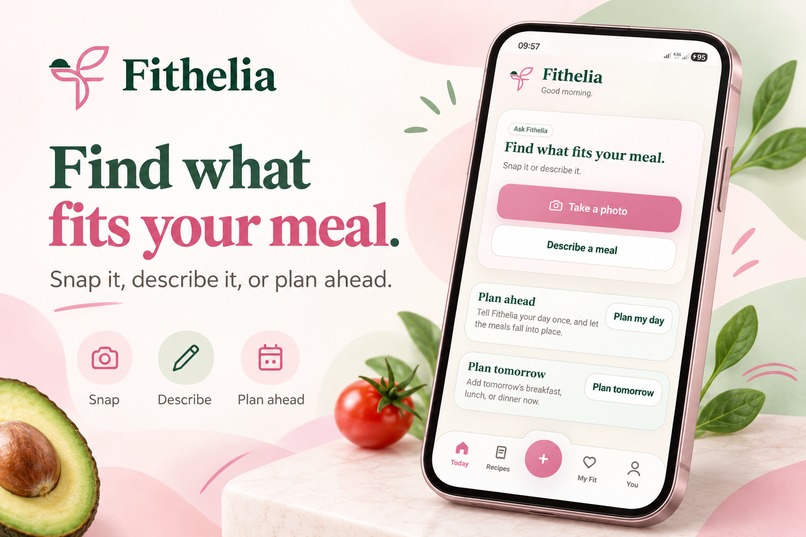
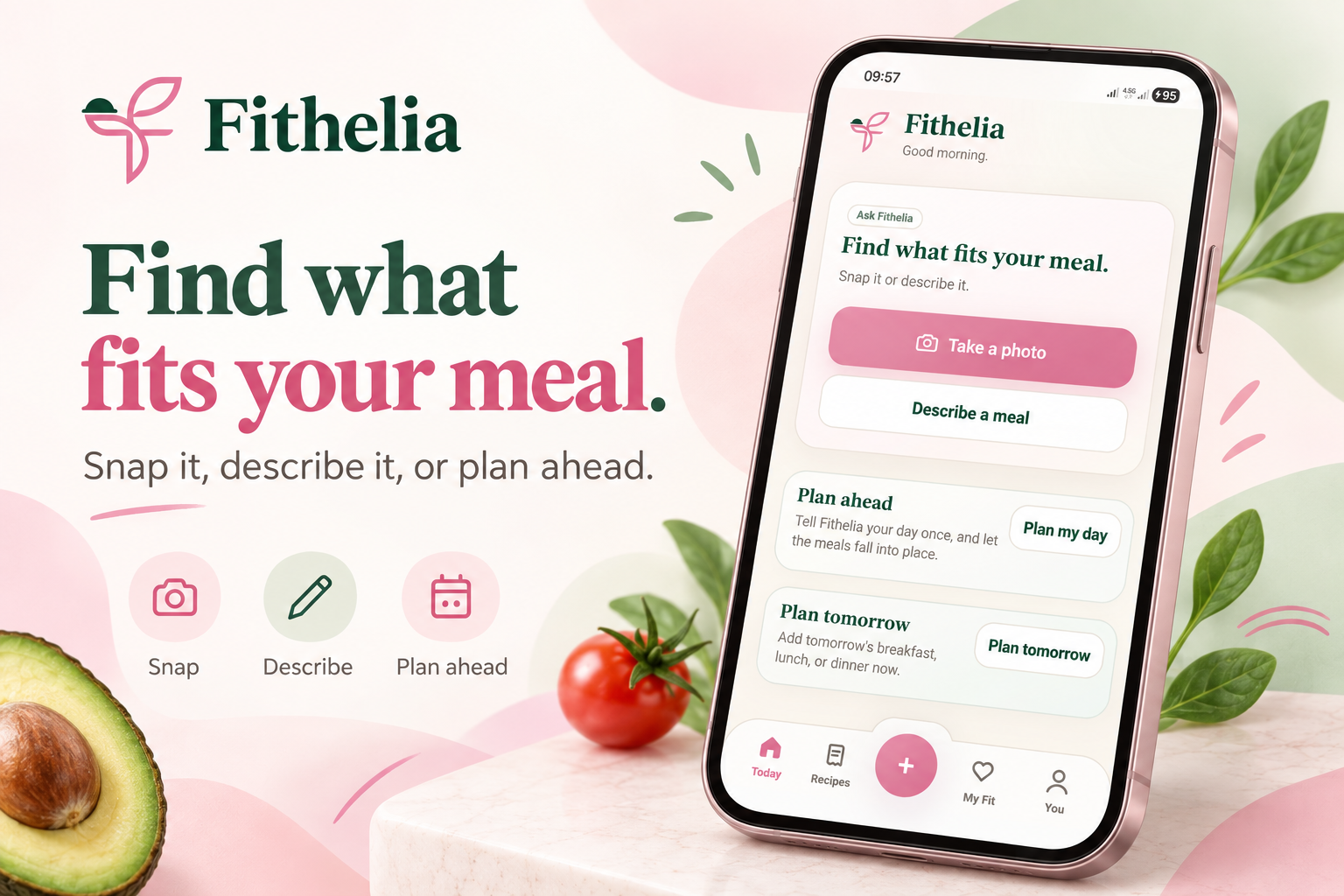
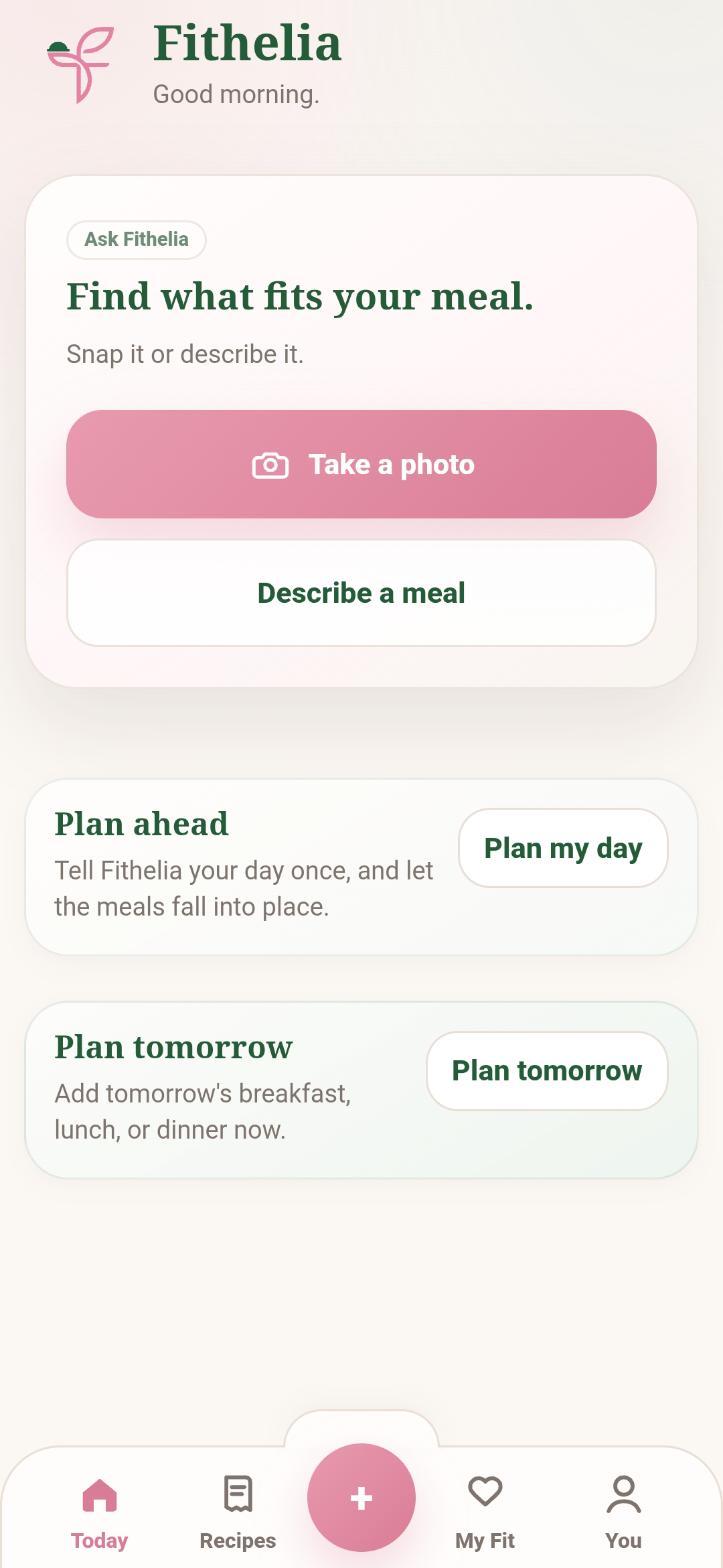
Start with the meal you already chose — snap it, describe it, or plan it ahead.
-
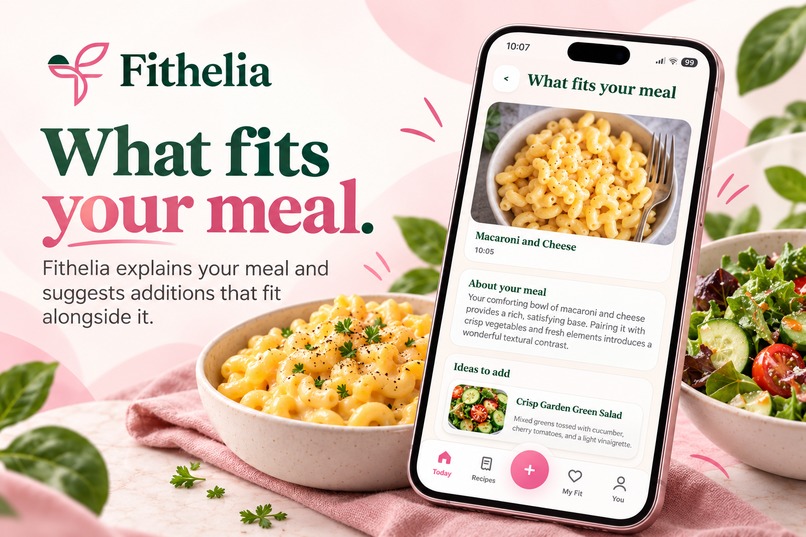
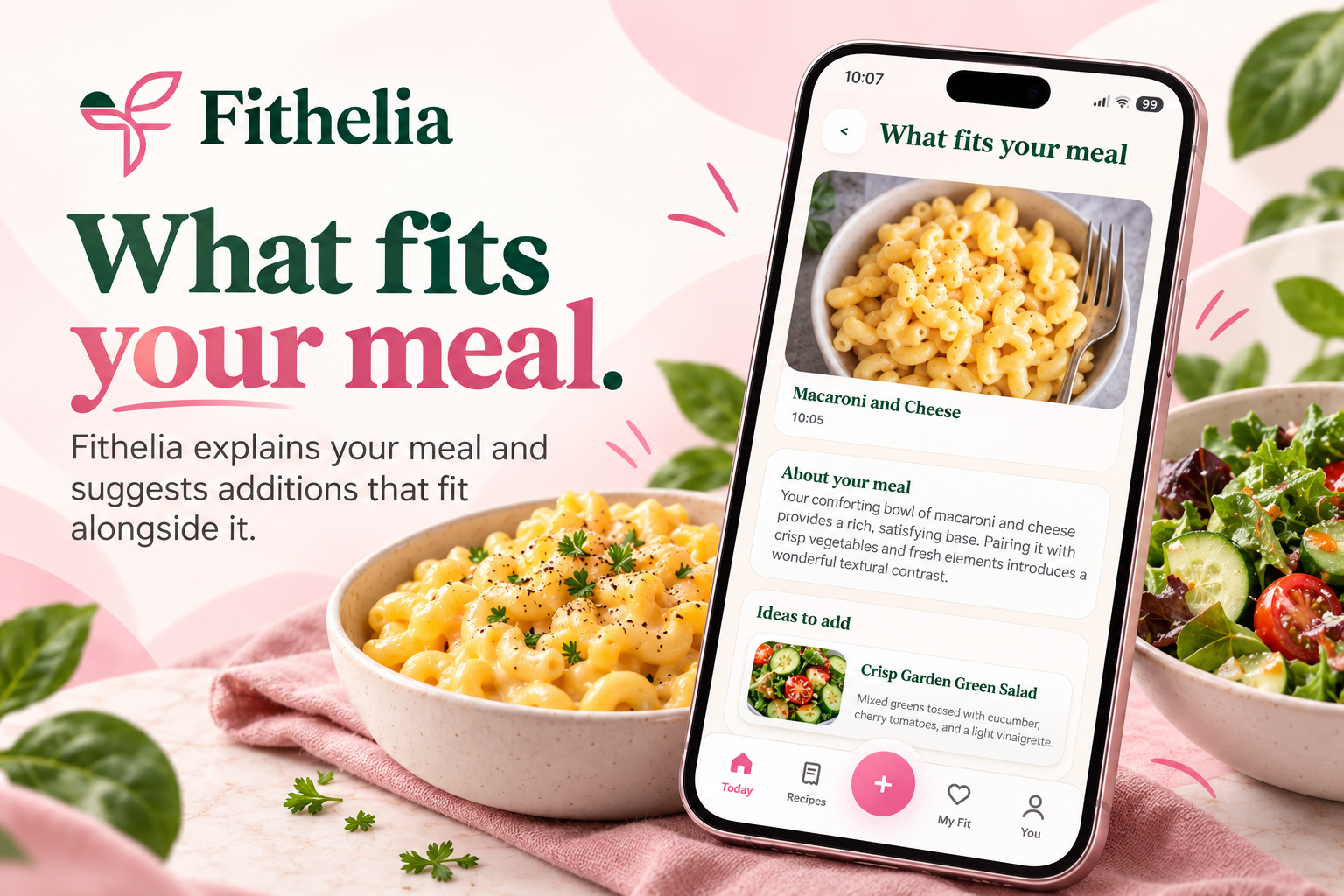
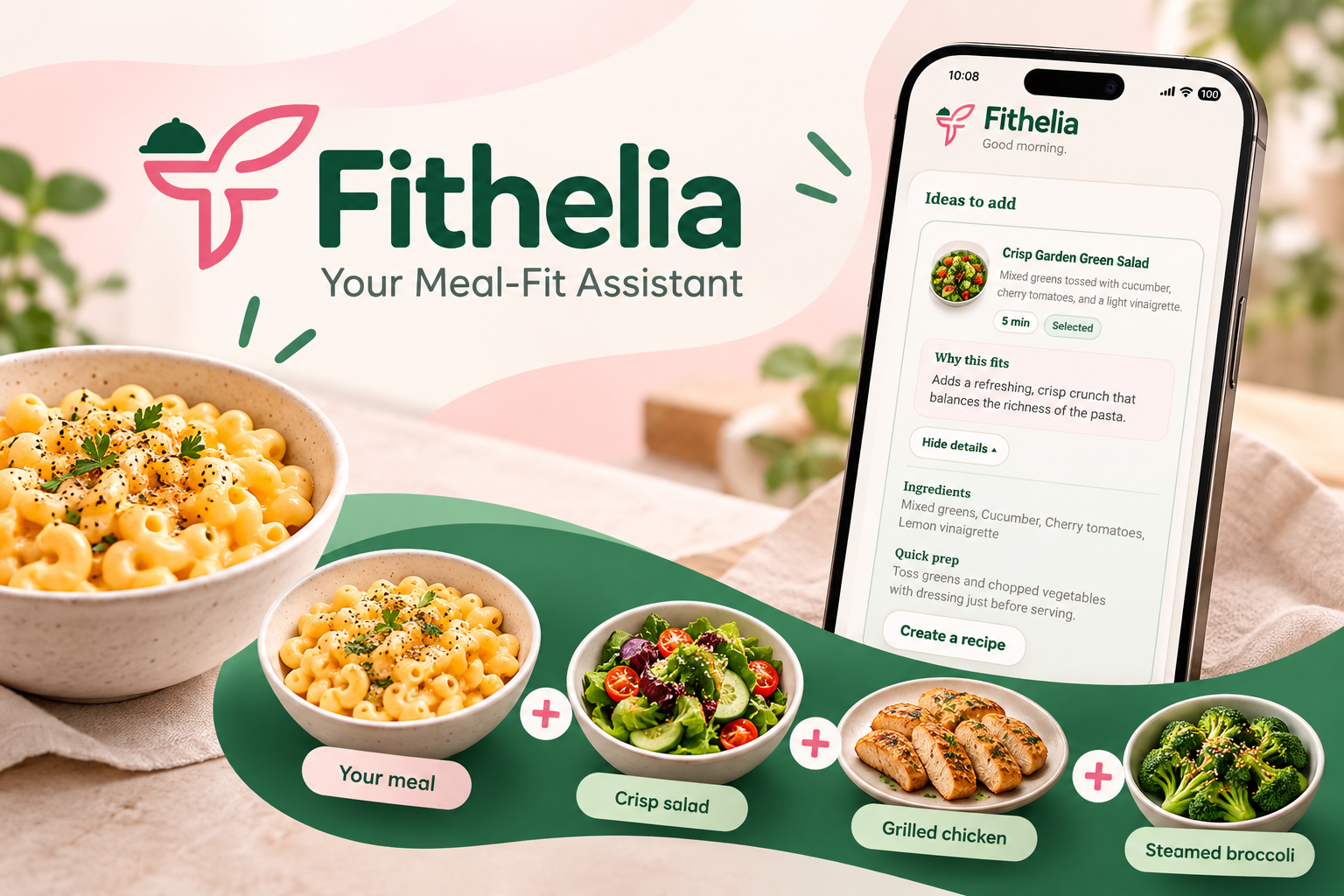
Each suggestion explains why it fits, with practical ingredients, prep time, and alternatives.
-
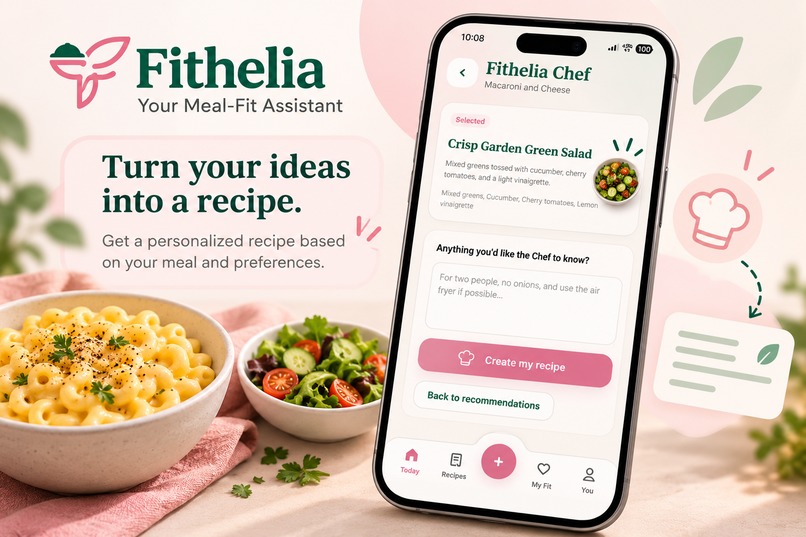
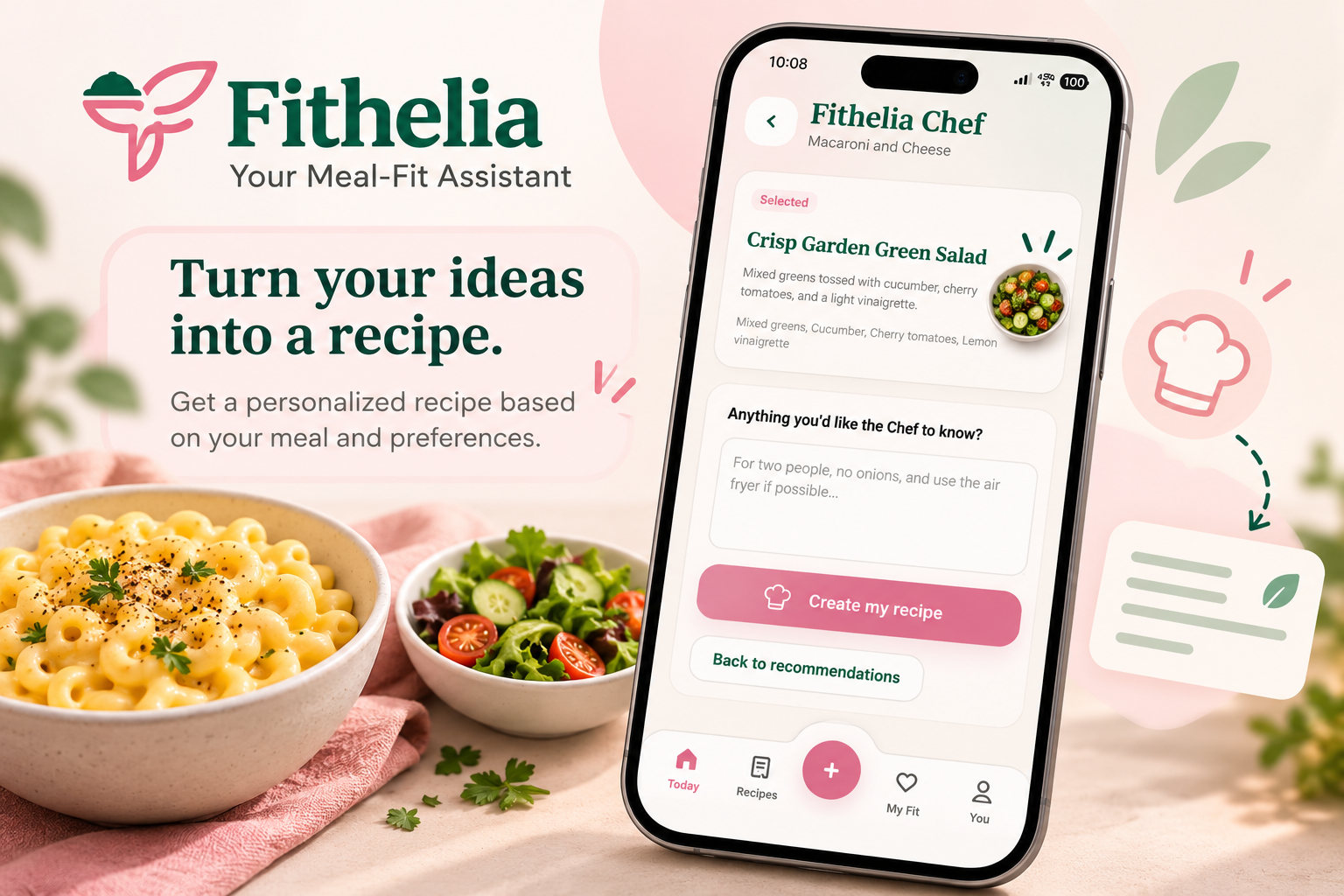
Turn a selected addition into a personalized recipe that can adapt to your preferences and context.
-
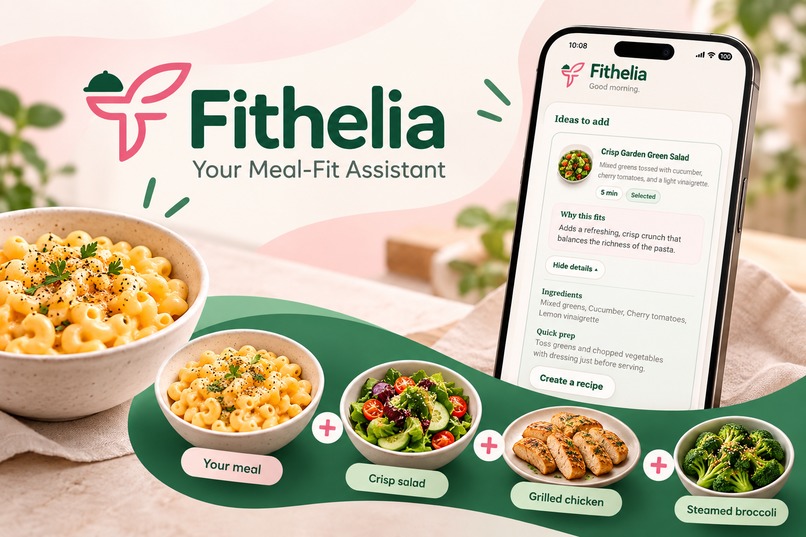
Fithelia understands the meal first, then looks for additions that can fit alongside it.
-
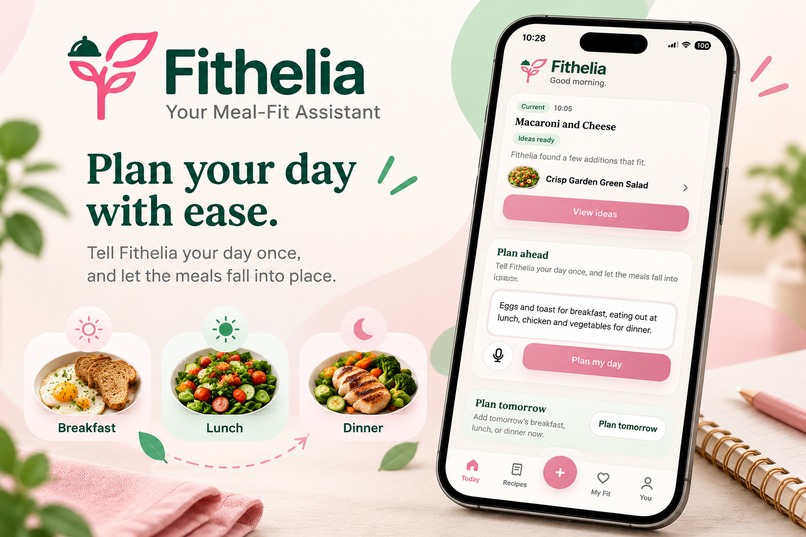
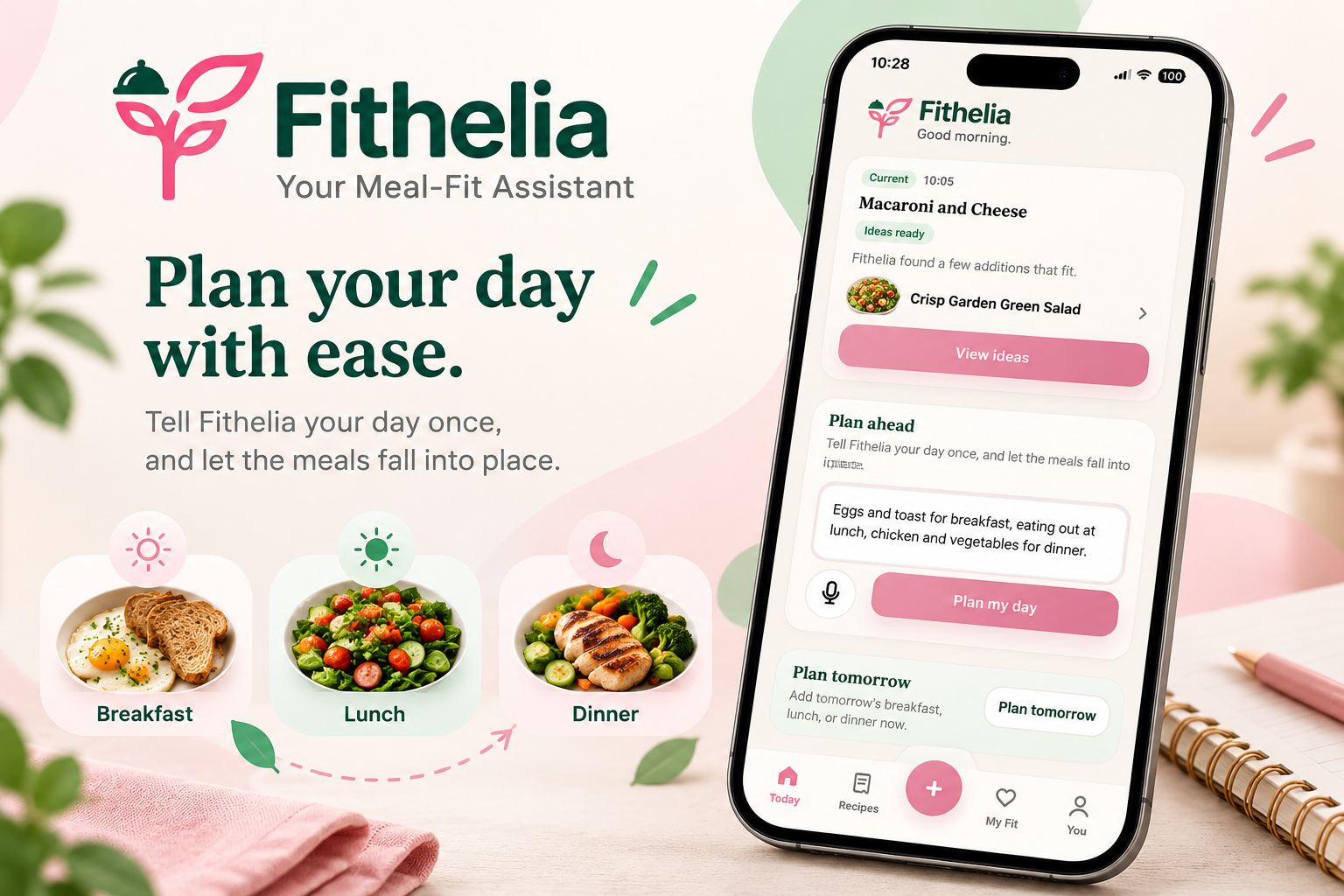
Describe your day once and let Fithelia organize breakfast, lunch, and dinner around real-life plans.
-

Fithelia App Icon
-
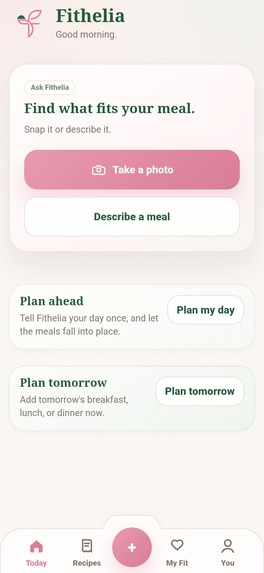
Today dashboard — add a meal, continue your meal-fit journey, or plan the rest of your day.

Inspiration
Nutrition has become one of the defining health challenges of our time.
Although nutrition is an area I have followed closely and worked on in different contexts throughout my medical background, hunger and satiety were not topics I had previously explored in depth. This challenge gave me the opportunity to study them more systematically and think about them from a different perspective.
I started with a very basic question:
Why does one meal keep us satisfied for hours, while another leaves us hungry again soon afterward?
As I went deeper into the research, I realized that satiety cannot be explained simply by how much we eat or how many calories we consume. Meal composition, protein, fiber, volume, fats, personal preferences, and individual responses can all play a role.
What interested me most was this:
There is no single "perfect meal" or universal satiety formula that works equally well for everyone.
That became the starting point for Fithelia.
Instead of building another diet app that tells people to eat completely different meals, I wanted to ask a different question:
"You already chose your meal. How can we make it work better for you?"
Fithelia was born from that idea.
Rather than automatically replacing what is already on the plate, Fithelia looks at the meal the user has chosen and considers whether something useful could fit alongside it.
The core principle is simple:
Keep the meal. Personalize what fits around it.
The goal is not simply to tell someone to "eat more." Fithelia looks for small additions that may help make a meal more satisfying, support longer-lasting satiety, and delay the return of hunger.
And sometimes, the right answer is that nothing needs to be added at all.
Fithelia is designed as a personalized meal-fit assistant that helps people improve the meals they already want to eat without turning every meal into a calorie-counting exercise, automatically replacing the main dish, scoring foods, or prescribing a rigid meal plan.
Same meal. Different result.
What it does
At the center of Fithelia is Fithelia Brain, a decision system designed to understand both the person and the meal.
Fithelia first learns about the user.
During onboarding, it builds a practical Personal Fit profile using signals such as hunger patterns, goals, dietary style, restrictions, food preferences, meal context, preferred effort level, sensory preferences, and other factors that may change what a useful recommendation looks like.
But that profile is not static.
Fithelia Brain can also use feedback from the user over time: which suggestions they accept, which they reject, what they dislike, what they do not have available, and what does not fit their situation at that moment.
These signals help shape future decisions.
AI is not used as an isolated decision-maker. Fithelia Brain combines the user profile, meal structure, current context, restrictions, and previous feedback to create the decision context in which AI-generated recommendations are produced.
Fithelia can understand meals through photos, text, or voice.
Its AI layer helps identify the main components of the meal and evaluate characteristics that may matter for satiety.
And if Fithelia cannot understand a photo with enough confidence, it is designed not to guess. It can ask the user for one useful clarification before continuing.
Fithelia then asks:
"For this person and this meal, is there anything that would genuinely be useful to add?"
Depending on the meal and the individual, that may mean suggesting a complementary source of protein, fiber, volume, healthy fats, texture, or another food that could make the meal more satisfying.
The objective is not to add food for the sake of adding food. It is to find a small, practical addition that may help the meal work better for that particular person.
The idea remains simple:
Keep the meal. Personalize what fits beside it. Support satiety.
Fithelia also does not force a recommendation onto every meal.
If the meal already appears sufficiently complete, Fithelia can conclude that it works well as it is.
If the user still wants more ideas, optional suggestions can be explored.
How we built it
I designed Fithelia not simply as a nutrition app built around an AI model, but as a system with three connected layers: understanding the person, understanding the meal, and understanding the fit between them.
1. Understanding the person
The first layer is the user.
Instead of creating a generic nutrition profile, Fithelia's onboarding builds a personalized Personal Fit / meal-fit profile.
Hunger patterns, goals, dietary style, restrictions, likes and dislikes, meal contexts, preferred effort level, and sensory preferences all contribute to that profile.
The goal is not to collect as much data as possible.
The goal is to collect enough meaningful context to understand why the same meal may require a different recommendation for two different people.
2. Understanding the meal
The second layer is the meal the user actually wants to eat.
Fithelia does not begin with a predefined diet or an idealized meal plan.
Through photo, text, or voice, it tries to understand the meal the user is actually considering or eating and identify characteristics that may matter for satiety.
An important product decision was to make uncertainty visible.
If the system cannot understand a meal confidently enough, it can stop and ask the user for clarification instead of inventing an answer.
3. Finding the fit between the person and the meal
The third layer is Fithelia's decision system.
Fithelia Brain combines the Personal Fit profile, the meal itself, context, restrictions, and previous feedback.
Rather than using AI as a generic nutrition chatbot that freely generates advice, Fithelia gives the model a structured decision context and asks a much narrower question:
"Is there a small addition that could genuinely improve this meal for this person?"
This means a recommendation should not only make nutritional sense. It should also be something the person could realistically enjoy, prepare, access, and use.
A major part of the product work was also making personalization understandable rather than invisible.
The onboarding experience therefore does more than collect answers. It reflects selected answers back to the user, explains why individual differences matter, and gradually shows how those signals can affect Fithelia's decisions.
The same philosophy continues after the meal is analyzed.
Fithelia tries not only to explain what it recommends, but also why this fits this meal and this person.
The premium experience and subscription infrastructure are integrated through RevenueCat, including premium access, offerings, entitlements, and the purchase flow.
Challenges we ran into
The biggest challenge was deciding what Fithelia should not become, while building the logic of Fithelia Brain without drifting away from scientific reasoning or real-world practicality.
It would have been much easier to build another calorie tracker, macro dashboard, meal planner, or general-purpose AI nutrition chatbot.
But that would have weakened the original idea.
Throughout development, I kept returning to one rule:
Keep the meal. Help the person make it more satisfying.
That meant avoiding unnecessary numbers, staying away from food scoring, and making sure personalization changed the recommendation itself rather than simply changing the wording around it.
Another major challenge was balancing nutrition logic with real life.
A recommendation may look theoretically excellent, but if the person dislikes it, does not have it available, does not want to prepare it, or simply does not want it at that moment, it is not a useful recommendation.
Fithelia therefore needed to consider more than the nutritional characteristics of the meal.
Preferences, restrictions, context, preparation effort, sensory preferences, and user feedback all needed to become part of the decision system.
Another important challenge was deciding how AI should behave when it is uncertain.
In a product related to nutrition and health, one principle was especially important to me: the medical idea of "first, do no harm."
I did not want the system to confidently invent an answer simply because it was expected to respond.
So Fithelia Brain needed to learn not only when to make a recommendation, but also when to stop and ask for more information.
One of the most important design principles became:
Fithelia does not always need to have an answer. It first needs to understand well enough.
Accomplishments that we're proud of
What I am most proud of is turning a relatively underexplored consumer problem — how hunger, satiety, and meal composition interact differently for different people — into an actual product concept that people can use.
The meal-fit approach became more than a feature.
It became the idea around which the entire product was designed:
Instead of replacing the user's meal, understand how that meal could work better for that particular person.
I am also proud that this idea did not remain a presentation, prototype, or AI demo.
In a relatively short development period, Fithelia became a real mobile product that users can download and use.
The resulting experience now brings together:
- personalized onboarding and a Personal Fit profile
- meal understanding through photo, text, and voice
- clarification when the meal is uncertain
- complementary recommendations that change according to the person and the meal
- a Why this fits explanation layer
- preferences, restrictions, and feedback-driven personalization
- Fithelia Chef, which turns suggestions into practical recipes
- Plan Ahead, which can understand a user's day from a few sentences and help organize meals across the day
- premium access and subscription infrastructure powered by RevenueCat
into one connected product experience.
All of these features developed around the same principle:
Keep the meal. Understand the person. Find small changes that may genuinely help.
The product has grown around that idea, but the idea itself has remained consistent from the beginning.
What we learned
One of the biggest lessons from building Fithelia was that personalization in nutrition is not simply a user-experience feature.
When used well, it can make recommendations more practical, more relevant, and better suited to real life.
If a system understands both the meal and the person, it does not always need to redesign everything.
It can make smaller and more precise suggestions.
Instead of saying:
"Here is what you should eat."
Fithelia is designed to say:
"You can keep the meal you chose. Here is something small that may work well alongside it for you."
Another important lesson was that useful personalization means much more than collecting preferences.
Knowing what someone likes, dislikes, avoids, or usually eats is not enough.
Those signals need to meaningfully change the recommendation itself.
The same meal may not require the same recommendation for two different people.
That led to one of the clearest lessons from Fithelia:
Better personalization does not necessarily mean a more complicated diet. Sometimes it means finding one small, appropriate addition for the right person and the right meal.
What's next for Fithelia
The next major step for Fithelia is to improve its ability to learn what actually works for each individual over time.
Today, Fithelia can already combine personal context, meal context, preferences, restrictions, and user feedback to create personalized meal-fit recommendations.
The next goal is to make that personalization increasingly longitudinal.
Fithelia should become better at answering questions such as:
- Which suggestions does this user actually choose?
- Which additions tend to make their meals feel more satisfying?
- Which recommendations do they repeatedly reject?
- Do their needs change depending on the time of day or situation?
- Which approaches consistently seem to work for similar meals?
In other words, Fithelia should gradually move from asking:
"What have you told me about yourself?"
toward also learning:
"What has actually worked for you?"
Over time, I would also like this approach to support more specialized meal-fit experiences for different lifestyles and life stages, such as:
- people who train regularly
- people with busy or irregular work schedules
- users who want to delegate more of their daily meal planning
- adults whose nutritional needs change across different life stages
- older adults looking for practical support for more balanced eating
Clinical conditions and medically specific nutrition needs are a different category.
If Fithelia eventually develops functionality for people with conditions such as diabetes, hypertension, thyroid disease, or other clinical needs, that should be approached separately, with appropriate scientific validation, safety boundaries, and involvement from healthcare professionals where necessary.
The long-term goal is simple:
Fithelia should not only learn what you eat or what you say you like. It should increasingly learn which small changes actually work for you.
And while helping users support longer-lasting satiety, Fithelia ultimately aims to encourage a more balanced, practical, and sustainable relationship with everyday meals.
Built With
- android
- capacitor
- chatgpt
- firebase
- firebaseauthentication
- gemini
- googleplay
- react
- revenuecat
- typescript

Log in or sign up for Devpost to join the conversation.