-
-
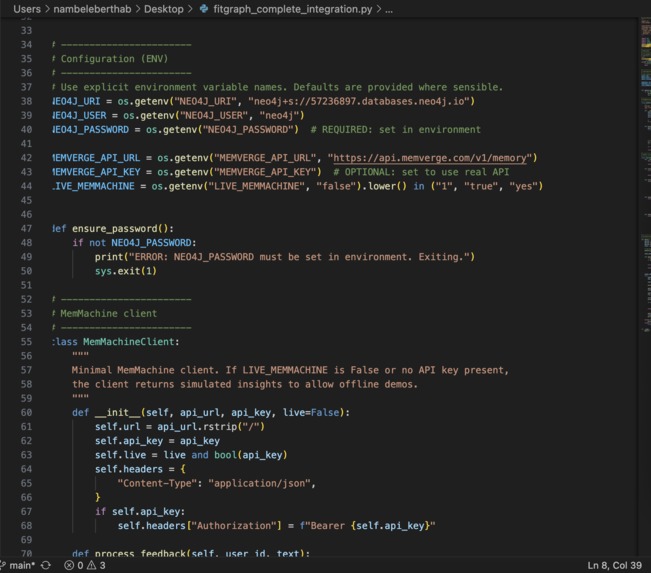
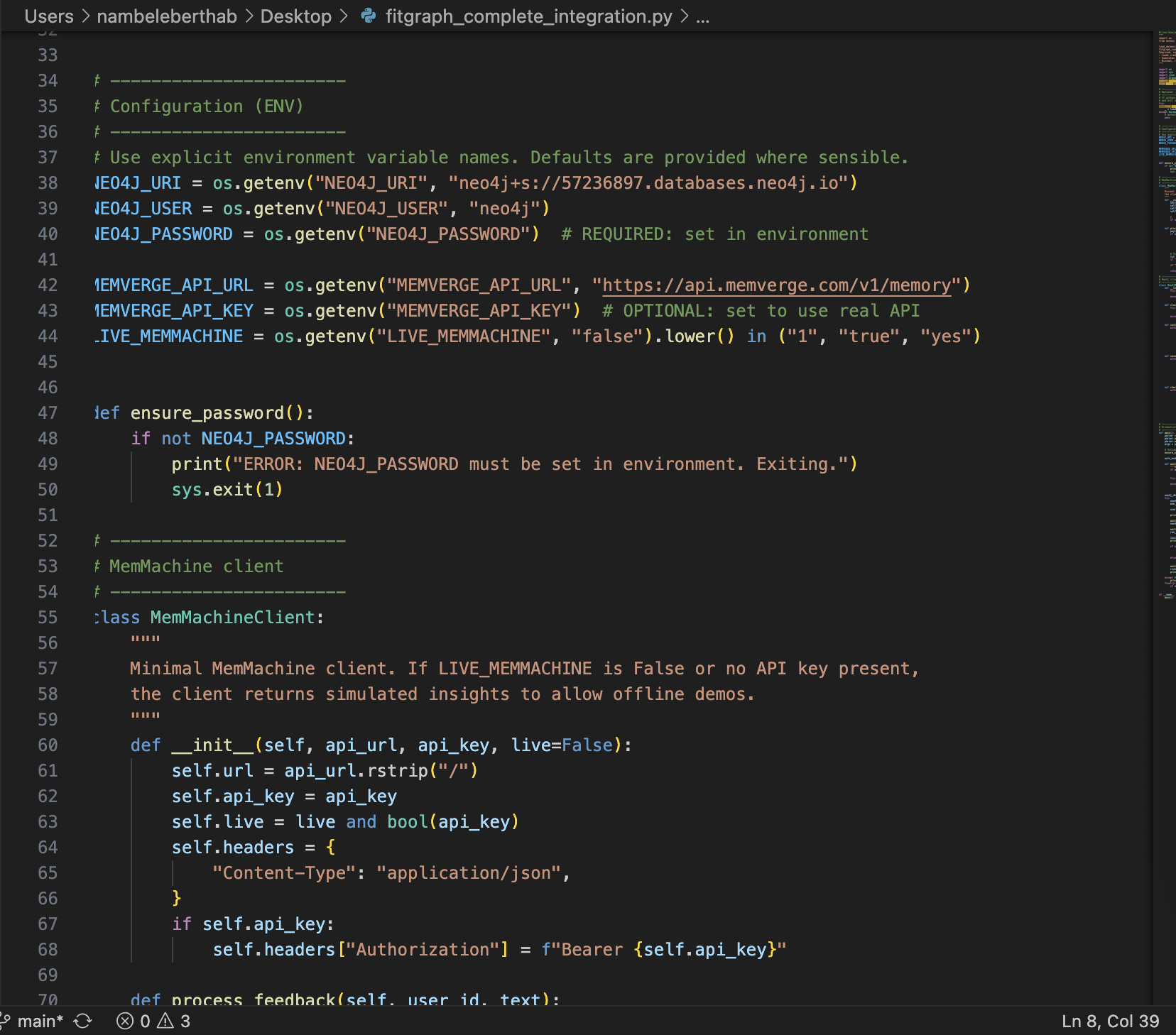
FitGraph Agent Logic: Python implementation integrating MemVerge's Vector Memory (via REST API) with Neo
-
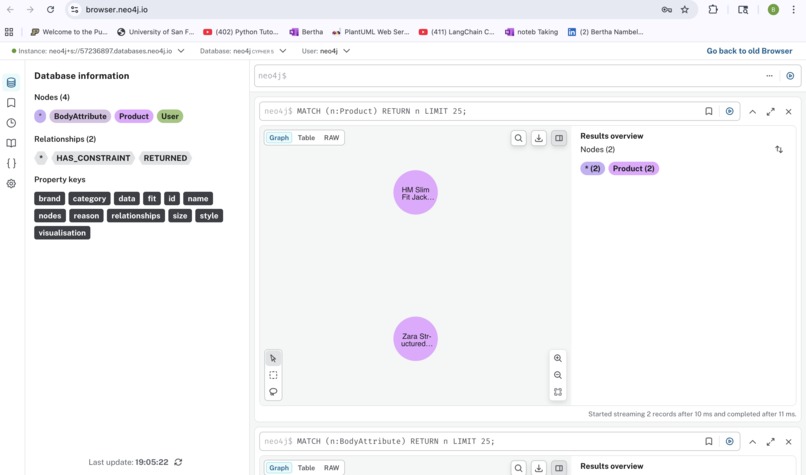
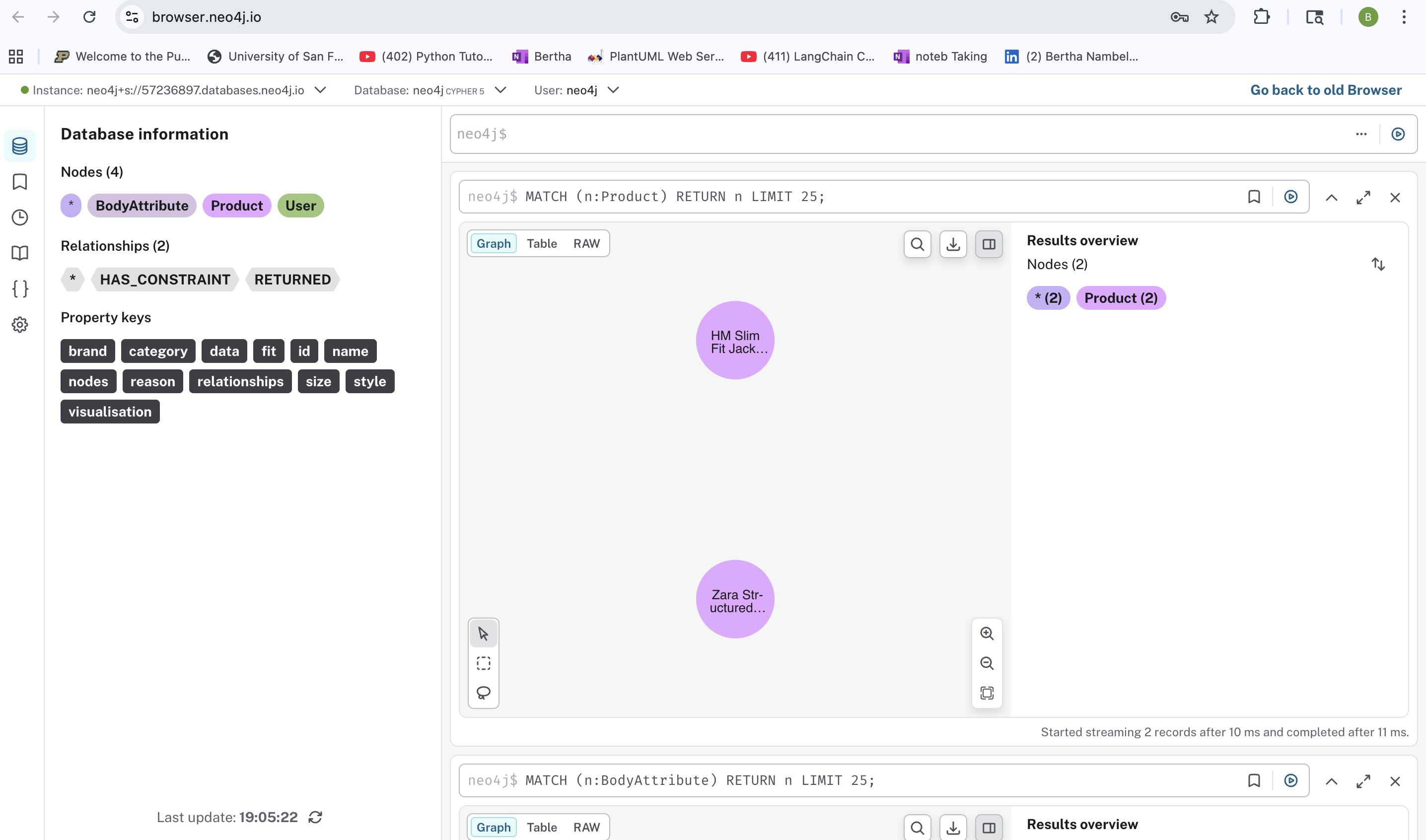
Constraint Visualization: Neo4j Graph displaying the relationship
We all know the pain: You buy a "Medium" jacket from Zara, and it fits perfectly. You buy a "Medium" from H&M, and you can't even zip it up. This inconsistency known as "Vanity Sizing" is a major reason why e-commerce has a staggering 40% return rate.
We realized that size charts are static and confusing, and most shoppers don't have a measuring tape handy. We wanted to build an AI that acts like a personal tailor who remembers your actual body measurements and ignores the arbitrary size labels on the tag.
What it does FitGraph is an intelligent shopping agent that acts as a "Universal Translator" for sizing. Instead of matching "Size M" to "Size M," it matches your physical body constraints against the garment's dimensions.
It Remembers: The agent listens to your natural language feedback (e.g., "This blazer was too tight on my shoulders") and stores it in MemVerge MemMachine.
It Analyzes: It extracts semantic features (like Broad Shoulders) from that memory.
It Protects: When you view a new item, it cross-references your physical features against the product's data in a Neo4j Graph Database. If there is a conflict (e.g., a "Slim Fit" item vs. a "Broad Shoulder" user), it proactively warns you to stop the purchase.
How we built it We combined Vector Memory with Graph Logic to create a hallucination-free shopping assistant.
MemVerge MemMachine (Memory Layer): We used this for Long-Term Semantic Memory. It stores unstructured user feedback and vectorizes it to detect latent physical traits that a standard database would miss.
Neo4j (Reasoning Layer): We used this for Constraint Reasoning. Once a physical trait is identified, we enforce it as a hard logic node in the graph. This allows us to map conflicting relationships across different brands.
Python: The agent logic that orchestrates the flow between the vector memory and the graph database.
Challenges we ran into The biggest challenge was bridging the gap between "fuzzy" AI and "strict" logic. LLMs are great at chatting but bad at math and rules.
The Hallucination Problem: Early versions of the agent would "guess" the size. We solved this by forcing the LLM to defer to the Neo4j graph for the final decision.
Data Integration: Connecting the live MemMachine API to our local environment required robust error handling to ensure the demo wouldn't crash if the connection dropped.
Accomplishments that we're proud of We are proud that we didn't just build another chatbot wrapper. We built a system with Agency.
It has Memory: It doesn't reset after every session.
It has Guardrails: It can say "No" to the user to protect them from a bad purchase.
It solves a real-world business problem (returns) using the specific strengths of Graph RAG.
What we learned We learned that Context is King. An AI without memory is just a calculator. By giving the agent access to the user's history (via MemVerge) and the product's strict rules (via Neo4j), we created something that feels genuinely "smart" rather than just chatty.
What's next for FitGraph Computer Vision: Analyzing user photos to auto-populate graph constraints (e.g., detecting "Long Arms" from a selfie).
Multi-Agent Workflow: A "Shopper Agent" negotiating with a "Stylist Agent" to balance style vs. fit.
Live Brand Indexing: Scraping real-time sizing charts from major retailers to expand the graph's knowledge base.

Log in or sign up for Devpost to join the conversation.