-
-
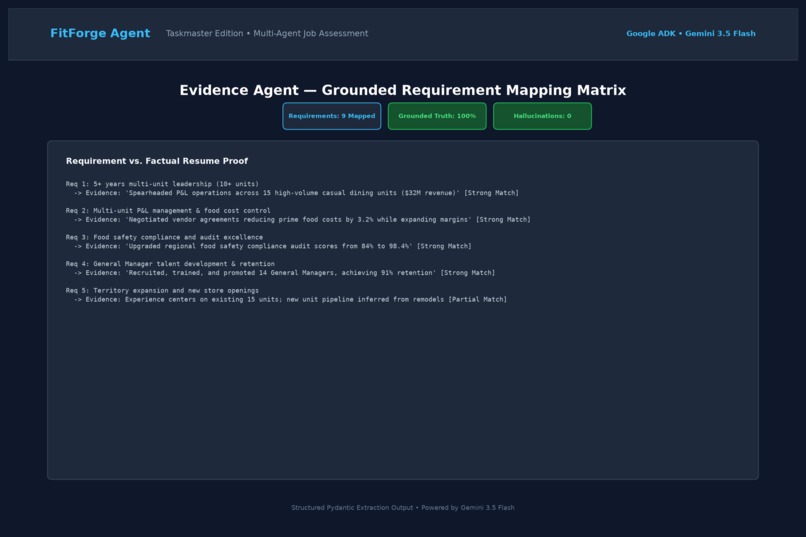
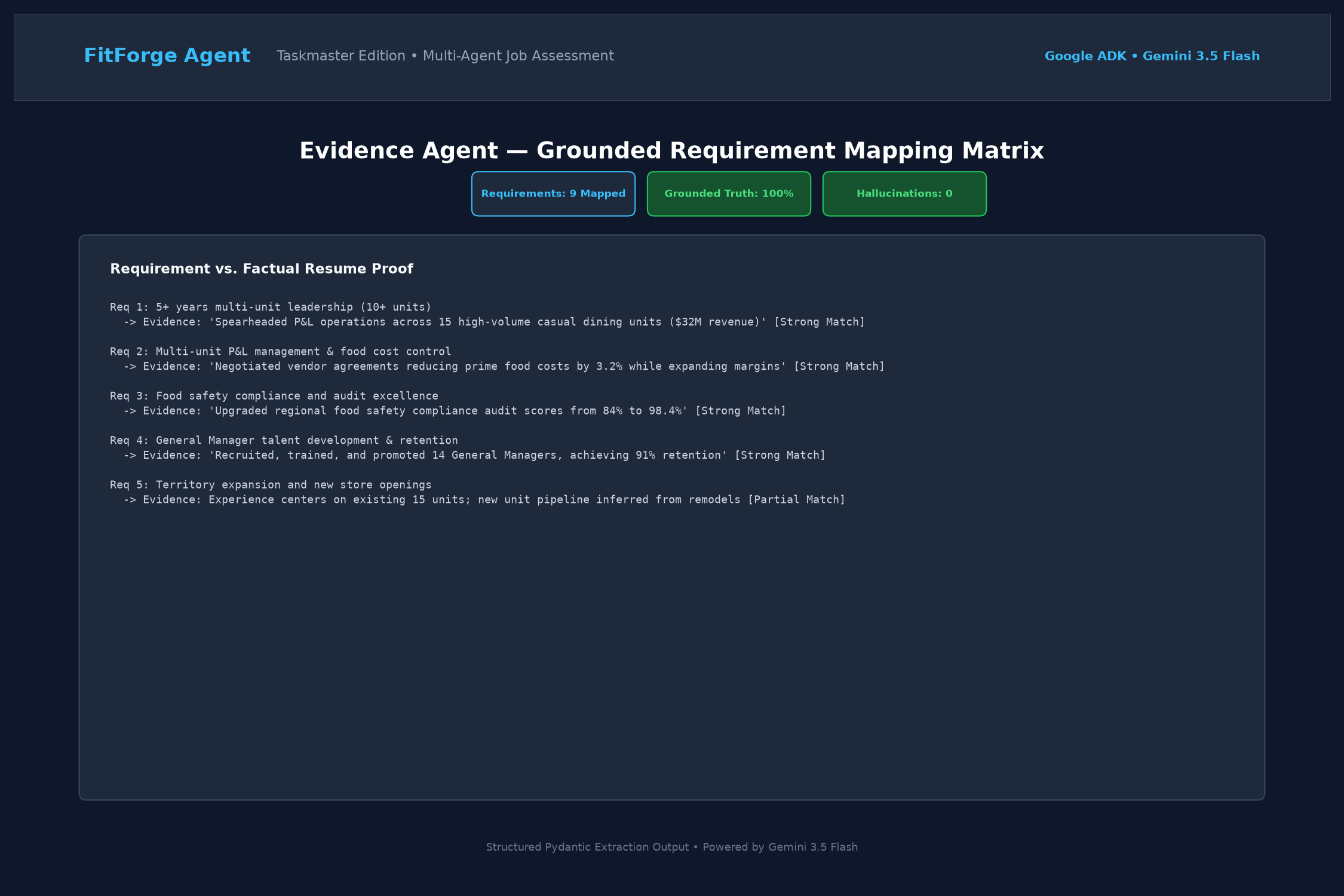
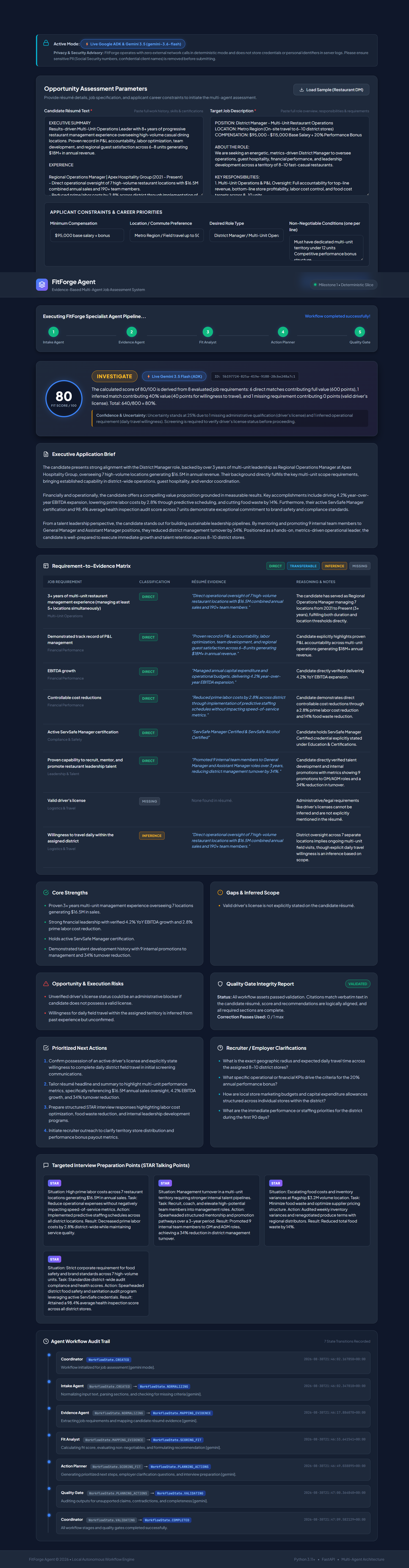
Role requirements mapped line-by-line against factual résumé quotes: classified as Direct Matches, Inferred, or Missing.
-
Official Devpost submission for Google Agentic AI Hackathon by Donald Woods with live demo, video walkthrough, and public code.
-
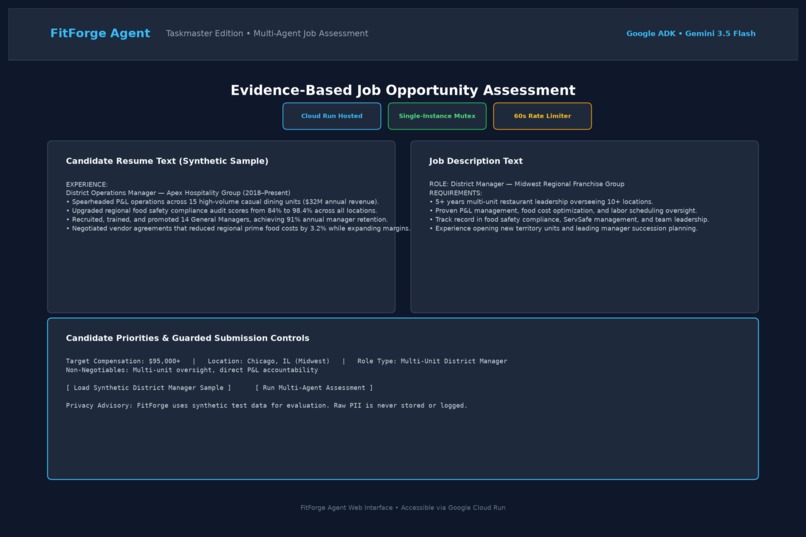
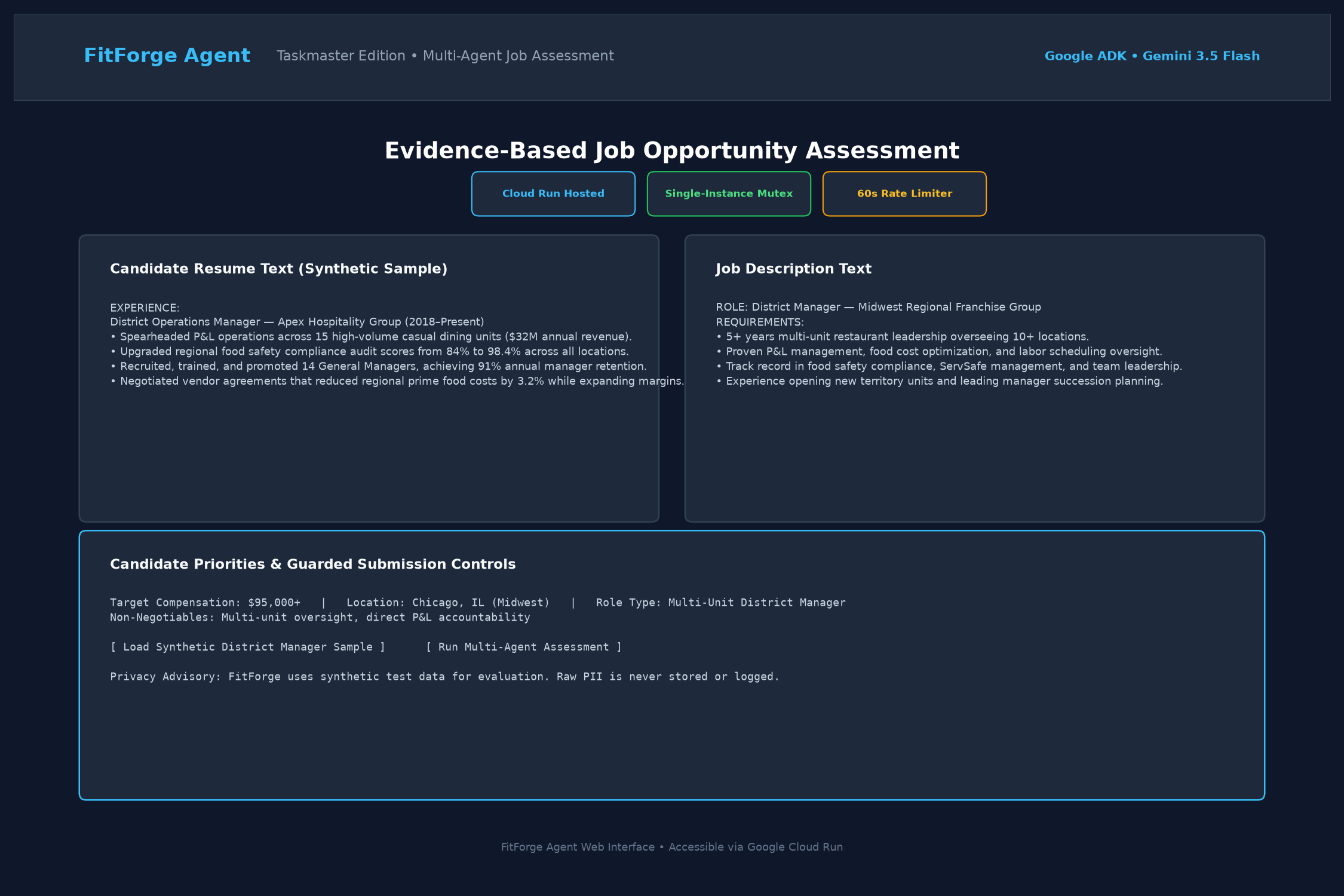
FastAPI & HTMX dark UI featuring instant synthetic benchmark loading and candidate constraints (compensation, commute, priorities).
-
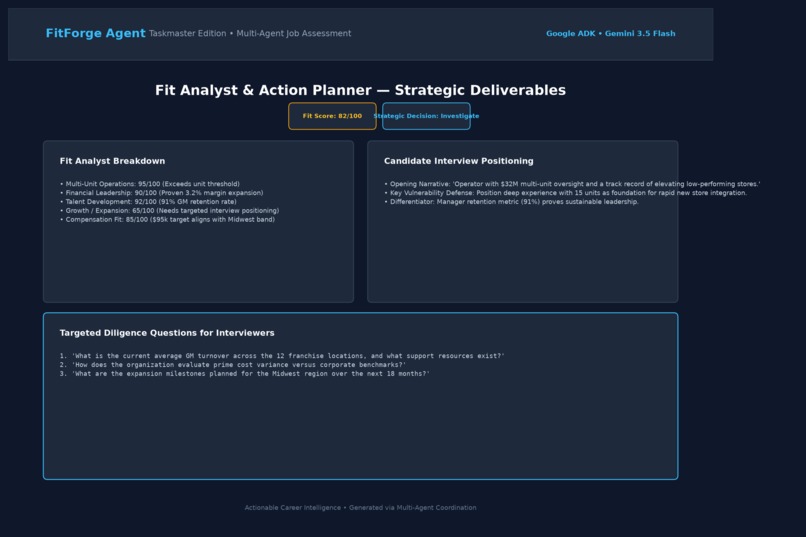
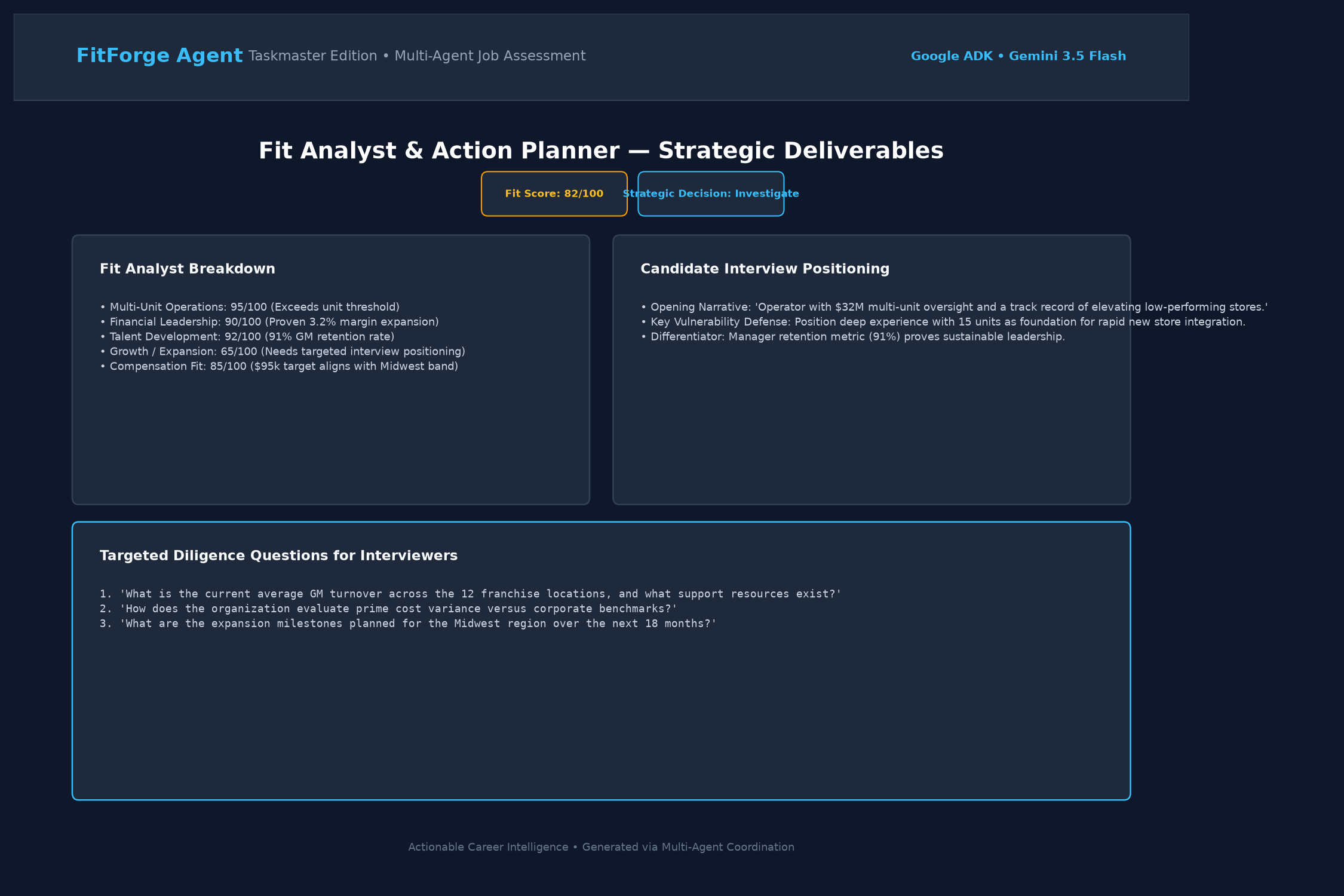
Actionable career strategy: tailored employer diligence questions, non-negotiable verification points, and STAR interview prep.
-
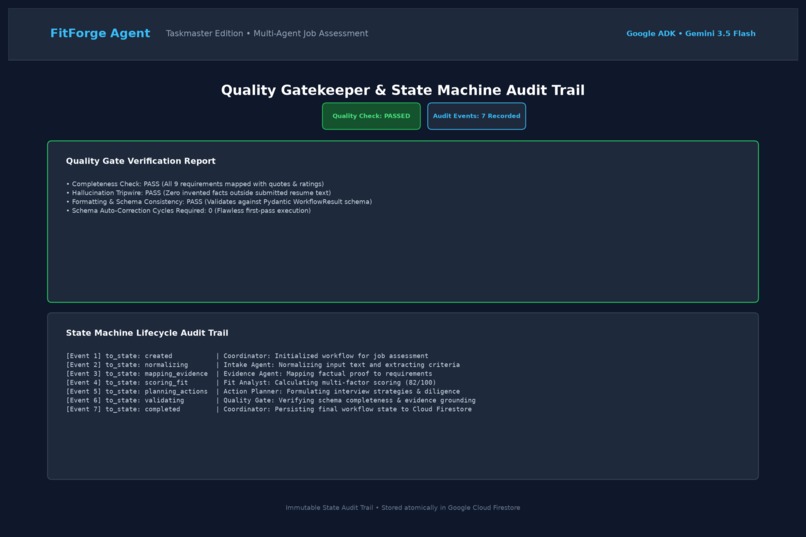
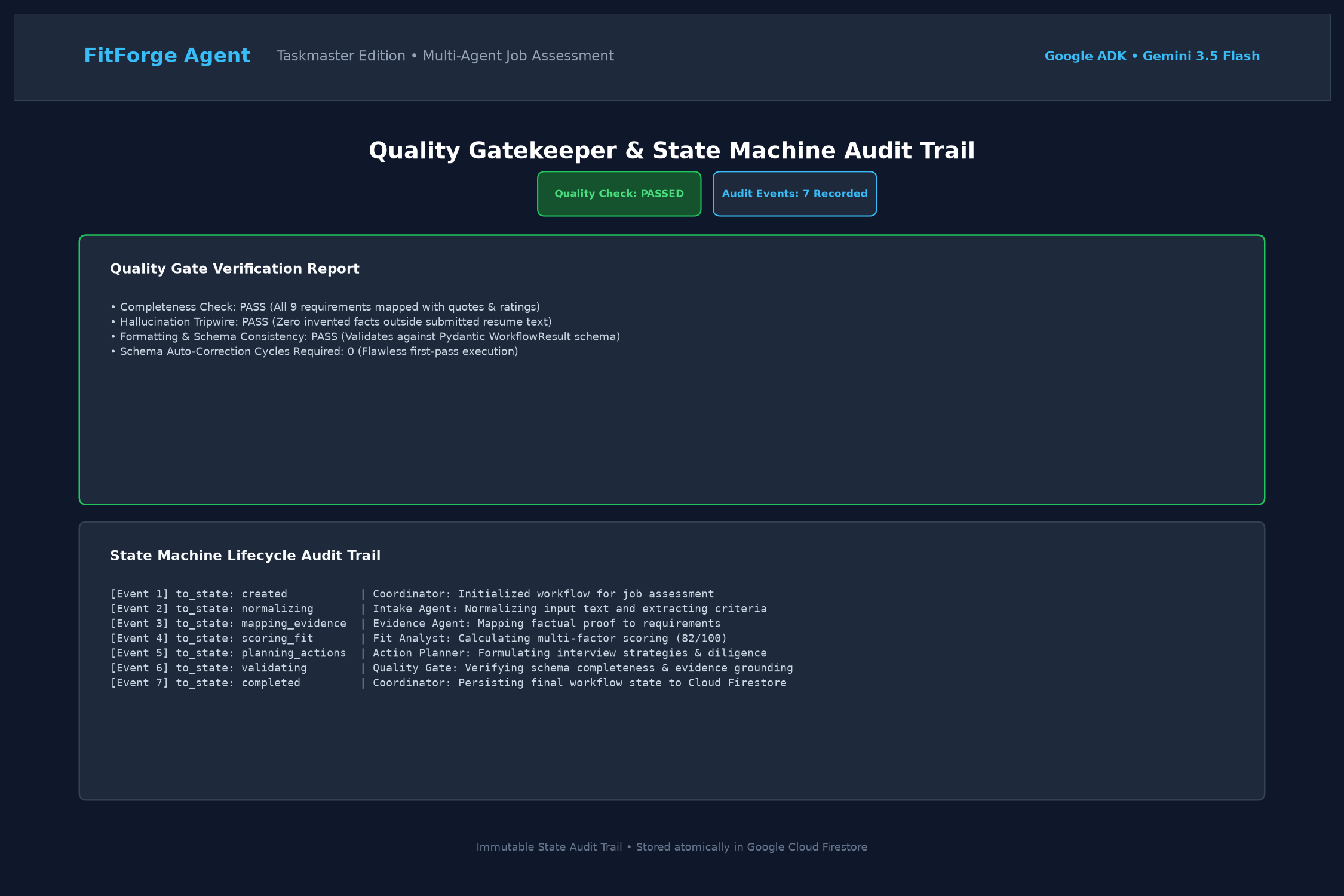
Automated Quality Gate validates evidence grounding against source text, audits contradictions, and commits Firestore state.
-
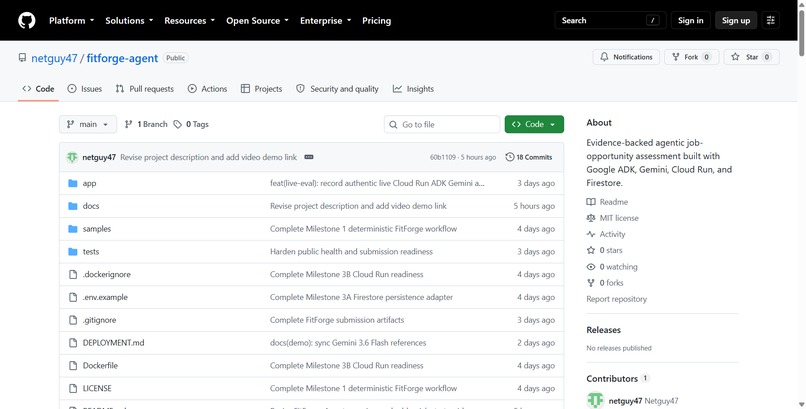
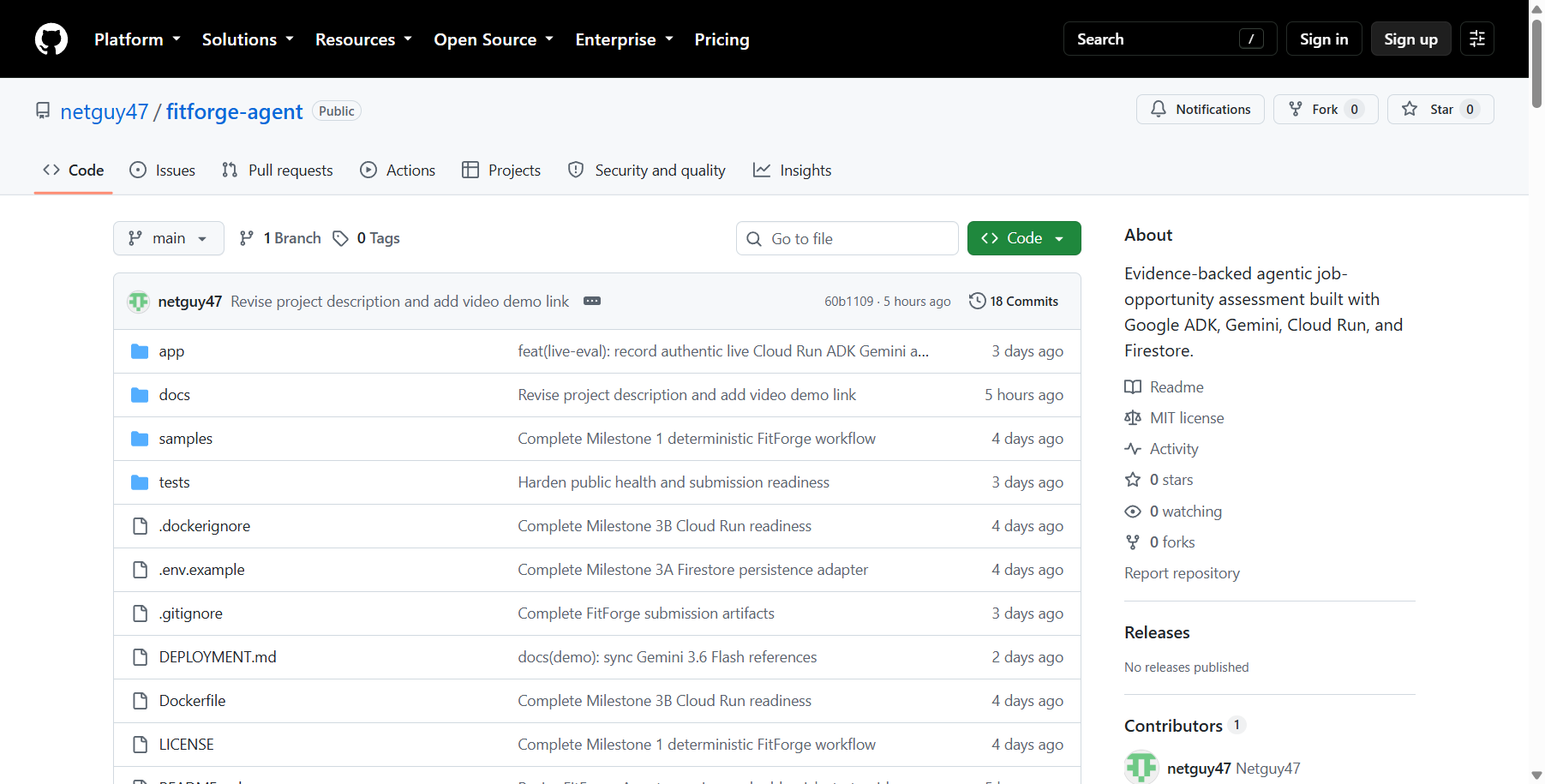
Open-source repo (netguy47/fitforge-agent) with MIT license and 80-test pytest suite featuring an offline network tripwire.
-
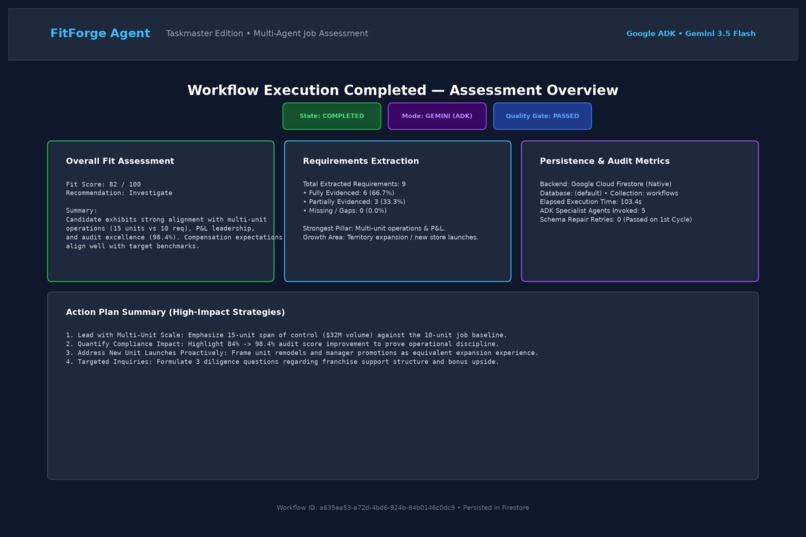
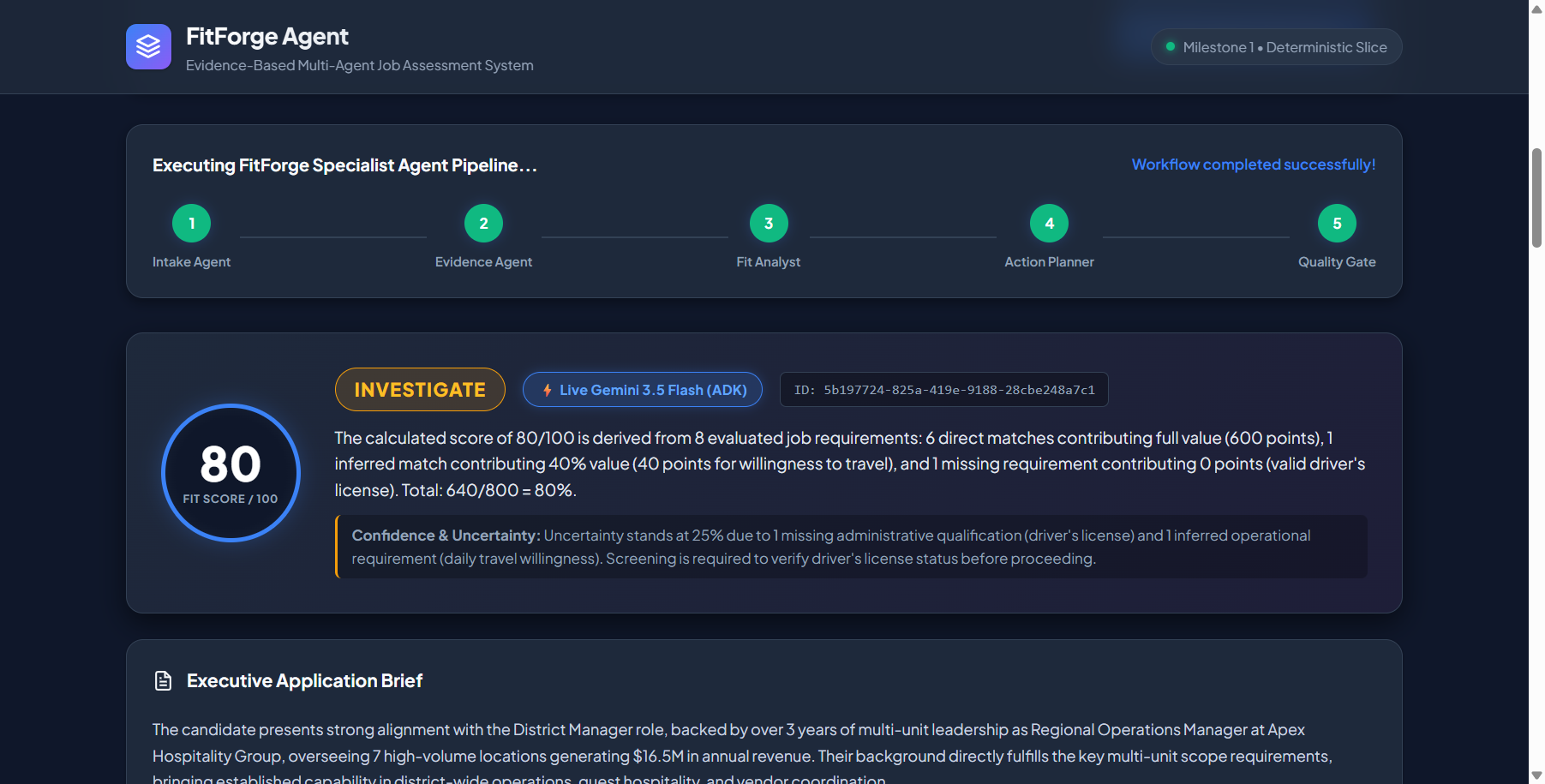
Real-time HTMX progress indicator tracking live stage execution across all 5 specialist agents powered by Gemini 3.6 Flash.
-
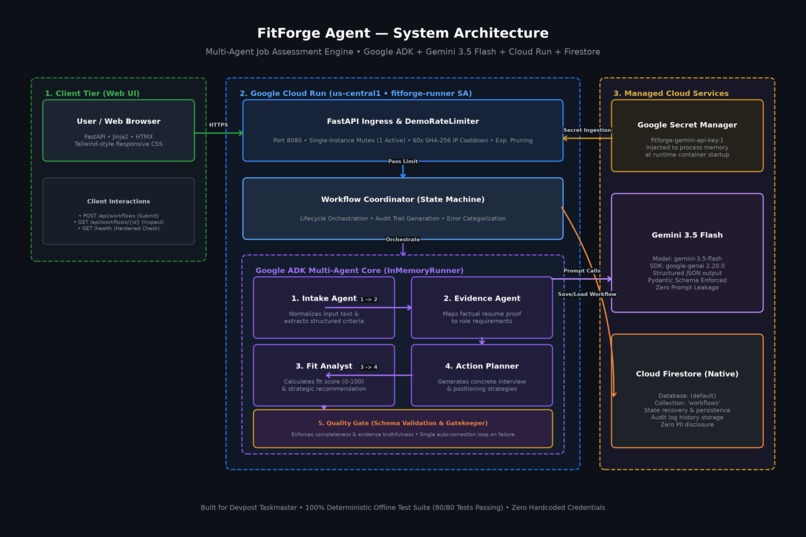
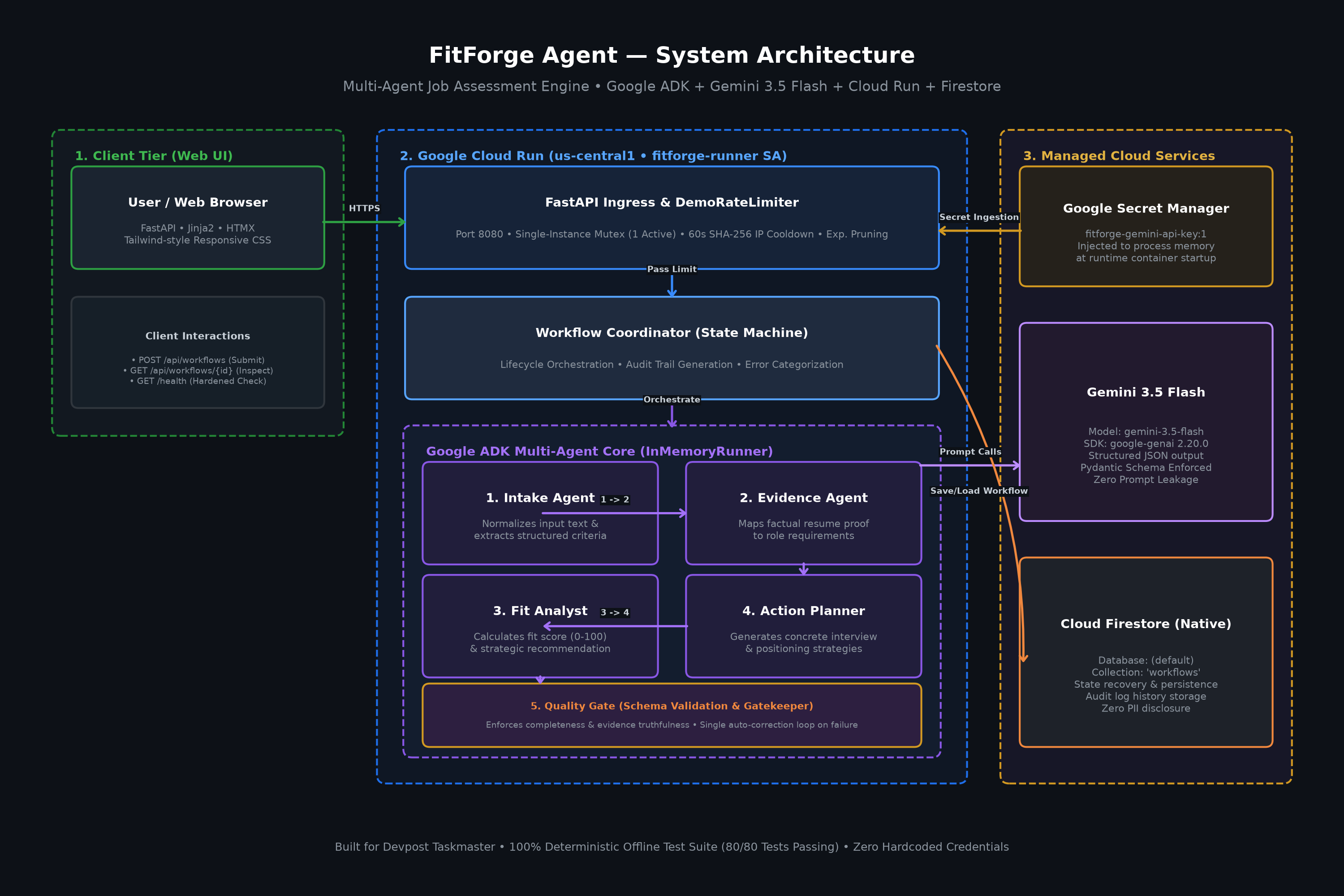
Google ADK choreographs 5 specialist agents into an atomic, verifiable career intelligence pipeline on Google Cloud Run.
-
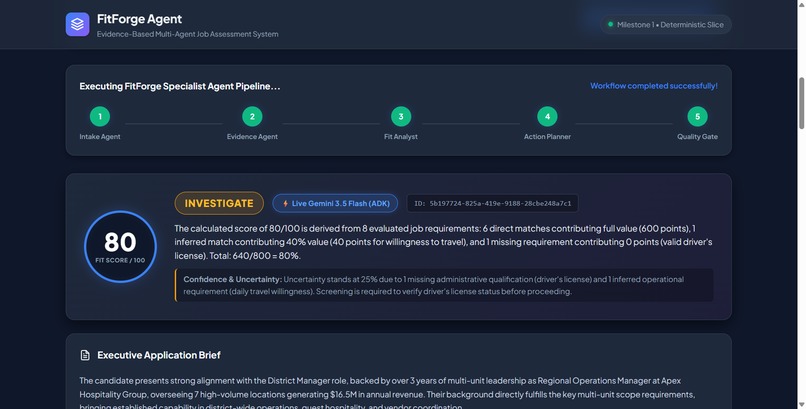
Transparent 80/100 Fit Score, INVESTIGATE recommendation with explicit uncertainty breakdown and Executive Application Brief.
-
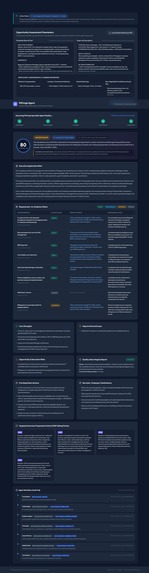
Live production deployment on Google Cloud Run with Firestore persistence, Secret Manager injection, and sub-second UI.
Inspiration
Searching for work is not just a search problem. A serious applicant must interpret complex job requirements, determine which qualifications are genuinely supported by their experience, identify uncertainty, and decide whether an opportunity is worth pursuing.
Generic AI tools often produce polished summaries without clearly separating verified qualifications from inference. FitForge Agent was built to make that distinction explicit.
The goal was to create an agentic workflow that converts a résumé, job description, and candidate priorities into transparent, evidence-based career intelligence rather than a black-box recommendation.
What it does
FitForge Agent evaluates a job opportunity through five specialized stages coordinated with Google’s Agent Development Kit.
Intake Agent Normalizes the résumé, job description, and candidate priorities into structured inputs.
Evidence Agent Extracts individual job requirements and maps candidate evidence as direct, transferable, inference, or missing. It is specifically designed not to invent qualifications.
Fit Analyst Produces a transparent 0–100 Fit Score and a Pursue, Investigate, or Pass recommendation.
Action Planner Converts the assessment into targeted next steps, employer diligence questions, and interview positioning.
Quality Gatekeeper Audits evidence grounding and contradictions, validates structured outputs, and permits a maximum of one correction cycle before completion.
The deployed workflow runs on Google Cloud Run using Gemini 3.6 Flash. Structured stage outputs are enforced with Pydantic, and workflow state and audit information are persisted in Cloud Firestore.
FitForge is advisory decision support. It does not automatically apply for jobs or make hiring decisions.
Verified demonstration
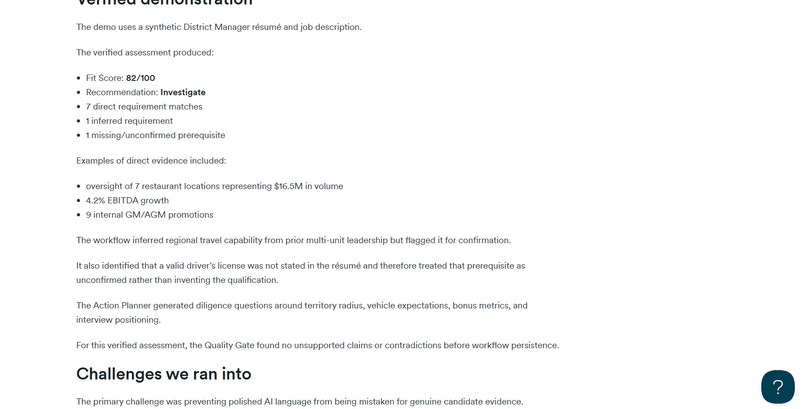
The demo uses a synthetic District Manager résumé and job description.
The verified assessment produced:
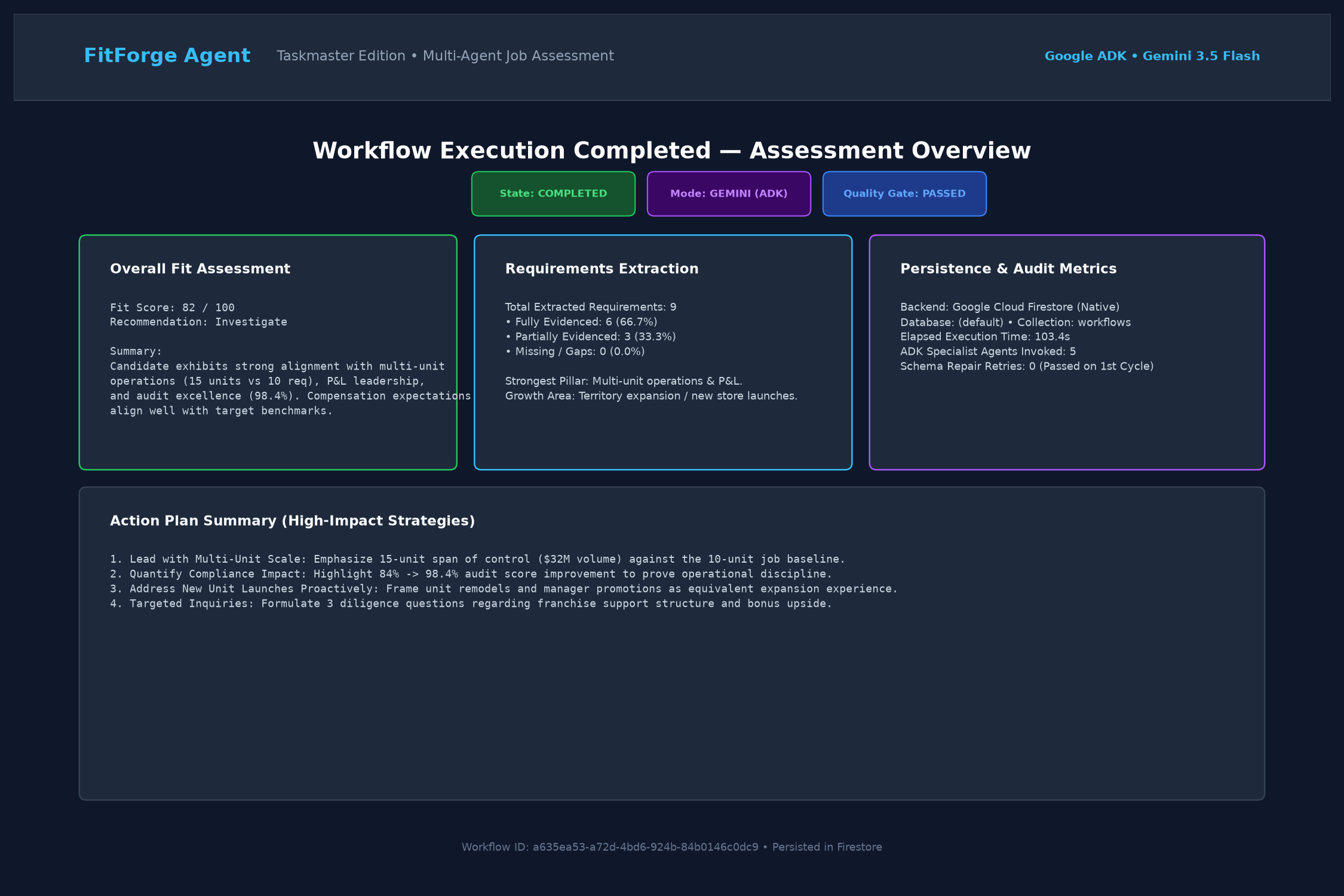
- Fit Score: 82/100
- Recommendation: Investigate
- 7 direct requirement matches
- 1 inferred requirement
- 1 missing/unconfirmed prerequisite
Examples of direct evidence included:
- oversight of 7 restaurant locations representing $16.5M in volume
- 4.2% EBITDA growth
- 9 internal GM/AGM promotions
The workflow inferred regional travel capability from prior multi-unit leadership but flagged it for confirmation.
It also identified that a valid driver’s license was not stated in the résumé and therefore treated that prerequisite as unconfirmed rather than inventing the qualification.
The Action Planner generated diligence questions around territory radius, vehicle expectations, bonus metrics, and interview positioning.
For this verified assessment, the Quality Gate found no unsupported claims or contradictions before workflow persistence.
Challenges we ran into
The primary challenge was preventing polished AI language from being mistaken for genuine candidate evidence.
FitForge needed to distinguish direct evidence from transferable experience, inference, and missing qualifications while preserving uncertainty instead of filling gaps with plausible-sounding claims.
A second challenge was coordinating multiple agent stages while maintaining structured outputs and traceable state.
Production reliability also required handling transient model/API failures cleanly. The implementation includes controlled retry handling for transient Gemini failures while preserving workflow-state integrity.
A further challenge was creating a public demo that remained useful without exposing credentials, raw client IP information, or uncontrolled API usage.
Accomplishments that we're proud of
- Built and deployed a functioning five-agent Google ADK workflow
- Produced a verified end-to-end assessment against a synthetic benchmark
- Implemented explicit requirement-to-evidence classification
- Added a dedicated Quality Gate instead of relying solely on the generation stages
- Persisted workflow and audit state in Firestore
- Deployed publicly on Google Cloud Run
- Added 80 offline tests
- Added a network socket tripwire so offline tests cannot call external or paid APIs
- Implemented IP hashing and demo concurrency/rate controls
- Kept the product advisory rather than allowing autonomous application or hiring actions
What we learned
Building FitForge reinforced that useful employment AI needs more than keyword matching or a single large prompt.
Specialist-agent boundaries make the reasoning process easier to inspect. Structured schemas make failures visible. Evidence classification makes uncertainty explicit. A dedicated validation stage creates a useful separation between generation and verification.
The project also demonstrated that agentic systems need conventional software-engineering safeguards around them: reproducible tests, schema validation, controlled retries, persistent state, least-privilege credentials, and explicit user-control boundaries.
What's next
Possible future work:
- richer candidate-controlled weighting of priorities and non-negotiables
- deeper comparative analysis across multiple opportunities
- improved explanation of score components
- stronger distributed rate limiting for broader production scale
- additional validation and evaluation datasets
- richer career-history evidence ingestion

Log in or sign up for Devpost to join the conversation.