-
-
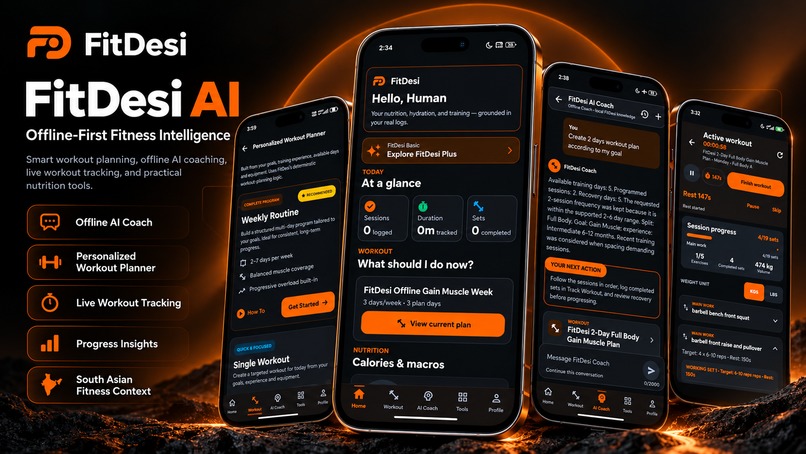
FitDesi AI — offline-first fitness intelligence with South Asian depth.
-
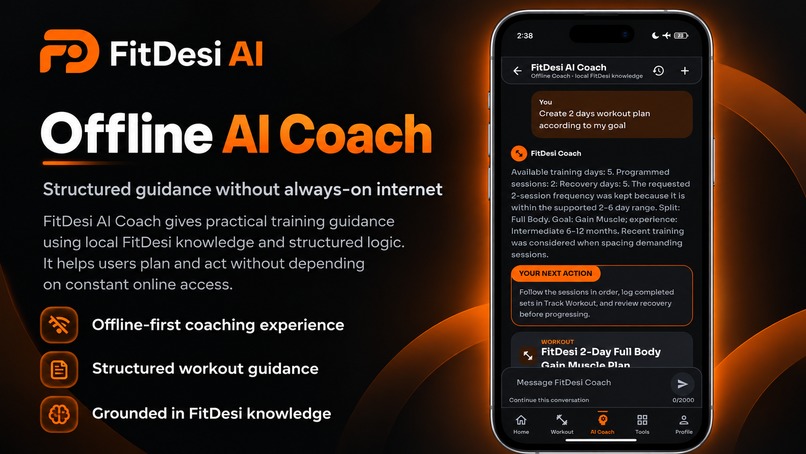
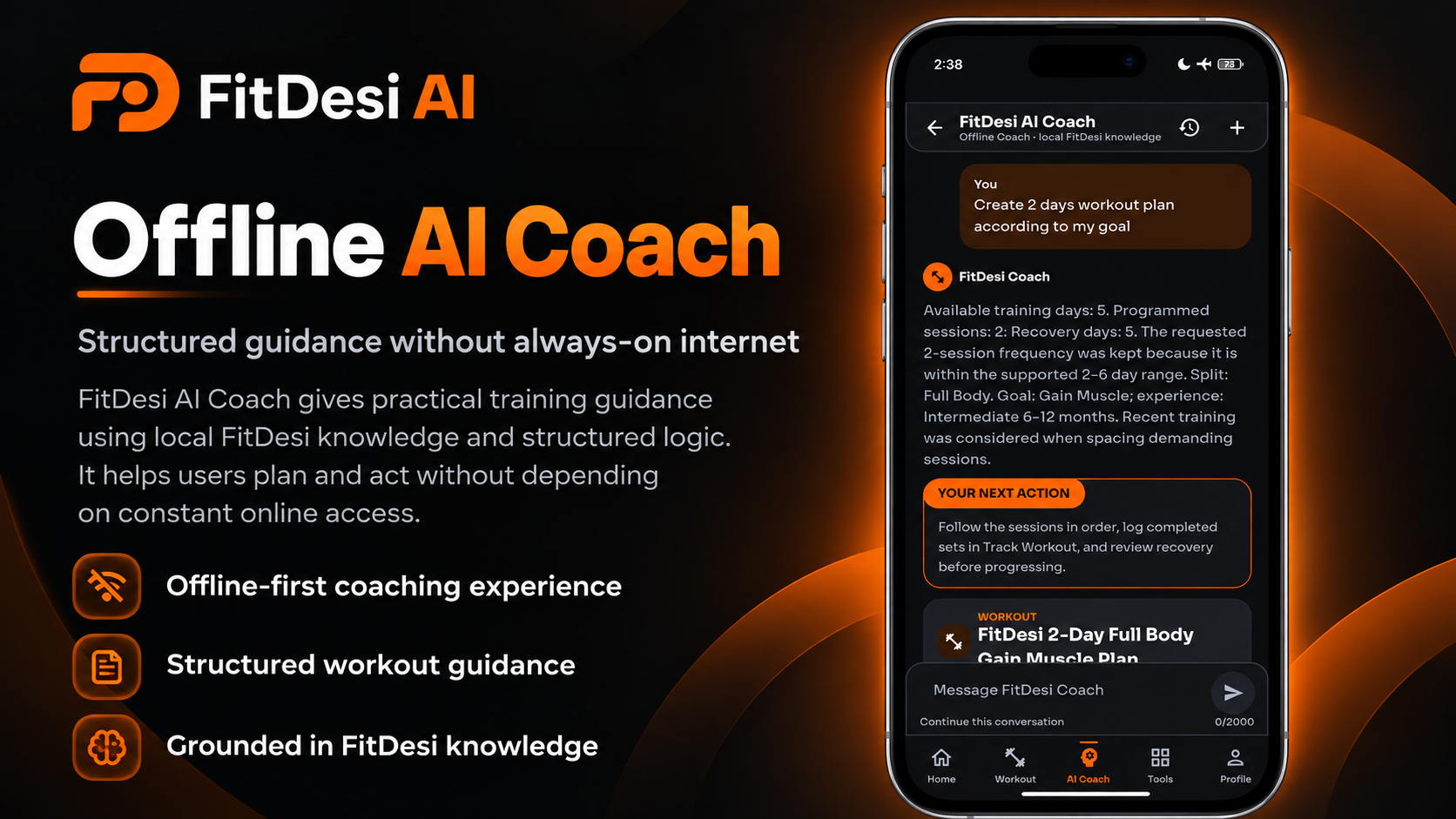
Structured fitness guidance grounded in local FitDesi knowledge, without always-on internet.
-
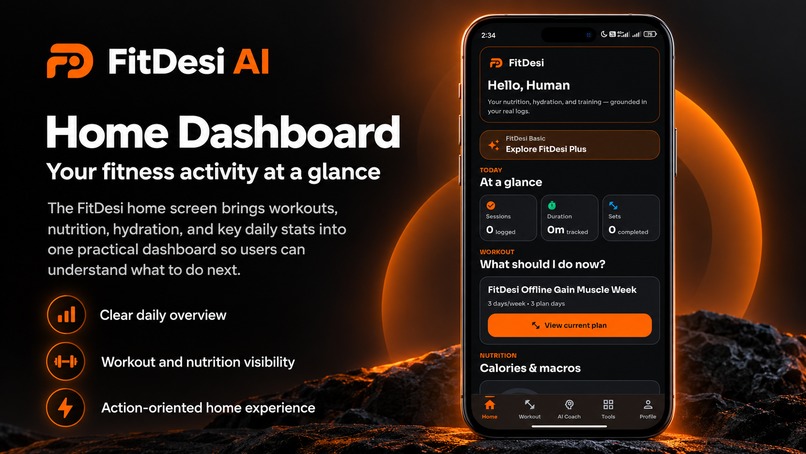
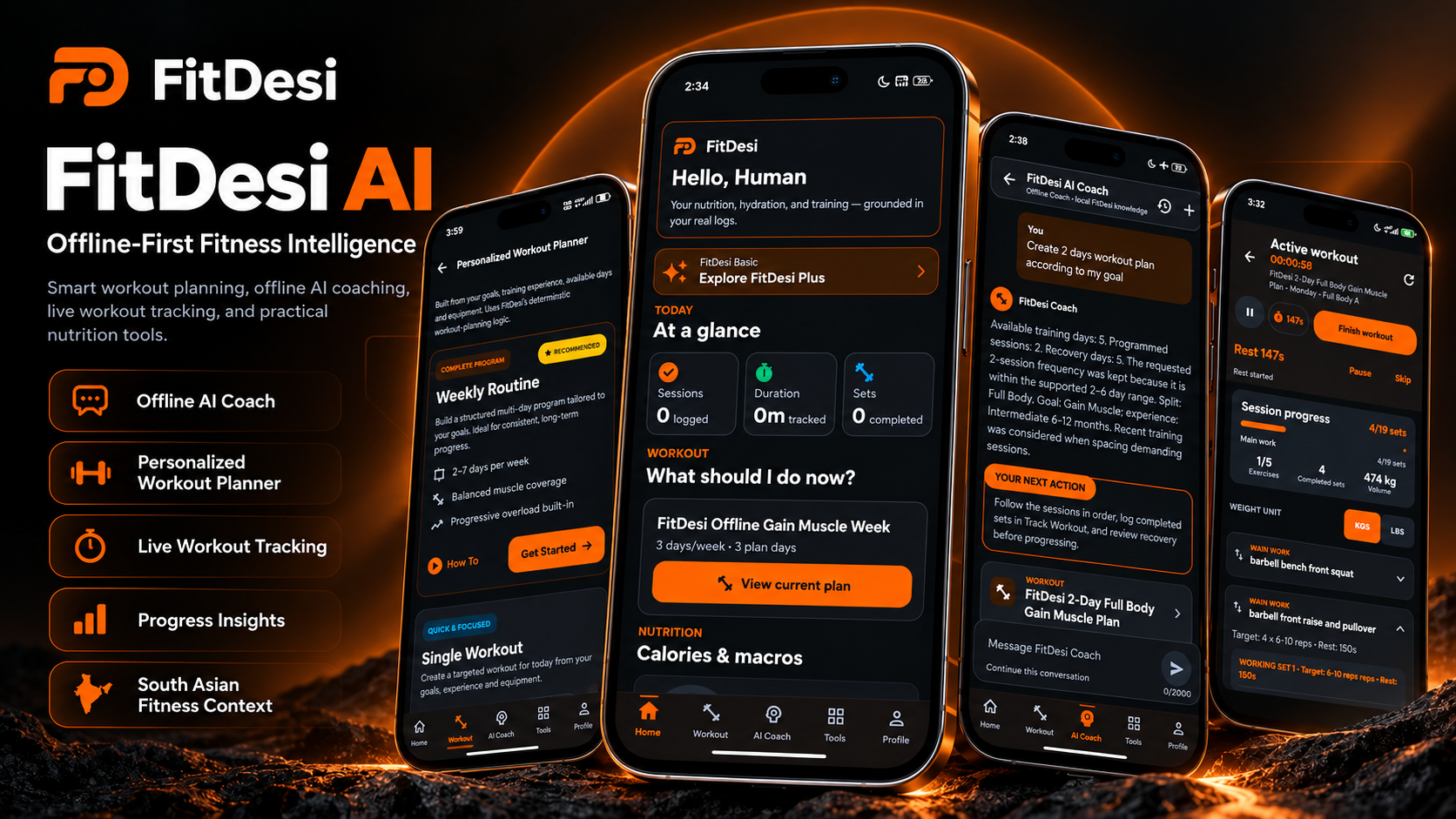
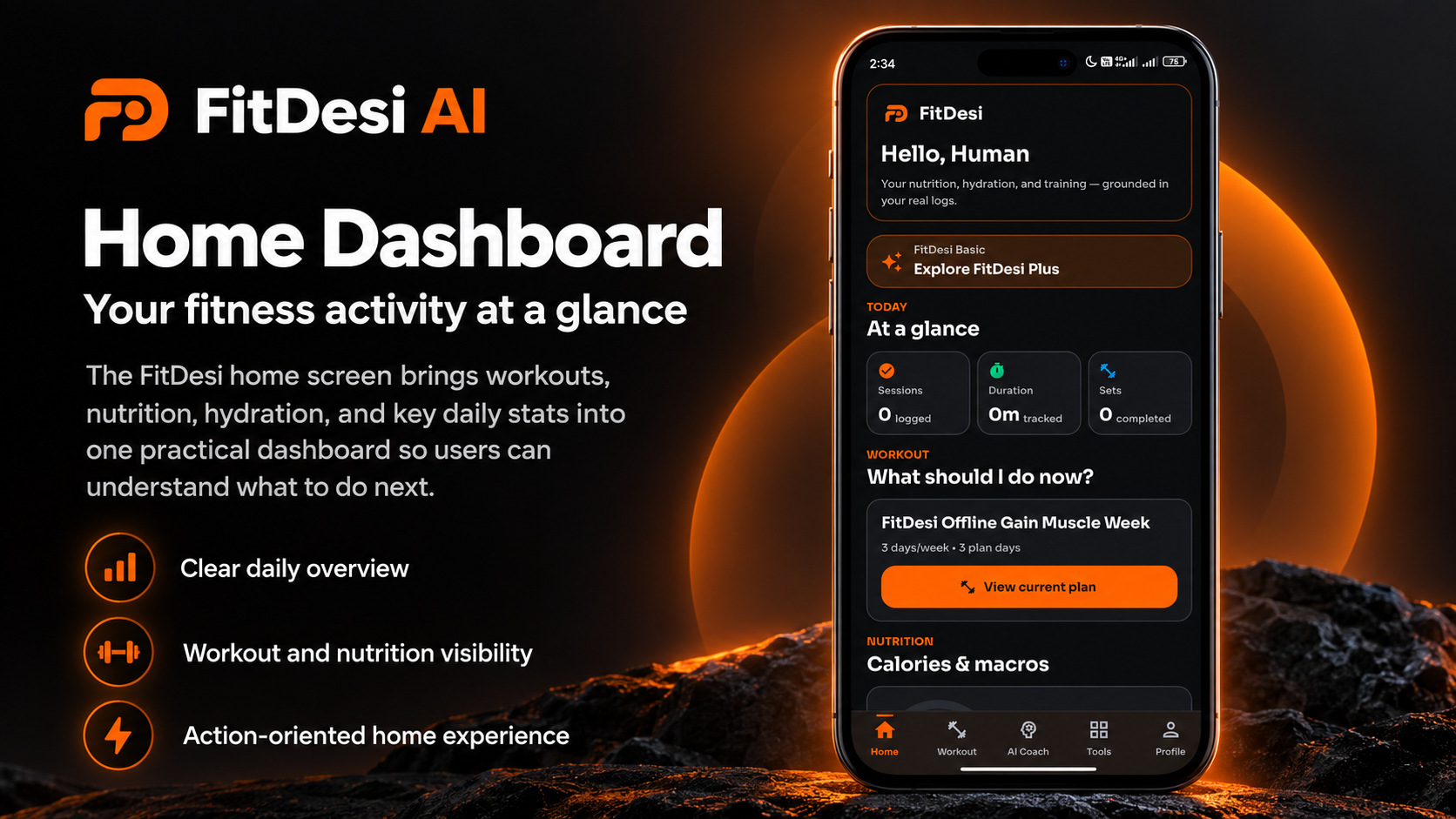
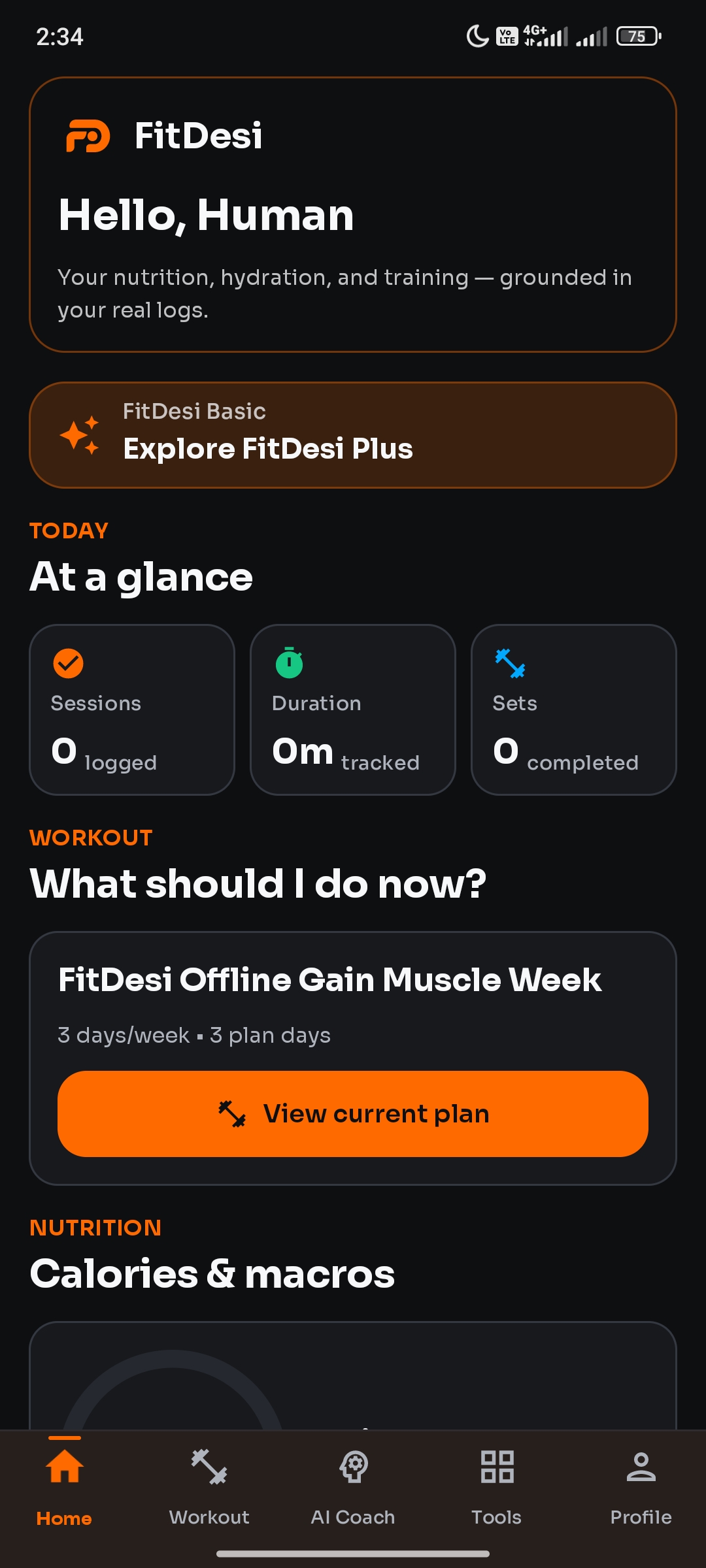
A practical home dashboard for workouts, nutrition, hydration, and daily fitness context.
-
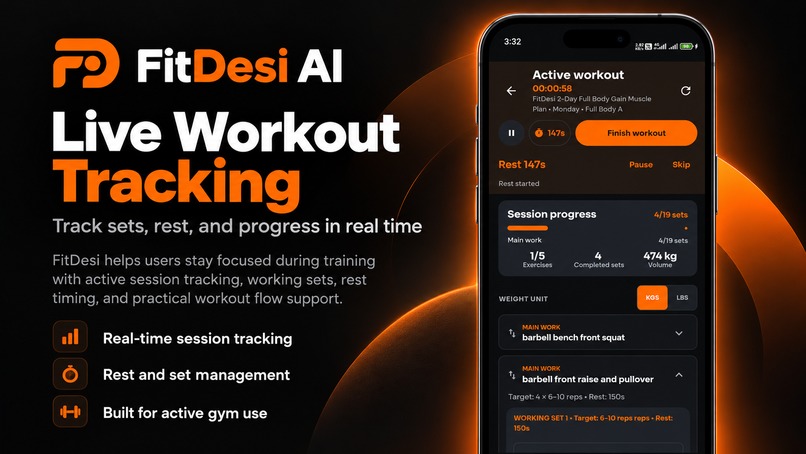
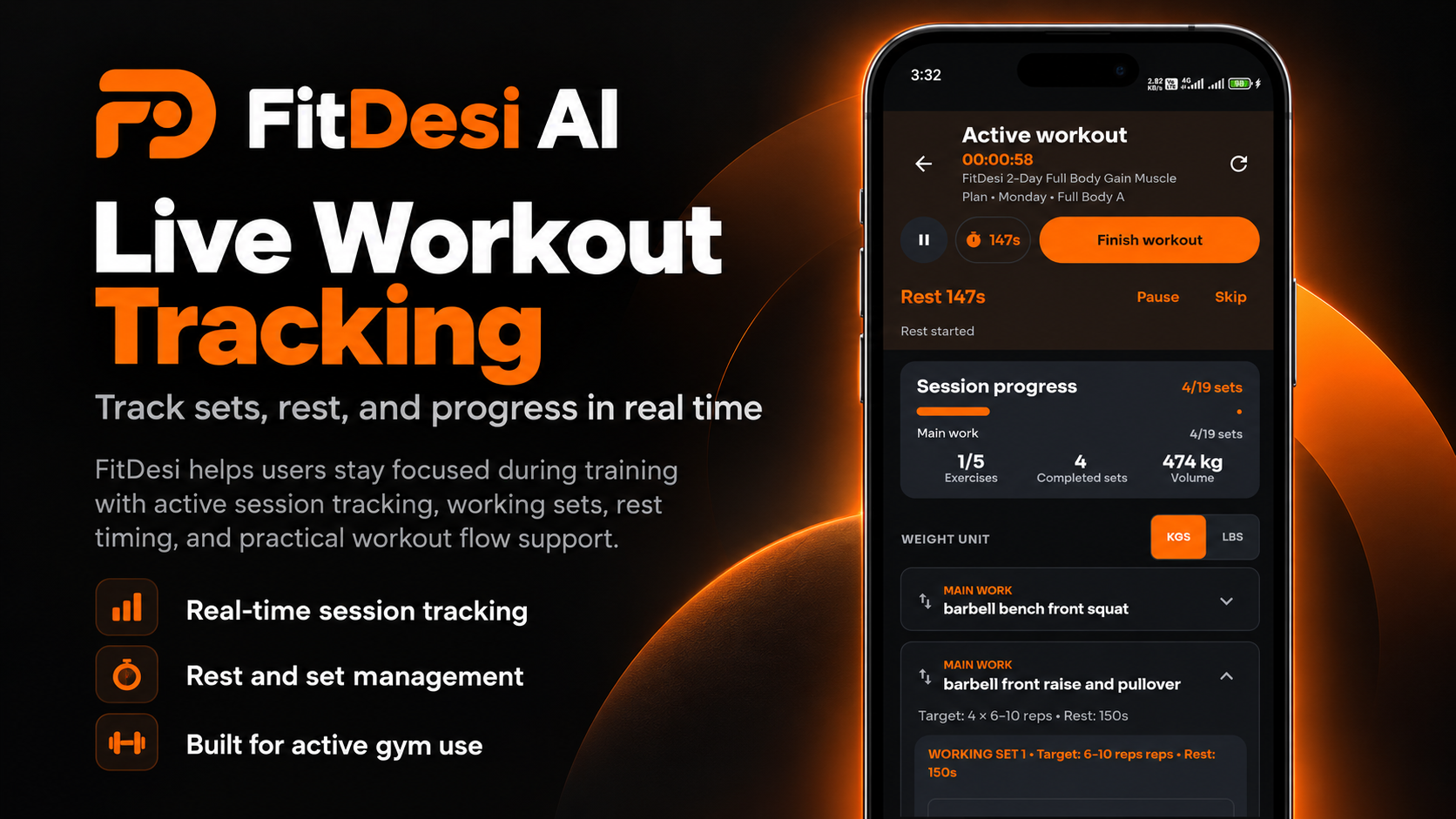
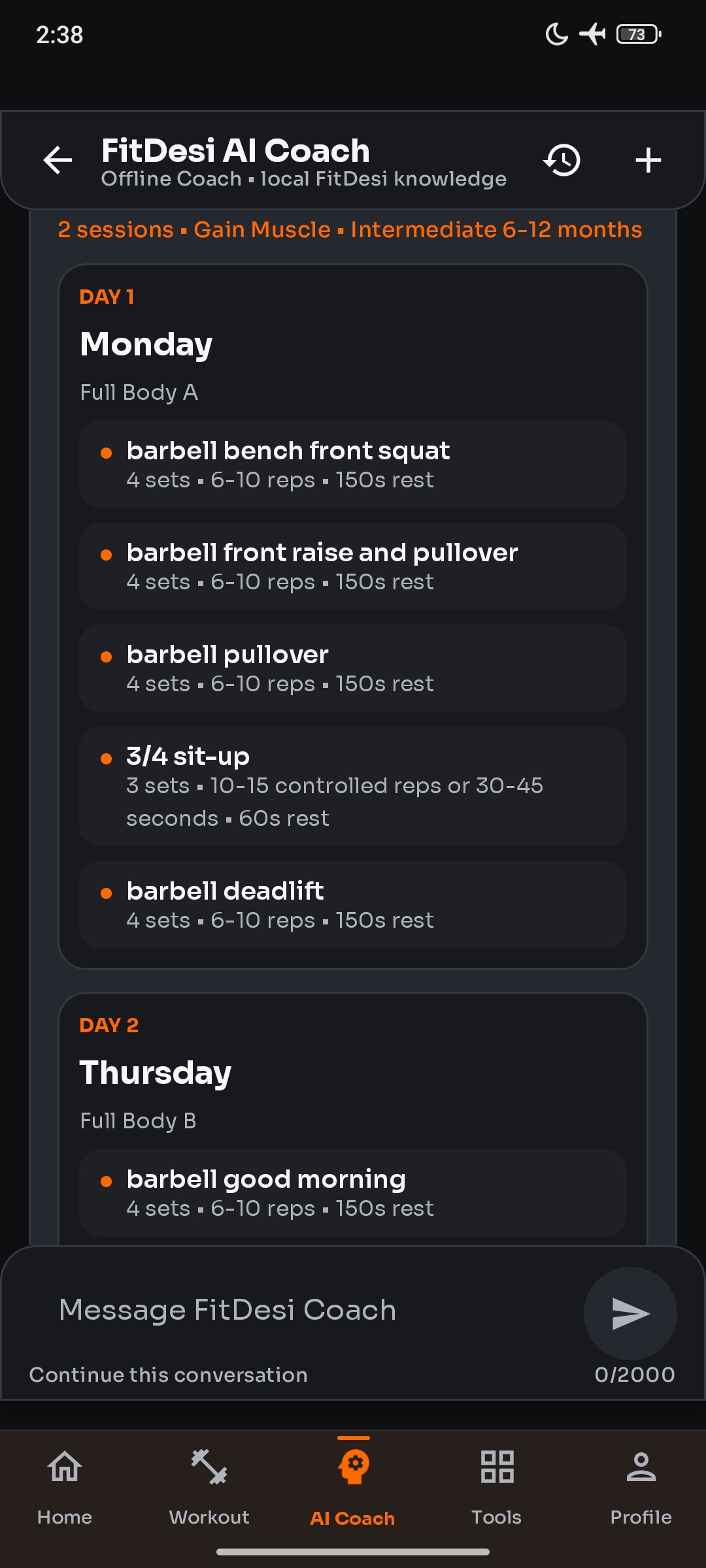
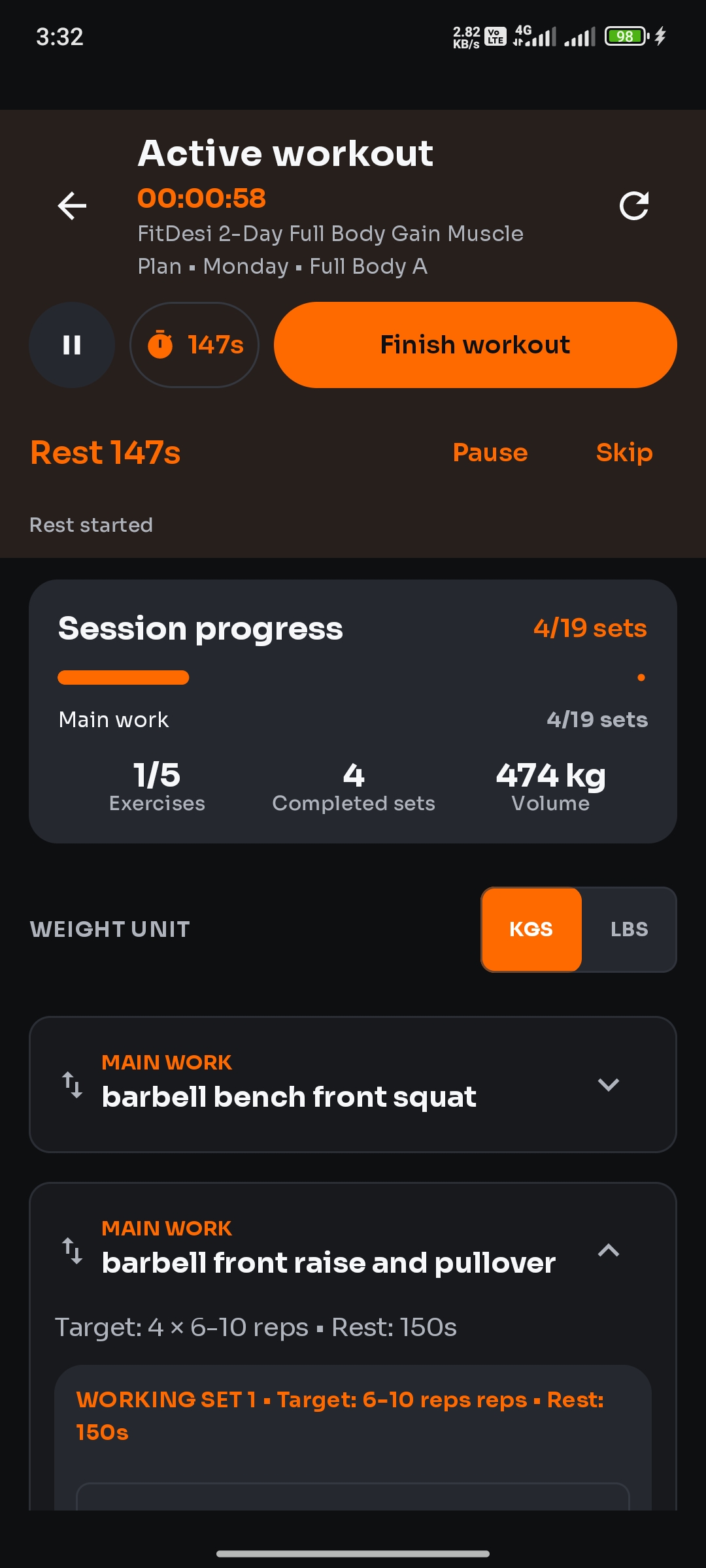
Track sets, reps, weight, rest intervals, session progress, and training volume in real time.
-
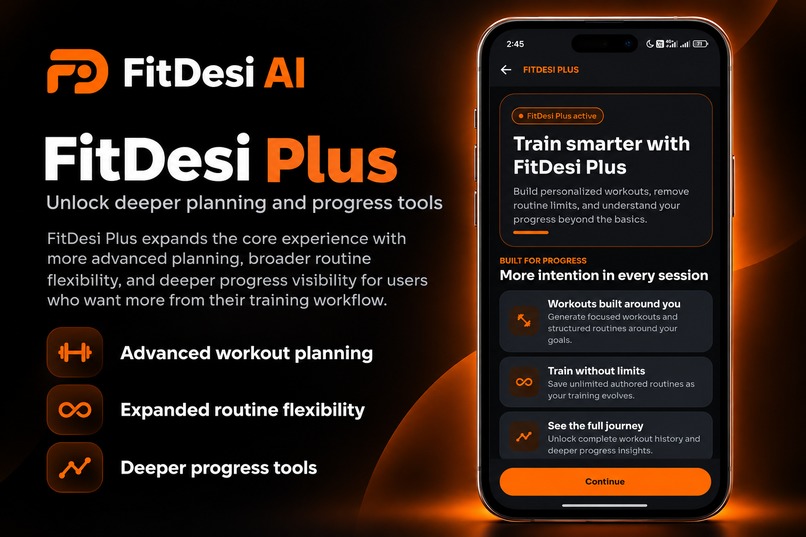
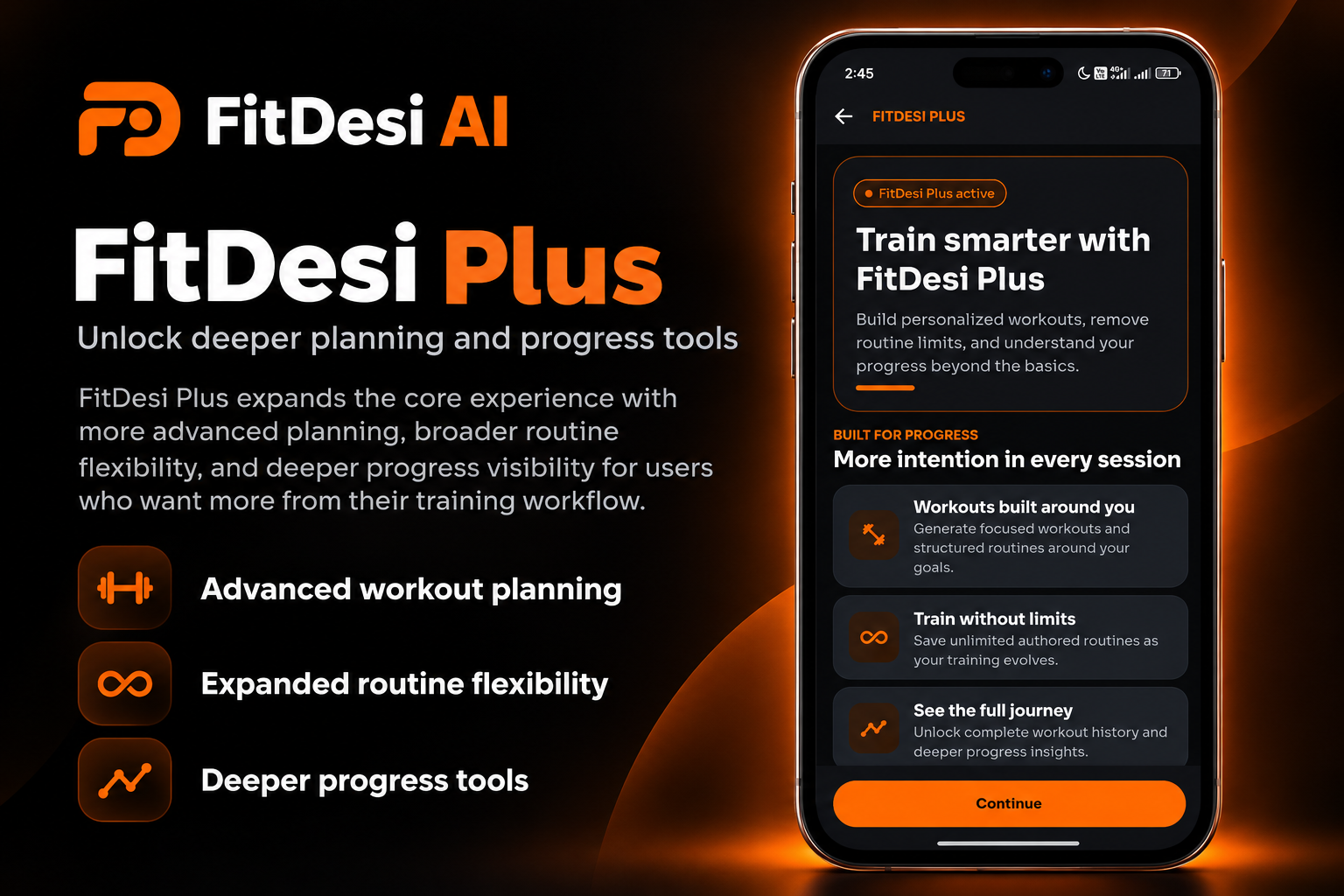
Plus expands planning flexibility, saved routines, workout history, and progress tools.
-
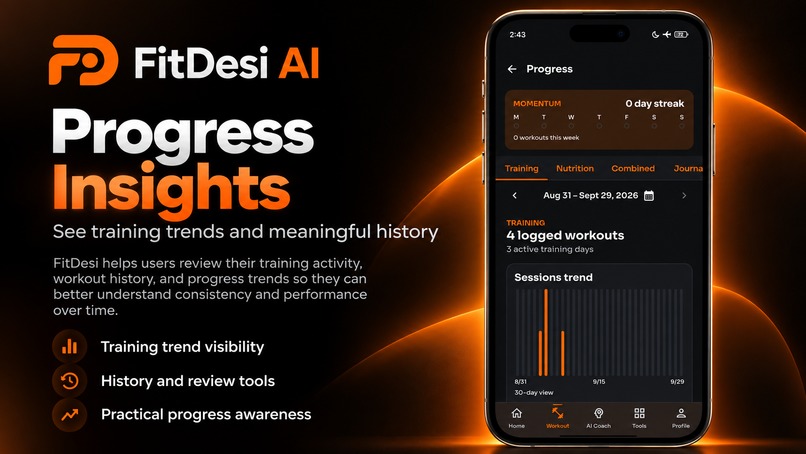
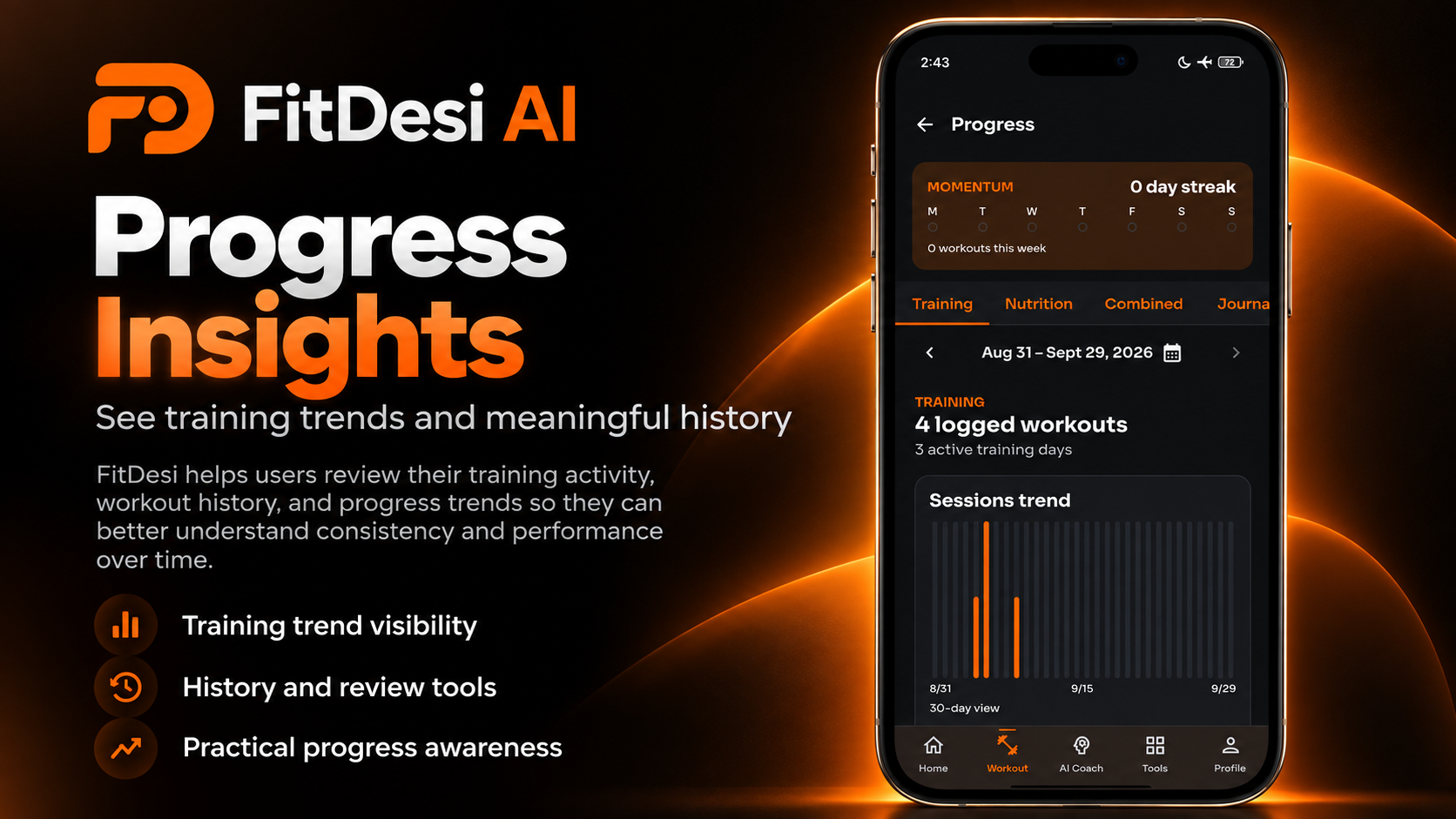
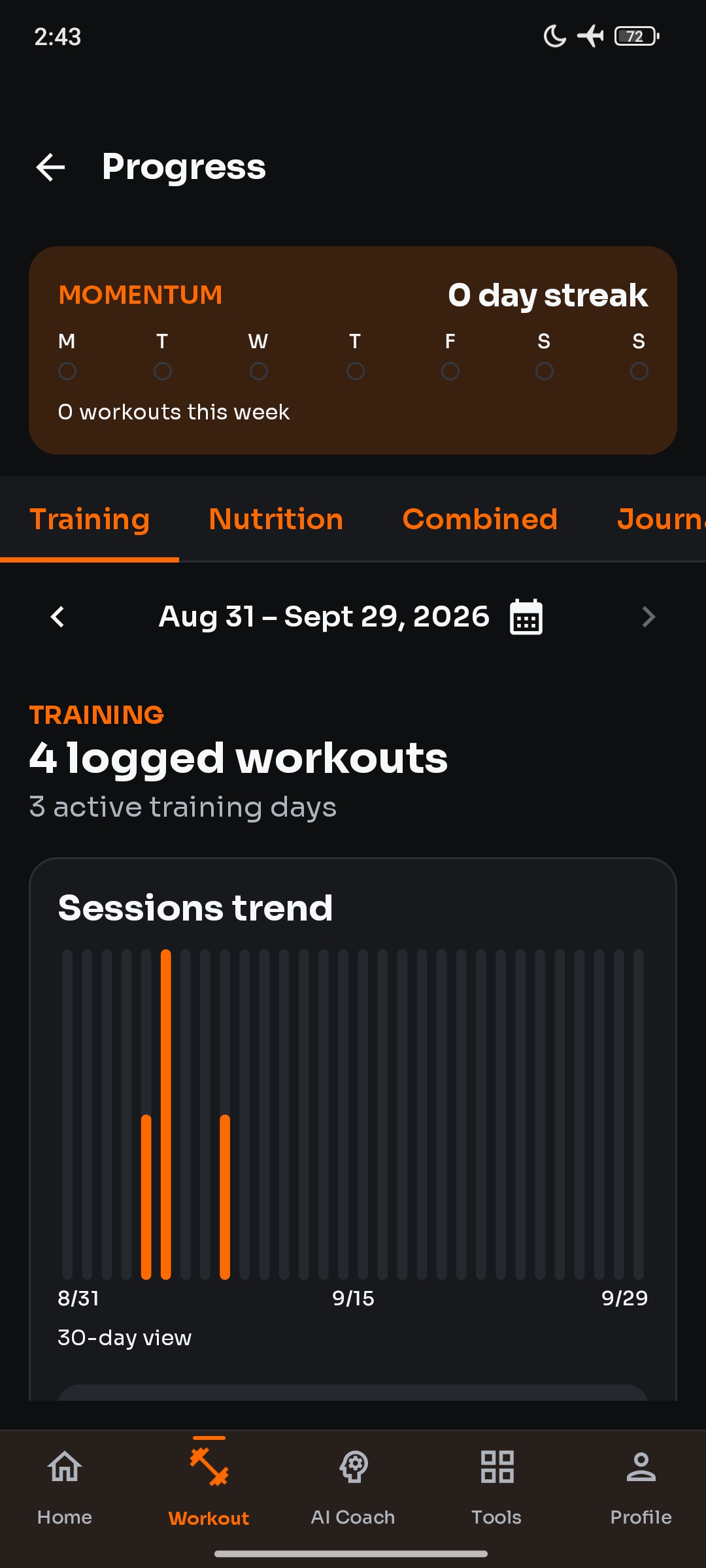
Review workout history, training frequency, trends, and longer-term progress insights.
-
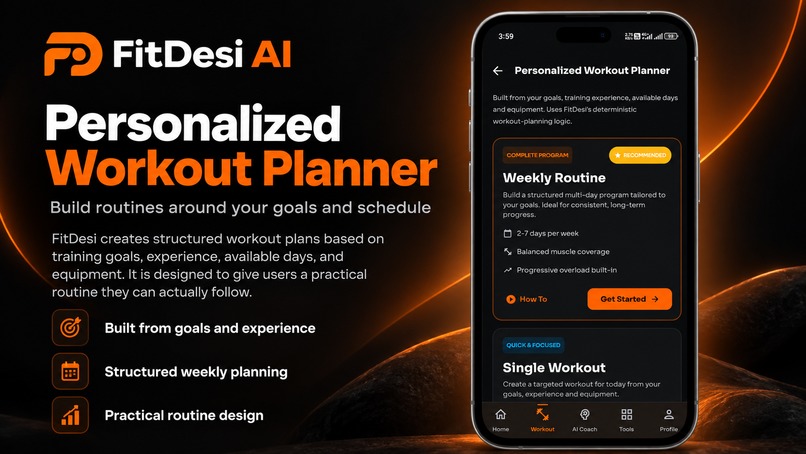
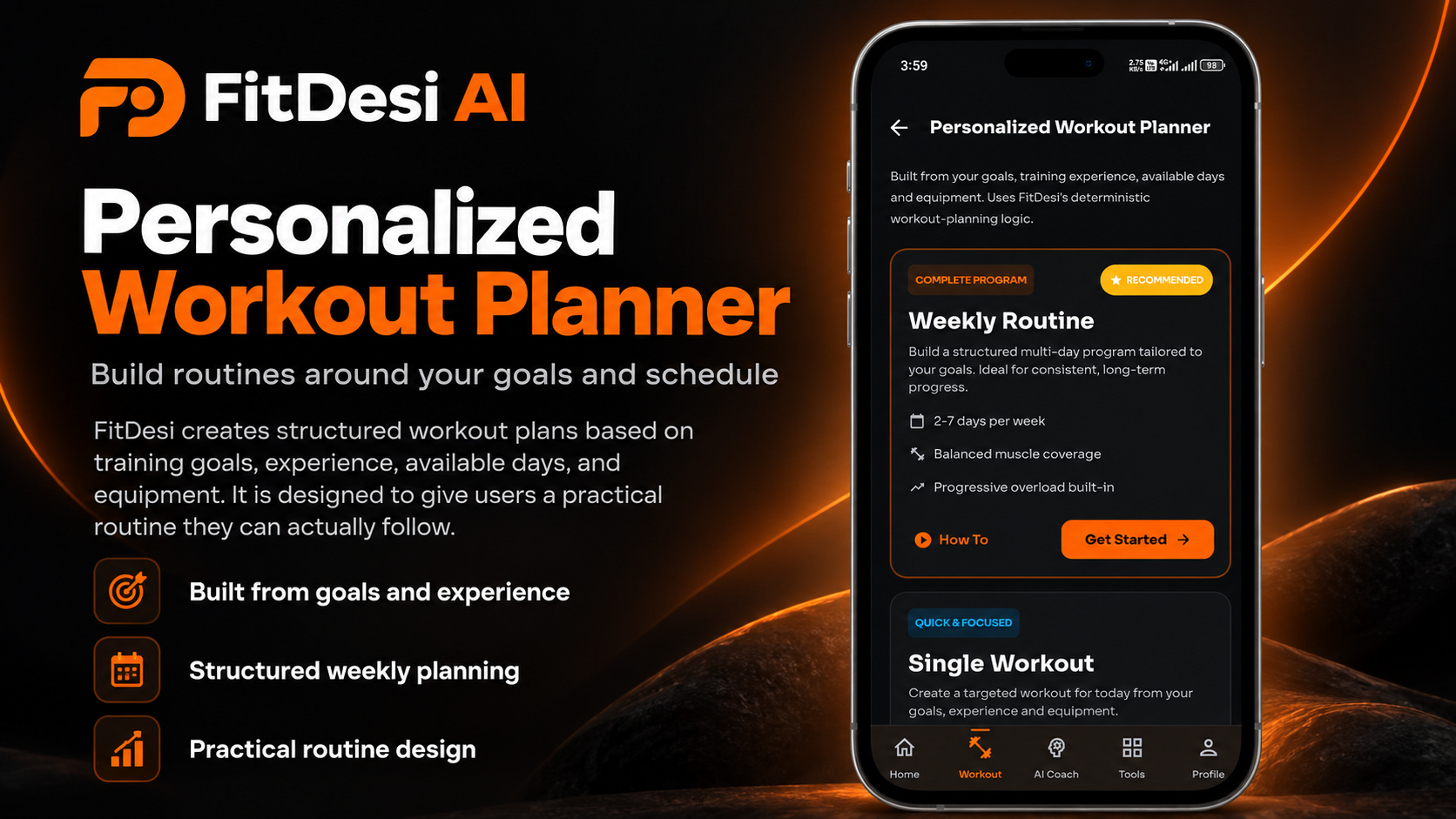
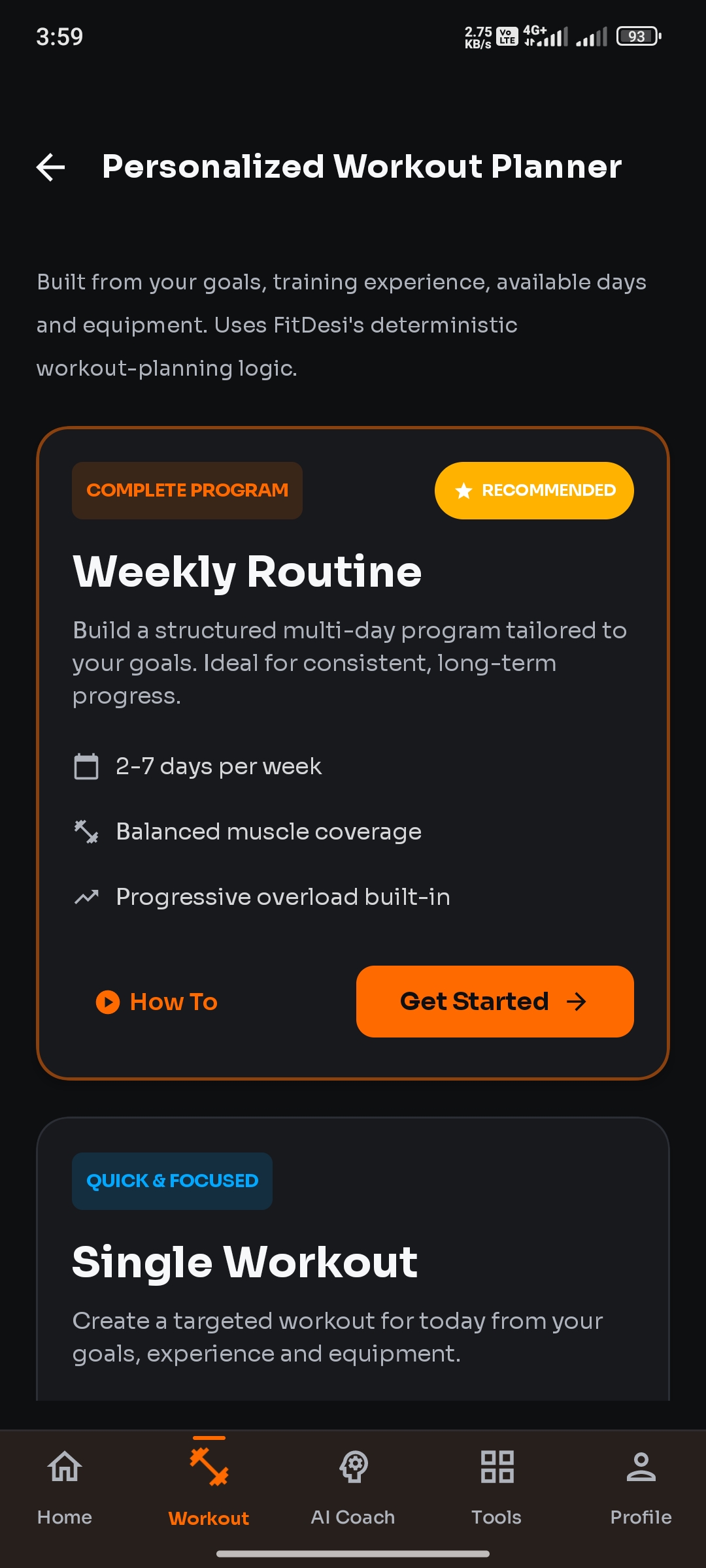
Personalized weekly planning built around goals, experience, available days, and equipment.
-
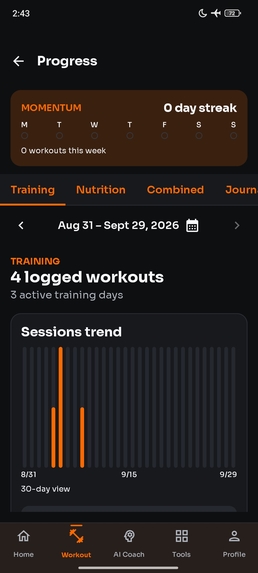
Review workout history, training frequency, trends, and longer-term progress insights.
-
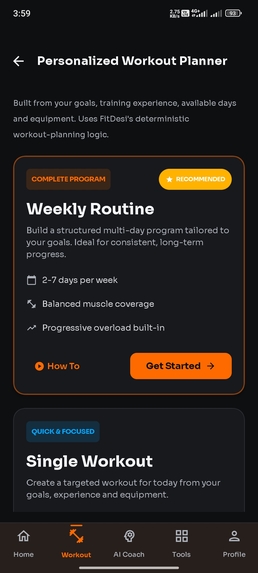
Real deterministic Personalized Workout Planner running on Android.
-
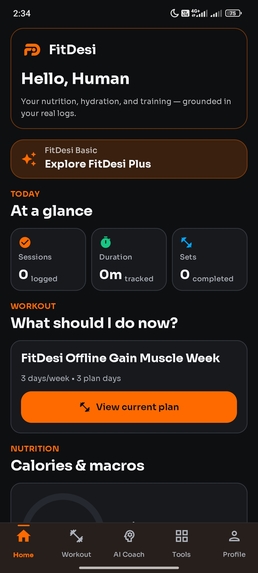
Real Android Home screen from the validated FitDesi QA candidate.
-
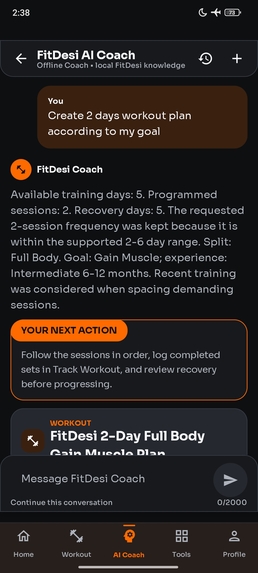
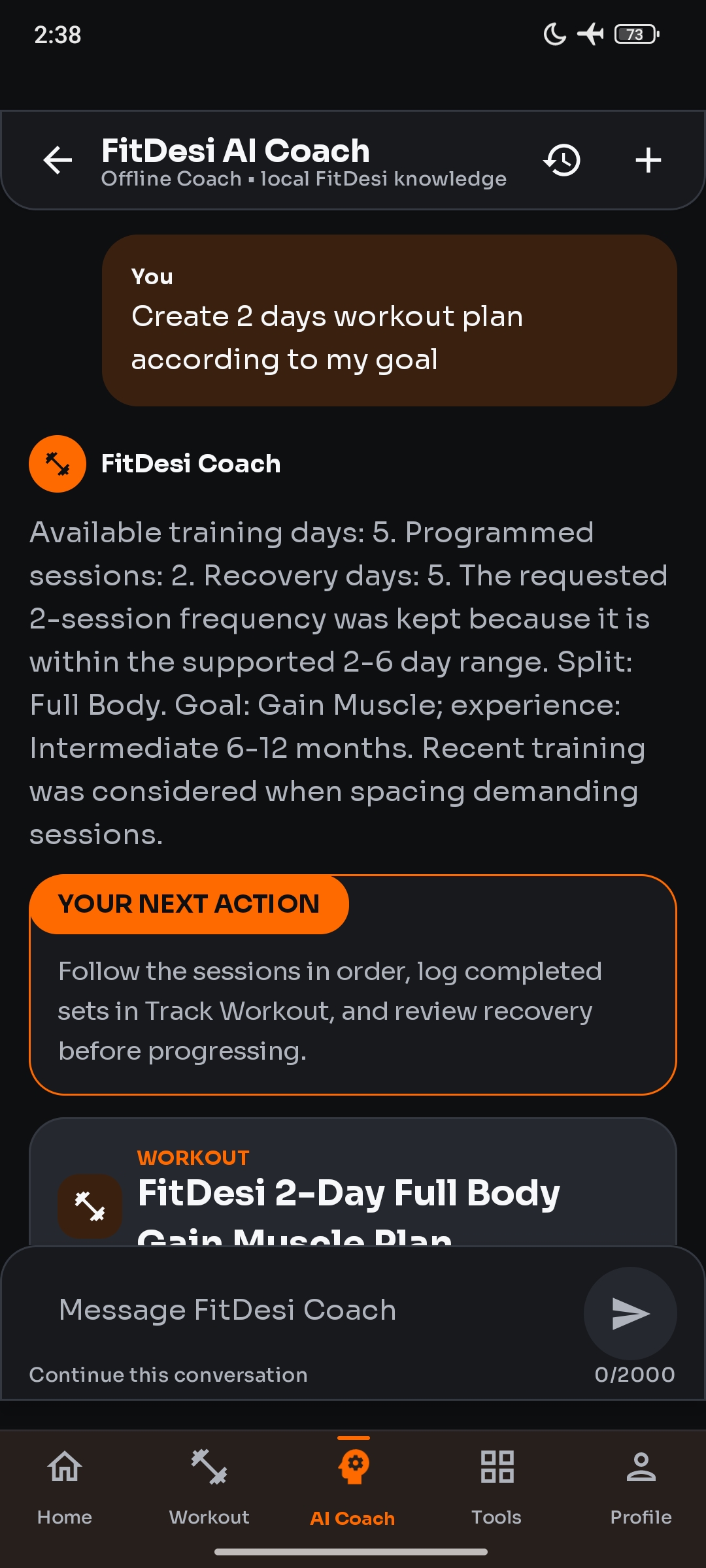
Real offline Coach response generating structured guidance from local FitDesi logic.
-
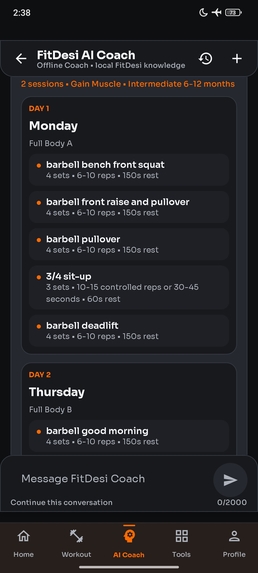
A real generated multi-day workout plan with exercises, sets, reps, and rest targets.
-
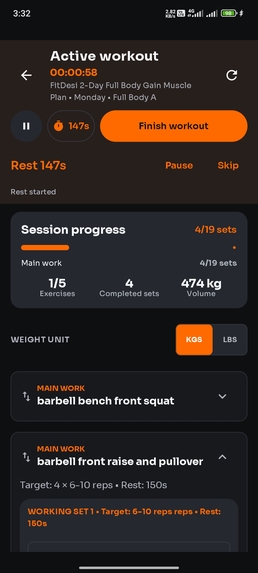
Real active-session tracking with rest timing, completed sets, volume, and exercise progress.
FitDesi AI — Offline-First Fitness Intelligence
Inspiration
FitDesi started from a very practical problem I kept running into while training: different people gave different advice about exercises and technique, and even when I found useful fitness apps, many of them became much less useful when connectivity was unreliable.
That made me ask a simple question: what if the core fitness experience stayed useful even when the internet did not?
FitDesi AI is my answer to that. It is a native Android fitness companion designed around offline-first usefulness, structured fitness guidance, and South Asian depth. The goal is not to replace professional medical advice or make an LLM the source of truth. The goal is to give people a practical system they can actually use day to day.
What FitDesi does
FitDesi brings the main fitness journey into one Android experience:
- Offline AI Coach — practical training guidance grounded in local FitDesi knowledge and validated profile context.
- Personalized Workout Planner — structured weekly routines based on goals, experience, available days, and equipment.
- Structured workout generation — deterministic programming logic creates workouts without inventing exercise identities.
- Live workout tracking — sets, reps, weight, rest timers, progress, and session summaries.
- Saved routines and history — persistent local workout plans, completed sessions, and progress review.
- Progress insights — training trends, workout history, and practical review tools.
- Nutrition and fitness tools — calorie, macro, BMR/TDEE, one-rep-max, hydration, and food logging workflows.
- South Asian food context — culturally familiar food identities alongside a verified public nutrition layer.
- RevenueCat-powered monetization architecture — a useful Basic core, Plus for deeper planning and progress tools, and Pro reserved for future advanced intelligence.
The public-safe nutrition layer currently includes 39 verified USDA nutrition records plus 20 South Asian discovery identities that are searchable but intentionally do not claim unverified nutrition values.
Why offline-first matters
A lot of AI products become nearly useless when a remote model or internet connection is unavailable. I did not want FitDesi to work that way.
The core product keeps deterministic logic and reviewed local data authoritative for things like:
- canonical exercise identities;
- workout programming rules;
- nutrition facts;
- persistence;
- subscription and entitlement truth.
AI is used to explain and personalize inside those boundaries rather than overwrite them.
That means the Basic experience can still provide useful planning, tracking, calculators, local coaching, and progress workflows without requiring a paid model API.
RevenueCat and the business model
FitDesi is designed around three permanent product tiers:
- Basic — the useful local/offline core.
- Plus — deeper workout planning, broader routine flexibility, and expanded progress tools.
- Pro — planned advanced remote coaching and adaptive intelligence.
RevenueCat is the commercial authority for subscription state. The current Shipaton QA candidate uses RevenueCat Test Store flows to validate purchase, entitlement, restore, and feature-gating behavior without pretending that test purchases are production revenue.
FitDesi also includes a bounded Rewarded Boost concept for selected premium experiences. Boost is temporary access, not a subscription tier, and it does not override subscription authority.
How it works
FitDesi uses a hybrid architecture:
Android
- Kotlin
- Jetpack Compose
- Material 3
- Room
- DataStore
- Firebase Authentication
- RevenueCat
Backend
- Node.js
- Express
- server-side entitlement and remote-admission boundaries
- Firestore-backed commercial/remote accounting architecture
Provider secrets stay server-side and never ship inside the APK. Production Remote AI remains intentionally default-off until its deployment, authorization, quota, privacy, and cost controls are fully closed.
The hardest parts
This project was not just about adding screens. The hardest work was keeping the product truthful while making it more capable.
1. Keeping AI from becoming the source of truth
Workout IDs, programming rules, nutrition values, entitlement state, and persistence cannot be guessed by a model. I had to keep deterministic engines and validated data in control while still making the Coach feel useful and conversational.
2. Preserving workout identity and programming invariants
FitDesi has canonical exercise IDs that must stay exact across generation, tracking, saving, and history. Small ID or metadata mistakes can break a workout flow in ways that are hard to notice, so these contracts became protected invariants.
3. Nutrition provenance
Food data is easy to overclaim. I had to separate verified nutrition from discovery-only food identities, keep provenance visible, and exclude unresolved historical data from the public runtime instead of presenting estimates as facts.
4. Persistence and real-device behavior
Passing JVM tests is not the same as surviving a real app update. I repeatedly checked that routines, workout logs, nutrition history, subscription state, and navigation still behaved correctly on a physical phone.
5. Subscription truth
RevenueCat integration had to be more than a paywall screen. Entitlements, restore behavior, paid-feature gates, and remote admission all needed clear authority boundaries so the client could not simply claim premium access.
6. Preparing a safe public repository
The private development repository contained internal history and assets that were not appropriate for public redistribution. Before submission I created a fresh, sanitized public-source export, re-audited its contents, removed unverified media references, and published it with fresh Git history rather than exposing private repository history.
What I am proud of
By the end of Shipaton, FitDesi had moved well beyond a static prototype:
- a working native Android app;
- offline-first coaching and deterministic workout planning;
- persistent workout, routine, nutrition, and progress workflows;
- RevenueCat Test Store purchase and entitlement QA;
- a signed Codemagic QA candidate;
- physical-device testing on the final candidate;
- 899 Android debug JVM tests across 97 suites with zero failures and one existing skip on the validated candidate;
- a public, sanitized source repository;
- and a public 1:44 product demo showing the real app experience.
I am especially proud that the app remains useful without pretending every feature needs a cloud model.
What I learned
The biggest lesson was that a working feature is not the same as a trustworthy product.
For FitDesi, shipping responsibly meant thinking about data provenance, deterministic boundaries, persistence compatibility, subscription authority, secret handling, CI validation, physical-device behavior, and what should not be activated yet.
That discipline made the product slower to build in some places, but much stronger overall.
What's next
FitDesi is still early. The long-term vision is to make both the offline and online experience significantly more intelligent without giving up the reliability of the current core.
Planned directions include:
- compact on-device ML intelligence designed for low battery and memory use;
- stronger offline personalization and recommendation support;
- a recipe-to-nutrition engine for structured meal analysis;
- a Food Analyzer that can help users interpret meals and ingredients;
- posture and movement-correction assistance using on-device vision where practical;
- a full-time Remote AI Coach for Pro with validated account, quota, privacy, and cost controls;
- richer progress intelligence and long-term adaptation;
- broader regional food coverage beyond South Asia;
- and a tighter bridge between local deterministic intelligence and optional cloud AI.
The goal is not to make FitDesi “AI everywhere.” The goal is to use the right intelligence in the right place: deterministic where truth matters, lightweight ML where it can run locally, and remote AI where deeper reasoning genuinely adds value.
Demo and source
Demo: https://youtu.be/bjr0ImZrxWM
Public source: https://github.com/mohammadusamashaikh9-cmd/fitdesi-shipaton-2026
FitDesi AI is targeting the RevenueCat Shipaton 2026 Next Gen Award through the student video + public-source route.
Built With
- android
- codemagic
- datastore
- express.js
- firebase-authentication
- firestore
- jetpack-compose
- kotlin
- material-3
- node.js
- revenuecat
- room


Log in or sign up for Devpost to join the conversation.