
Presentation Slides:
https://docs.google.com/presentation/d/1ym-v-adZLKgZbO411HUdyeXGbV2f0SM3GaYa3Z59kw0/edit?usp=sharing
Inspiration
Software and tech students have a bit of a reputation when it comes to fashion, hoodies, mismatched fits, and very little confidence in personal style. We noticed that while there are countless tools to improve coding skills, productivity, and resumes, there are very few that help people understand and improve how they present themselves visually.
We wanted to build something that helps people, especially students in tech, get a clear read on their current style and actionable guidance on how to level it up, without relying on generic trends or influencer advice. FitCheck was created to make fashion feedback accessible and personalized.
What it does
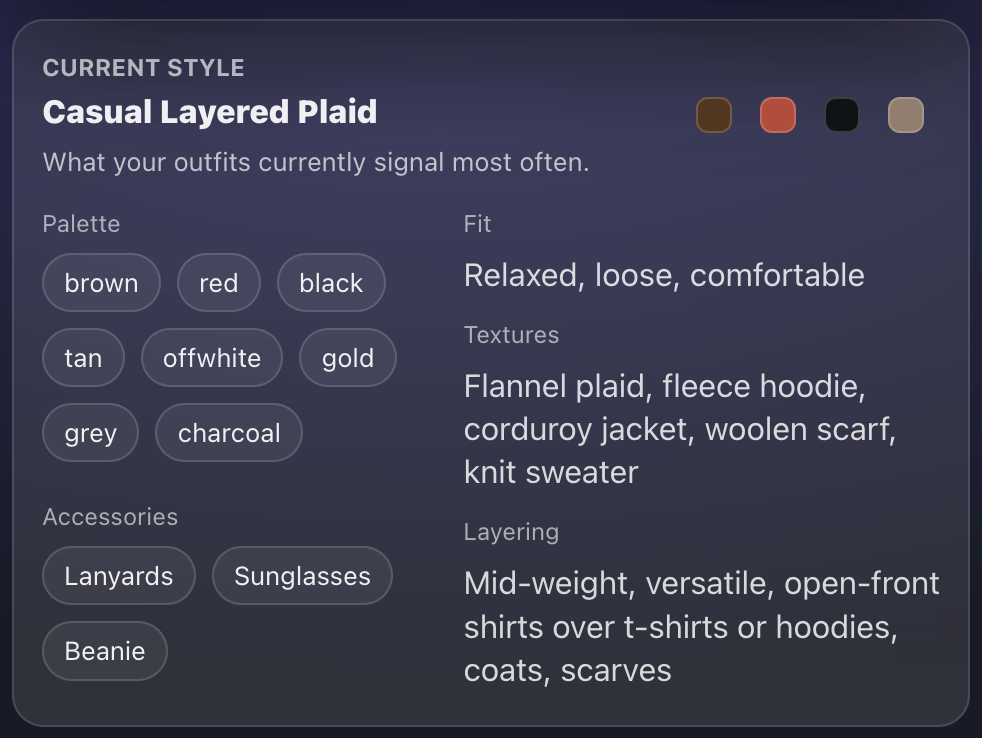
FitCheck analyzes outfit photos to understand a user’s current fashion style and provides personalized recommendations to improve it.
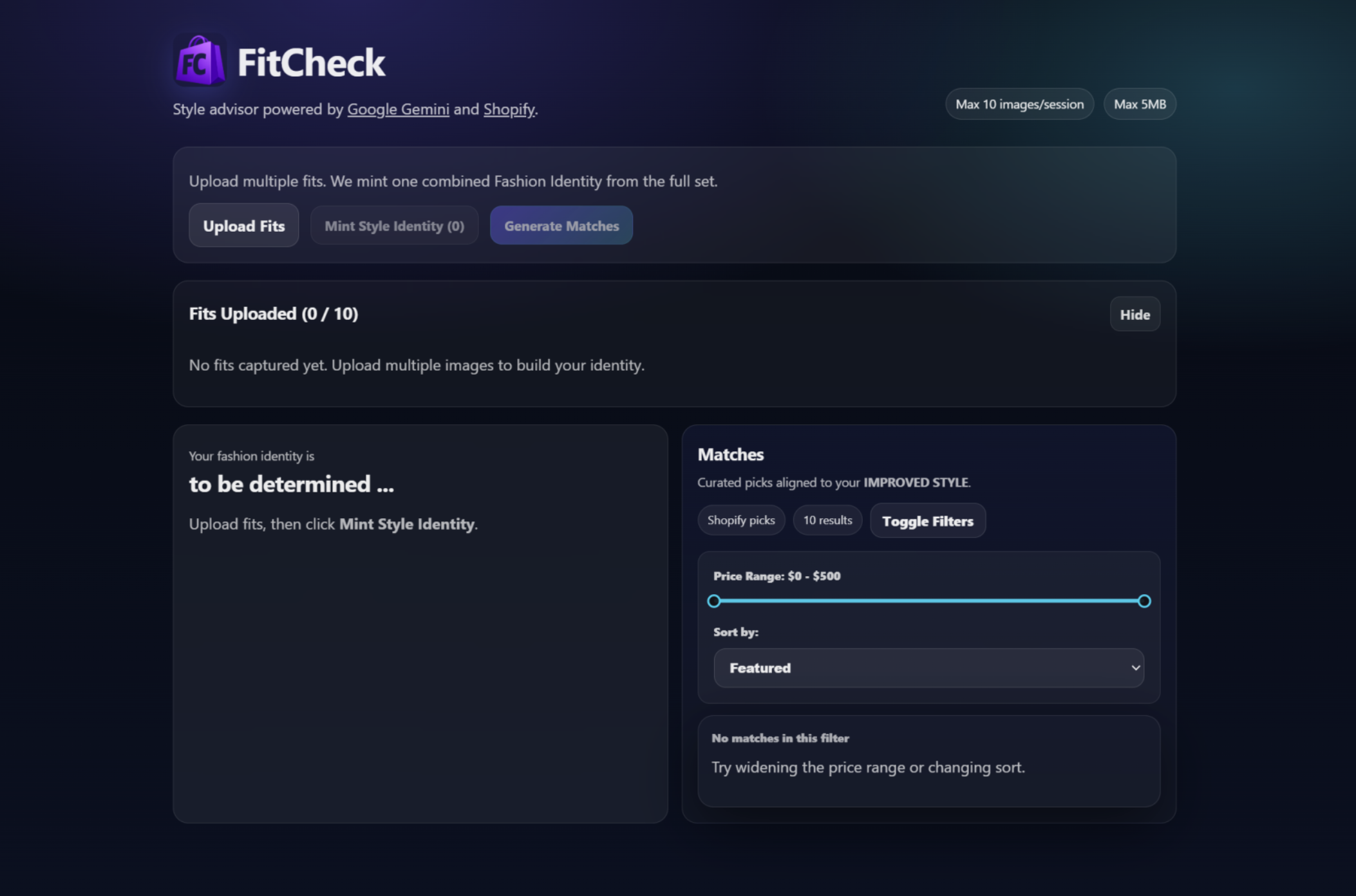
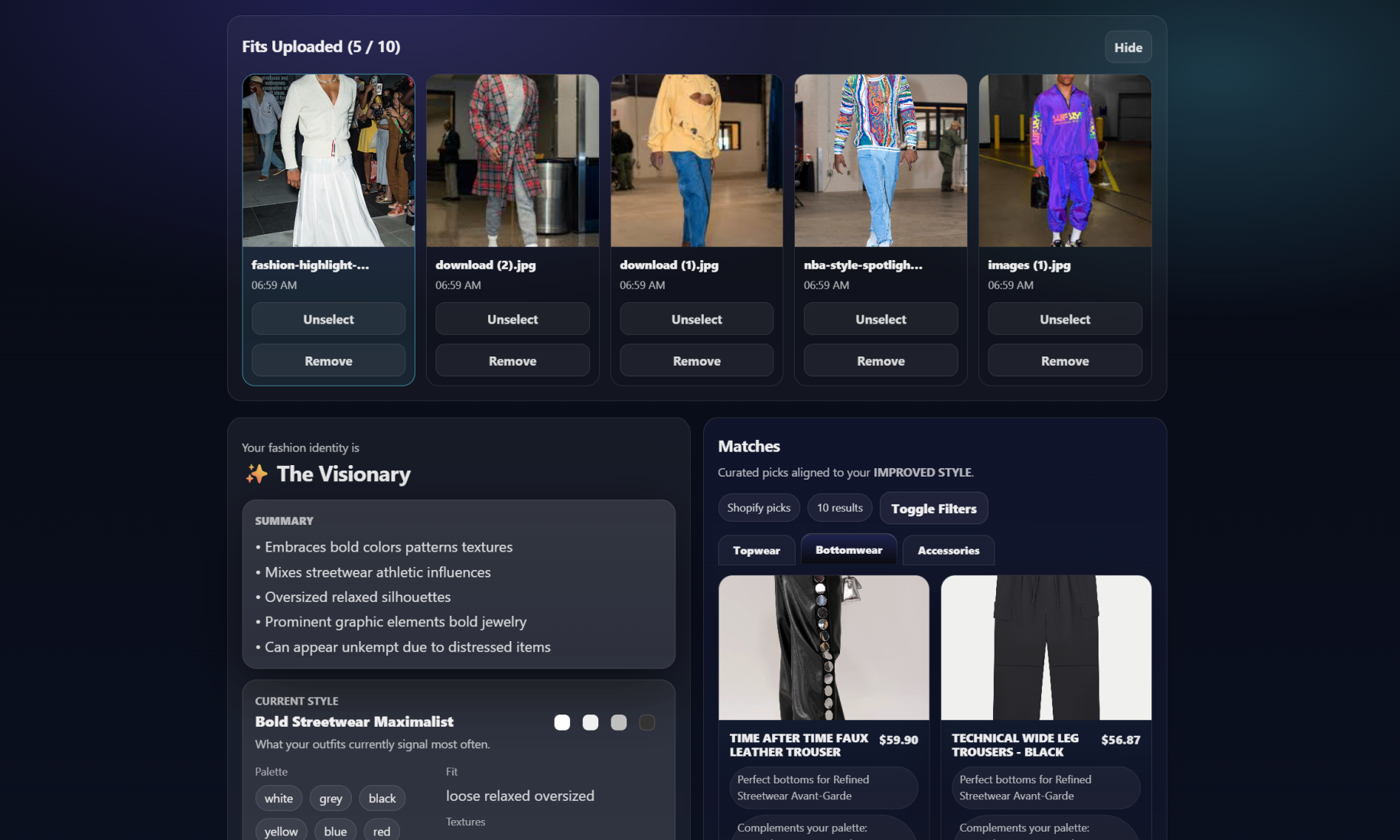
- The user uploads photos of their outfits.
- FitCheck analyzes the images to identify:
- Overall fashion style
- Color palette
- Clothing silhouettes
- Accessories and styling details
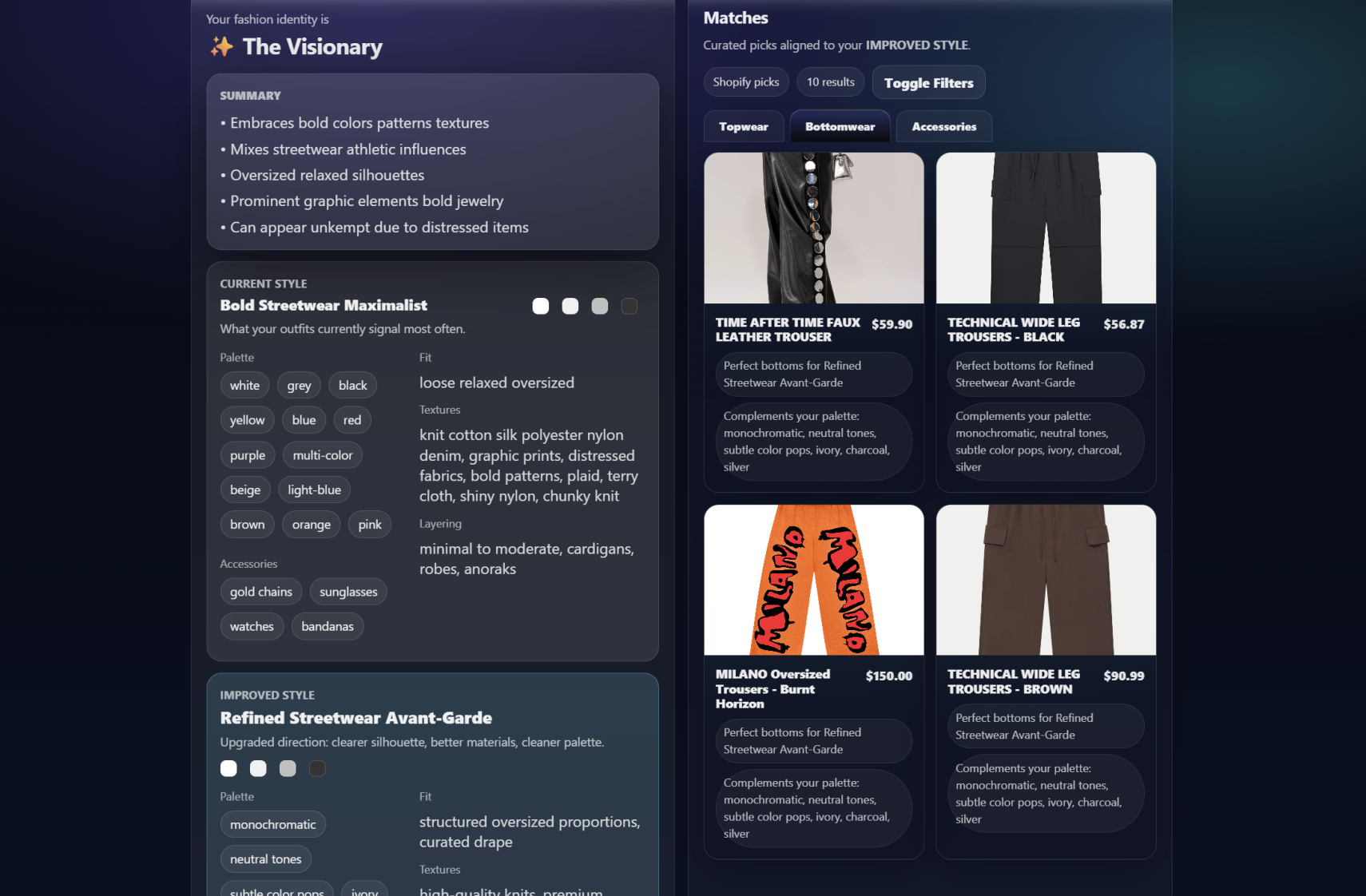
- The system generates:
- A current style profile
- An improved style profile with suggested upgrades
- Using Shopify’s MCP, FitCheck searches Shopify stores globally to find:
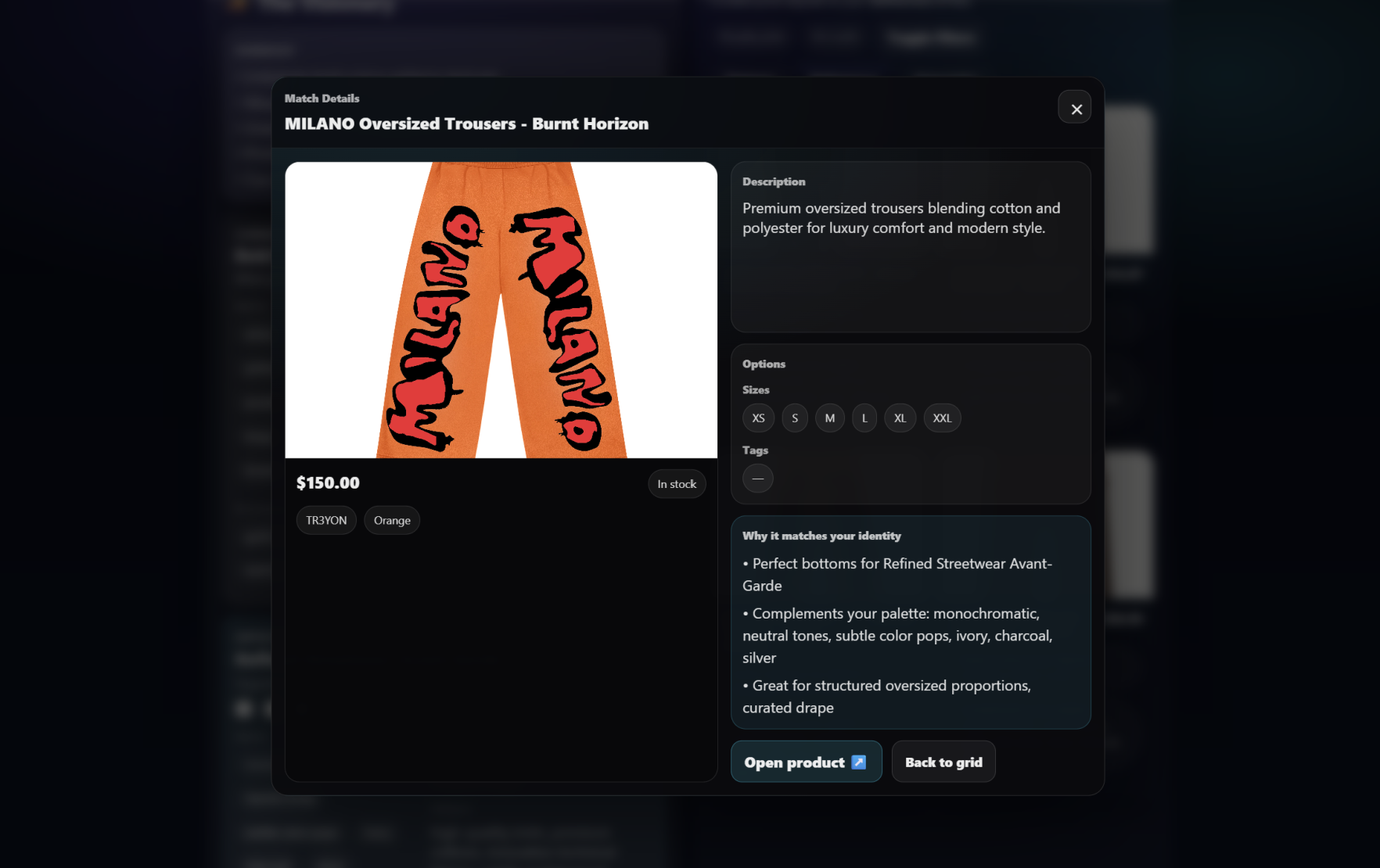
- Clothing and accessories that match the improved style
- Product details and direct purchase links
The result is a clear breakdown of where the user’s style is now and concrete product recommendations to help them upgrade their closet.
How we built it
Frontend
Built with React + Vite, using HTML, CSS, JavaScript, and TypeScript to create a clean, user-friendly interface for uploading photos and viewing style feedback.
Backend
Implemented with Python and FastAPI, served via Uvicorn, with supporting services in Node.js.
LLMs
We use Gemini through OpenRouter to analyze outfit photos. Gemini processes visual features such as colors, layering, fit, and accessories, then reasons about the user’s style to generate both current and improved style profiles.
Commerce Integration
Shopify’s MCP is used to search Shopify stores globally. The backend matches the improved style profile with real products, returning relevant items along with metadata and purchase links.
Challenges
Accuracy of visual analysis: Outfit photos vary widely in lighting, angles, and backgrounds, making consistent style interpretation challenging.
Prompt engineering: Getting Gemini to produce structured, actionable, relevant, concise fashion insights (instead of vague advice) required iteration.
Tool orchestration: Coordinating image analysis, style reasoning, and Shopify MCP product search in a single pipeline, then tying it all together with the frontend.
Shopify MCP: Using such a new tool required us to search extensively and learn from limited documentation.
UX design: Presenting rich style insights without overwhelming the user with too much information.
Accomplishments that we're proud of
What we learned
- How to work with multimodal AI models for real-world visual analysis
- Backend programming with FastAPI
- Effective prompt engineering and JSON parsing for structured, controllable outputs
- Building pipelines that connect AI reasoning to live commerce data
- Designing personalization systems that feel helpful rather than generic
- Rapidly prototyping a full-stack AI product under hackathon time constraints
What's next for FitCheck
- More robust catalogue search can allow for more affordable options.
Built With
- css
- fastapi
- gemini
- github
- html
- javascript
- node.js
- openrouter
- python
- react
- shopify
- typescript
- uvicorn
- vite

Log in or sign up for Devpost to join the conversation.