-
-
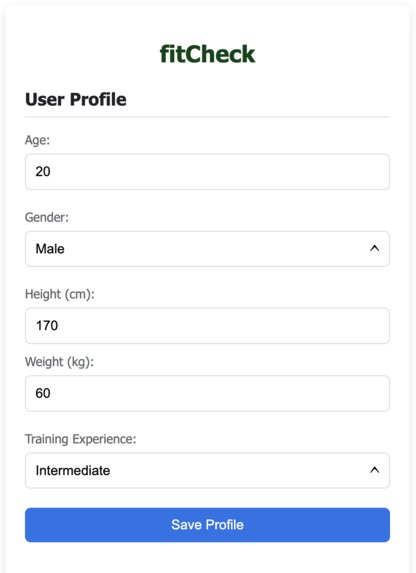
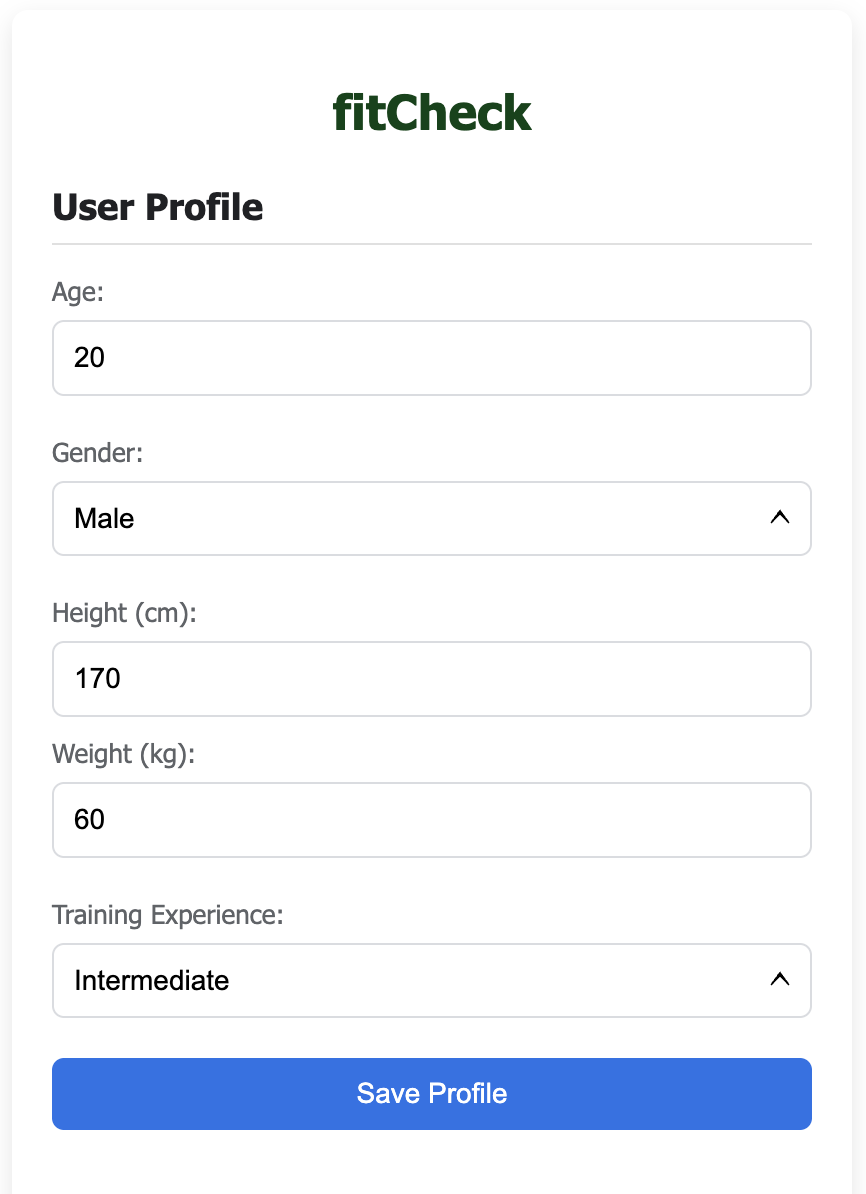
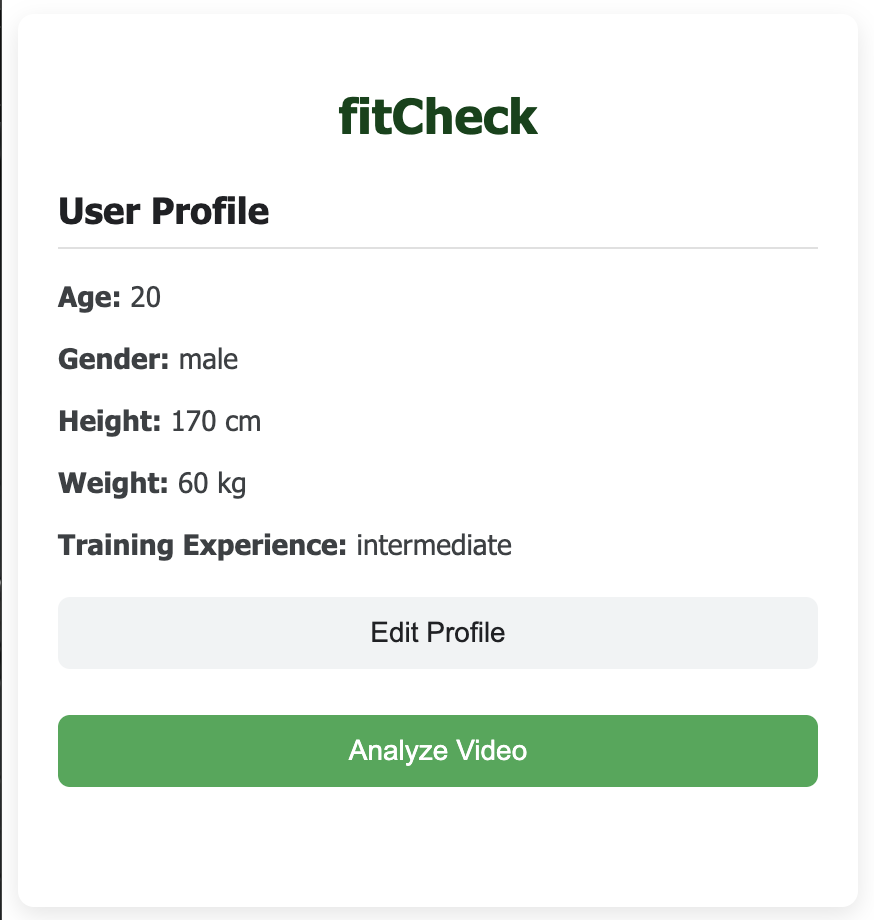
Profile creation and editing page
-
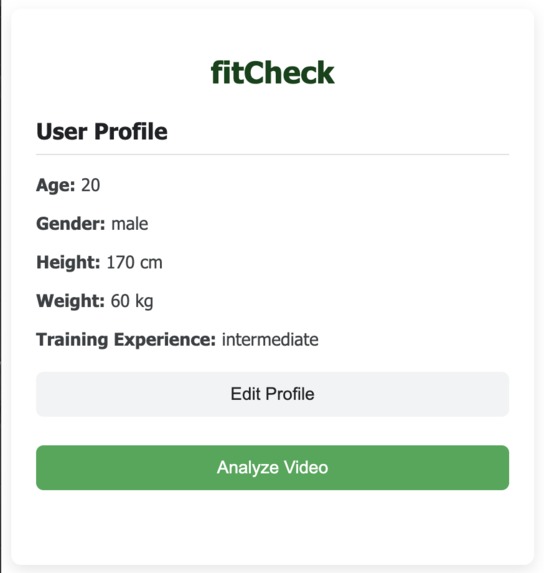
Main page
-
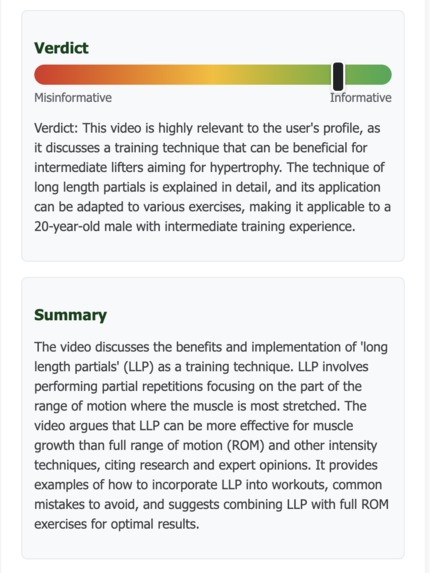
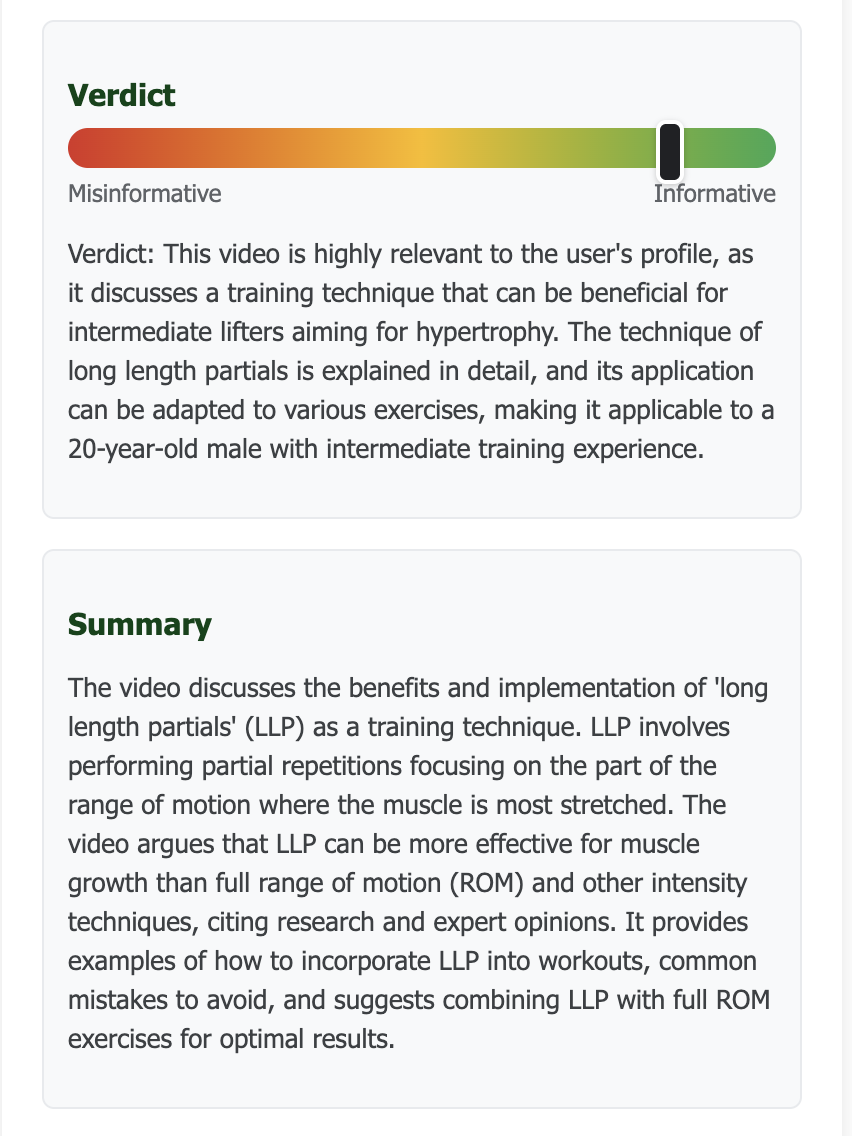
AI video analysis using the Perplexity Sonar API
FitCheck
A personal AI fact-checker for fitness videos.
Tech Stack
- Frontend: HTML, CSS, JavaScript
- Backend: Python (Flask)
- AI/ML Integration: Perplexity Sonar API
- Transcription: YouTube Data API,
youtube-transcript-api
The Problem
The rise of fitness content on platforms like YouTube and TikTok has transformed how people consume exercise and nutrition advice. YouTube alone has over 500 hours of video uploaded every minute, while TikTok’s short-form fitness clips garner billions of views monthly. However, this surge in content has a dark side: widespread misinformation. A recent study analyzing sports nutrition videos on YouTube—a critical component of fitness content—found that 65.8% were based on personal anecdotes, misbeliefs, or commercial interests rather than scientific evidence (Kiss et al., 2023). Moreover, 77.2% of videos from non-professional sources, such as for-profit organizations or influencers, contained potentially misleading information, while only 22.8% were evidence-based from professionals like dietitians (Kiss et al., 2023).
This is especially important because misleading fitness and health tips can cause chronic injuries and harm to its audience. A particularly vulnerable group is beginners who are eager to improve their health. They are often overwhelmed by contradictory advice, such as “carbs are essential” versus “carbs are harmful for gains,” or cherry-picked studies that don’t apply to their specific needs. Even when science is referenced, it’s frequently misrepresented, leading to wasted effort, unsafe workout practices, or even injuries. Furthermore, not every advice is applicable to an individual because of differing genetics, lifestyles, and gym experience.
The Solution
FitCheck is a Chrome extension designed to tackle this problem by delivering real-time, personalized, evidence-based evaluations of fitness videos on YouTube and TikTok. By analyzing video content and aligning feedback with users’ unique goals and circumstances, FitCheck ensures effective and safe practices in the crowded world of online fitness advice. FitCheck does this by:
- Identifying fitness content as you scroll.
- Extracting claims using transcript + metadata.
- Fact-checking with Perplexity's Sonar API against scientific literature.
- Personalizing feedback based on your profile, including height, weight, experience level, etc.
- Summarizing the video and giving a simple, transparent verdict.
Example Verdicts:
- Evidence-Based: Backed by science and safe for your goals.
- Misleading: Contains some truth but includes exaggerated or unverified claims.
- Not Recommended: Unreliable advice or unsuitable for your profile.
How It Works
Tech Stack
- Frontend: HTML, CSS, JavaScript
- Creates a user-friendly, responsive user interface for the Chrome extension.
- Backend: Python (Flask)
- Manages API calls to Perplexity Sonar API and YouTube Data API, ensuring secure handling of API keys via environment variables.
- Processes video transcripts and user profiles for analysis.
- AI/ML Integration: Perplexity Sonar API
- Powers real-time fact-checking with access to scientific sources.
- Transcription: Python
youtube-transcript-api- Used by the backend to fetch video transcripts.
User Flow
Initial Setup
Users fill out a quick profile with their:
- Goals (e.g., fat loss, muscle gain)
- Height, weight, age
- Training level (beginner, intermediate, advanced)
- Existing injuries or restrictions
Watching a Video
On YouTube or TikTok Web, the user activates FitCheck by clicking the extension. The extension:
- Fetches the video details and transcript by making secure calls to the local Flask backend.
- Parses the content for fitness-relevant claims.
- Sends claims and metadata to the backend for analysis by the Perplexity Sonar API.
Extension Output
- Video Summary: A user-friendly explanation of what the video covers
- Claim Check: 3–5 top claims extracted and assessed
- Sources: Each claim linked to relevant studies or articles
- Misinformation Score
- Final Verdict: Clear label with reasoning
- Suggestions: Trusted content based on user goals
Perplexity Sonar API Usage
The Perplexity Sonar API is used as FitCheck’s primary fact-checking capabilities:
- Accuracy Assessment: Responses are evaluated for scientific support, recency, and relevance to the user’s profile (e.g., aligning advice with specific fitness goals or restrictions).
- Bias Detection: Low-quality or conflicting sources, or promotional content, increase the bias score, alerting users to potential unreliability.
Why It Matters
In an era where fitness influencers often prioritize clicks and engagement over accuracy, misinformation can lead to serious consequences, from ineffective workouts to dangerous health practices. Beginners, in particular, may lack the expertise to evaluate the credibility of the content they consume, making them susceptible to harmful advice. FitCheck empowers users to:
- Make informed decisions based on solid, evidence-based insights.
- Understand scientific concepts without needing advanced knowledge.
- Navigate the fitness content landscape with confidence and safety.
With FitCheck, watching fitness videos becomes a step toward better health, not a gamble with your well-being.
References:
- Kiss, A., Soós, S., Temesi, Á., Unger-Plasek, B., Lakner, Z., & Tompa, O. (2023). Evaluation of the reliability and educational quality of YouTube™ videos on sport nutrition topics. Journal of Foodservice Business Research, 26(6), 597–614.
- Li, H. O. Y., Bailey, A., Huynh, D., & Chan, J. (2020). YouTube as a source of information on COVID-19: a pandemic of misinformation? BMJ Global Health, 5(5), e002604.
- Statista. (2022). Hours of video uploaded to YouTube every minute.

Log in or sign up for Devpost to join the conversation.