Inspiration
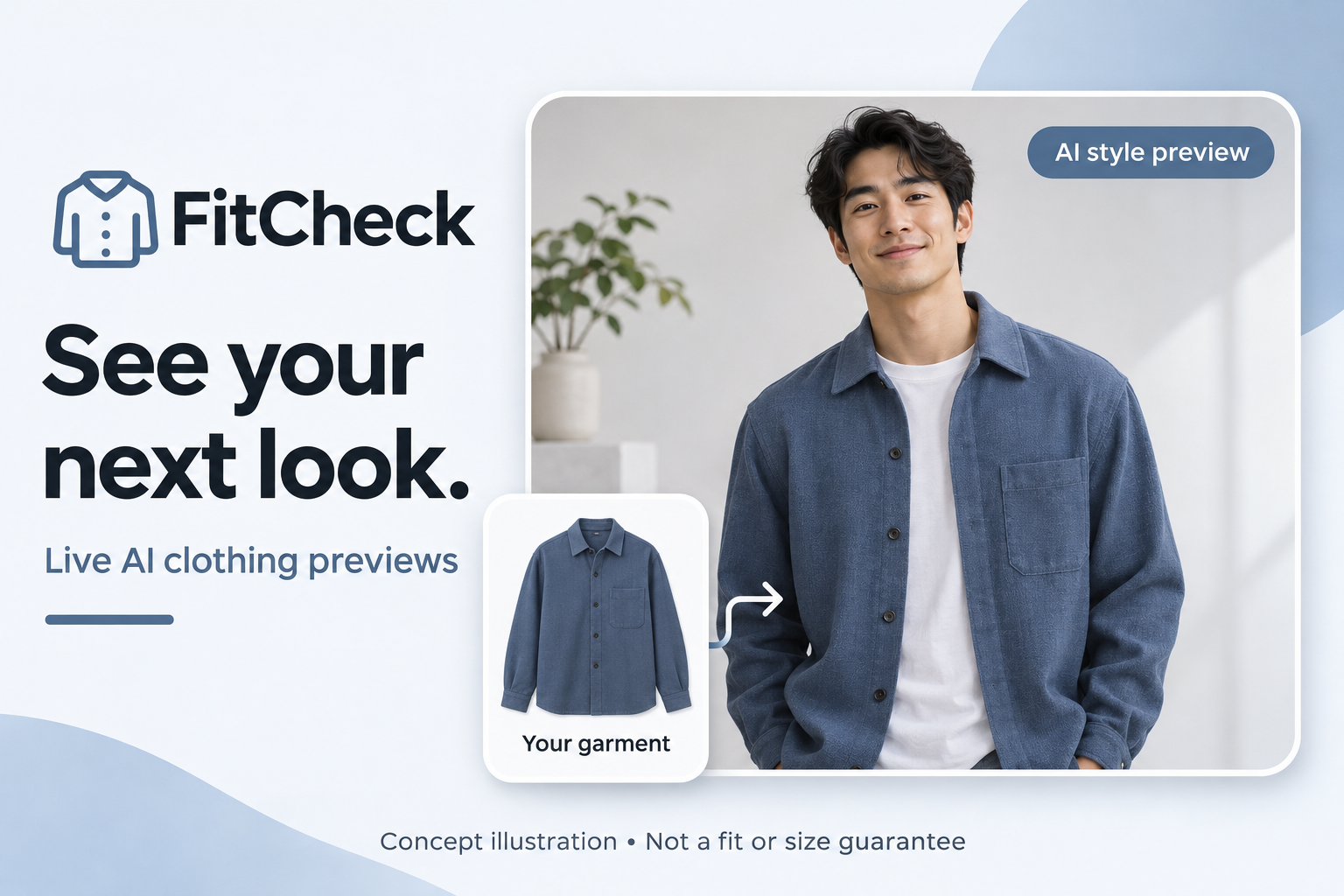
FitCheck started with a simple question: What if you could see a clothing style on yourself before physically trying it on?
Product photos help us discover clothes, but imagining those clothes on ourselves is a different experience. I wanted to make that exploration more personal and interactive through a live AI preview
What it does
FitCheck lets users upload a garment image, optionally describe a look, and start a live camera session. AI transforms the video into an illustrative preview of that clothing style.
Users can change the garment or update the prompt during a session. The result is a way to explore appearance—not a measurement tool or a guarantee of fit, sizing, or fabric behavior.
How we built it
I built the interface with React, TypeScript, and Vite, and integrated Decart Lucy 2.6 through the Decart SDK. The browser sends camera video over WebRTC, alongside the prepared garment reference and outfit prompt.
Garment images are validated and resized in the browser before transmission. A local server endpoint issues short-lived, restricted connection tokens, keeping the permanent API key out of the frontend.
Camera access begins only after an explicit user action. Stopping the session disconnects the provider and stops the camera tracks. I used Vitest, TypeScript checks, and production builds to verify application logic and catch regressions.
Challenges we ran into
One of the hardest challenges was moving beyond a clothing overlay toward a believable preview. Earlier experiments showed that aligning a garment with a person’s shoulders does not automatically produce realistic sleeves, natural boundaries, or convincing clothing replacement. That helped shape the move to generative video.
Another challenge was managing the camera and connection lifecycle. Permission requests, connection failures, and stopping a session all need careful handling so the camera does not remain active unexpectedly.
Privacy also required clear tradeoffs. Live generation sends video and garment imagery to an external provider. I made that processing visible before users start and kept media out of FitCheck’s logs and storage.
Accomplishments that we're proud of
What we learned
I learned to distinguish visual alignment, generated appearance, and physical fit. They are separate problems, and a convincing image cannot establish whether a garment will fit.
I also learned that AI integration involves much more than connecting a model. Input validation, secure credentials, session cleanup, provider permissions, and honest product language all shape whether the experience is useful and trustworthy.
What's next for FitCheck
FitCheck is currently a local evaluation prototype. The next steps are broader camera and device testing, evaluating preview consistency across garments and movement, and reviewing the hosting, privacy, and provider requirements for a public release.
Built With
- 2.6
- apis
- camera
- decart
- lucy
- node.js
- react
- sdk
- typescript
- vite
- vitest
- webrtc
