Inspiration
As student-athletes and fitness enthusiasts, I noticed a common problem: staying consistent and healthy isn’t just about how much you train — it’s about how you recover, eat, sleep, and listen to your body. Existing fitness apps track data, but they don’t understand it in context. I wanted to create an AI-powered coach that connects the dots between your training habits, fatigue, sleep, and wellness - helping you train smarter, not just harder. That’s how FitBud was born, a personal fitness companion that learns from your habits and helps prevent burnout and injuries before they happen.
What it does
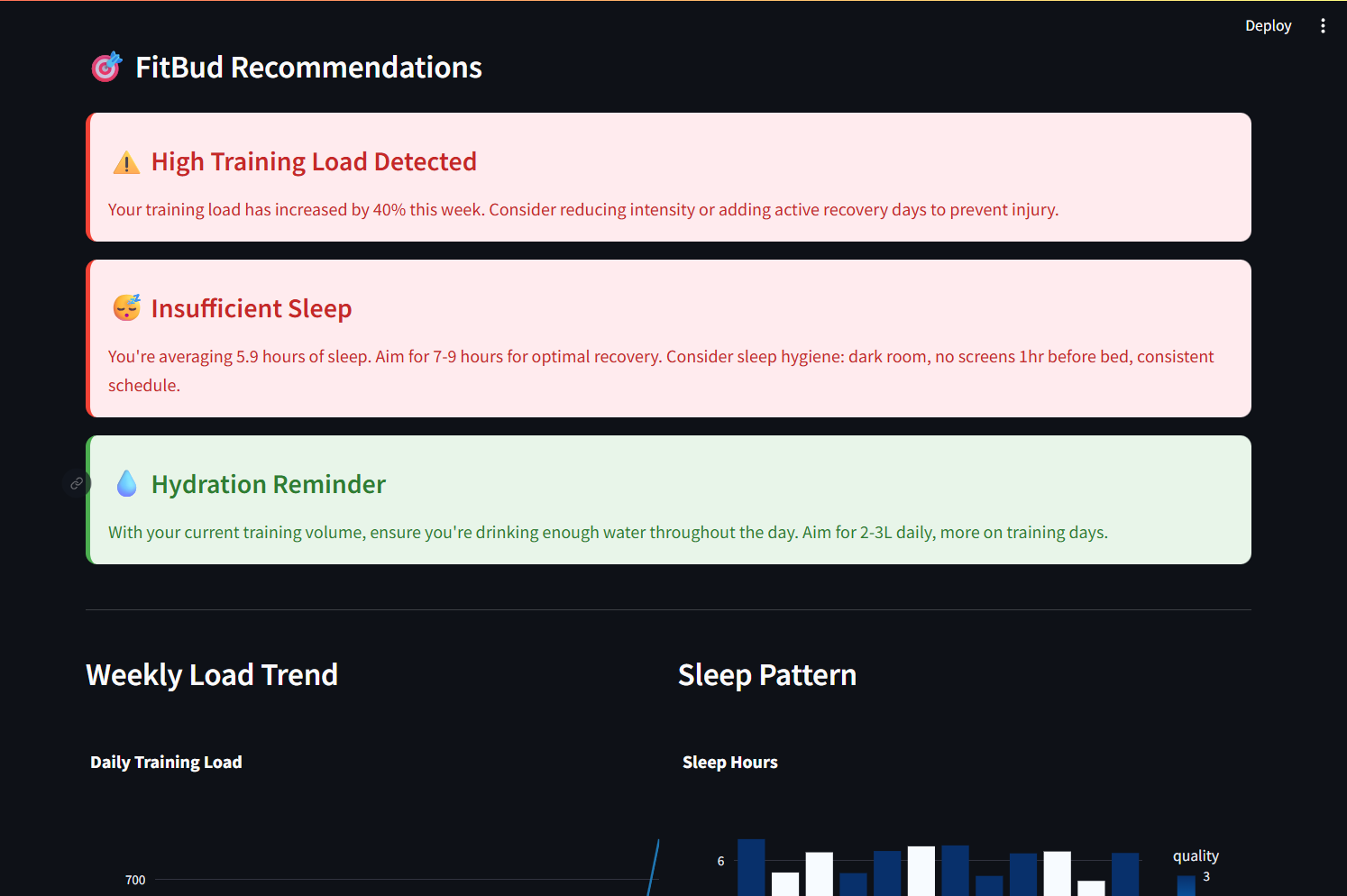
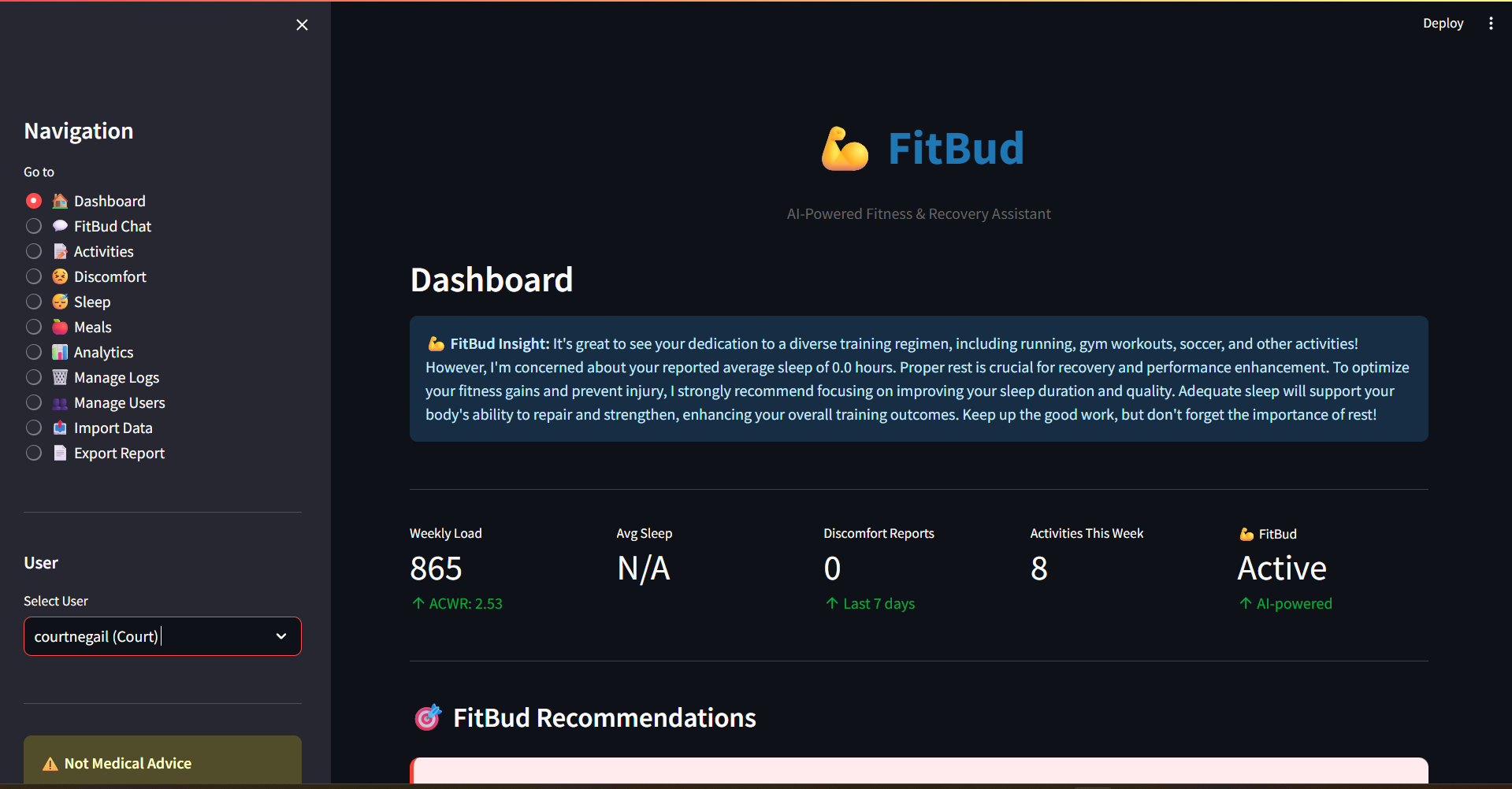
FitBud helps users log physical activities, workouts, gym sessions, and discomforts, using AI to provide personalized recommendations on:
Sleep optimization
Nutrition and recovery strategies
Training load and rest balance
Injury prevention and mobility advice
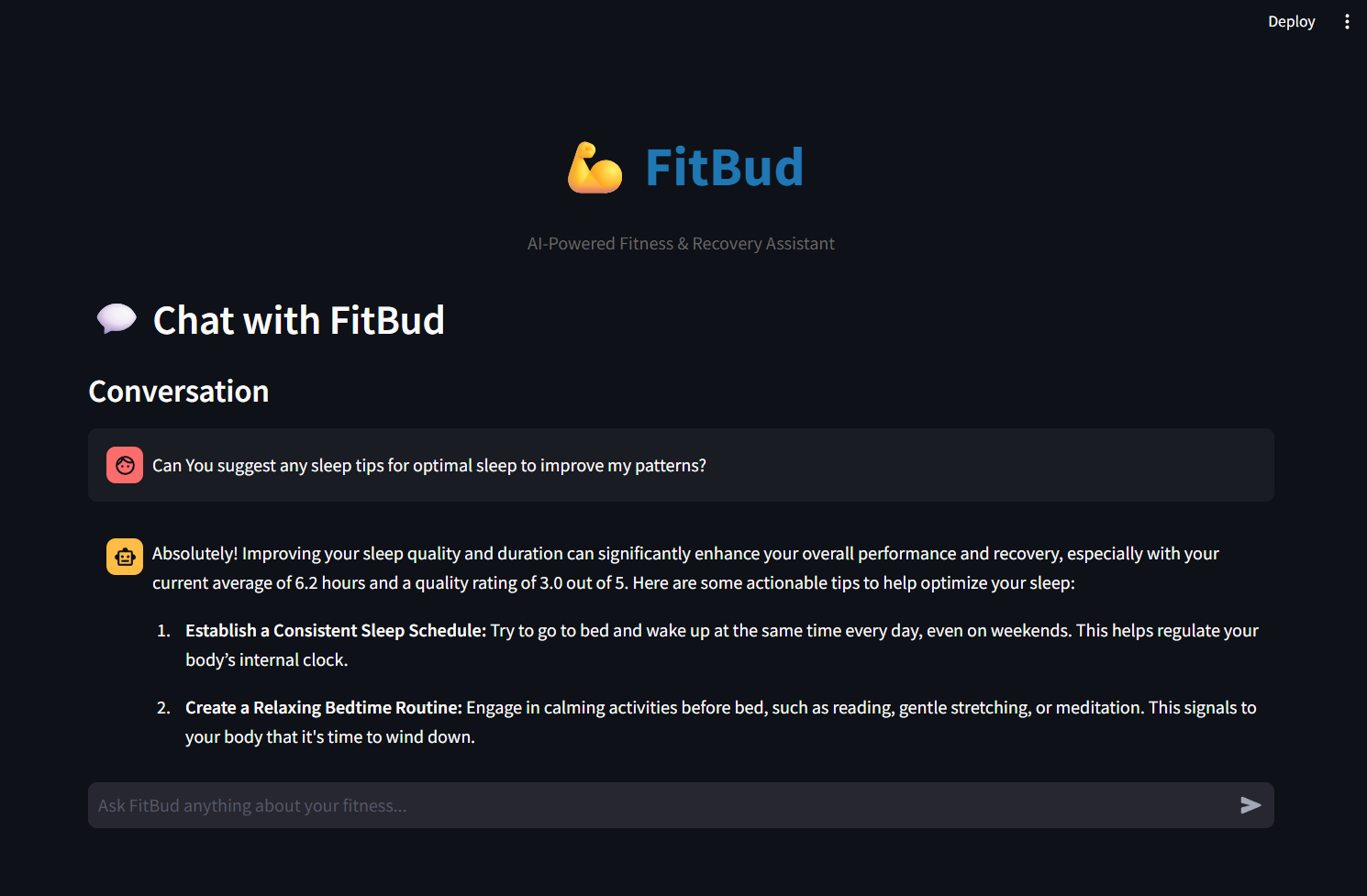
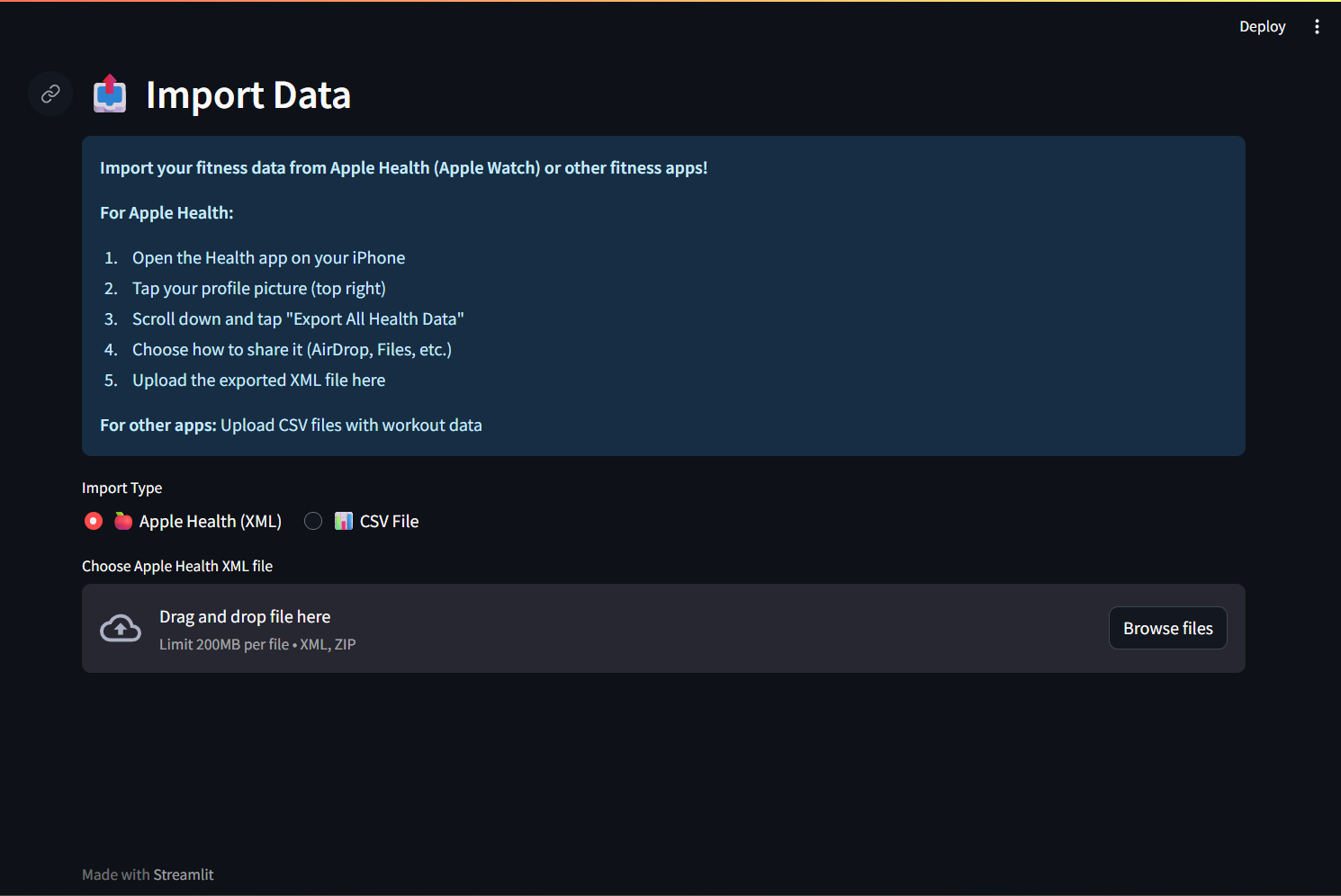
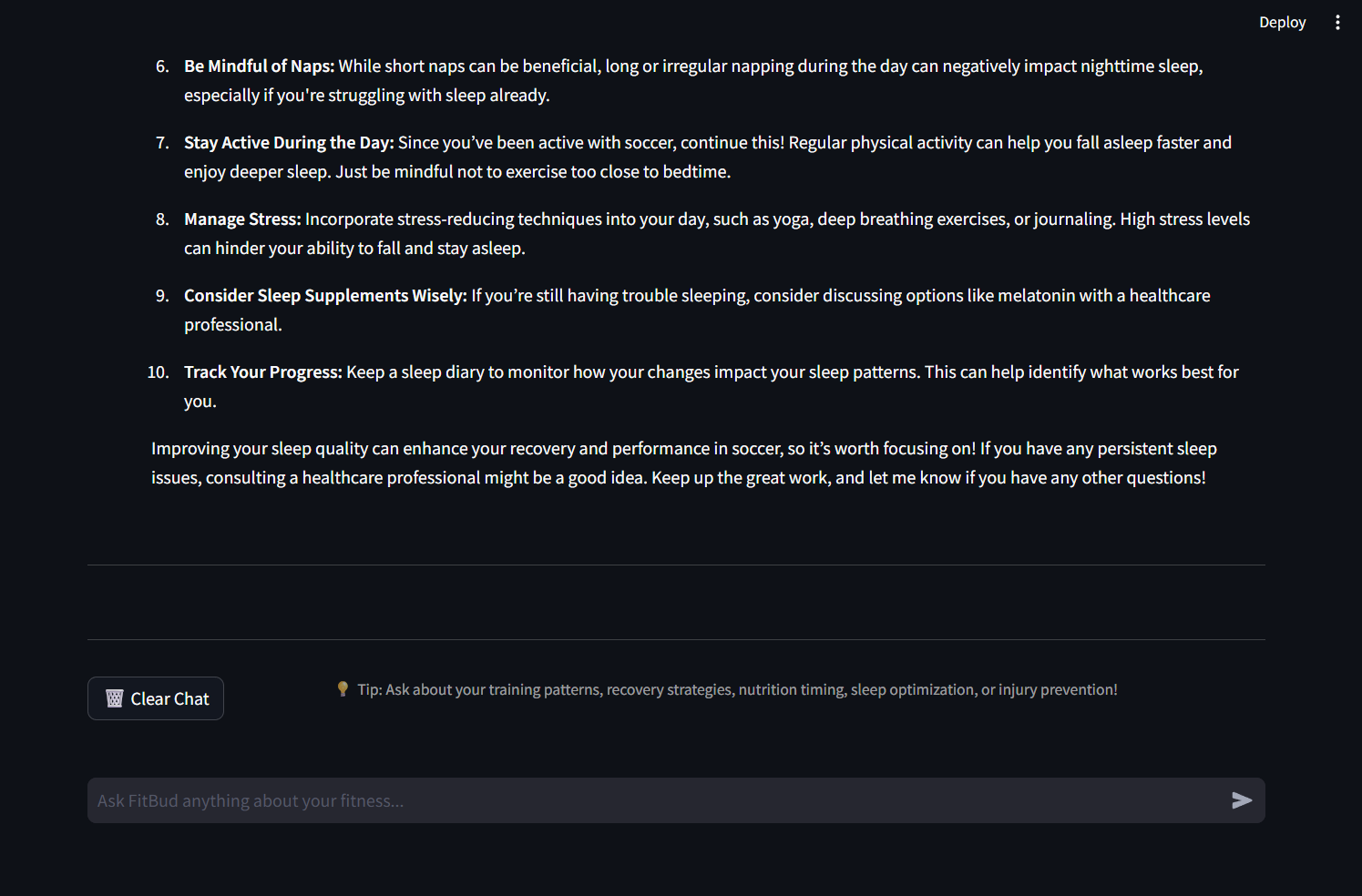
With a chat interface, users can communicate with an AI coach for practical next steps based on their activity logs, sleep data, and pain reports. FitBud can integrate with major fitness trackers like Google Fit, Strava, and Fitbit for accurate insights.
How I built it
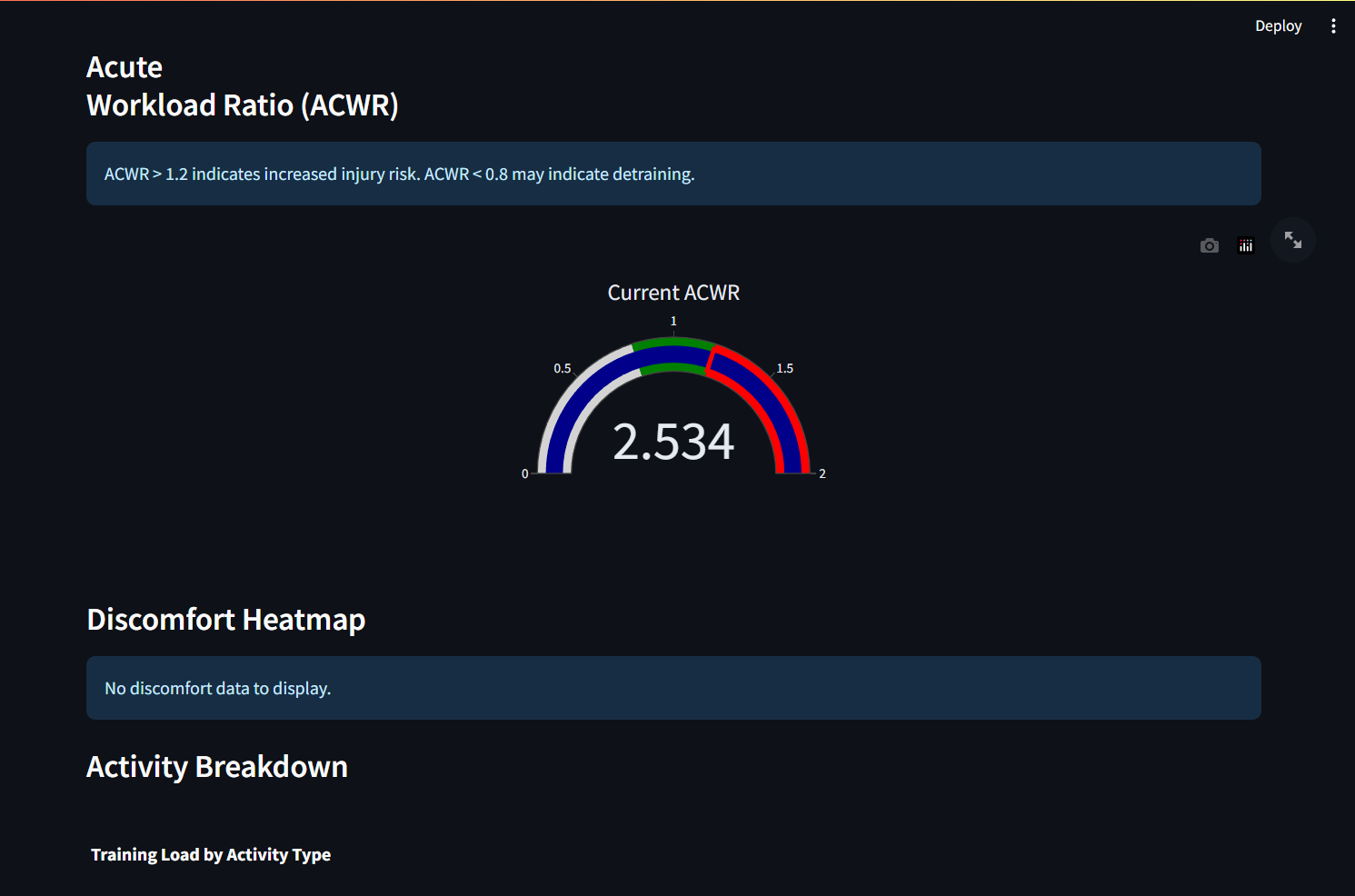
FitBud is a web app developed with Python and Streamlit, providing interactive dashboards for data logging and visualization. Key features include: AI Recommendation Engine: Uses the OpenAI API to analyze fitness logs and deliver personalized insights. Data Model: Structured JSON schema for activities, duration, exertion, pain flags, and sleep/nutrition metrics. AI Chat Tab: Custom chat interface in Streamlit for natural conversations with an AI coach. Visualization Layer: Charts and trend indicators for tracking weekly training load, fatigue, and recovery.
Challenges I ran into
Integrating AI safely: Making sure the AI stayed within realistic, non-medical advice boundaries while still sounding human and helpful.
Limited time: Building an app that balances technical AI integration, UX polish, and data realism in a short hackathon timeframe.
Accomplishments that we're proud of
Built a functional AI-powered fitness coach from scratch within the hackathon timeframe.
Solved difficult Streamlit state bugs and achieved a clean, stable chat flow.
Designed an app that’s both technically solid and user-friendly, blending data, AI, and wellness design.
What I learned
How to integrate AI models (OpenAI API) into an app.
The importance of human-centered design when building health-related tools; tone, empathy, and trust matter as much as technical accuracy.
Balancing data-driven and conversational interfaces; letting users either view insights visually or chat with their “FitBud.”
What's next for FitBud
Integrating live sync with Apple Health ,Google Fit, Fitbit, etc.
Developing a mobile version for easier daily logging.
Partnering with health professionals to ensure recommendations meet wellness guidelines.
Built With
- pandas
- plotly
- python
- sqlalchemy
- streamlit

Log in or sign up for Devpost to join the conversation.