-
-
Logo of FitBridge
-
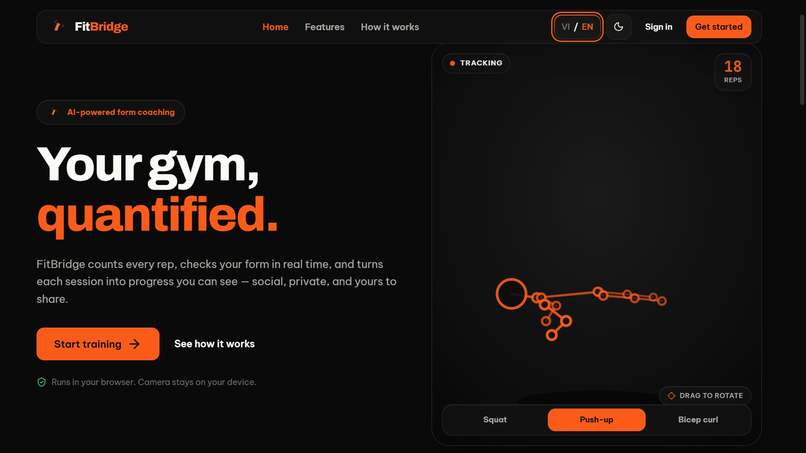
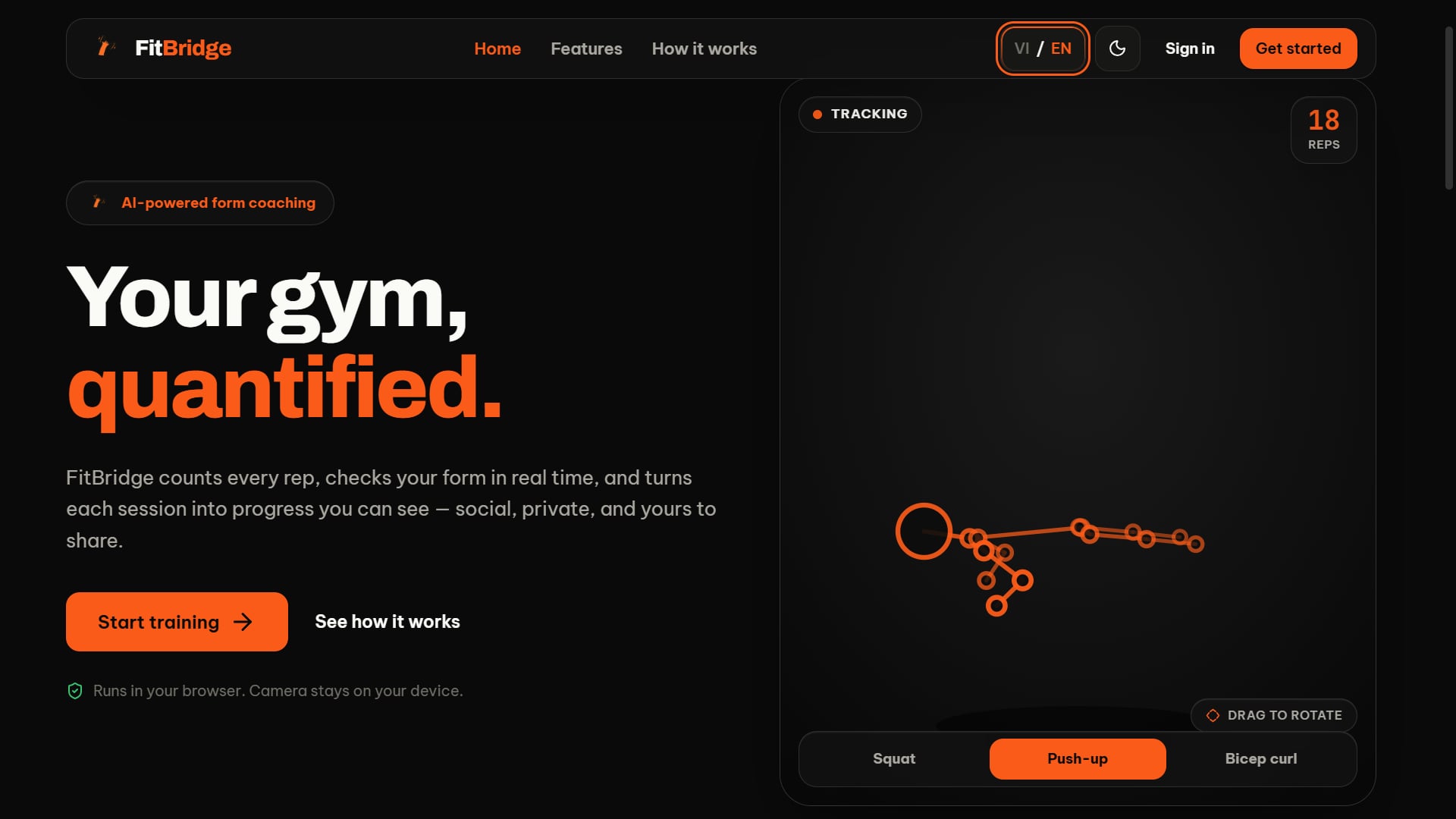
Home Page
-
-
-
-
-
-
Inspiration
As a long-time gymer, I have deeply understood the struggles that beginners face: the complete lack of guidance to correct their lifting form and the difficulty of tracking progress effectively. To make matters worse, many of my friends have spent a fortune hiring personal trainers, only to end up with inexperienced or outright scam trainers who don't deliver results. We wanted to build a solution that democratizes high-quality AI fitness coaching (making it accurate, affordable, and accessible to everyone). Track: Health for All
What it does
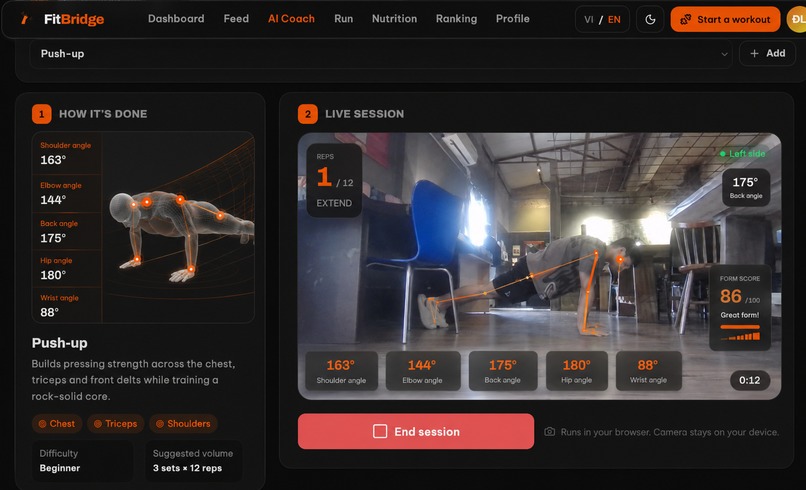
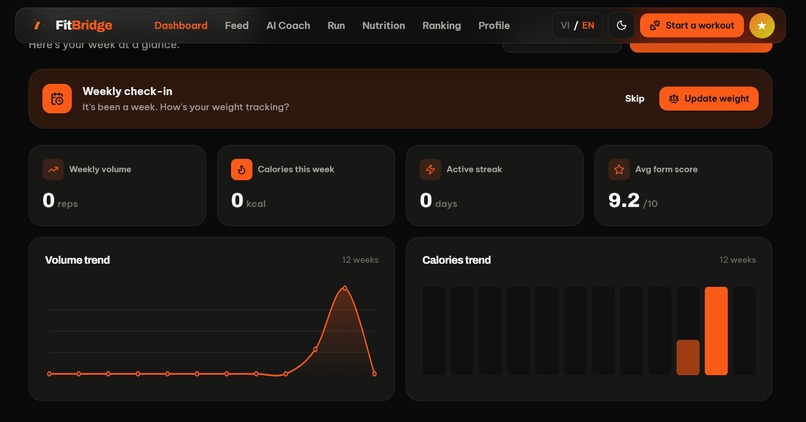
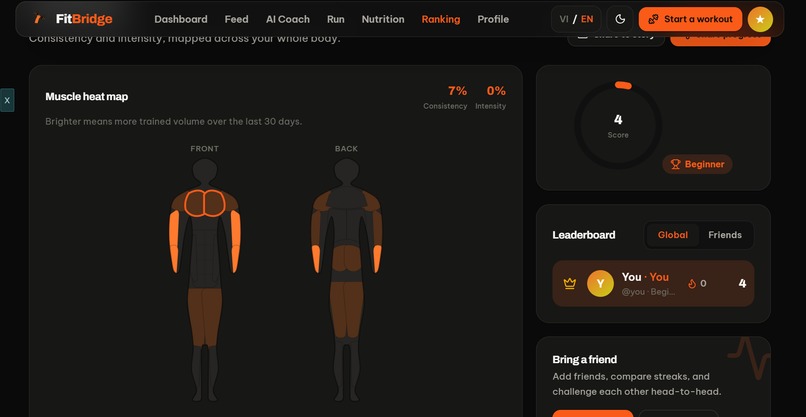
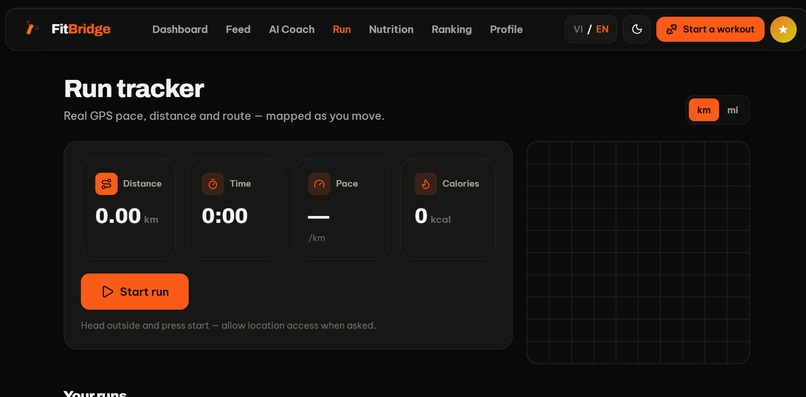
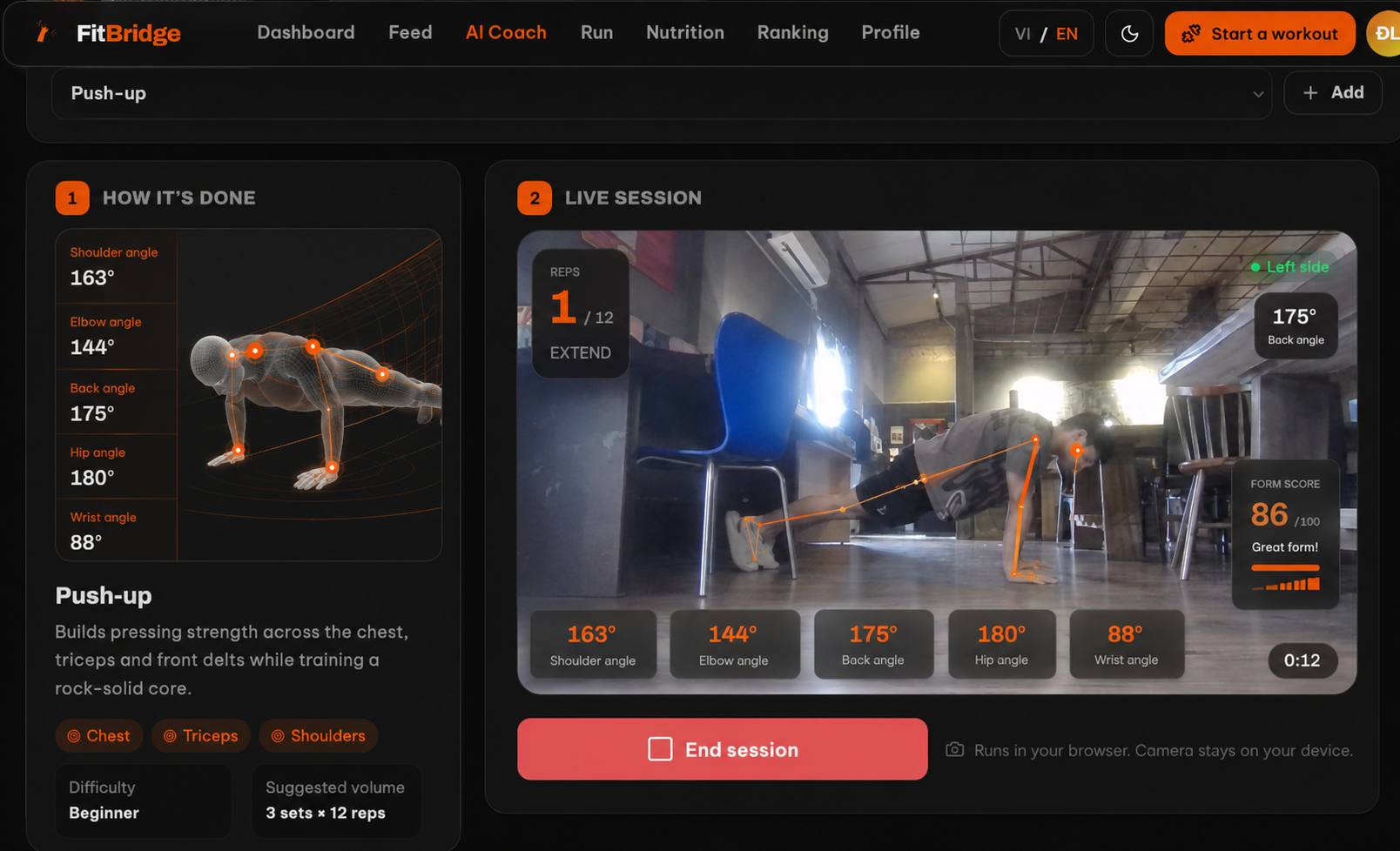
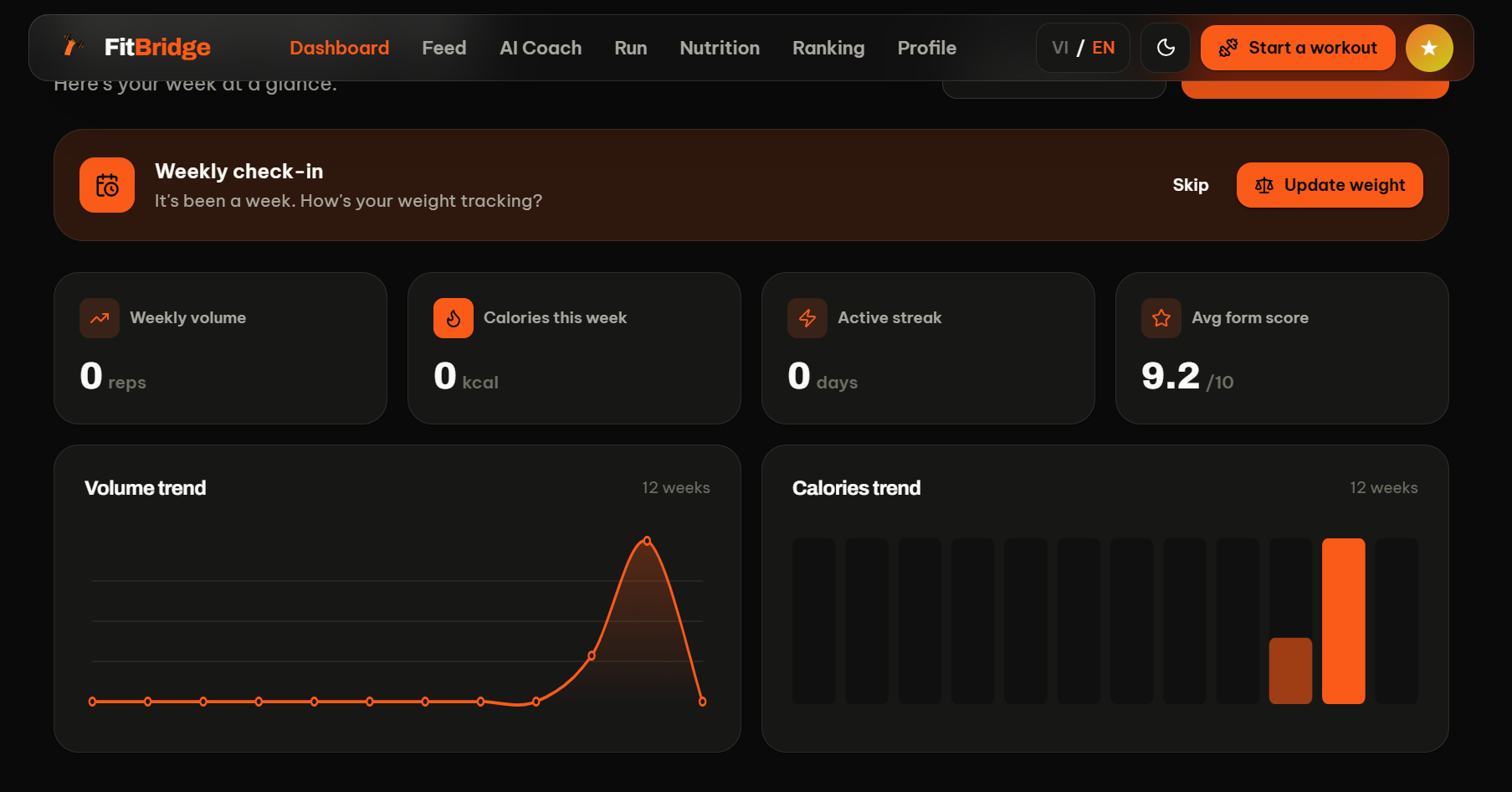
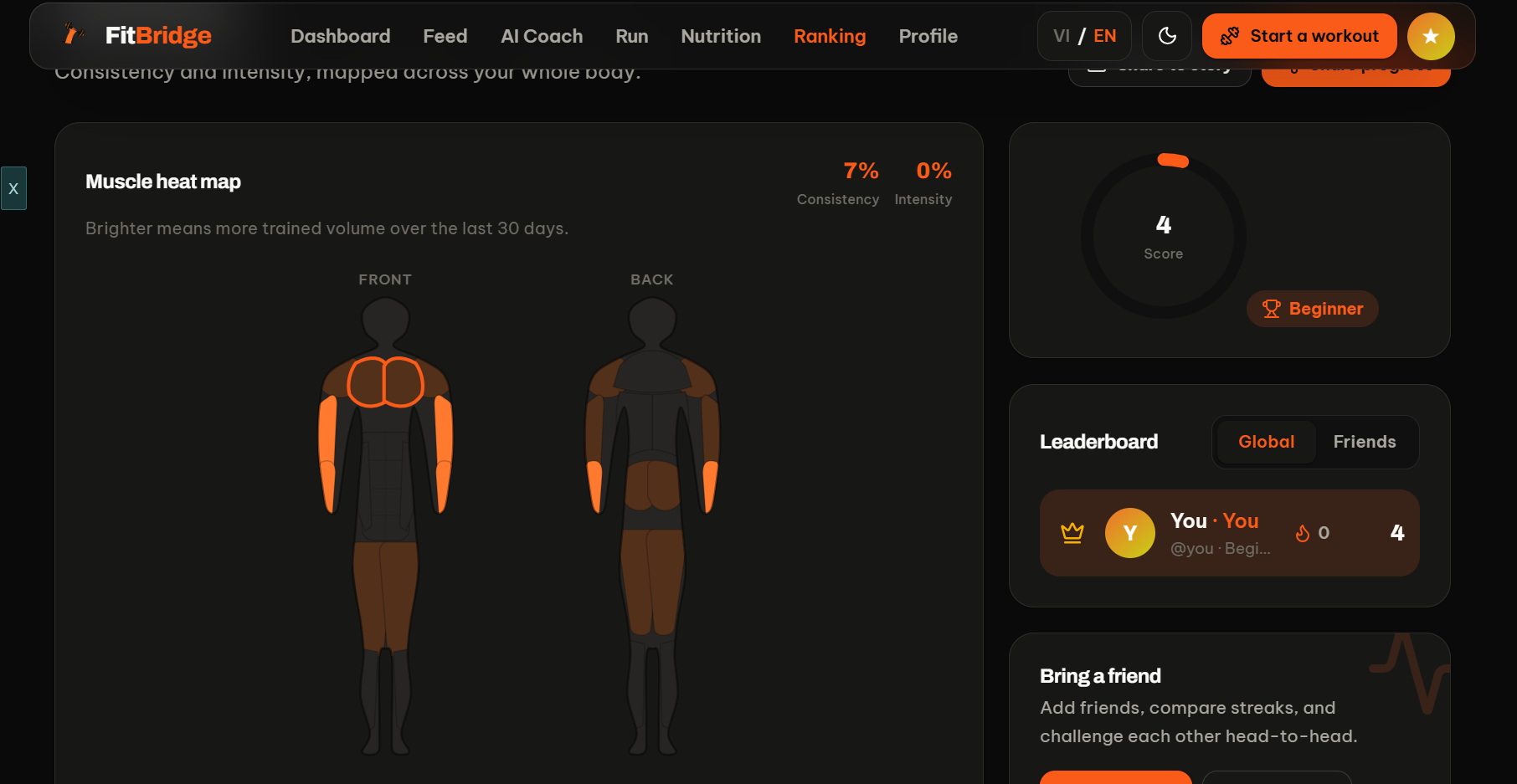
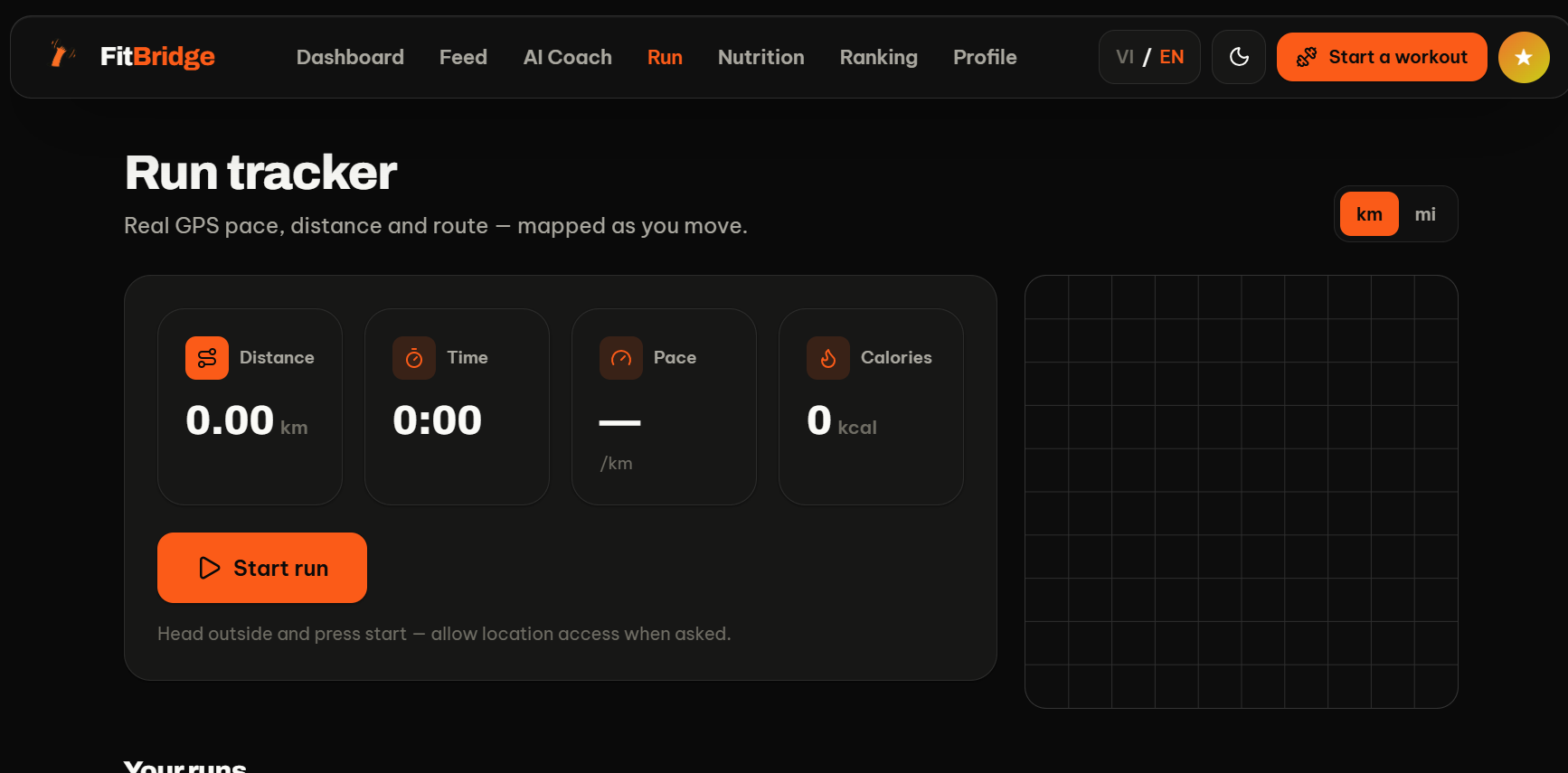
FitBridge is an AI-powered virtual fitness assistant that turns your camera into a real-time personal trainer. Using advanced computer vision, the app tracks your body movements during an exercise and provides instant, real-time audio feedback to correct your form using LLM and AI-generated text-to-speech. At the end of every set, FitBridge generates a comprehensive analytical report displaying critical workout metrics: total calories burned, exact rep/set counts, and an automated form audit highlighting specific posture mistakes to fix for the next set.
How we built it
We built FitBridge with a robust, modern tech stack optimized for real-time processing and intelligent feedback:
- Frontend & Deployment: Developed a responsive user interface deployed seamlessly on Vercel.
- Computer Vision Core: Integrated OpenCV and MediaPipe Pose for high-performance, low-latency 2D/3D human body skeletal tracking directly via the browser camera. Made a joint angle benchmark for a qualified rep.
- AI & Voice Engine: Leveraged the Google Gemini API to instantly analyze joint angle data and generate contextual form corrections, which are then converted into real-time audio feedback using a Text-to-Speech (TTS) pipeline.
Challenges we ran into
- Model Heavyweight & Latency: We initially attempted to use YOLOv8 for body tracking, but it proved to be too heavy and caused severe lag when deployed in a real-time web environment on Vercel. To fix this, we pivoted to a lightweight setup using MediaPipe combined with OpenCV, which drastically reduced latency.
- False Rep Counting: In the early stages, the computer vision accuracy for tracking reps was low-even a simple nod of the head would mistakenly trigger a rep count. We resolved this by completely refactoring our counting logic, establishing strict geometric rules, and setting precise joint angle thresholds to validate a complete range of motion.
Accomplishments that we're proud of
- High-Accuracy Tracking: After rewriting our rep-counting algorithms, we significantly boosted the precision of our computer vision engine, minimizing false triggers.
- The Goggins Factor: We successfully integrated an aggressive, highly motivating AI audio persona inspired by David Goggins-the ultimate idol for anyone pushing past their limits-to drive users to smash their goals.
What we learned
Through this intense development journey, our team grew immensely. We mastered efficient time management under pressure, optimized our workflow for seamless team collaboration using Git/GitHub, and perfected our prompt engineering skills with Claude to generate highly accurate structural responses from our AI engines.
What's next for FitBridge
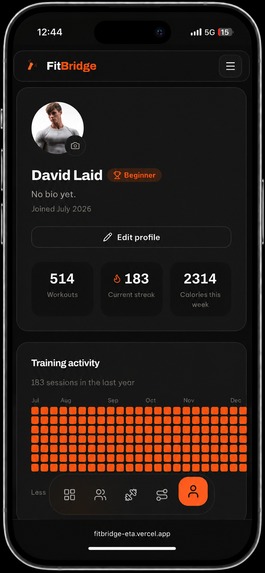
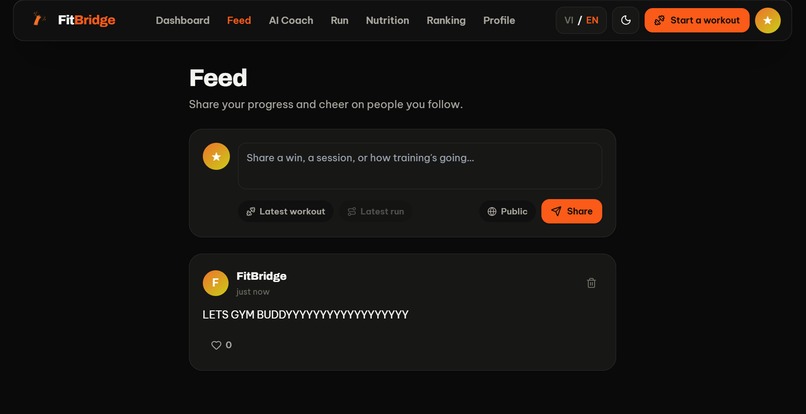
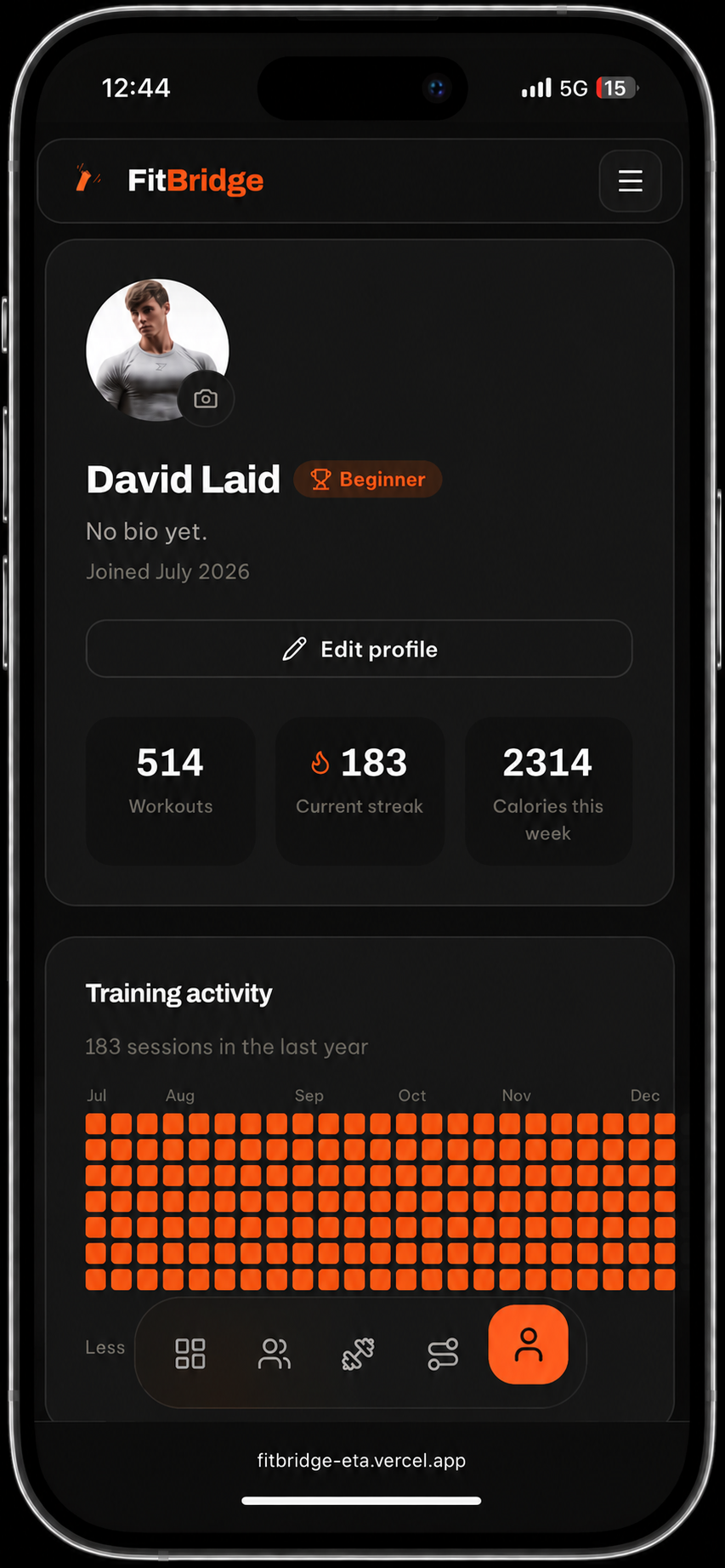
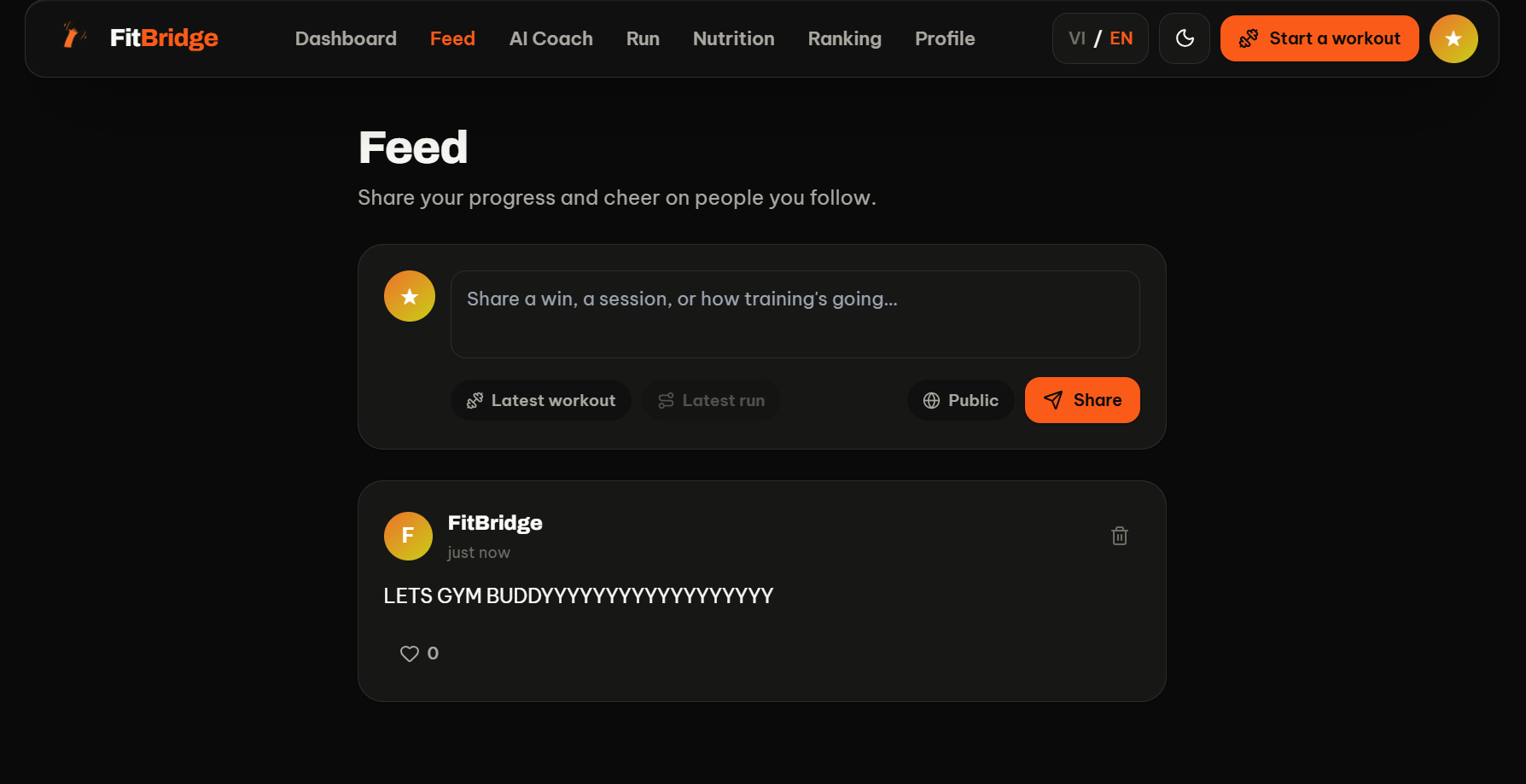
Moving forward, we plan to scale FitBridge into a comprehensive fitness ecosystem by dramatically expanding our exercise library to support complex compound lifts and targeted routines. Ultimately, we want to transform FitBridge into a thriving, community-driven social platform where fitness enthusiasts can connect, share their progress charts, and push each other to stay uncommon.
Built With
- css
- google-gemini-api
- javascript
- mediapipe
- next.js
- opencv
- plpgsql
- postgresql
- react
- supabase
- text-to-speech
- vercel


Log in or sign up for Devpost to join the conversation.