-
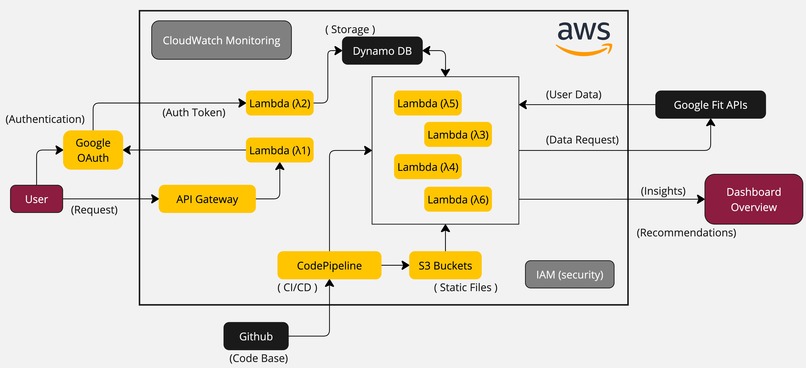
Architecture Diagram
-
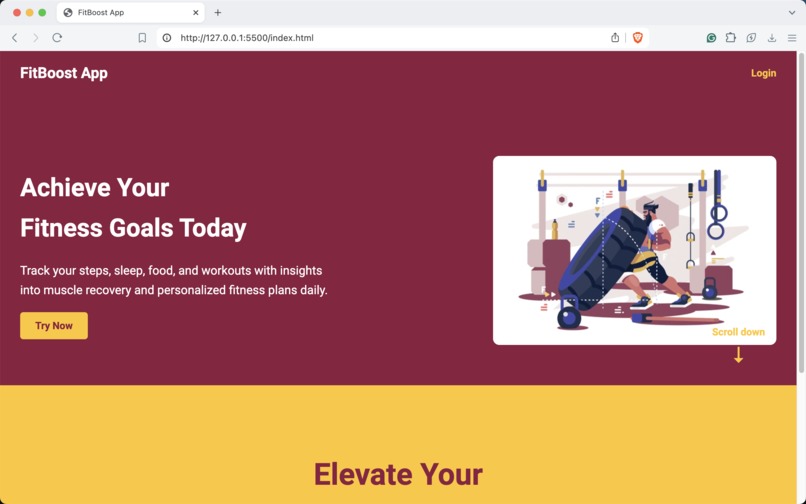
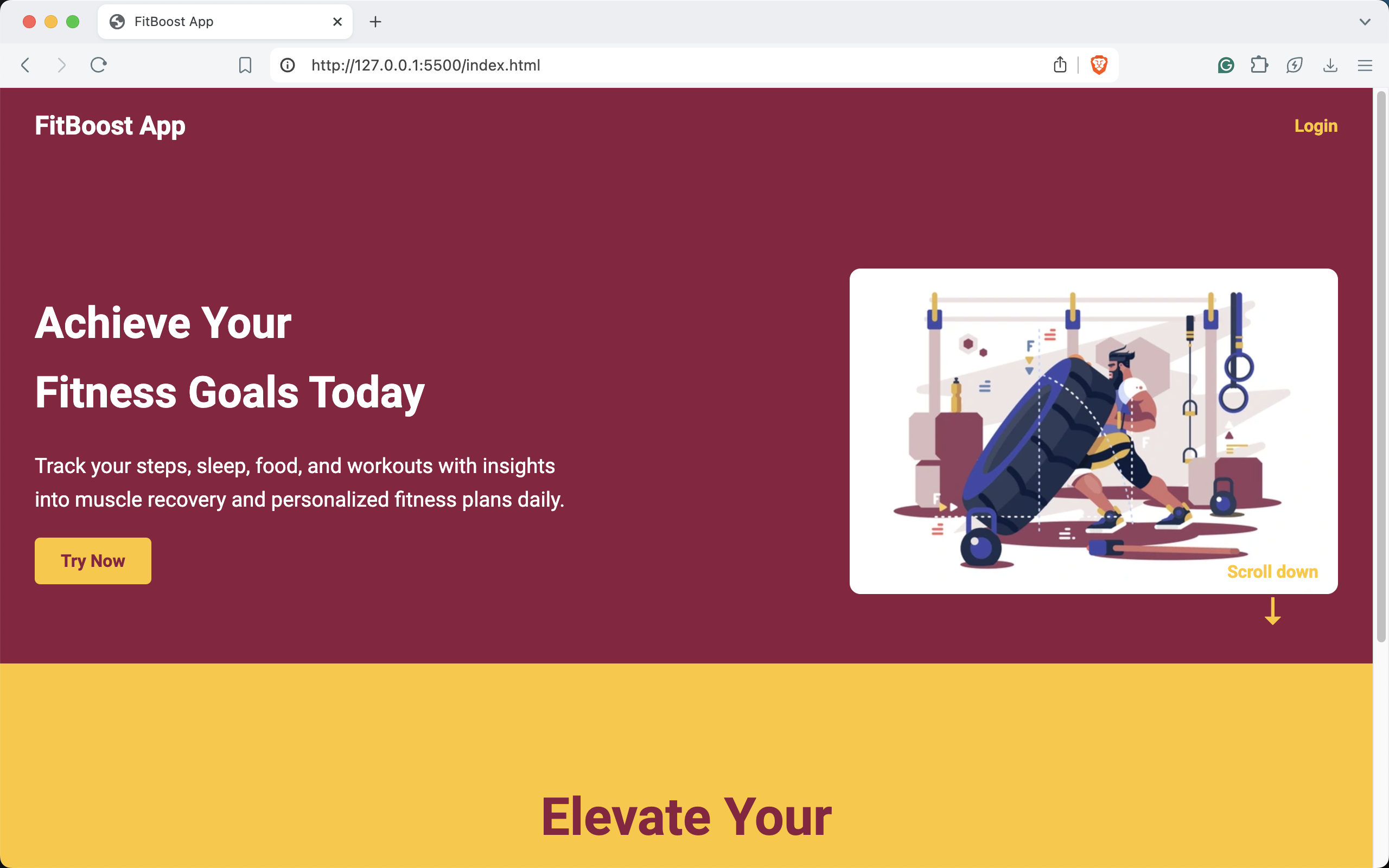
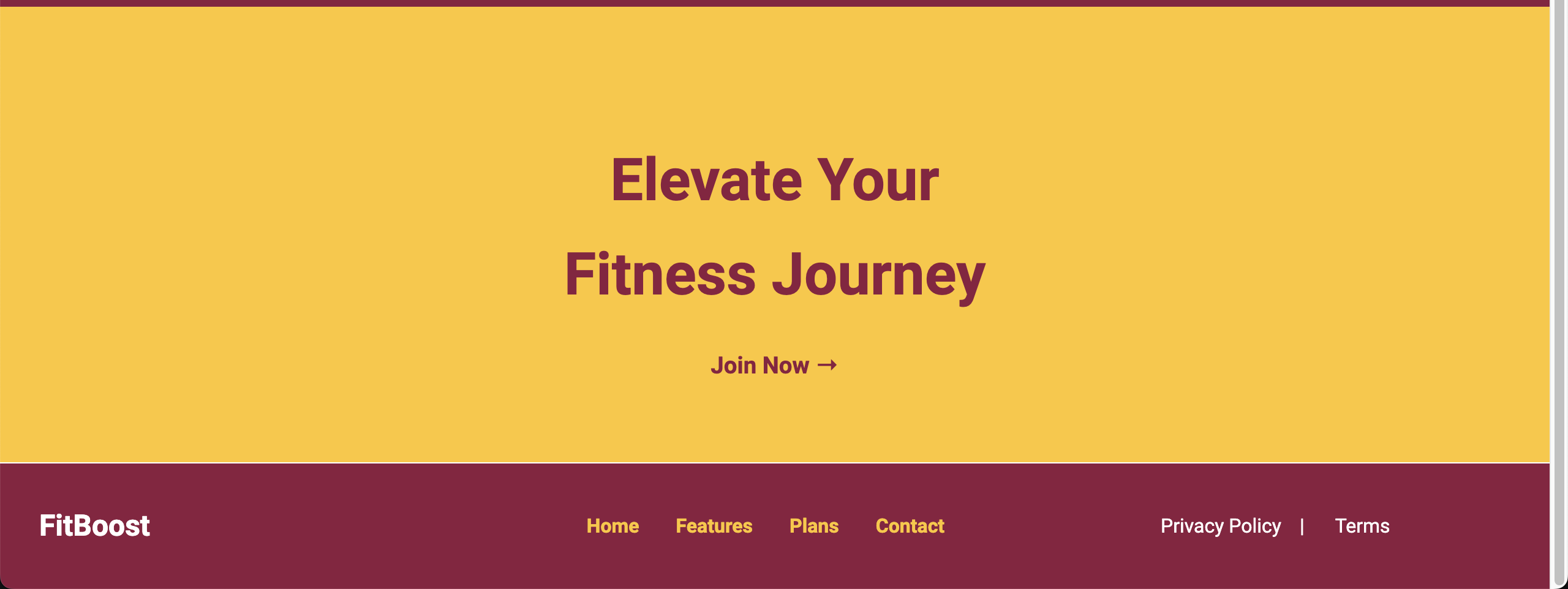
FitBoost Homepage
-
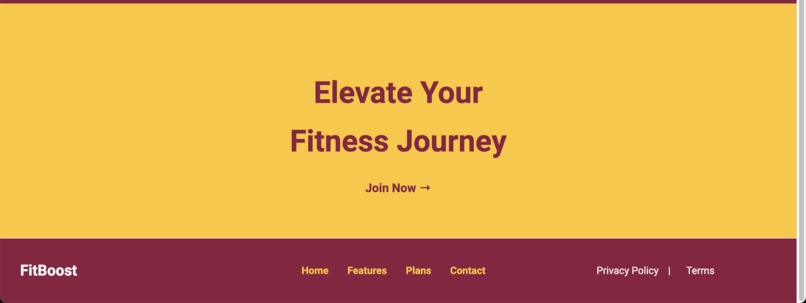
FitBoost Homepage
-
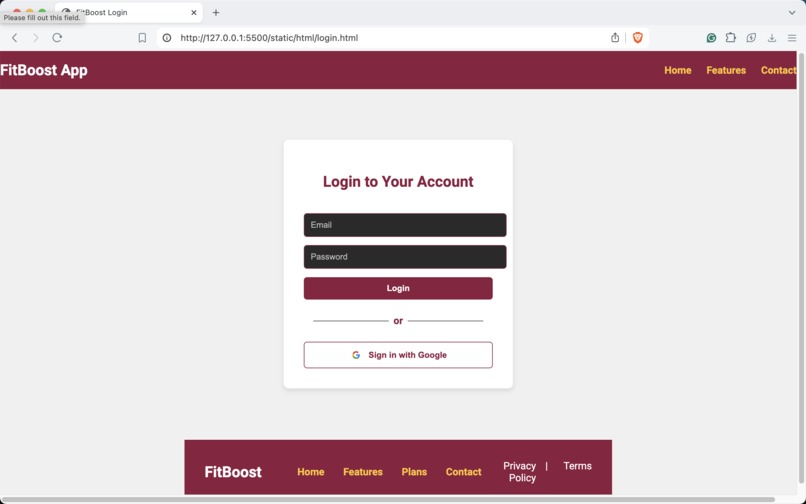
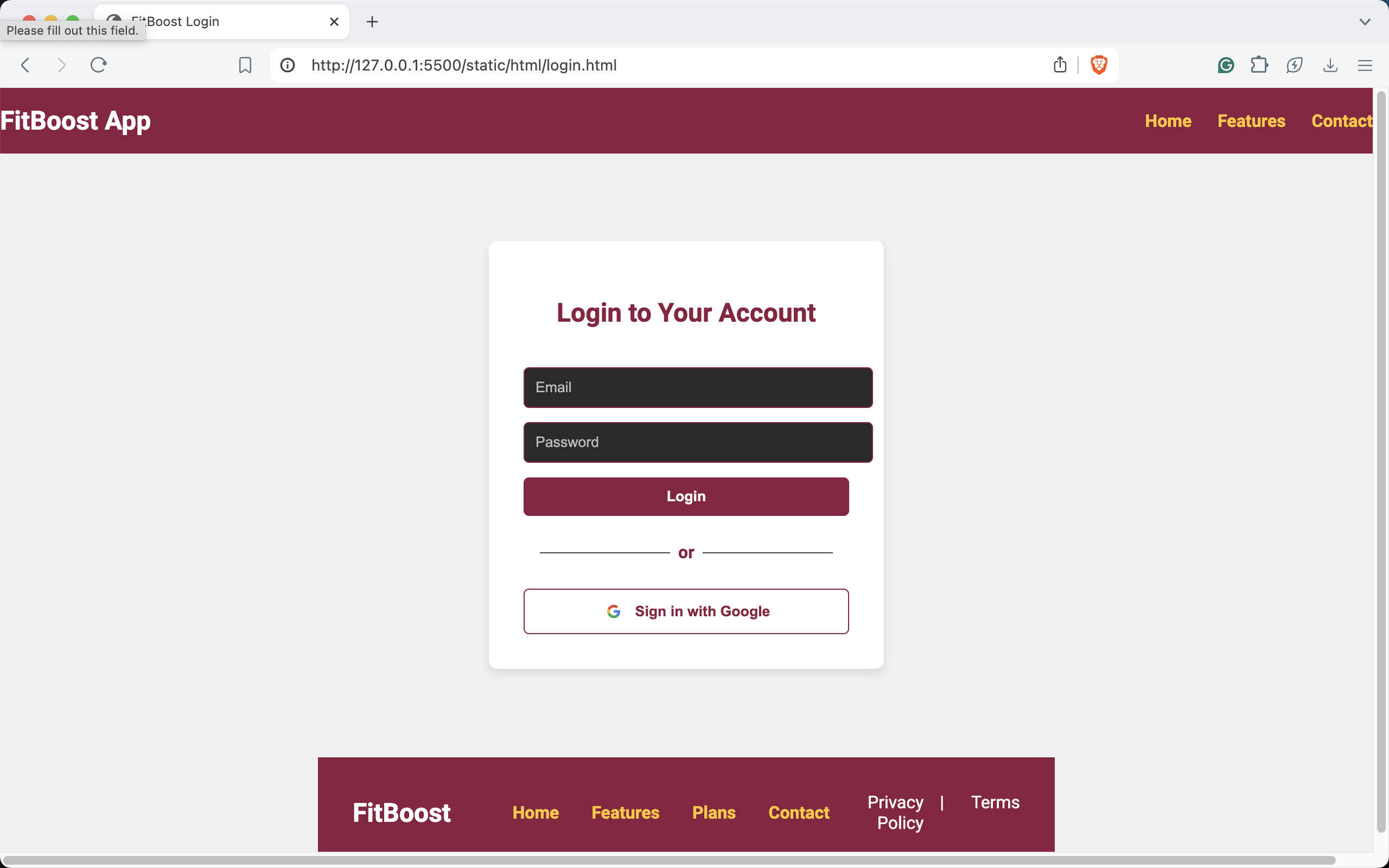
FitBoost Login Page
-
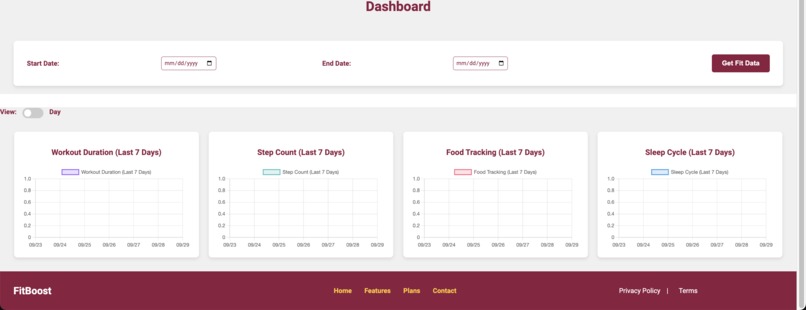
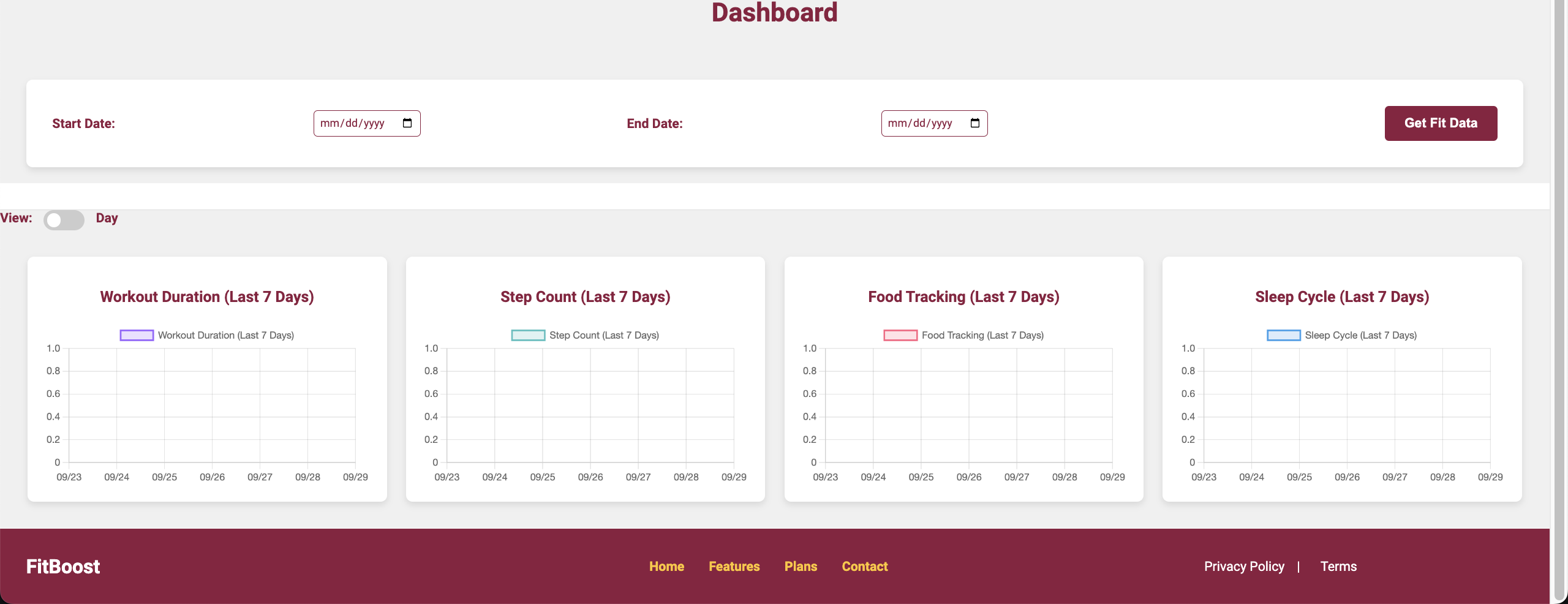
FitBoost Dashboard
-
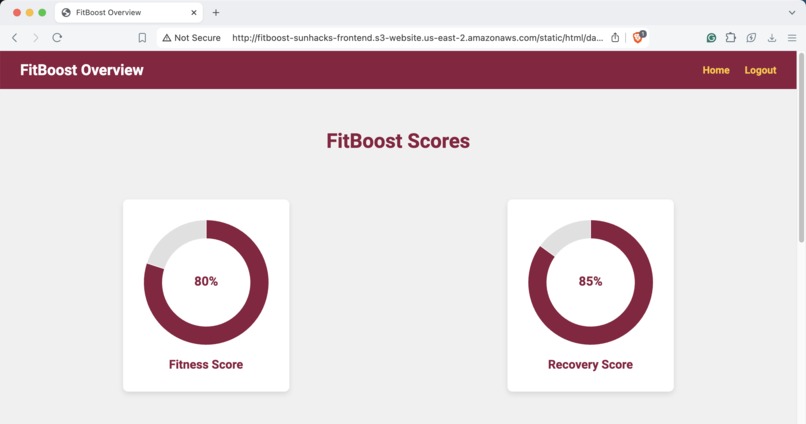
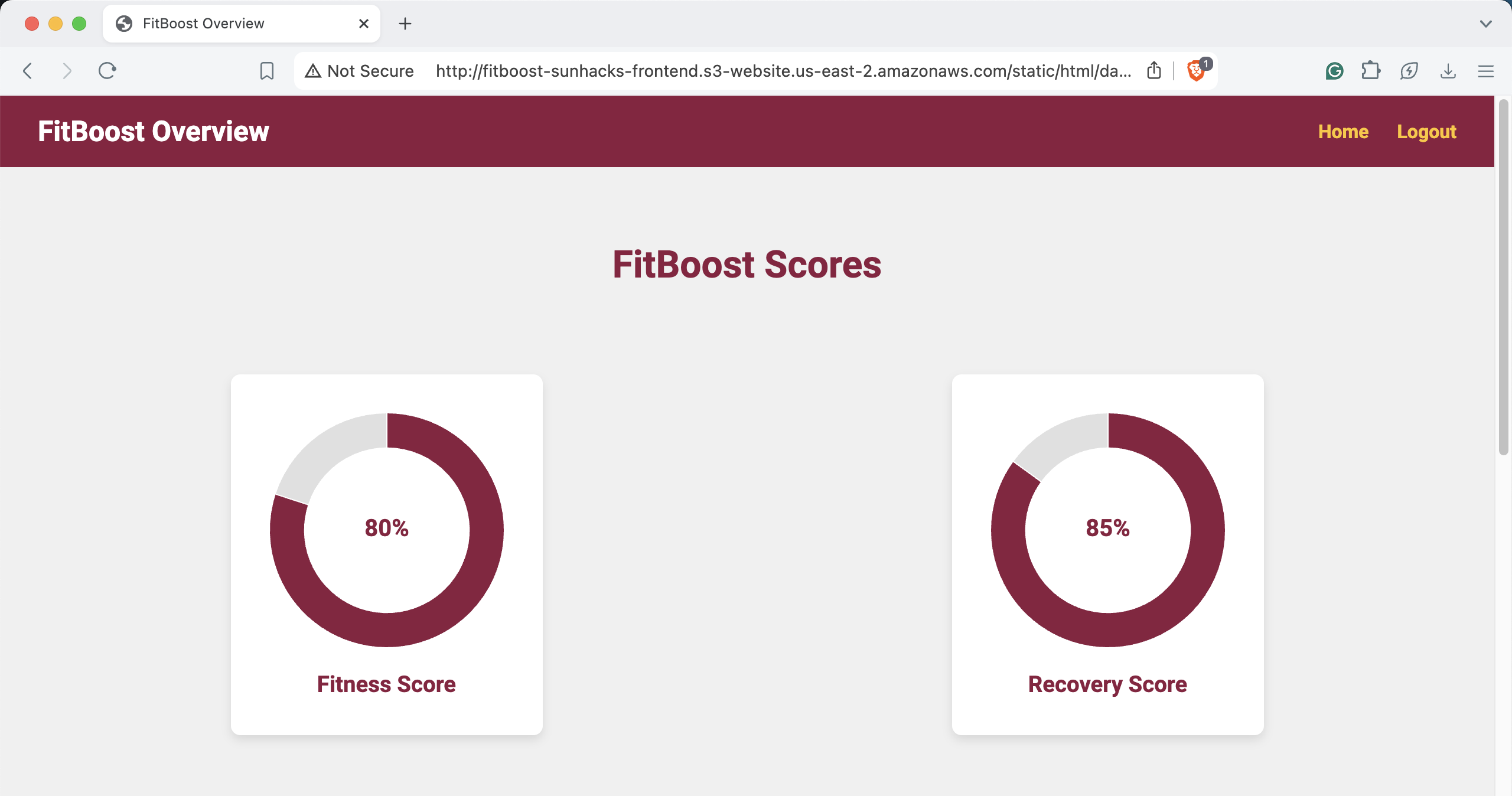
FitBoost Scores
Inspiration
The idea for FitBoost came from the need for a comprehensive fitness-tracking app that expands fitness as a lifestyle to people of all economies and communities. It goes beyond the basics of step counting and calorie tracking to meet the user's needs. We wanted to create something that gathers fitness data, helps users understand their recovery cycles, and makes informed decisions about their health and fitness journey.
What it does
FitBoost is a holistic fitness app that tracks sleep, steps, workouts, and food intake, calculates a personalized recovery score, and provides actionable insights to help users improve their fitness levels. The app integrates with Google Fit to gather relevant fitness data, allowing users to visualize their progress, set goals, and receive recommendations on optimizing their health and lifestyle.
How we built it
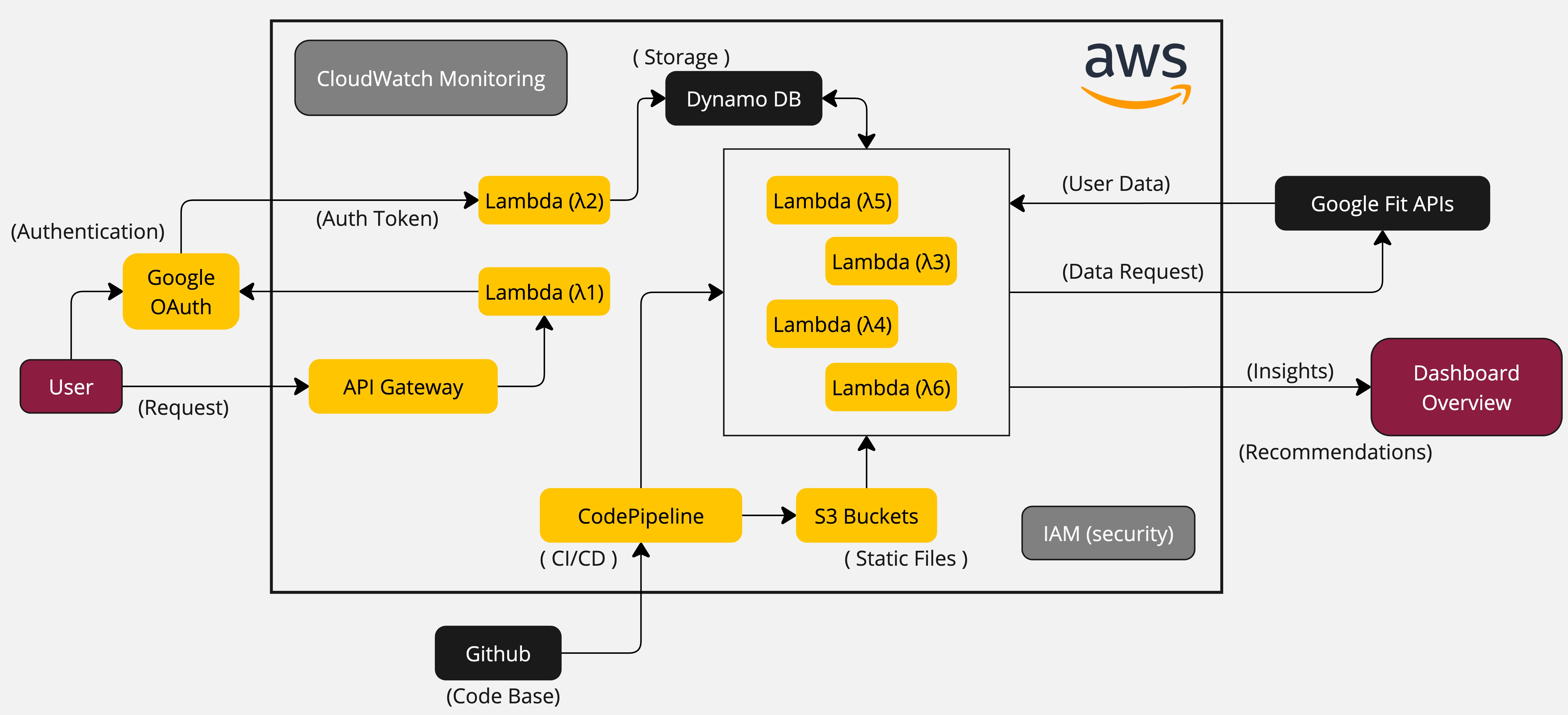
We went all in with the AWS architecture to demonstrate its ease of use and go-to-market strategy. The backend of FitBoost is powered by AWS Lambda, utilizing a serverless architecture to ensure scalability and cost efficiency. We used Python for the backend logic in the lambda functions and DynamoDB to store user data.
We used Github as a codebase and AWS CodePipelines for Continuous Integrations and Deployments.
We connected with Google Fit APIs to integrate fitness data, allowing us to pull step counts, sleep metrics, workouts, and other health information like heart rate and blood pressure.
The UI was built using HTML/CSS/JS, focusing on providing an intuitive and user-friendly experience with a lightweight, interactive application.
PFA architecture image in the
Challenges we ran into
Learning the design and architecture of AWS services in 24 hrs and integrating with Google Fit's historical health data, which had so many fields to process and derive outputs.
Accomplishments that we're proud of
Building the complete prototype in 24 hours and handling the development tasks without much assistance from outside. As a rookie here, we are really proud of the things which we have done during this hackathon.
What we learned
We gained a deeper understanding of serverless architecture and its benefits for application development. We also learned the intricacies of integrating third-party APIs, such as Google Fit, and how to handle user data securely using DynamoDB.
What's next for FitBoost
We plan to add more integrations, such as compatibility with other popular fitness-tracking apps and devices. We're also considering adding community features, such as planning workouts according to your gym and location availability, to make the fitness journey more affordable and break the stereotypical restrictions to be fit.
Built With
- amazon-web-services
- aws-api-gateway
- aws-cloudwatch
- aws-dynamodb
- aws-iam
- aws-lambda
- awscodepipeline
- css
- github
- google-fit-apis
- html5
- javascript
- python
- server-less-architecture


Log in or sign up for Devpost to join the conversation.