🏋️♂️ About the Project – Fit2Apple
🔥 Inspiration
While working on fitness app integrations, I noticed a common problem: many apps log the wrong workout type in Apple Health. Whether it’s logging a HIIT session as "Other" or a strength workout as "Functional Training", these misclassifications break the user experience — especially for those who rely on accurate fitness tracking. I built Fit2Apple to solve this.
💡 What I Learned
- How Apple HealthKit handles
HKWorkoutActivityTypeand the importance of accurate classification for sensor tracking and user insights - The diversity of workout formats and how users and apps interpret them differently
- Developers need simple, pluggable APIs they can trust without adding manual mapping logic
🛠️ How I Built It
- Tech Stack: Node.js, AWS Lambda, API Gateway, DynamoDB, and RapidAPI
- Designed a 4-stage data pipeline:
- Normalization of workout input (e.g., reps, sets, rounds, intervals)
- Heuristic rules & inference based on structure, pacing, and intensity
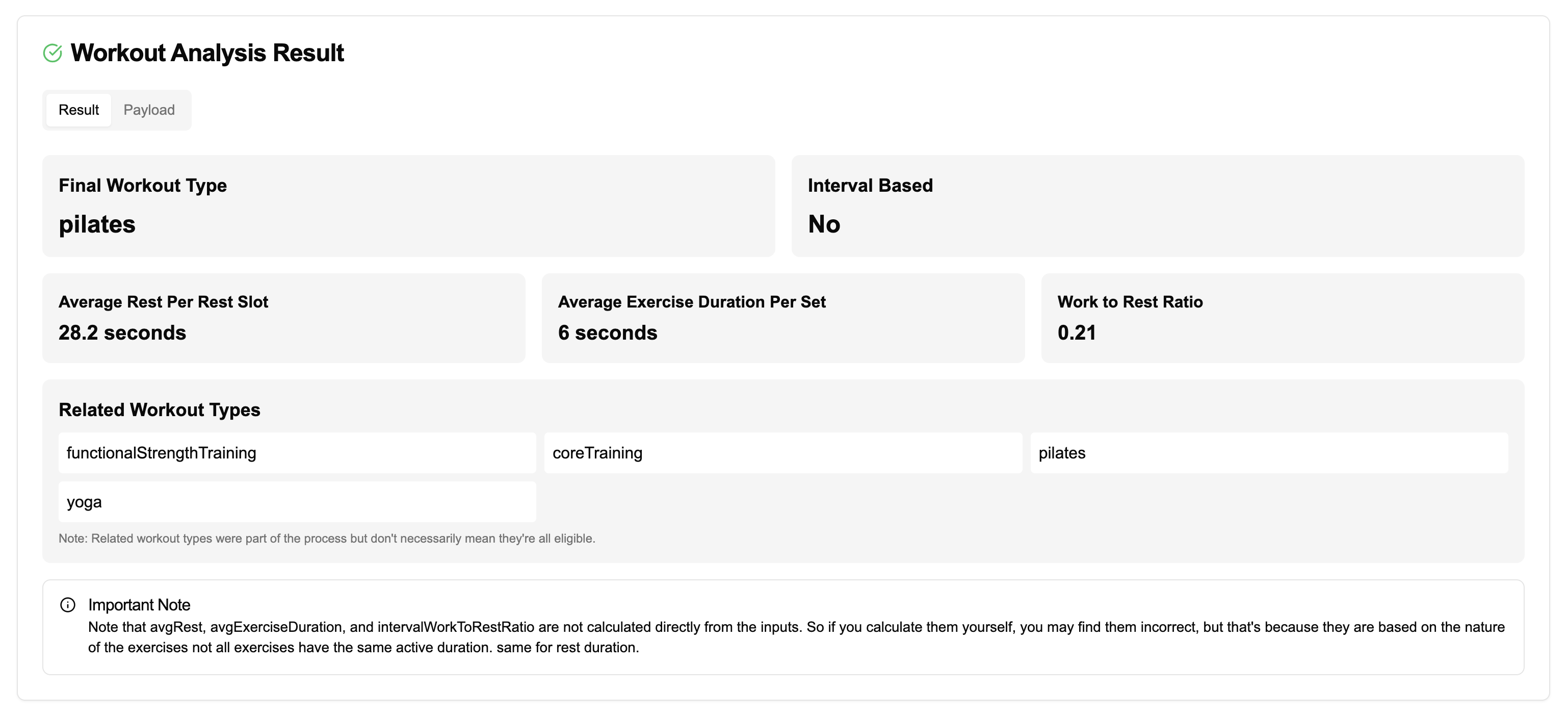
- Activity type classification into the most accurate
HKWorkoutActivityType - Return metadata to help developers understand the classification reasoning
- Built a public demo: fit2user.vercel.app
🚧 Challenges
- Apple provides no public documentation or guidance for how to choose
HKWorkoutActivityTypebased on custom workouts - Workout formats are inconsistent across platforms — from circuits to Tabata to freestyle
- Developers rarely think about the Apple HealthKit implications until users complain
- Finding the balance between too simple and too complex was tricky — I had to support edge cases while keeping the API intuitive


Log in or sign up for Devpost to join the conversation.