-
-
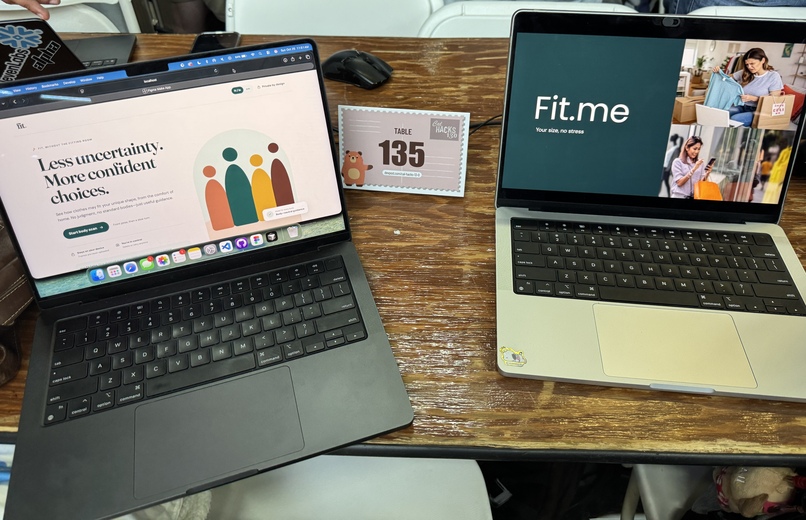
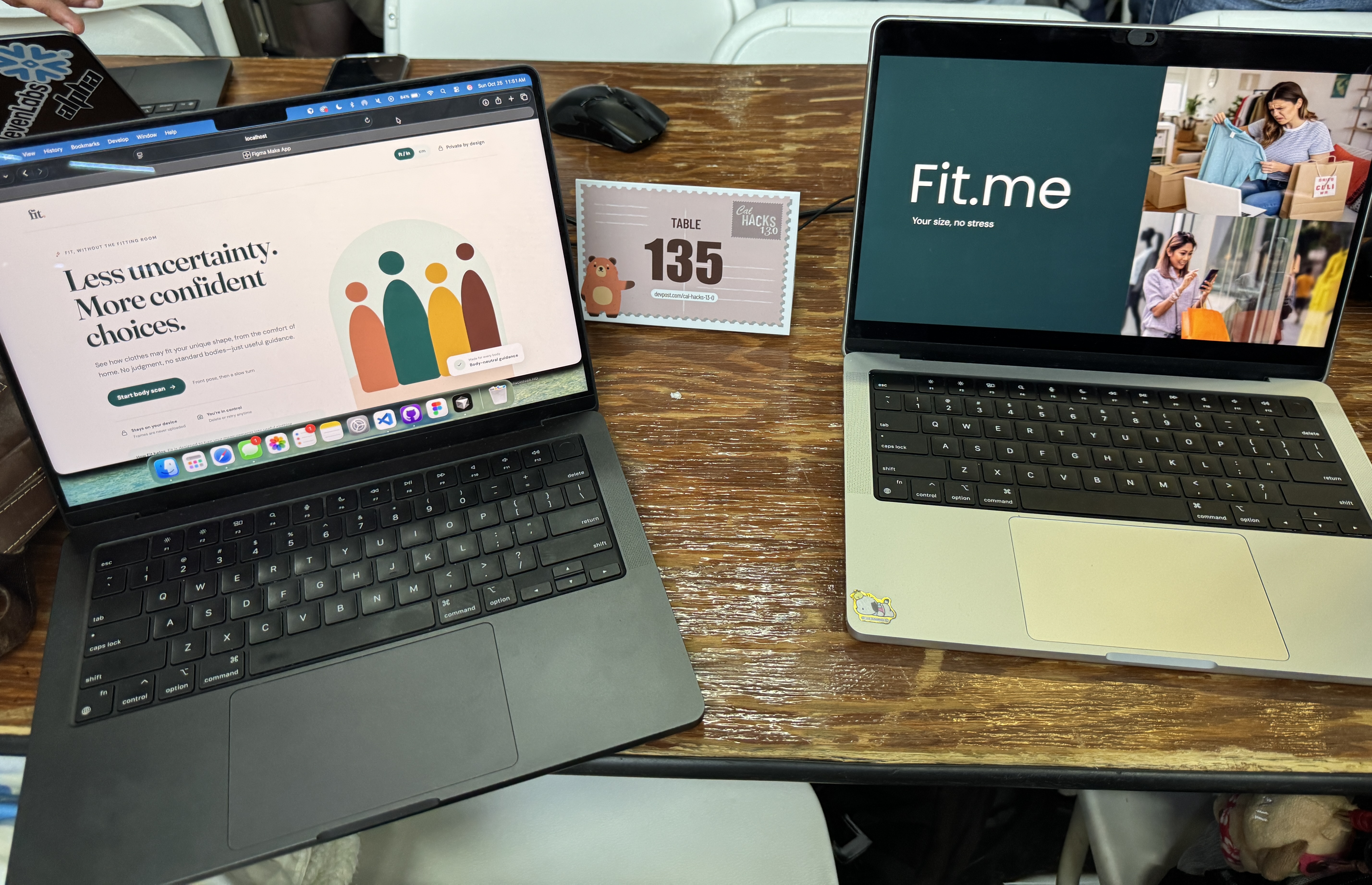
Fit.me project page and demo presentation (10/25/26)
Inspiration
Sizing guides on clothing websites are a standard... but a slightly obsolete one. While they're helpful for shoppers who might have their measurements stored, users who can't take their measurements for any reason or feel body sensitive and might become demoralized to do so face an overlooked barrier to purchasing the clothing they want. To bypass this sizing uncertainty, they resort to bracket purchases—buying multiple sizes to cover a potential fit range (e.g. M, L, XL) and trying them on at home before returning the two sizes that don't work.
For one small business owner based in SF who catered to a plus-size female client base on Amazon, this purchase-and-return procedure was more damaging than profitable, in more ways than one. The constant return processing took money from his pocket to compensate, but that's not even the worst part. While purchasing 3 sizes and returning 2 was in reality a sign of success for a sale, Amazon saw this as a high potential for return risk, reducing his store's overall marketplace rating, marking items as "frequently returned", and costing him future customers.
This is a problem many businesses likely face, but it is the small ones that are punished the most.
We wanted to create a tool that would help both the buyer and seller—empowering customers to find the right fit in one shot without any physical struggle or damage to body confidence, and minimizing profit loss for small business owners who are satisfied when their customers treat their stores as one-stop shops.
What it does
Our web app is a hands-free body measurement and size recommendation system. We use a laptop webcam to gauge a user's physical measurements (e.g. shoulders, bust, inseam, waist, hips) and provide clothing size recommendations corresponding to an online sizing chart for specific, user-selected clothes.
How we built it
We first built a face recognition model that detects a person's age using GoogLeNet. Then we blurred the face. We also simultaneously built a model to scan the body using MediaPipe. Later, we merged the two to scan the entire body. Moreover, once the model measured the person, it gave clothing recommendations from a pre-formed database. We also created our website on Figma make, and then connected the front and back end.
Challenges we ran into
We realized our first idea was infeasible, and therefore we switched to creating Fit.me. We were a little short on time, and it was our first time building something related to biometrics and computer vision, so it took us a while to figure out how to build the models and measure the user accurately. We also ran into issues connecting the scanning program to the front end. At first, the website didn't run the scanning process; however, after multiple tests and fixes, we got the website to scan the user's full body.
Accomplishments that we're proud of
Being a group of beginner hackers and having very limited exposure to computer graphics and vision within the team, we are very proud to have built a working MVP of our product that approximates biometrics within 2-3in of the correct values. We were able to conduct live demos of our tool with our judges, returning results in seconds and incorporating a variety of sponsors' products along the way (Cartesia for voice-guided scanning instructions, Apify for clothing site scraping, Anthropic/Claude for sizing recommendations, etc.).
What we learned
This project really pushed all of us out of our comfort zones. We had to learn a lot about computer vision and how to capture biometrics while building the models. We also learnt how to integrate the back and front end (Figma make design).
Built With
- apify
- cartesia
- chat-gpt
- claude
- convex
- css
- cursor
- figma
- gemini
- github
- google-docs
- google-slides
- googlenet
- python
- slack
- typescript

Log in or sign up for Devpost to join the conversation.