-
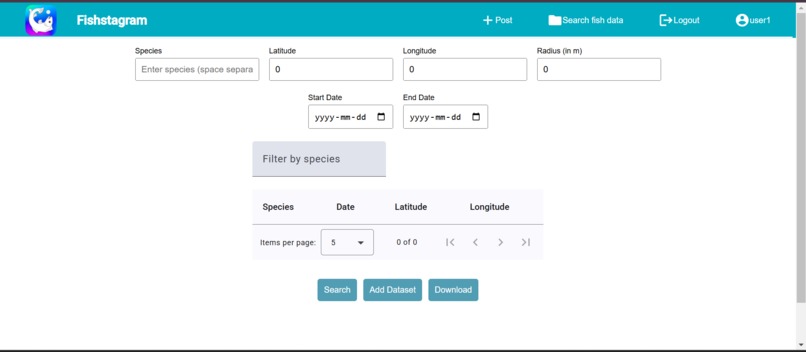
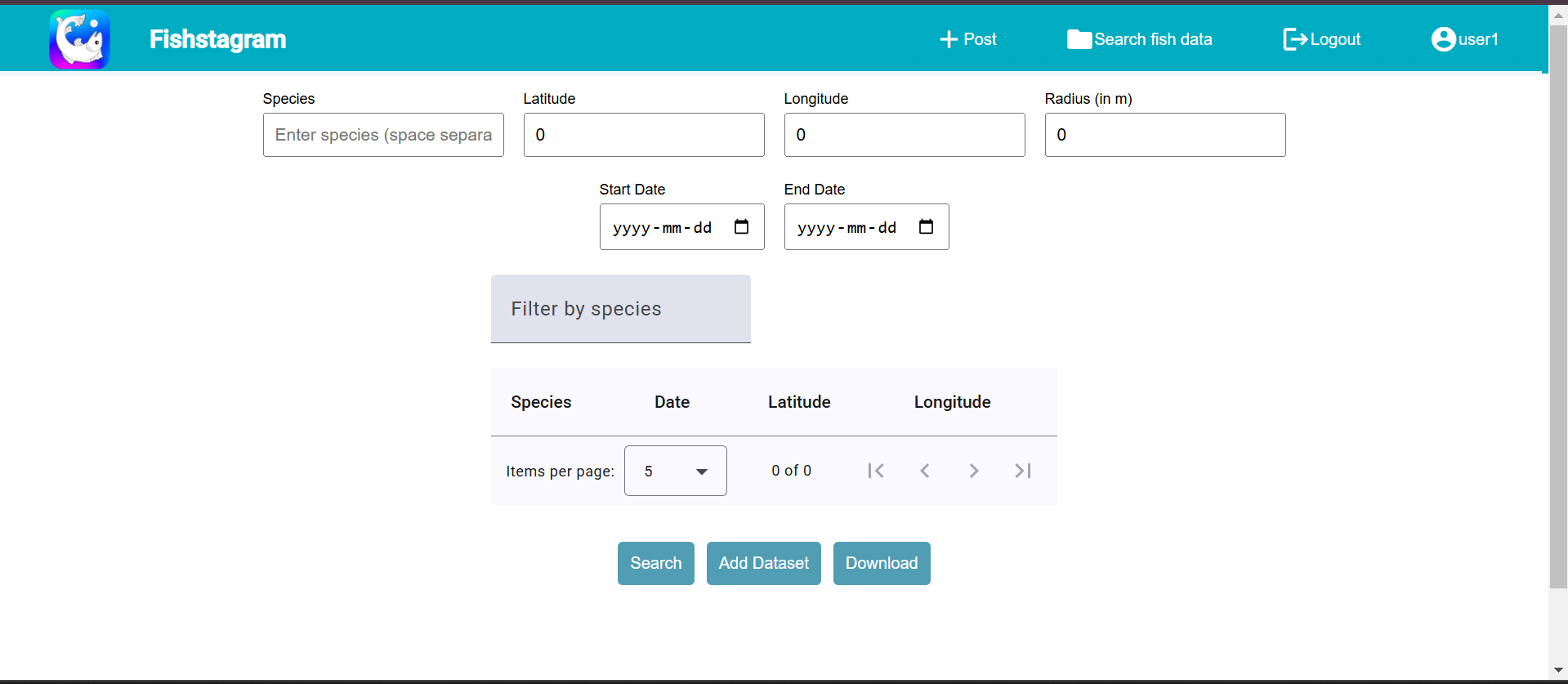
Dataset screen in Account
-
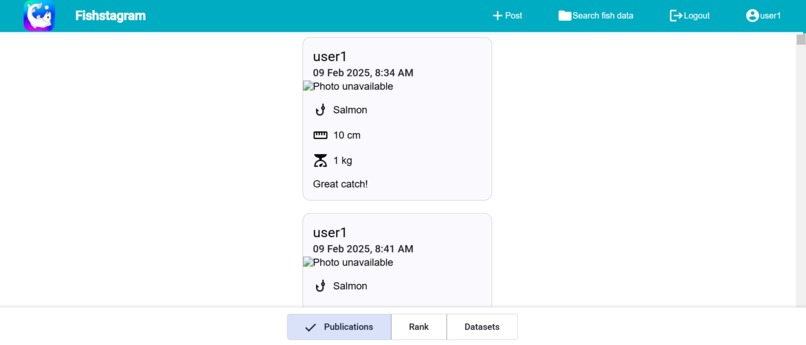
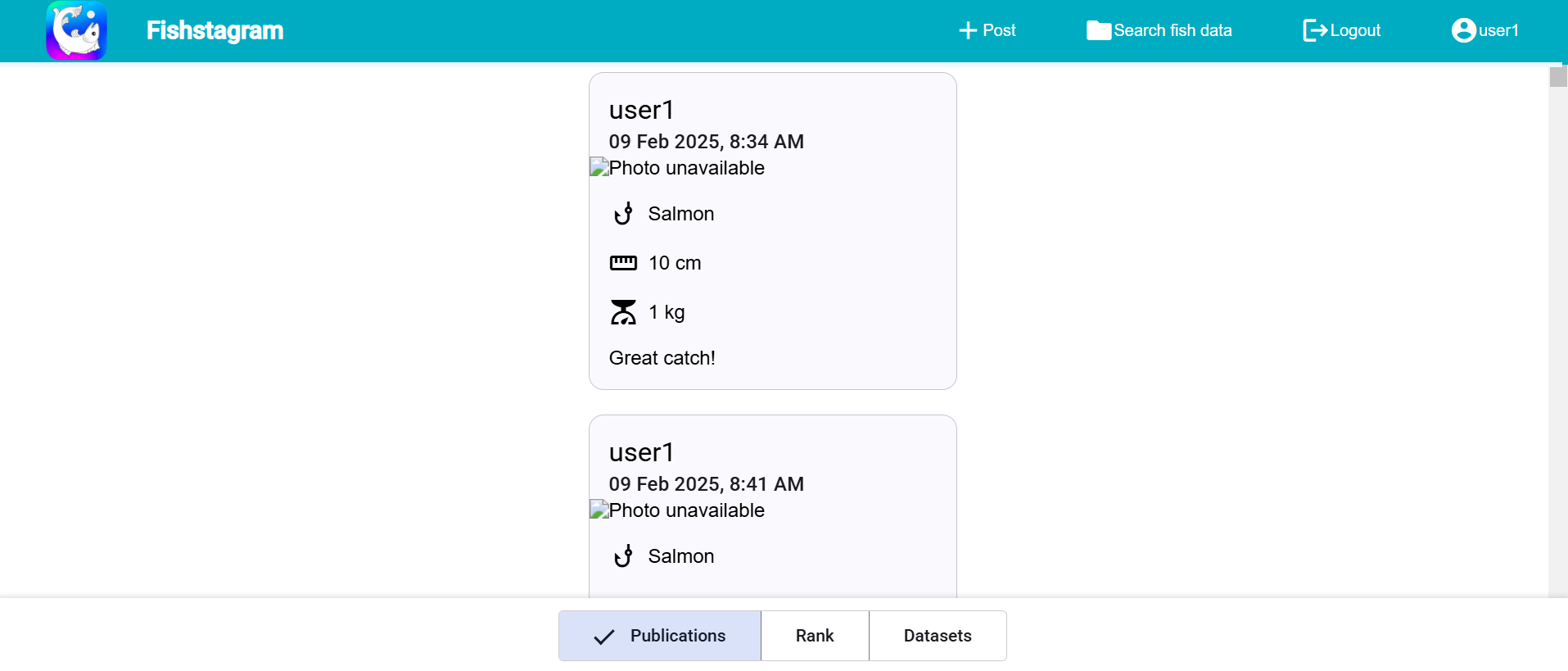
Account screen
-
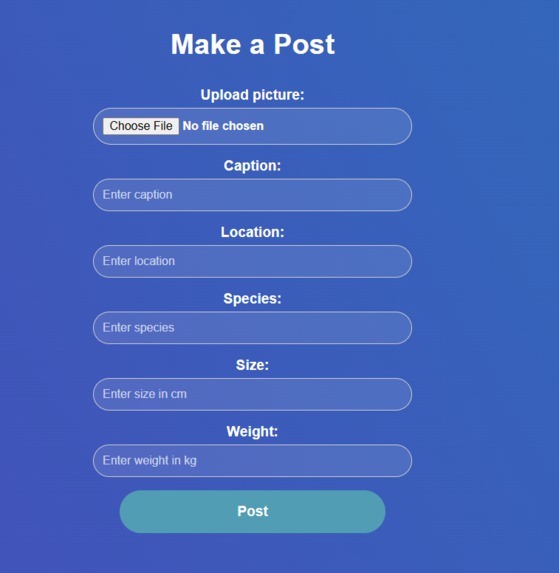
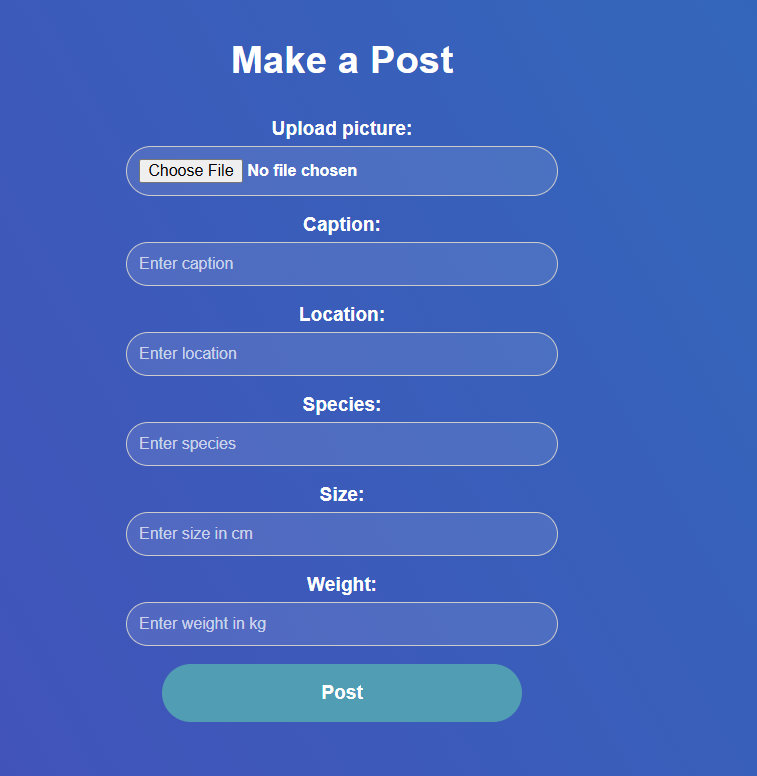
Post screen
-

Login screen
-
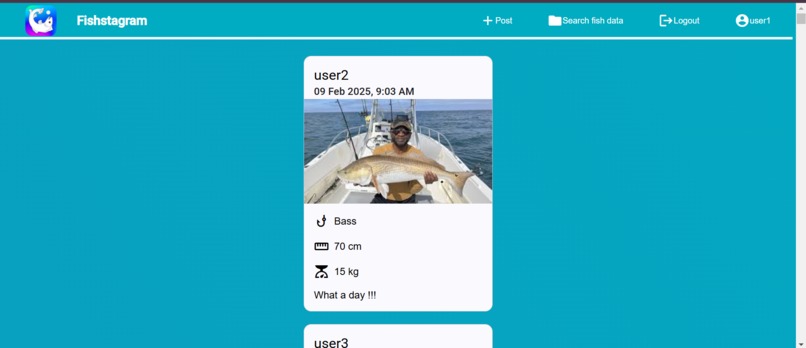
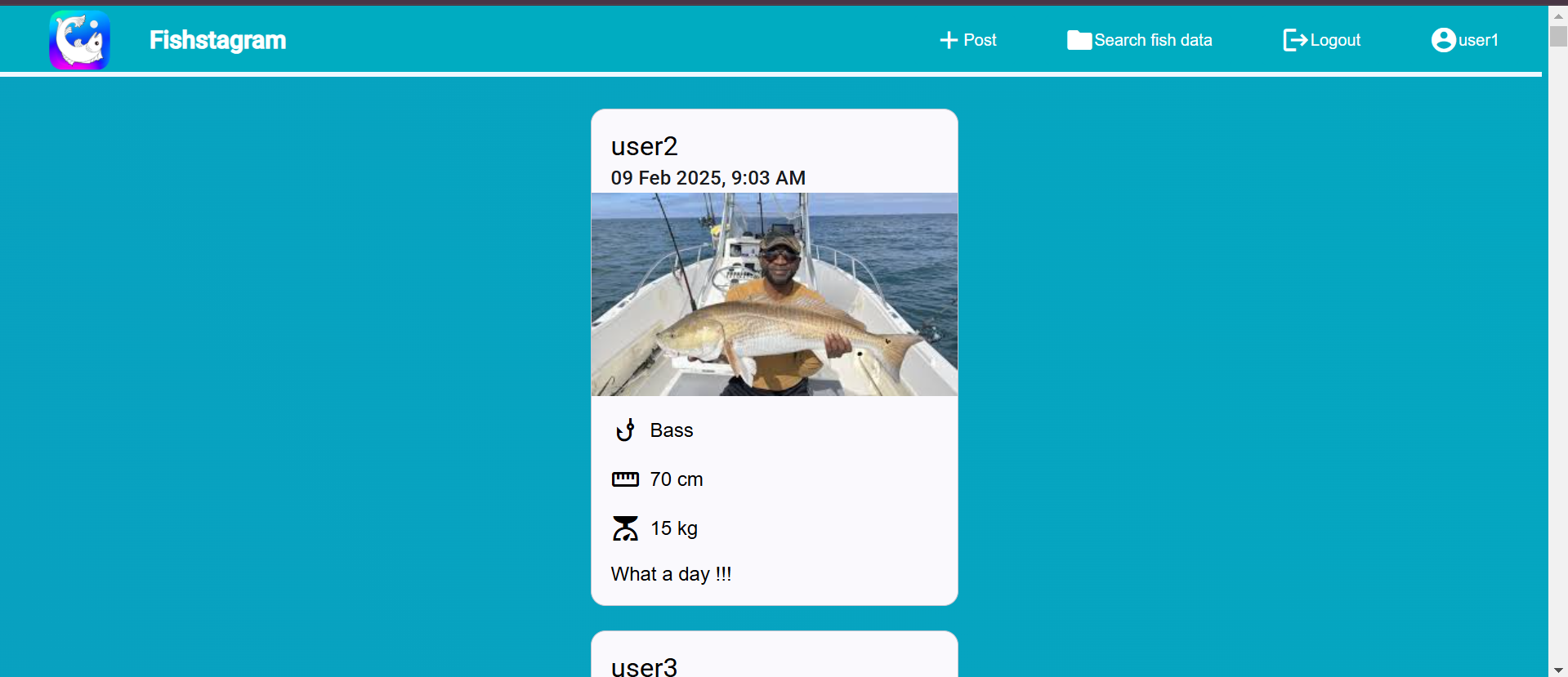
Feed screen

Inspiration
We like to fish, which allows us to greatly appreciate aquatic ecosystems and the preservation of the life within. Our joint passion for science and data management allowed us to conceive the primordial idea behind this project.
What it does
Fishstagram is a social media web application where fishers and scientists can convene. For the fishers, they get to share their catches with a like-minded community and expand their network. Scientists can glean the passive data collected by the fishers about the types of fish and ecosystems that exist in the lakes they visit. Overall, it is a symbiotic relationship that fosters a strong and passionate community.
How we built it
For the visuals and overall front end programming, we utilized the Angular Framework to make use of its amazing material component and simplified website code integration. As for the back end, we created a NestJS server which took care of communicating and obtaining information from our MongoDB instance, and sending it back to the client.
Challenges we ran into
CSS styling and overall visuals were fairly time-consuming to implement and gave us some trouble. Mismatching of package files made it difficult to work on the server side at the same time. Integration of HTTP requests and their responses could prove itself somewhat challenging.
Accomplishments that we're proud of
The website offers a variety of services for users of various backgrounds, whether they are passionate fishers or dedicated scientists. We are also rather proud of our dynamically updated pages, like the feed or the account page.
What we learned
Some of our team had the chance to learn the Angular Framework, which was not only unique but totally new to them. Some teammates that had a front end intensive background had the opportunity to work and develop a good amount of the back end functionalities.
What's next for Fishstagram
We hope to eventually be able to implement an API that gives species predictions based on current location, as well as an integrated AI tool that automatically detects fish species and physical dimensions.

Log in or sign up for Devpost to join the conversation.