




Inspiration:
In The Cost of the Catch, players manage fishing operations while balancing profit with the health of the ocean. Every decision, such as how much to fish and where to fish, affects marine life and the surrounding ecosystem. Careless overfishing can lead to declining fish populations, damaged ecosystems, and struggling fishing communities. Players must think strategically and sustainably to protect the ocean while keeping their fishing industry alive.
What does it do?
The Cost of the Catch raises awareness about the real-world consequences of overfishing by showing how short-term gains can lead to long-term environmental and economic harm.
As the player progresses through the game, they will make decisions that affect the surrounding ocean ecosystem. At the start, the player can only send their crew to fish in a single section of the ocean. Over time, continued fishing will reduce the fish population in that area. If the player keeps fishing without limits, the fish may eventually disappear, coral reefs can die off, and the ecosystem may no longer be able to recover. When this happens, the player will be forced to purchase rights to fish in other areas of the ocean.
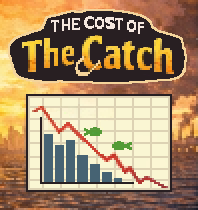
At the end of each day, the crew provides a report showing how many fish were caught based on the hours spent fishing, along with an estimate of the remaining fish population in that area. As time passes and more fish are harvested, the daily catch will gradually decrease until there are eventually no fish left to catch. The environment and other aspects of the surrounding ecosystem would also be damaged by factors such as anchors destorying choral reefs.
Our process: How did we build it?
We first had to pick a focus for our game that was achievable given the time constraints. We spent some time as a group putting together different ideas and doing research before finally deciding on a plan. Once we made a decision, we began recording steps, ideas, information, and other resources on a Google Doc to keep everything accessible to all teammates. Our next step was to create all of the music, sounds, sprites, backgrounds, and anything else we would need. (animations and images were made within the time limit) Images After we had our ideas, plan, and assets ready, we could finally begin coding our project in Unity:
-Create a map for the player to pick a fishing location
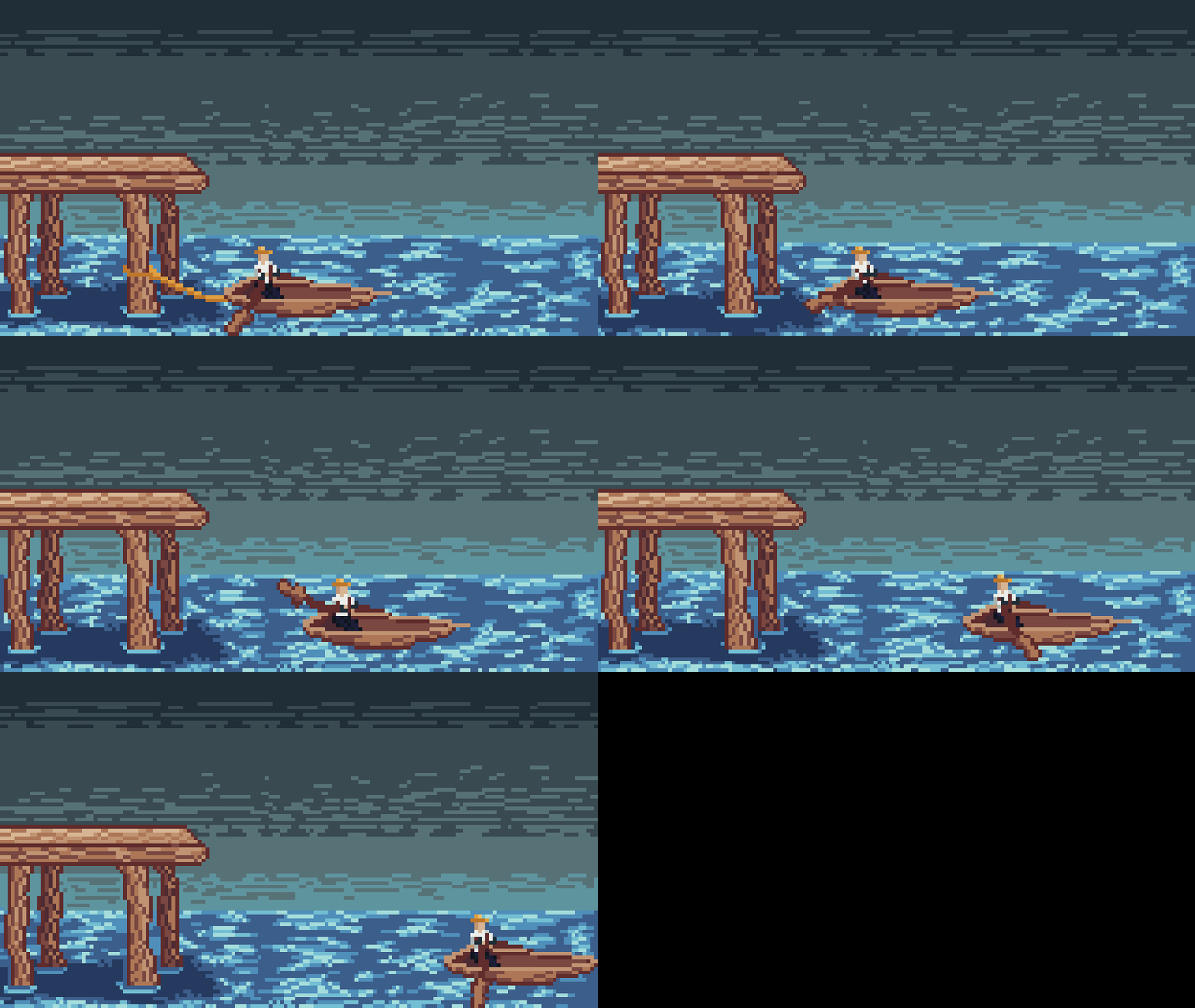
-set cut scenes and animations to tell the story
-Create a script that sends the player a summary of the fish caught in total, fish caught per hour, and population status. This will go down the longer the player fishes in that area, as the fish population will decrease until extinction
Some challenges we ran into:
When we first began our project, we realized that our original idea was too extensive and complex to complete within the given time constraints. This cost us some time during planning, as we had to rethink our idea to better suit the project's criteria and constraints.
Additionally, this was our first time coding in Unity, and we had challenges with some of our members not being able to load it on their computers and with it crashing a few times during programming.
Accomplishments that we're proud of:
We are so grateful for the chance to be able to participate in the 2026 Hackathon. This is our first full year since our robotics team was created in April of 2025, and our very first competition! We have grown so much since it was founded, but we hope to continue to learn and grow over the next few years. Our team is currently really small, and we are working with very limited funding. We are hoping that we can expand our team in the future to give more students at our school the chance to discover how fun, exciting, beneficial, and inspiring robotics can be!
We are ready to be the "future of the world", - Dr. Andrew Wheeler
What did we learn?
As a new robotics team, we learned so much about managing our time, organizing our resources, planning and communicating as a group, and overcoming challenges under pressure. We will definitely continue to build these skills within the group and apply them to future projects and competitions.
What's next for The Cost of the Catch:
We will likely continue building on this project during club meetings as a resource to teach some of our members who might be interested in learning or practicing code.
Built With
- c#
- devpost
- git
- github
- google-docs
- libresprite
- unity


Log in or sign up for Devpost to join the conversation.