🌲🔥 About the Project: Smart Wildfire Response & Prediction
🚀 Inspiration
Wildfires are becoming more frequent and destructive, causing severe damage to ecosystems, communities, and economies. Emergency response teams often struggle with limited resources and delayed response times, leading to avoidable losses. Inspired by real-world disaster response challenges, we set out to build a data-driven solution to optimize resource allocation and predict wildfire risks.
🛠 How We Built It
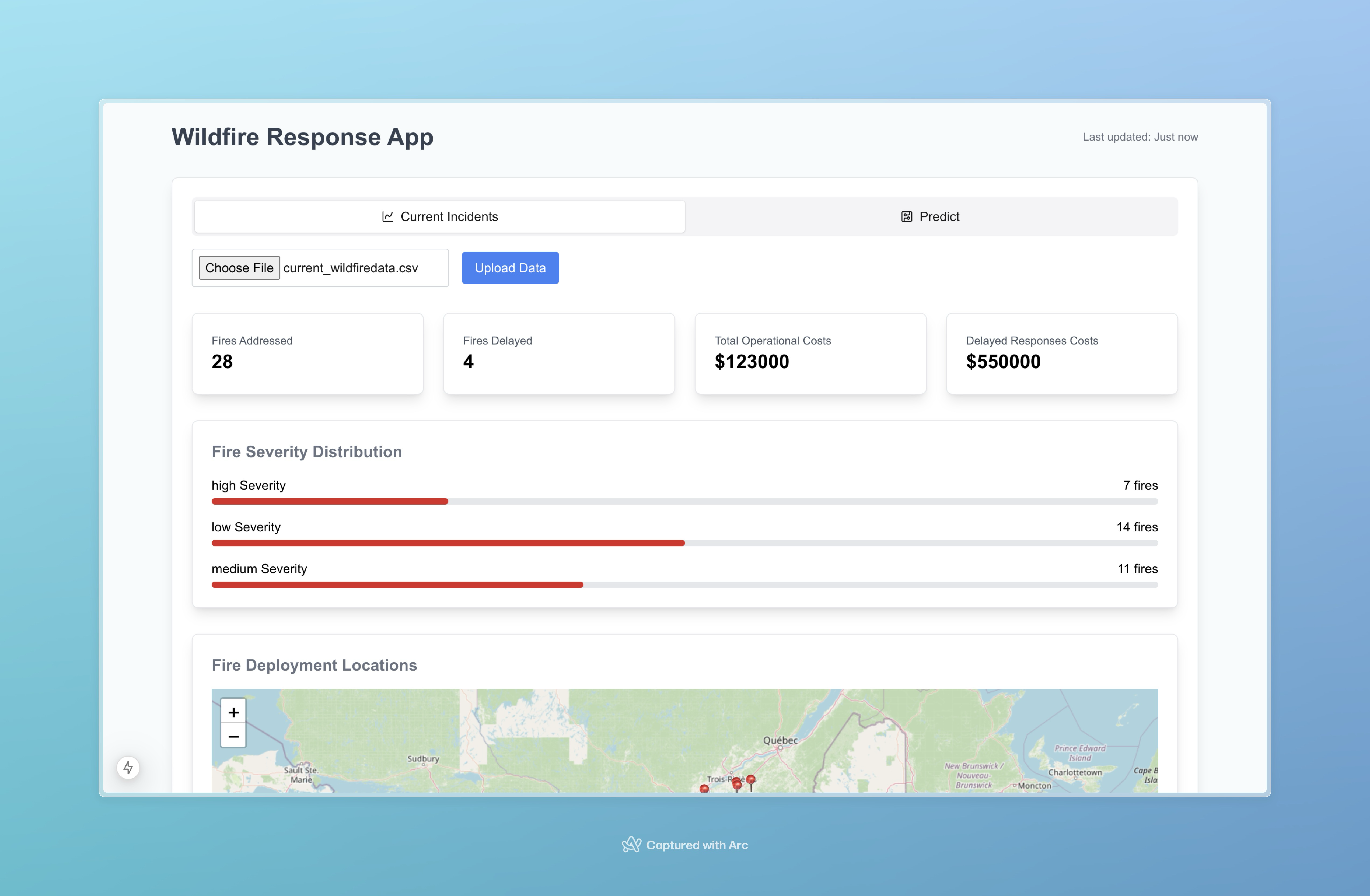
We developed a Flask-based API that processes wildfire occurrence data and dynamically deploys firefighting resources based on severity and availability. Our system consists of:
Data Processing: Extracting and analyzing CSV-based wildfire data.
Resource Allocation Engine: Deploying Smoke Jumpers, Fire Engines, Helicopters, Tanker Planes, and Ground Crews using an optimized priority-based system.
API Endpoints: Supporting wildfire severity updates, resource tracking, and deployment reporting.
Predictive Modeling (Part 2): Exploring historical wildfire trends to forecast high-risk fire zones for proactive response planning.
📚 What We Learned
The importance of real-time decision-making in emergency response.
Optimizing resource allocation to balance cost-efficiency and fire containment.
Integrating predictive analytics to improve disaster preparedness.
Building scalable APIs that can handle large datasets and evolving real-world conditions.
⚡ Challenges We Faced
Resource Tracking Issues: Ensuring firefighting units update dynamically without resetting.
Data Processing Efficiency: Sorting and filtering large wildfire datasets effectively.
Balancing Response Priorities: Allocating limited resources while ensuring high-severity fires are handled first.
Frontend-Backend Communication: Debugging API integration to ensure smooth data flow.
🌟 The Impact
With this project, we aim to improve emergency wildfire response, reduce economic losses, and enhance predictive risk assessment—ensuring that firefighting teams work smarter, not harder. 🚒🔥

Log in or sign up for Devpost to join the conversation.