-
-
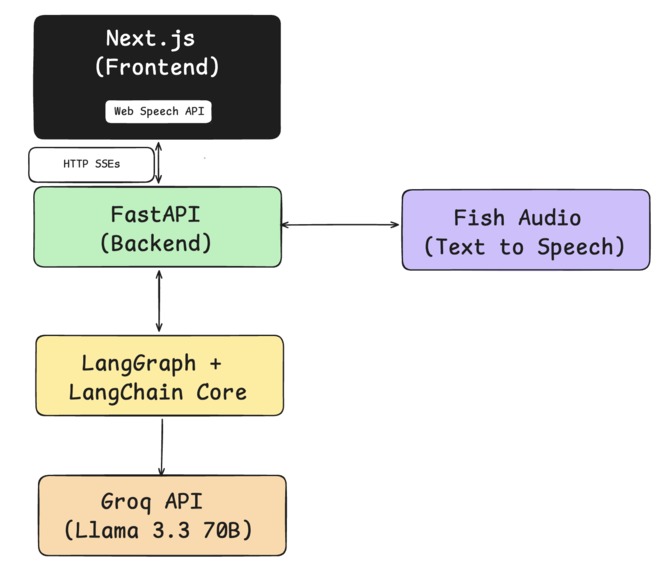
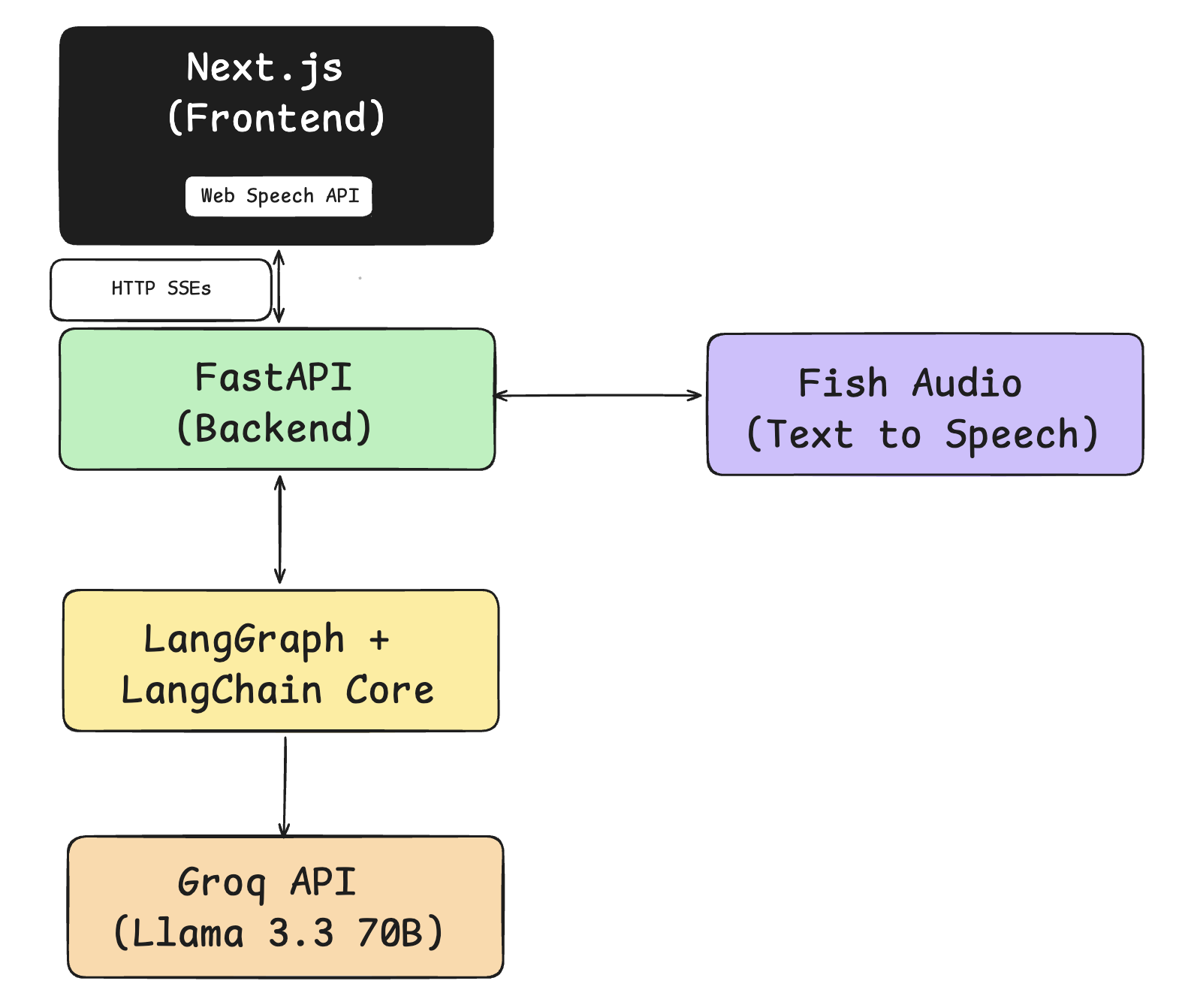
System Architecture
-
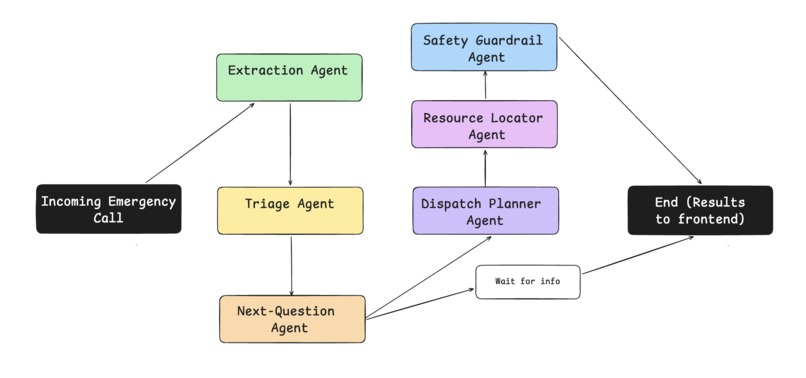
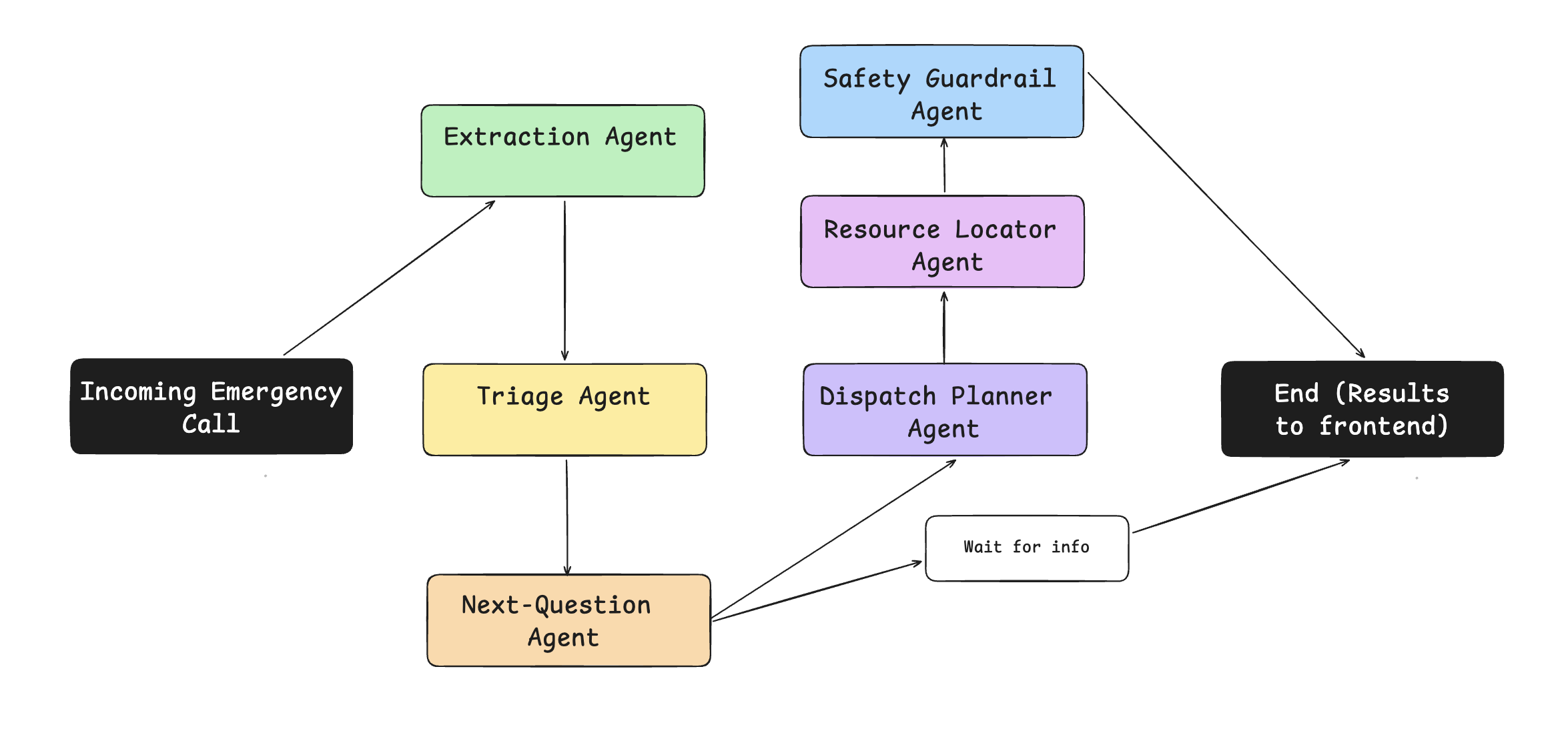
Agentic AI System
-
-
💡 Inspiration
📞 Over 240 million emergency calls are made in the United States each year (National Emergency Number Association), putting extreme pressure on dispatchers in life-or-death situations. In those critical first moments, key details can be missed, delayed, or misunderstood when callers are panicking.
FirstWaveAI was built to rethink the emergency intake process. I created an AI-powered call assistant that speaks directly with callers, asks clarifying questions, and structures critical information in real time. The system then visualizes the situation on a live map, identifies nearby resources, and generates an AI-assisted dispatch recommendation, all while keeping a human dispatcher in full control with an approval override. 🚑
🚨 What it does
FirstWaveAI is a real-time emergency dispatch assistant that combines speech recognition, multi-agent AI, and interactive visualization to help dispatchers work faster and more accurately.
🔧 Core Features
🎙️ Voice-First Interface
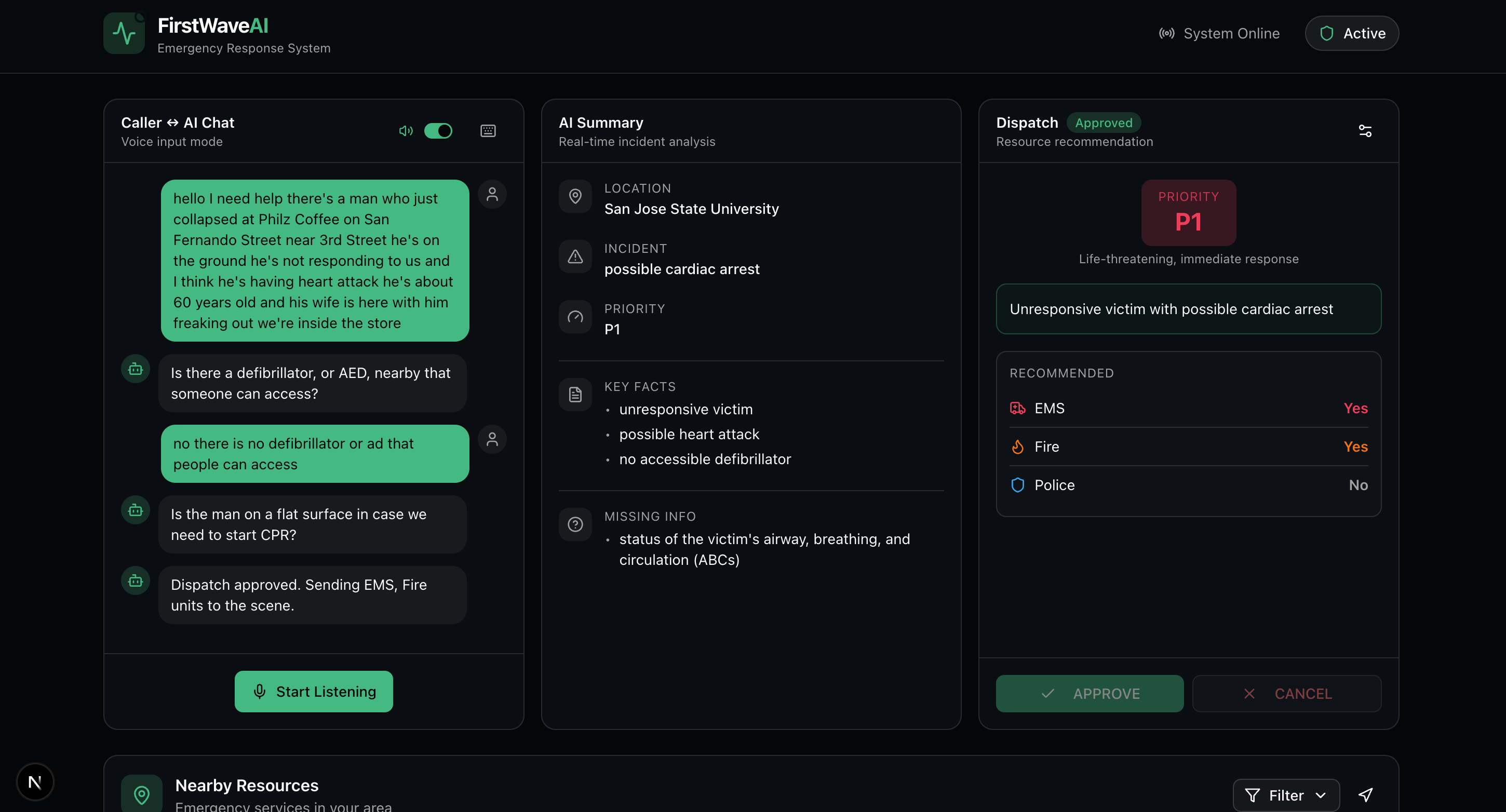
Callers can speak naturally using the Web Speech API, while the system transcribes the conversation in real time and maintains a full transcript.
🧠 Multi-Agent AI Pipeline (LangGraph + LLaMA 3.3 70B)
Six specialized AI agents work together to analyze the call:
- 📝 Extraction Agent – Captures key details (location, injuries, hazards, people count)
- 🚦 Triage Agent – Assigns priority levels (P1–P4)
- ❓ Next-Question Agent – Suggests clarifying follow-ups
- 🚓 Dispatch Planner – Recommends EMS, Fire, or Police
- 🗺️ Resource Locator – Finds nearest available units with ETAs
- 🛡️ Safety Guardrail – Ensures ethical RECOMMENDATIONS
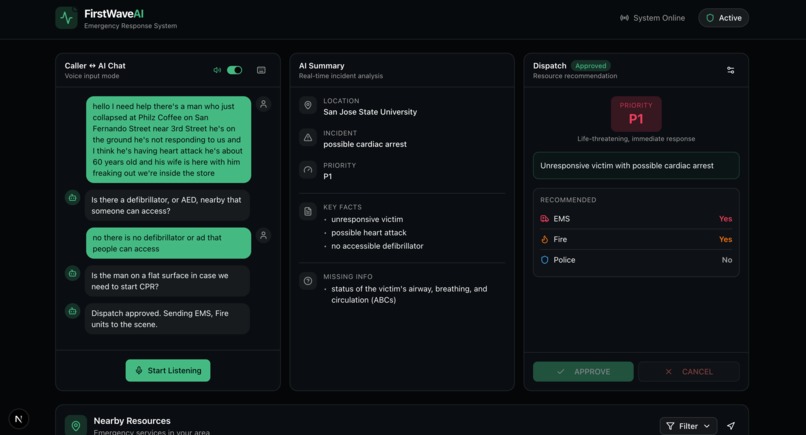
🖥️ Interactive Dashboard
A clean three-column interface shows:
- Live chat transcript 💬
- AI-generated emergency summary 📝
- Dispatch recommendations with approve/cancel controls ✅❌
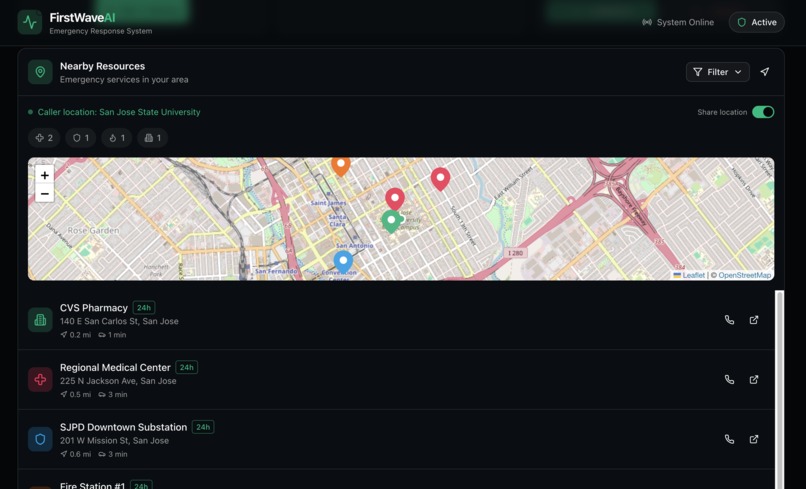
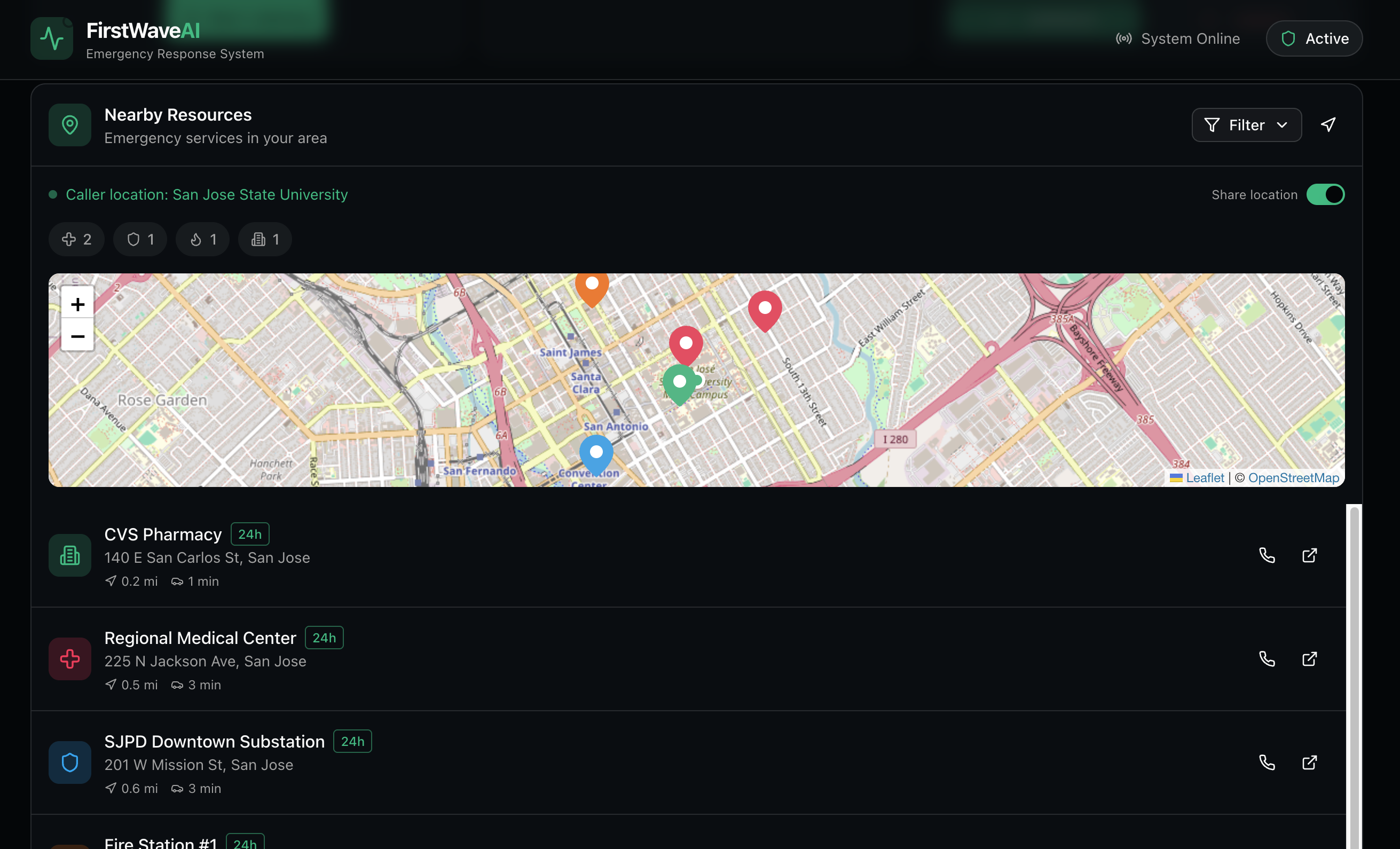
🗺️ Resource Mapping
An interactive Leaflet map displays nearby hospitals, fire stations, police, and pharmacies with distances and travel times.
🛠️ How I built it
Frontend
- Next.js 16 + React 19
- Tailwind CSS 4 (custom emergency theme)
- shadcn/ui components
- Leaflet + Openstreetmap
- Web Speech API
- TypeScript
Backend
- FastAPI
- LangGraph (multi-agent orchestration)
- Groq + LLaMA 3.3 70B
- Fish Audio API (TTS)
- Server-Sent Events (SSE) for real-time updates
⚠️ Challenges I ran into
Building AI for real emergencies is hard.
- 🔁 Avoiding redundant questions – The AI kept asking things the caller already said, so I had to add strict memory rules.
- ⏱️ Speed vs. accuracy – P1/P2 emergencies required immediate action, while P3/P4 allowed more questioning. Encoding this logic took serious prompt tuning.
- ⚖️ Ethical safety – I carefully designed guardrails to prevent harmful questions.
🏆 Accomplishments I’m proud of
🎯 This was my first fully solo hackathon project!
📚 What I learned
- 🗂️ Solo project management — better scoping, prioritization, and focus
- 🐞 Debugging under pressure — isolating issues across multiple systems quickly
🚀 What’s next for FirstWaveAI
🔗 MCP Integration - Replace mock data with real Model Context Protocol servers for:
- Live emergency unit locations
- Hospital availability
- Real-time traffic conditions
Built With
- fastapi
- groq
- langchain
- langgraph
- next.js
- python
- typescript


Log in or sign up for Devpost to join the conversation.