-
-
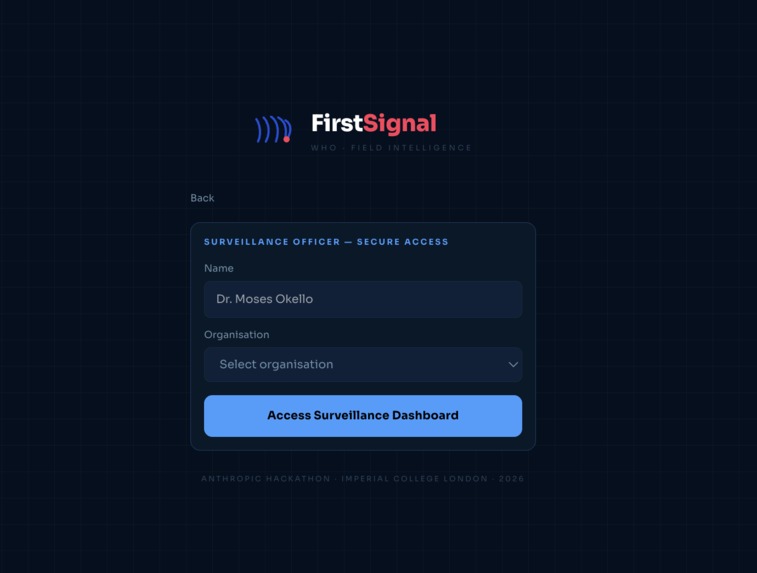
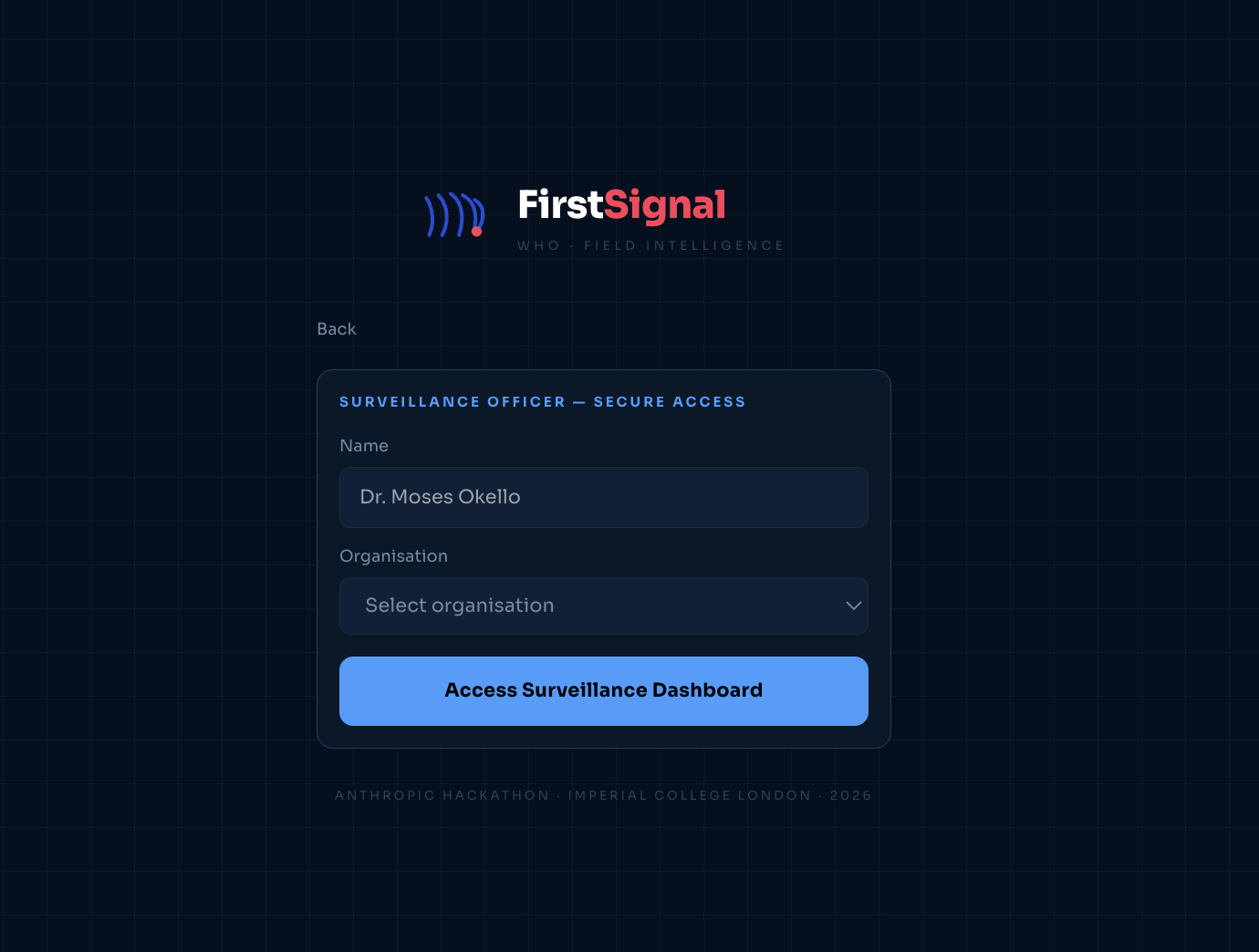
Supervisor Login Page
-
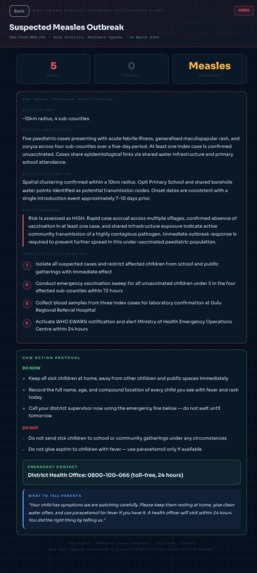
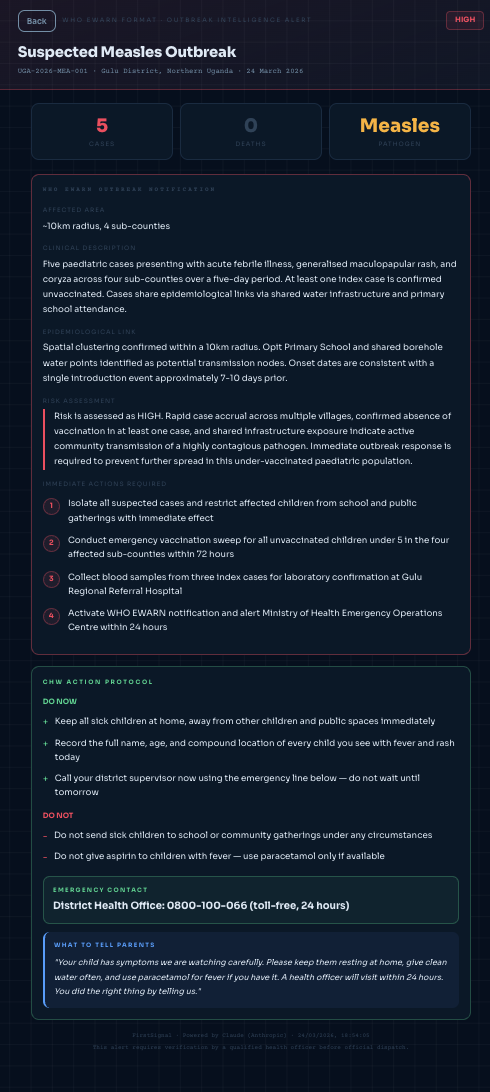
WHO EWARN alert screen — full notification
-
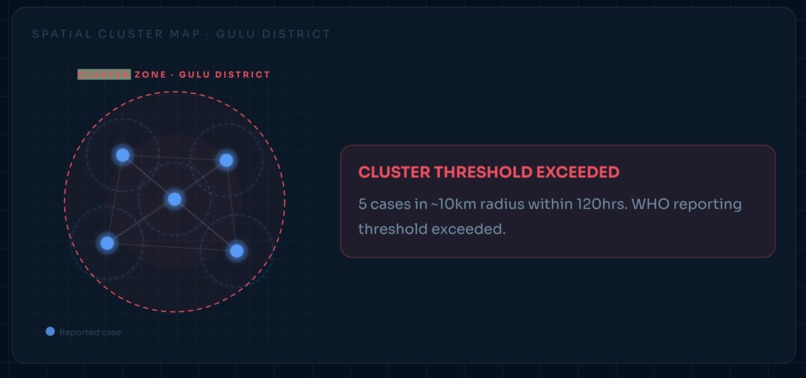
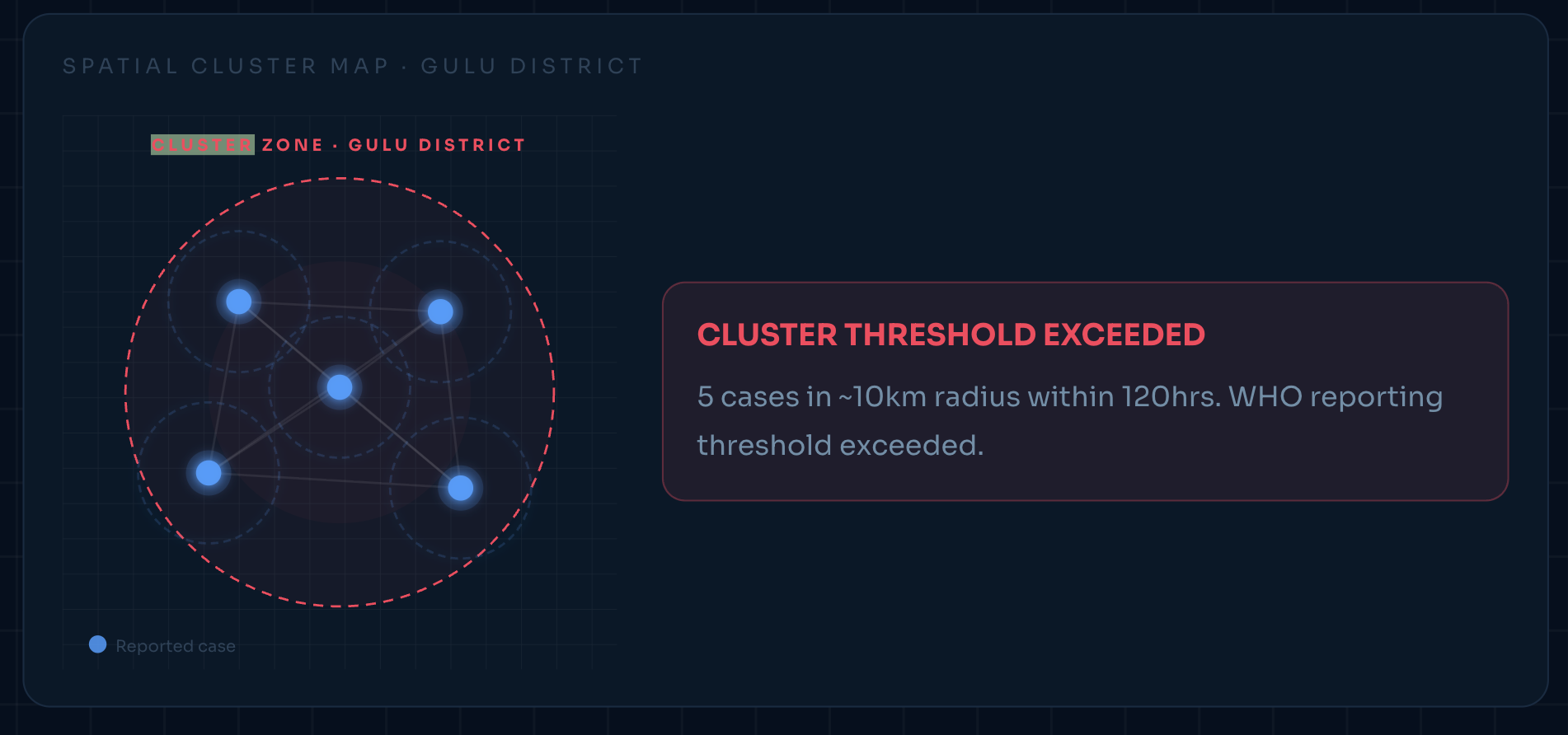
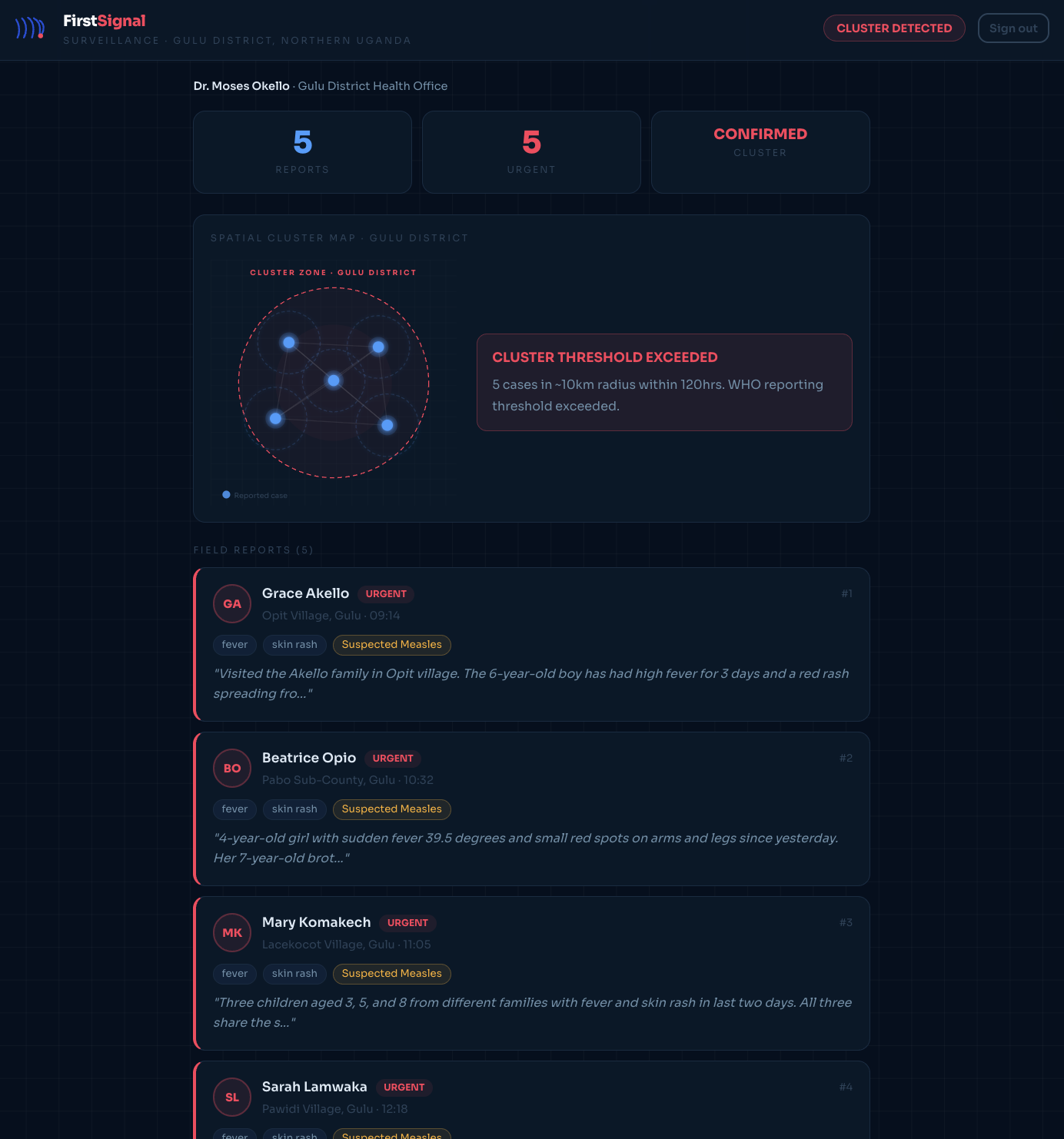
Cluster map with all 5 nodes and the red zone ring
-
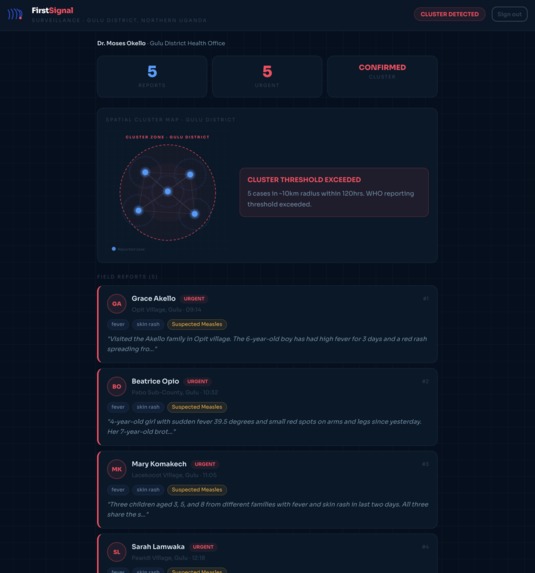
Supervisor dashboard with all 5 reports loaded + CLUSTER DETECTED badge
-
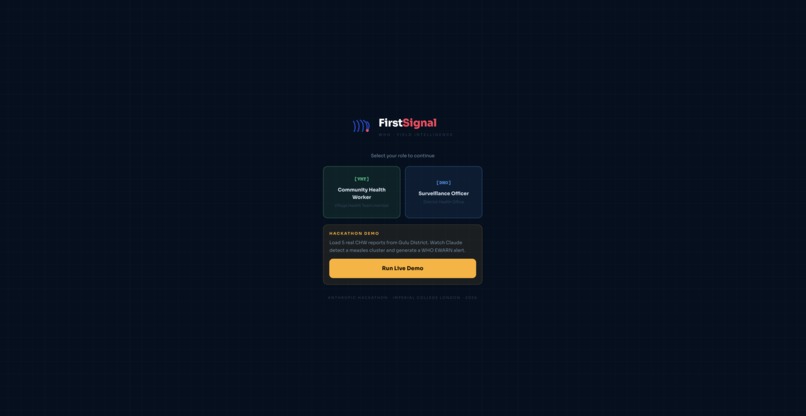
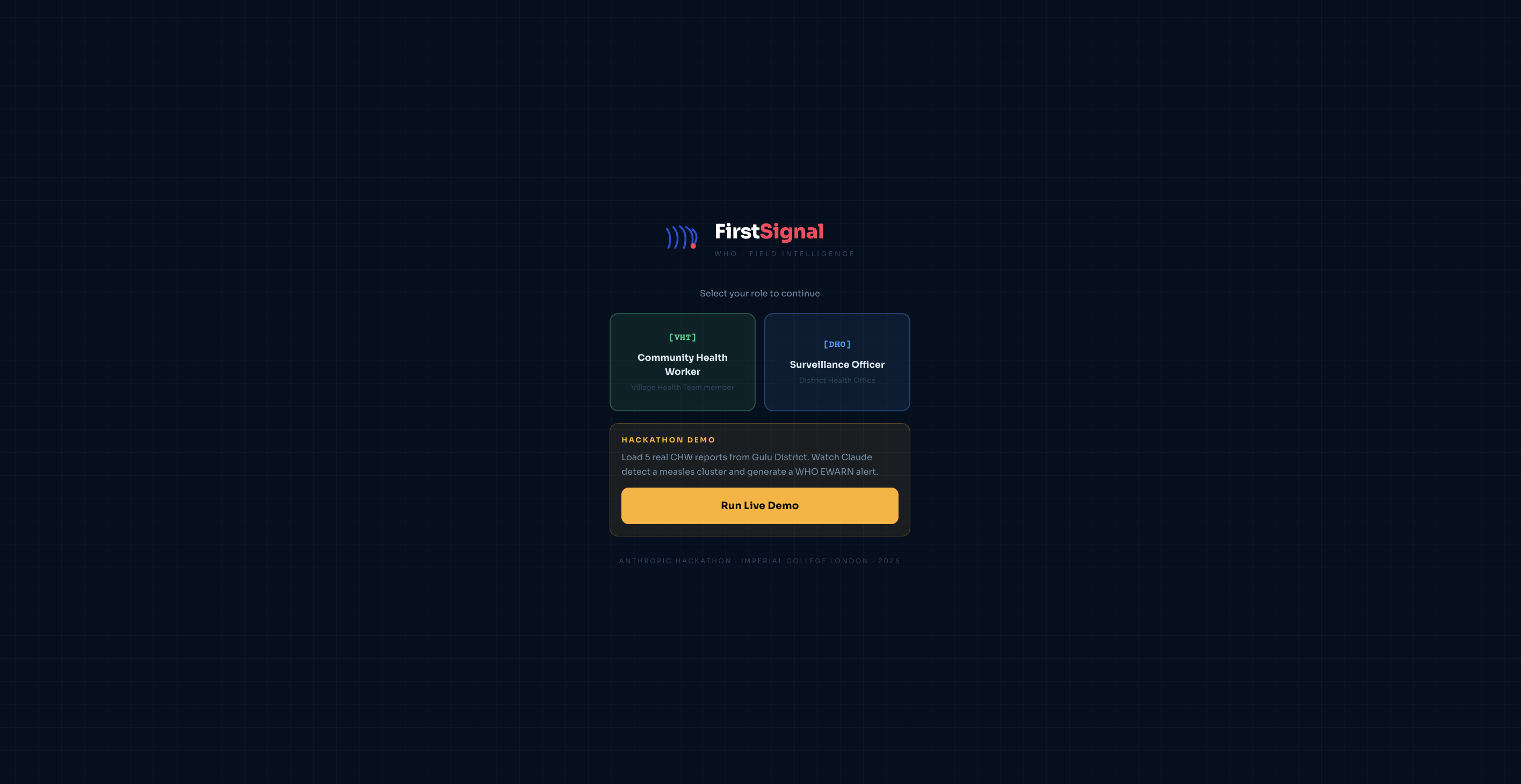
Login screen — role selection
The Problem
Rural community health workers (CHWs) in Uganda see the earliest signs of disease outbreaks — clusters of fever, unusual rashes, sick children. But they have no system to escalate these observations. They send WhatsApp messages into a void. By the time a pattern is recognised, the outbreak has spread.
DHIS2 and WHO's eIDSR system require structured data entry — a significant barrier for field workers operating in remote areas with basic Android phones. Approximately 60% of alerts in high-risk regions remain untriaged due to limited human resources.
What We Built
FirstSignal is an epidemic intelligence platform that accepts unstructured text observations from CHWs, uses Claude to extract structured surveillance data in real time, detects spatial clusters, and generates formal WHO EWARN-format outbreak alerts — all without requiring CHWs to fill in a single form.
The pipeline:
- CHW submits a plain-text field observation ("6-year-old boy, fever 3 days, rash spreading...")
- Claude extracts: symptoms, age, severity, onset, suspected condition, red flags, priority
- Reports are aggregated across a district in real time
- When 3+ cases cluster within a 10km radius, a cluster alert fires
- Claude generates a full WHO EWARN outbreak notification with immediate actions
- CHWs receive a plain-English action protocol and parent communication script
Who It's For
Primary user: Female, 20–45, government-trained Village Health Team (VHT) worker in rural Uganda. Basic Android device. 2G/3G connectivity. WhatsApp-native. High health literacy, low digital literacy.
Secondary user: District Health Officers and WHO surveillance teams who need structured, actionable intelligence — not raw WhatsApp messages.
Why It's Different
Tanzania's AI/DHIS2 integration triages alerts already inside the system. FirstSignal is the layer before that — it converts what CHWs already do naturally into the structured data that surveillance systems need.
Ethics & Safeguards
- Claude extracts and flags — a qualified health officer must verify before any alert is dispatched (two-step confirmation built into the UI)
- No PII stored — only symptom, location, and date
- Claude states confidence level; the system never makes decisions autonomously
- Role-based access: CHWs cannot see sensitive aggregate surveillance data
- False alert risk addressed: human verification gate before WHO notification
Track
Track 1: Biology & Physical Health — improving access to disease surveillance infrastructure for underserved communities in Sub-Saharan Africa.
Built With
Claude (Anthropic) · React · HTML/CSS · WHO EWARN Protocol Framework
Built With
- anthropic-api
- claude
- css
- html
- javascript
- react
- who


Log in or sign up for Devpost to join the conversation.