-
-

-
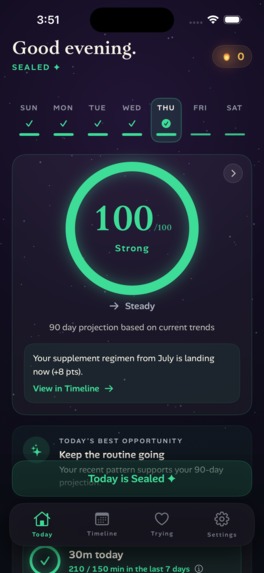
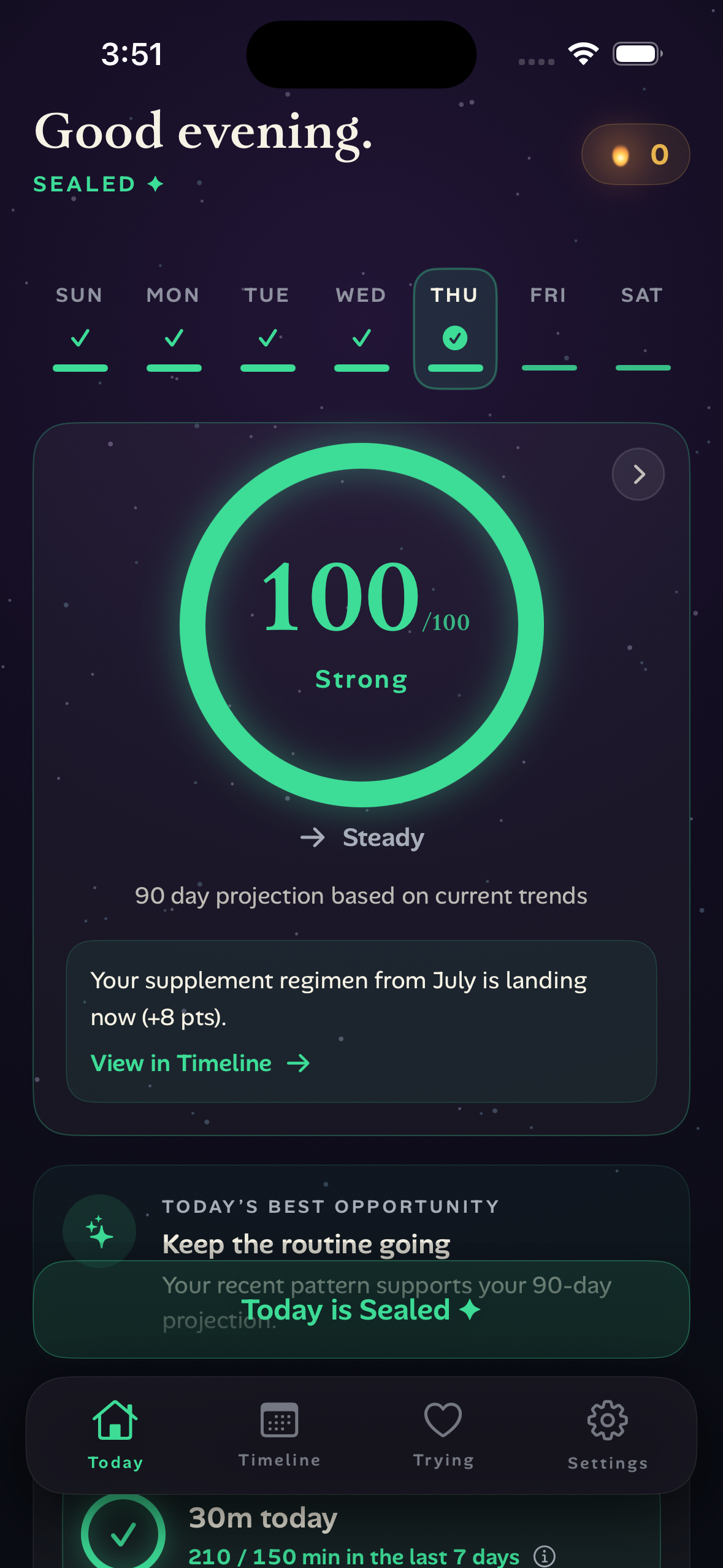
Home / Today — actual app screenshot with synthetic test data.

Inspiration
I am at that age where friends are starting to have kids or, in our case, trying to have kids.
Alarmingly, of about 8 couples who started trying, only 2 have gotten pregnant in 6 months.
We all hear the stats. Sperm counts are down 50% compared to 50 years ago. But, like, what does that mean?
Well, back in May, I started to investigate.
Turns out, it's not just plastic or air pollution or any single thing. It's actually a bunch of smaller things and a few bigger things like age, exercise, timing, and drugs.
Yes, those drugs. But also, not those drugs.
Weed and alcohol both contribute to infertility. But surprisingly, the more normal drugs for 30-year-olds are often to blame. Hair loss drugs, antidepressants, testosterone injections. The list is long, and we are at peak medication.
After diving down the rabbit hole, I realized just about every man has at least a few habits that reduce his fertility, not to mention when in their partner's cycle they are trying. So, this is really an education problem and an issue of having a lifetime of fertility-reducing habits... seems solvable?
So, I made this app for my wife, myself, and my friends to all have kids together.
What it does
First, it asks you a bunch of questions about your habits, age, lifestyle, body mass, etc.
Then it puts all of those factors together into a score to assess your general fertility level purely based on your lifestyle habits.
I worked with our OBGYN to tweak some of the numbers, especially around the effects of weed and alcohol. (Turns out, increased marijuana use is one of the main fertility reducing factors she sees in her practice.)
How we built it
I designed it in Figma and had my wife illustrate the initial artwork in Procreate. Then I took those designs and implemented the PRD in Claude first, with Codex doing more technical work like the scoring system and RevenueCat integration.
All built in Swift. There is no backend. I'm using this app too and a lot of this data is super sensitive, so it's only stored on your device. If you want to save it, you can export it to iCloud or as a CSV.
I actually built the initial version just for myself and a few friends in June and kept it on TestFlight until I saw the Shipaton hackathon and decided to publish it for this.
Challenges we ran into
I was a bit ambitious. I wanted to do too much and add too many features, but ultimately, it's a lot of surface area to QA, especially when there are so many permutations of different scores and notes, etc. Reining it in to get something launchable and usable was the hardest part. Then came iterating on feedback over the last couple of months.
Finally, marketing has been tough. Ironically, I used to be a director of marketing at a startup, but I'm just a bit too camera shy to show up and put my face out there to let other potential dads know that they could probably save themselves thousands of dollars in OBGYN visits and tests if they just exercise, sleep better, and avoid alcohol/drugs for 3 months.
Accomplishments that we're proud of
Building the app and already having our first confirmed pregnancy (woohoo!) from someone in our friend group who used that early TestFlight version back in June.
What we learned
The male fertility problem is mostly an education issue, along with maybe a bit of overmedication. I'm not sure how many guys were taking hair pills in the '70s, but certainly fewer than today...
But, it seems, the fertility issues really comes down to age, exercise, and then substances. And among our friends, age is the biggest contributing factor, followed by stress, sleep, weed, alcohol, and timing.
Women track their periods but often don't pay attention to peak fertile periods. When trying, however, those are the only real days that matter. The odds are 8% per fertile period for an average person. Missing that 3-5 day window dramatically reduces the odds of conception and you need to wait another month. You try for 6 months and only try on target for 3 of those months your odds of success are way lower...but folks don't know that.
Anyways, this whole fertility thing is fascinating... but mostly because it feels very solvable, yet we put so much emphasis on avoiding pregnancy in sex education that, when it's time to get pregnant, we guys just don't know what we have to do.
What's next for FirstBorn: Male Fertility
Win this hackathon and then use the funds to have a few female influencers talk about the male side of the fertility crisis and how to get their men to show up for their journey of trying to conceive....basically start marketing this thing. It works. The science is sound. It's an education problem we can solve.
Built With
- revenuecat
- swift
- swiftui

Log in or sign up for Devpost to join the conversation.