Aim
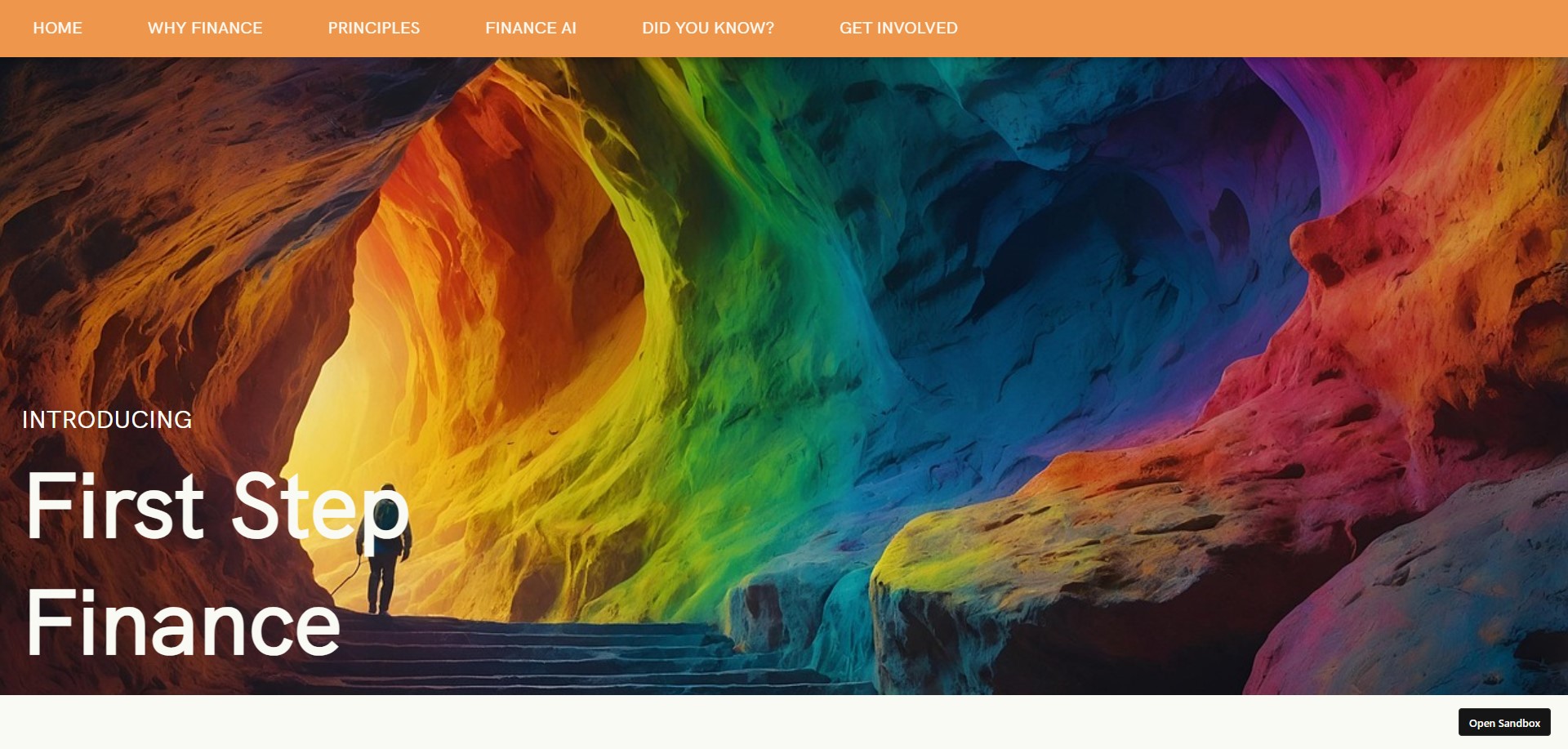
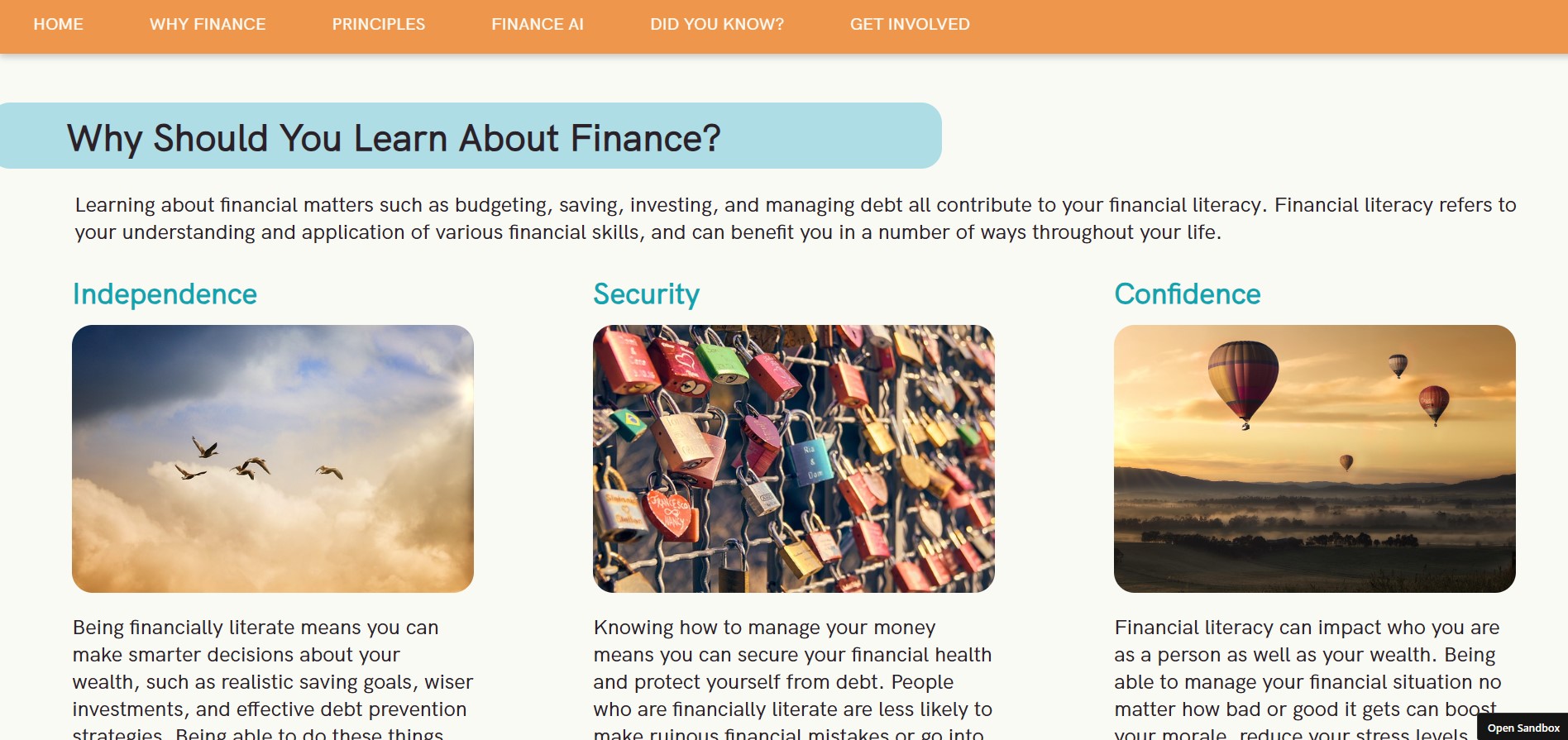
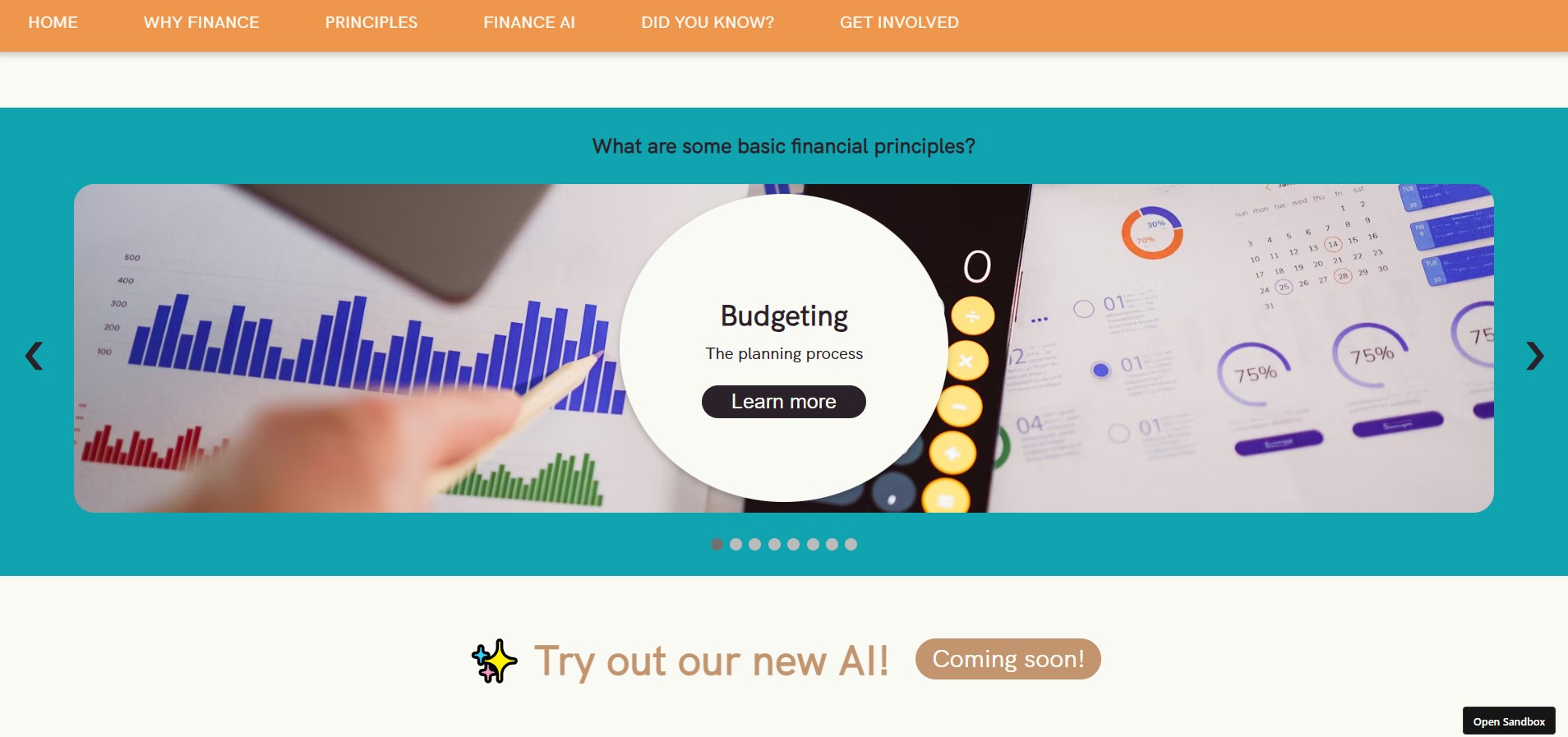
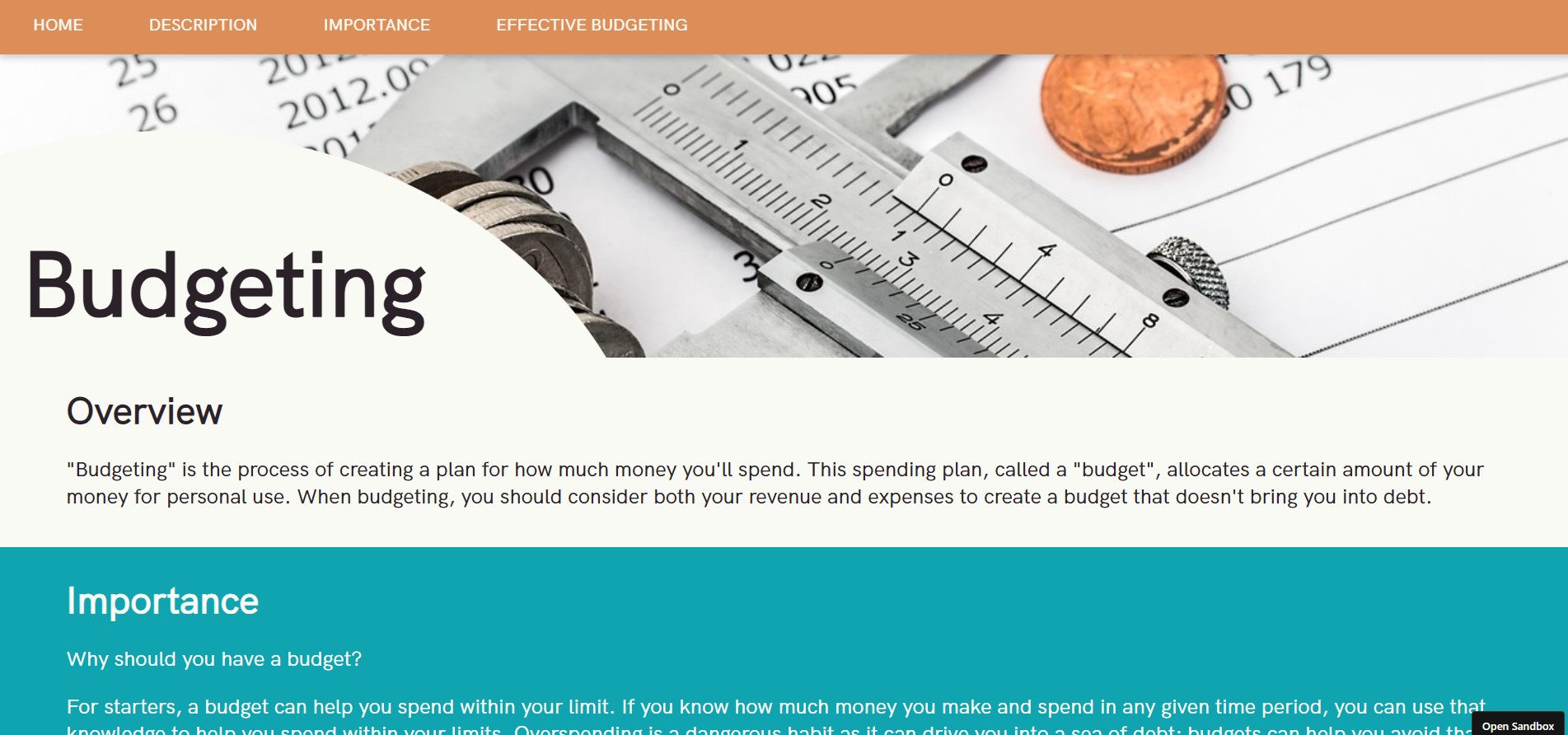
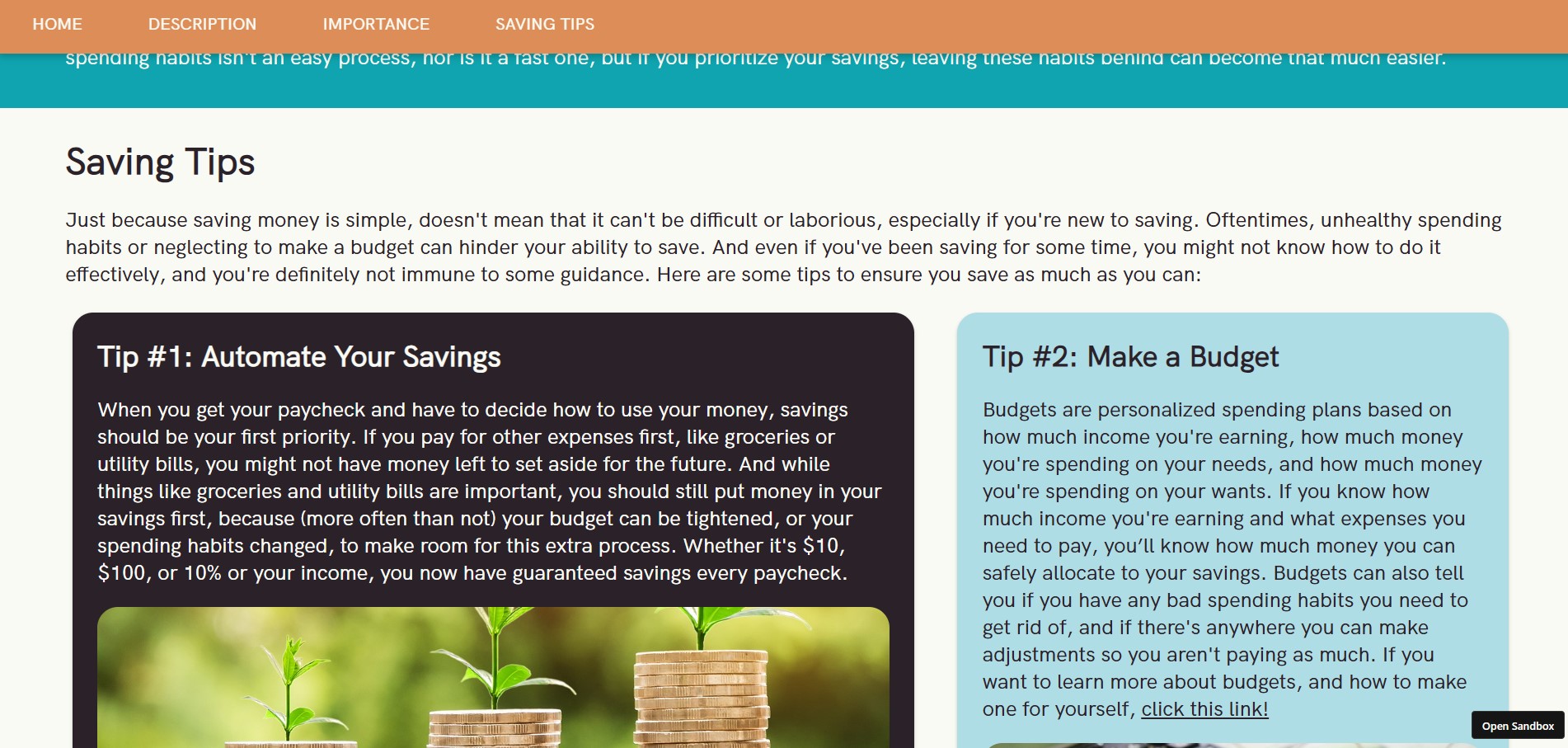
A website made for those completely new to, and inexperienced with, finance. We motivate beginners to pursue financial literacy despite their current lack of knowledge, and provide a complex understanding of basic financial principles such as budgeting, investing, and credit so they are prepared to manage and strengthen their own financial situations. This project is the first step beginners will take to understand and benefit from the complicated financial resources that surround them.
Inspiration
The inspiration for this project came from seeing the financial struggles of those around me. When I say “financial struggles,” I don’t mean not having enough money at home – I mean struggles to understand finance, from its most rudimentary principles to the more complex ones. I hear a lot of kids my age, even the smart ones, talk about the financial aspect of adulthood with dread; not excited or determined but fearful of managing their own financial situation because of how unprepared they are. The root of their unpreparedness comes not from a lack of experience, but how hard it is to learn about finance even in theory, because financial resources such as articles, textbooks, and videos, all share one tragic flaw – assuming their reader is already financially literate. So many resources assume their users have a basic financial knowledge that most people, particularly the young, haven’t acquired yet. This makes all the jargon, figures of speech, and abstractions composing these external resources indecipherable to those just starting to learn. Where were the basics – a place where people could start from? The desire for such a starting point to exist for my generation is what inspired me to create my project. The first step to becoming financially literate is the largest, and I wanted to create something that could help users take this step, and start them off on their journey to financial literacy. This “something” took form as an article-based, nonprofit website, both coded and written with simplicity in mind, to help the inexperienced take their first step. Appropriately named: First Step Finance.
What we Learned
Over the course of this project, I’ve learned much about finance and computer science. For finance, I learned how complex these so-called “basic” financial principles really are, and how they’re interconnected to each other. I learned how to explain these concepts from scratch and paint a simpler (but no less accurate) picture of them. As for the coding aspect, I learned a number of different web development concepts, such as flexboxes, animations, and responsiveness. I also studied graphic design to make my website as visually appealing as possible without sacrificing easy navigation.
How we built it
This website was built using simple HTML, CSS, and JS. I used an online cloud developer platform – CodeSandbox – to write, save, and compile my programming files, as well as to preview my website. I also used Figma to design my website before coding it.
Challenges we ran into: Coding
When it came to coding the website for this project, I dealt with some minor challenges like troubleshooting my errors and struggling to understand programming concepts. I overcame these setbacks through a plethora of online articles, videos, and even books that explained the key web development principles I would need to create my site. Thankfully, I was able to catch on pretty quickly. For some time, I also struggled with designing my website just using code. Picking out the right fonts, colours, and layout for my website was tough, and I made many rough sketches and Figma blueprints before settling on the warm, colorful theme that I felt was perfect for First Step.
Challenges we ran into: Content
My biggest challenge in writing the content for my site was figuring out how to explain key financial concepts from scratch. I was going to write articles for those completely inexperienced, so I couldn’t use any financial terms or ideas without defining them first, and I had to assume my readers had no prior knowledge or understanding of these concepts. I had to start at the very basics, ensuring I wrote clearly enough that readers would not feel lost, and then inch my way towards the more complex aspects of these principles. For a long time, I had trouble figuring out the perfect way to break these concepts down for a beginner without being too wordy, too vague, too patronizing, or too boring – all of which might confuse or turn away beginners. Eventually, I decided to practice explaining these principles to real people and see what descriptions worked best. My younger brother and some of my friends served as my critics, chosen because they (like many others in my generation) had low financial literacy and motivation despite being on the cusp of adulthood. By practicing on them, I learned what explanations made sense to beginners, what confused them even more, which analogies worked best and in what order I should introduce new ideas. I used this wealth of knowledge to refine my existing explanations, then tried them out on real people again, garnering more feedback. And so writing the content for my website, while still a tough process, kept improving until my work was good enough for this project.


Log in or sign up for Devpost to join the conversation.