-
-
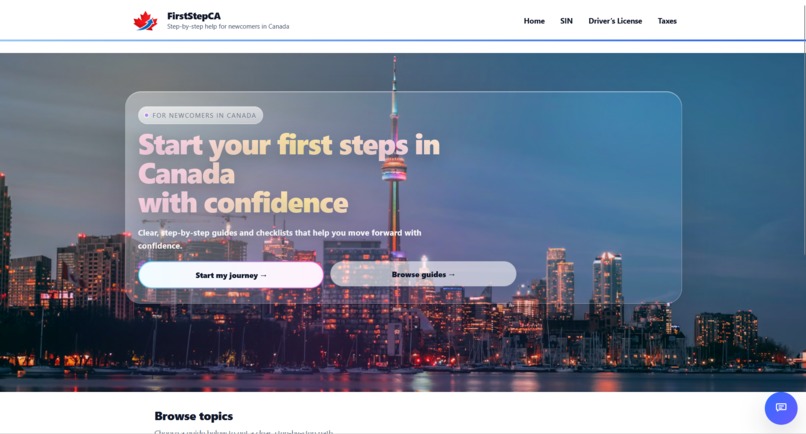
Home page
-
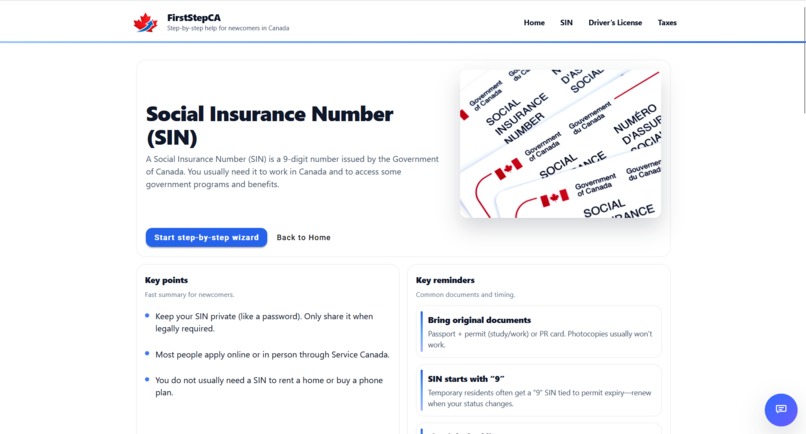
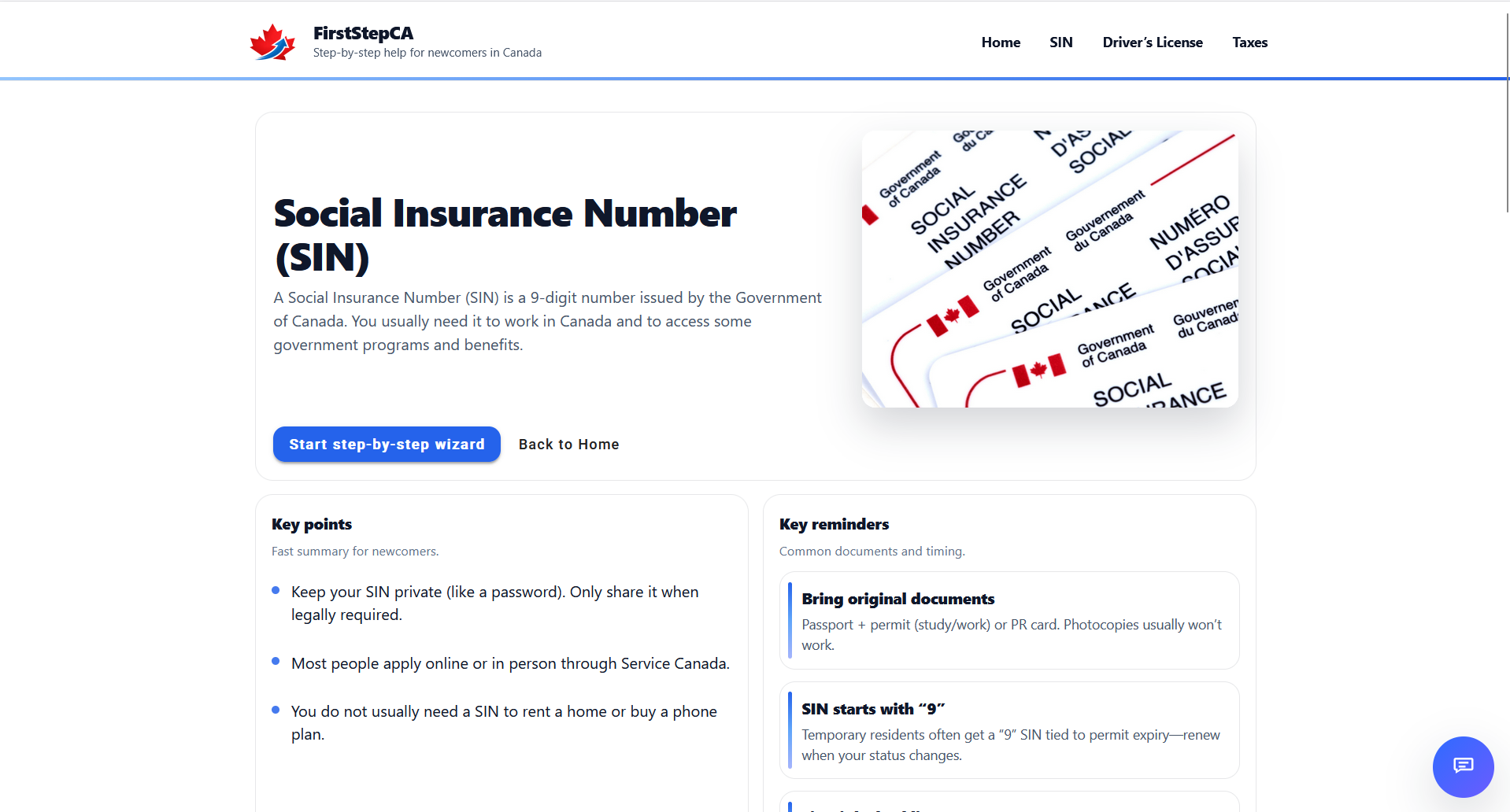
SIN (demo)
-
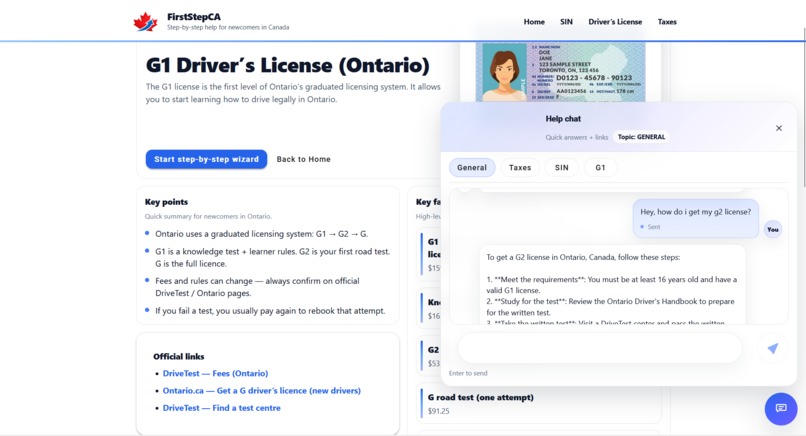
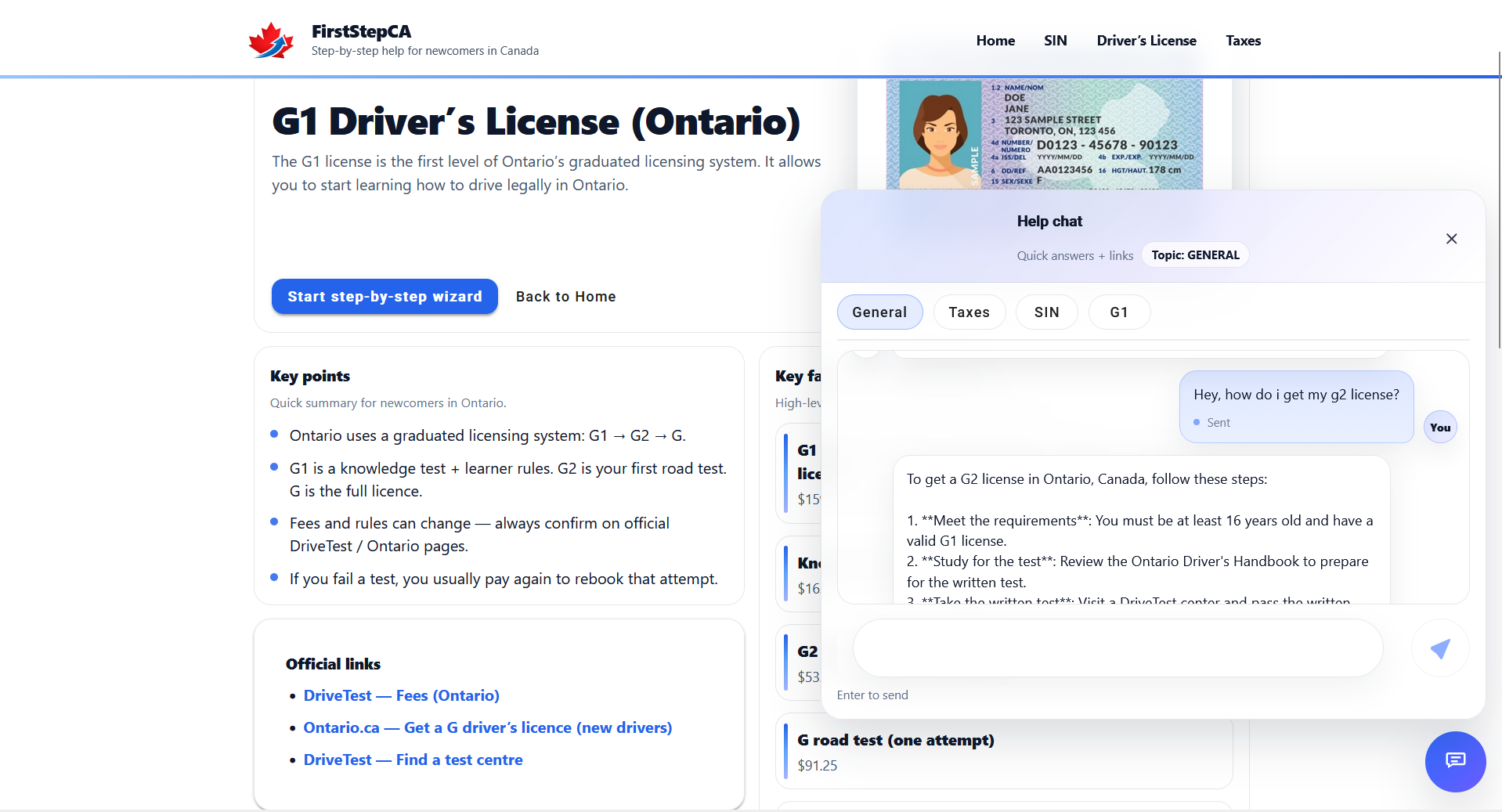
Chat Bot (demo)
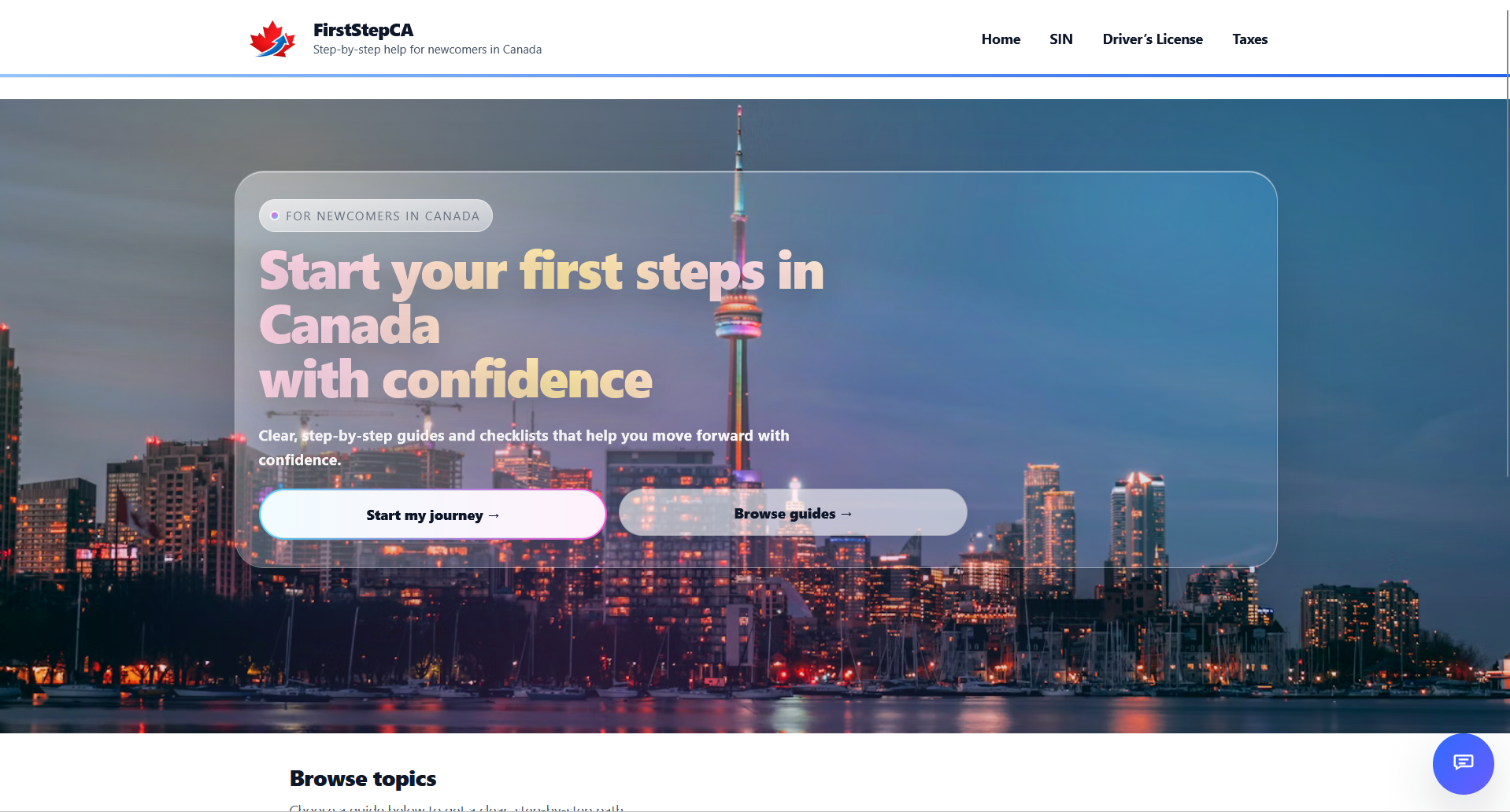
!!First Step Canada !!Inspiration
As newcomers to Canada, we experienced firsthand how confusing basic government processes can be. Essential tasks like applying for a SIN, understanding taxes, or getting a driver’s license require navigating multiple government websites such as IRCC, CRA, and Service Canada — each filled with dense language and fragmented information.
This complexity creates unnecessary stress, delays, and mistakes for people who simply want to follow the rules and integrate successfully. We were inspired to build First Step Canada to make these systems easier to understand, more human, and accessible to everyone starting a new life in Canada.
What It Does
First Step Canada is a web application that helps newcomers navigate essential Canadian government processes with confidence.
The platform provides:
Step-by-step guides for common procedures such as:
Getting a Social Insurance Number (SIN)
Applying for a G1 driver’s license
Understanding basic personal taxes
Clear explanations of:
  - > What each process is

  - > Why it is required

  - > Who needs to complete it
An AI-powered chat assistant for personalized questions when guides aren’t enough
Direct links to official government resources, ensuring accuracy, trust, and transparency
Our goal is to reduce confusion, prevent costly mistakes, and empower newcomers to interact confidently with Canadian systems.
How We Built It
We built First Step Canada as a full-stack web application with scalability and accessibility in mind:
Frontend:
Built using Angular
Clean, accessible UI focused on clarity and low cognitive load
Content Design:
Step-by-step guides designed for users with intermediate English
Structured to avoid overwhelming walls of text
Backend:
API integrated with a Large Language Model (LLM)
Handles contextual, user-specific questions safely
Deployment:
Deployed using modern cloud tools for reliability and scalability
Throughout development, we prioritized simplicity, accessibility, and real-world usability.
Challenges We Ran Into
Balancing accuracy with simplicity: Government processes must be precise, but overly complex explanations defeat the purpose. Finding the right balance was critical.
Responsible AI integration: Ensuring the AI assistant remained helpful without replacing or contradicting official government information.
Hackathon constraints: Connecting frontend and backend, deploying reliably, and iterating quickly within a limited timeframe required careful debugging and prioritization.
Accomplishments We’re Proud Of
Built a real solution to a real problem faced by millions of newcomers
Successfully integrated Canada-specific systems (SIN, taxes, licensing)
Created a guided experience, not just a collection of links
Implemented an AI assistant that supports — not replaces — official sources
Delivered a usable, scalable product within hackathon constraints
Most importantly, we built something people could genuinely use.
What We Learned
Accessibility goes beyond visuals — language clarity, structure, and guidance matter
AI must be designed responsibly, especially when dealing with government and legal information
Gained hands-on experience with full-stack deployment, API integration, and rapid iteration under real-world pressure
Built With
- angular.js
- express.js
- vercel

Log in or sign up for Devpost to join the conversation.