-
-
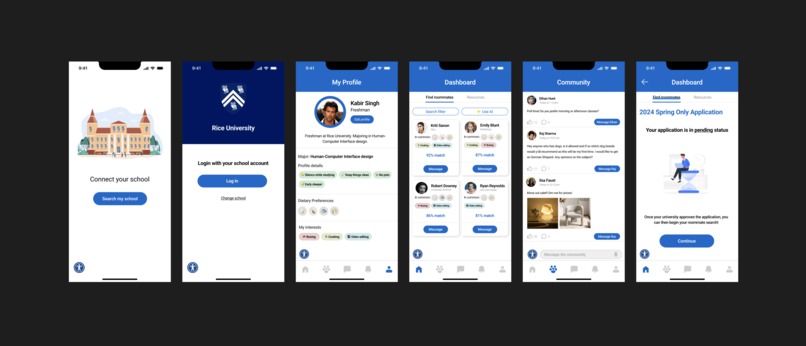
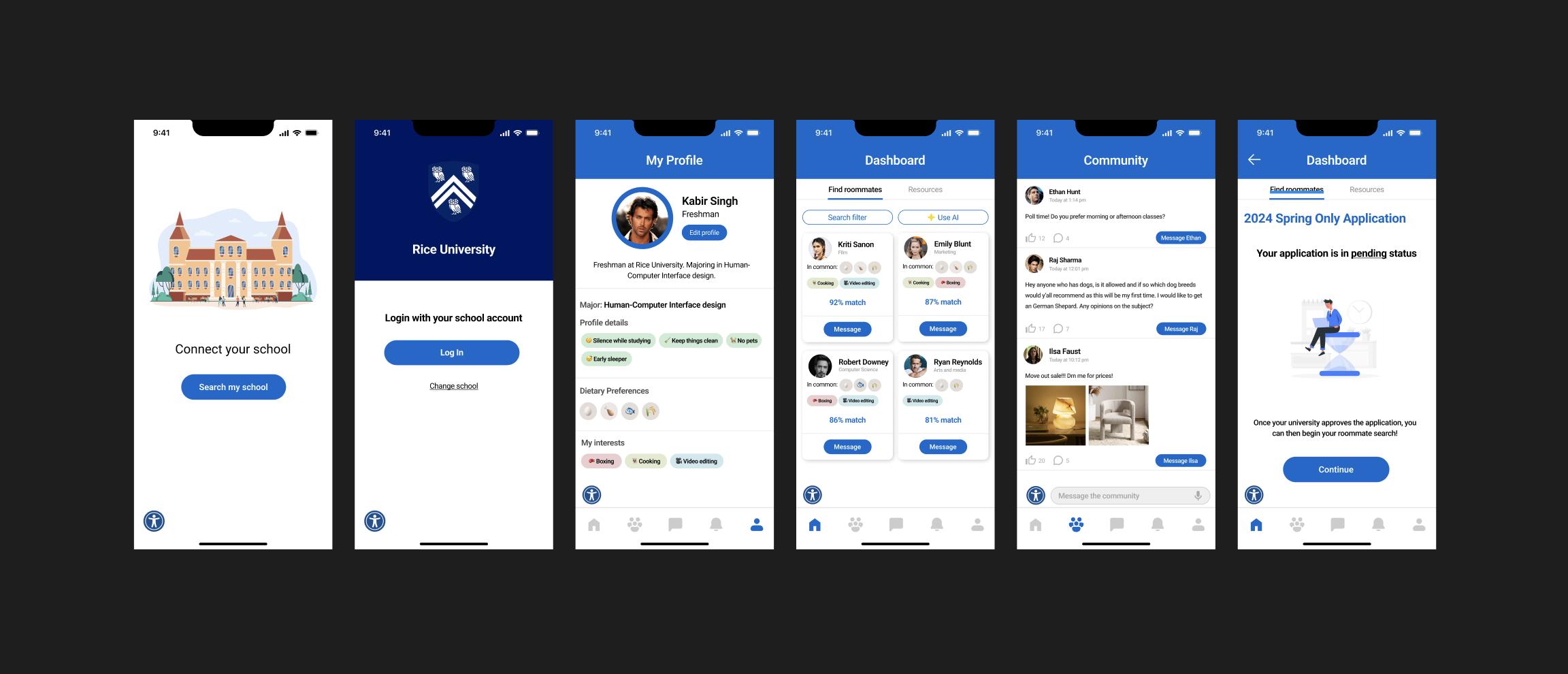
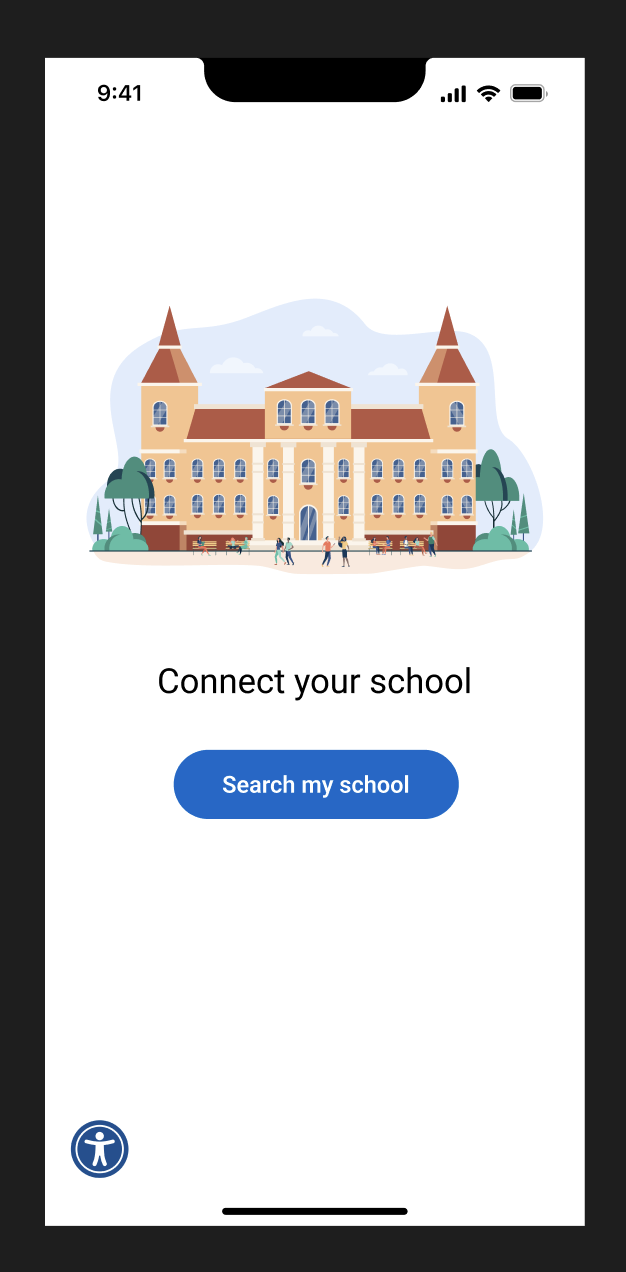
Cover
-
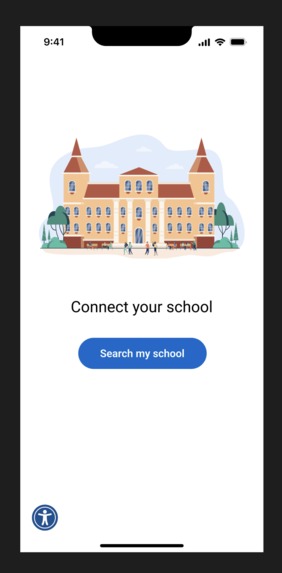
App intro
-
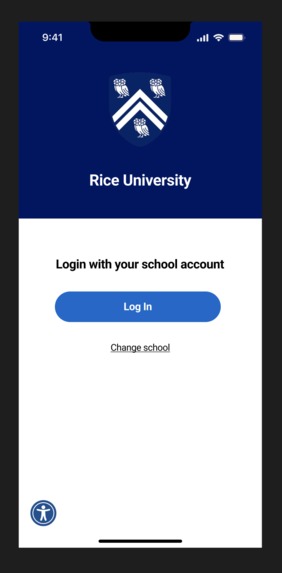
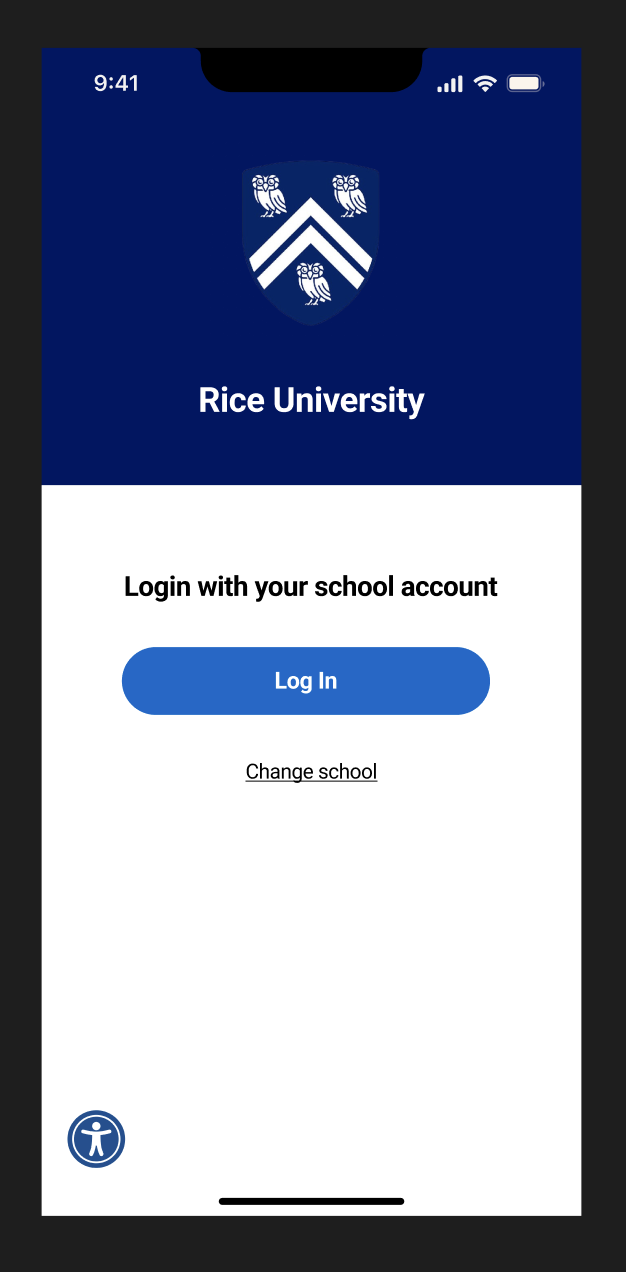
University Login
-
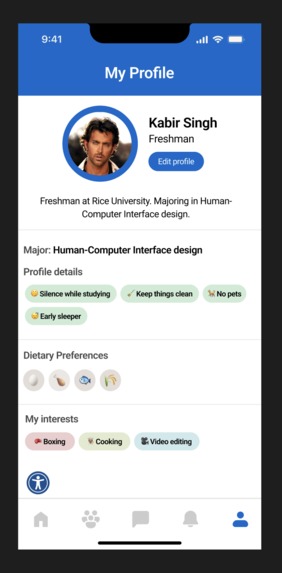
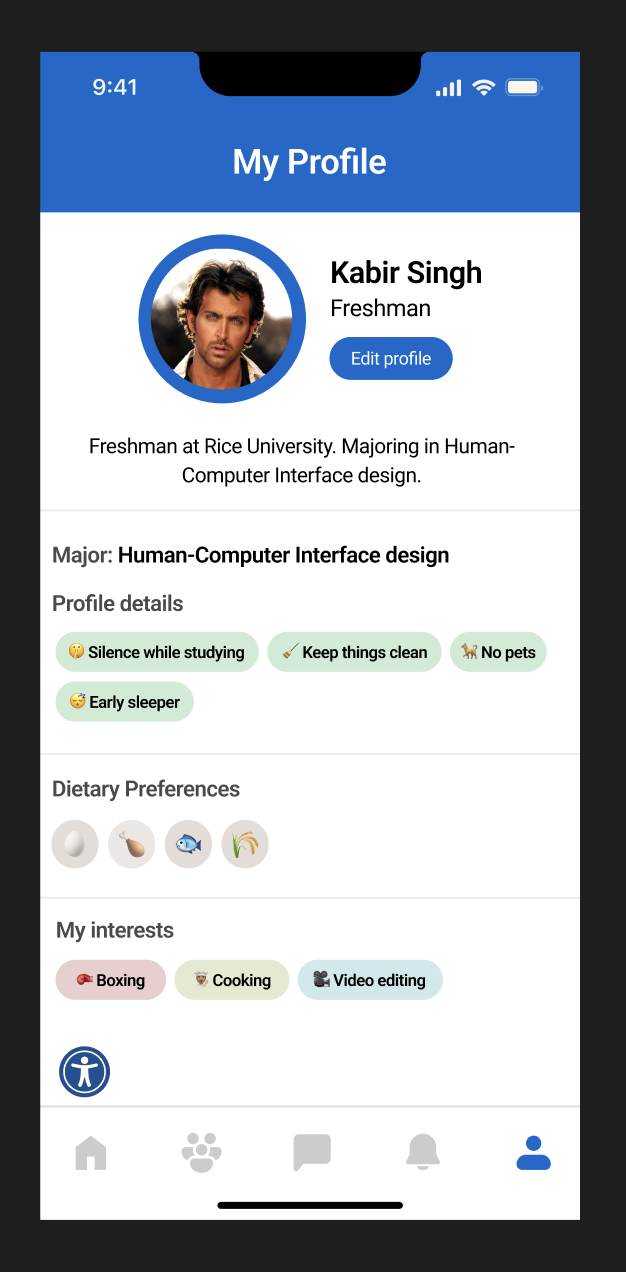
User Profile
-
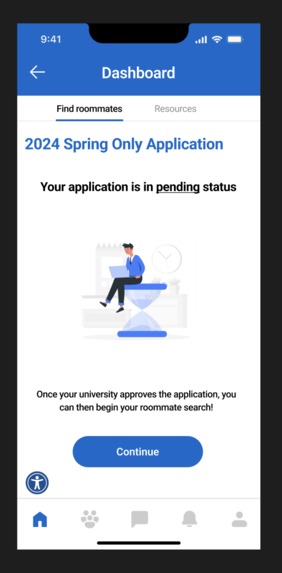
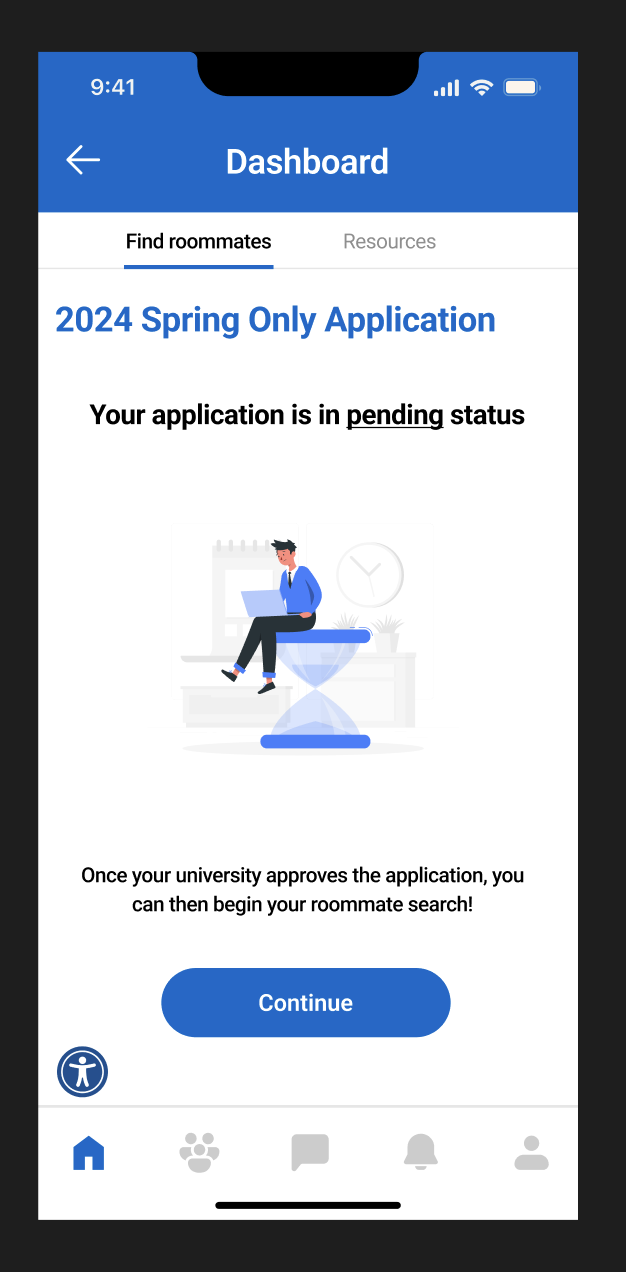
Housing Application Pending
-
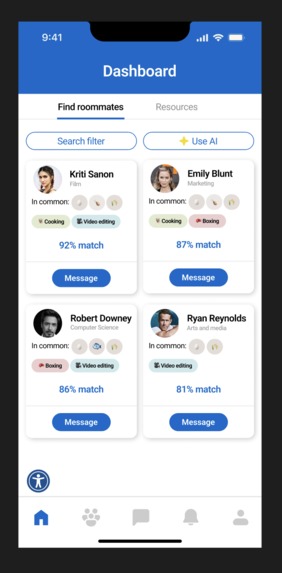
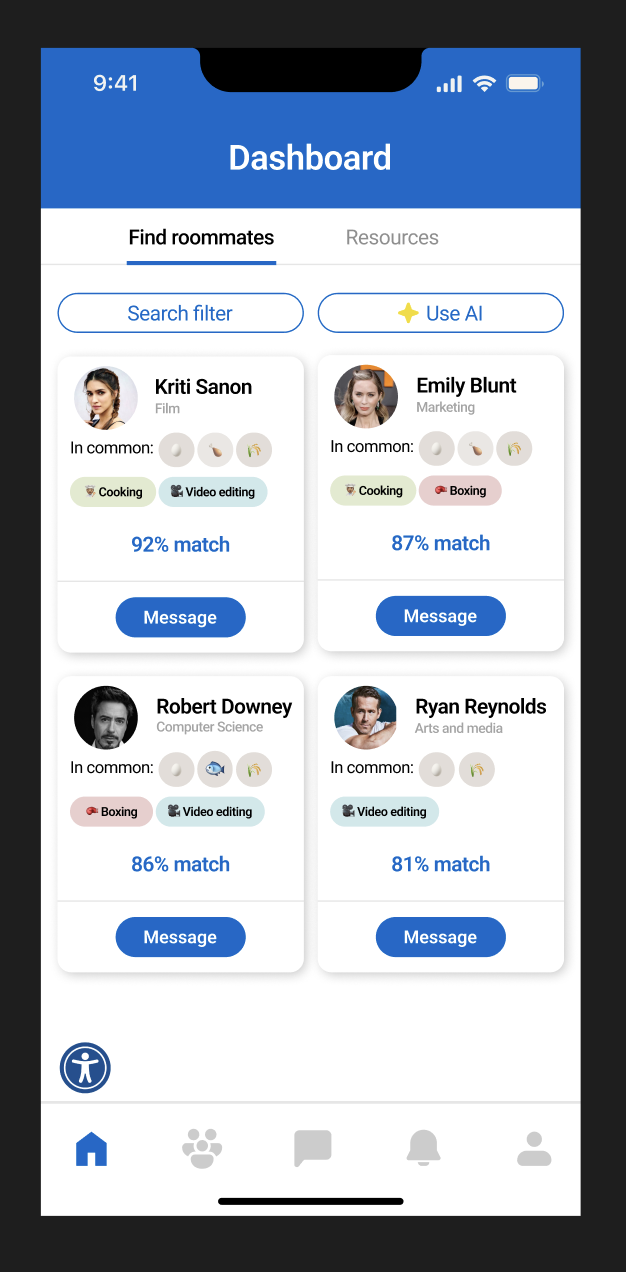
Find Roommates
-
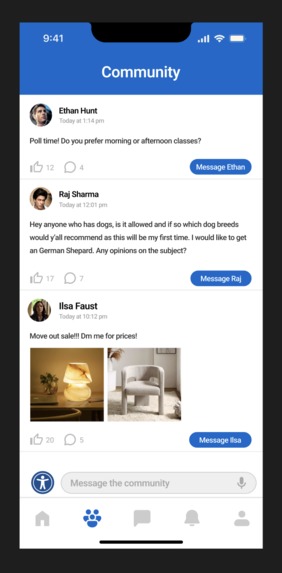
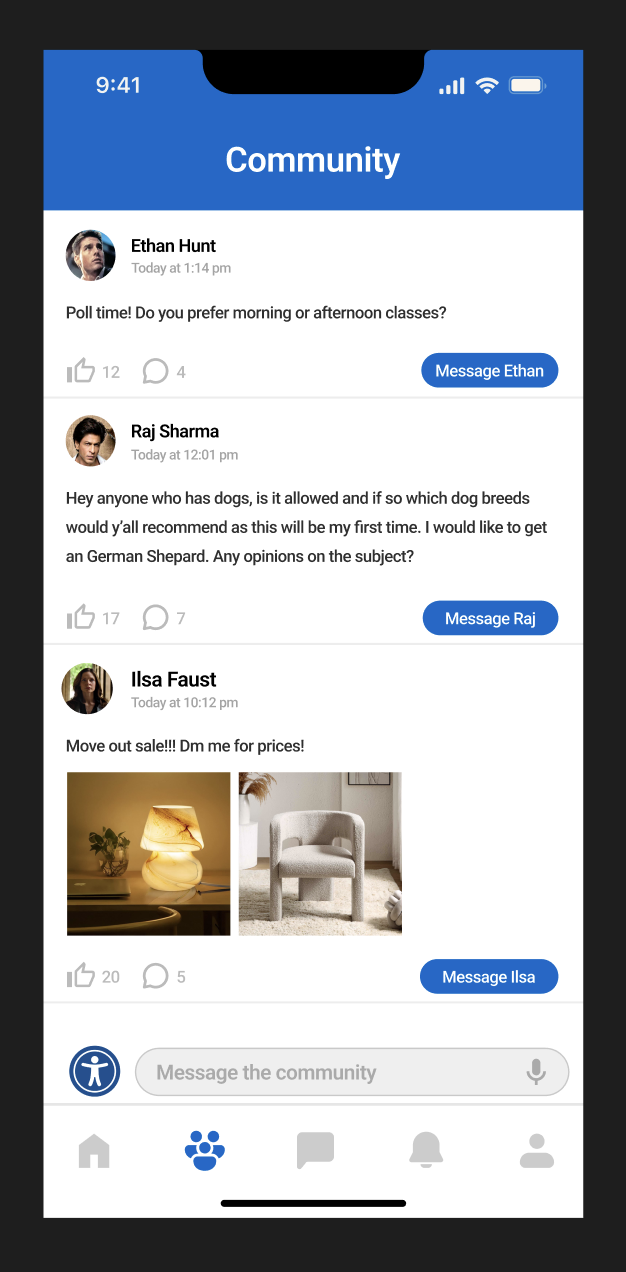
Community
Prototype link [UniNest App Design]: (https://shorturl.at/BEMS6)
Describe your project (max 150 words)
UniNest’s slogan is “Application to Roommate, all in one place;” it very well achieves that. Instead of housing applications and roommate searches beginning in two different places, it combines that in one app to streamline the whole housing process. In addition, it incorporates the use of AI along with a manual filter option to narrow down plausible roommate options that relate to the user’s profile. The user has to fill out a housing application, which the university approves. Only then can the user begin searching for roommates. When a possible roommate is found, they can message them and request to dorm together.
Describe your research process and findings. If you conducted any surveys or interviews, please include the survey form and/or interview questions here. If you conducted secondary research by pulling from online sources, please include a link to your sources. (Max 500 words)
Just after the design prompt was released, my designing and problem-solving abilities kicked in. I went from thinking about creating an app that would streamline the navigation of courses to taking attendance. In the end, I settled in to tackle the housing problem. Since I have never lived in a dorm, I had no idea about the process, which challenged me to start from absolute scratch when researching. My initial idea was to create an app that would help find roommates, but multiple apps already do that. I learned a little bit about the dorming process from a couple of universities’ websites as well as ChatGPT. This gave a base to start off with when crafting survey questions. Just before bed, I leveraged my university’s community group chat to post my survey link. When I woke up, I got a couple of responses that I let my mind ponder about as I was going about my morning routine and attending the workshops. I also contacted my friends who have had university housing experiences to see if I could interview them; they agreed. I learned a lot from the interviews I conducted as they gave me much deeper insights. Both, from the survey and the interview, I noticed two common problems: the user interface/process and roommate preferences. Some students pointed out that the process of housing was a bit complicated for them; this included the application and roommate search. The main problem that caused this was the overly detailed and unorganized university web pages. While it’s important to lay out all the important details, it also overwhelms the students who are just getting started with college. Next, the roommate search. One of the students said he’s a vegetarian and is living with someone who eats chicken. He pointed out that dietary preference should be one of the filters to sort by. From the overall research, I decided to create an app that would combine both the application and roommate search, so it’s all in one place; as it should be.
Survey link: https://forms.gle/MPAspxVnzMJGuf7X9
Survey/interview questions:
- What is your current academic status?
- Have you faced challenges in finding suitable housing near your university? If yes, please describe the main challenges.
- How important are the following factors when considering housing options?
- How important is finding a roommate who shares similar study habits and lifestyles?
- Are there specific features that are missing in your house search that you wish you had?
- Are there specific aspects of the housing search process that you find time-consuming or confusing?
- What do you like and dislike about current solutions available for housing and roommate searches?
- Is there anything else you would like to share regarding your experiences, preferences, or challenges related to university housing and roommates?
Research sources:
- https://www.rice.edu
- https://www.rice.edu/user/login
- https://housing.rice.edu/sites/g/files/bxs3096/files/2020-02/Final_20-21CampusHousingAgreement.pdf
- https://housing.rice.edu/undergraduate-housing
- https://www.freepik.com/
- https://www.figma.com/community/file/1121065701252736567
- https://www.figma.com/community/file/768726574016795759
- https://reslife.tamu.edu/tamu-housing-portal/
- https://offcampushousing.unt.edu
- https://offcampushousing.unt.edu/find-your-roommate/#
- https://housing.unt.edu/housing_how-to/apply_for_housing
- https://dribbble.com/shots/16367037-User-Profile-Concept
Describe your most important design decisions. What research findings and/or user testing results led you to make these decisions? (Max 500 words)
One of my most important design decisions included adding a top nav bar on the “Dashboard.” Generally, designers only have a maximum of five navigation buttons on the bottom nav bar, but I needed to include other pages that were essential such as “Find Roommates,” “Renew lease,” “Move out,” and “Resources.“ I would not have been able to add all of this along with the main navigations: Dashboard, Community, Messages, Notifications, Profile. I decided to add a sub-navigation bar within the Dashboard that would encompass the other pages. After conducting the interview and follow-up questions, I learned that getting a renewal for dorms is an easy approval, so that can easily be implemented in the “Find Roommate” page. For the “Move out” page, students pointed out that if you decide to not dorm the following semester, there is no need to fill out a form; “you would just leave the dorm as if you were leaving for the weekend.” In addition, not all universities allow you to dorm for all four years. Some allow only the freshman year and then you are expected to rent out an apartment or commute. So keeping all this in mind, I made the executive decision to remove the “Renew lease” and “Move out” pages and simply keep “Find Roommates” and “Resources.” I was hesitant to remove the pages because I thought I needed to have an option available for the other students, but I realized that the interface would look different for each university depending on whether they allow dorming for all four years or just freshman year. It is very crucial to have a user-centric design, as we are designing for the users, and not ourselves.
Built With
- figma

Log in or sign up for Devpost to join the conversation.