-
-
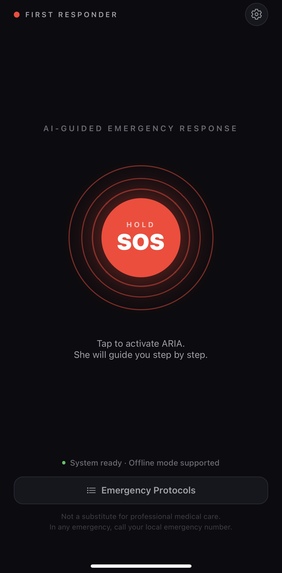
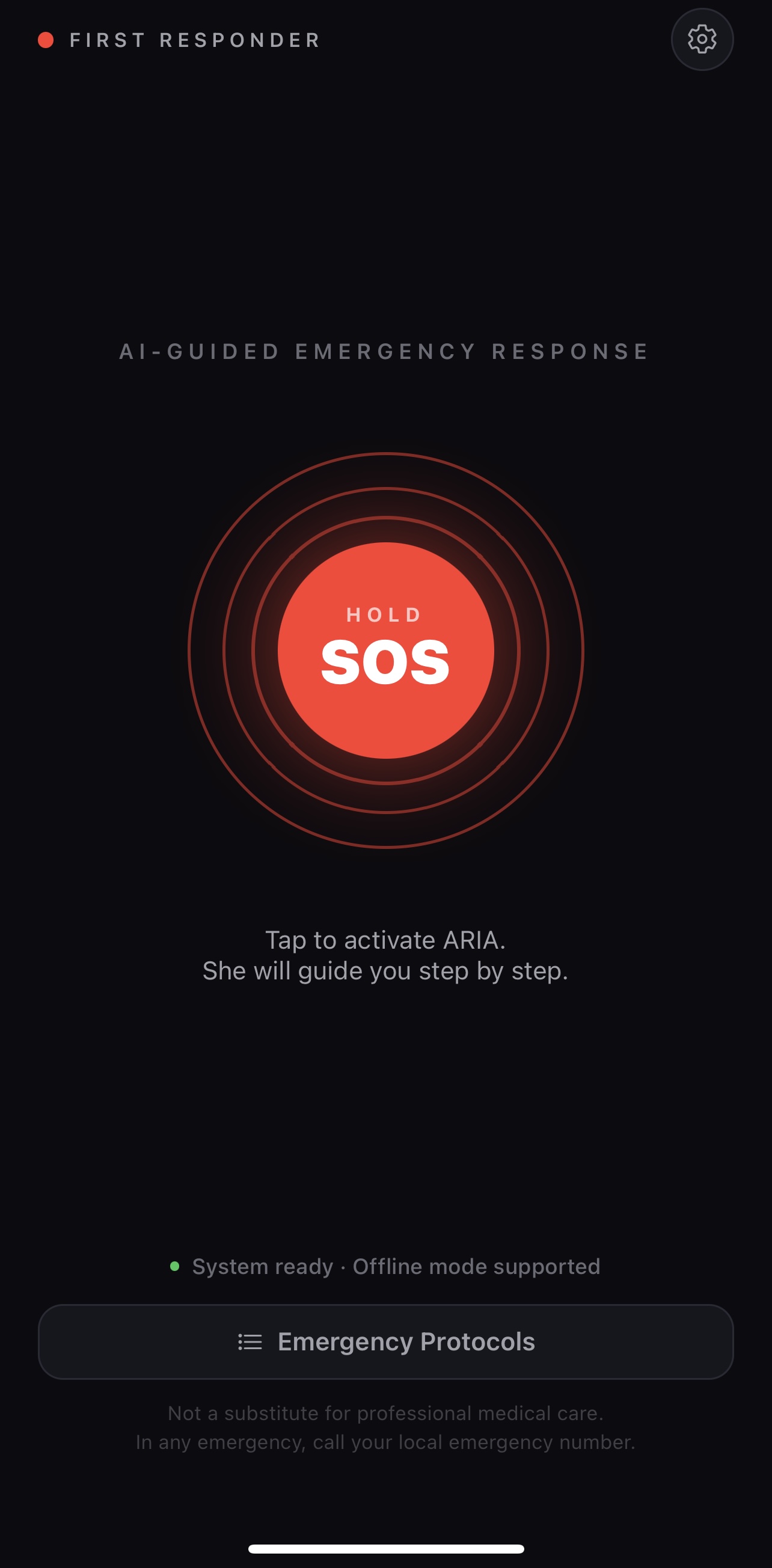
SOS Homescreen when pressed activates AI assistant to aid in emergency response
-
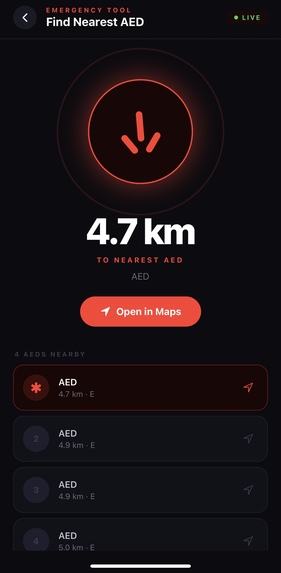
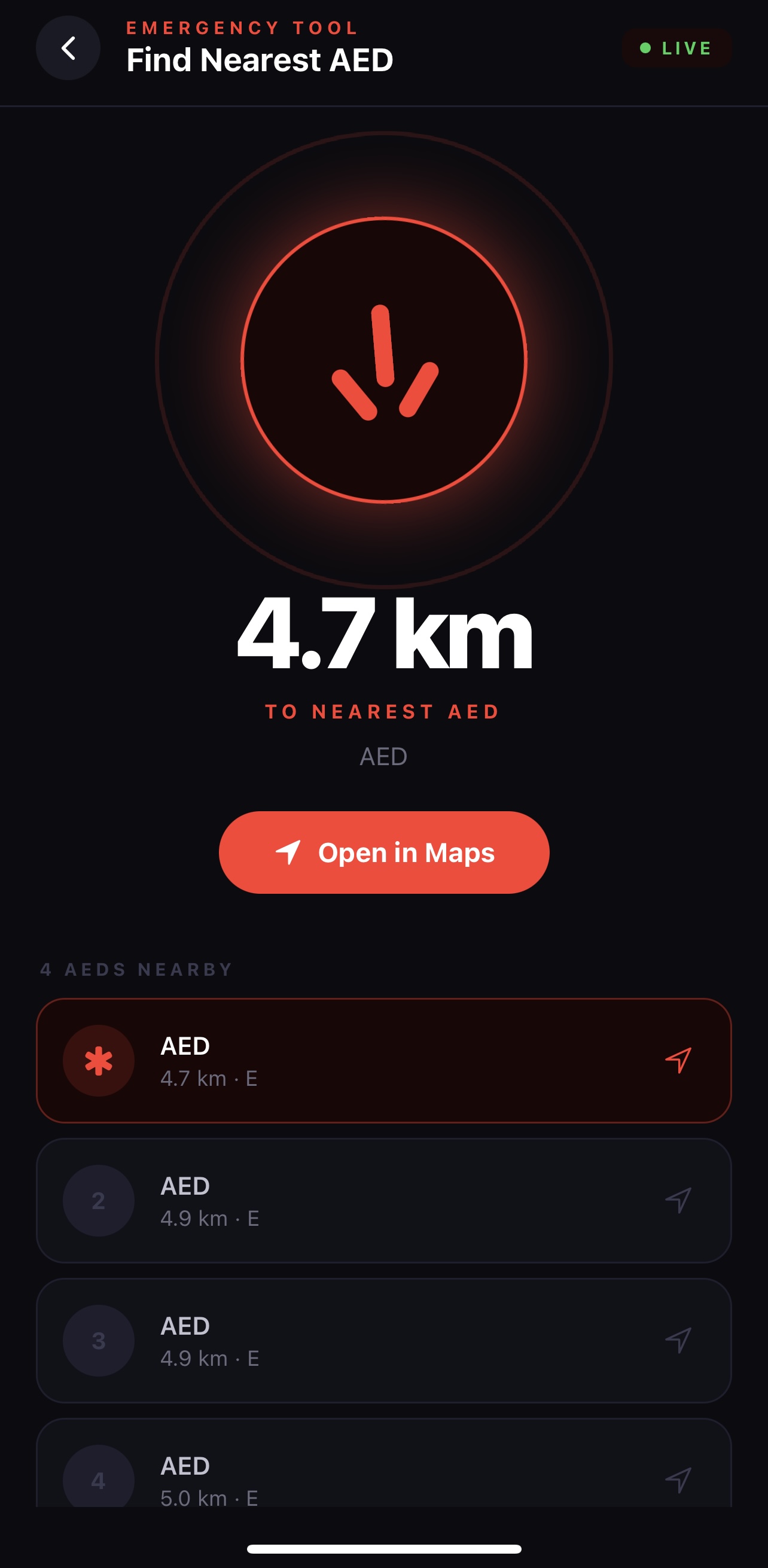
AED Findmy detector locates nearest AED
-
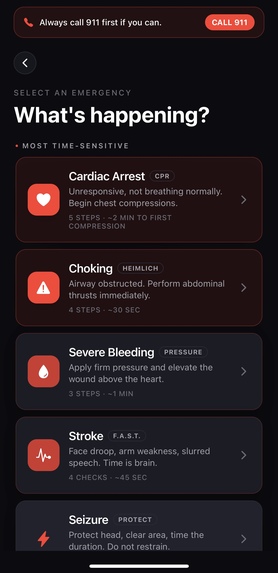
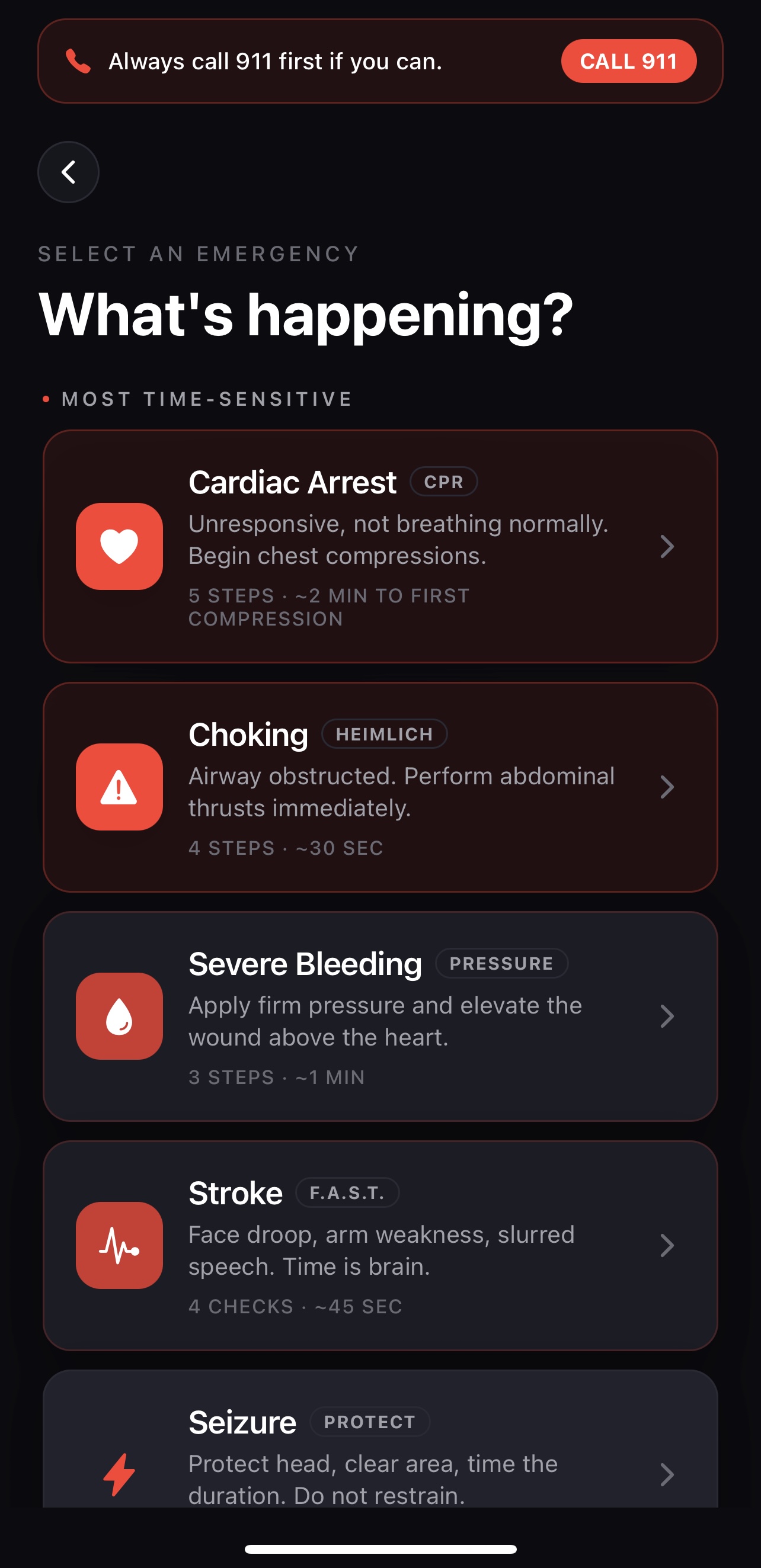
Offline Text to Speech Interactive Basic Life Support Options, works without any internet.
Physical Demonstration: https://youtube.com/shorts/fiyTcA_KPYY?feature=share
Extra Phone Demonstration: https://youtube.com/shorts/6BGM_8HQUkM
Inspiration 350,000 cardiac arrests happen outside hospitals every year. Most bystanders freeze — not from fear, but from not knowing what to do. We built First Responder because survival shouldn't depend on whether the nearest person happened to take a CPR class.
What it does First Responder gives anyone an AI paramedic in their pocket. Tap SOS and ARIA instantly listens to your description of the emergency and guides you step by step — directing CPR at exactly 110 BPM, counting your actual compressions via accelerometer, prompting rescue breaths every 30 reps, and locating the nearest AED on a live community map. No internet? It switches to full offline protocols automatically.
How we built it Built with React Native and Expo for cross-platform mobile. ARIA runs on Claude Haiku via the Anthropic API for near-instant voice responses. Speech-to-text uses OpenAI Whisper for transcription, and expo-speech for text-to-speech output. The accelerometer detects real chest compressions using peak G-force detection. AED location data combines OpenStreetMap with a community submission system backed by Supabase. NativeWind handles the UI.
Challenges we ran into Getting the AI to respond fast enough to feel like a real voice assistant was the hardest problem. We hit a token limit bug that caused ARIA to repeat the same phrase on every turn. Audio routing on iOS meant CPR instructions were playing through the earpiece instead of the speaker. Counting actual compressions from the accelerometer required careful peak detection to avoid false positives from phone movement.
Accomplishments that we're proud of A fully voice-driven emergency session that requires zero typing under pressure. Real compression counting via physics — if you don't push, it doesn't count. A CPR loop that automatically cycles compressions, rescue breaths, and AED prompts without the user having to think. Community AED mapping that works offline and lets anyone submit a device at their location.
What we learned Latency matters more than accuracy in an emergency — a 500ms response feels like a lifetime when someone isn't breathing. Audio session management on mobile is surprisingly complex. And designing for high-stress use forces you to strip away every unnecessary tap, word, and decision.
What's next for First Responder Real 911 integration with automatic location dispatch. Apple Watch support for hands-free CPR guidance. Verified AED database partnerships with building managers and universities. Multi-language support. And clinical validation of the CPR coaching accuracy with medical professionals.
Built With
- babel
- claud-api
- expo.io
- openstreetmapapi
- react-native
- supabase
- tailwind

Log in or sign up for Devpost to join the conversation.