-
-

Logo
-

Sign Up
-
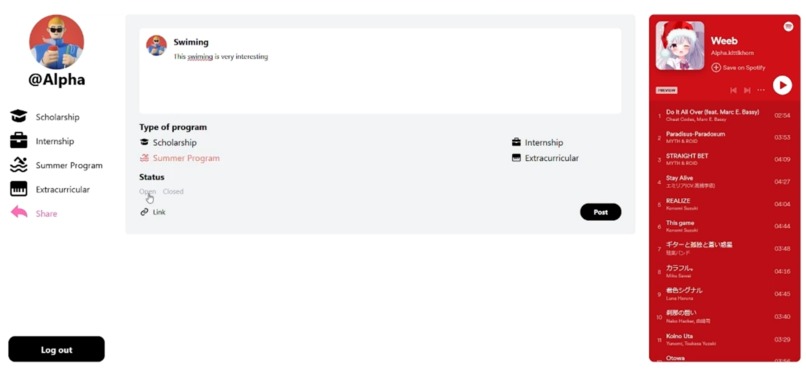
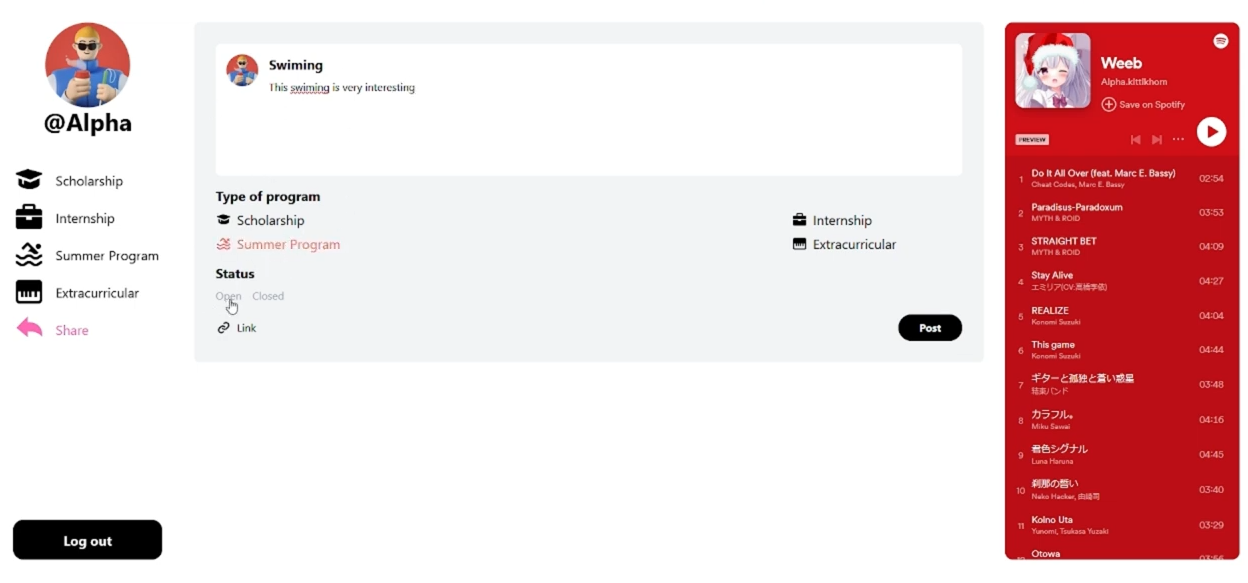
Share Page
-
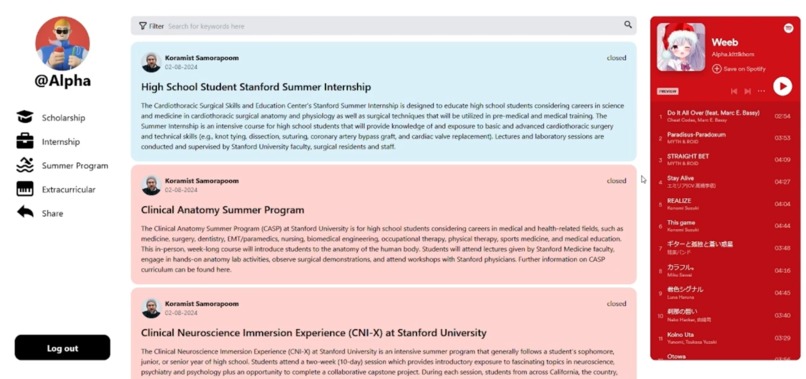
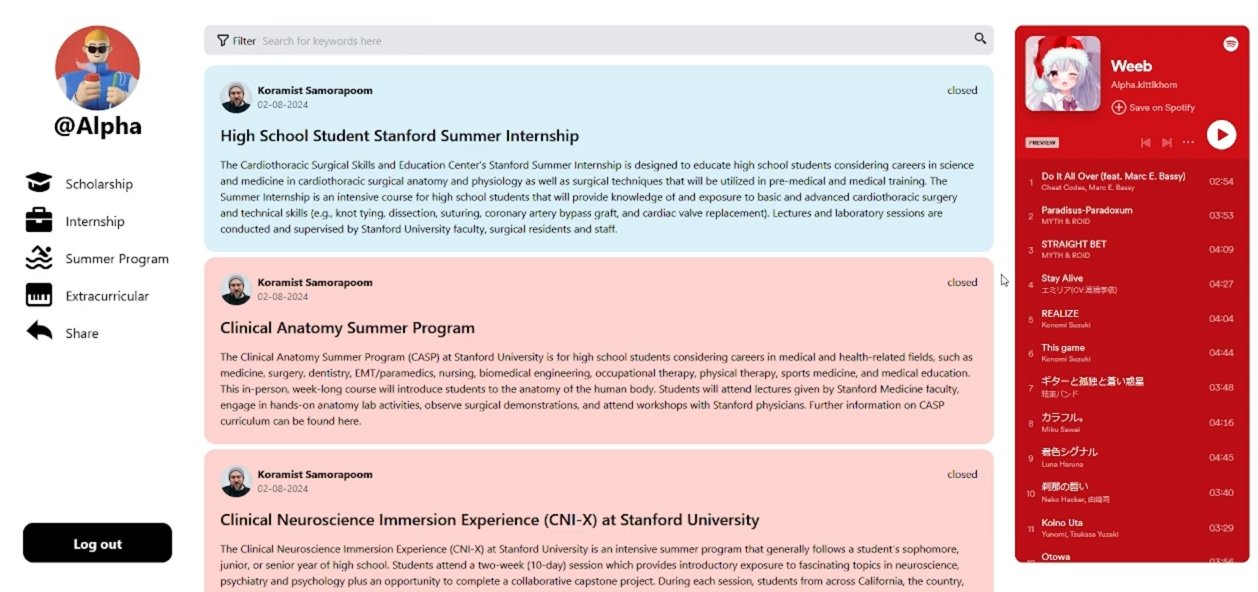
homepage


Inspiration
The inspiration for this project came from the people around us. As students in a third-world country, we witnessed the vast economic gap between individuals. Through our friends and family, we were able to see both sides of this divide, noting the limitations each side faces.
One significant finding was that first-generation, low-income students often struggle to find resources to improve their portfolios. Without preexisting networks or the financial means to accelerate their careers, these students rely on opportunities that are free or offer scholarships. However, these opportunities are often obscure, difficult to find online, and challenging to locate individually.
Therefore, our primary goal was to create a platform that gathers as many opportunities as possible for first-generation, low-income students into one website—a hub, so to speak—where it is easy to find and share all kinds of opportunities. This will allow for more opportunities to be seen and give the opportunity for student networks to grow.
What it does
FGH is a hub that allows first-generation, low-income students to find opportunities to accelerate their careers without wasting time searching for them. It also enables students to share opportunities with others, helping to expand their networks.
How we built it
We used the MERN tech stack for this project, which includes three main components: the frontend, backend, and database. (Middleware is included with the backend for simplicity.)
We primarily used JavaScript for the backend to enable secure settings such as JWT tokens and middleware. For the frontend, we utilized React and Tailwind to create reusable components and maintain CSS code that is easy to read, stylish, and compact. Finally, we used MongoDB to store user and item information, making the website's data more dynamic and easily scalable.
Challenges we ran into
We ran into mainly problems while coding:
- Translating Figma designs accurately into the website
- Implementing and using API endpoints effectively
- Learning how to POST and GET images from the database in base64 format
- Determining the parameters to be implemented and used in the project
- Managing time constraints due to school commitments
Accomplishments that we're proud of
We are extremely proud of our ability to find preexisting data on the web related to opportunities for first-generation, low-income students. It took us hours to find suitable opportunities to append to our database. We are also proud of our first implementation of JWT tokens in a project, the creation of reusable components, smooth transitions between pages, and our filtering capabilities. Additionally, we successfully implemented user authentication and managed our time effectively to participate in this hackathon while both of us were occupied with internships and school.
What we learned
Through many sleepless nights, we learned about the difficulties that first-generation, low-income students face when seeking opportunities. We gained valuable skills, including how to implement JWT tokens, use CORS, and work with MongoDB. We learned how to use JavaScript for backend development, write sophisticated and efficient code, create middleware, use React, and create and implement API endpoints. We also learned how to upload and download images from the server and how to create visually appealing designs using Figma.
What's Next for First Gen Hub (FGH)
Looking ahead, we aim to expand First Gen Hub by building partnerships with educational institutions and organizations to offer exclusive opportunities tailored for first-generation, low-income students. We plan to enhance our platform with personalized recommendations, making it easier for students to find opportunities that match their interests and goals. Additionally, we want to develop a mentorship program that connects students with professionals in their desired fields, offering guidance and support.
We would also like to focus on increasing our community engagement by hosting webinars and workshops that equip students with valuable skills. As we grow in the future, we will be committed to maintaining a supportive and inclusive environment, ensuring that FGH remains a trusted resource for students seeking to overcome barriers and succeed in their careers.
Furthermore, we plan to create an AI suggestion system for more flexible searches and implement additional automated moderation to enhance the user experience and maintain a positive community environment.
Built With
- javascript
- mongodb
- node.js
- react
- tailwind


Log in or sign up for Devpost to join the conversation.