-
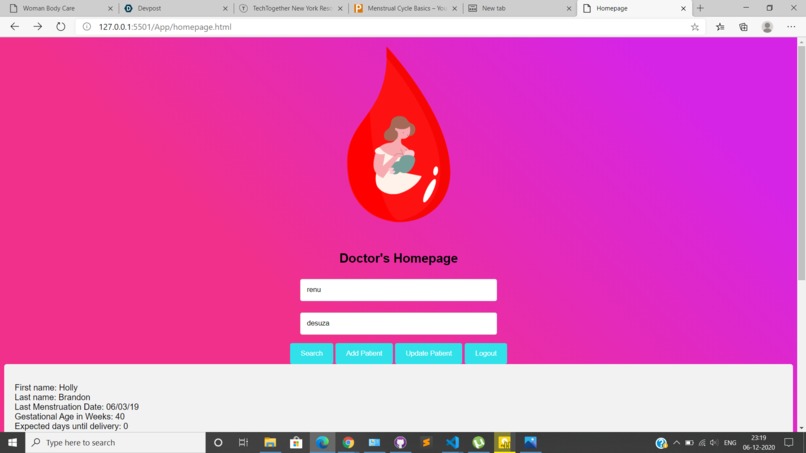
client name
-
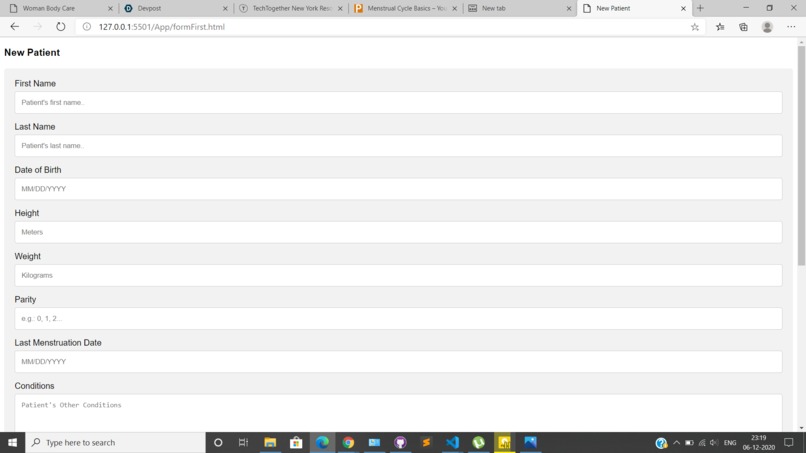
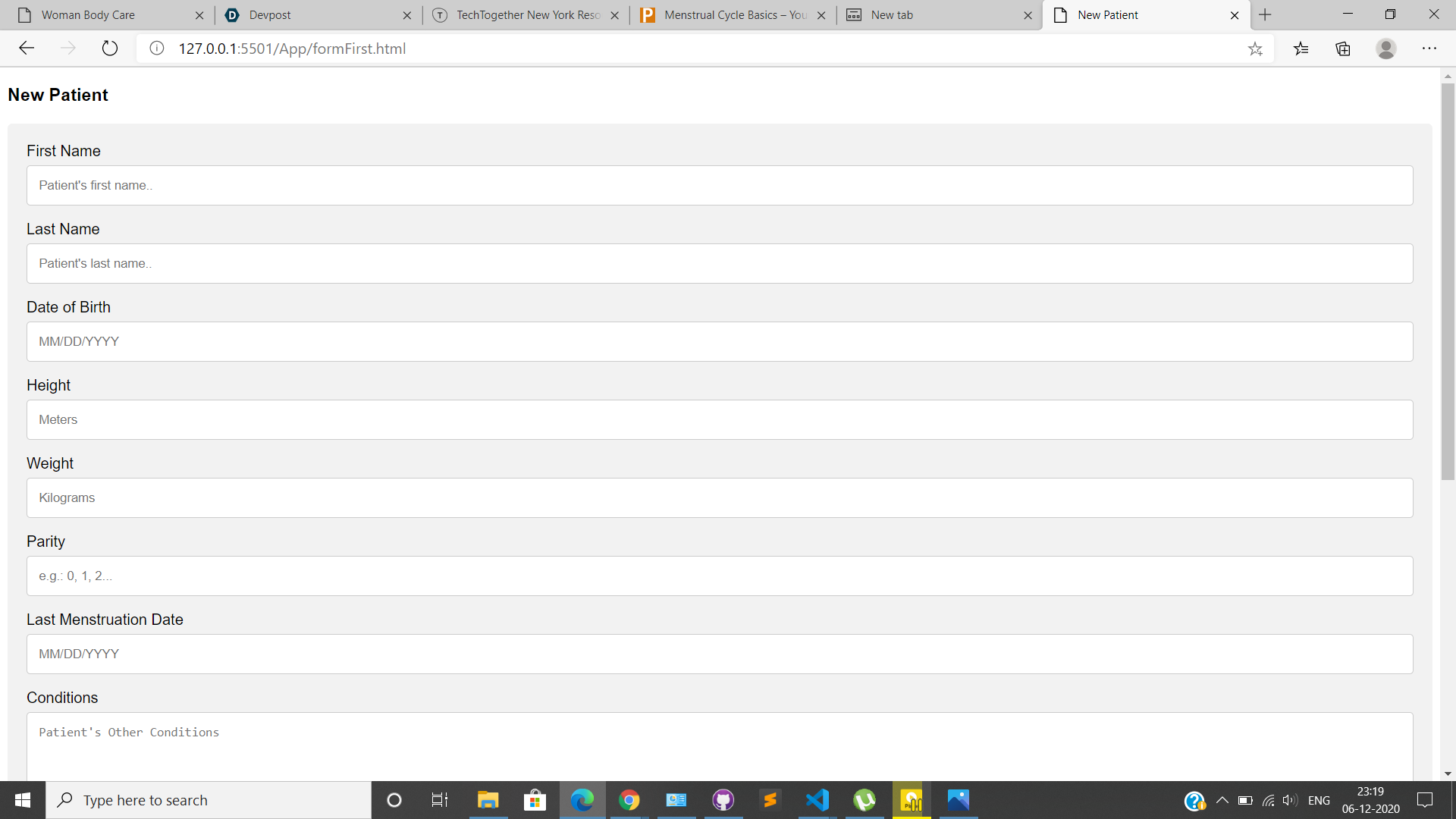
client information
-
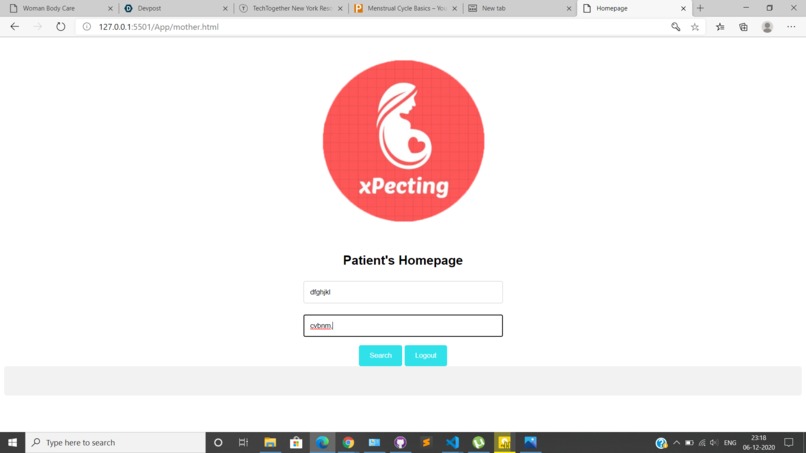
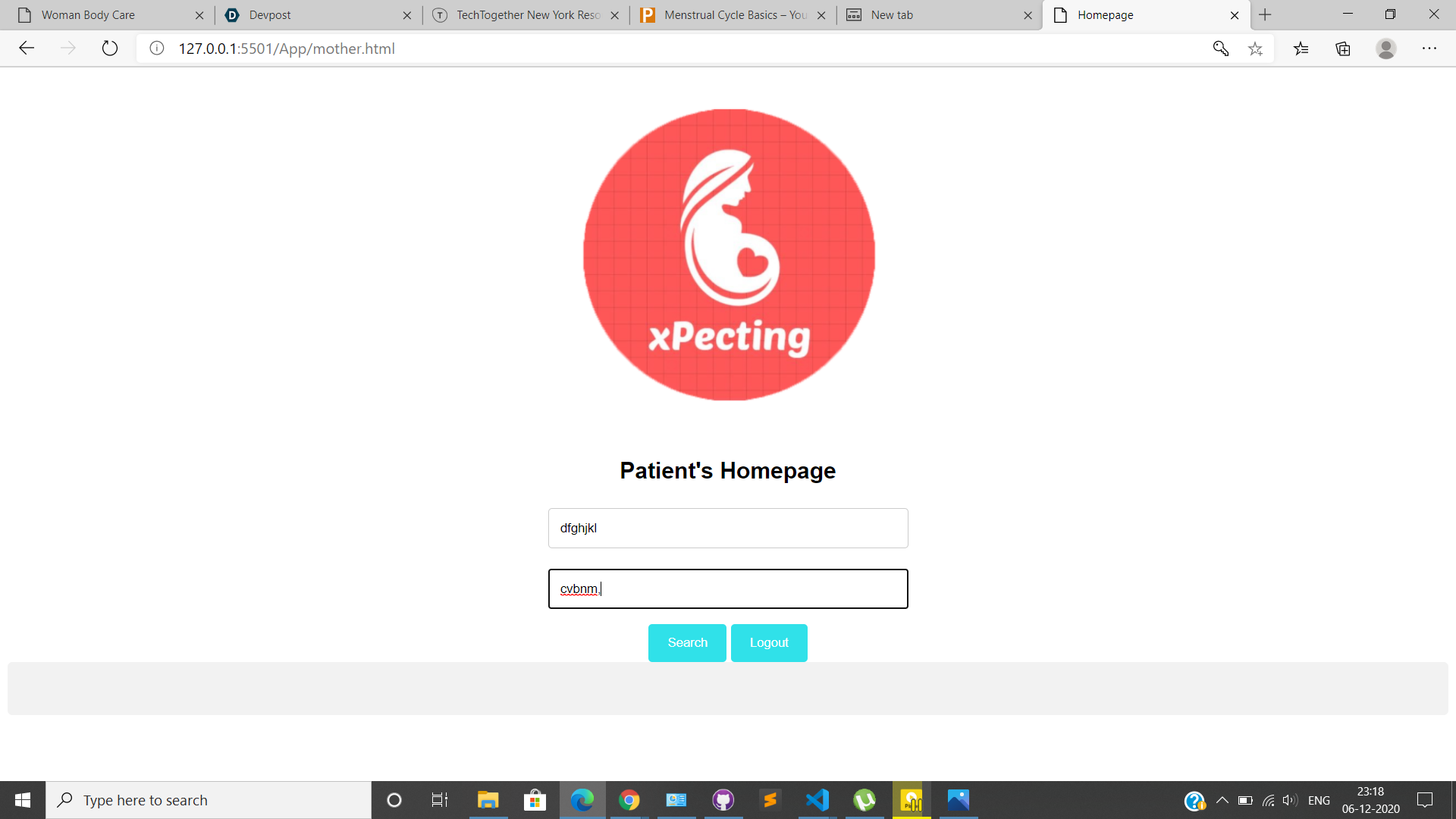
login page
-
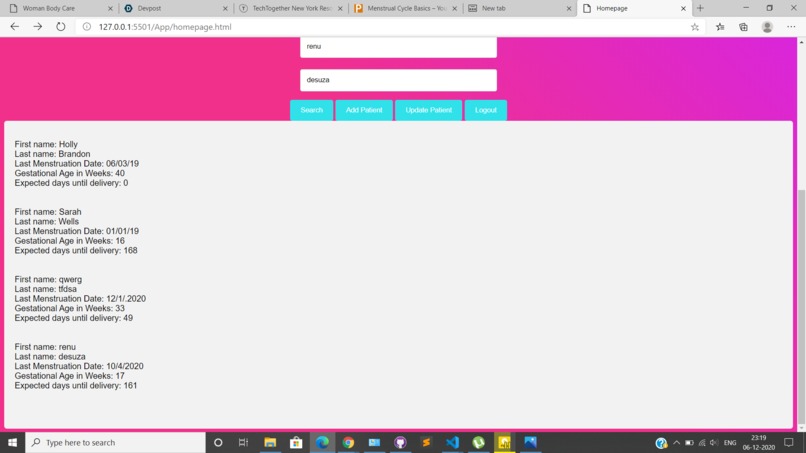
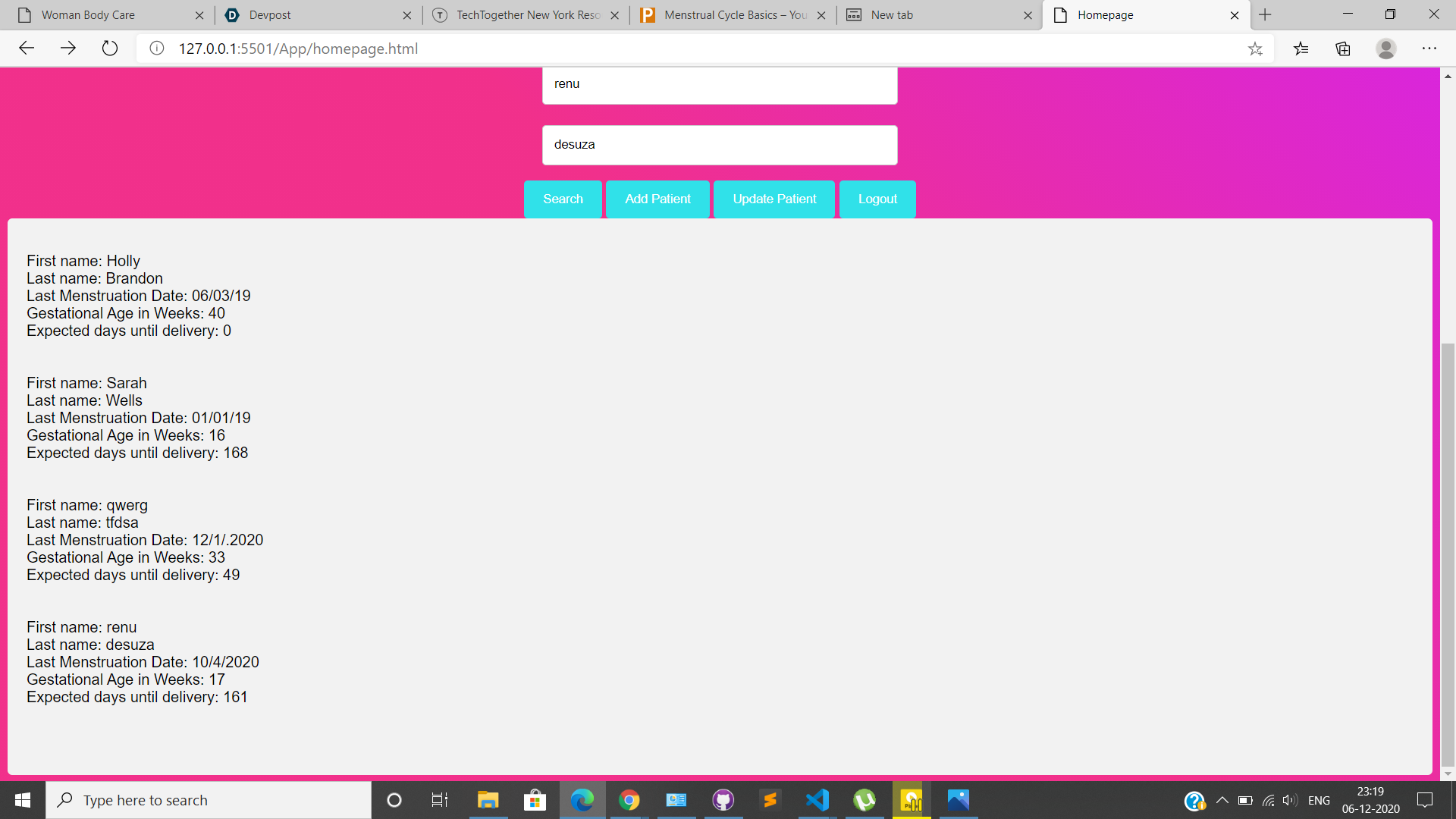
information storage
Inspiration
While menstruation usually begins between ages 12 and 13, it may happen at a younger or older age. The first menstrual period is called " menarche .". The menstrual cycle is about four weeks long, starting on the first day of bleeding and ending when the next period begins. Every single day, lose to 800 woman die due to preventable causes related to pregnancy. The 9 months of gestation is tough for the expecting couple or the mother in particular and our vision is to create an efficient, effective and affordable maternity healthcare model that caters to the three segments of the process which is prepartum, labour and postpartum. We also envision to bring back the concept of midwife system into the birth process.This concept solves a lot of issues such a reduced uneasy hospital visits for the expecting mother, reduce in doctor appointment expenses, the doctor could outsource to a particular midwife center and hence being able to prioritize and treat patients efficiently, in developing countries midwife concept could open up a huge opportunity for education and vocational training for women in rural areas.
What it does
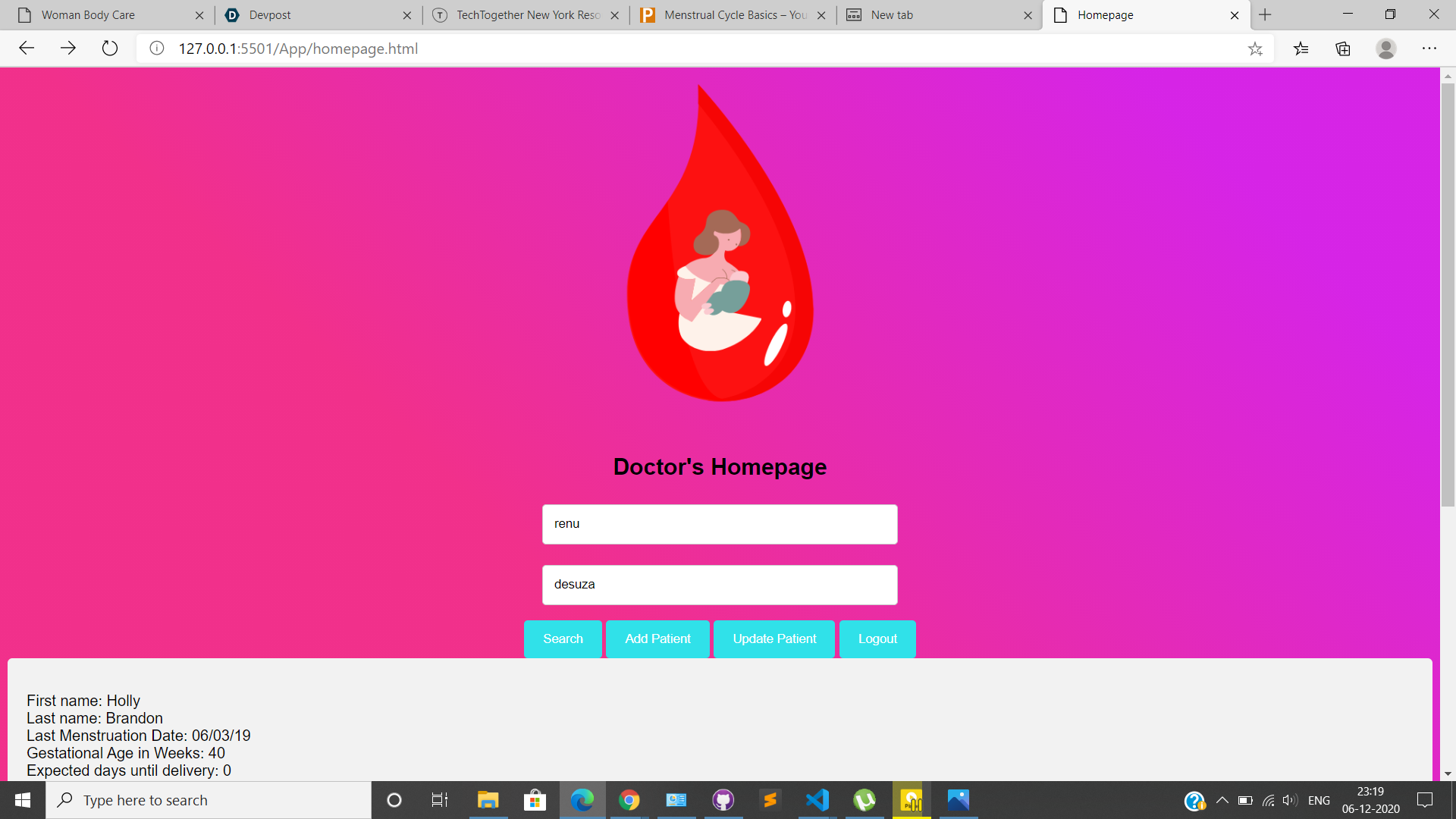
The app would be accessible to the expecting couple, midwife and the doctor and the day to day health updates by the expecting mother or the parameters that is measured by the midwife is uploaded to the same portal. the regular reading taken by the midwife will get uploaded which will be viewed by the doctor and the next appointment will be scheduled. we worked with a hardware model for contraction intensity detection using arduino, piezo sensor and touch sensor. The frequency and the intensity of the contraction is noted and the couple or the mother is notified when she should leave for the hospital. The app also includes portions of prepartum depression coping mechanism by creating a forum for other new parents, psychologist and nutritionists.
Understanding how menstruation works can help you understand how your own cycle works.
Follicular Phase (Days 1-14) This phase of the menstrual cycle occurs from approximately day 1-14. Day 1 is the first day of bright red bleeding, and the end of this phase is marked by ovulation. While menstrual bleeding does happen in the early part of this phase, the ovaries are simultaneously preparing to ovulate again. The pituitary gland (located at the base of the brain) releases a hormone called FSH – follicle stimulating hormone. This hormone causes several ‘follicles’ to rise on the surface of the ovary. These fluid filled “bumps” each contain an egg. Eventually, one of these follicle becomes dominant and within it develops a single mature egg; the other follicles shrink back. If more than one follicle reaches maturity, this can lead to twins or more. The maturing follicle produces the hormone estrogen, which increases over the follicular phase and peaks in the day or two prior to ovulation. The lining of the uterus (endometrium) becomes thicker and more enriched with blood in the second part of this phase (after menstruation is over), in response to increasing levels of estrogen. High levels of estrogen stimulate the production of gonadotropin-releasing hormone (GnRH), which in turn stimulates the pituitary gland to secrete luteinizing hormone (LH). On about day 12, surges in LH and FSH cause the egg to be released from the follicle. The surge in LH also causes a brief surge in testosterone, which increases sex drive, right at the most fertile time of the cycle.
Ovulatory Phase (Day 14) The release of the mature egg happens on about day 14 as a result of a surge in LH and FSH over the previous day. After release, the egg enters the fallopian tube where fertilization may take place, if sperm are present. If the egg is not fertilized, it disintegrates after about 24 hours. Once the egg is released, the follicle seals over and this is called the corpus luteum.
Luteal Phase (Days 14-28) After the release of the egg, levels of FSH and LH decrease. The corpus luteum produces progesterone. If fertilization has occurred, the corpus luteum continues to produce progesterone which prevents the endometrial lining from being shed. If fertilization has not occurred, the corpus luteum disintegrates, which causes progesterone levels to drop and signals the endometrial lining to begin shedding.
How I built it
html5, css3 is the display of our site, node.js is the server site part , it also store petient data and java script is the make the attractive pages.
Challenges I ran into
We had a tough time finding the database for the app. the three level entry at the user interface was a challenging part. For the hardware part, waiting for the touch sensor to work according to the actual medical criteria was not possible because of time crunch.
Accomplishments that I'm proud of
We are extremely proud of the concept because it deals and solves many pain points spread over different stakeholders during the gestation period of a woman. We are proud of the final database that we created, since it authenticates users and stores data about each user. None of us had used firebase before.
What I learned
We learned not to give up. there were a lot of problems that we were facing with the coding and hardware part till the very last of the hackathon, but we stood strong together and found a way out. We learned more about the coding platform and came up with a more feasible solution. We learned more about web development, as well as backend technology.
What's next for first day Menstrual Cycle care
The future scope for woman care would be including data sets from different bio signals so that a fully view-able electronic health record can be incorporated in it. We also hope to increase security for each user, since the data being handled is very personal.


Log in or sign up for Devpost to join the conversation.