Inspiration
Ever since I was a kid playing adventure games and MMORPGs, I’ve been hooked on the fantastical worlds in games like Perfect World International, Phantasy Star Online, and Final Fantasy X/X-2. They’ve got this vibrant, unreal vibe that virtual spaces should have—places that feel impossible. I’m also super inspired by Syd Mead, the guy who basically defined the retrofuturism we know today, and I had Grimes’ music on repeat while creating.
That’s why I wanted my game and virtual world to capture that same wild, imaginative spirit, like building the first colony on an alien planet. As a creator, I’m driven by the nostalgia of those gaming experiences that shaped me. Now, as a designer, I’m putting my own spin on that magic with mobile virtual worlds like First Colony: Time Extractors.
The idea of time anomalies has been bouncing around in my head for a while, and I thought it’d be a killer hook for the game. It also explains why the map’s objects regenerate each round—we’re jumping to different points in the planet’s timeline when it was loaded with resources. But we only get 3 minutes to mine because the anomaly gets unstable, and we gotta bail. Hence, Time Extractors.
What it does
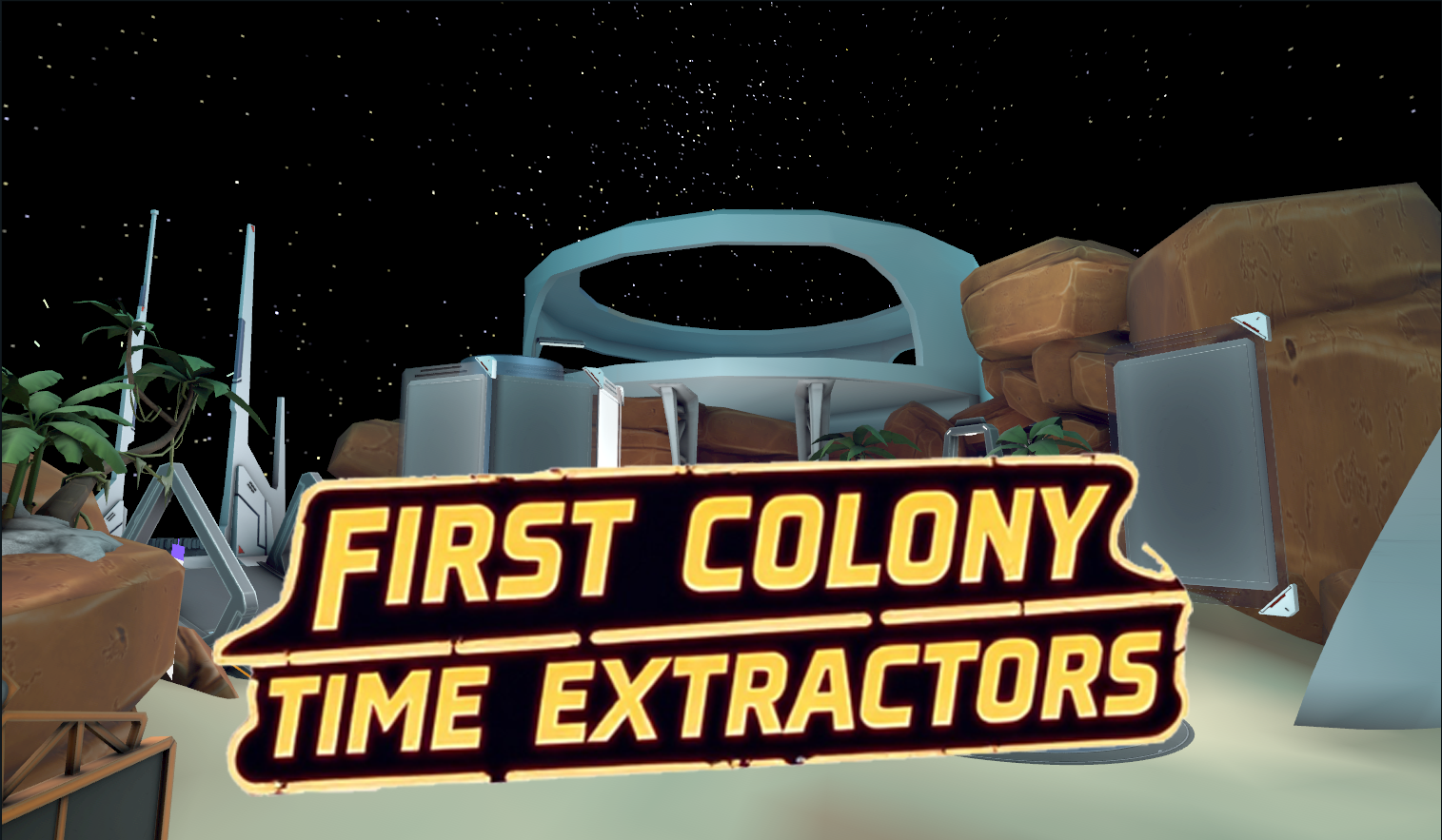
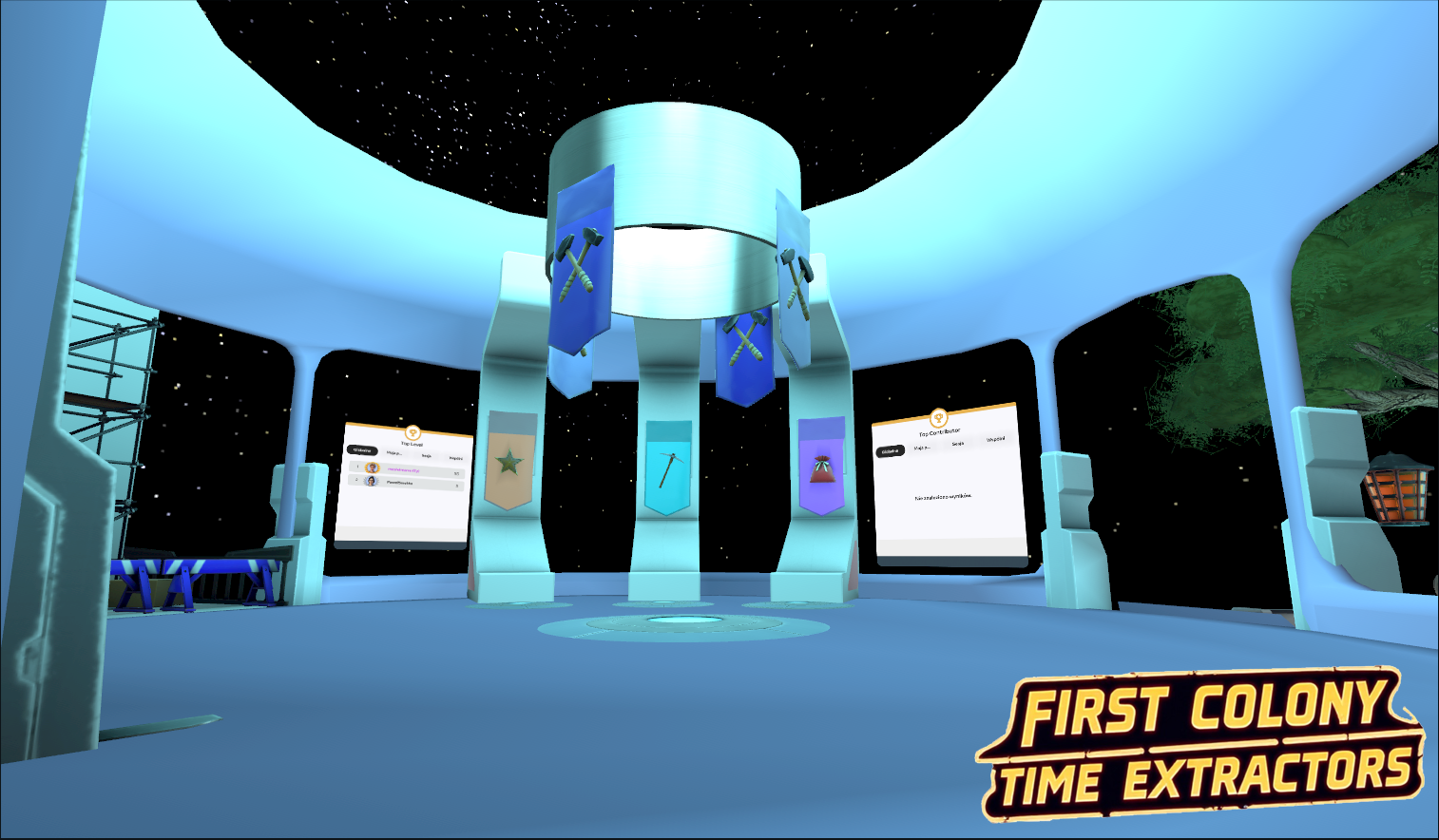
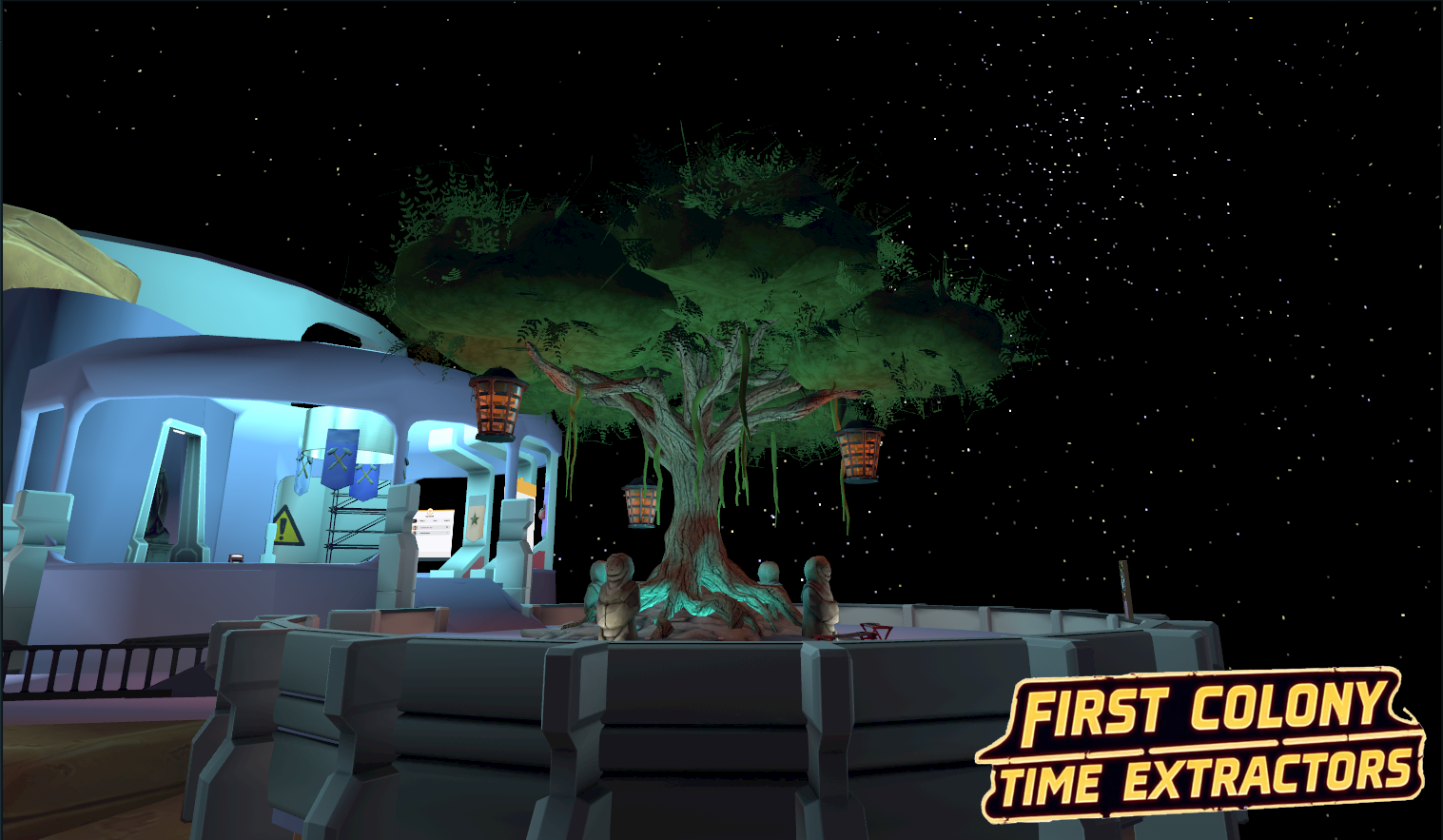
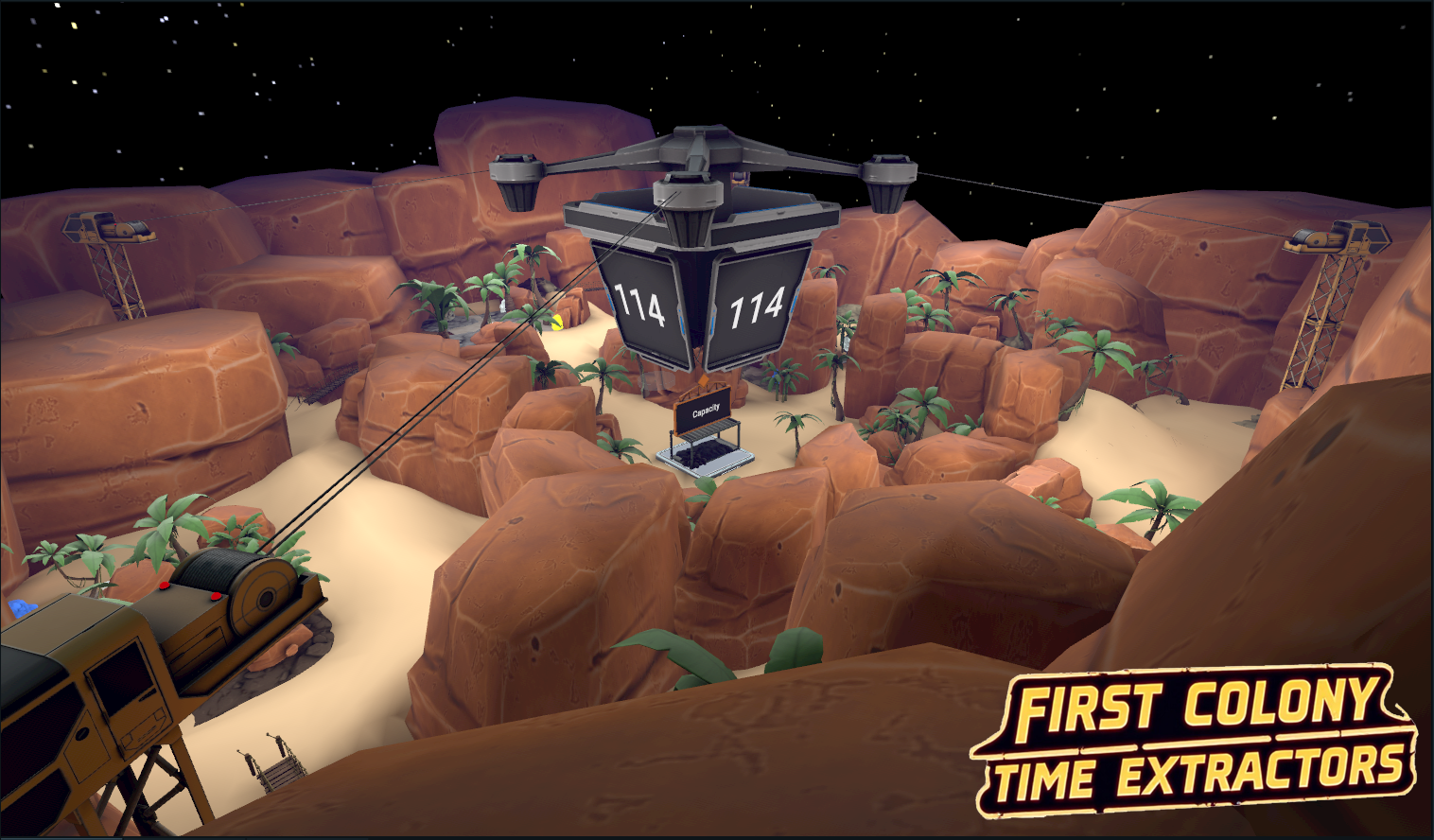
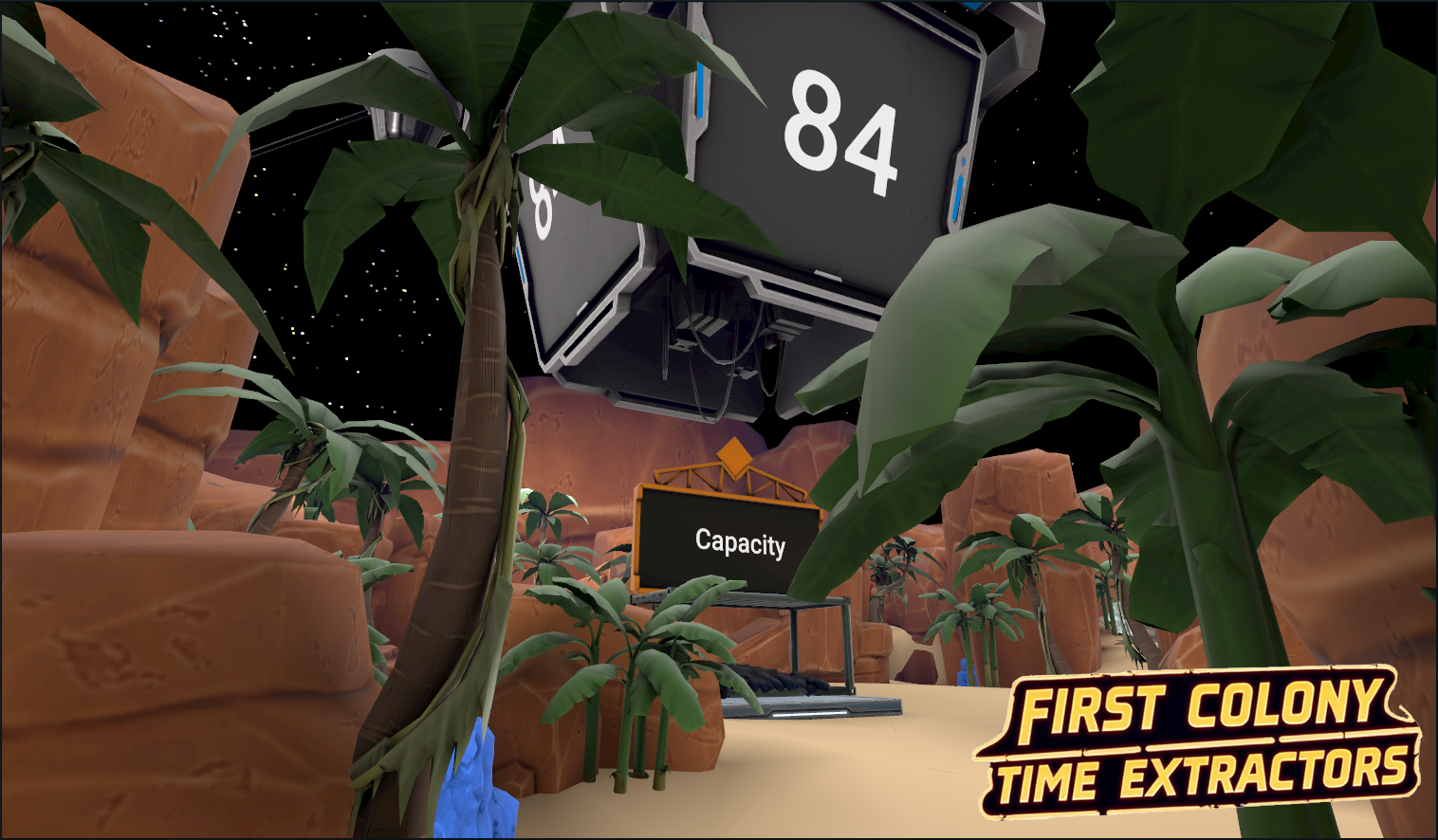
First Colony is a mobile/web game on Meta Horizon Worlds that drops you into a retrofuturist sci-fi world as a time-warping colonizer. Race against the clock to mine ores in ever-changing maps, deposit them in a shared container, and compete or collaborate to dominate the leaderboard. For your hard work, every round you are being rewarded with Yados and Experience, that allows you to upgrades, Contribution Points and level our avatar up. Every ore has different rarity, each time you destroy it, and every run has different score multiplier. With engaging quests, upgradable gear, and a vibrant lobby for socializing, it’s an immersive, endlessly replayable adventure.
How we built it
Most of the assets I used to build my world were public assets available to everyone in the project*, so I could focus purely on the fun of designing levels and scripting mechanics. Since this is my first game project in this engine, **I leaned on Codeblocks to create the mechanics, drawing from my experience making educational scenarios for Minecraft: Education Edition and my designer instincts honed in the gaming industry. That combo let me deliver a prototype with solid core mechanics. I also used Blender and Stable Diffusion to help shape the world’s visual concept during the creative process.
Challenges we ran into
My biggest challenge was scripting and designing mechanics for multiple players. Even though the systems are similar, I had to shift my approach and add functions in the scripts to check for and resolve conflicts that could accidentally reward the wrong player. The constant struggle throughout the process was limited time and resources. I built the game solo from scratch in a tool I’m not fully familiar with—sure, I’ve worked extensively in Unreal Engine and Unity, I see the similarities, and I know how to design for mobile platforms, but every editor’s structure is something you’ve gotta learn fresh.
Accomplishments that we're proud of
I’m most proud of how fast I learned to use a new tool and managed to deliver a working game prototype in just a month and a half by the time I submit this project. I’m also really stoked that I brought my vision of this fantastical world to life, and I can easily share it with others—all you need is a phone with the Meta Horizon app. I think the core mechanic of depositing ore into a single container is awesome because it ramps up competition, but it could easily be tweaked to vibe with a cooperative feel for building a space colony. The idea of collecting Contribution Points was a guiding light from my first sketches, and I’m set on making it the heart of this world. Plus, I’m proud of how satisfying it feels to mine ore, deposit it, and level up your character.
What we learned
Above all, I learned a new tool that I want to keep exploring and dive into scripting with TypeScript to expand my world’s possibilities. It was a valuable lesson in thinking about world and mechanic design in a more engine-agnostic way. I started by sketching everything on paper and making flowcharts, then figured out how to bring it to life in the engine.
What's next for First Colony: Time Extractors
I really want to fill the upper part of the house with assets to make it a cool extra spot for hanging out and interacting. I’m planning to add more quests to the game, including daily quests and something like an achievement system to reward players for sticking around in my world. Next, I want to keep squashing bugs and fixing anything that might visually annoy players. After adding mechanics to boost engagement, I’d like to optimize my world so I can increase the player cap—right now, it’s set at 4, but I’ll test what’s possible in its current state. That means moving scripts from CodeBlocks to TypeScript and batching/merging objects to reduce graphical load. Another big priority is adding visuals for upgrades, like a better pickaxe, a cooler backpack, and showing the player’s level above their head. The experience would also feel way better with a UI that reacts to what the player’s doing—even something simple, but it’s gotta be there, so that’s on the list. Finally, once the world is polished to a decent point, I’d love to add telemetry and figure out how to monetize my world.
Built With
- blender
- codeblocks
- editor
- horizon
- meta
- worlds


Log in or sign up for Devpost to join the conversation.