-
-
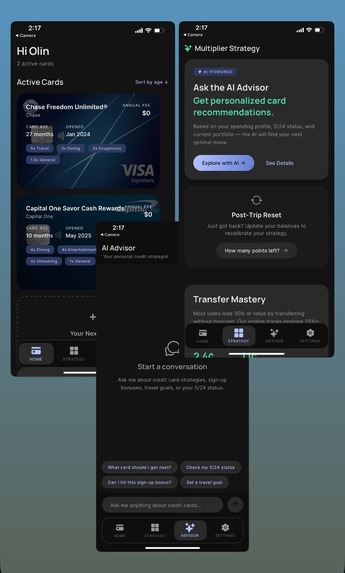
React App
-
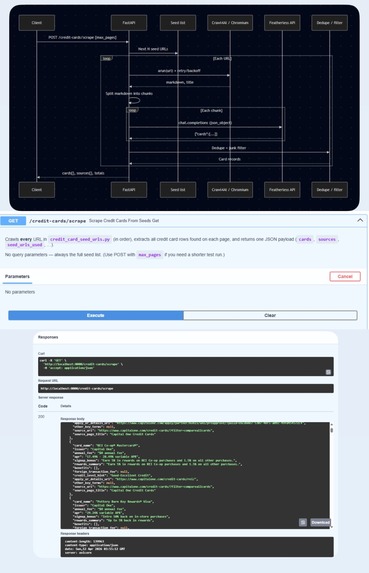
Webscraper/Featherless API
-
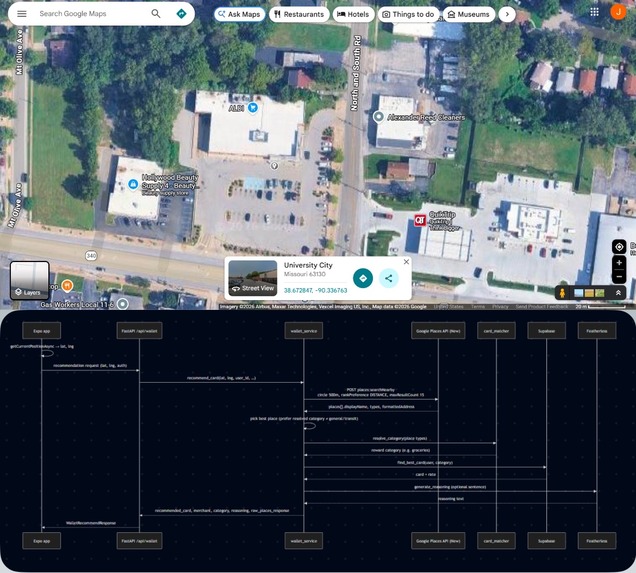
Google Places
Inspiration
For a lot of students, credit cards are confusing on their own, and it gets even harder when you try to think about rewards and travel. You might have a couple of cards, but figuring out which one to use for each purchase, how to maximize rewards, or whether a new card is even worth it can feel like guesswork. Most resources do not really help with that. They either try to sell you cards or assume you already understand the whole points ecosystem. First Class is built for students who are in the middle of that. It focuses specifically on managing credit cards in a simple and practical way, acting as an expert advisor in your pocket to help you use what you already have better and make smarter decisions without overcomplicating things.
What it does
First Class is a mobile app built with React Native and backed by a Python FastAPI server that helps you manage and optimize your credit card usage. It has two flagship features:
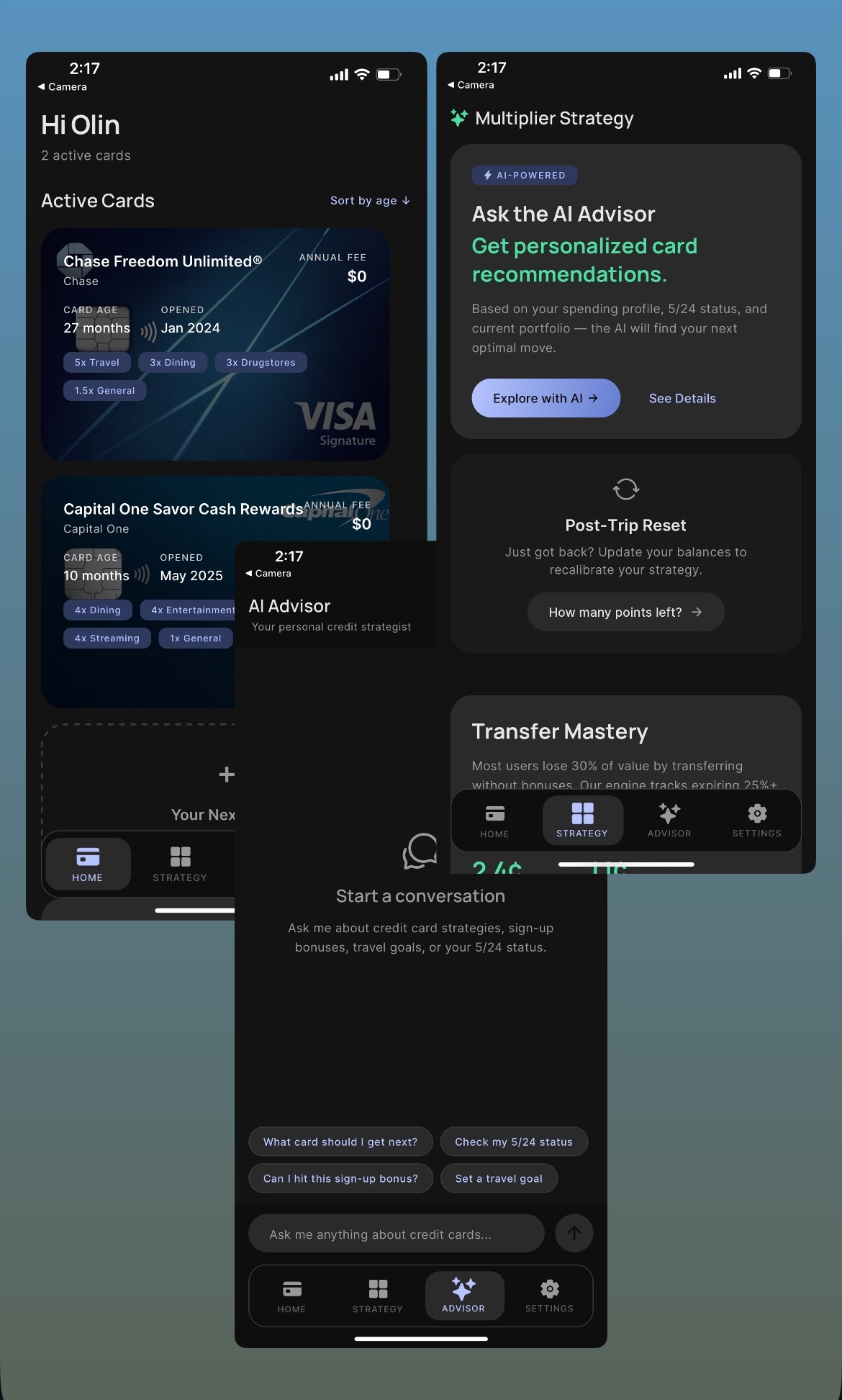
The AI Credit Card Strategist: This is the core of First Class—an autonomous AI assistant that acts as your personal financial advisor for credit cards. Unlike a generic chatbot, the Strategist is deeply integrated with your financial profile. It knows your credit score, monthly income, breakdown of living expenses, active travel goals, and current cards. When you ask for advice on what card to get next, it doesn't just give you a generic list. Instead, it:
- Formulates a multi-phase roadmap to build a complete card ecosystem (like the Chase Trifecta or Amex Trifecta) that maximizes your specific spending categories.
- Uses live tools to check your Chase 5/24 status, search the card catalog, and calculate if you can realistically hit the Sign-Up Bonus (SUB) spending requirements based on your actual monthly expenses.
- Enforces strict financial guardrails, like running a debt-vs-rewards calculator if you carry a balance, ensuring it never recommends a card that would hurt you financially.
- Automatically updates your personalized timeline in the app with Phase 1, Phase 2, and Phase 3 goals once you approve the plan.
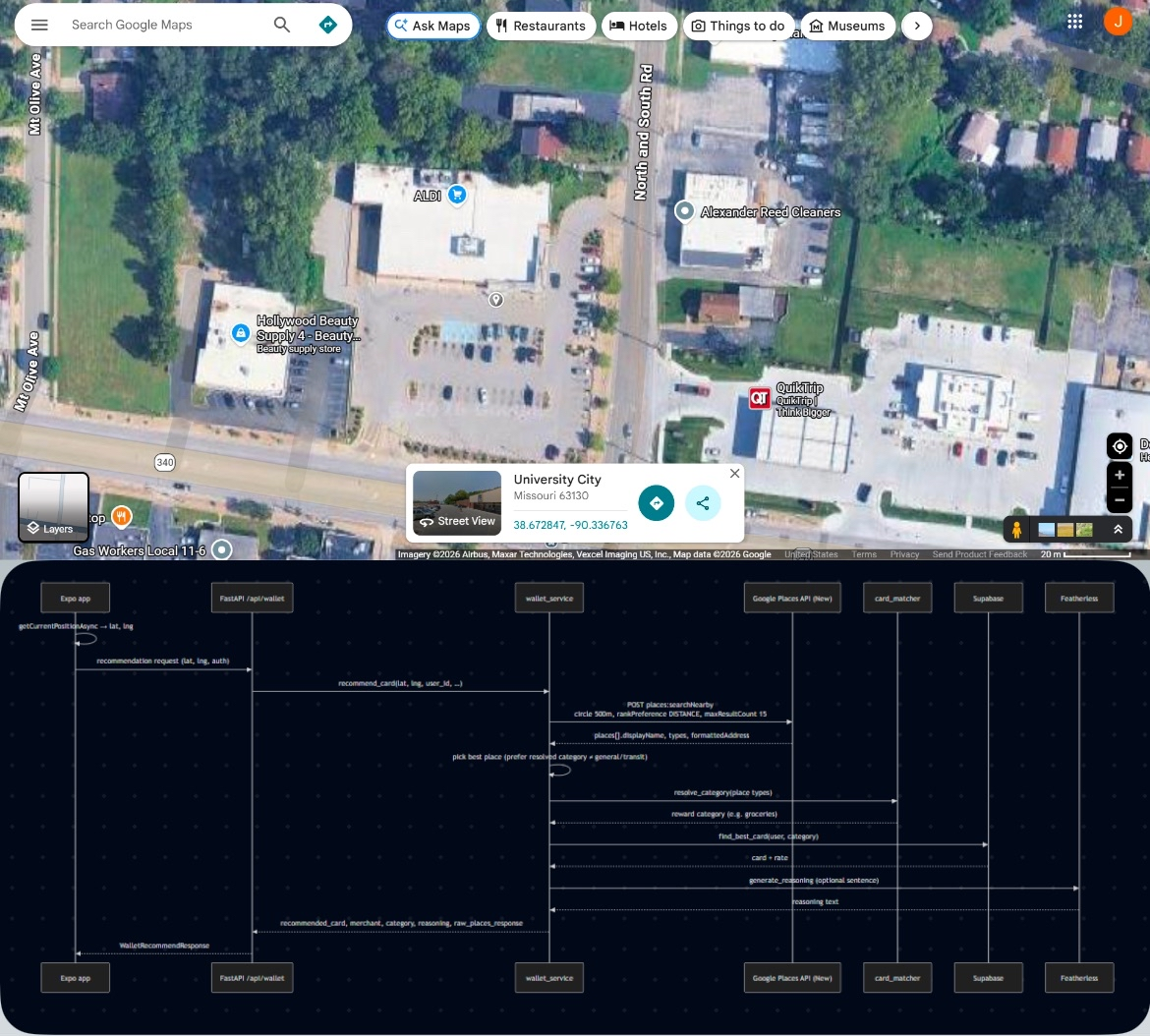
Smart Wallet: When you enable location, the app takes your GPS coordinates and sends them to the backend, which uses Google Places to understand where you are and what type of purchase you are about to make, like dining or groceries. It then looks at the cards in your profile, stored in Supabase, and recommends exactly which card to use along with a short explanation of why. This removes the need to memorize reward categories or think through every purchase in the moment.
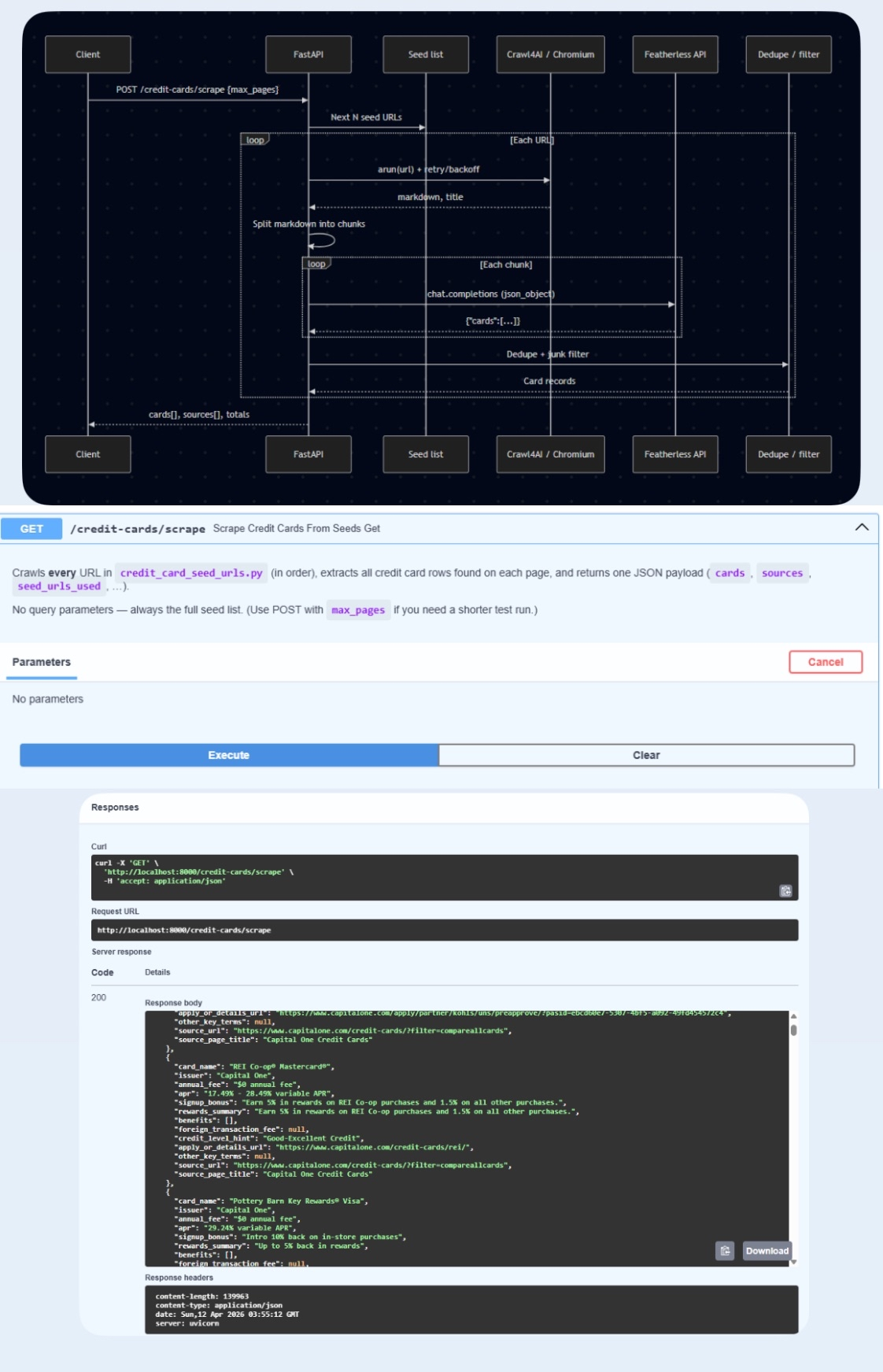
Behind the scenes, there is a crawlAI x Featherless pipeline that keeps card data up to date by loading issuer listing pages in a headless browser, converting them into text, and extracting structured details like fees and rewards. That data powers the recommendations and the AI Strategist's knowledge base.
How we built it
The backend is built with FastAPI and organized into clear layers: routers for endpoints, shared services for logic, and typed request and response models so everything stays consistent and predictable. All external integrations are handled server-side, including Google Places, Supabase, and Featherless (which we use as an OpenAI-compatible API for LLM calls).
To build the AI Strategist, we implemented a complex agentic loop with function calling. The AI is equipped with an array of backend tools (check_five_24, calculate_sub_feasibility, debt_vs_rewards, get_card_catalog, set_timeline). As you chat, the agent can autonomously call these functions, retrieve real-time data from your Supabase profile, and factor the results into its response. We implemented a custom Server-Sent Events (SSE) streaming pipeline that interleaves token generation with tool call executions in real-time, providing a seamless and responsive chat experience.
For the Smart Wallet feature, the app sends GPS updates to the backend, but we added logic to avoid unnecessary calls with distance thresholds and cooldown timers. Once a location is processed, we map it to a spending category and compare it against the user’s saved cards, returning a simple recommendation.
On the data side, we built a pipeline using Crawl4AI to keep credit card information up to date. A headless browser loads issuer listing pages, handles popups, and converts the page into markdown. Large pages are split into overlapping chunks and sent to Featherless with a strict prompt to extract structured JSON (fees, rewards, bonuses). The results are parsed, deduplicated, and merged into clean records.
Challenges we ran into
We burned time on Google Cloud’s $300 credit / billing setup which was giving us issues, so we switched to Featherless to keep iterating on prompts and JSON extraction.
Building the AI assistant presented significant challenges with function calling. We had to build robust fallback mechanisms to parse text-based tool calls when the model occasionally failed to use native function calling correctly. Getting the model to strictly adhere to financial guardrails and not hallucinate required extensive system prompt engineering and injecting a dynamic "User Context" block into every request.
For Smart Wallet, Google Places is accurate often, but categories can be broad or ambiguous, and “nearest place” isn’t always “where you’re shopping,” so we added ranking and filtering on results before mapping types to our reward buckets.
Accomplishments that we're proud of
We built a full end-to-end system that goes from a user’s real-world location to a clear credit card recommendation in real-time.
We are incredibly proud of the AI Strategist. We didn't just wrap an LLM in a chat interface; we built a functional, tool-using agent that acts like a true financial advisor. It understands complex concepts like the Chase 5/24 rule and ecosystem trifectas, and it proactively protects users from taking on bad debt or missing out on bonuses.
We also successfully developed an automated pipeline that takes messy issuer websites and turns them into structured, usable data that directly powers the app, which was a big step beyond just scraping or summarizing content.
What we learned
We learned how to connect multiple systems in a clean and reliable way, combining real-time location data, external APIs, and LLMs without slowing things down.
Building the chat feature taught us a massive amount about agentic workflows, function calling, and managing state in an LLM conversation. We learned that strict prompting and dynamic context injection are critical if you want an AI to provide personalized, safe, and actionable financial advice. We also saw how important it is to design around real user behavior, like handling GPS noise and keeping responses fast.
What's next for First Class
Next, we want to expand the AI Strategist's capabilities to automatically analyze your monthly statements and proactively tell you if you're optimizing your spend correctly. We want to improve recommendation accuracy and make everything more personalized based on user behavior. We also plan to expand our card dataset and refine the extraction pipeline so it stays up to date and more detailed. On the product side, we want to make the experience feel even more seamless, so choosing the right card becomes almost automatic.
Built With
- expo.io
- featherless
- google-places
- mcp
- react-native
- supabase


Log in or sign up for Devpost to join the conversation.