-
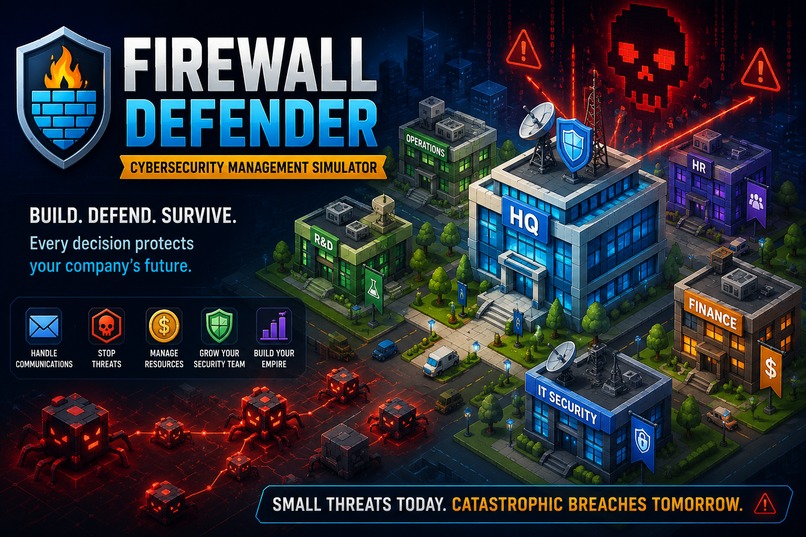
Firewall Defender - Thumbnail
-
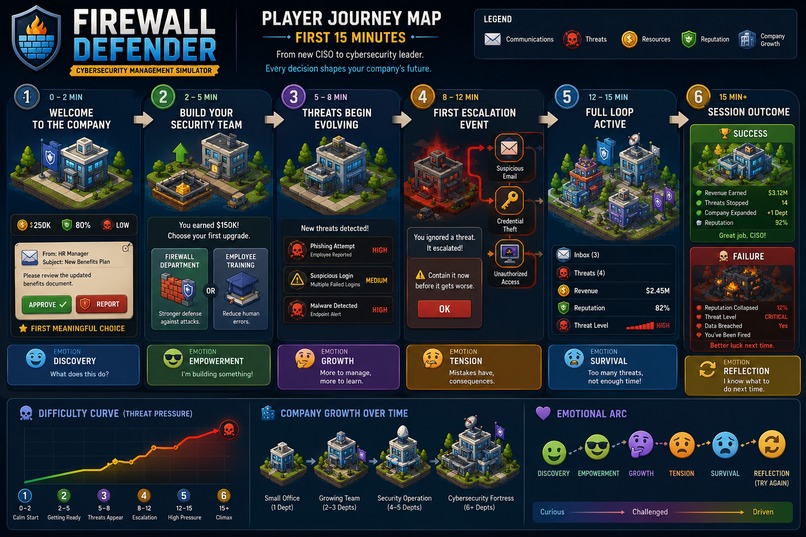
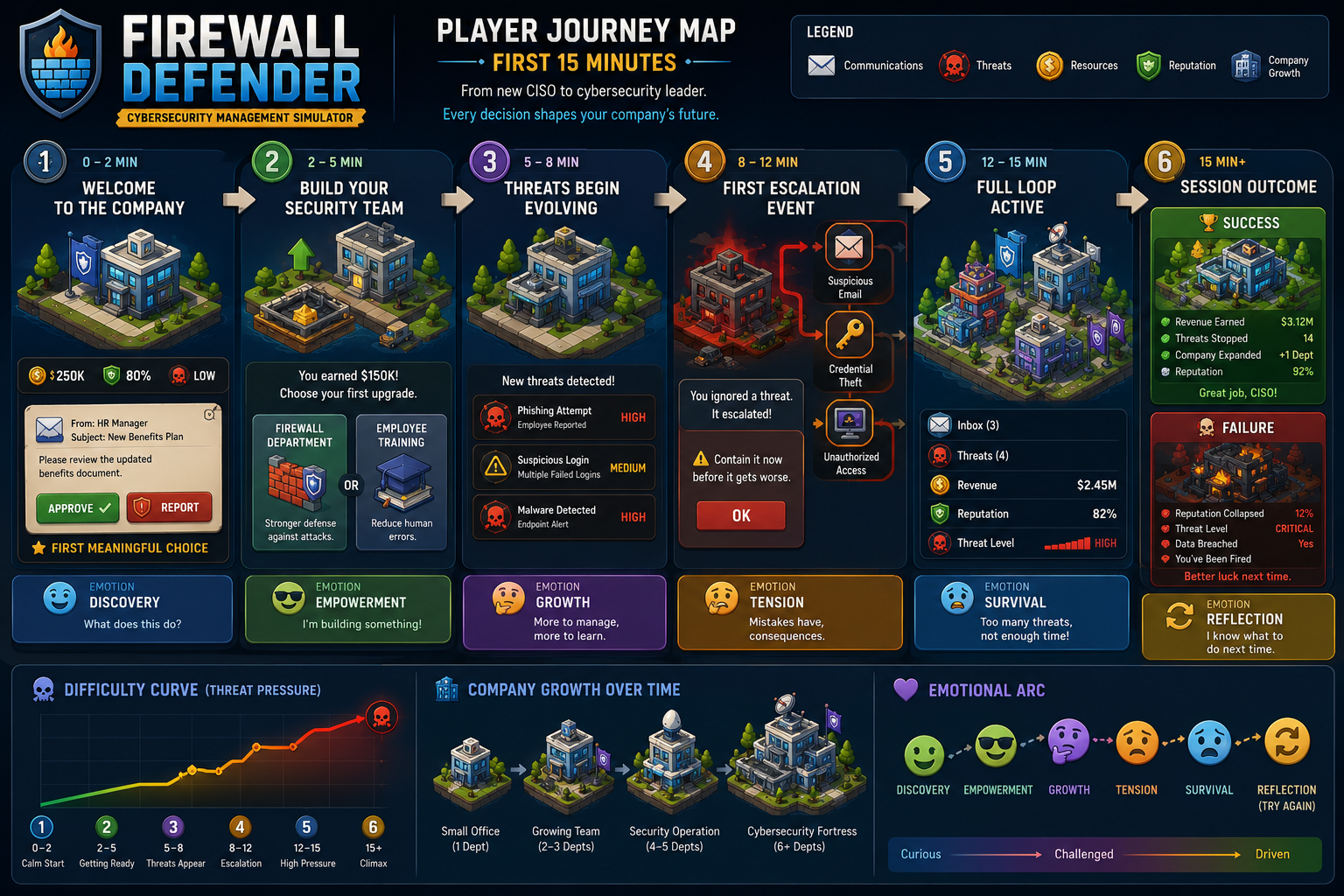
Firewall Defender - Player Journey Map
-
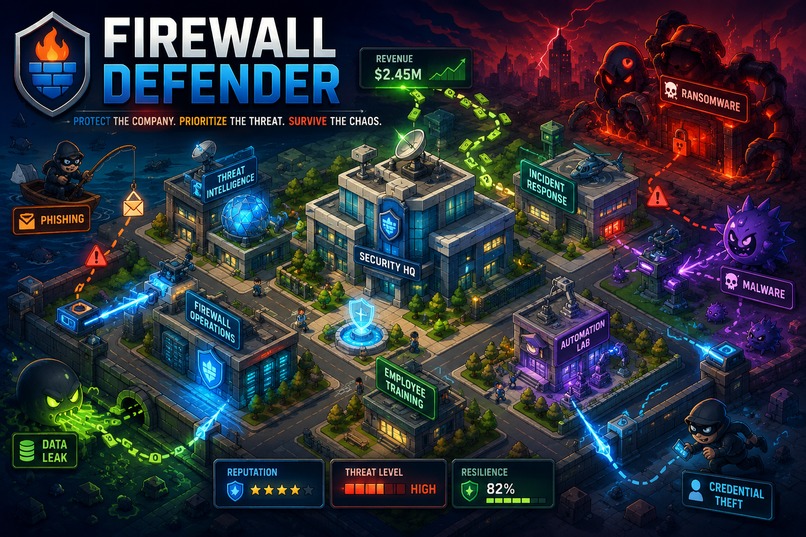
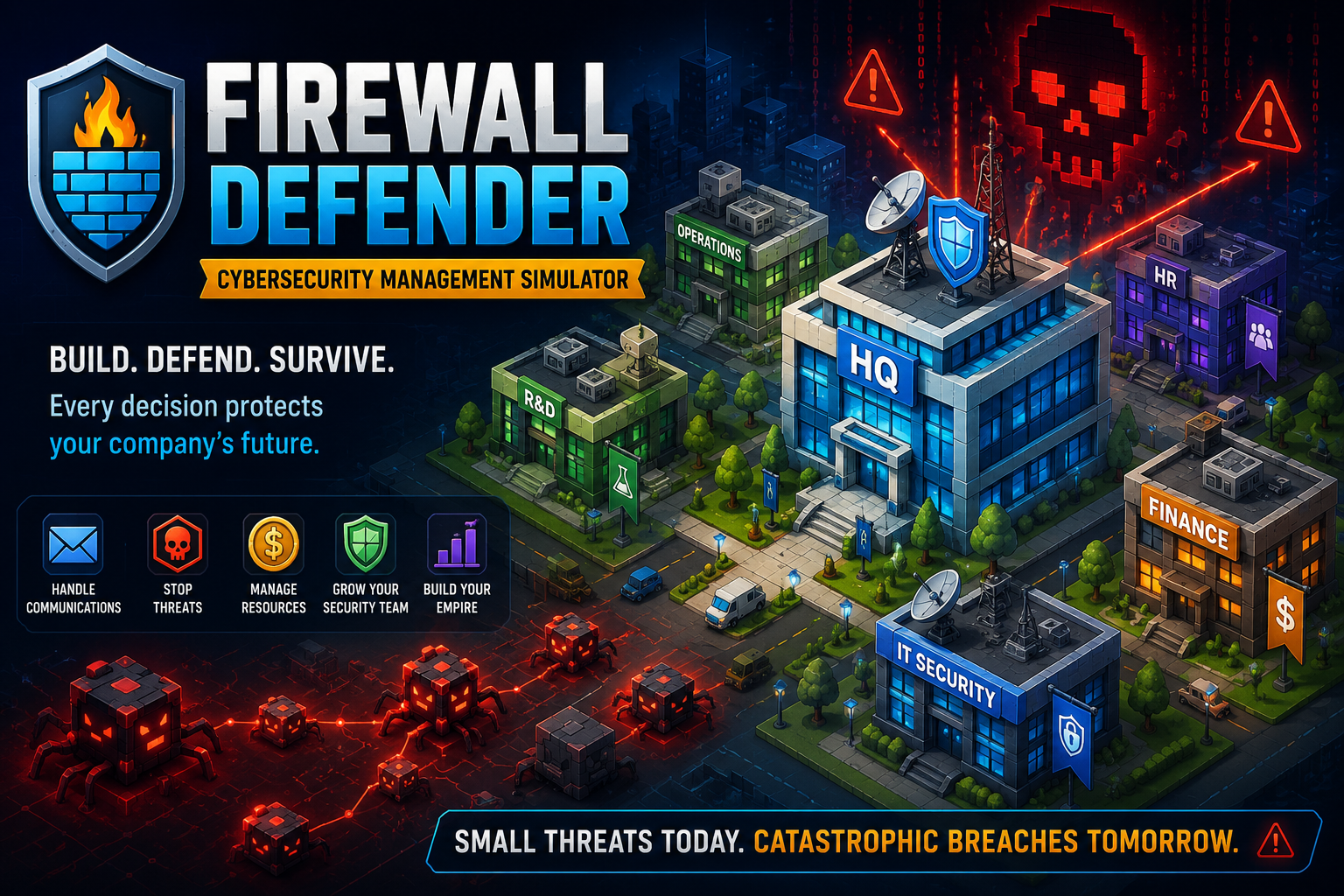
Firewall Defender - Hero Art
-
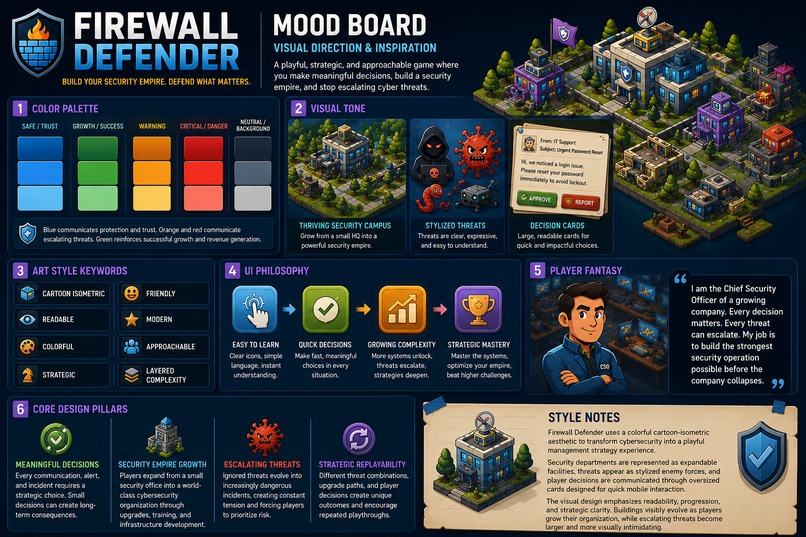
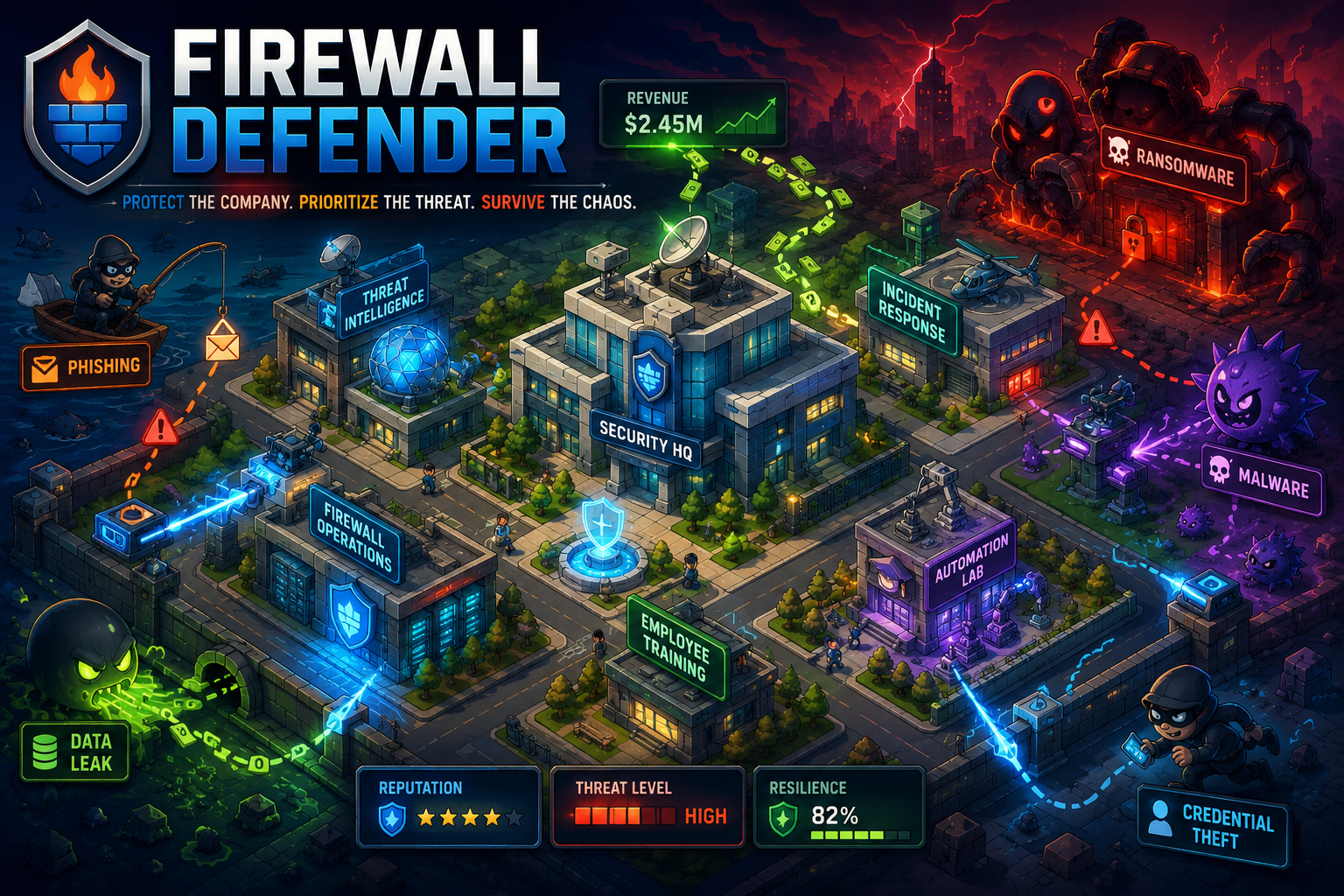
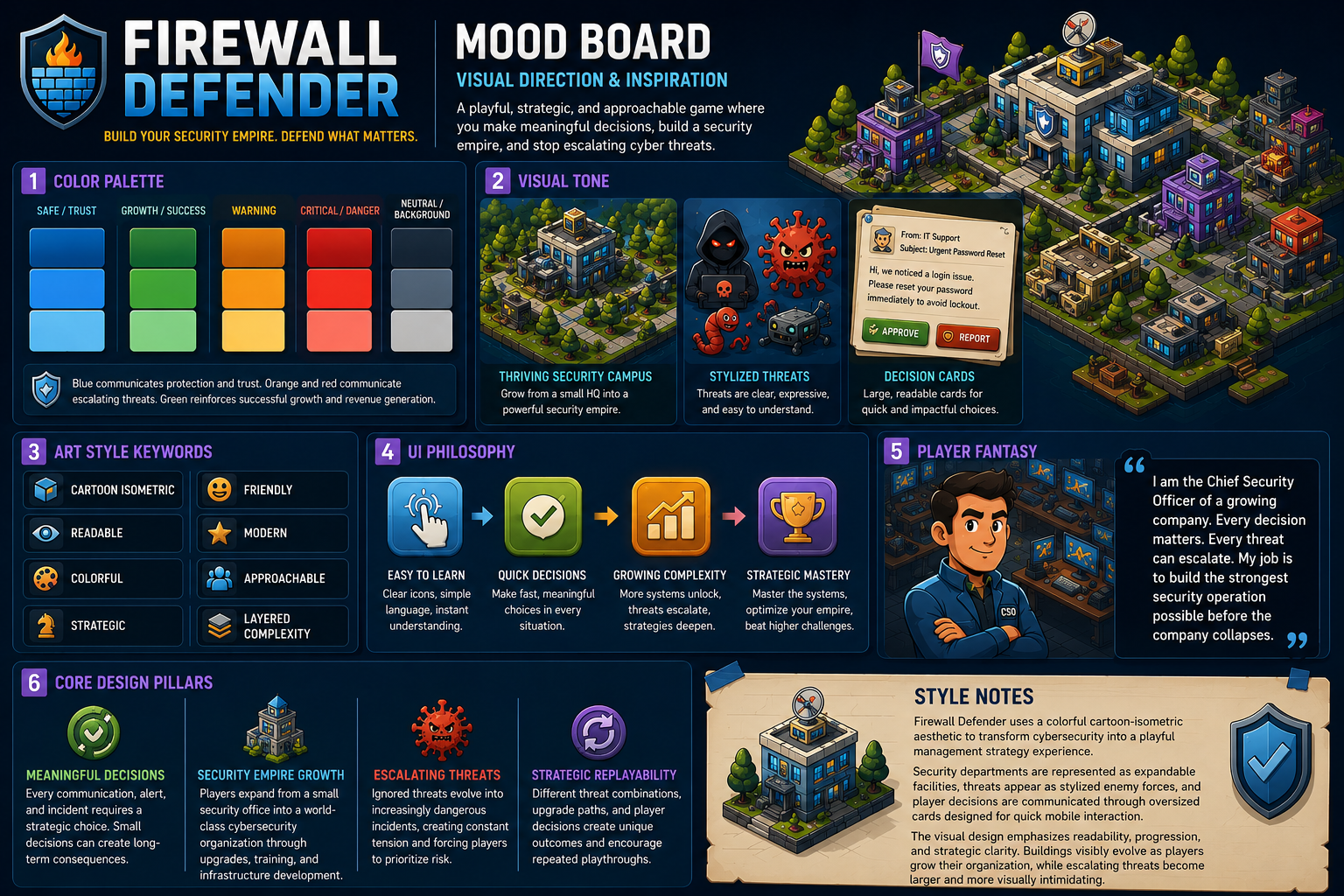
Firewall Defender - Mood Board
-
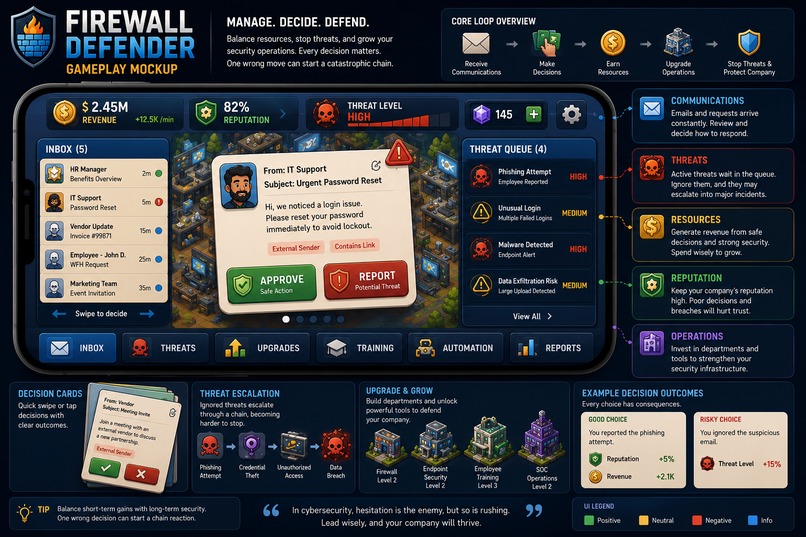
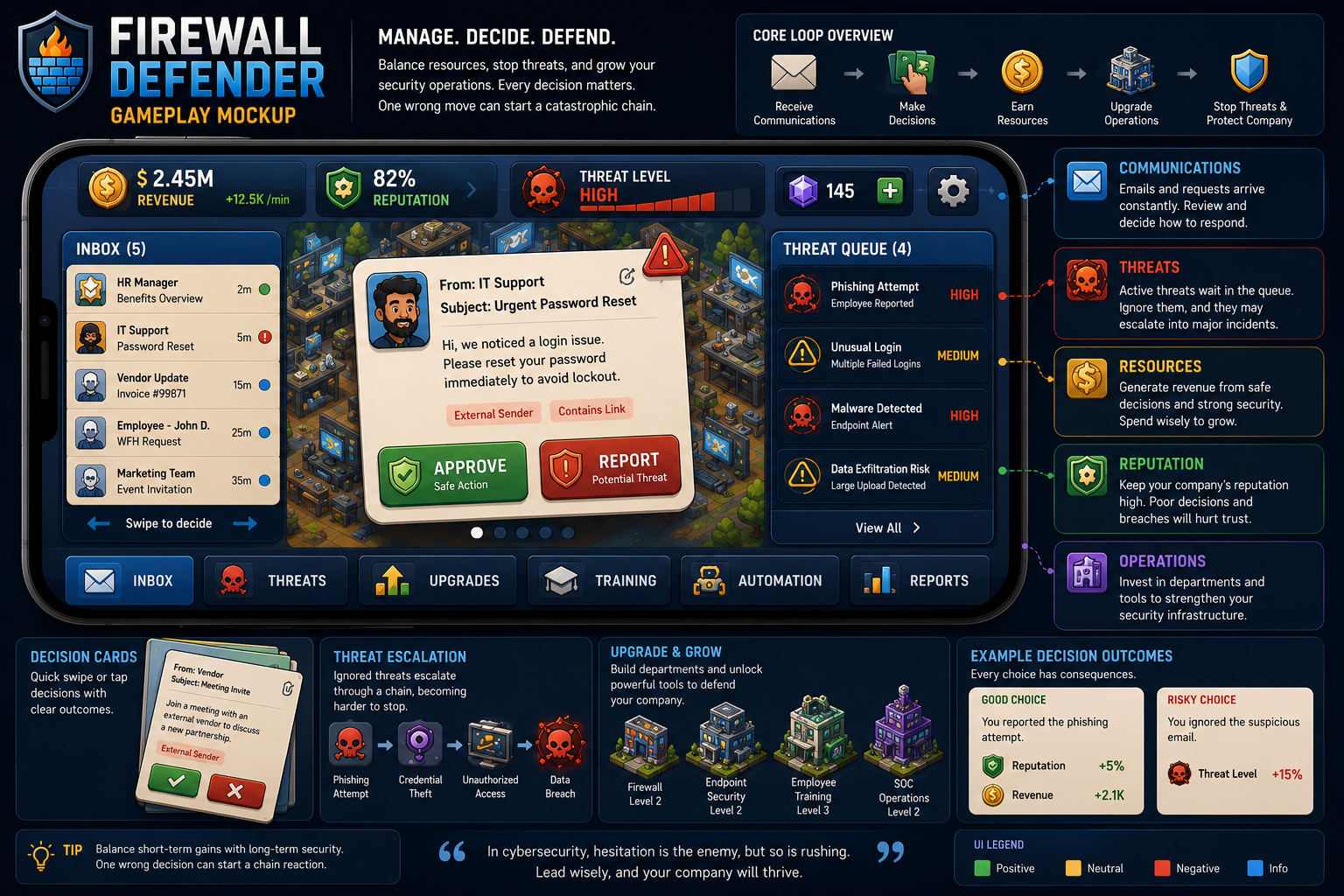
Firewall Defender - Gameplay Mockup
-
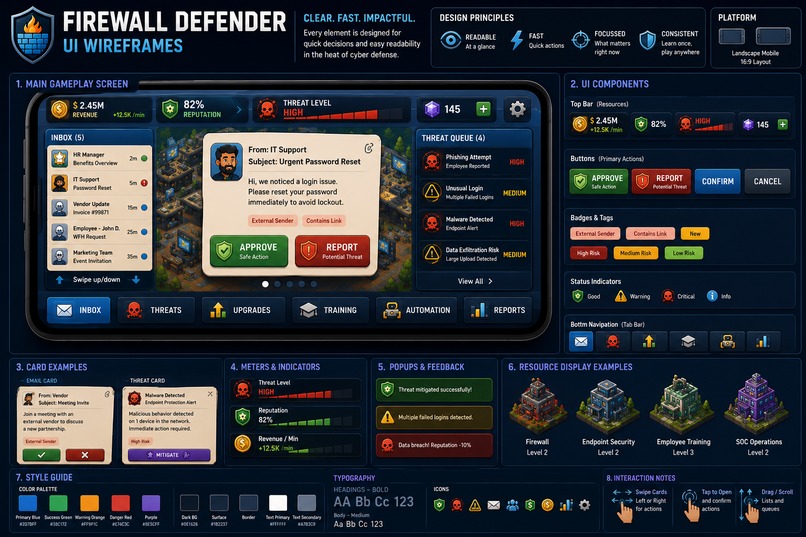
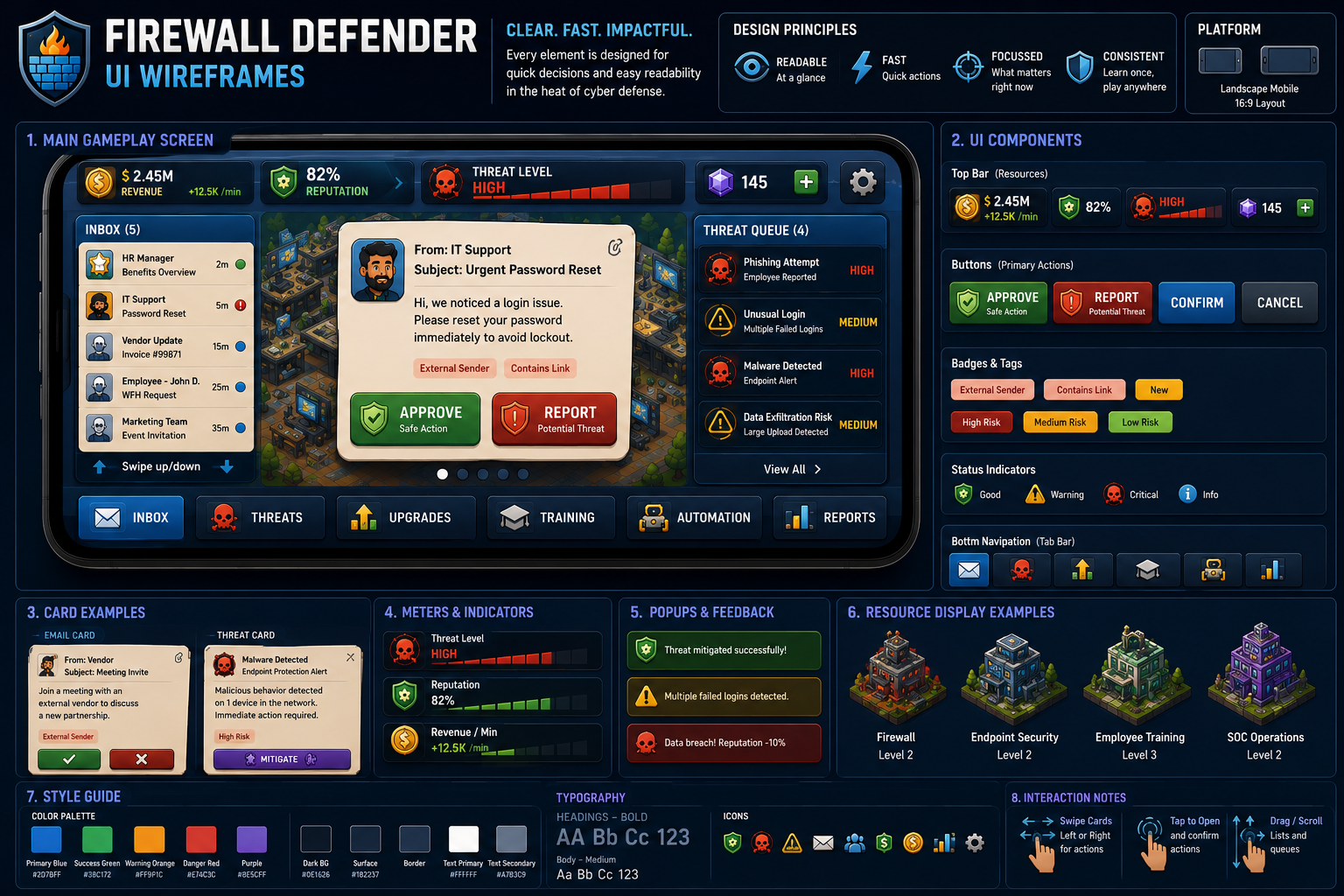
Firewall Defender - UI Wireframes
-
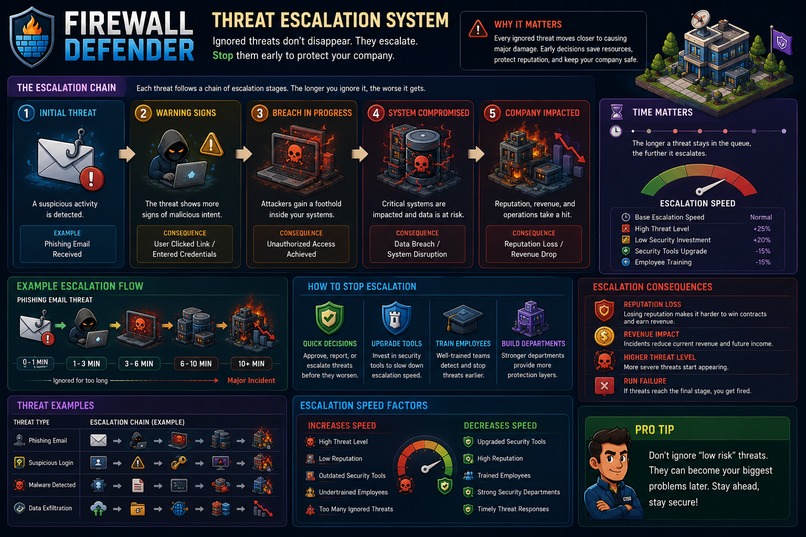
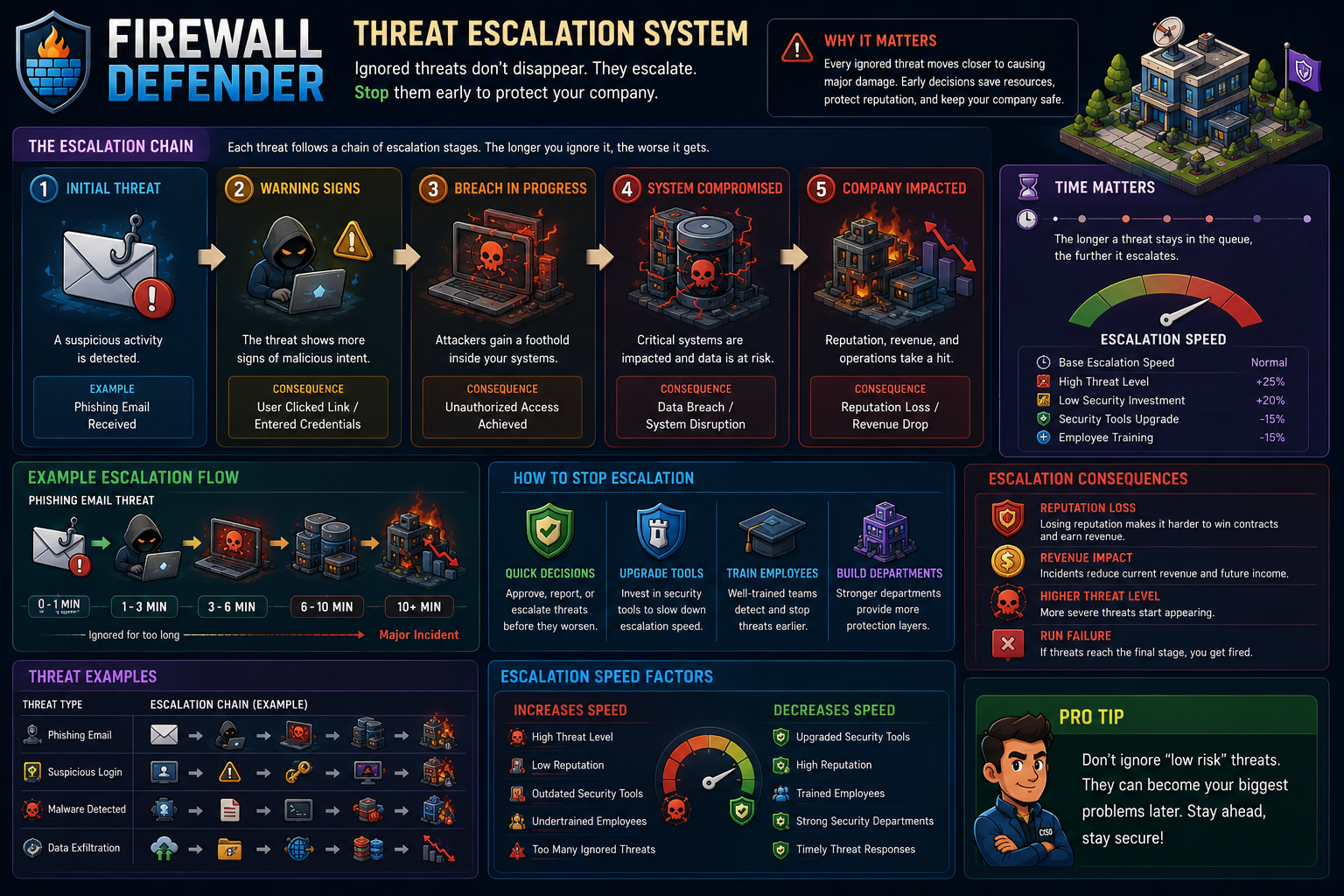
Firewall Defender - Threat Escalation System
-
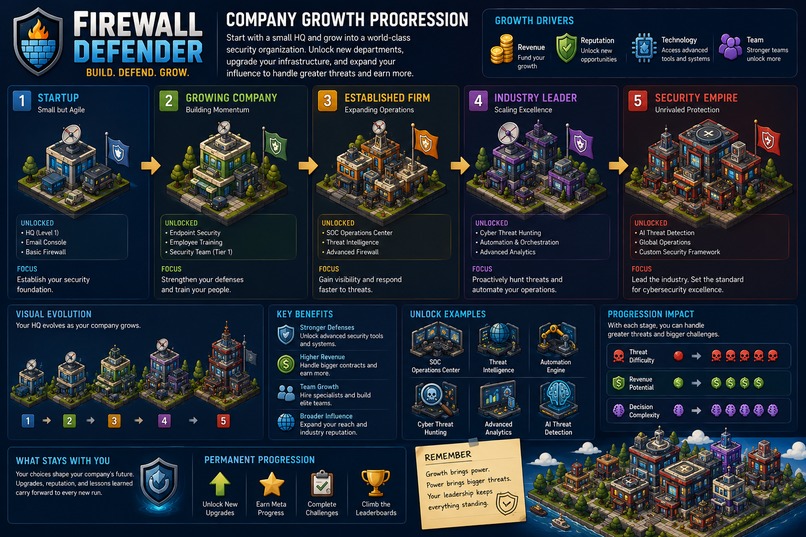
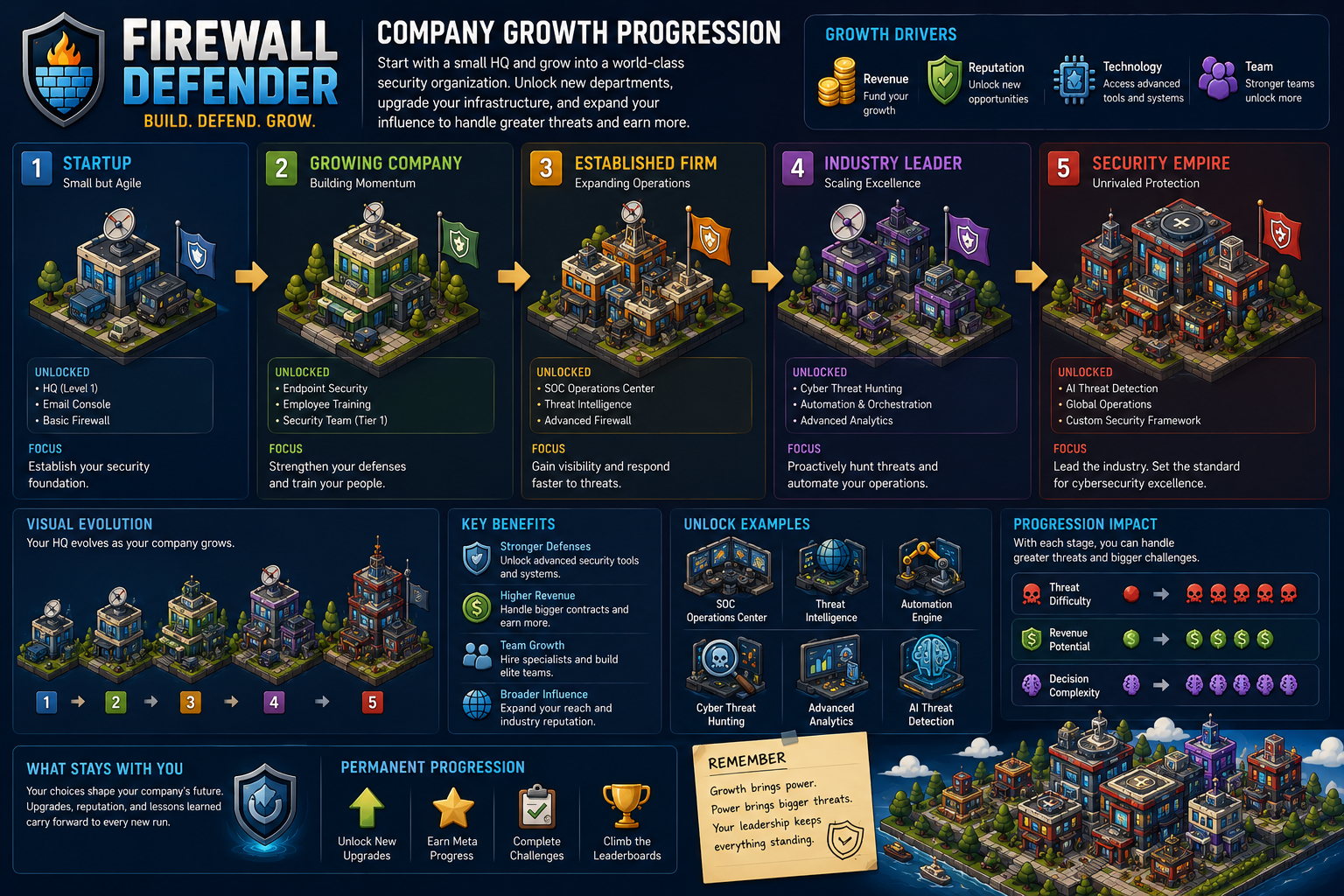
Firewall Defender - Company Growth Progression
-
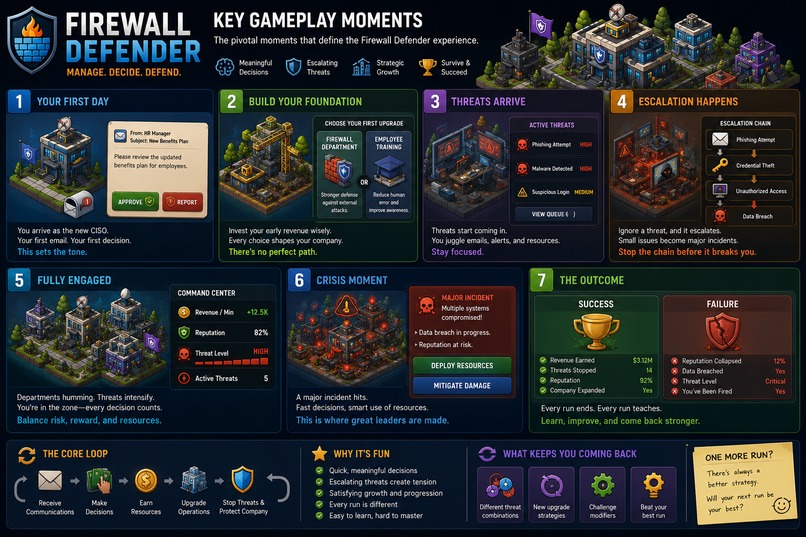
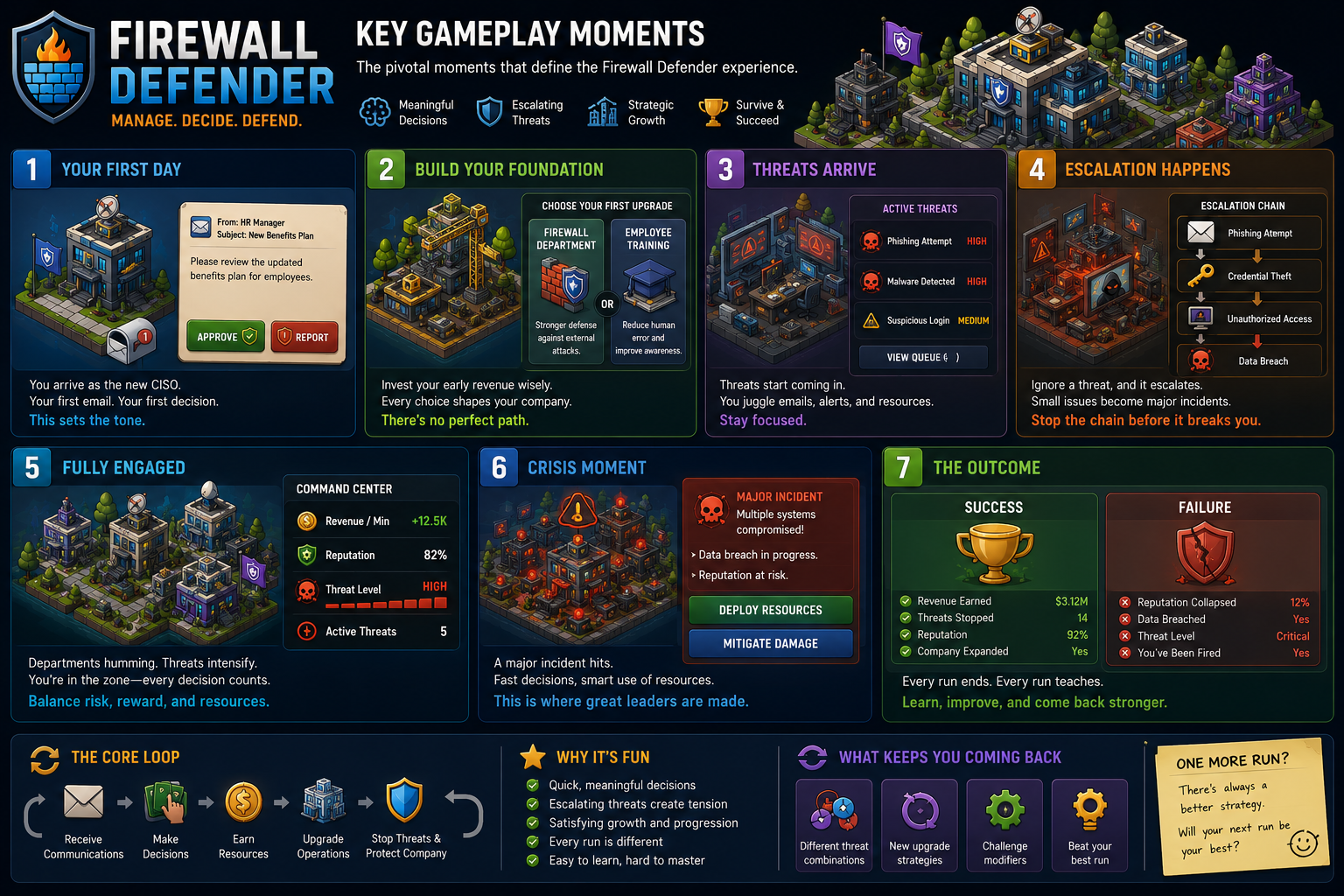
Firewall Defender - Key Gameplay Moments
Inspiration
Firewall Defender was inspired by a simple observation: cybersecurity is full of interesting decision-making, but most people experience it as something invisible or highly technical.
I wanted to explore what would happen if cybersecurity concepts such as phishing, malware, employee training, and incident response were transformed into approachable game mechanics. The goal was to create a strategy game where players experience the tension of defending a company while making meaningful decisions under pressure.
The project also draws inspiration from games that create compelling decisions through simple interactions, rewarding long-term planning and adaptation.
What it does
Firewall Defender is a mobile-first strategy and management game where players take on the role of a Chief Security Officer responsible for protecting a growing company from cyber threats.
Players receive communications, evaluate risks, allocate resources, and invest in security departments while managing Reputation, Revenue, and Threat Level.
The game's signature mechanic is its Threat Escalation System. Small threats can evolve into larger incidents if ignored, forcing players to balance short-term priorities against long-term consequences.
How we built it
Firewall Defender was developed as a complete pre-production game design package.
The design process focused on identifying a strong core gameplay loop, defining progression systems, establishing visual direction, mapping the first fifteen minutes of player experience, and creating a realistic production plan.
The project was structured around four core design pillars:
- Strategic decision-making
- Escalating threat management
- Company growth and optimization
- High replayability
Each supporting document was designed to reinforce these pillars and demonstrate how the concept could realistically be developed into a finished game.
Challenges we ran into
One of the biggest challenges was transforming complex cybersecurity concepts into gameplay that felt approachable and fun.
Many cybersecurity simulations can feel overwhelming or overly technical. The design challenge was finding ways to simplify these concepts without losing the strategic depth that makes them interesting.
Another challenge was balancing management gameplay with accessibility. The game needed enough complexity to reward strategic players while remaining easy to understand during short mobile sessions.
Accomplishments that we're proud of
The strongest accomplishment was developing a concept that transforms a traditionally technical subject into a clear and engaging strategy game.
The Threat Escalation System emerged as a unique mechanic that ties together player decisions, resource management, progression, and replayability.
We are also proud of creating a cohesive visual identity that communicates growth, pressure, and strategic decision-making through a colorful cartoon-isometric art style.
What we learned
This project reinforced the importance of identifying a strong core loop before expanding into additional systems.
The design process highlighted how meaningful consequences can create engagement without requiring complex mechanics. Small decisions become significantly more impactful when players can clearly see their long-term effects.
We also learned the value of designing around player emotions and experiences rather than focusing solely on features.
What's next for Firewall Defender
The next step would be transforming the concept into a playable prototype focused on validating the core decision-making loop and threat escalation systems.
Future development would include meta progression, challenge modifiers, additional departments, industry-specific scenarios, and expanded escalation chains.
Long-term, Firewall Defender could evolve into a highly replayable strategy platform where players continuously experiment with new organizational builds, defensive strategies, and challenge configurations.
Built With
- ai-assisted-concept-art
- chatgpt
- game-design
- player-journey-mapping
- systems-design
- visual-development


Log in or sign up for Devpost to join the conversation.