-
-
Cover
-
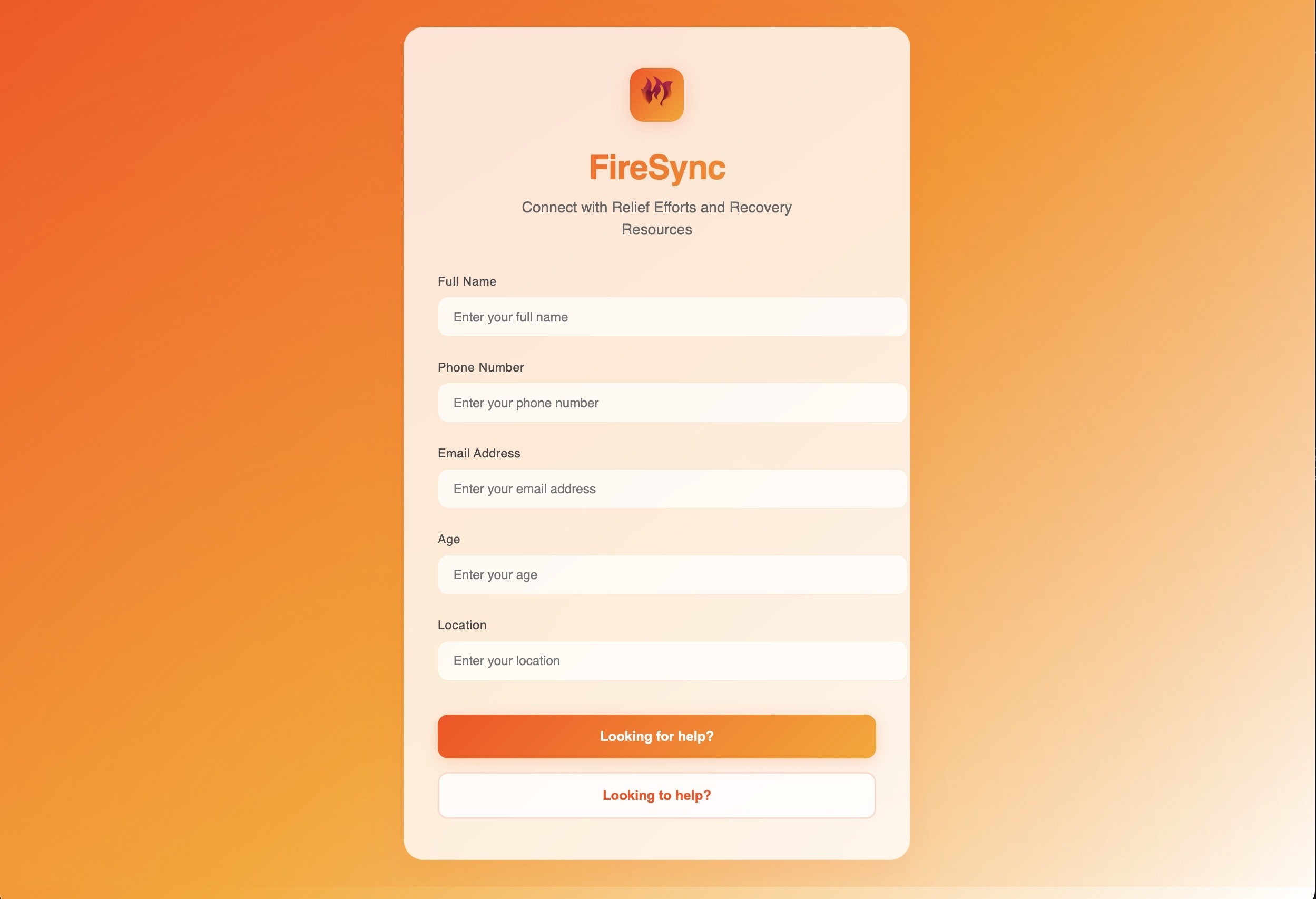
Landing Page
-
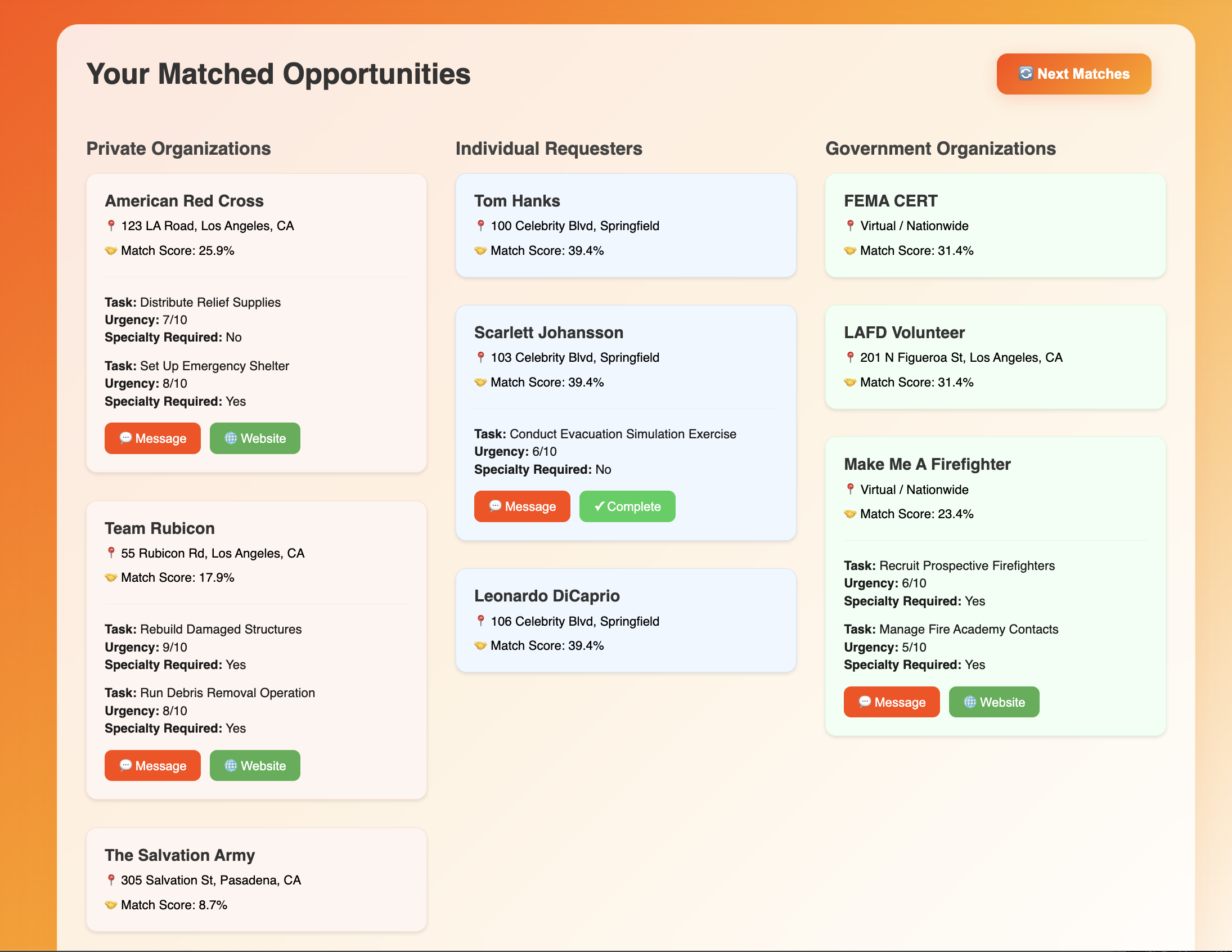
matching-dashboard
-
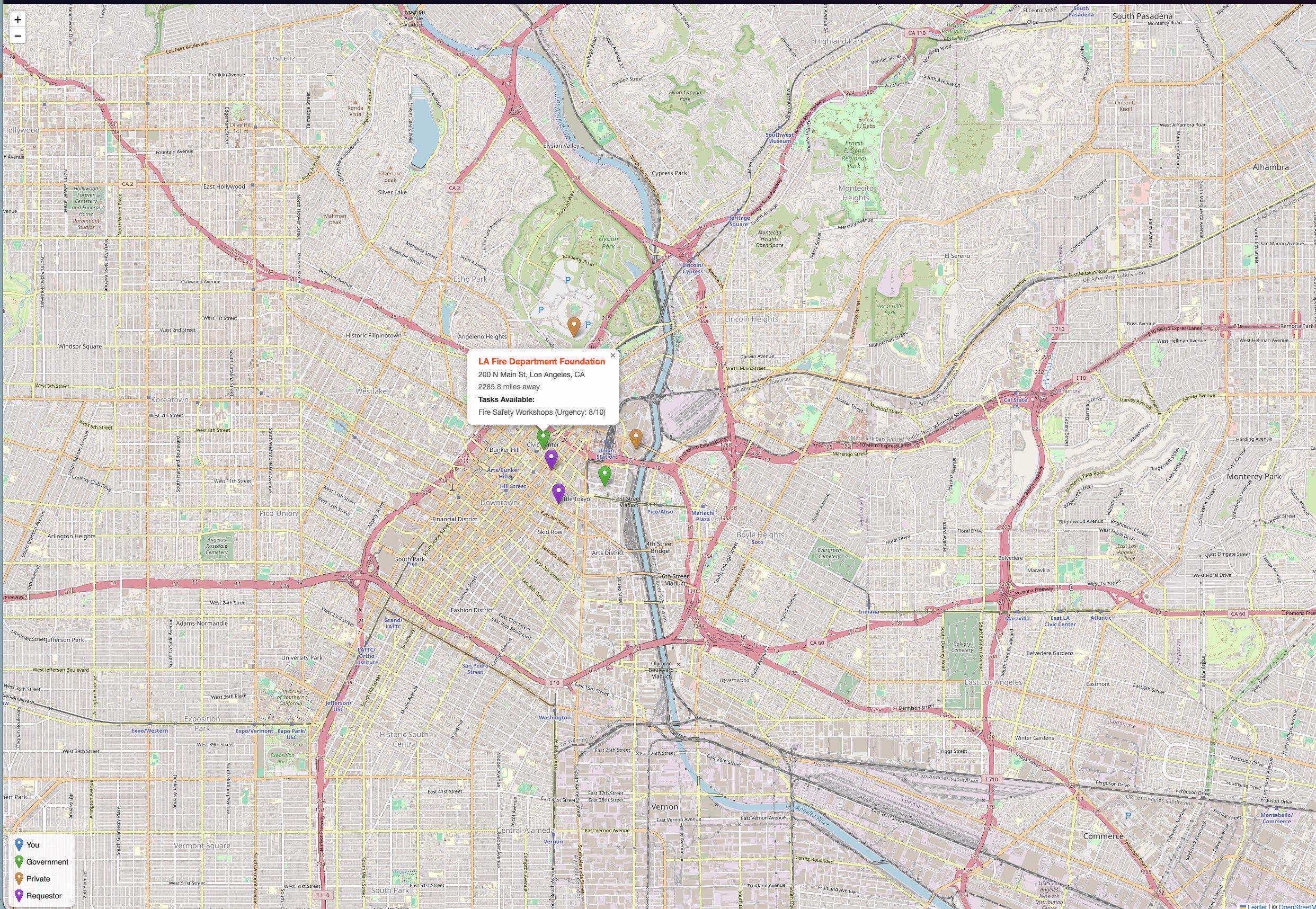
map
Inspiration
The story of FireSync began with a news report that left us shaken. A small town in California, devastated by wildfires, was struggling to recover. Despite the outpouring of support, the chaos made it nearly impossible for volunteers to connect with those in need. This disconnect highlighted a glaring problem: recovery efforts were fractured, inefficient, and often left the most vulnerable without help.
We were inspired to bridge this gap—to create a platform where communities, volunteers, and organizations could come together seamlessly. We envisioned a solution where cutting-edge technology could meet human compassion, revolutionizing the way communities recover after disasters.
What it does
FireSync is a next-generation disaster recovery platform that empowers wildfire-stricken communities to rebuild faster and smarter. It harnesses AI for intelligent volunteer-task matching, real-time coordination, and impact tracking. Here’s how it works:
- Requesters can list the tasks they need help with, specify skill requirements, and set urgency levels.
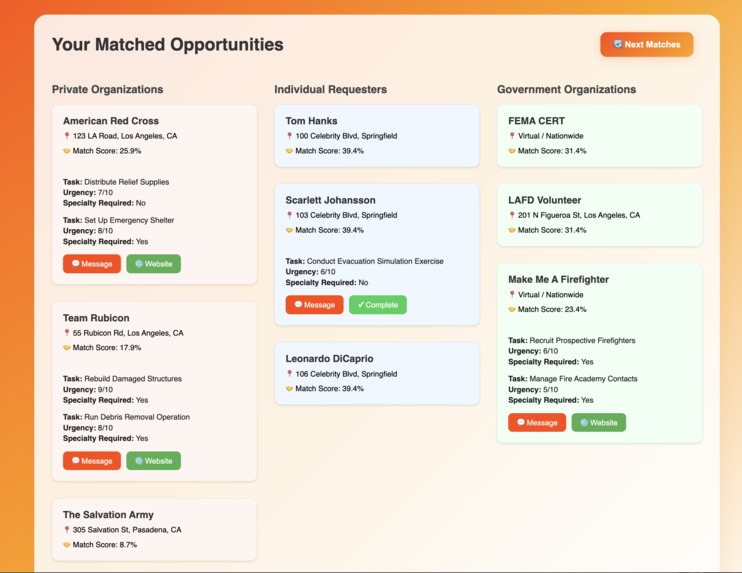
- Volunteers are matched with opportunities that align with their availability, skills, and location.
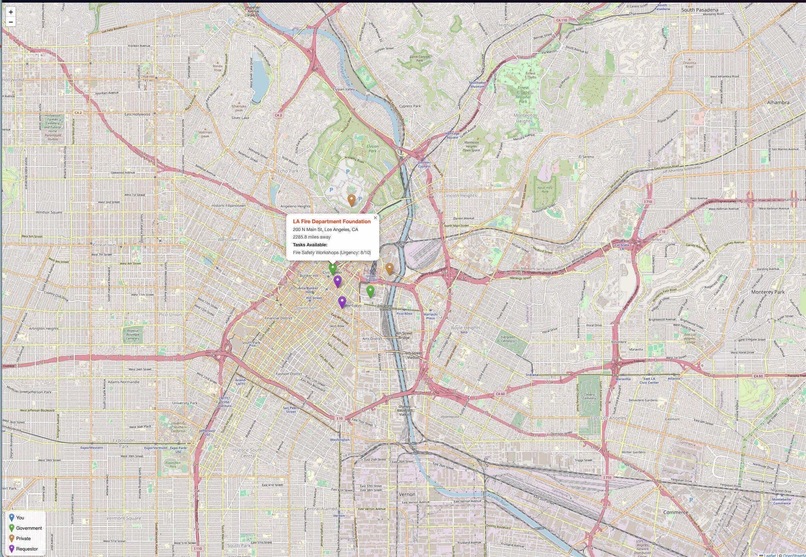
- The platform features interactive maps, a real-time messaging system, and a sustainability tracker that gamifies recovery efforts.
FireSync ensures that every willing volunteer finds meaningful opportunities, while communities receive the targeted help they need.
How we built it
Building FireSync was an incredible journey.
- Frontend: We used React to create a user-friendly and responsive interface.
- Backend: Our backend, built with Node.js and MongoDB Atlas, ensures scalable and secure data management.
- AI Matching: We implemented Retrieval Augmented Generation (RAG) for intelligent volunteer-task matching, powered by OpenAI’s GPT models.
- APIs: We integrated APIs for background checks, geocoding, and distance calculations to enhance user safety and optimize matches.
- Features: From interactive maps to real-time messaging and a sustainability tracker, every feature was designed with user experience in mind.
Challenges we ran into
The road wasn’t without its hurdles:
- Data Overload: Matching volunteers to tasks required processing complex datasets like availability, urgency, skills, and proximity. Optimizing this process was a major technical challenge.
- Real-Time Coordination: Implementing real-time messaging and ensuring instant delivery of messages across users tested our backend architecture.
- Scalability: Wildfire recovery involves large-scale operations, so designing a system that could handle high traffic was critical.
- Emotional Weight: Listening to stories of those affected by wildfires added a deeply human element to our work, reminding us of the urgency and importance of what we were building.
Accomplishments that we're proud of
- Impactful Matches: Our intelligent matching system delivers tailored opportunities, helping both volunteers and communities feel truly supported.
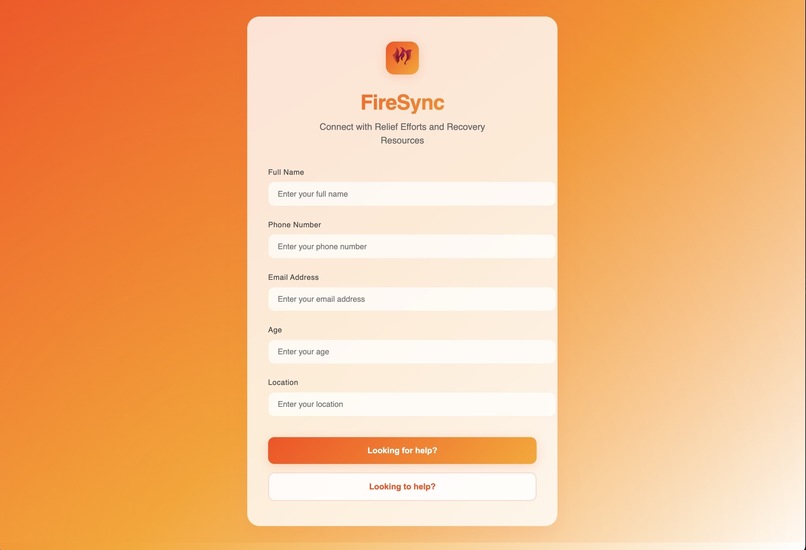
- Intuitive User Experience: FireSync’s interface is simple, sleek, and easy to navigate for users of all tech proficiencies.
- Real-Time Features: We’re proud of the seamless real-time messaging system that connects volunteers and requesters instantly.
- Gamified Sustainability Tracker: This unique feature motivates users to engage by visualizing their impact in real time.
Most importantly, we’re proud that FireSync has the potential to transform lives and create stronger, more resilient communities.
What we learned
Through this journey, we learned that technology can only do so much without empathy and human connection.
- Collaboration is Key: Building a platform like FireSync required input from developers, designers, and community organizers.
- Agility Matters: Tackling challenges required us to adapt quickly and think creatively.
- The Power of AI: We saw firsthand how AI can drive meaningful solutions for real-world problems.
Above all, we learned that even in the face of devastation, people’s willingness to help each other can move mountains.
What's next for FireSync
We’re just getting started! Here’s what’s next:
- Mobile App: Launching a dedicated mobile app to make FireSync accessible anytime, anywhere.
- Expanded Use Cases: Extending FireSync to address recovery efforts for other natural disasters like hurricanes and earthquakes.
- Enhanced AI: Leveraging machine learning to further refine our matching algorithms.
- Global Impact: Collaborating with international organizations to scale FireSync and make a difference worldwide.
FireSync isn’t just a platform—it’s a movement to redefine disaster recovery through innovation and human connection. Together, we can rebuild stronger.
Built With
- amazon-web-services
- avascript
- eslint
- express.js
- framer-motion
- git
- google-cloud
- google-maps
- heroku
- mongodb
- mongodb-atlas
- netlify
- node.js
- openai-api
- postman
- prettier
- react
- serpapi
- studio
- tailwind-css
- visual
- websocket


Log in or sign up for Devpost to join the conversation.