-
-
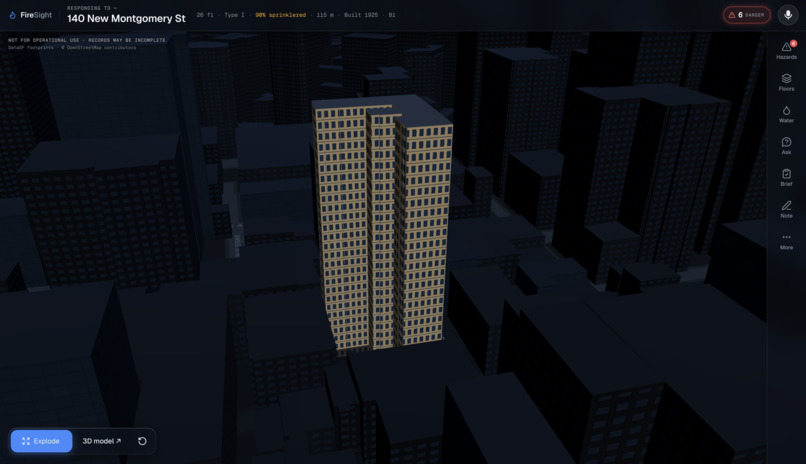
Building Render
-
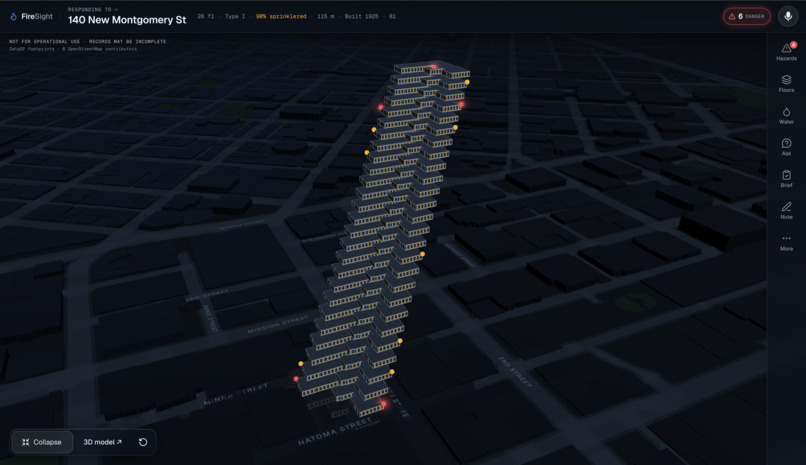
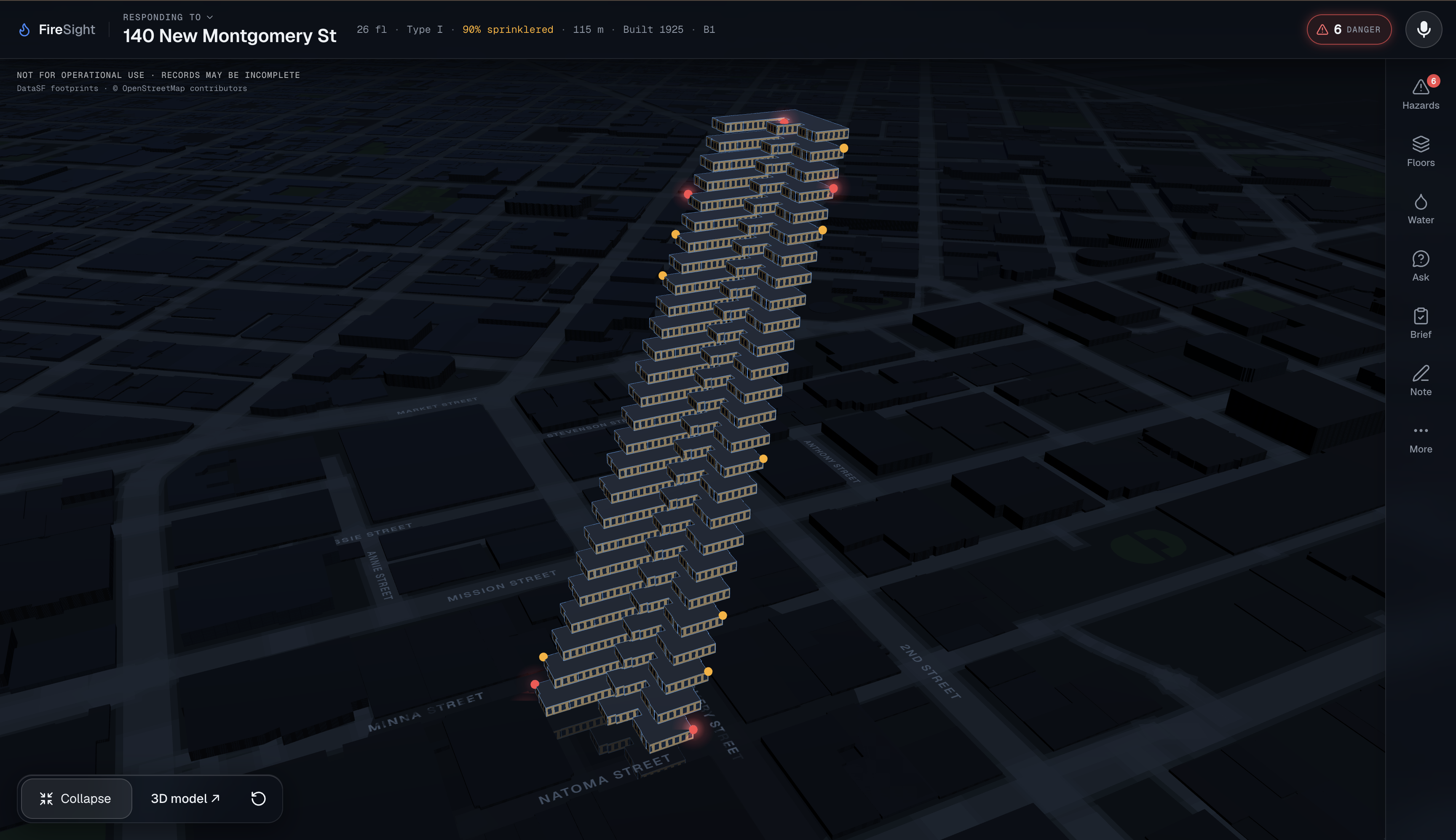
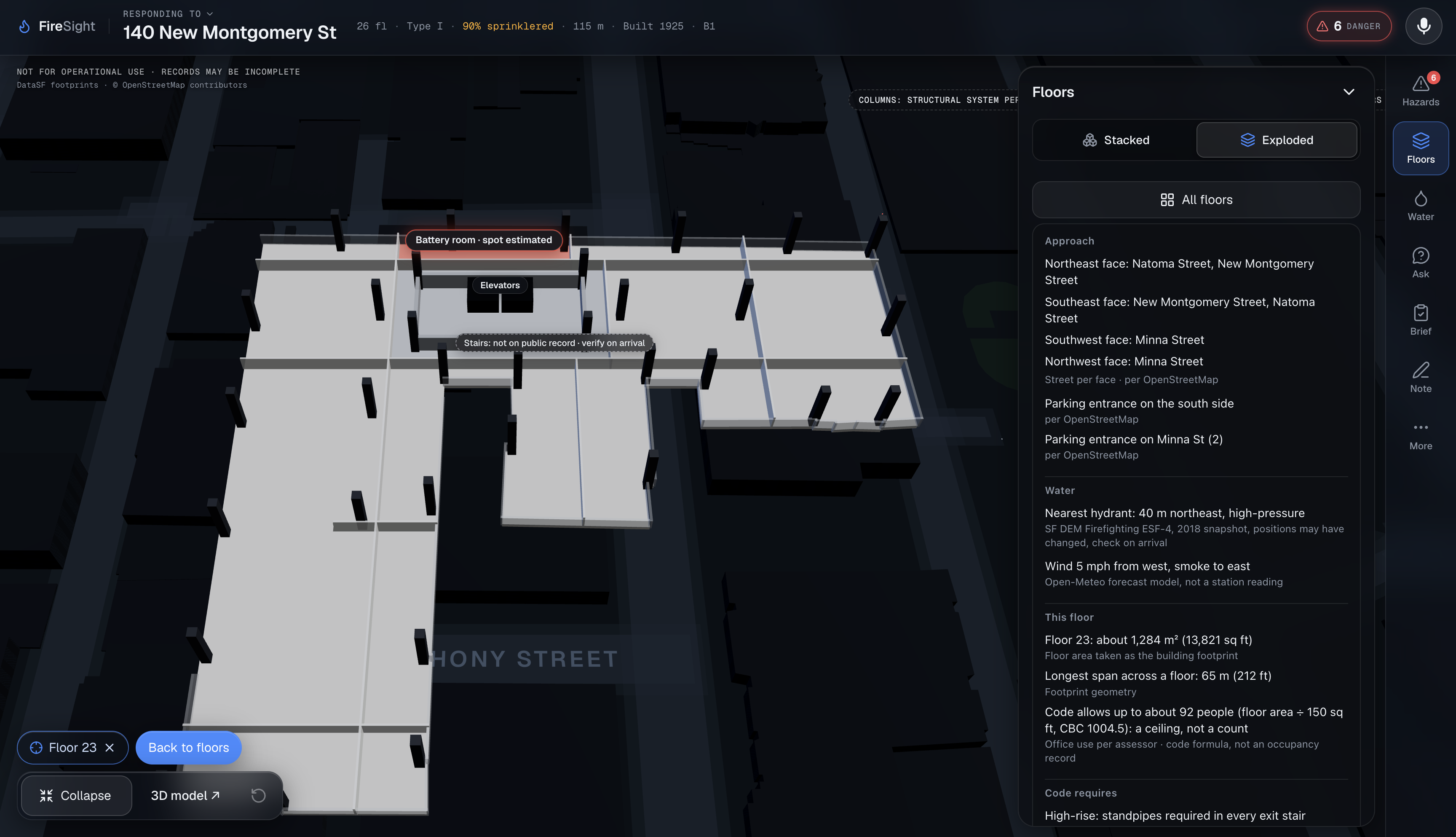
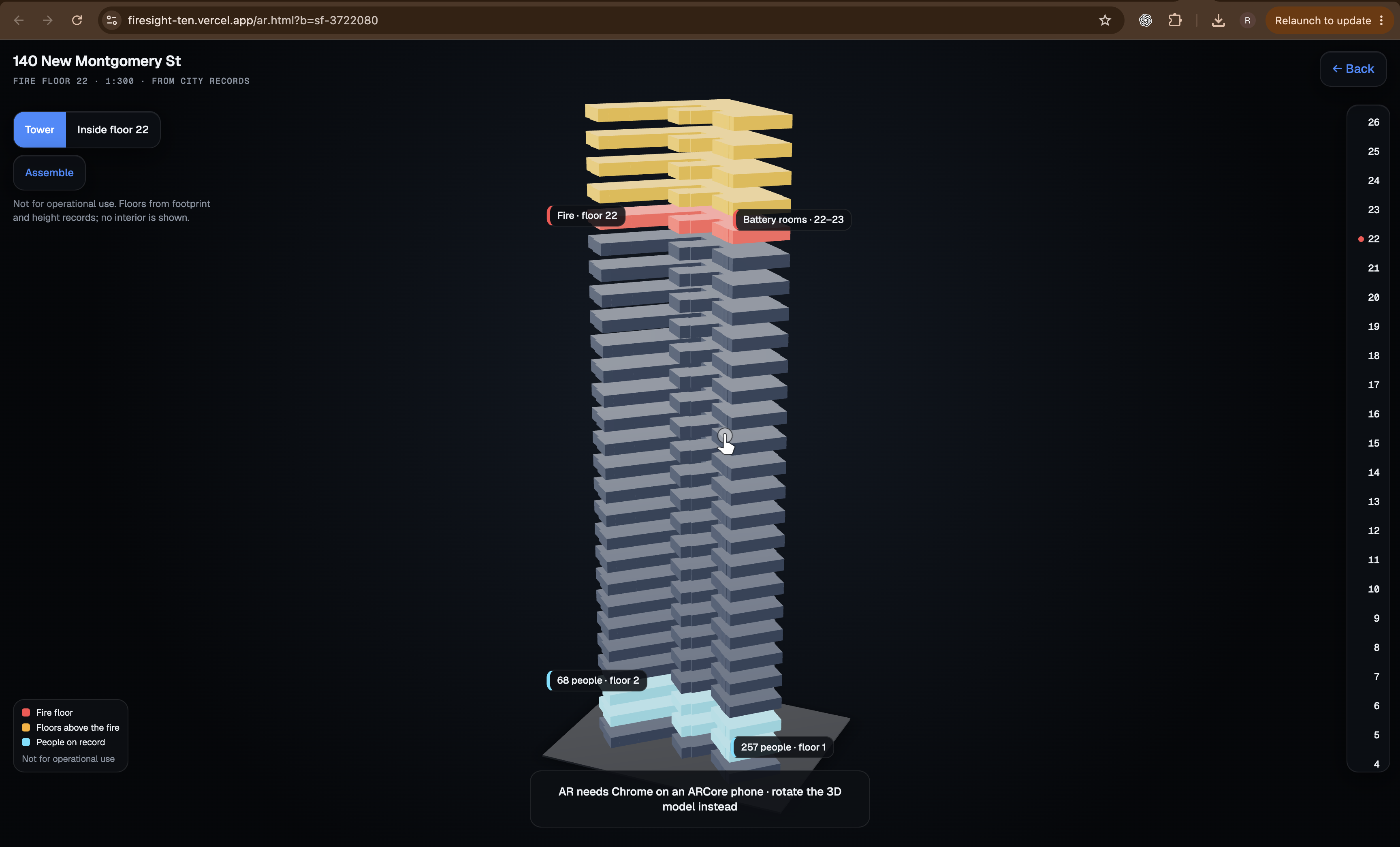
Exploded Floor visualization
-
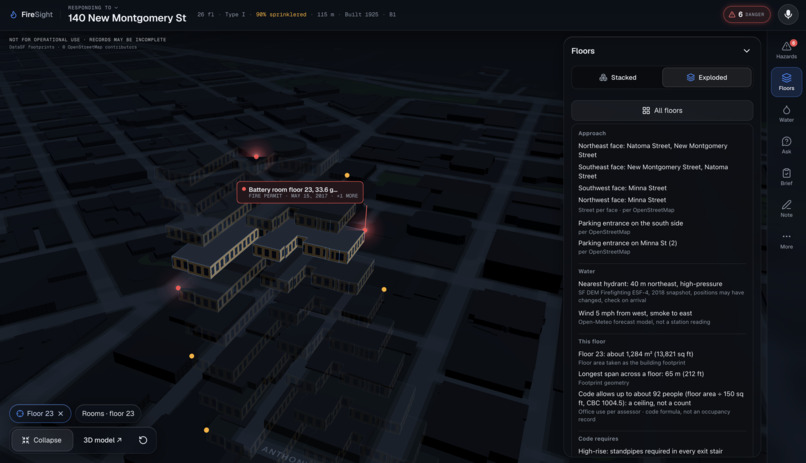
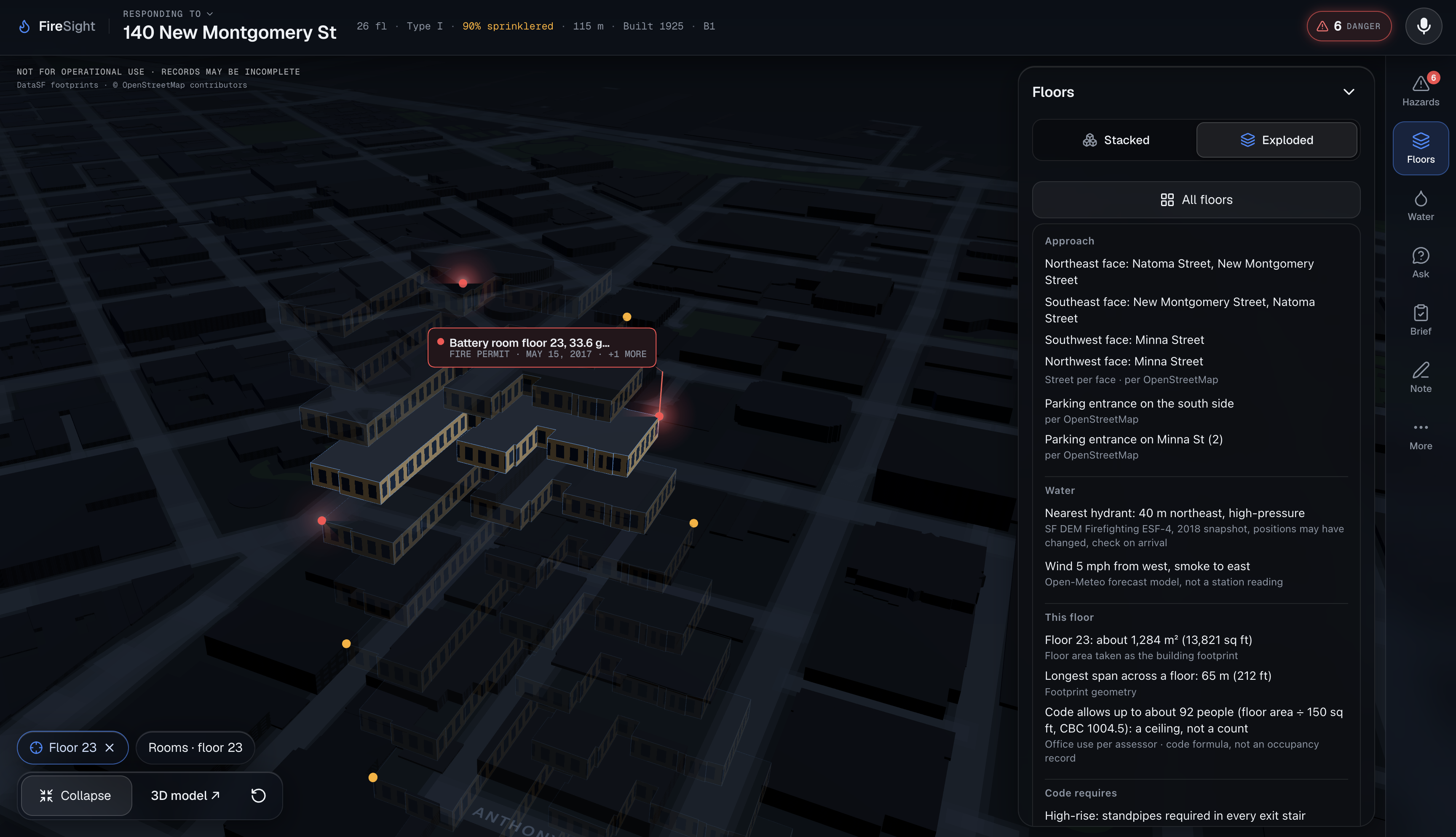
GUI interface
-
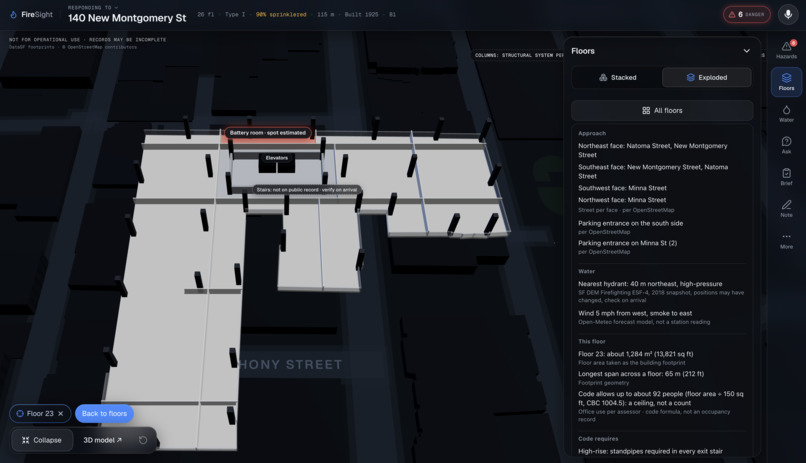
Floor plan of building floors including lifts
-
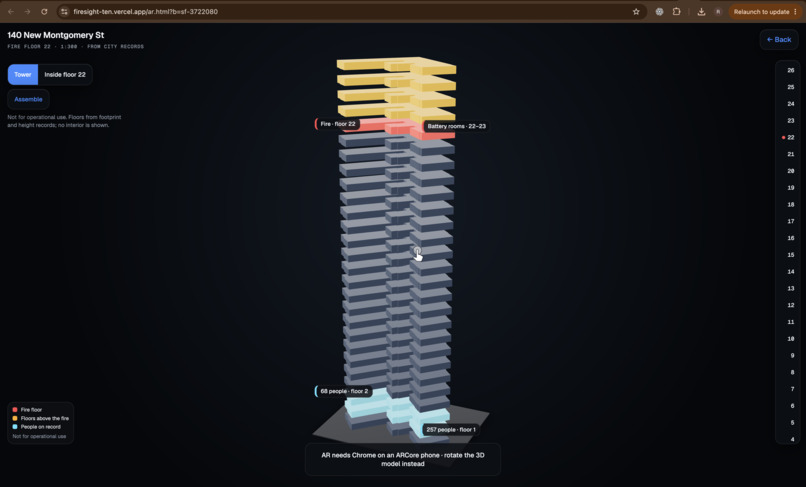
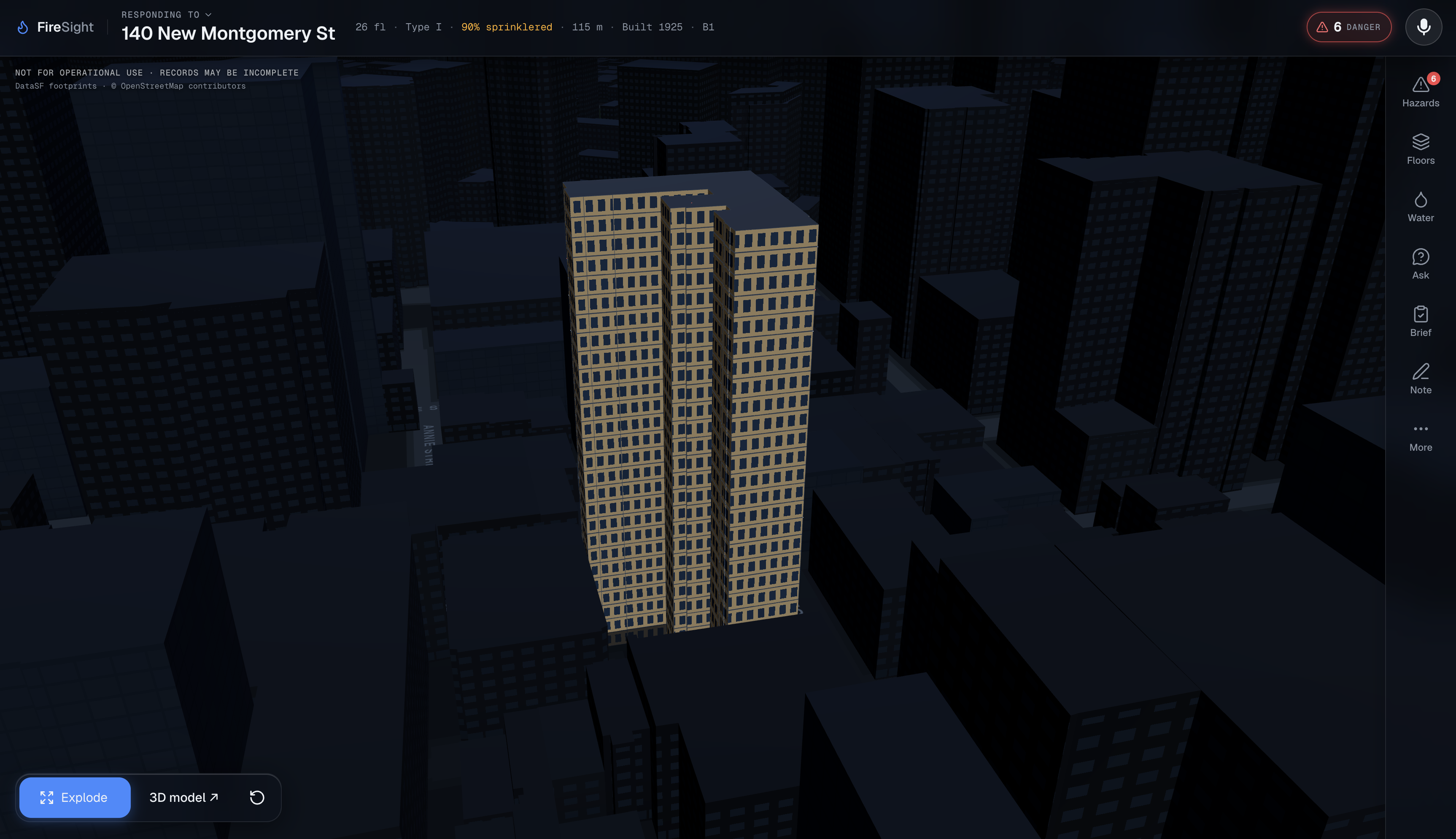
Full 3d Rendering of building
Inspiration
Firefighters make critical decisions about unfamiliar buildings. Watching Grenfell Tower Inquiry testimony inspired us to bring scattered building records into a briefing responders could use before arriving.
What it does
FireSight turns a dispatch address into an interactive, floor-by-floor 3D building briefing. It surfaces cited records, flags missing or conflicting information, and supports voice interaction and Android AR. Officers can approve AI-generated briefing lines and copy a crew card for manual sharing.
How we built it
We used React, TypeScript, and Three.js for the interface and visualization. A Python pipeline queries 89 public-data source entries per building. Claude generates briefings through a Hono API, ElevenLabs provides speech, and TypeSafe Jev classifies voice commands. A read-only MCP server exposes the building intelligence.
Challenges we ran into
Datasets use inconsistent addresses and identifiers, and records can disagree or become outdated. Public records also lack interior floor plans. We had to distinguish sourced facts from illustrative visuals while keeping the interface clear under pressure.
Accomplishments that we're proud of
We connected dispatch input, 3D exploration, cited records, voice interaction, and officer-reviewed briefings across four San Francisco buildings. Conflicts remain visible, and interior layouts and exact equipment positions remain explicitly unverified.
What we learned
More data does not automatically mean better decisions. Useful intelligence needs context, source dates, clear uncertainty, and human judgment. A citation is a starting point for trust, not proof of current conditions.
What's next for FireSight
Expansion to multiple fields including Police, Military, Permit Committees
Built With
- elevenlabs
- hono
- jev
- python
- react
- three.js
- typescript

Log in or sign up for Devpost to join the conversation.