-
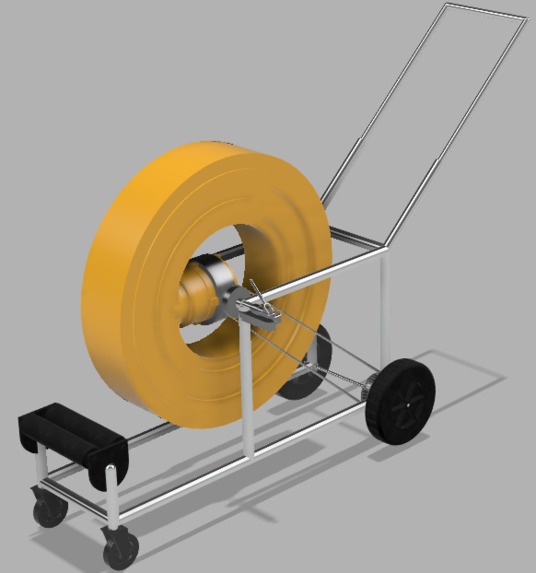
Rendered Assembly
-
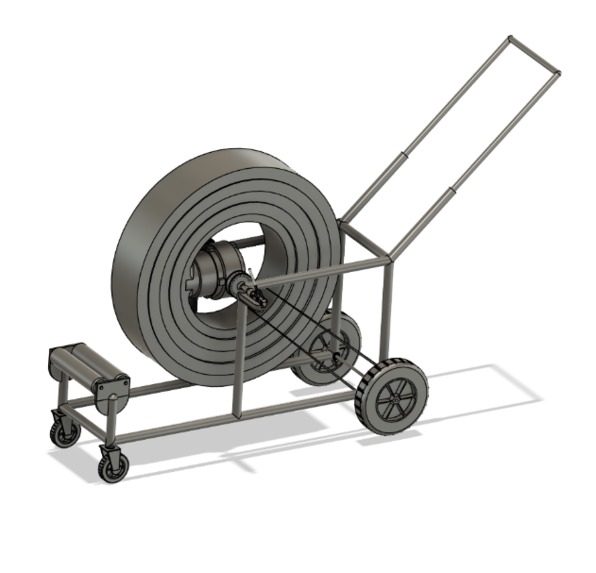
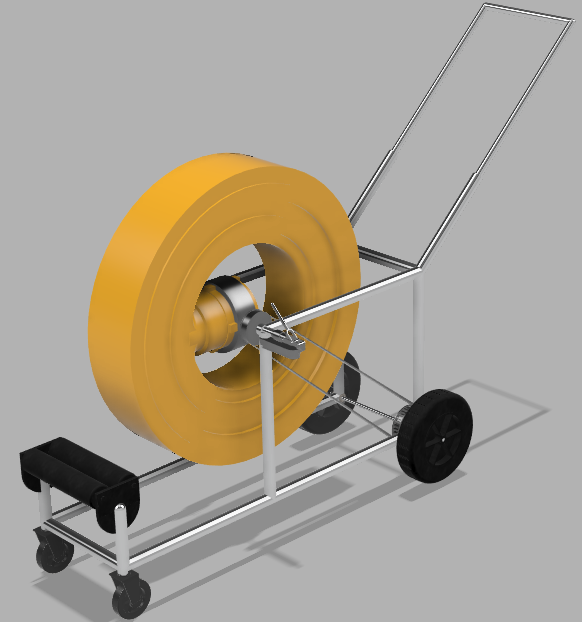
Full Assembly
-
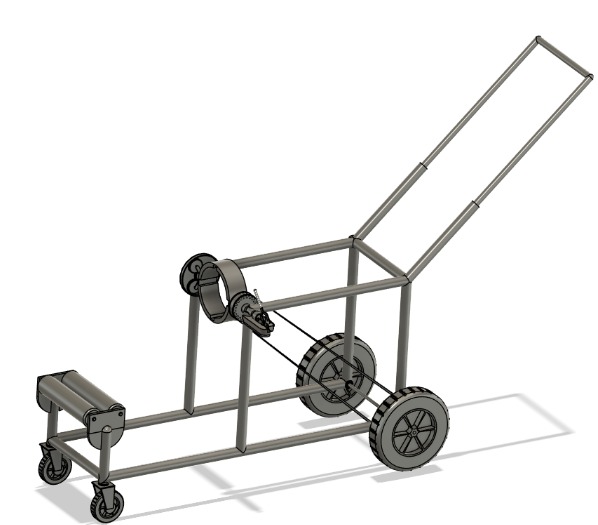
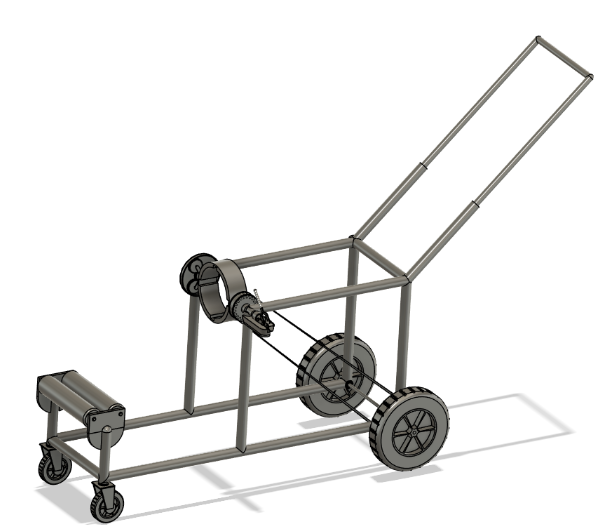
Frame without hose
-
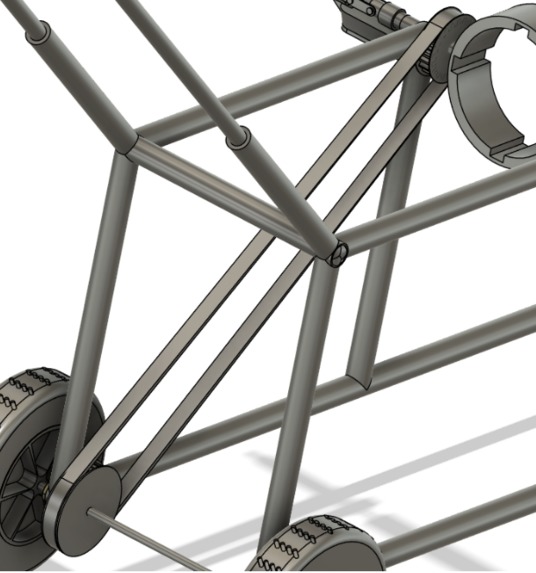
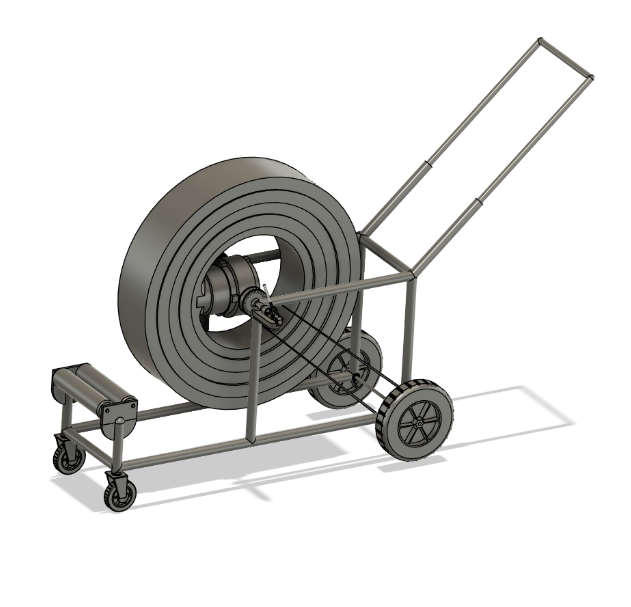
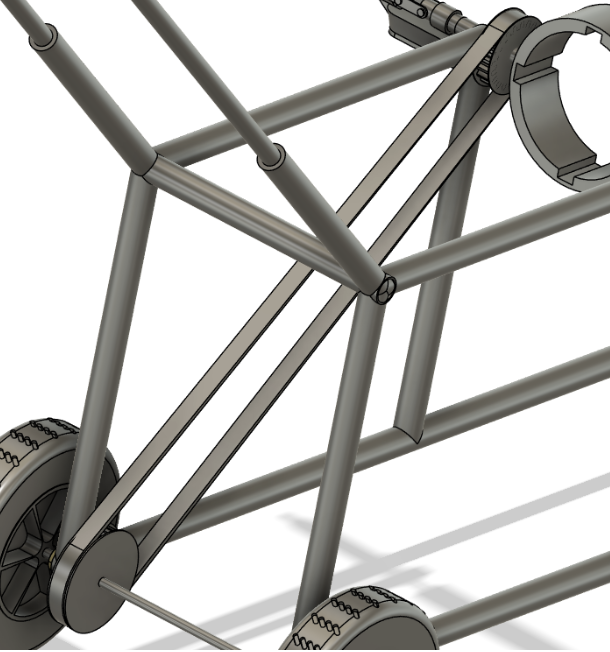
Belt drive
-
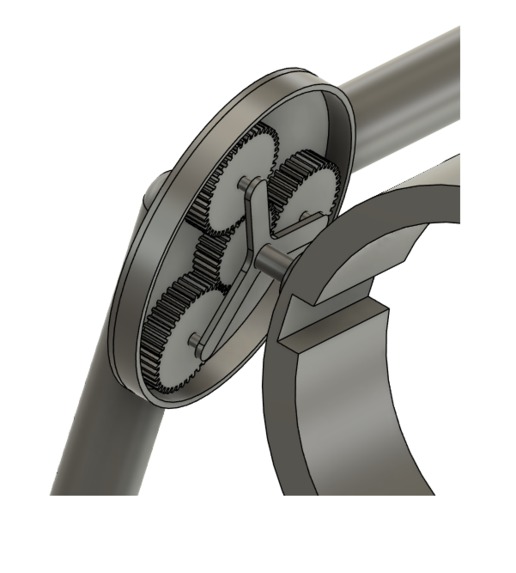
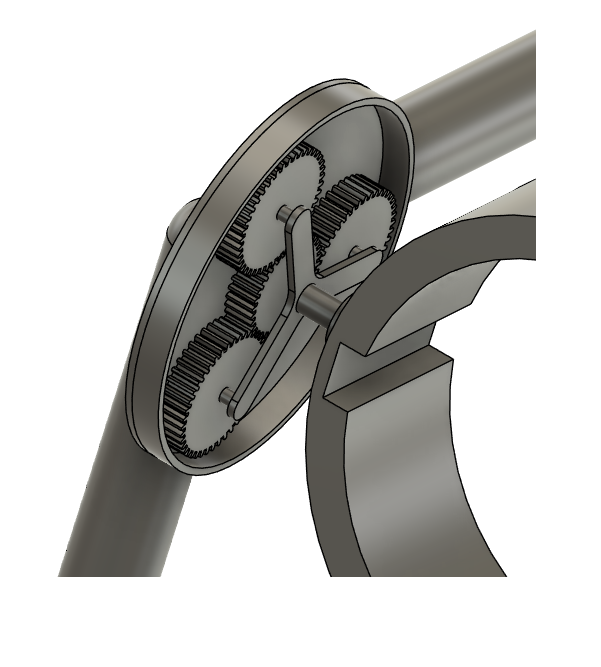
Planetary Gear Hub
Background Research
To understand the needs and problems first responders encountered, we spoke with Catey Alcaraz, an EMT, and Tim Walsh from the Illinois Fire Service Institute.
Our findings Background Research
Brainstorming Mind Map
Market Analysis
With our idea in mind for hose management, we researched existing hose management systems. We found that there was no device that managed hose stacking methods such as the .inuteman stack and flat stacking. We also found many devices capable of holding a rolled firehose for easy deployment or easy mobility, but none for easy cleanup or any that drained water in the process.
We figured out the reason that hose stacking devices do not exist is because the dimensions of the device would occupy too much space to make it an effective and incentivizing device to use. Almost all hose stacking spans upwards of 8ft long, meaning there would be no reason for firefighters to deviate from the tradition of manual stacking if it meant having to pack an extremely large device on their fire truck, where every compartment is already fully loaded.
Going further into research, we also found no devices that were able to roll a fire hose mechanically. The existing devices allow for easy unrolling of expensive electrical components and motors to roll the hose, driving up costs substantially and lowering the possibility of mass manufacturing and widespread usage.
Introduction
Firefighting is a high-stress and physically demanding profession, requiring first responders to put themselves in life-threatening situations. However, their responsibilities are not finished after the fire has been extinguished. The cleanup process of all equipment takes on average 1 to 2 hours, depending on the severity of the fire. Amongst these tasks is draining, rolling and packing the fire hose that can take up to 25 minutes per hose, especially considering the multiple hoses used in a single emergency.
Our design, the FireRoller, is a fully mechanical device that integrates hose draining and rolling into one streamlined operation. The FireRoller significantly reduces cleanup time, cutting the time per hose significantly by over 50%. This advancement not only enhances operational efficiency but also reduces the physical strain on firefighters from manually draining and rolling the hose to lifting the full 100+ lb roll to pack into the truck.. The following sections dive into more detail of the design, components, and functionality of this tool.
The Problem
Post-emergency cleanup is extremely time-consuming and continues to be physically demanding. We are focusing specifically on the hose cleanup. Fire fighting hoses ranging anywhere from 1.5 - 6 inches in diameter and can weigh up to 136 lbs total for a dry section of the 6 inch rubber hose. These hoses need to be neatly and compact rolled up and brought back to the fire truck after an emergency. Adding on to this process, the hose must be drained of water because an undrained 100 ft 6 in hose can weigh upwards of 1320 lbs if water is still inside the hose. Draining a 100 ft hose takes around 10 minutes depending on the experience and skill of the firefighter. Rolling the same hose takes around another 10 minutes and the entire 136 lb hose has to be lifted manually to be loaded onto the truck. This process is then repeated multiple times due to the usage of multiple different hoses in an emergency.
The Solution
The FireRoller is a fully mechanical device that automated the draining and rolling process. The FireRoller is mounted on 4 rubber wheels to allow for mobility across various terrains with the front 2 wheels on a free swivel. The winching mechanism for the rolling of the hose is geared to the rear 2 wheels to make the device fully mechanically driven. The gearing system utilizes planetary gears and gear ratio reduction to increase torque without significantly reducing speed. The winching system works by clamping onto the head of the hose and rotating as the device is moved to spool the hose. The hose is fed to the winch by a set of elevated rollers which ensures smooth delivery of the hose and the elevation takes advantage of gravity to drain the water. Using this device the process of draining and rolling can be combined and accelerated.
To address first responder safety, one of the most common injuries, firefighters and first responders in general get is overexertion and straining. The device removes all strenuous labor by rolling and elevating the hose mechanically. It also carries the roll of hose for the firefighters further reducing the physical strain necessary to manually carry the hose to load back onto the fire truck.
Target Users
The FireRoller is designed for both small, low-resource fire departments, as well as larger departments, that face physically demanding tasks during firefighting operations. These departments, regardless of size, need affordable and efficient tools that reduce physical strain, improve operational efficiency, and enhance safety. The FireRoller automates the draining and rolling of hoses, significantly reducing the physical effort required, preventing overexertion injuries, and saving valuable time. Its fully mechanical system ensures it remains low cost, while its mobility across various terrains allows for quick deployment in diverse situations. By streamlining hose management and minimizing manual labor, the FireRoller supports firefighter safety and efficiency, offering a practical and accessible solution for both small departments with limited resources and larger departments seeking additional convenience.
Technical Design Features
a. Fully Mechanical Winching System The core of the FireRoller is its mechanical hose winching mechanics which connects to rear wheel axle to the rotating clamps by a combination of gear reductions and a planetary gear to increase torque without losing significant speed. The allows the winching system to be driven by the movement of the device. The clamps will rotate the head of the hose while the device is being pushed to neatly roll the entire hose.
b. Elevated Rollers for Smooth Hose Delivery The elevated rollers at the front of the winch guides the hose smoothly into the mechanism. This design ensures that the hose is feed continuously onto the winch, preventing tangling. The rollers will be purely driven by the friction between the hose surface and the rollers as the winch ultimately produces the torque to pull the hose. The elevation of hte entry point to the mechanism allows the device to take advantage of gravity to assist with draining, speeding up the process of hose cleanup by allowing water to naturally flow out of the other end of the hose.
c. Mobile, Rugged Frame with Swiveling Wheels The FireRoller is mounted on a sturdy aluminium frame with four rubber wheels, two of which are free-swiveling for enhanced maneuverability. Aluminum is a lightweight yet durable material that also lowers the final cost materials and production. Since the payload of the hose will not exceed 136lb, we do not need steel or carbon fiber levels of rigidity for the frame. This combined with the wheels, allows the FireRoller to be moved easily across various terrains, ensuring adaptability to a wide range of firefighting environments.
d. Collapsible Frame The frame of the FireRoller is also collapsible allowing firefighters to maximize the compartments they are given on a fire truck. The beams of the frame are extendable allowing the wheelbase to shorten. Additionally, the handle bar also folds to keep the compact form of the device in the smallest possible volume. This ensures that storage of the device is readily available and would not interfere with the many other tools firefighters bring to the emergency scene.
Major Iterations and Design Inspirations - Images
We initially tried to automate the process of hose stacking. However, upon iterating designs for how a device could automate that process we found that in order for the hose to be stacked to the usual configuration the device would be a minimum of 8 ft long. This makes it unrealistic for firefighters to use or bring to an emergency scene as compartment space in the fire truck is very limited and a bulky device would not be convenient to use.
We decided to tackle fire hose rolling instead and ended up with the FireRoller. It takes inspiration from the manual act of rolling and draining a hose. We first started our initial designs with a frame that could support 4 wheels with the front 2 mounted on a swivel for easy turning and maneuverability. Essential components of the device also included hose clamp, the gearing to make the hose clamp rotate and the locking mechanism of the clamp.
Once we began CAD we made a couple small changes. The shape of the frame changed to accommodate the rollers at the front of the FireRoller as our intial design would constrain the roller mechanism to not have enough width. We also went from one roller to two rollers because it would be more effective at flushing at the water.
Challenges we ran into
Designing the FireRoller presented challenges such as balancing durability with weight to ensure ease of use, creating a system that adapts well to various terrains, and keeping production costs low for affordability. Additionally, developing a fully mechanical, reliable system that performs consistently and is easy to use for all fire personnel required careful attention to material choice and design simplicity.
We had to ensure the device would simply "just work" and is appealing to firefighters in the sense that the extra effort of hauling a device like this around would yield more benefits when saving significant amounts of time and reducing physical strain when draining, rolling and packing the fire hose post emergency.
Walkthrough of the device
a. Deployment After the emergency has concluded and the hose has been used to suppress the fire, the FireRoller is taken out its storage compartment. The frames are extended and the handle bar is lifted and the device is rolled to the area where the hose needs to be drained and rolled up. The user positions the FireRoller at one end of the hose and locks the hose head in place using the clamps making sure the hose passes through the elevated rollers.
b. Draining and Rolling With the FireRoller in place, the rolling and draining process begins. The device is pushed down the length of the hose while the clamps simultaneously rotate, rolling the hose around the hose head itself. While it is rolling, the elevated rollers lifts the hose up right before it gets rolled, allowing water to flow downstream continuously. Eventually all the water flows out the hose head at the other end of the hose.
c. Transporting the Rolled Hose Once the hose is fully rolled, the other hose head will rest on the elevated roller. The FireRoller makes the entire roll easier to transport back to the fire truck or the storage area. The device’s wheel removes the need for physical straining of lifting the heavy roll manually. The user can simply wheel the roll to its desired location.
d. Storing the Hose and Collapsing the Frame Once the hose is at its desired location, the clamps can be unlocked, detaching the roll from the FireRoller. The frame is then lifted up and away from the roll and the roll can be moved into proper storage. The frame can then be contracted and the handlebar folded down. Once the frame is in its most compact configuration it can also be stored into the fire truck compartment or storage bin.
Real-World Feasibility of the FireRoller
The FireRoller is designed to be a practical and cost-effective solution for hose management, particular for low-resource/low-budget fire departments. Below is an analysis of the feasibility of our product, covering materials, manufacturability and potential challenges.
a. Manufacturability
The FireRoller is a fully mechanical device, which helps make it more accessible for fire departments with budget constraints. Its mechanical design eliminates the need for expensive electronic components, batteries or advanced technology, making it simpler and cheaper to manufacture.
Assembly: The device can be assembled using standard manufacturing techniques such as metal welding for the frame, machine for the winching mechanisms and casting for gears and rollers. Components can also be outsourced to other companies since they are simple parts. These processes are cost-effective and widely available in most manufacturing facilities.
Assembly Complexity: The design is relatively simple, with fewer parts compared to more complex, electronic alternatives. This simplifies the assembly process, reduces production time, and lowers labor costs. Basic welding, riveting, and mechanical assembly should be sufficient to produce the device.
Production Scale: The FireRoller is suitable for both small-scale production and larger runs. It can be manufactured in smaller quantities to meet the needs of local fire departments, or in larger quantities for widespread use in municipalities with more fire departments. Larger quantity manufacturing would drive costs down even further which makes it ideal for standardization across all fire departments.
b. Materials
The materials chosen for the FireRoller are critical in ensuring that the device is durable, cost-effective and lightweight while being able to handle the stresses of regular use in a demanding environment.
Frame Material: aluminum Aluminum is lightweight, cheap and rigid enough to support the loading of a maximum 136 lb hose. Manufacturing: Aluminum can be extruded or cast making it accessible for mass production.
Wheels Material: Rubber with steel core Rubber provides good traction and durability for the wheels, particularly in rough and uneven terrains. The steel core ensures strength and load-bearing capacity. Manufacturing: rubber wheels can be modeled and fitted with steel hubs which is a standard process in wheel manufacturing.
Winching and Gears Material : Stainless steel Winching system and gears needs to handle significant stress and torque and will be exposed to repeated uses. Stainless steel is resistance to corrosion, which is necessary since the device will be often exposed to water Manufacturing: gears and the clamp can be machined or casted, which are basic metal working processes.
Rollers and Hose Feed Mechanism Material: High-density polyethylene (HDPE) HDPE is lightweight, durable and resistant to wear from friction. It is also easy to mold and can withstand exposure to harsh environments including water. Manufacturing: These components can be injection molded, which is a cost- effective method for production
c. Cost Considerations - Cost Breakdown
Total cost of the device makes it an affordable option for fire departments across the United States. If we were to automate the whole device with electronics, the cost would easily go up to $5000 or event $10000 dollars based on costs for batteries, high torque motors, circuit control panels, software etc. The mechanical design of this device is the most cost-effective option to maintain functionality while drastically cutting costs.
Future Improvements and Next Steps
In terms of development, prototyping and field testing are essential to fine-tune the design, with feedback from actual fire departments guiding necessary adjustments. Following these test we can make improvements through materials, functionality or cost reduction.
Material optimization can be explored by testing alternative materials such as composites or 3-D printed components to reduce weight and cost without compromising durability
Enhancing the mobility of the device is crucial, particularly for rough or steep terrain, and this can be achieved by experimenting with larger wheels or an adjustable wheel height system. Furthermore, cost reduction efforts through optimized manufacturing processes and bulk material discounts will help make the FireRoller more accessible to smaller, low-resource fire departments.
What we learned
Through the development of the FireRoller, we learned the importance of balancing functionality with simplicity. We discovered that creating a fully mechanical system not only reduces costs but also enhances reliability, especially in high-pressure environments like firefighting. The design process emphasized the need for durable materials that can withstand extreme conditions while maintaining ease of use for all personnel, regardless of experience. Additionally, we learned how critical user feedback is in refining product features and ensuring the device meets the practical needs of fire departments, both large and small. Lastly, we gained insight into the challenges of manufacturing a cost-effective solution without compromising on quality or performance.

Log in or sign up for Devpost to join the conversation.