-
-
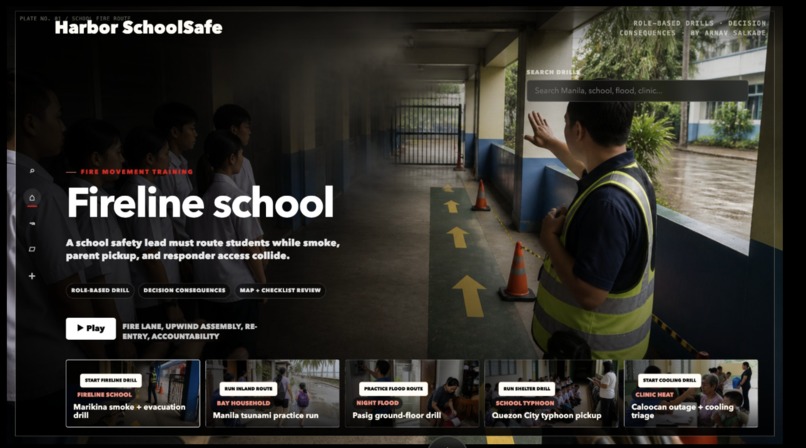
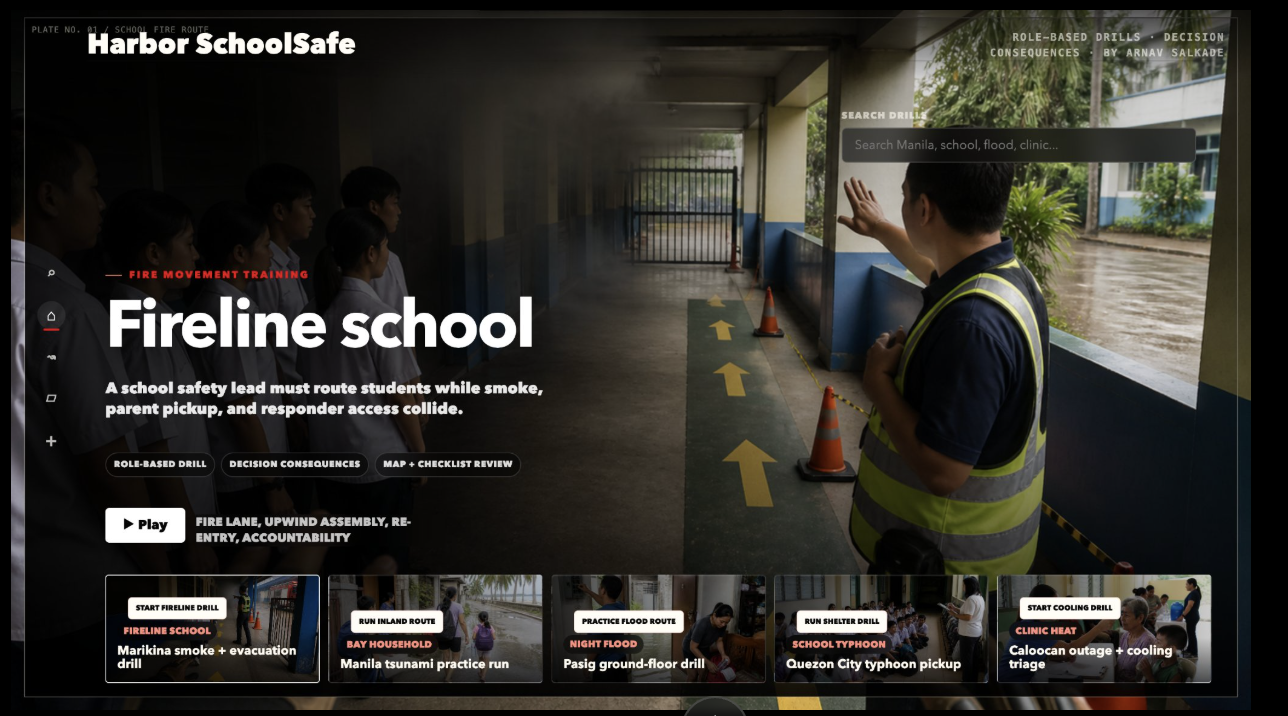
Netflix-style drill hub where schools choose fire, flood, typhoon or clinic heat simulations.
-
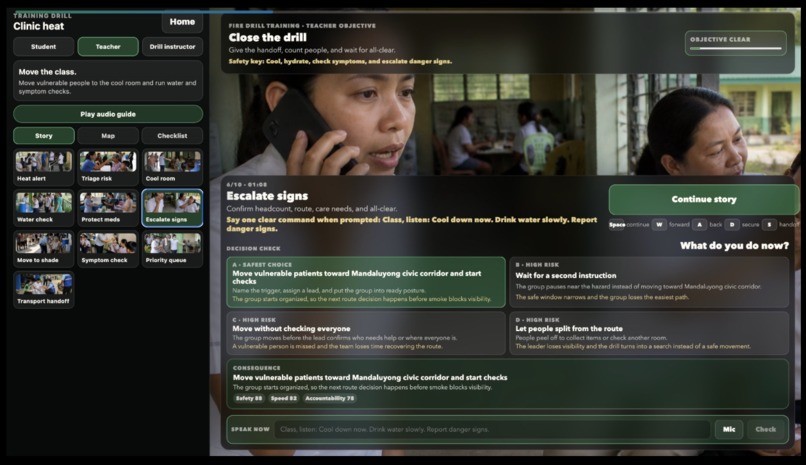
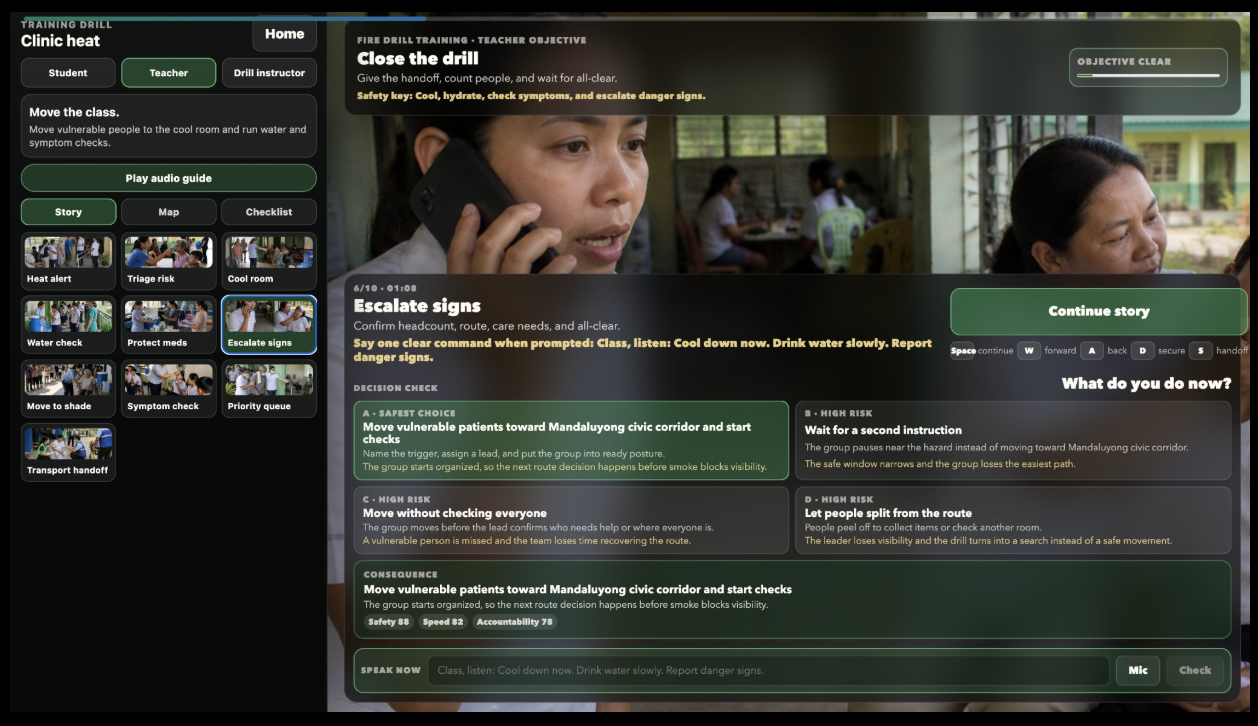
Teacher drill screen with MCQs, map, checklist and consequence feedback after each choice.
-
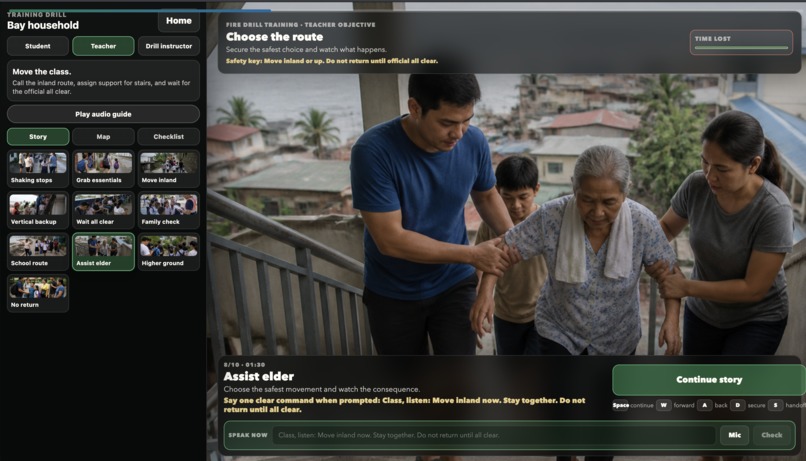
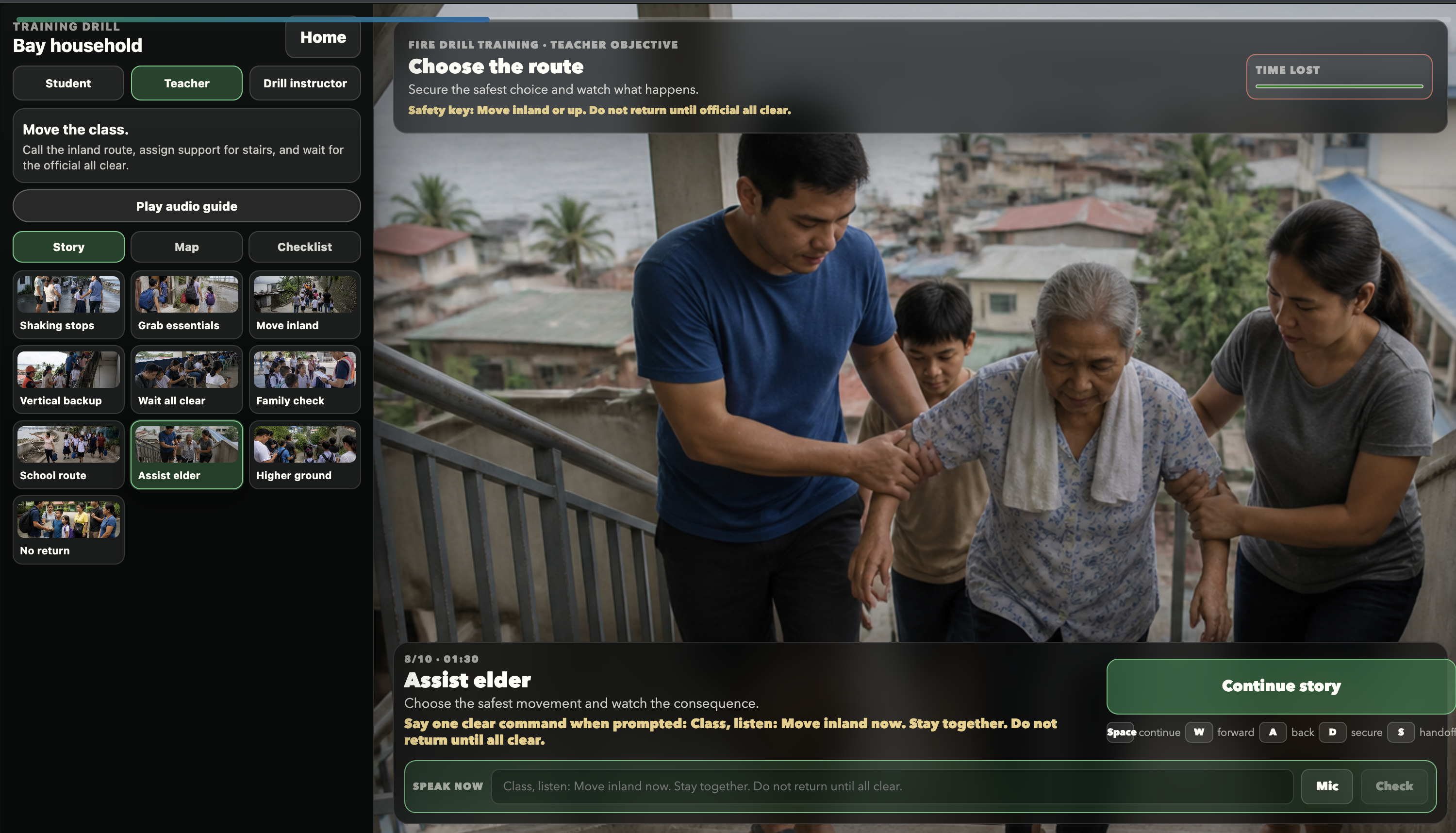
Role-based emergency practice for moving vulnerable people through blocked routes under pressure.
-
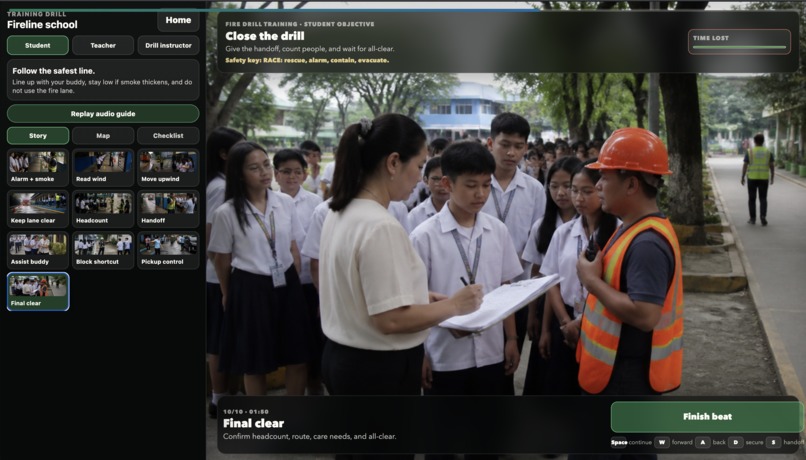
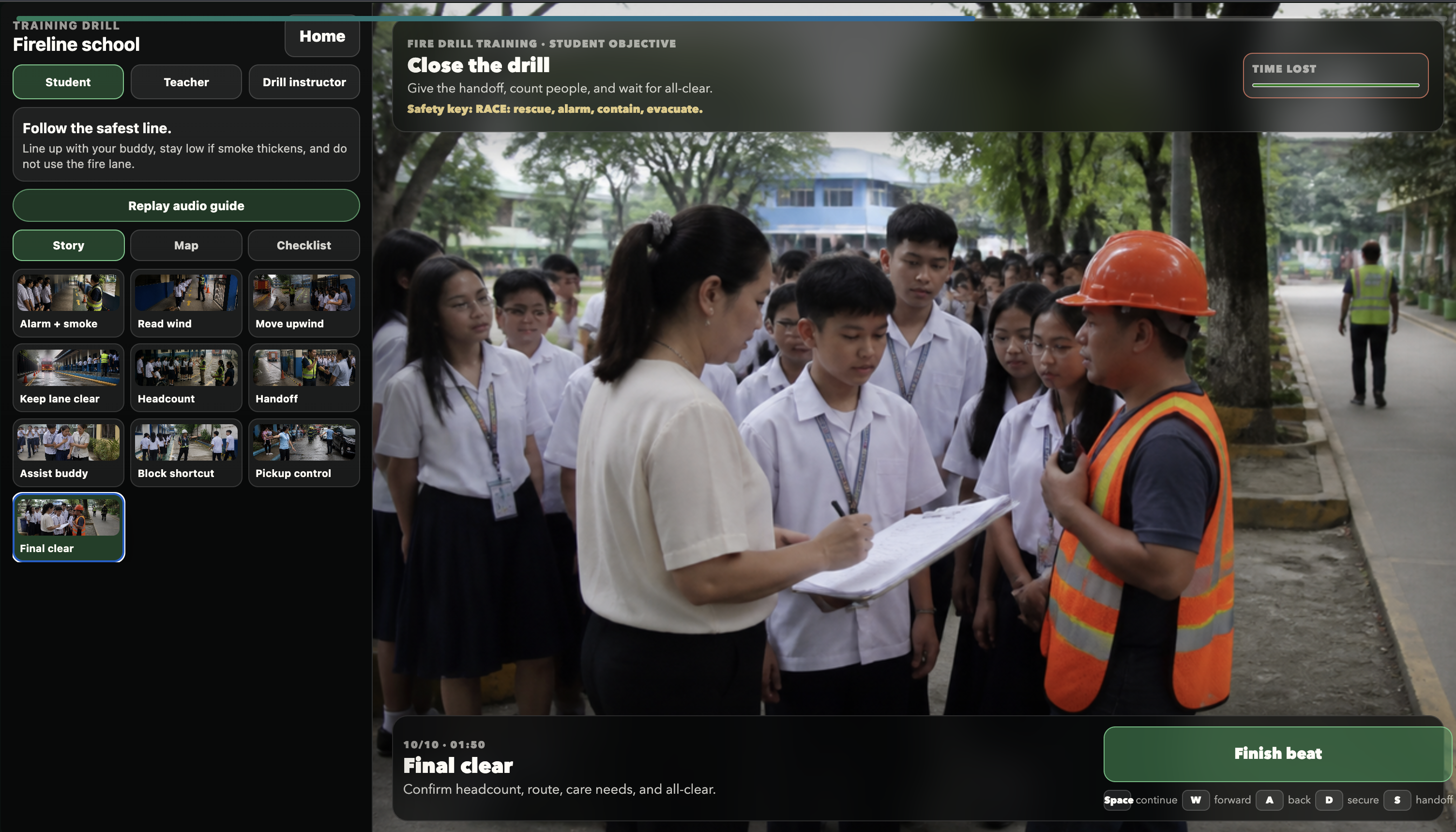
Instructor view for guiding students through safety choices, handoffs and drill consequences.
Inspiration
Growing up in Southeast Asia, I have regularly encountered new events of heatwaves and fire-related disruptions. I’ve seen schools regularly run fire drills, but most of us treated them as just another school activity. We followed instructions, stood in a line, then went back to class and forgot about it.
At the same time, the region faces real challenges, from heatwaves and floods to fires and typhoons. It made me wonder: are people prepared to work together during a real emergency? I wanted to remove the misunderstandings, lack of clarity and panic element involved.
That question became the starting point for Fireline Commander. Fireline Commander is an agentic emergency preparedness platform that turns school safety drills into live, role-based simulations. The simulation is the visual/story layer. Elastic MCP is knowledge layer powering it.
What it does
Fireline Commander uses Elastic MCP as the agent’s emergency knowledge retrieval layer. The drill library, safety procedures, route rules, emergency checklists, and context based actual scenario metadata are indexed in Elastic so the Gemini agent can retrieve the most relevant guidance during a live simulation and reason over the choices made.
When a user starts a scenario such as a school fire evacuation or flood response, the agent does not simply generate generic advice. It searches the emergency knowledge base through Elastic MCP, pulls relevant drill context, reasons over the current scenario, then produces a role-specific action plan inside the simulation.
This makes Elastic the “mission intelligence layer” behind the product. The user sees a live drill. The agent sees searchable emergency knowledge, scenario state, and decision consequences.
Users can step into different roles such as a teacher, student leader, clinic worker or safety marshal and respond to scenarios including:
- School fire evacuations
- Tsunami evacuation drills
- Extreme heat events
1) The user selects a drill scenario from a Netflix-style emergency training hub. 2) The app loads a role-based simulation, such as teacher, student, drill instructor, or school safety lead. 3) Gemini interprets the current crisis state and user objective. 4) Elastic MCP retrieves relevant drill procedures, checklist items, scenario rules, and safety guidance. 5) Google Cloud Agent Builder orchestrates the agent workflow. 6) In UI, agent retrieves a next-step recommendation, route decision, safety checklist, or evacuation response. 7) The user makes a decision and sees the consequence inside story mode.
How I built it
I built Fireline Commander as an interactive web application focused on learning through simulation.
The system combines:
- Role-based scenarios
- AI-assisted guidance
- Decision tracking
- Progress monitoring
- Drill reports
My goal was to make emergency preparedness feel practical and approachable rather than overwhelming.
Challenges I ran into
One of the hardest parts was making the scenarios realistic without making them confusing.
Real emergency procedures can be detailed and technical, but people need clear instructions when under pressure.
We also spent time making each scenario feel different. A school fire, flood, and heat emergency require very different decisions, so each simulation needed its own flow and objectives.
Another challenge was making sure the AI gave useful guidance instead of generic responses. It shoudl follow region specific guidelines and SOP and be engaging enough so students learn and think.
Accomplishments that I'm proud of
The biggest accomplishment is turning emergency preparedness from a passive document into an interactive training system. Fireline Commander makes drills feel like real decisions instead of static instructions.
I built a product that combines simulation, role-based learning, agentic planning, and emergency knowledge retrieval. The app gives schools a way to practice complex situations such as blocked routes, smoke movement, elderly assistance, flooding, heat triage, parent pickup, and responder access in a controlled environment.
I am especially proud that the product feels understandable to non-technical users while still being designed around an agentic architecture: Gemini reasons, Google Cloud Agent Builder orchestrates, Elastic MCP retrieves trusted crisis context, and the interface turns it into a live decision-making drill.
What I learned
Many emergency drills are too predictable. People walk the same route, follow the same checklist, and rarely experience the pressure of conflicting decisions. Real crises are messier. A route can be blocked. A student can be missing. A vulnerable person may need assistance. Parents may arrive at the wrong time. Responders may need access while evacuation is still happening.
Fireline Commander helps schools rehearse those moments safely. It makes preparedness more realistic, more repeatable, and more engaging.
What's next for Fireline Commander
I would like to expand Fireline Commander beyond individual simulations and support larger community drills.
Future ideas include:
- Multi-user exercises
- School-wide drill coordination
- Local hazard information
- Voice-guided simulations
- More disaster scenarios
- AI-generated training reports
My hope is to make emergency preparedness more engaging, accessible, and memorable for everyone.
Built With
- ai-agents
- gemini
- google-cloud-agent-builder
- mongodb
- mongodb-mcp
- next.js
- react
- tailwind-css
- typescript
- vercel

Log in or sign up for Devpost to join the conversation.