-
-
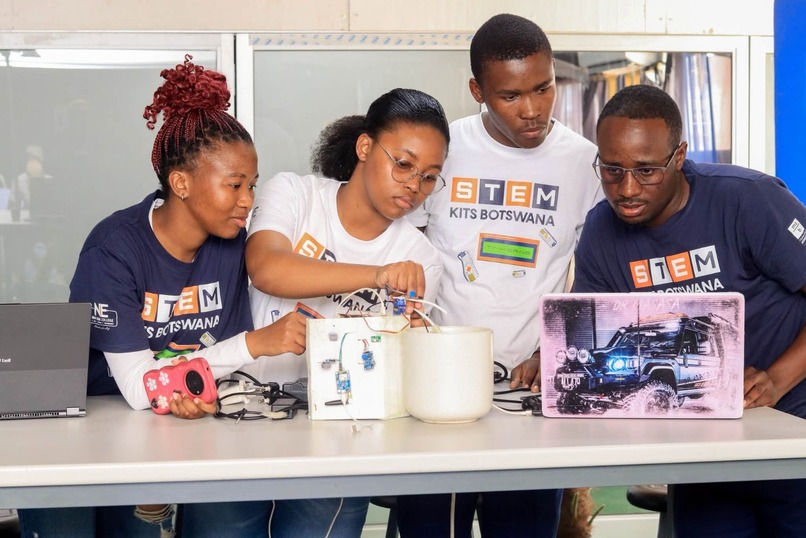
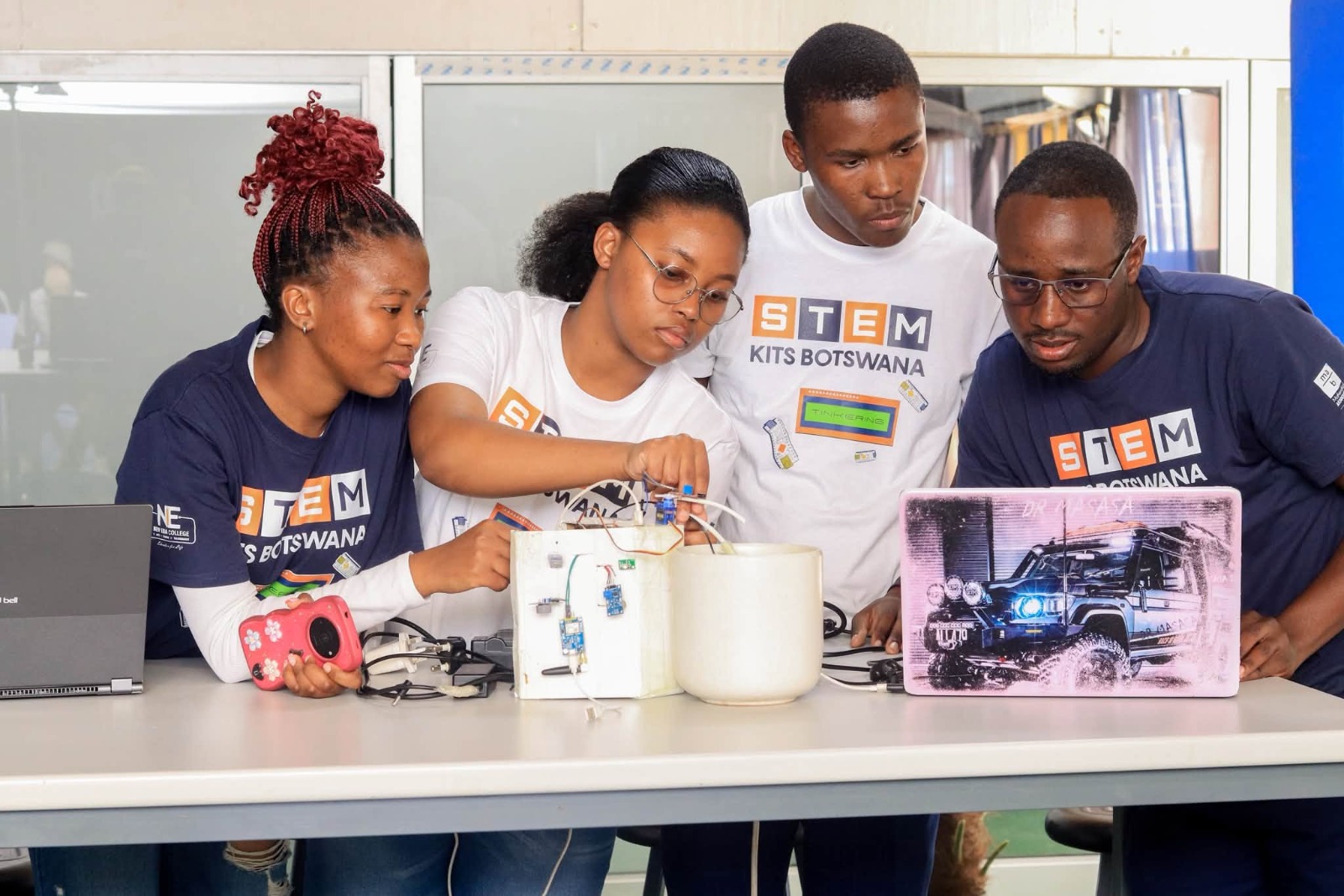
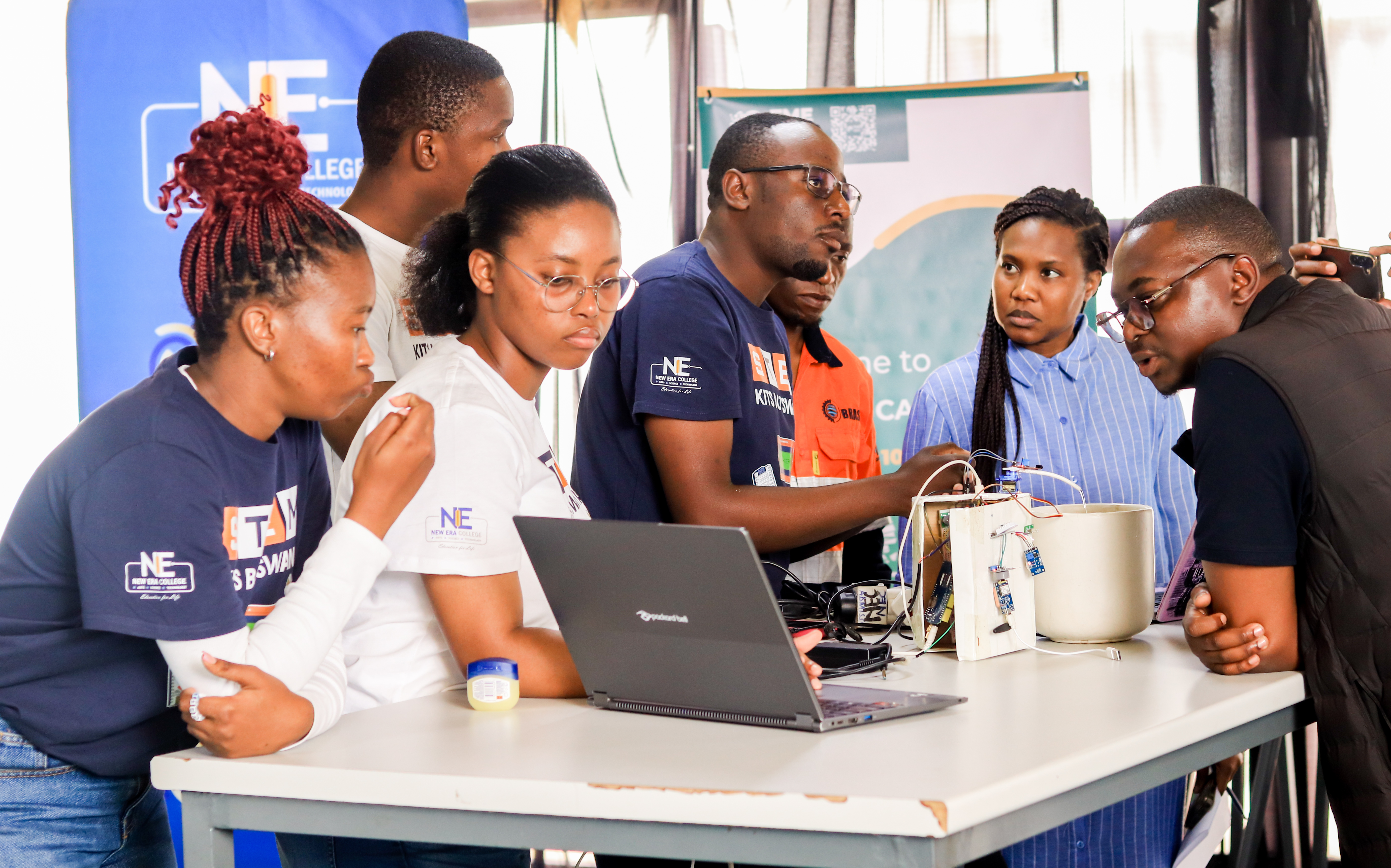
FireGuard Capsule hardware/prototype
-
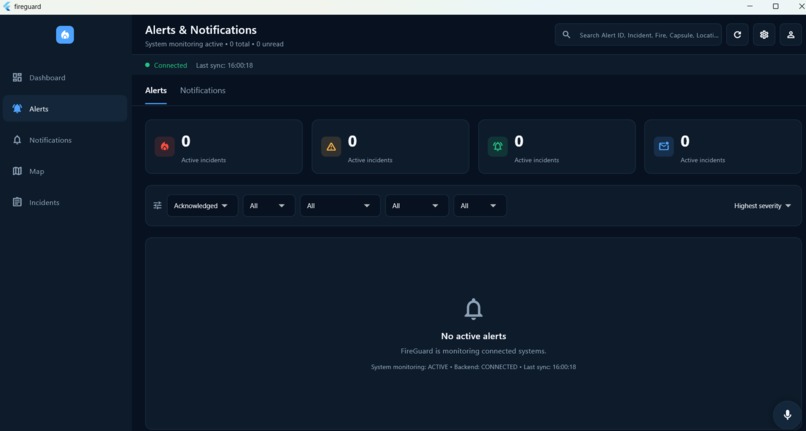
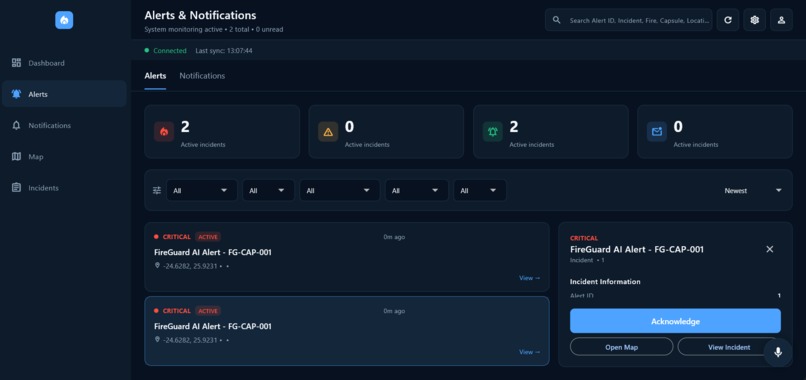
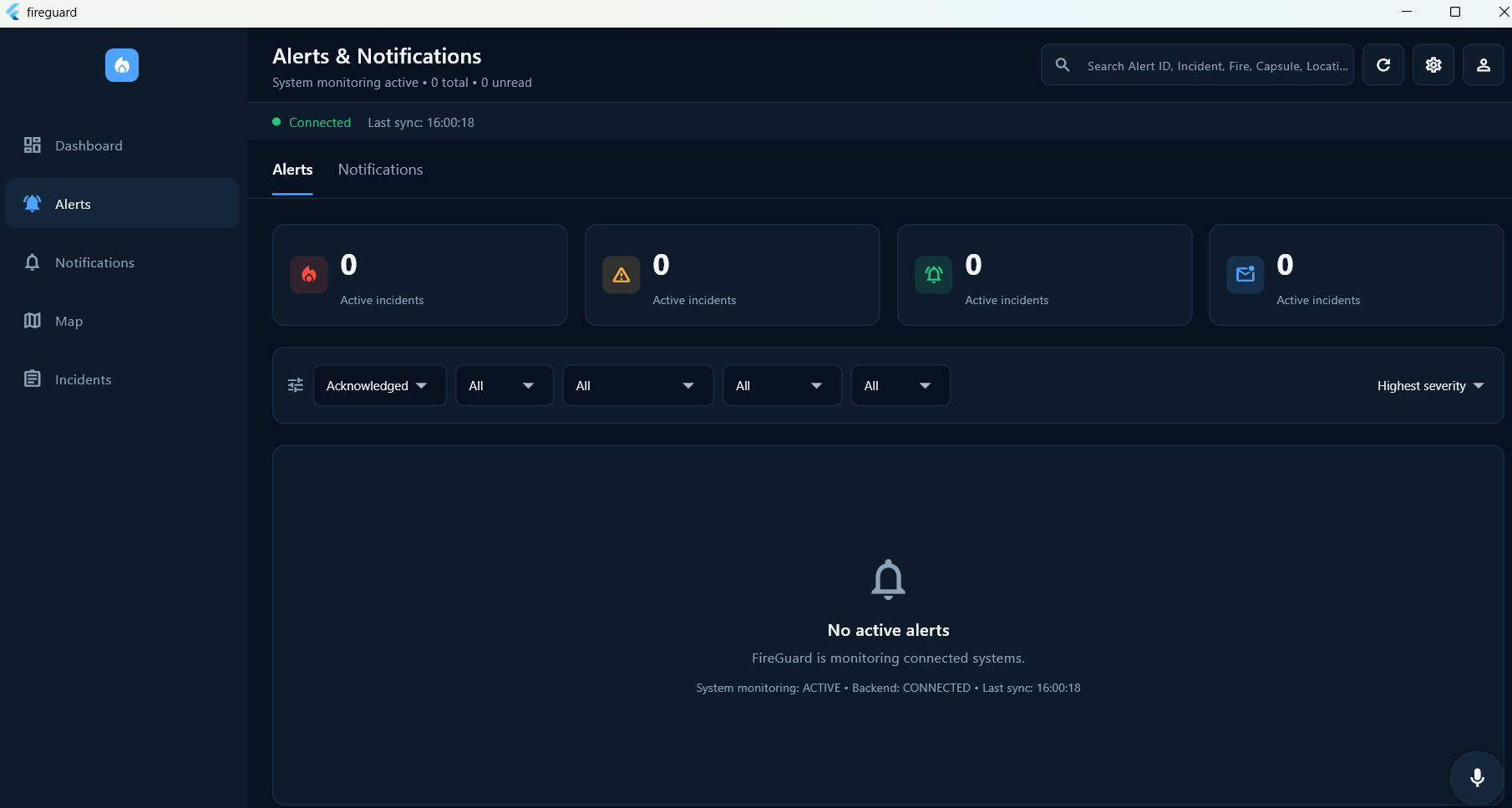
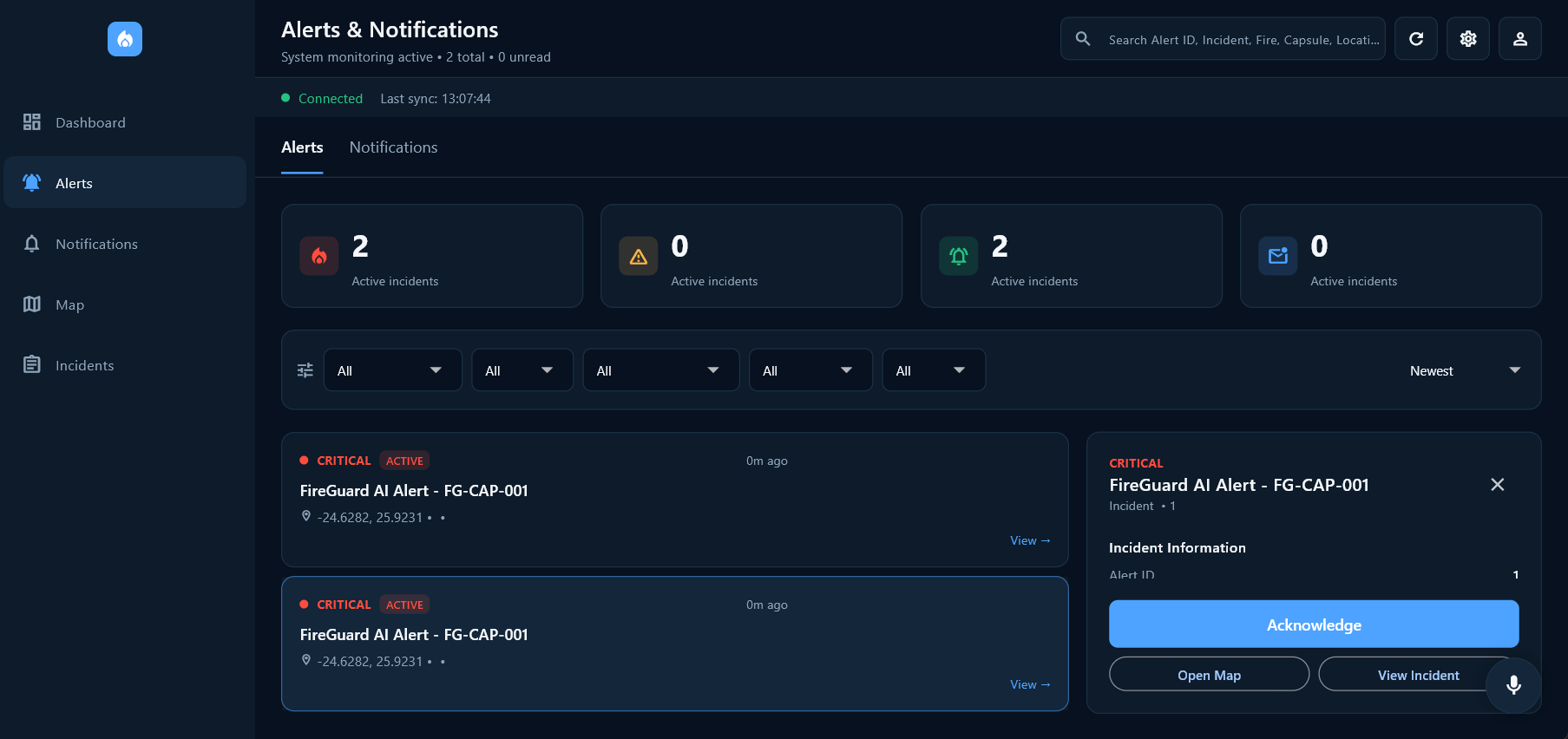
Alerts screen
-
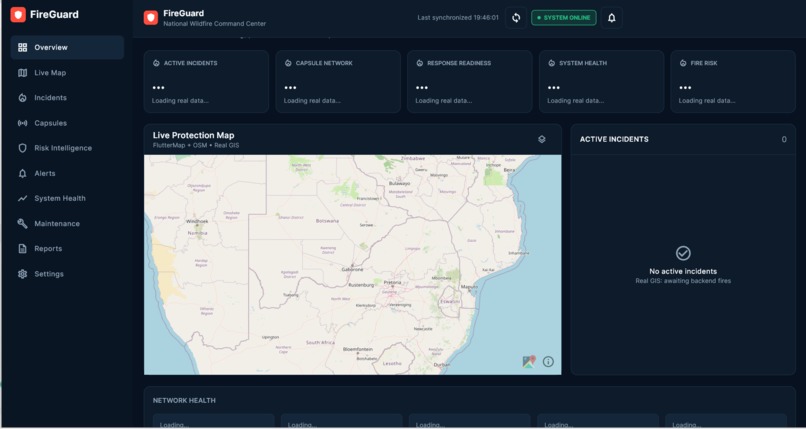
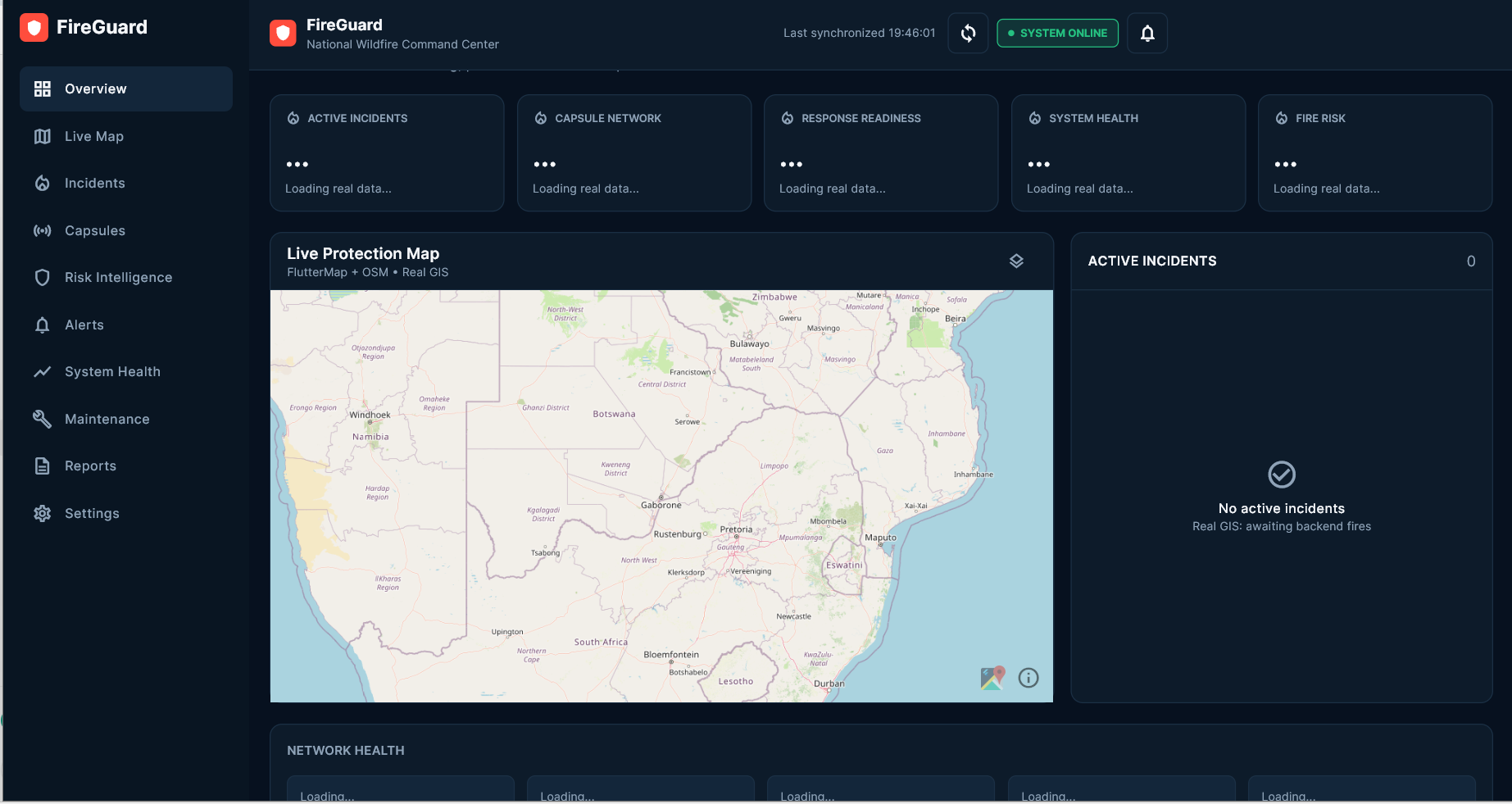
FireGuard dashboard
-
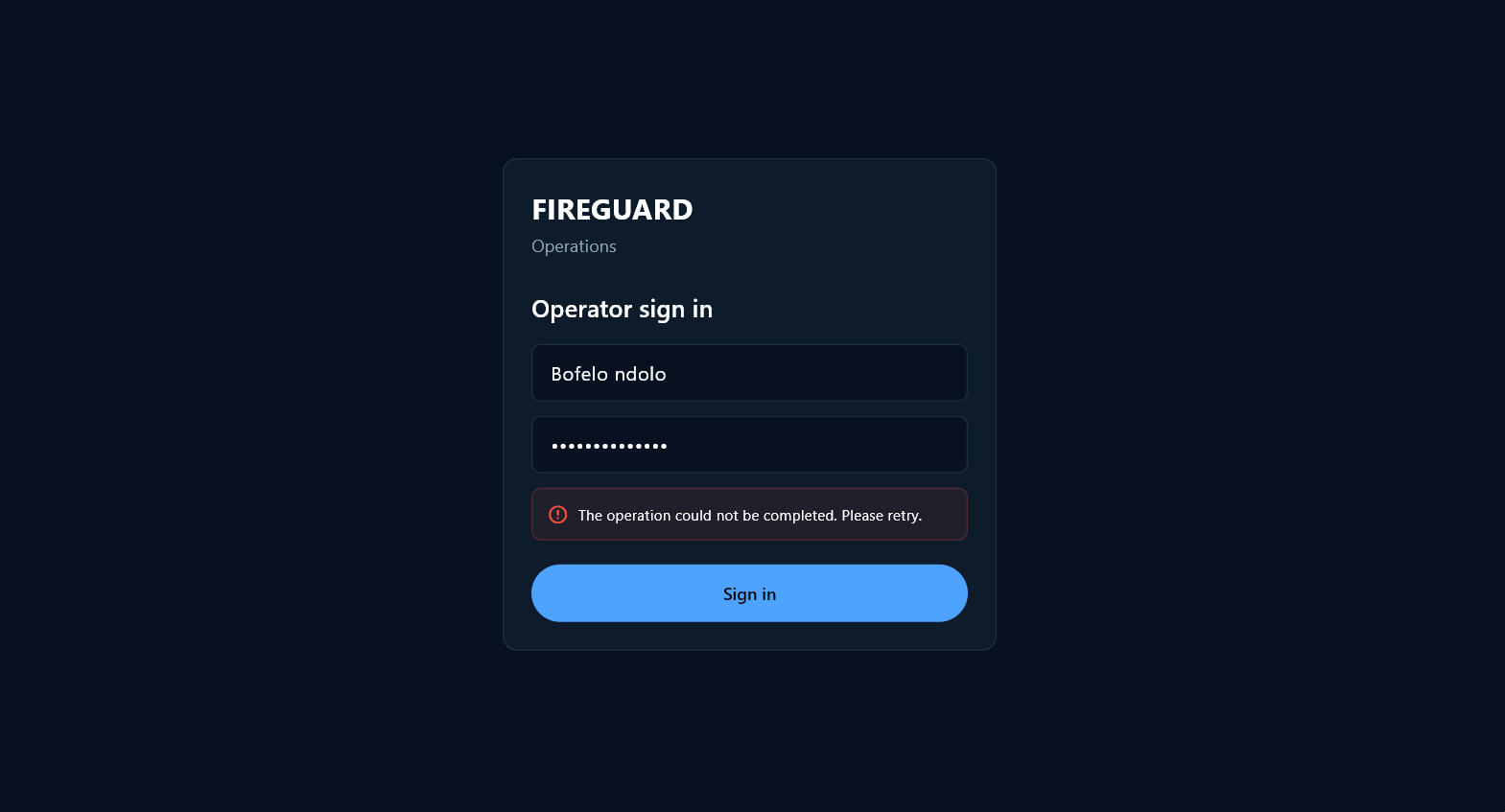
Login screen
-
System architecture
-
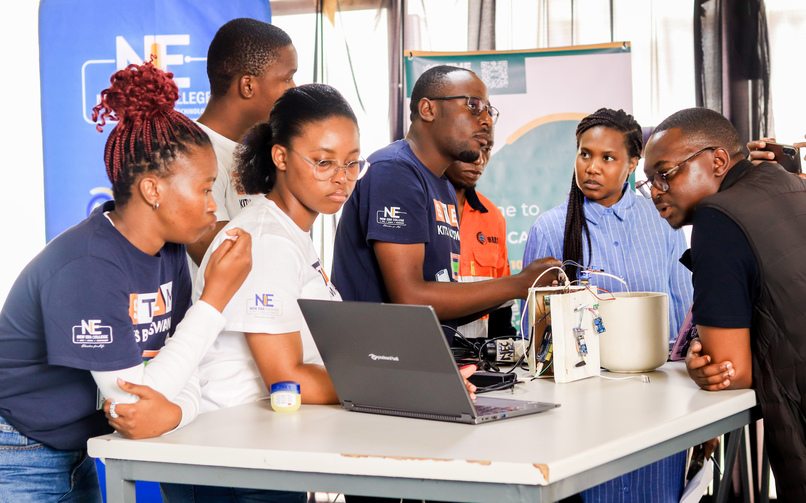
Overall FireGuard concept/prototype
-
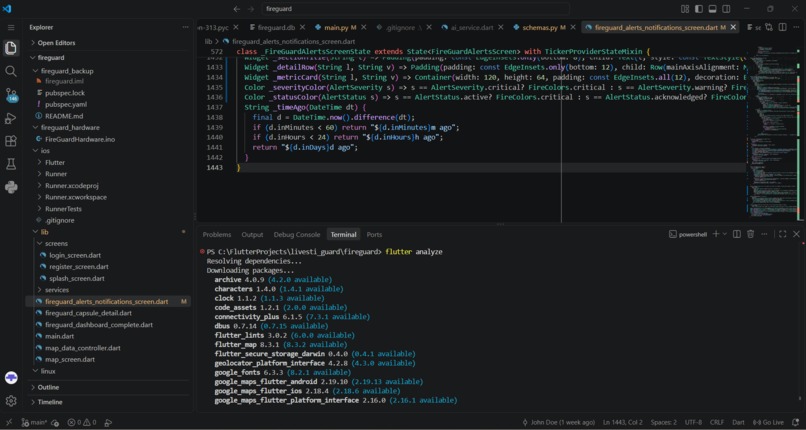
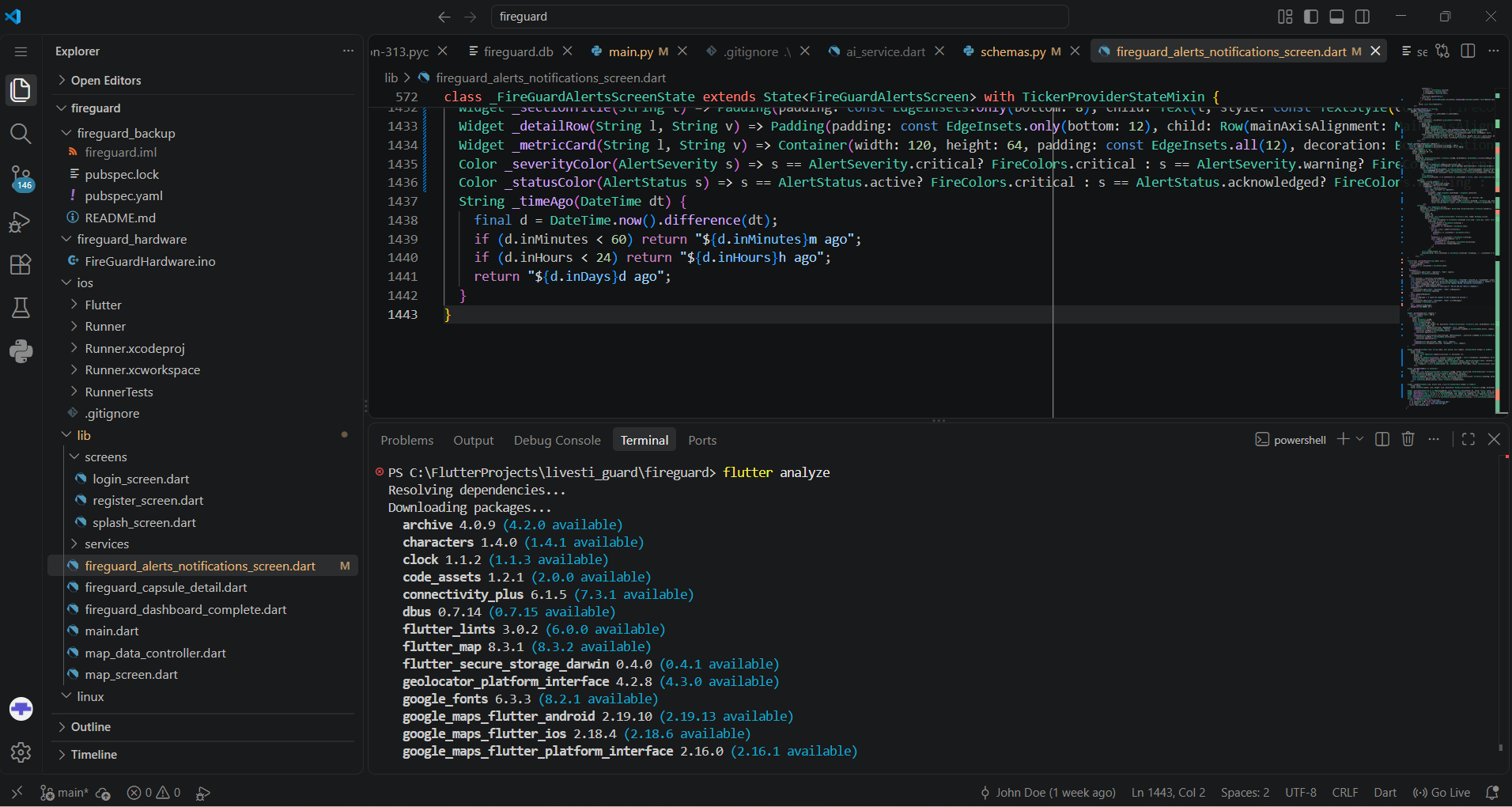
FireGuard Assistant/voice VS code
InspInspiration
Our inspiration came from the wildfire problem faced by Botswana, especially during the dry season when high temperatures, dry vegetation, low humidity and strong winds can allow grass and bush fires to spread quickly. Fires can threaten livestock, farms, grazing land, wildlife, communities and infrastructure. In remote areas, a fire may only be noticed after it has already grown, creating a delay before people can respond.
This led us to ask a simple question: can technology help detect a fire earlier, understand the situation faster and give people more time to respond?
FireGuard Capsule™ was created from this idea. We wanted to develop more than an alert system. We wanted to combine environmental sensing, intelligent fire verification, location tracking, communication and an early-response mechanism into one system that could eventually operate in remote areas using solar power.
Although the project started from a Botswana problem, the same challenge exists in many fire-prone regions around the world. Our goal is to develop an approach that can be tested locally and, if proven effective, adapted to other areas facing similar wildfire risks.
What it does
FireGuard Capsule™ is an AI-powered wildfire monitoring, early-warning and early-response system.
The system is designed to continuously monitor environmental and fire indicators such as temperature, humidity, smoke, carbon monoxide, infrared temperature and flame detection. Instead of relying on one sensor, FireGuard combines multiple sources of evidence to assess whether a possible fire is taking place.
When a fire event is detected, the system processes the available sensor information and environmental conditions, assigns a fire status and severity, records the location and sends the information to the FireGuard platform. The Flutter application and web dashboard allow authorised users to view alerts, locations, telemetry and incident information.
The system also includes an AI Assistant and voice interaction to help users access fire information more easily.
The physical FireGuard Capsule™ is being designed with solar power, battery storage, wireless communication and an automated suppression mechanism. The planned suppression system is intended to provide an initial response to small fires and help slow the spread of larger fires while emergency responders are being notified.
The main purpose is simple: detect earlier, provide better information and give people more time to act.
How we built it
We built FireGuard as a complete system rather than as an AI model or mobile application alone.
The mobile application was developed using Flutter and Dart. It provides the user interface for authentication, dashboards, alerts, incident details, maps, capsule information and the FireGuard Assistant.
The backend was developed using Python and FastAPI. It provides the APIs that connect the application with the system database, telemetry, alerts, capsule information, AI services and geospatial information. SQLite is currently used for the development database.
For the intelligence layer, we developed a fire-classification and environmental-risk pipeline. The system combines sensor evidence with environmental information instead of treating a single measurement as proof of a fire. The environmental machine-learning component uses a calibrated Random Forest model trained using NASA fire detections together with controlled background samples and environmental variables.
The final held-out test evaluation of the environmental model achieved approximately 0.964 ROC-AUC and 0.965 PR-AUC. These results describe the model's evaluation on its test data; they are not a claim that the complete physical capsule has already been proven in the field.
We also developed the embedded-system architecture around an ESP32-class controller, environmental sensors, GPS, communication, power management and future suppression hardware. The firmware architecture includes telemetry handling, sensor validation, diagnostics, actuator safety and an emergency-stop function.
The project was built in stages so that the software, backend, AI and future hardware components could be connected into one system.
Challenges we ran into
During development, we faced several challenges.
The first was reliable fire verification. A single sensor can produce a misleading reading, so we had to design the system to consider multiple indicators before classifying an event. This led us to use sensor fusion and separate fire evidence from environmental risk.
The second challenge was building a real AI pipeline without pretending that unavailable hardware data was real. Because the physical capsule is still being developed, we had to keep the software architecture ready for real telemetry while clearly separating real model training and system logic from future physical testing. This was important because we did not want to use fabricated sensor readings as evidence of real-world performance.
Another challenge was connecting many different parts of the project. The Flutter application, FastAPI backend, database, AI services, GIS information, telemetry and alert system all had to work together. Solving these integration problems taught us that a strong engineering solution depends as much on reliable system architecture as it does on individual technologies.
These challenges helped us make FireGuard more structured, testable and technically honest.
Accomplishments that we're proud of
We are proud that FireGuard has developed from an initial wildfire-monitoring idea into a working full-stack engineering prototype.
We built a Flutter application connected to a FastAPI backend and a persistent database. We implemented authentication, telemetry handling, alerts, capsule information, GIS features, AI services and the FireGuard Assistant.
We also developed and evaluated a real machine-learning pipeline for environmental fire-risk assessment, together with an engineering-based sensor-fusion system for fire classification. The project includes NASA fire intelligence, GPS-based incident information and a structured alert system.
On the embedded side, we developed the firmware architecture needed for the future physical capsule, including telemetry, sensor validation, health monitoring, diagnostics, actuator safety and emergency-stop handling.
Another accomplishment we are proud of is documenting the system openly, including its architecture, AI methodology, API structure, database and development process.
Most importantly, we did not build only a demonstration screen. We built the major software and intelligence layers needed for a complete wildfire-monitoring system and created a foundation for physical testing.
What we learned
Through this project, we learned that building an AI engineering system is about much more than training a model.
We learned how important data quality, validation and clear separation between measured information and estimated information are. We also learned that sensor fusion can provide stronger evidence than depending on one sensor, and that machine-learning results must be evaluated carefully before making real-world claims.
Technically, we developed experience with Flutter, Python, FastAPI, databases, APIs, machine learning, environmental data, GIS, embedded-system architecture and system integration.
We also learned that safety has to be considered from the beginning when software is eventually connected to physical actuators. A system that can influence a real-world emergency response must have clear validation, failure handling and safe operating procedures.
The biggest lesson was that AI is only one part of the solution. A useful wildfire system needs sensing, data processing, intelligence, communication, human decision-making and, eventually, safe physical response working together.
What's next for FireGuard Capsule™
Next, we plan to move from the current software and engineering prototype toward physical hardware integration.
The next stage will include building and testing the physical FireGuard Capsule™ with the selected sensors, ESP32-class controller, GPS, communication system, solar power, battery and suppression components. We will then conduct controlled tests to measure detection time, false alarms, GPS accuracy, communication reliability, power performance and suppression response.
After controlled testing, the system can be evaluated in carefully selected field conditions before considering wider deployment.
We also plan to improve the environmental intelligence using more local and regional fire and weather data, strengthen operation in areas with limited connectivity, support multiple connected capsules and improve the physical enclosure for harsh outdoor conditions.
In the longer term, we want FireGuard Capsule™ to become a scalable network of intelligent wildfire-monitoring units that can help farms, communities, conservation areas, businesses and emergency-response organisations detect fires earlier and respond faster.
Our vision is not to replace firefighters. It is to give them better information, earlier warning and more time to act.iration

Log in or sign up for Devpost to join the conversation.