-
-
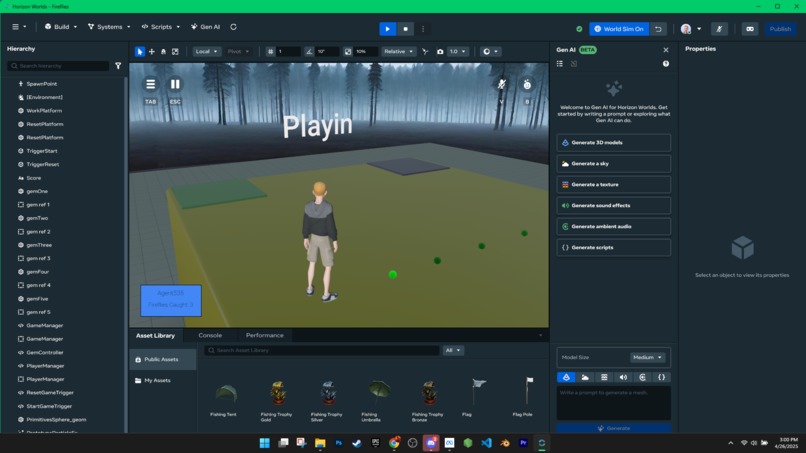
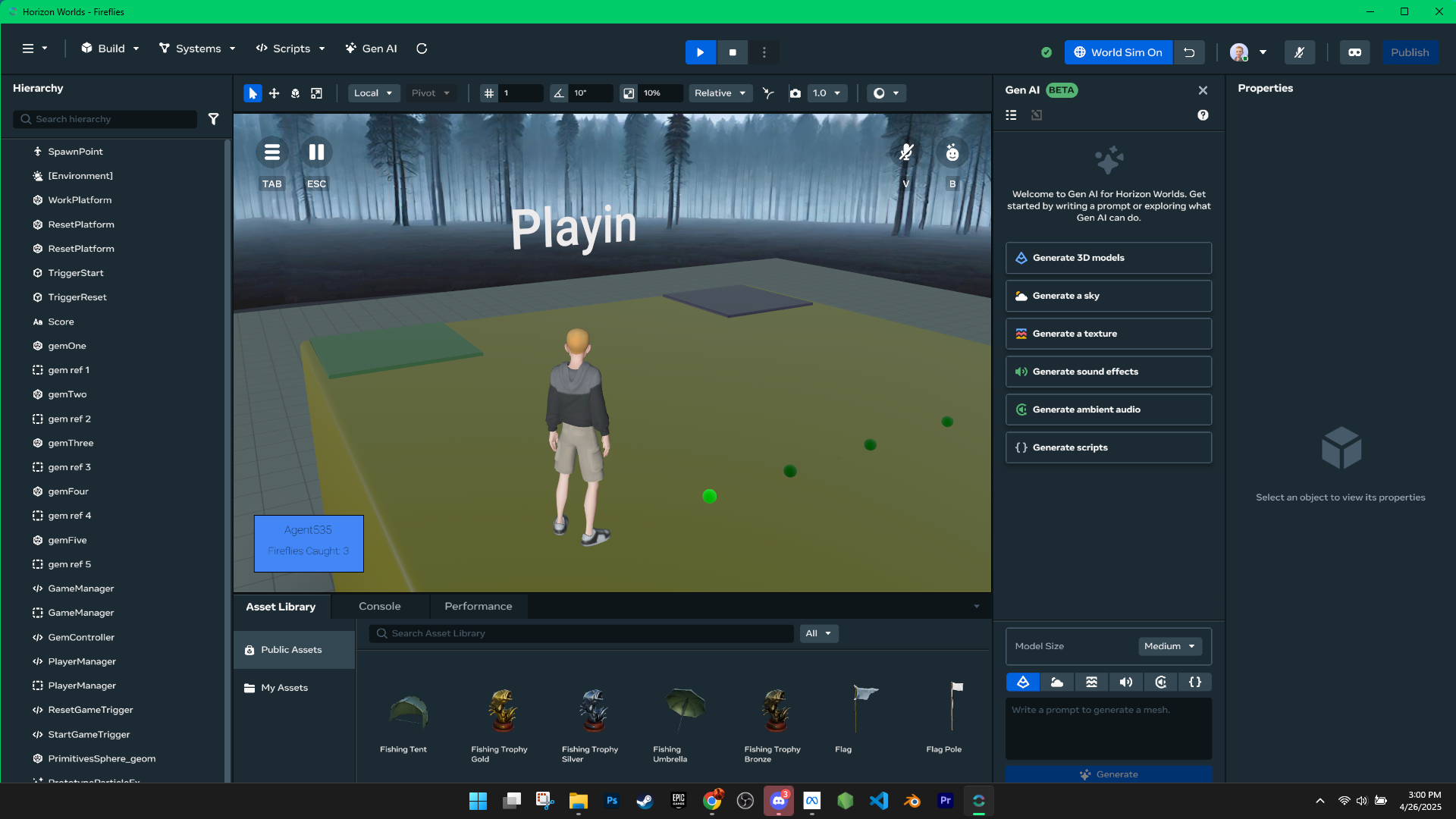
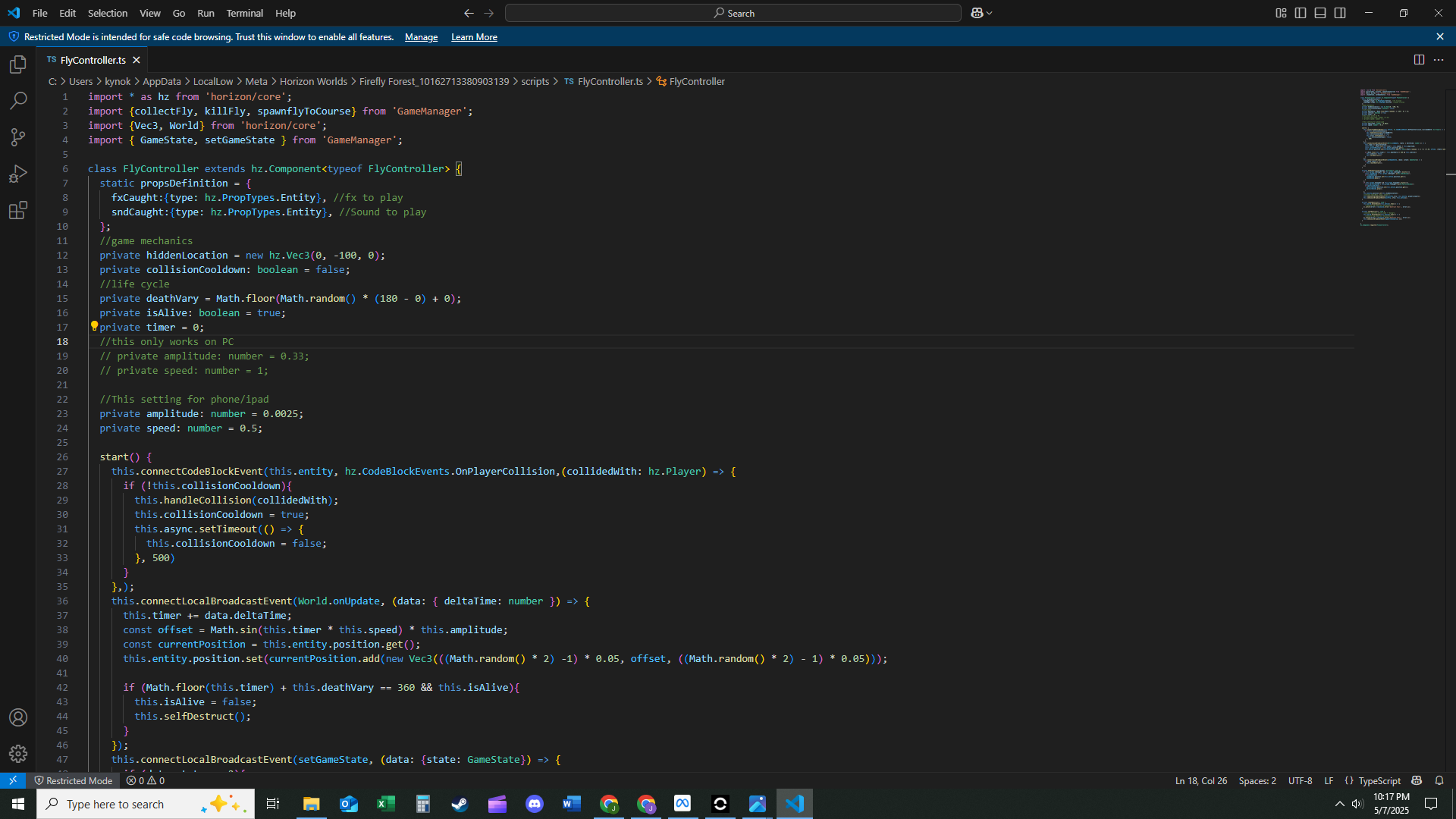
Early code testing
-
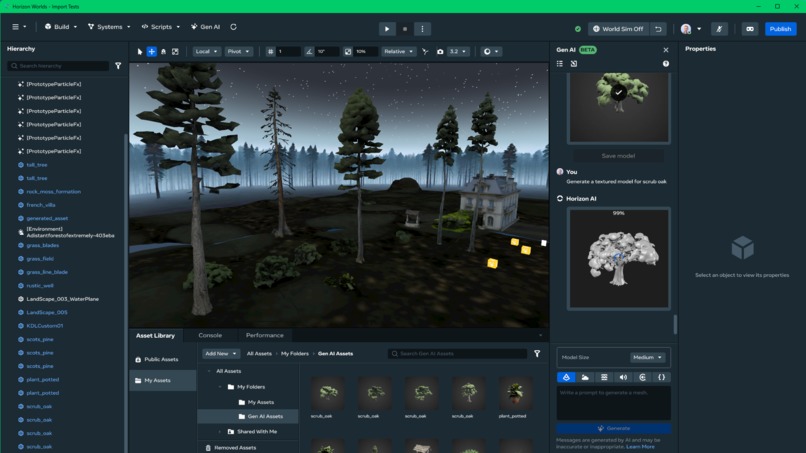
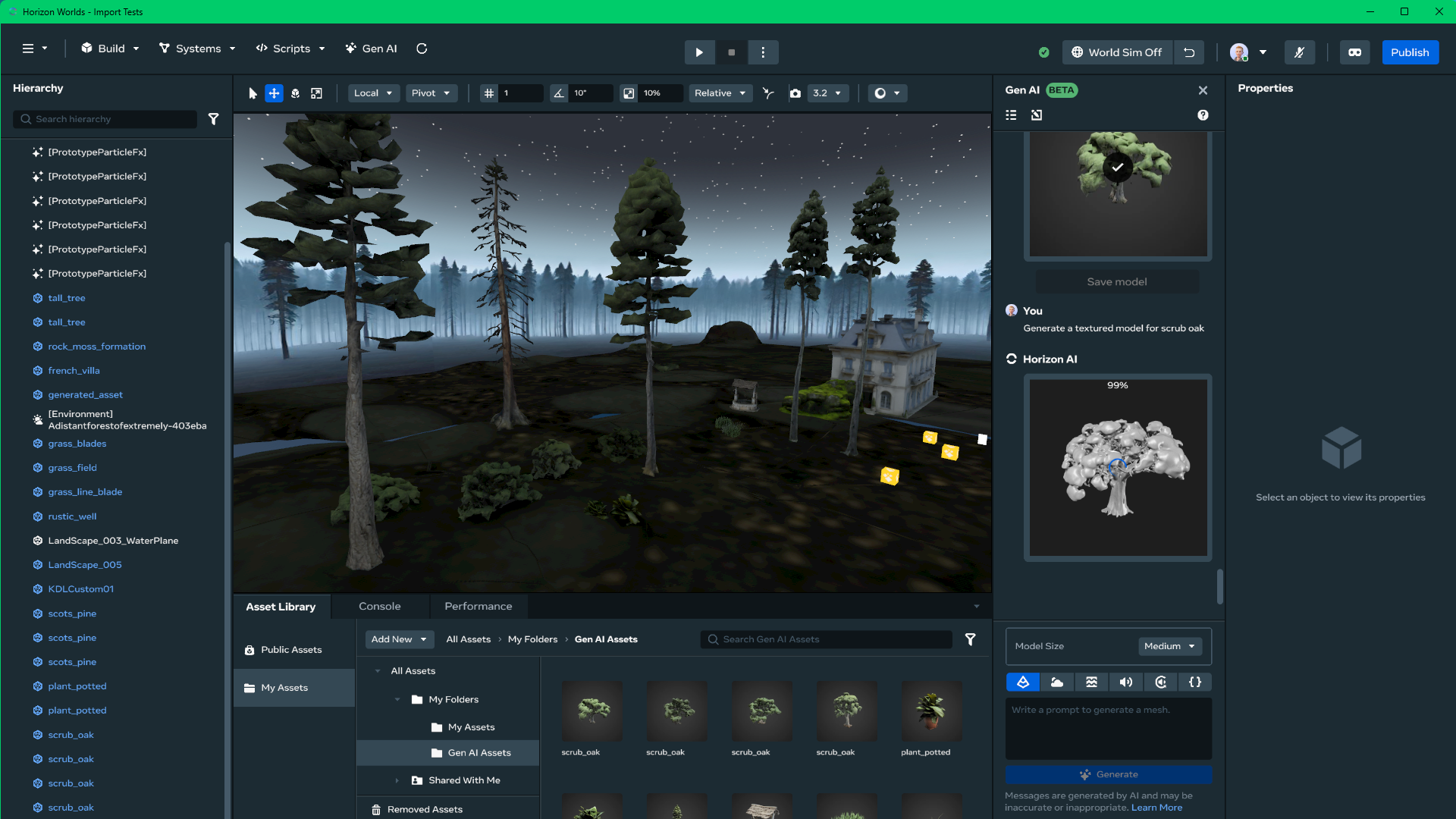
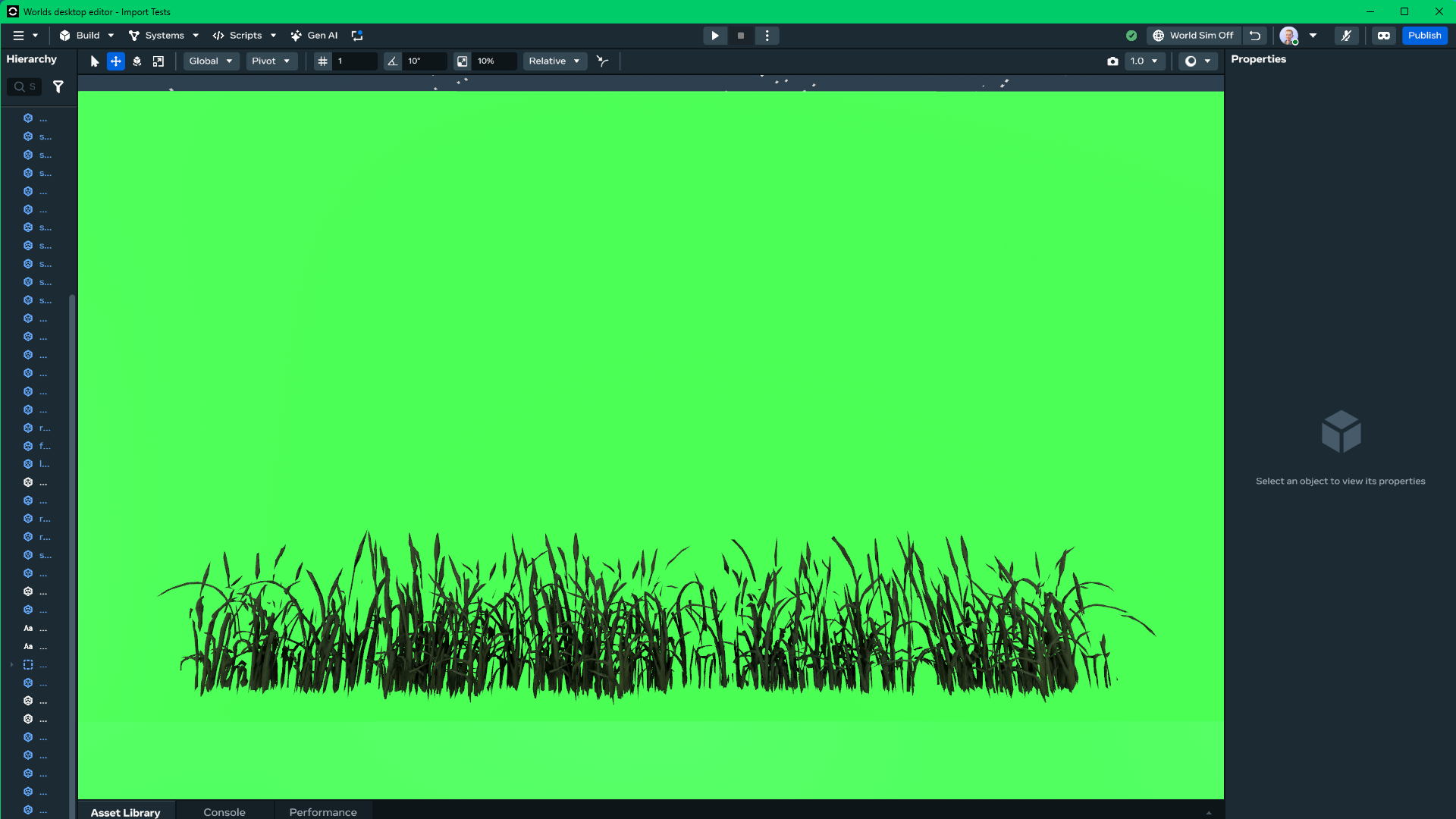
GenAI mesh testing
-
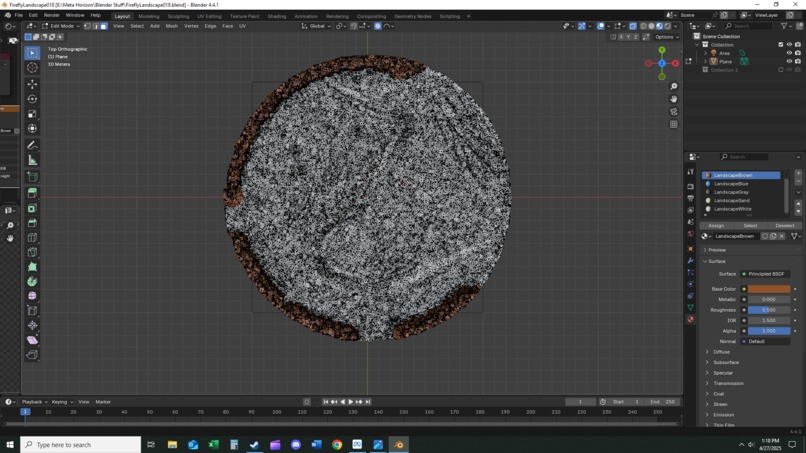
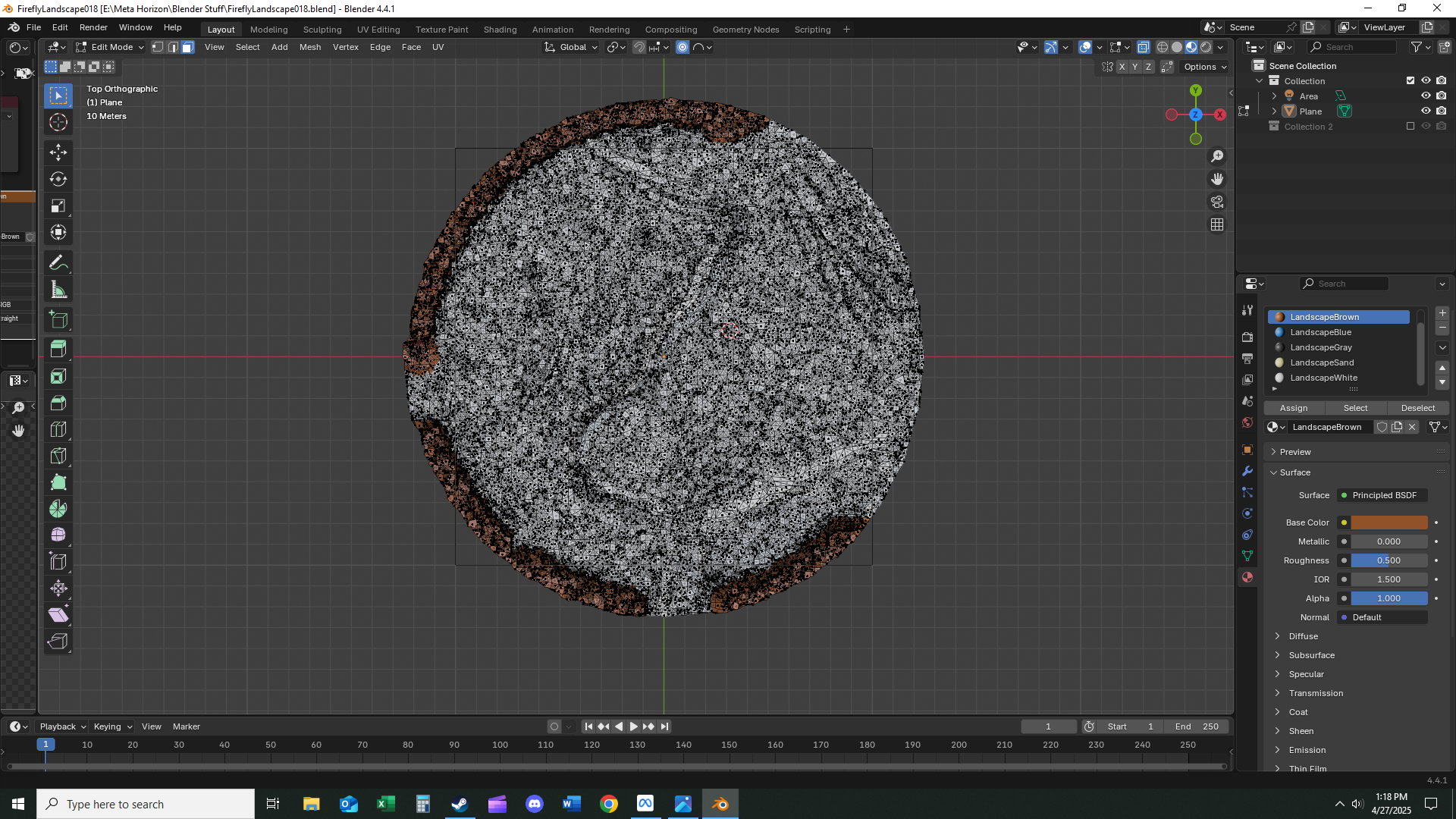
Landscape prototype
-
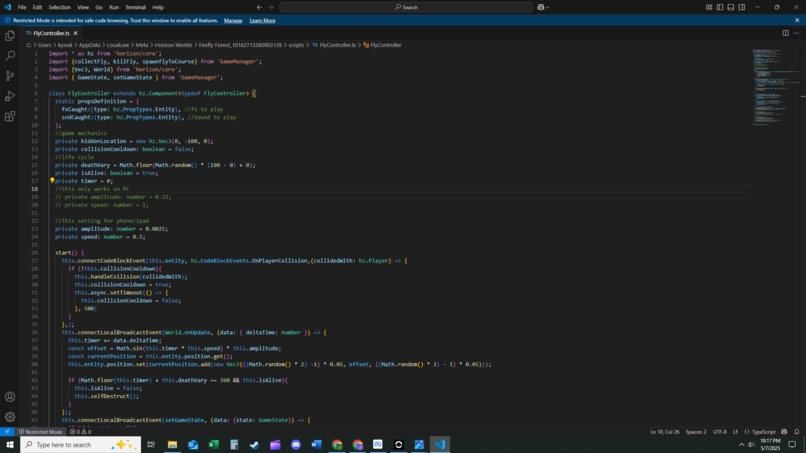
//code
-
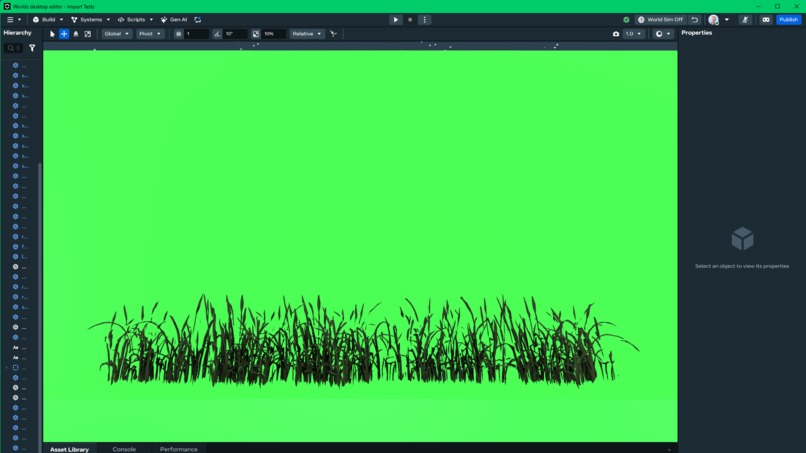
Making a grass texture from GenAI meshes.
Inspiration
The inspiration for Firefly Forest centered around creative constraints. Being new to typescript and MHW, we understood simplicity and achievability of scope was key. Taking direction from the contest documentation, we agreed on a super simple “micro” game loop wrapped in a rich, polished, and hopefully relaxing environment. Once the fireflies idea was agreed upon, the environment and style grew into place around it. Additional inspiration came from games like WoW Tirisfal Glades, Silent Hill, and Red Dead Redemption.
What it does
Offer something visually different into the Meta Horizon Worlds space. -And you collect fireflies.
How we built it
Key Tools Include: Blender, GenAI for source meshes and images that were then heavily edited in Photoshop and Blender.
Key Processes Include: Assembly line style art production where Farore did the modeling, then Agent did the texturing, and Superman integrated assets into the code. Alternating with world decorating duties as assets were finished. Also the exporting of models from MHW into Blender and back again, this worked for scale guides as well as final asset polishing.
Farore did all the modeling, created the landscape assets and the firefly, and led layout, trees, and world assembly. Farore was the Spirit.
Supermancantswin coded the game and structured the final production environment. Superman was the Wizard.
Agent did GenAI asset creation, Photoshop, texturing, vertex reduction, and production. Agent was the Direction.
Challenges we ran into
One of the biggest hurdles to conquer early on was learning to use Meta-Horizon’s World Editor, Blender, and Typescript in order to create a world for this competition. While all 3 of us had some experience with Unreal Engine 5, none of us had ever used blender before, and only one of us had a working knowledge of Java Script. In order to resolve this, the first 4 weeks were devoted to research and tutorials.
Another major difficulty we encountered later in production was exceeding the world’s cap for geometry complexity. Since the Horizon-Worlds GenAI models were extremely expensive, we inadvertently created a forest with trees that were densely packed with vertices, to a point where the world refused to load any new assets. We resolved this dilemma by exporting the GenAI models into blender and manually reducing the vertex footprint of every model and importing them back into Meta Horizon Worlds.
Accomplishments that we're proud of
We are most proud of the general level of visual polish and unique style. In particular, the custom skybox, landscape, and UI. We are also proud of being able to complete a working game having never used Meta Horizon’s Worlds, Typescript, or Blender before this competition.
What we learned
In addition to the software we had to learn, we also learned how to work and gel together to make a complete game under time constraints outside our comfort zone.
What's next for Firefly Forest
Given more time, we would like to make the world more interactive with items and mini activities such as skipping rocks on the water or, or tossing stones down the well for a spooky sound, and particle effects and special shaders for the water. Expanding gameplay with daily, weekly and seasonal quests would be a key addition.


Log in or sign up for Devpost to join the conversation.