Inspiration
What if building software felt as simple as talking to your TV?
FireDev started with that question. AI coding agents can already do serious development work, but using them usually means sitting at a computer, typing commands and watching a terminal. I wanted to bring that experience to Fire TV: describe an idea, watch it take shape and guide the next change with your voice.
I built and tested FireDev using my own older Sony Fire TV. The aim was to turn a device I already owned into a new way to create software.
What it does
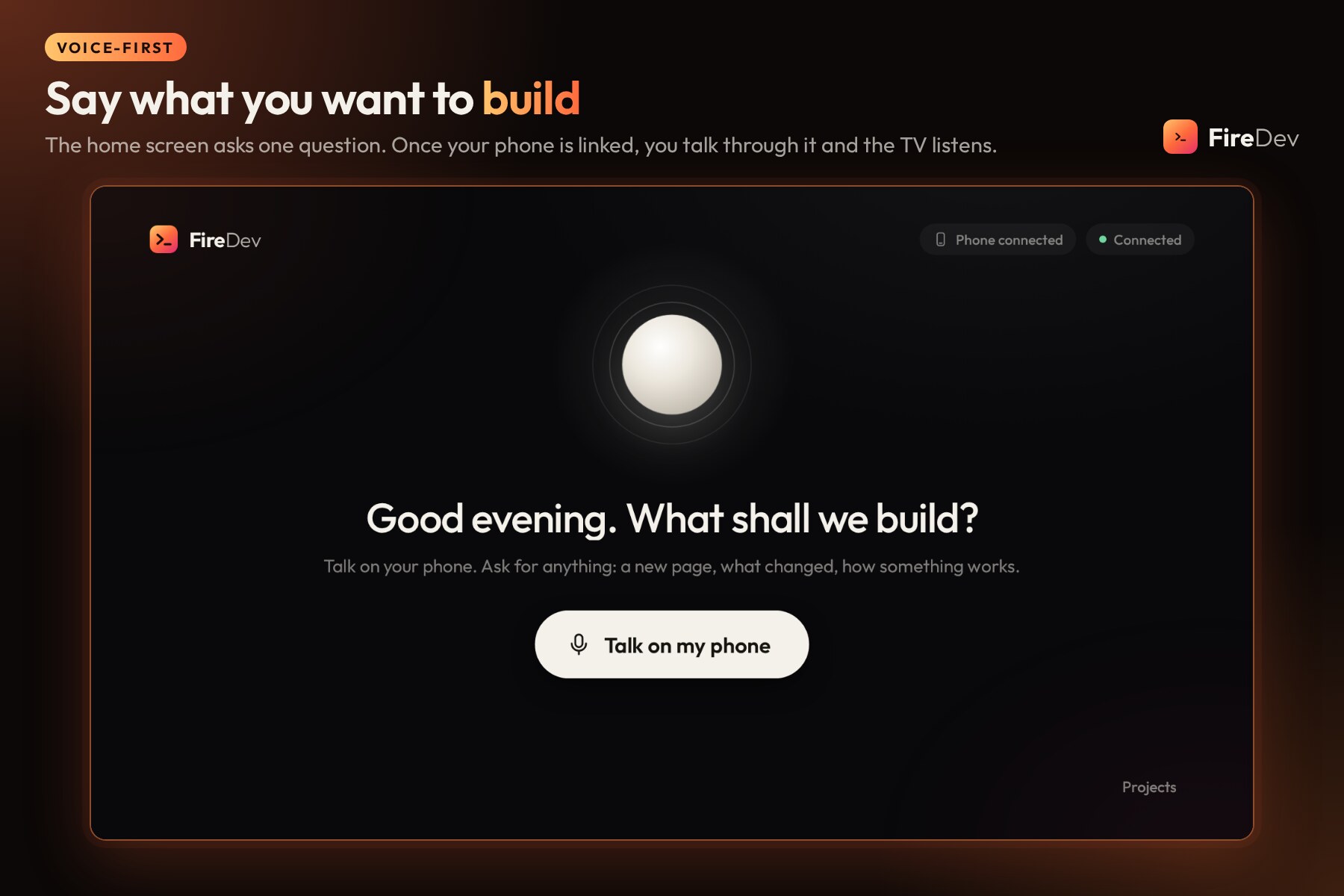
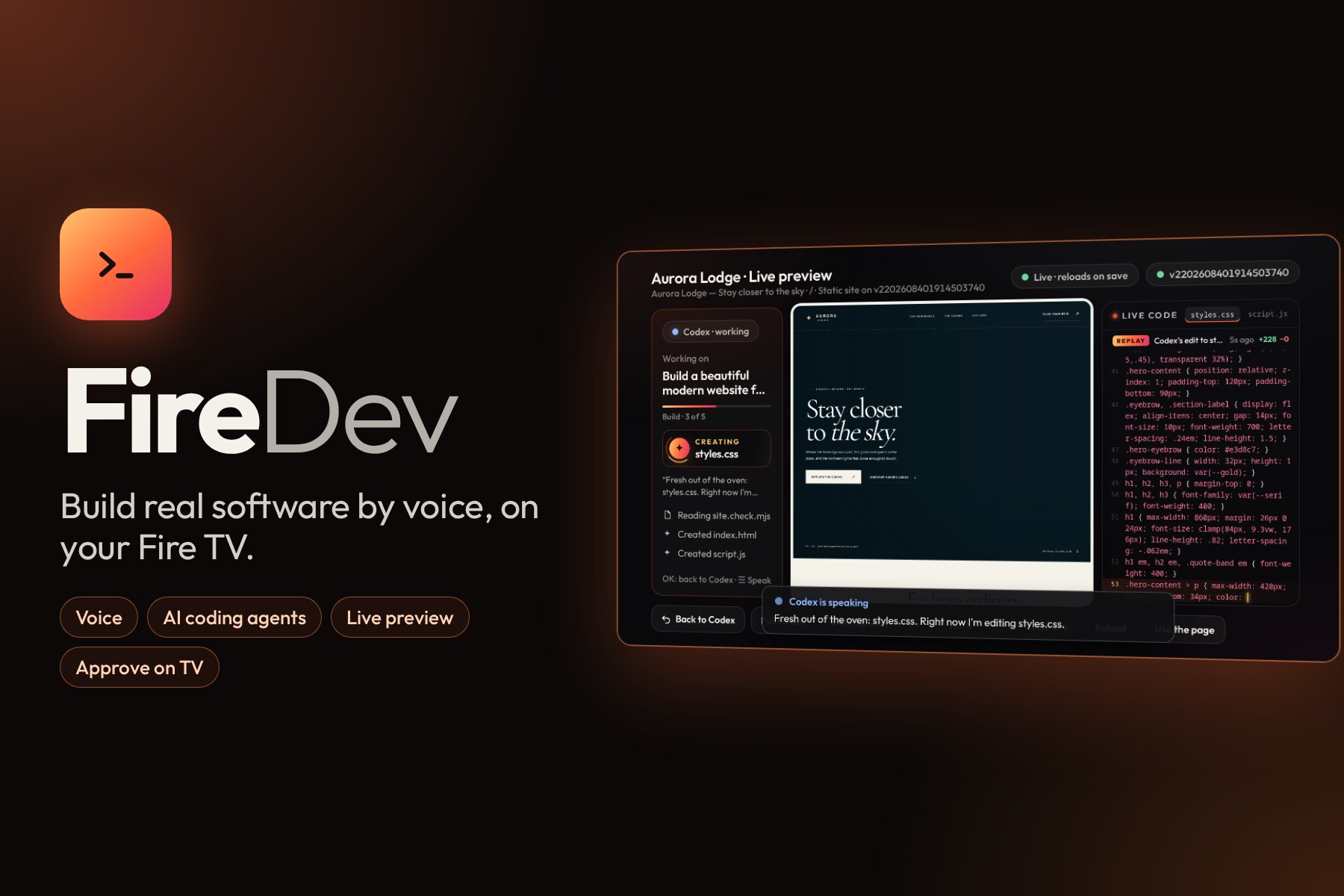
FireDev turns Fire TV into a voice-first development workstation.
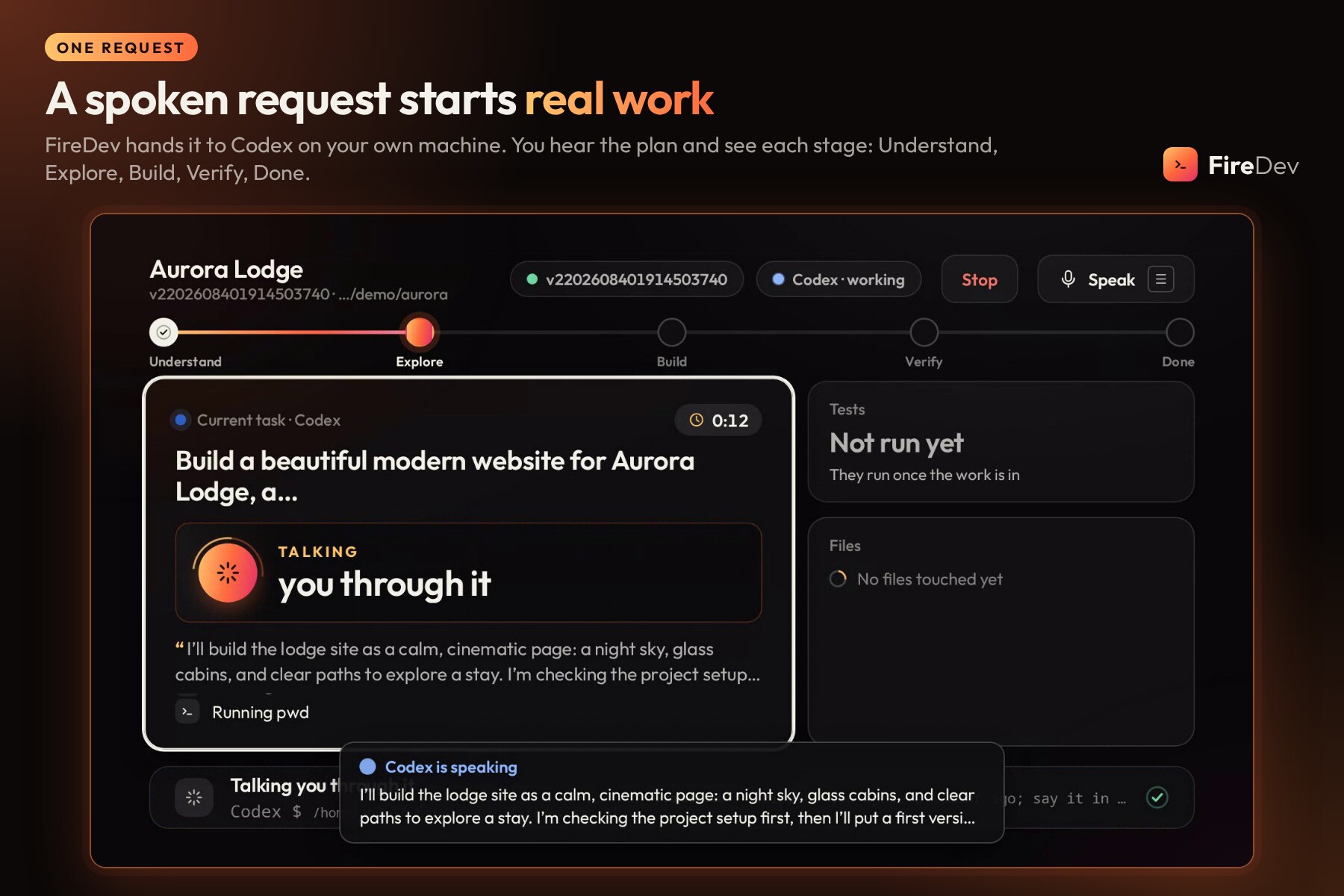
Connect to your development machine over SSH, direct AI coding agents such as Codex or Claude, and follow their work on your TV. You can ask them to build features, investigate bugs, run tests and prepare deployments.
The interface brings three parts of the process together:
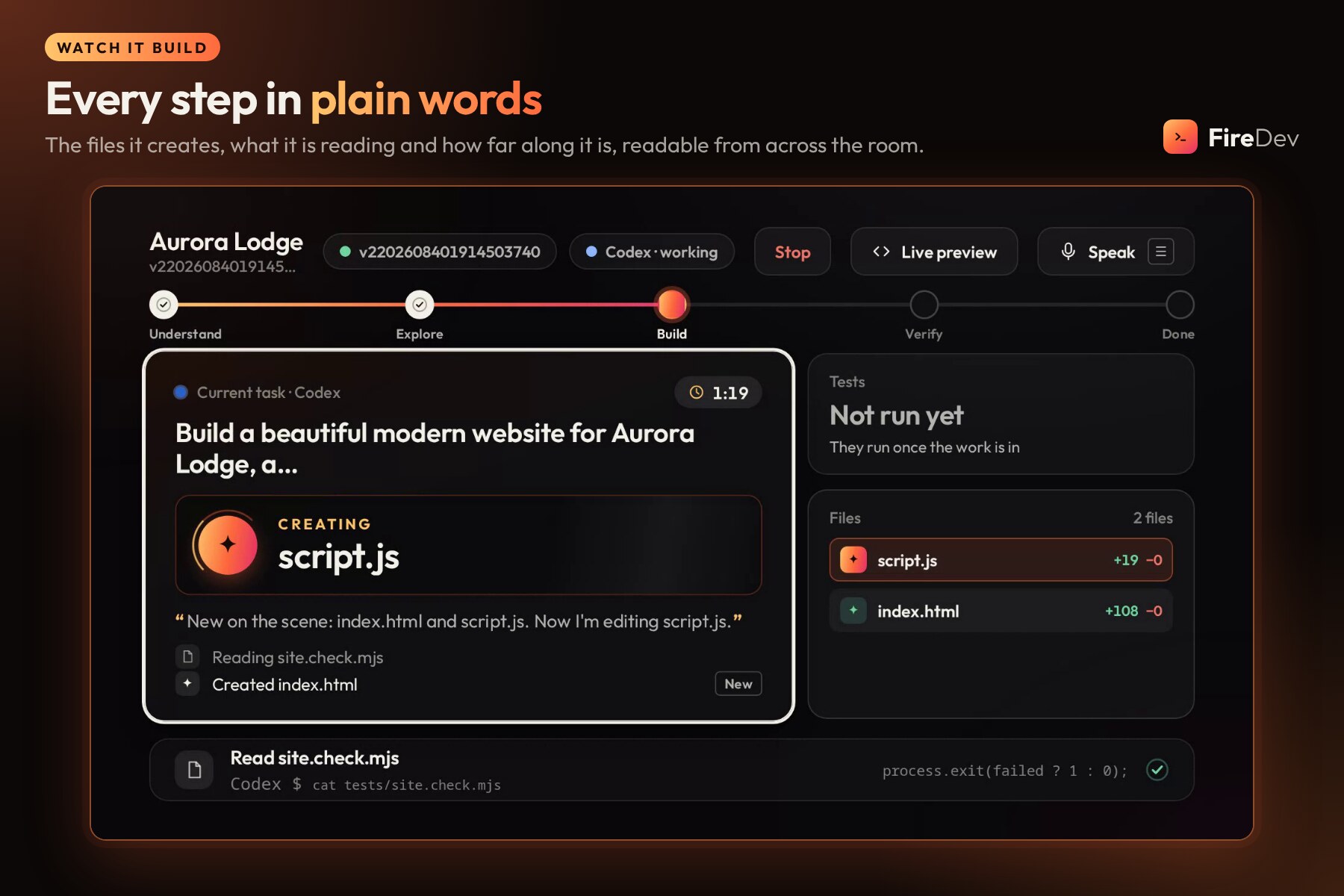
- Agent activity: see what the agent is doing and what needs your attention.
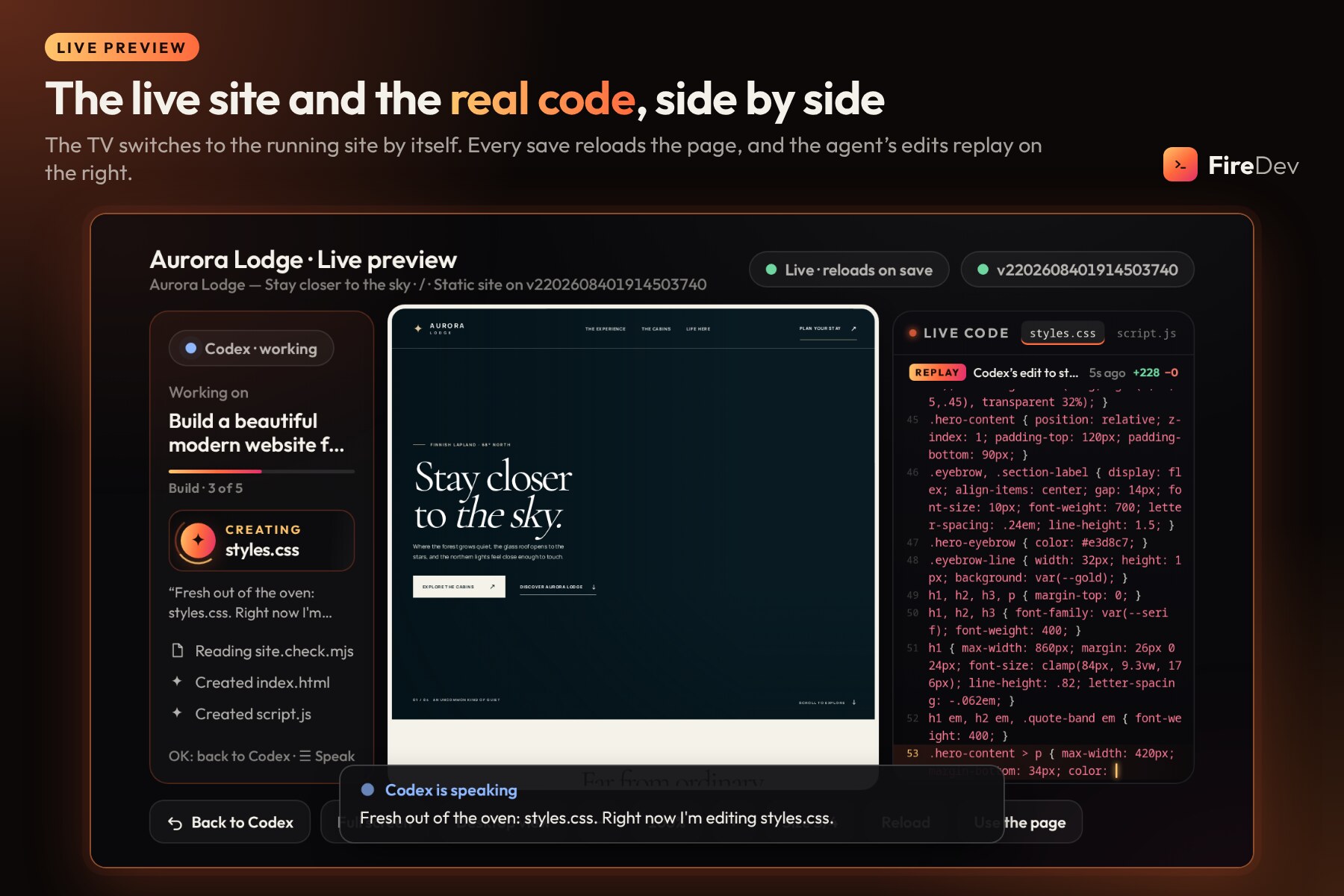
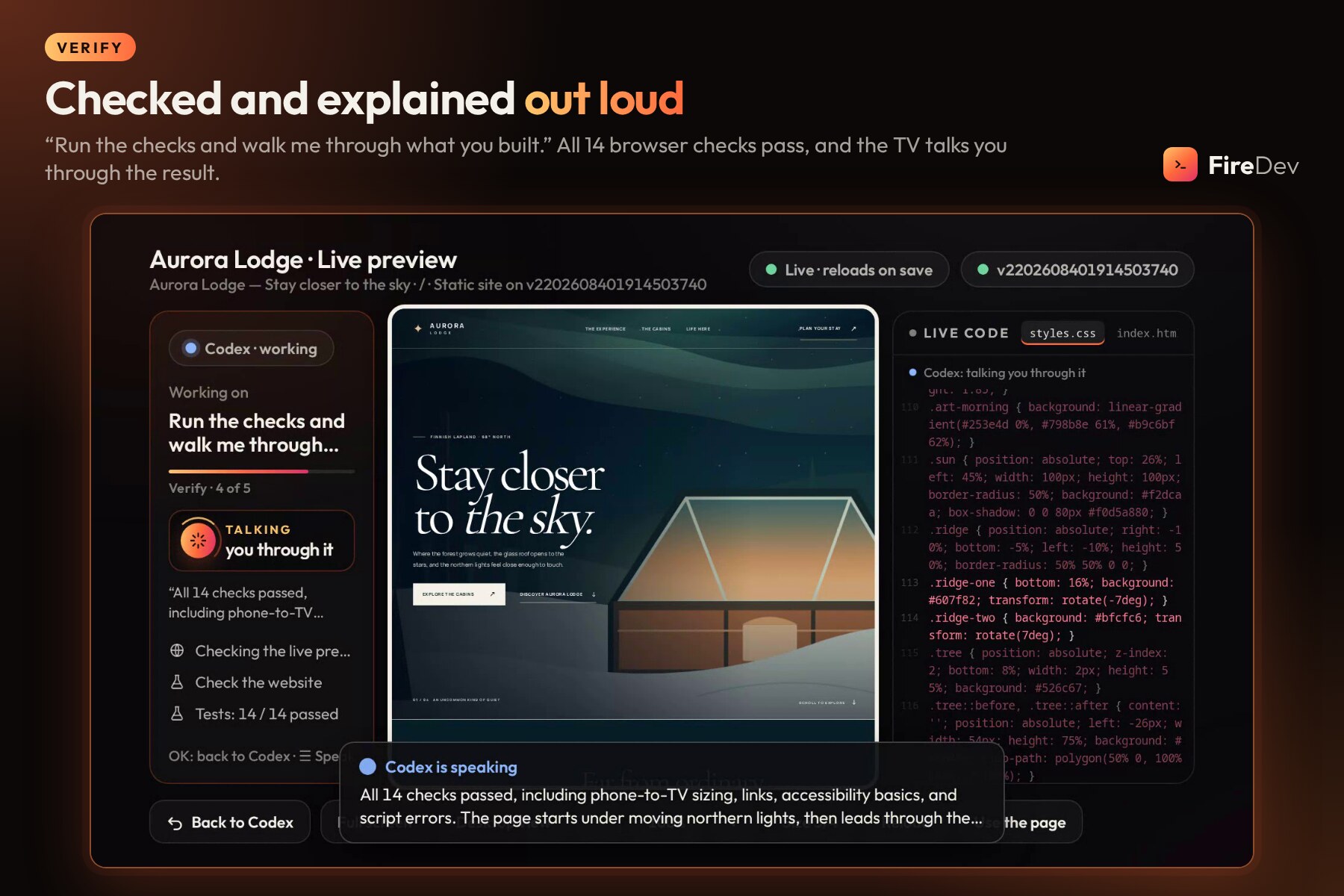
- Live preview: watch the software change as the agent builds it.
- Live code: follow the actual edits, with clearly labelled code replays.
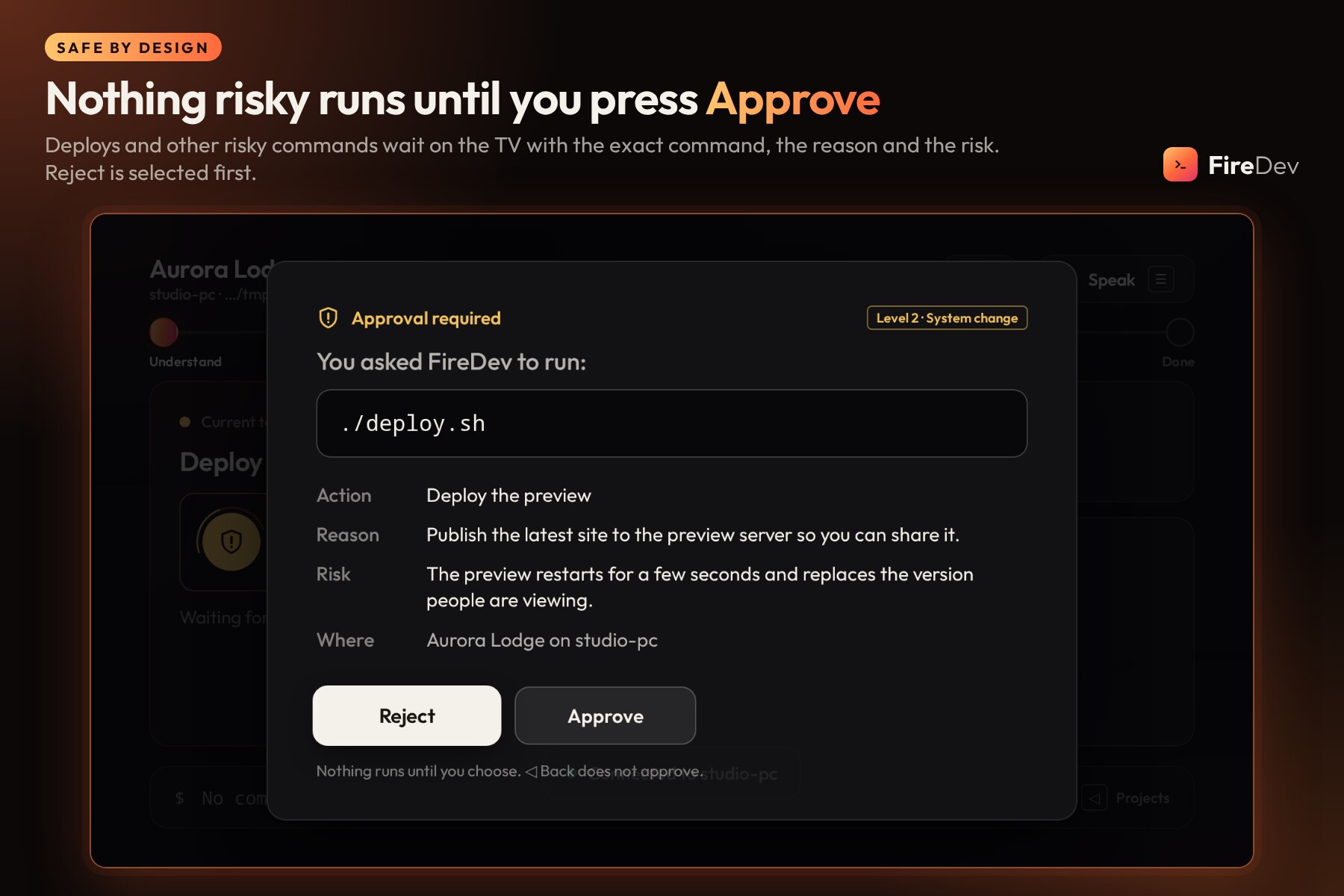
The app brings relevant information forward automatically, reducing the need to navigate between screens. Sensitive actions can be presented for approval on the TV.
How I built it
FireDev combines an Android app for Fire TV, a TV-focused web interface and a Python backend connected to development machines through SSH and tmux.
It works with existing coding agents rather than building a new coding model. The connected machine runs the development tools, while Fire TV provides the interface for directing and observing the work.
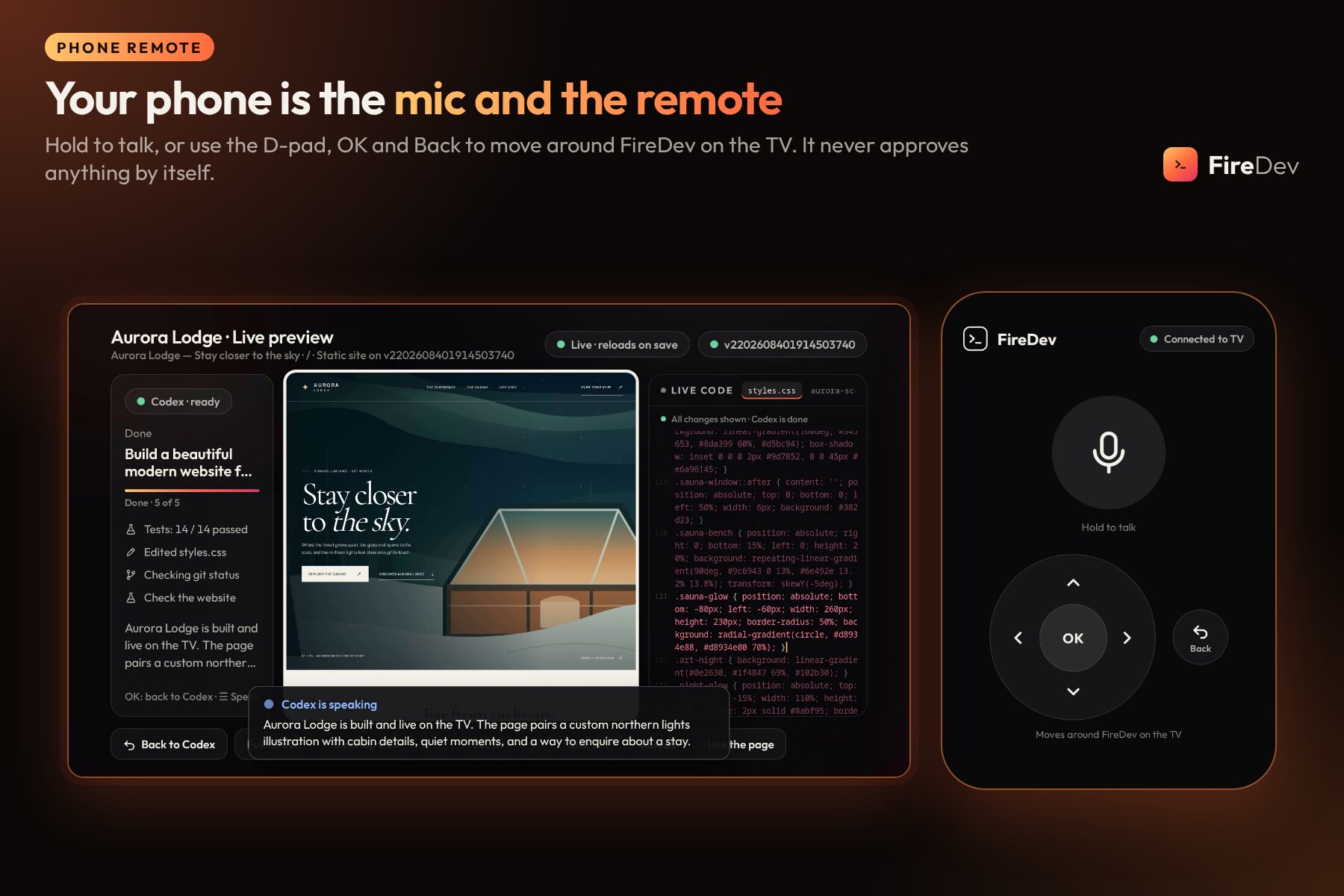
A paired phone provides microphone input for voice commands. Spoken responses use device text-to-speech.
The live view connects agent activity, file changes and the running preview. Code replays show real edits and are labelled as replays. The preview follows relevant changes so viewers can see their effect.
Challenges I ran into
Making the experience readable across a room. A terminal interface does not translate directly to a television. I refined the layout around large cards, clear text and focused information.
Supporting a real Fire TV WebView. My TV reported a different usable viewport from the physical display resolution, which initially caused severe cropping. Fixing this required scaling against the viewport the app actually received.
Keeping the preview reliable. Development involves incomplete pages and temporary errors. I added checks before displaying a preview and improved how updates appear to reduce blank screens and disruptive reloads.
Making agent work understandable. An agent may spend time thinking, running commands or testing without changing the page. FireDev distinguishes these states and shows actual activity rather than filling the wait with simulated work.
Accomplishments I’m proud of
I brought voice direction, remote coding agents, live previews and action approvals together in a Fire TV experience.
The most rewarding moment was watching a spoken request become a working website, then asking for a redesign and seeing the changes appear on the television.
I am also proud of testing on an older TV. Working within its constraints pushed me to make the interface clearer and the preview more resilient.
What I learned
A voice-first development tool needs more than speech recognition. It needs to make the current state clear: what the agent understood, what it is doing, what changed and when the user needs to decide.
I also learned how much real-device testing matters. Browser previews helped, but the television exposed issues with scaling, performance and readability that shaped the final experience.
What’s next for FireDev
Next, I want to simplify setup, improve voice interaction and expand compatibility across Fire TV devices.
I also want to make longer development sessions easier to follow, with clearer progress, better recovery when connections drop and more useful explanations of changes.
The goal remains simple: build real software by voice, on your TV.
Built With
- android
- codex
- css
- html
- javascript
- kotlin
- openai
- python
- ssh
- tmux

