Inspiration
California is very susceptible to forest fires and can lead to many deaths/injuries if action wasn't taken in a timely manner. Many public fires can also go undetected and cause harm to people before the right action is taken, causing harm to society. So, we thought to utilize EyePop's effective computer vision models to detect such harmful fires and potential danger to people before it causes them harm. Our project will especially work well for automating large scale surveillance systems that are hard to monitor manually, missing potential fires.
What it does
Our AI-driven multi-model fire risk detection system combines two complementary computer vision models to identify growing fires and detect people at risk in a timely manner, enabling first responders to intervene before harm occurs.
The system will operate in two stages. First, a custom EyePop.ai cloud-hosted model will analyze images captured from video streams (e.g., CCTV feeds) at five-minute intervals. This model computes a criticality index on a scale from 0 to 1, representing the likelihood that a person is in danger due to fire or smoke. If the criticality index reaches 0.7 or higher, the scene is flagged as High Danger.
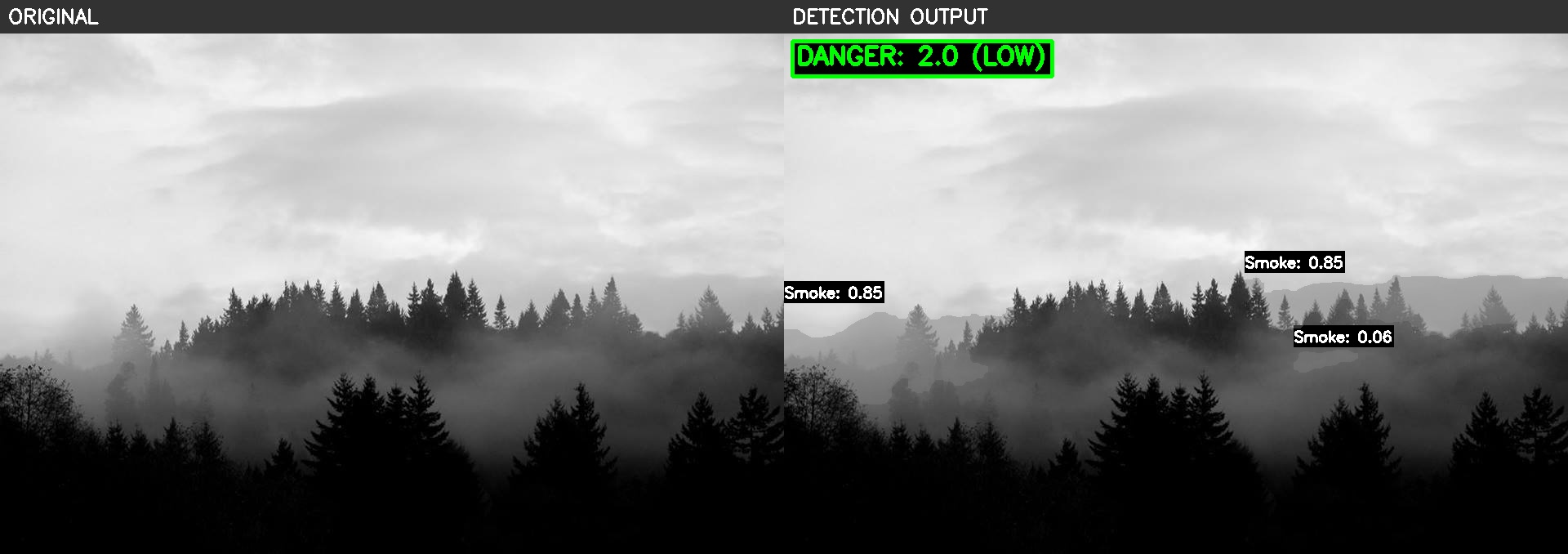
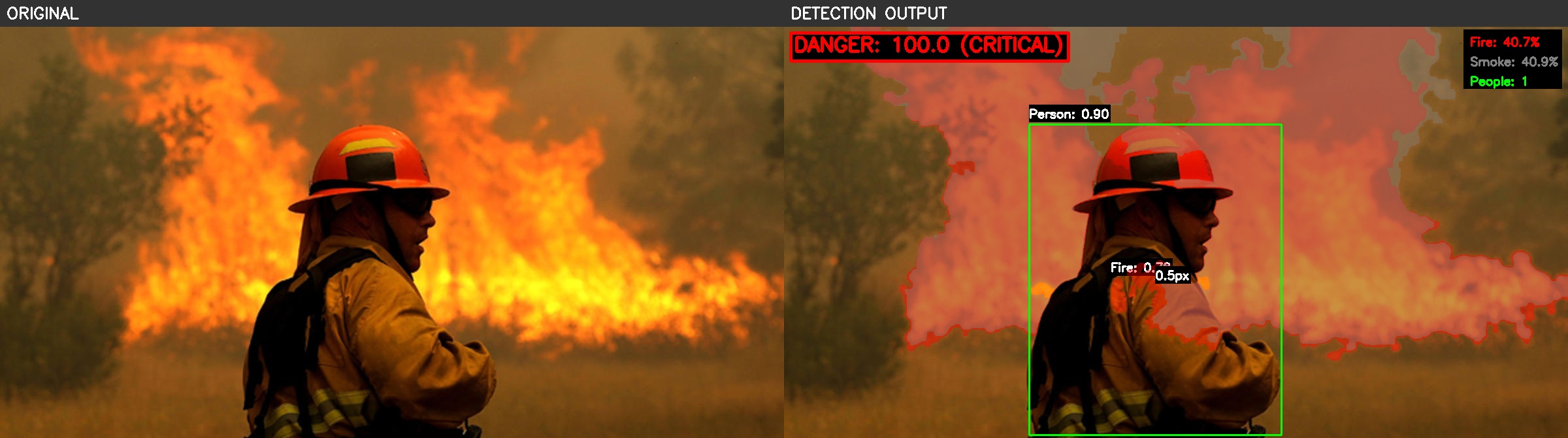
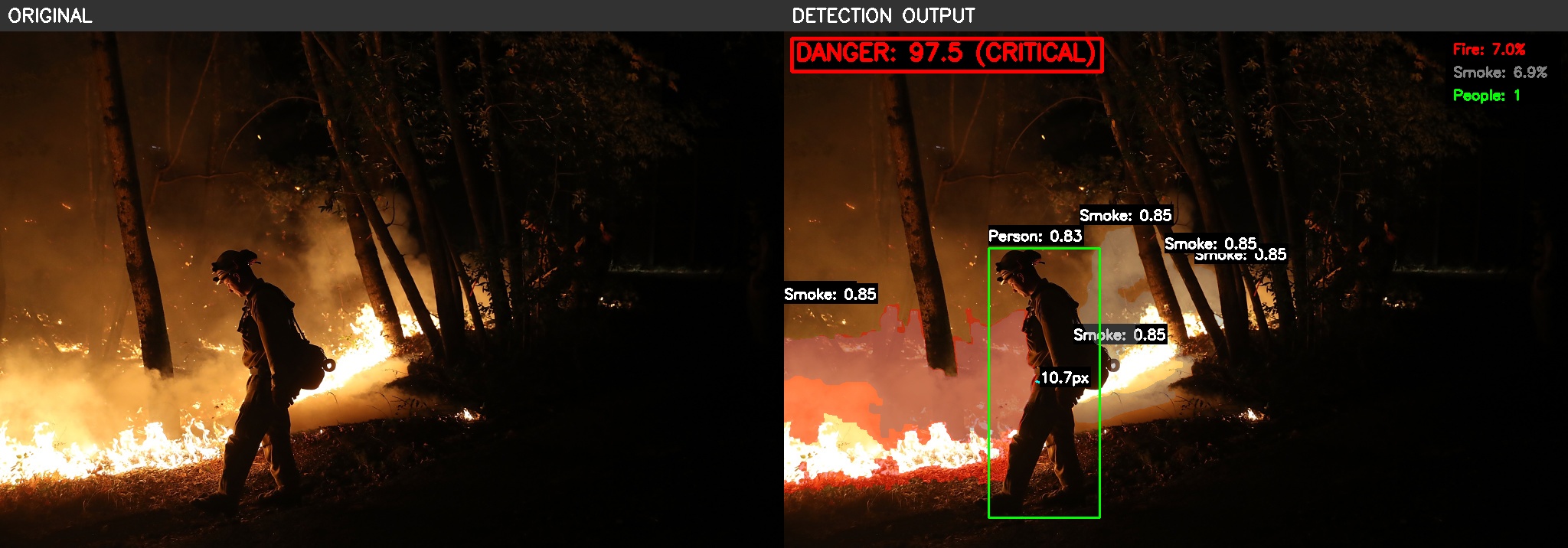
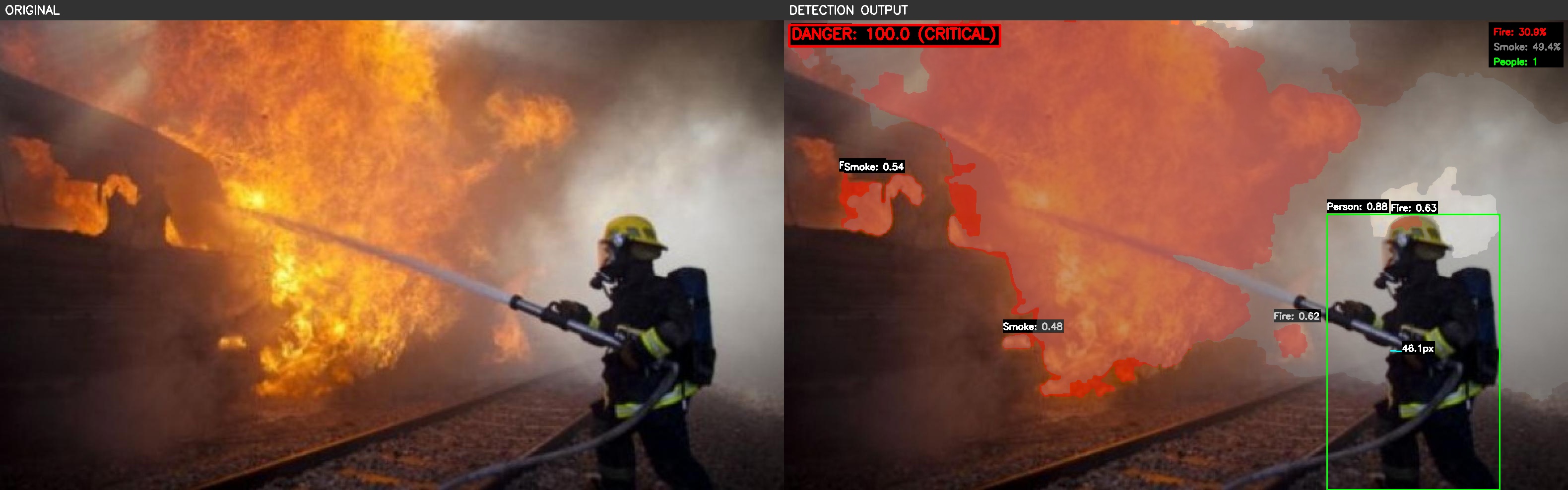
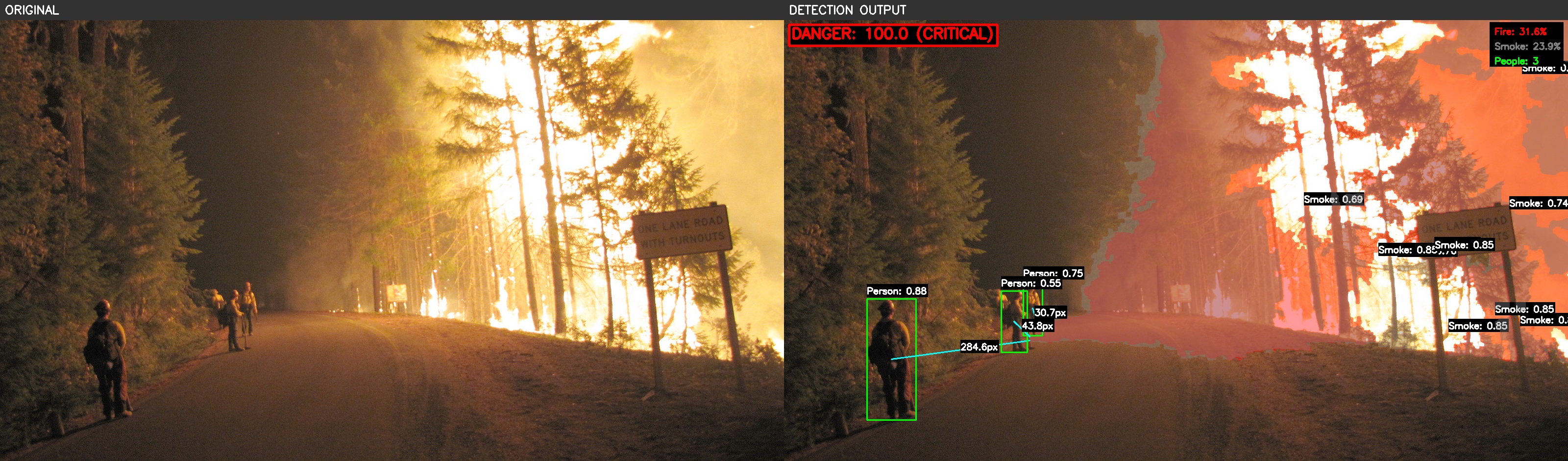
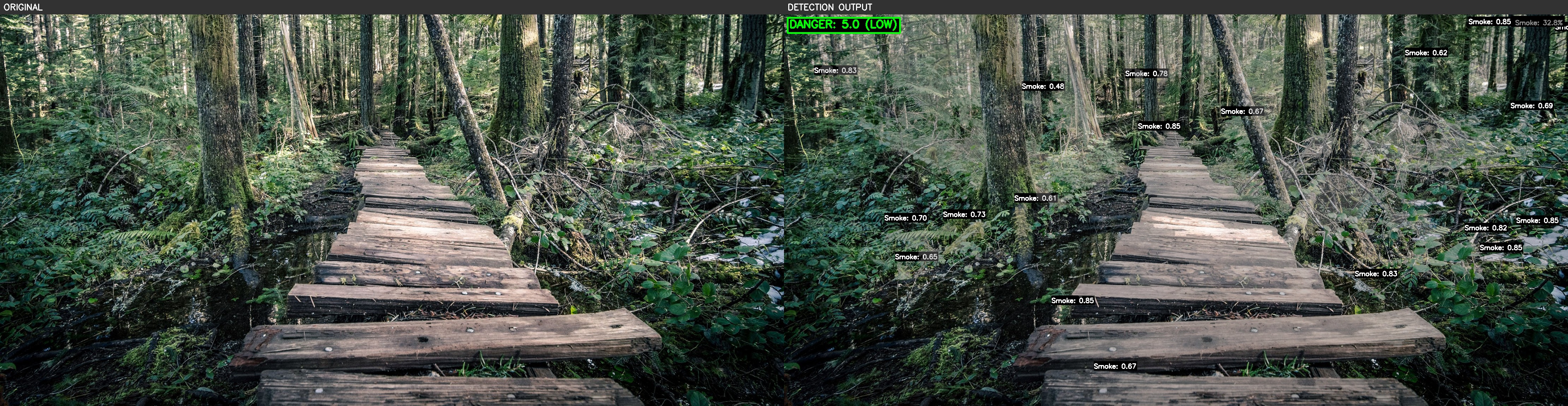
Once a stream is marked High Danger, the system will activate a second model: a YOLOv8 pre-trained object detection model enhanced with HSV color analysis. This model performs real-time, localized fire and smoke analysis, providing visual risk indicators that help first responders assess severity and act accordingly on site.
How we built it
Our EyePop computer vision cloud model was trained on public Kaggle Datasets to identify people in danger when near fire. Then, we created the code to create a criticality index using EyePop's documentation.
Our YOLOv8 model used the pre-trained model made publicly available by Ultralytics. By the help of Claude, we managed to integrate this model to create a real-time analysis of video feed, simulating how it would work with surveillance systems.
Challenges we ran into
EyePop's model was cloud-based meaning it could be unreliable and slow. And the YOLOv8 model potentially flagged the wrong items as fire since it was using HSV analysis. Therefore, to overcome these challenges we proposed a system utilizing both models to complement one another and create a robust fire detecting system.
Accomplishments that we're proud of
Relative high accuracy (with high confidence) in flagging images as High Danger and detecting people + fire using the real-time YOLOv8 video analysis model.
What we learned
The importance of having a locally-based model to serve as a backup against cloud-based models and the advantages of using multiple systems that communicate with each other, leveraging each others capabilities and reducing their individual cons.
What's next for Fire Risk Detection System
Integrating the models into an agentic system to alert authorities and inform first responders based on confidence and danger. This would make sure that the large-scale surveillance system autonomously detects and takes action before anyone gets harmed.
Built With
- claude
- eyepop
- kaggle
- python
- yolov8

Log in or sign up for Devpost to join the conversation.