-
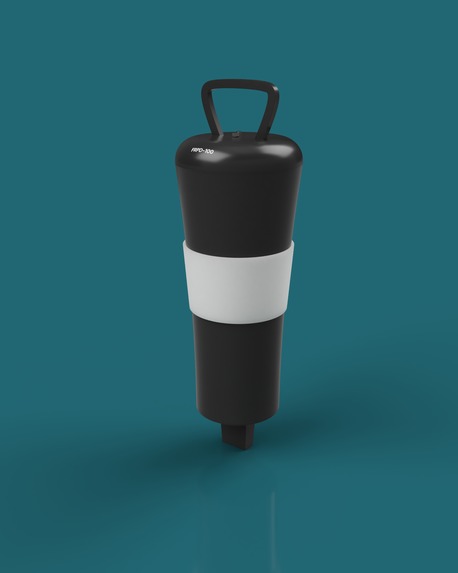
Isometric
-
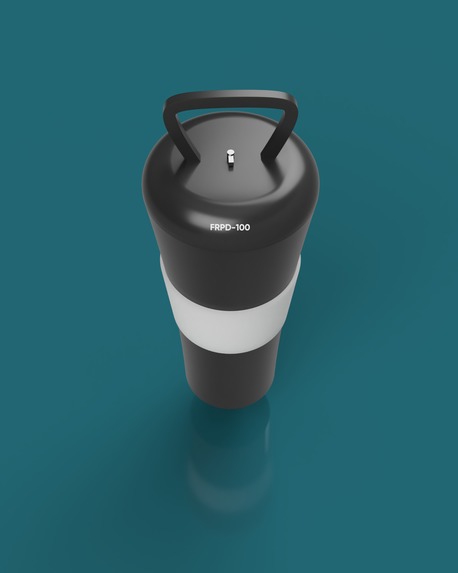
Close up
-
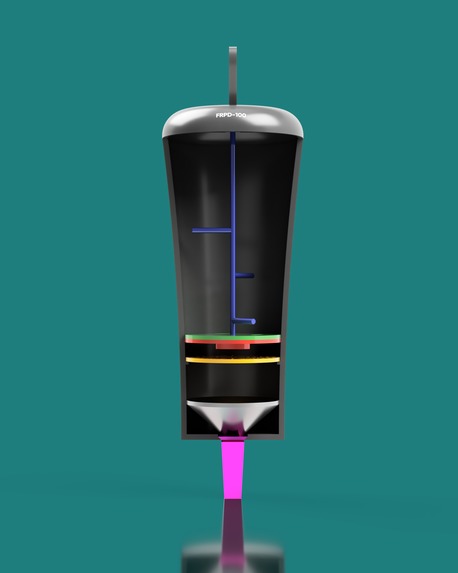
Side Section
-
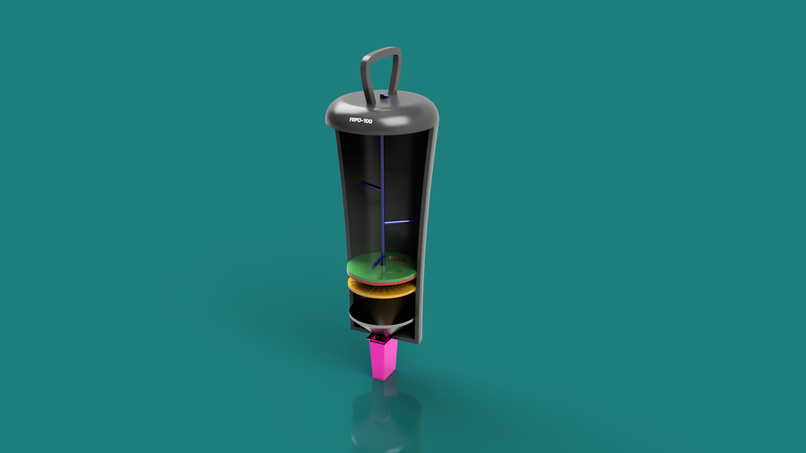
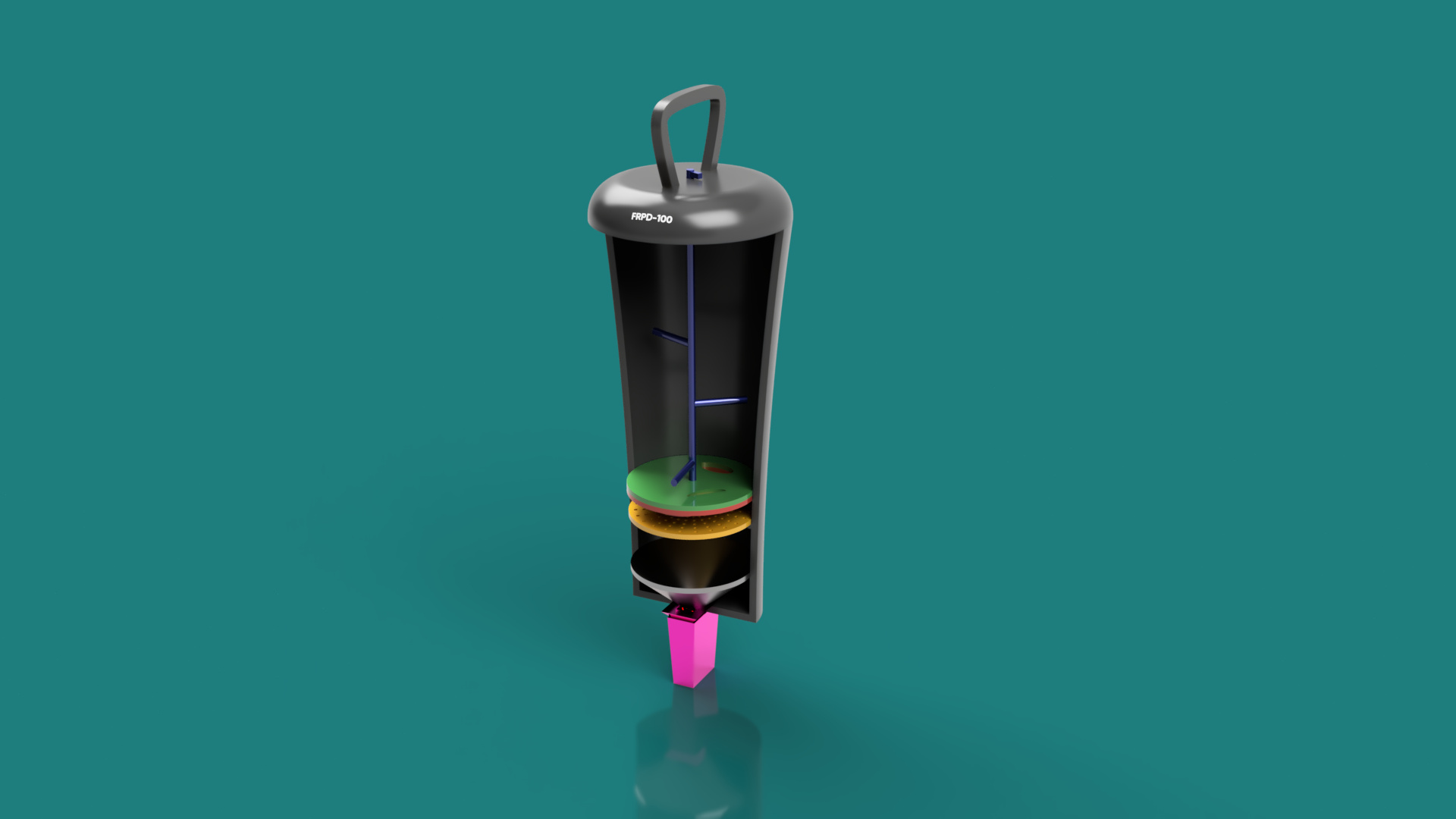
Angled Section
-
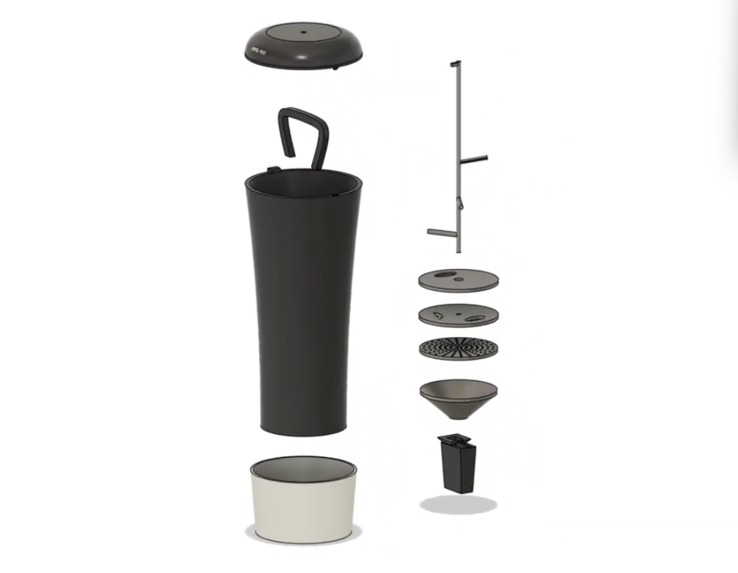
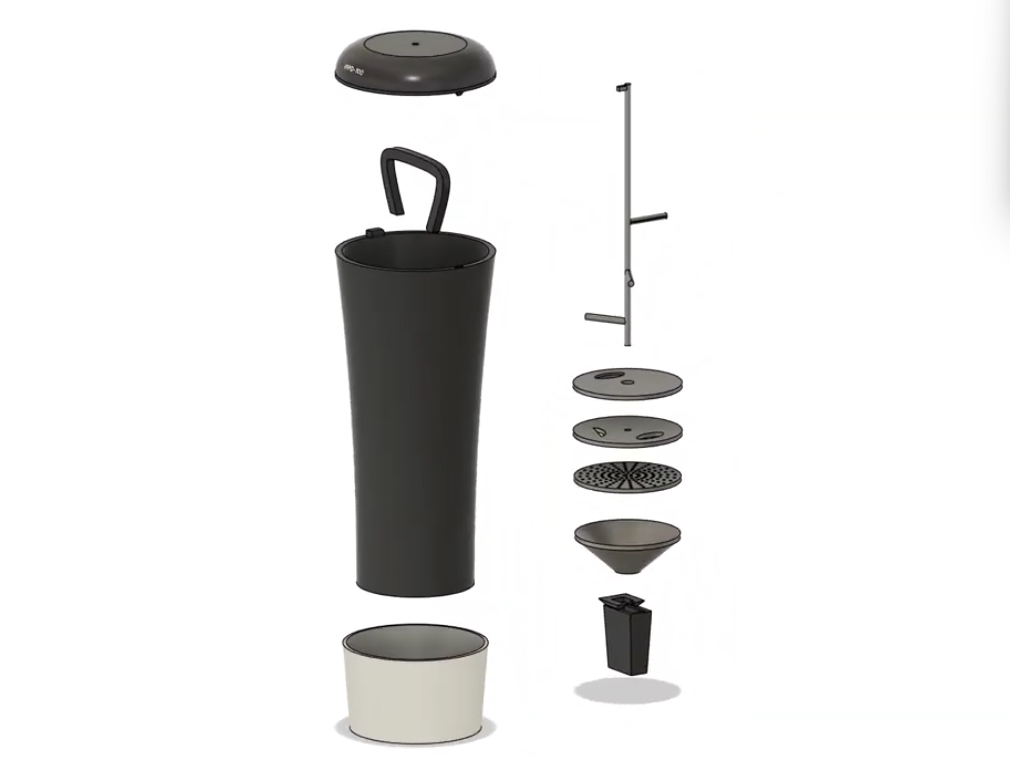
Exploded Assembly
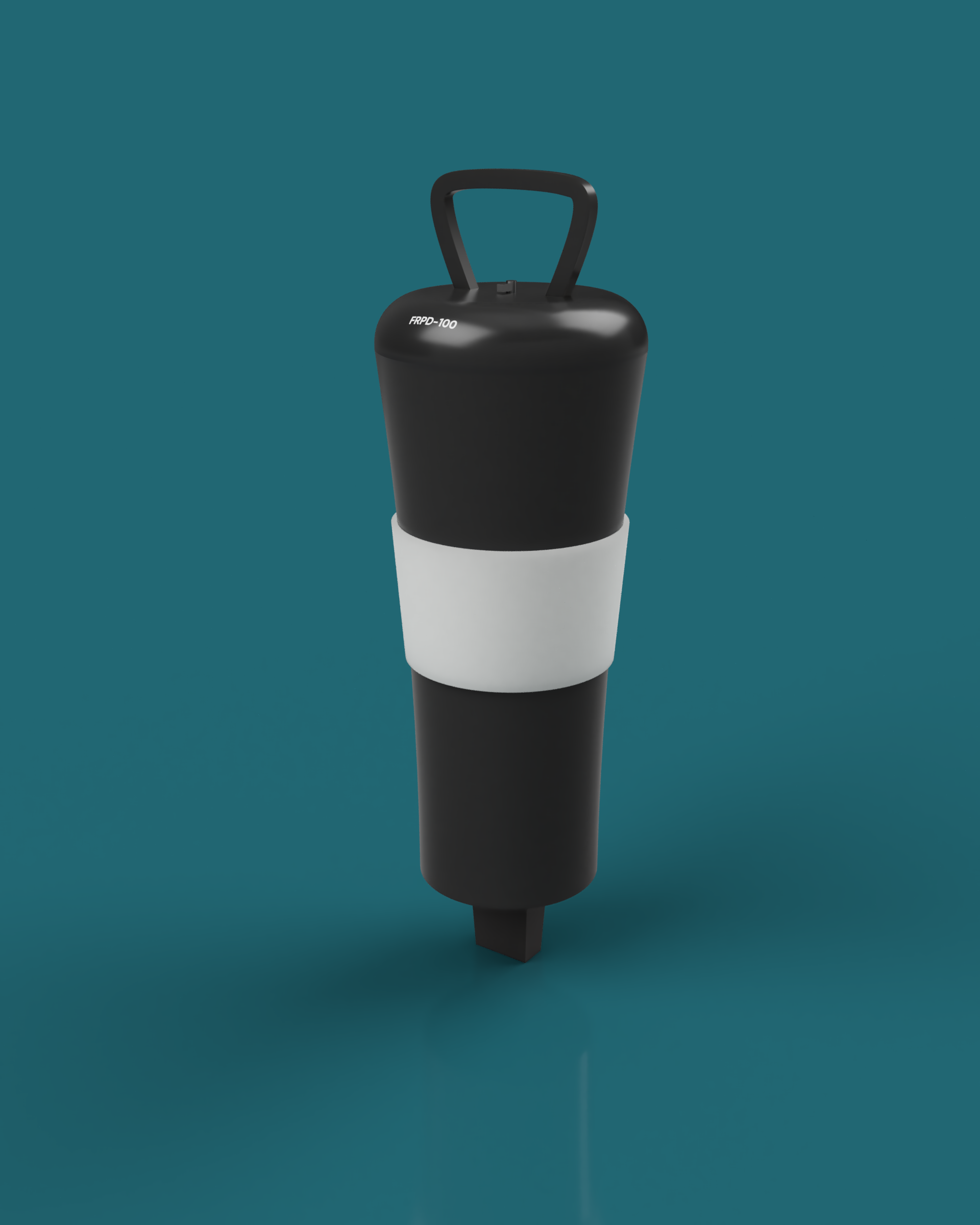
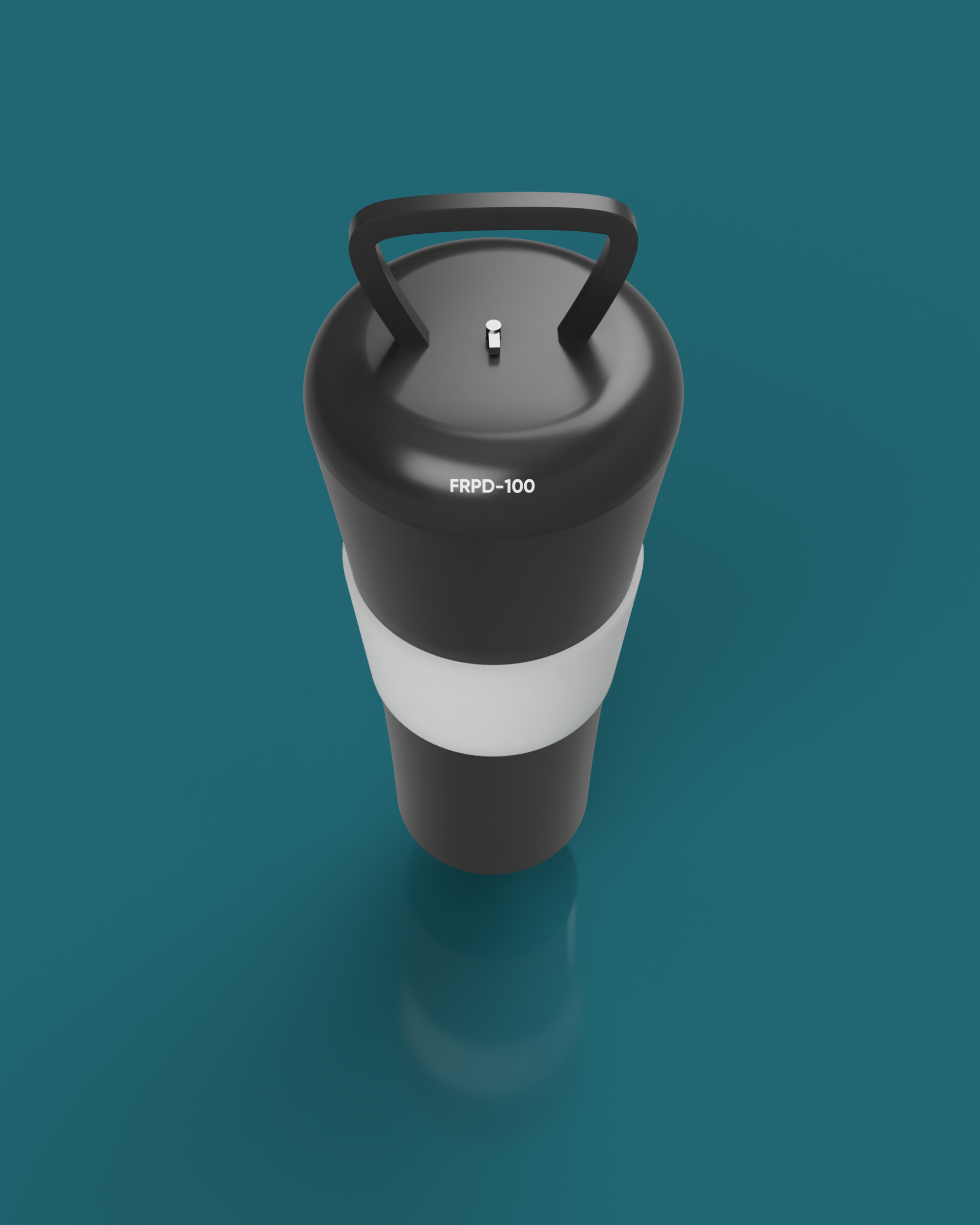
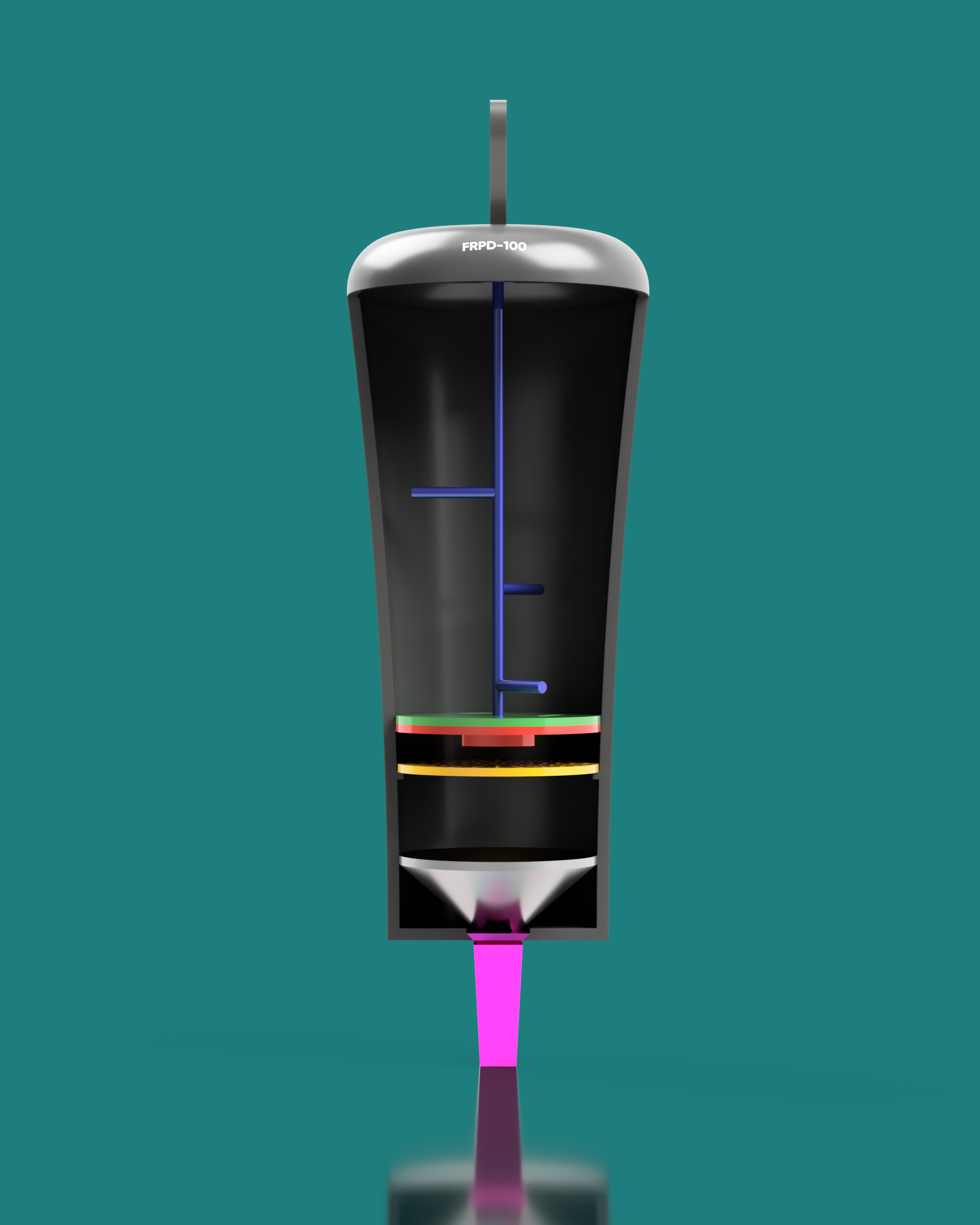
Photos, videos, and full design process and demonstration of FRPD-100 at the link below:
https://docs.google.com/document/d/1srVKSSefen11r5ICPME-tgWlk0WS7VtiZYTJw7k6f7Y/edit?usp=sharing
Inspiration
The project was designed as a tool for firefighters and fire prevention teams. Fire retardant powder has been used to fight wildfires by being sprayed from planes. We researched fire retardant powder and thought it was underused and could be utilized in different situations. Further research showed us that flame retardants, while effective, are often avoided due to pipe clogging and system failure (from IFSI guest speaker).
Our goal: We wanted to create a mechanism similar to the powder being sprayed from planes, but on a smaller scale that could be used to fight fires in different situations. Our goal was to create a specialized powder dispenser with an ergonomic, handheld design, focusing on easy transport and versatility in both pre-fire safety and post-fire cleanup. This tool should be used to create firebreaks or containment lines, helping to slow and contain fires. Another consideration was that it should be a budget-friendly tool with a simple interface that could be utilized by volunteer fire departments (from IFSI guest speaker). With its modular design, the dispenser should allow for easy swapping, cleaning, and part replacement, ensuring efficiency, ease of use, and durability. It should be able to withstand extremely high temperatures. Finally, it should have some mechanism to avoid pipe clogging and system failures.
What it does
The device spreads fire retardant powder on floors and surfaces, creating protective lines (firebreaks and containment lines) that can prevent the spread of fires or mark hazardous areas. It can be used in various environments such as on surfaces inside buildings or in outdoor environments.
How to use it
The cap is opened to allow fire retardant powder to be loaded inside before use. The knob is spun to allow powder to be released at specific increments through the sifter and funneled out of the chute.
Materials
Materials Used:
Body: PEEK
Coating: Silicone-based coating
Grip: Silicone Rubber
Body Material: We selected PEEK, an advanced fire-resistant plastic, for the body due to its properties. PEEK has extremely low heat conductivity, making sure the dispenser remains cool to the touch even after long durations in high-temperature environments. PEEK is specifically developed for high-heat resistance and will only melt at extremely high temperatures. Additionally, It emits very low smoke and gas emissions when exposed to fire, minimizing hazards for firefighters working near flames or extreme conditions.
Insulated Grip: The grip is made from silicone rubber. It provides a comfortable, non-slip hold while offering extra heat insulation. It improves safety and ergonomics during demanding conditions.
Mechanical parts
The FRPD incorporates three key mechanical parts to ensure controlled powder distribution.
Agitator: The agitator is a vertical rod with spokes that can be spun by a knob at the top. It breaks up clumps of powder and prevents clogging. One of the main drawbacks of fire retardant powder is its tendency to clog, causing system failures. The agitator ensures a consistent flow of powder and prevents blockages.
Sifter: The sifter is responsible for evenly dispersing the powder into the funnel. It ensures uniform spread, preventing excessive clumping or uneven distribution on surfaces.
Rotary plate: The rotary plate is a spinning disk mounted on the agitator rod directly above the sifter. It allows the user to manually control the amount of powder released by the sifter. By adjusting the rotary plate, the users can regulate the flow rate, from completely closing off the powder release to setting specific increments for controlled dispersion.
How we built it
Our development began with research on fire retardant powder; how it worked, where it was used, where it could be used, and the main problems with using it. We then researched different types of powder dispensers. From there, we created multiple sketches of individual components and how they would fit together to meet our constraints. Once we refined the design, we created CAD models of each component in Fusion and integrated them into a full assembly.
Manufacturability
The FRPD-100 is designed with manufacturability in mind, with a focus on both cost-effectiveness and ease of production. Its simple mechanical design eliminates the need for electronic components, significantly reducing complexity, increasing reliability and durability, especially in high-heat environments. The modular structure allows for easy assembly, part replacement, and cleaning, extending the lifespan of the product. The body is made from PEEK, which can be manufactured through injection molding or CNC machining. Additionally, the rotary plate, agitator, and sifter are made from steel and can be easily fabricated using standard machining and molding techniques, making the overall manufacturing process scalable for larger production runs.
Thermal simulations
We simulated FRPD-100 with a thermal strain test at 500 degrees Celsius. The body performed very well, experienced minimal displacement and strain, showing that it can remain durable in high temperature situations. Conversely, the handle was displaced by 1.66 mm. We are satisfied with our ability to find a weak spot in our design. When improving our design in the future, the strength of the handle will be the first priority.
Challenges we ran into
One of the biggest challenges was creating a modular design that could be easily maintained and have parts replaced. Another challenge was finding a balance between simplicity of the design and having all of the necessary features.
Accomplishments that we're proud of
We are particularly proud of the overall design as it prioritizes modularity and simplicity. Users can replace and clean parts easily, enhancing the longevity of the product and its usability in demanding situations.
What we learned
We gained valuable insights into product design, mainly the importance of balancing complexity and functionality. We learned a lot about the engineering design process, finding a problem, coming up with an idea, and trying to achieve several goals with our design. We also improved our skills in CAD modeling and assembly integration.
What's next for FRPD-100
We would like to improve our design in the future. We saw a flaw in the durability of the handle and would like to redesign it. Additionally, we are interested in scaling up the size of the tool and potentially creating a larger version.
Built With
- adobe-fresco
- autodesk-fusion-360

Log in or sign up for Devpost to join the conversation.