
Inspiration
We were inspired by the real-world stress that healthcare workers face when trying to quickly triage patients in clinics and disaster scenarios. We wanted to create a tool that helps automate part of that judgment process in a safe, accessible way, especially for situations without full hospital infrastructure or around-the-clock staff.
What it does
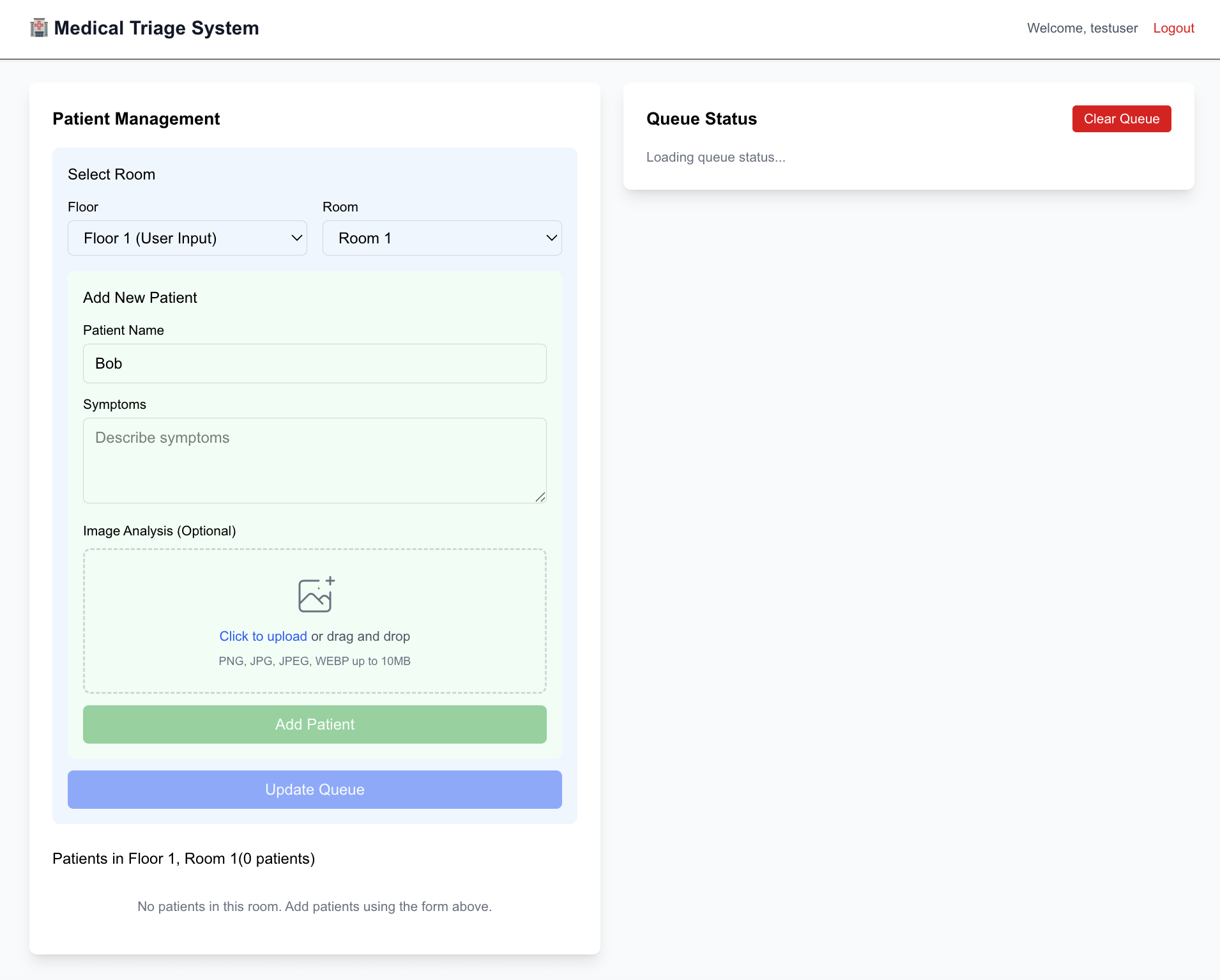
TriageAI is a lightweight web application that allows users to submit symptoms, upload images, and receive an AI-generated assessment. It returns a suggested urgency level, possible diagnosis, and care advice. The system can also process images using a vision model to support the diagnosis. The entire system works with a Python backend and a modern React (Next.js) frontend.
How we built it
The backend is written in Python using FastAPI and contains the core triage logic, image analysis via OpenAI Vision API, and integration with a MedicalTriageAssistant class that performs rule-based inference. The frontend is built with Next.js and React, featuring a clean UI that allows users to enter symptoms or upload medical images. Axios handles communication between frontend and backend, and all state is managed using hooks.
Challenges we ran into
We faced trouble with CORS settings between the frontend and backend during local development. We also had difficulty managing multiple backends and environment variables, and syncing asynchronous components with dynamic user input. Deploying both parts together smoothly also required troubleshooting.
Accomplishments that we're proud of
We built a fully functional AI triage system from scratch in under 24 hours, integrating image input, AI response generation, and multi-route UI with user feedback. We’re especially proud of combining modern frontend technologies with Python tooling for a clean, accessible healthcare prototype.
What we learned
We learned how to deploy and debug full-stack applications quickly, how to use the OpenAI Vision API for medical-style tasks, and how to keep frontend/backend interfaces minimal but effective. We also practiced Git workflows under stress and made fast architectural decisions.
What's next for TriageAI
We’d like to connect this to a real database for patient history, add authentication with session persistence, and integrate more robust language translation features for global accessibility. We'd also explore adding offline support and mobile responsiveness to make it usable in more clinics.
Built With
- axios
- express.js
- fetch-ai
- flask
- jwt
- mongodb
- next.js
- npm
- open-ai
- python
- tailwind-css
- typescript
- vercel


Log in or sign up for Devpost to join the conversation.