-
-
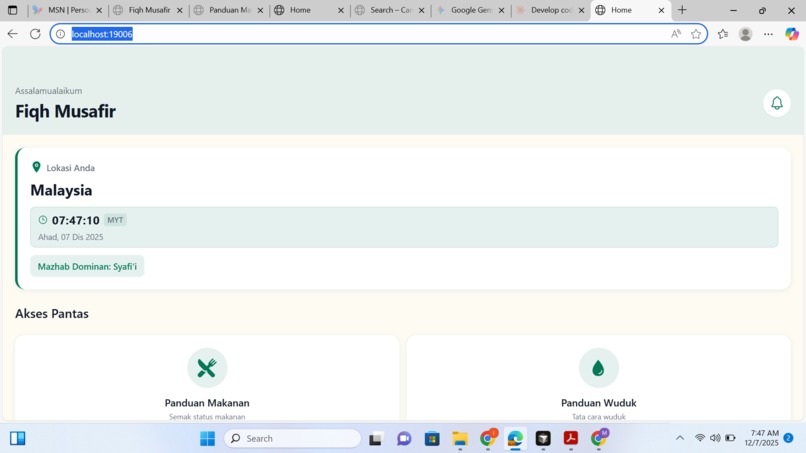
main menu
-
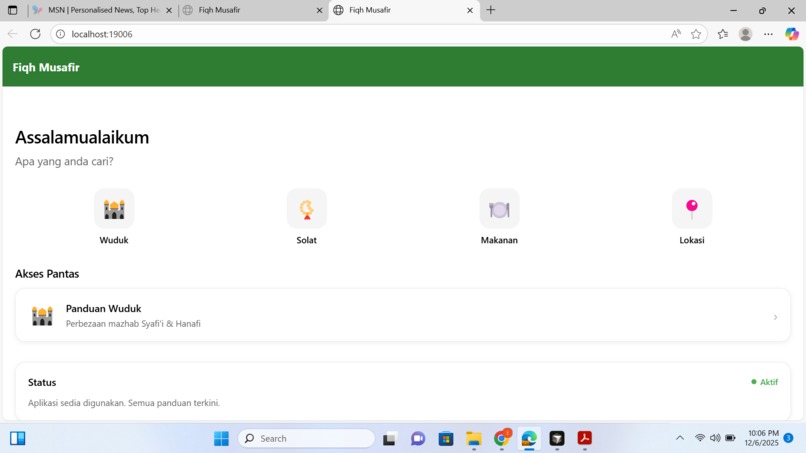
main menu
-
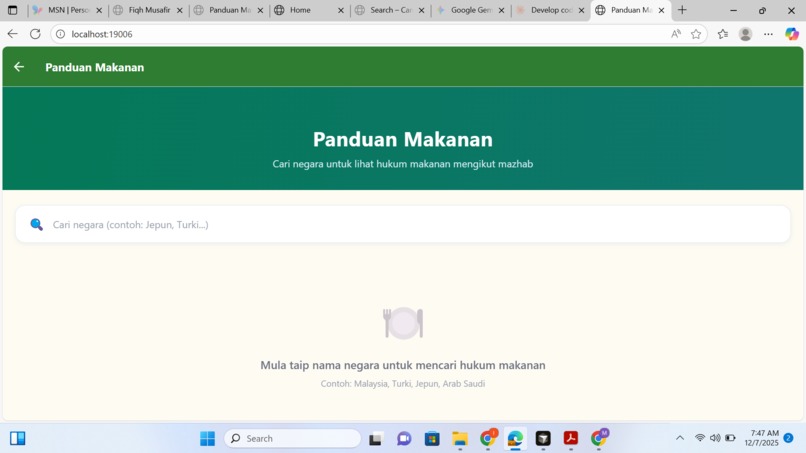
panduan makanan page
-
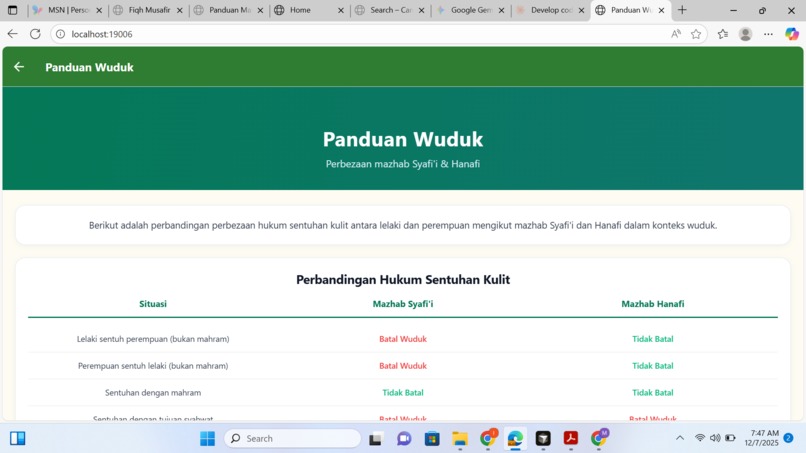
panduan wuduk page


Inspiration
The idea for Fiqh Musafir was born from the common confusion ("was-was") faced by Muslim travelers—especially from Southeast Asia (Shafi'i school)—when visiting countries with different Islamic schools of thought (Mazhabs) or non-Muslim majorities.
Travelers often ask: "Can I eat seafood here according to local Fiqh?", "Is this meat permissible?", "How does the prayer style differ in this country?"
span_0For example, seafood rules differ significantly in the Hanafi school (Turkey/Pakistan)span_0 span_1compared to the Shafi'i school, and ingredients like Mirin are a major concern in Japanspan_1. We wanted to build a "Pocket Sharia Advisor" to answer these questions instantly.
What it does
Fiqh Musafir is a smart web application that adapts religious guidance based on the user's destination. Its core features include:
- span_2Location-Based Mazhab Detection: Users search for a country (e.g., "Turkey" or "Morocco"), and the app identifies the dominant Mazhab (e.g., Hanafispan_2 span_3or Malikispan_3).
- "Traffic Light" Food Guide: A visual safety system for food ingredients based on local culture and Fiqh:
- Worship (Ibadah) Context: Provides quick tips on prayer variations and Wudu rules relevant to the location.
How we built it
We prioritized a lightweight, fast, and user-friendly experience:
- Frontend: Built with React for a responsive user interface.
- Styling: Used Tailwind CSS to create a "Premium Modern Islamic" aesthetic (Emerald & Teal themes) that feels calm and professional.
- Data Logic: We converted complex theological data from Fiqh texts and PDFs into structured JSON objects. This allows the app to dynamically filter rules based on the user's selected location.
- AI Assistance: Leveraged Cursor (AI) to accelerate the development of the UI components and data mapping logic.
Challenges we ran into
The biggest challenge was Data Modeling for Theology. Islamic jurisprudence (Fiqh) is nuanced and not always binary. span_8Translating scholarly differences (Khilaf)—such as the status of seafood in the Hanafi schoolspan_8 span_9or the use of Rennet in the Westspan_9—into simple code logic without oversimplifying or violating Sharia principles was difficult. We had to design a flexible data structure that could handle these "grey areas" (Syubhah) effectively.
Accomplishments that we're proud of
We are proud of the UI/UX Design. We successfully turned heavy text-based religious rules into an intuitive visual interface. The "Traffic Light" system makes it easy for travelers to make quick, confident decisions without reading lengthy articles.
What's next for Fiqh Musafir
- GPS Auto-Detection: Automatically serving content based on the user's real-time geolocation.
- Prayer Times API: Integrating accurate local prayer times.
- Community Contributions: Allowing scholars or locals to submit food tips for their specific regions.
Built With
- html5
- html5-please
- javascript
- lucide-react
- react
- tailwind-css

Log in or sign up for Devpost to join the conversation.