-
-
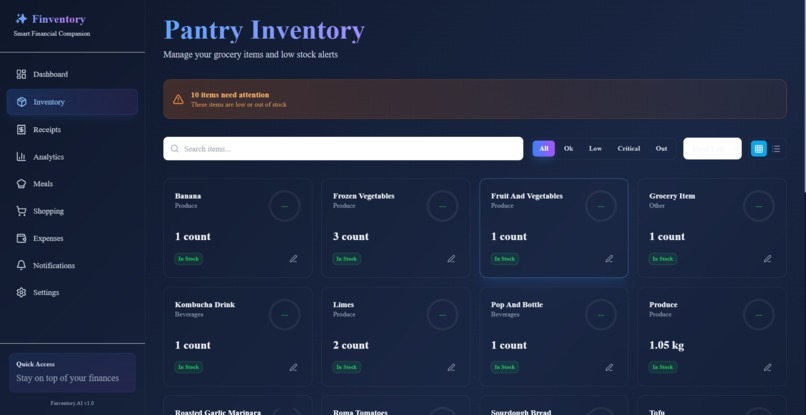
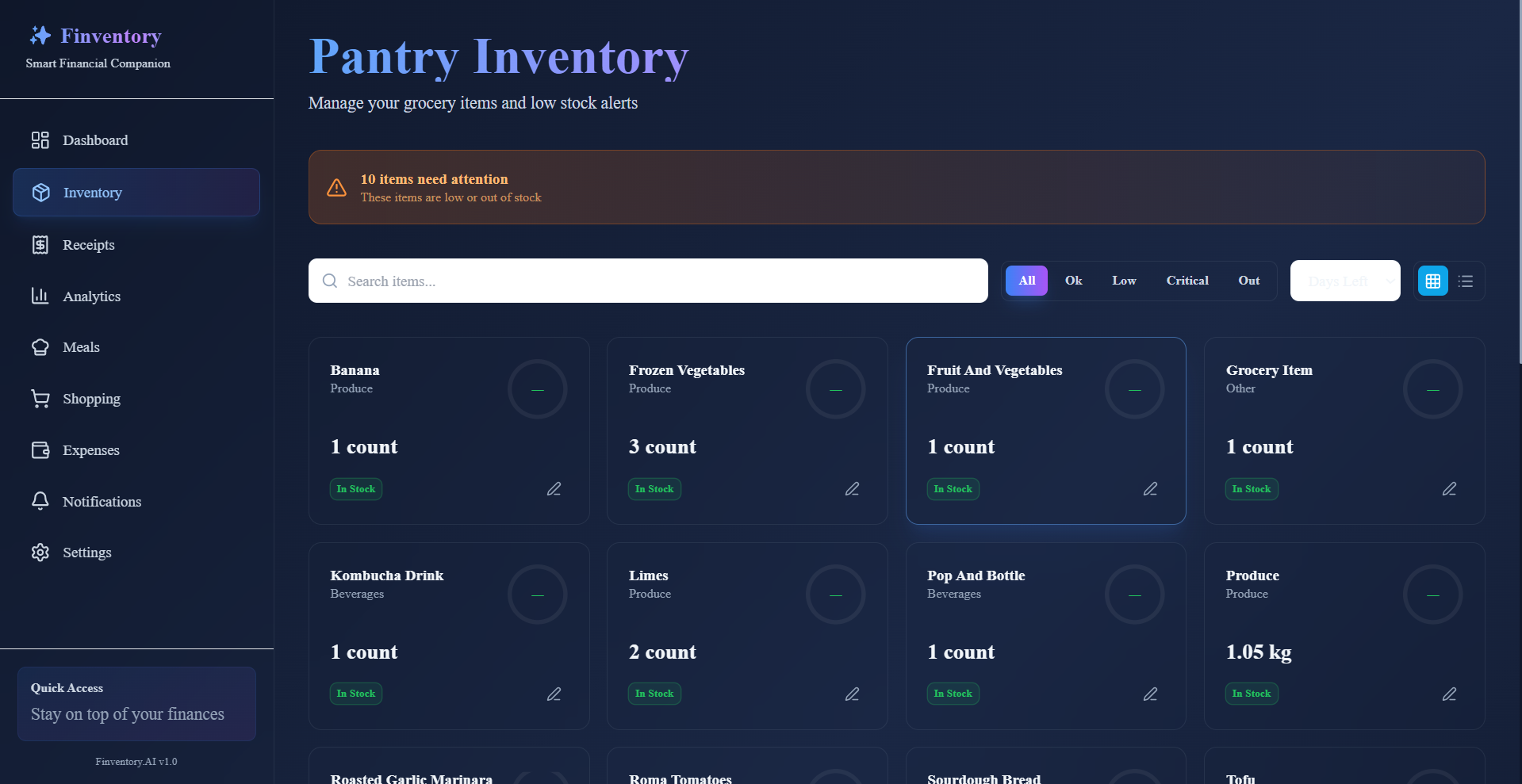
Panty Items
-
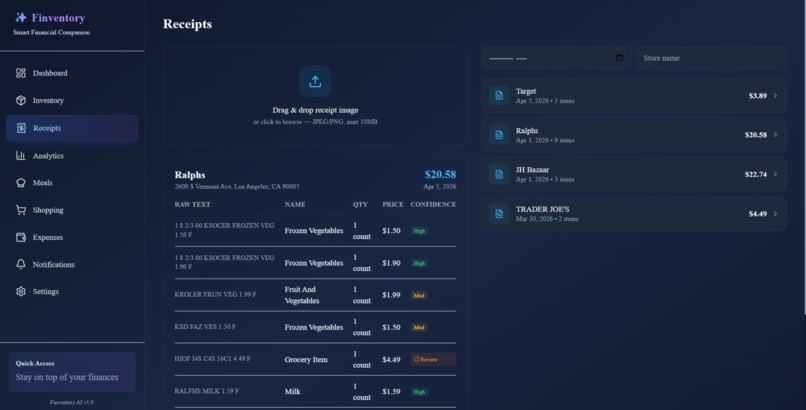
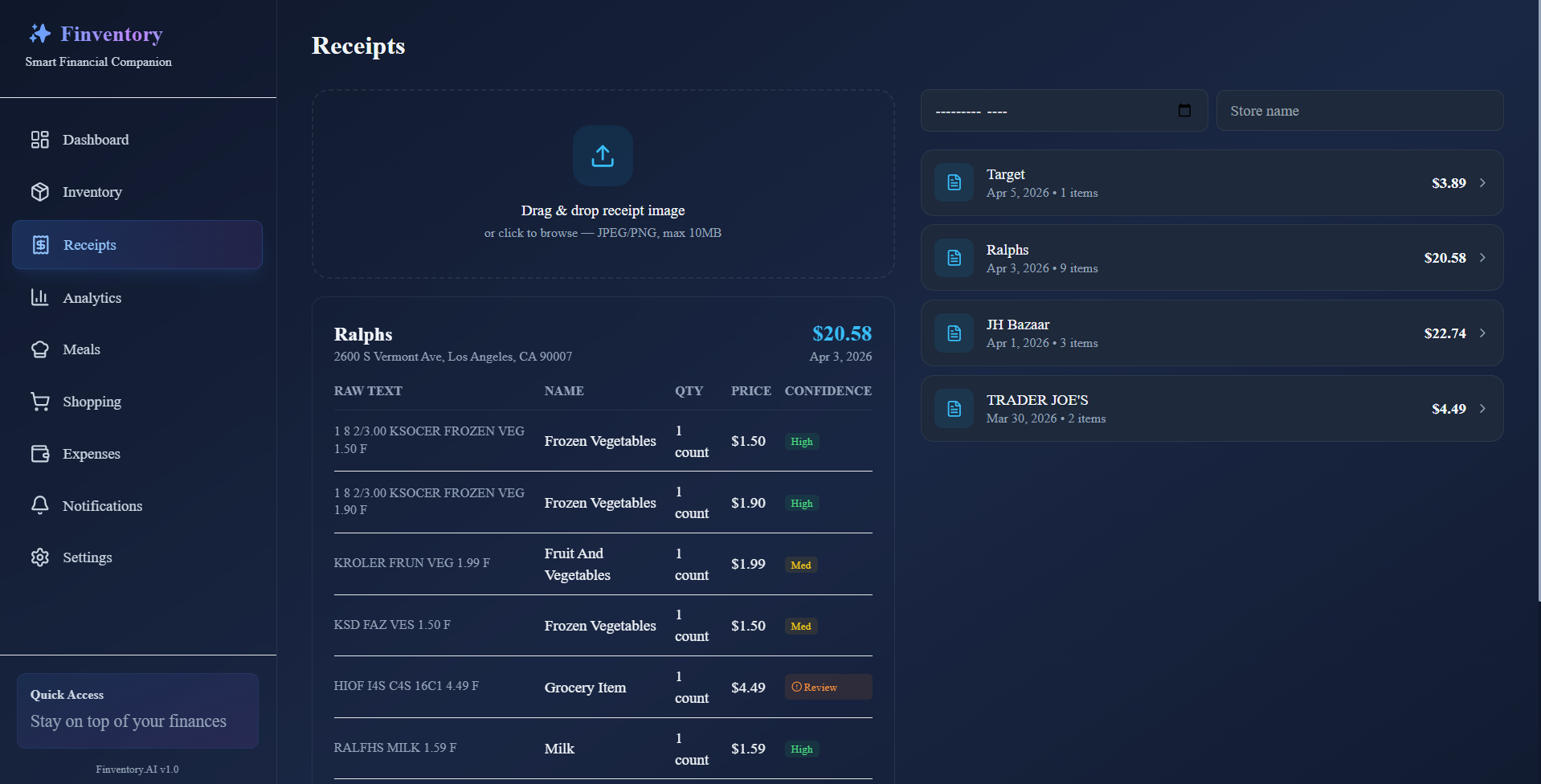
Check uploaded Receipts
-
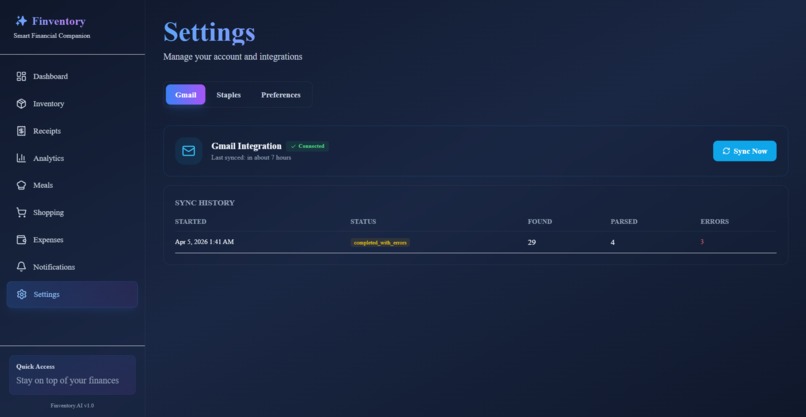
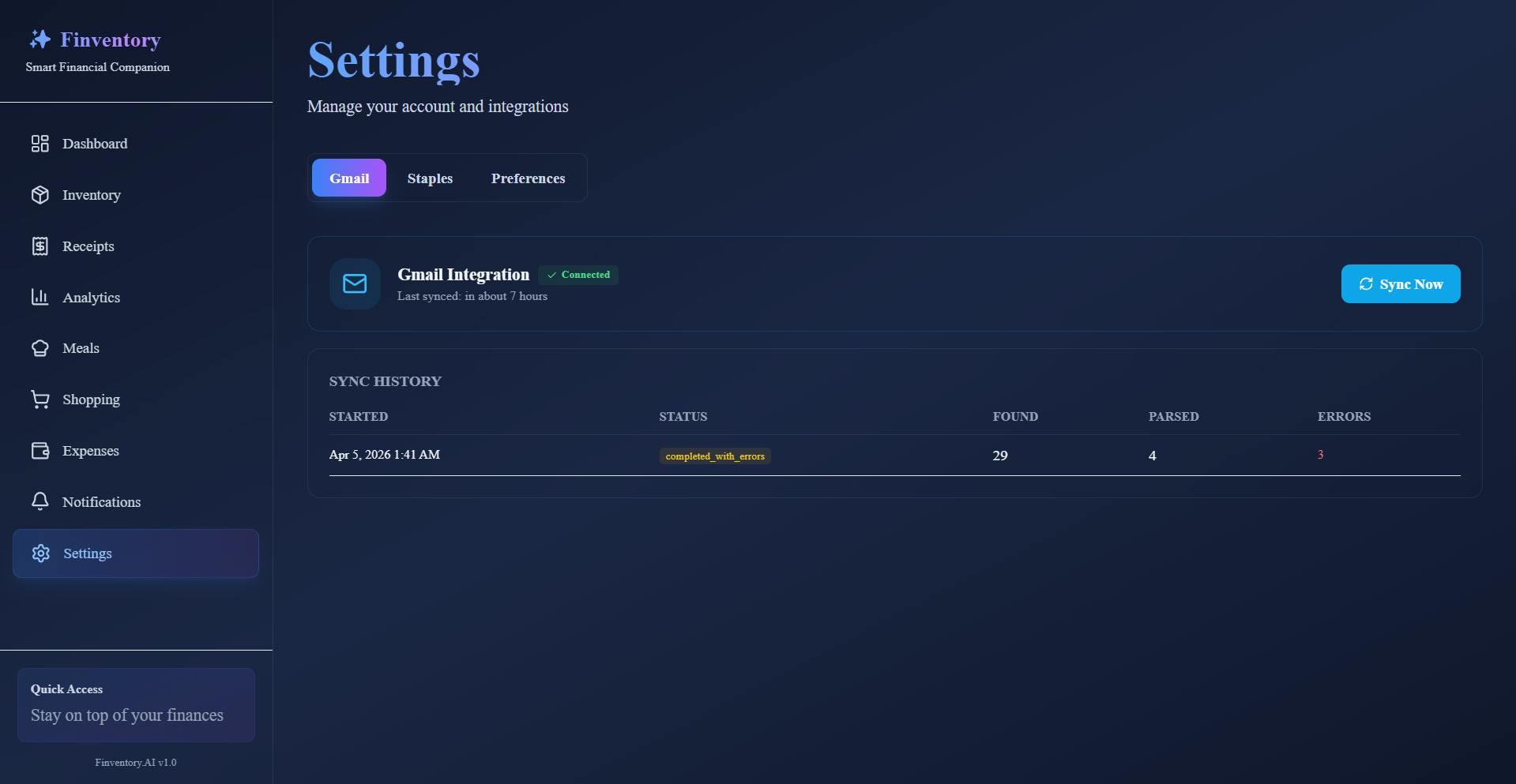
Check your Email syncs
-
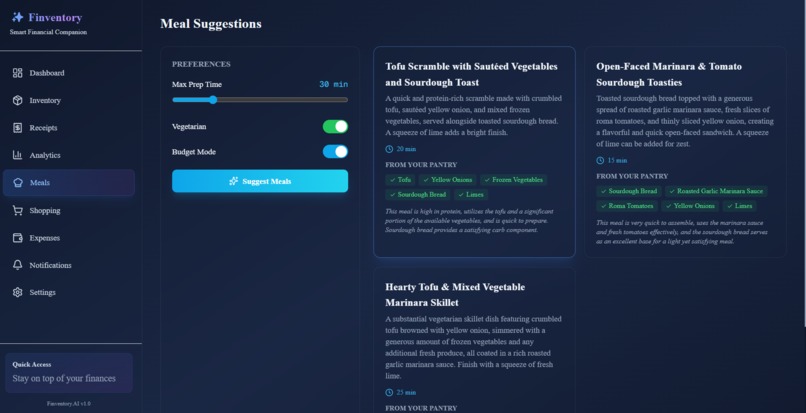
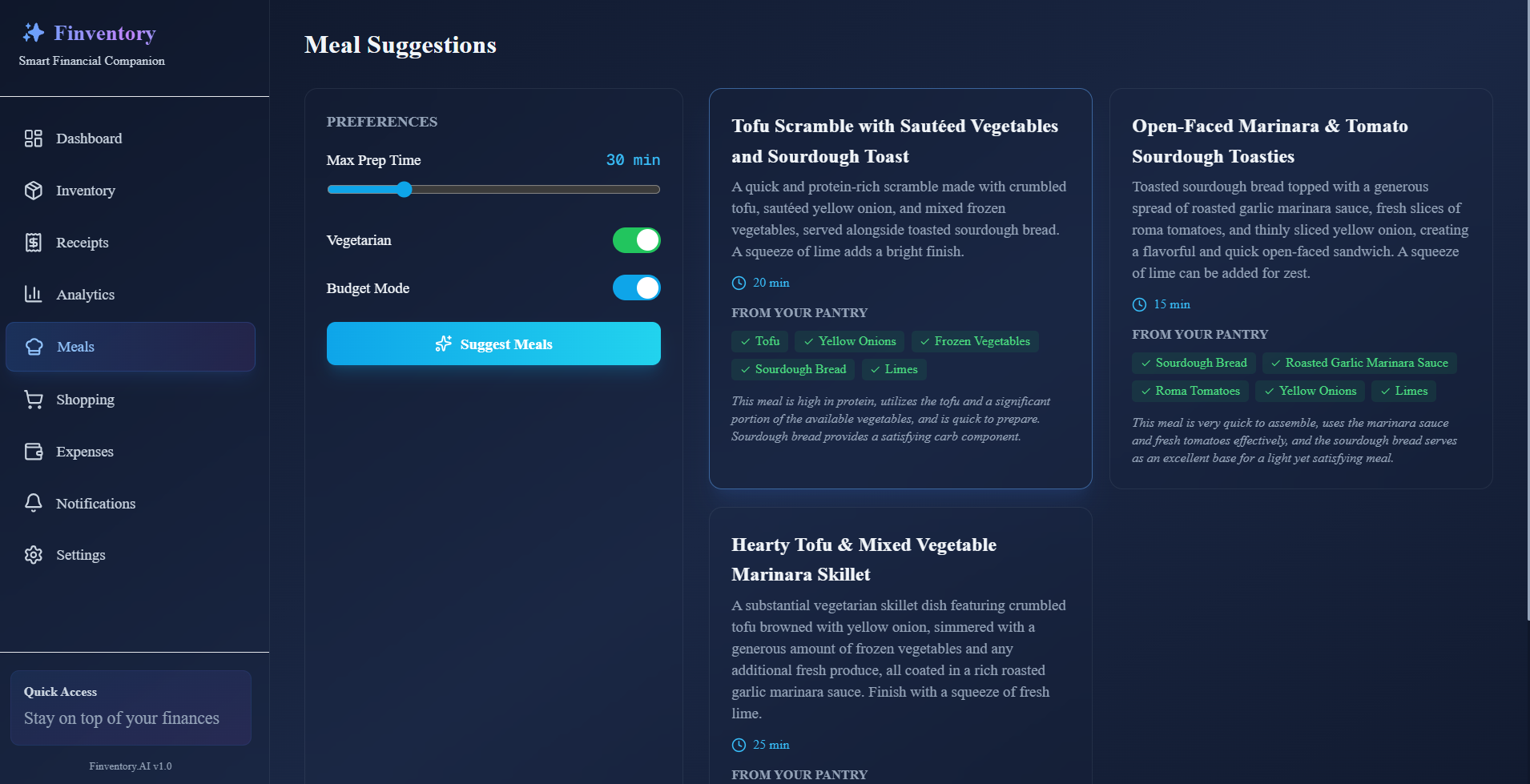
Get instant meal suggestions from available items.
-
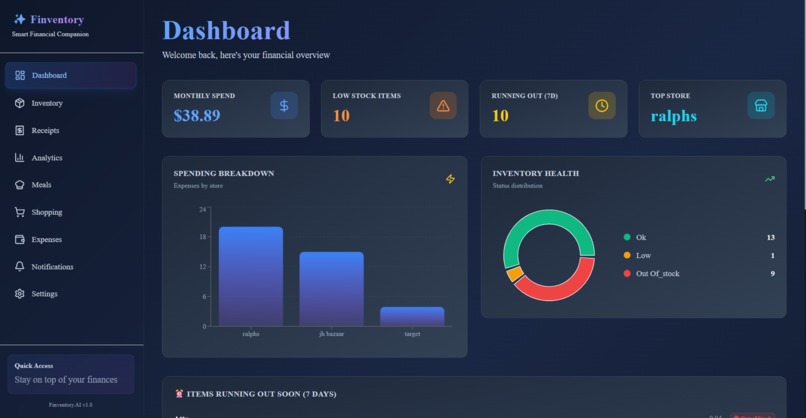
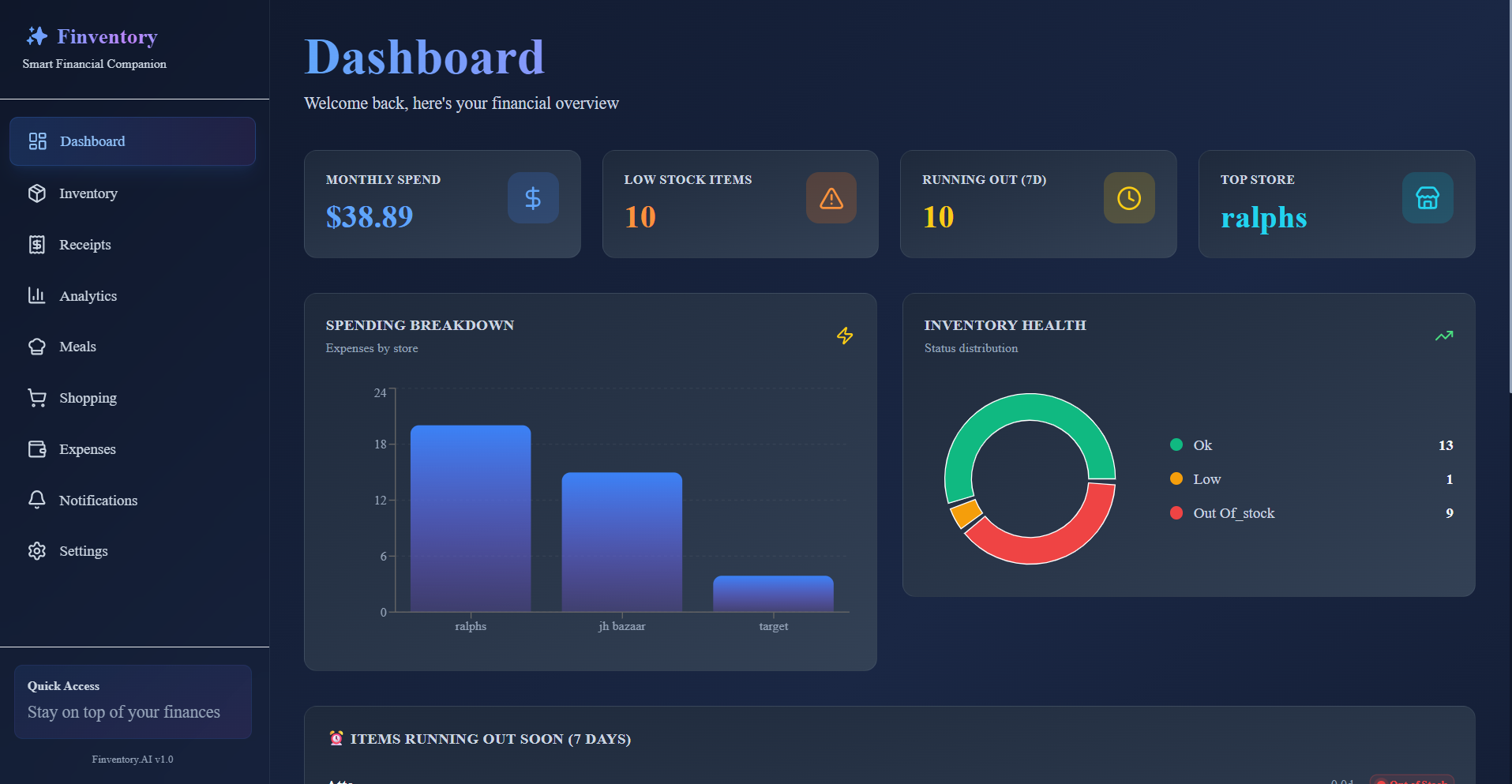
Dashboard & Analytics
-
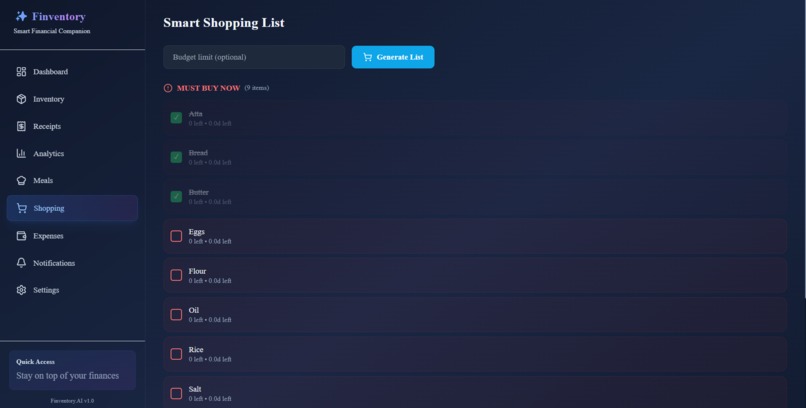
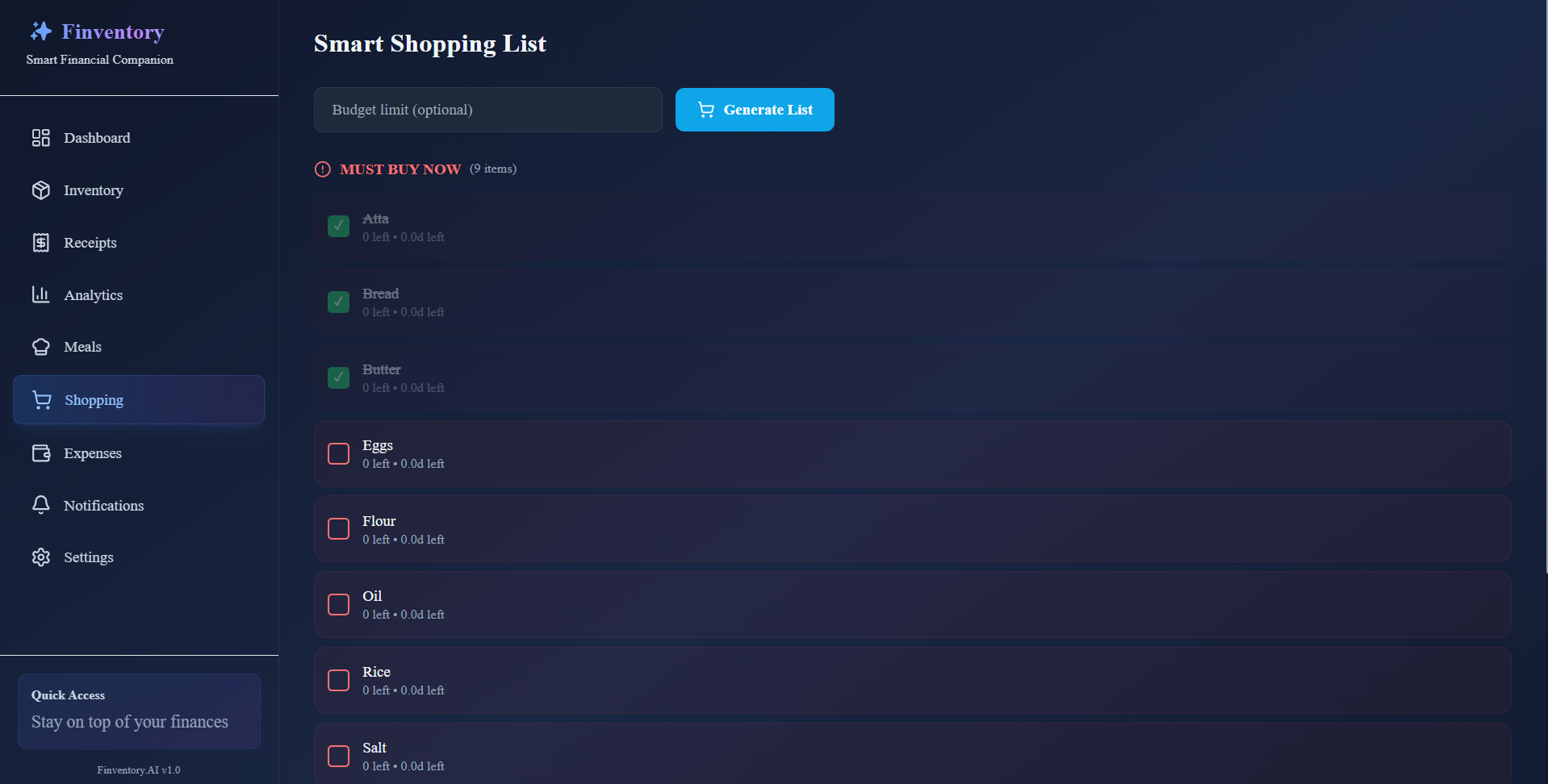
Generate quick list of items to be bought
Inspiration
Both of us are college students who constantly juggle budgeting, grocery shopping, and keeping track of what we actually spend. We realized how easy it is to lose track of receipts, forget recurring expenses, and buy items we already have at home. We wanted to build a system that makes expense tracking feel automatic instead of tedious, while also helping people manage their pantry and make smarter food decisions.
What it does
Finventory.AI is an Claude-AI-powered pantry and expense management system that turns receipts and Gmail emails into structured financial and inventory data. Users can upload receipt images to automatically extract expenses with Claude OCR, update pantry inventory, and track item quantities. The app also pulls expense-related Gmail emails to make sure digital purchases are covered too. On top of that, Finventory.AI provides analytics, low-stock reminders, price insights, and meal suggestions with Claude LLM based on existing ingredients, so users can save time, reduce waste, and spend smarter.
How we built it
We built Finventory.AI as a full-stack system with a FastAPI backend, MongoDB for storage, and an AI extraction pipeline for receipts and email-based expenses. The backend organizes data into users, receipts, inventory states, price observations, notifications, and unified expense records. We designed the system so that onboarding creates the user profile and pantry baseline, receipt uploads populate inventory automatically, and scheduled jobs handle stock decrements and reminders. For the Gmail integration, we added a sync flow that fetches expense-related emails, parses them into structured records, and merges them into a single expense feed. On the frontend, we built a modern dashboard with inventory views, analytics, receipt review, meal suggestions, shopping lists, and Gmail integration controls.
Challenges we ran into
One major challenge was designing a backend that could connect inventory, expenses, analytics, and reminders without becoming overly complicated. Another challenge was handling noisy receipt data and making sure extracted line items were normalized into consistent pantry items. Gmail parsing also required careful logic because email formats vary a lot, so we had to balance deterministic parsing with AI fallback. A final challenge was making the whole product feel cohesive in the frontend while supporting many different workflows without overwhelming the user.
Accomplishments that we're proud of
We’re proud that Finventory.AI is more than just a receipt scanner — it’s a connected system that updates inventory, tracks spending, predicts shortages, and suggests meals from what users already have. We also built a unified expense layer that combines physical receipts and Gmail-based digital expenses into one view. Another accomplishment is the depth of the product architecture: it includes onboarding, OCR, inventory prediction, notifications, shopping intelligence, and AI-powered meal suggestions all working together.
What we learned
We learned how much thoughtful system design matters when building AI products that need to feel useful in daily life. We also learned how important it is to normalize messy real-world inputs like receipts and emails into structured data that can power better decisions. On the frontend side, we learned how to present complex functionality in a way that still feels intuitive, fast, and polished. Most importantly, we learned how AI can be used to remove friction from repetitive tasks instead of just adding another chatbot.
What's next for Finventory.AI
Next, we want to improve receipt parsing accuracy, expand support for more expense sources, and add richer budgeting features like category limits and spending goals. We’d also like to make the meal recommendation engine more personalized and support more household-aware inventory logic. In the future, we could add barcode scanning, mobile-first receipt capture, deeper retailer insights, and collaborative household accounts so multiple people can share one pantry and budget view.
Built With
- apscheduler
- axios
- claude
- css
- docker
- fastapi
- google-gmail-oauth
- mongodb
- ngrok
- node.js
- python
- react
- tailwind
- typescript
- zustand

Log in or sign up for Devpost to join the conversation.