Inspiration
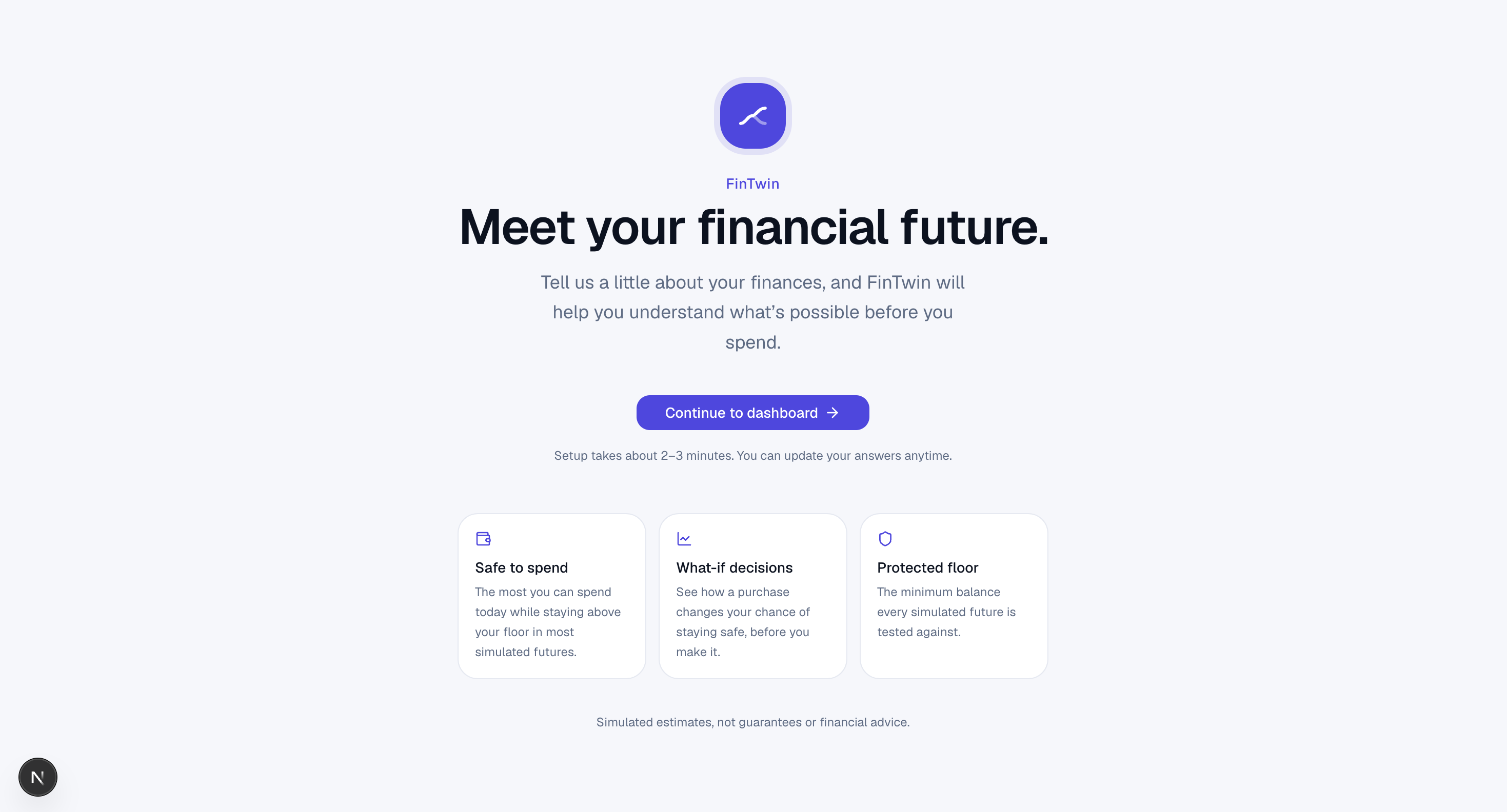
We've all checked our bank account and thought, "I have enough money, but can I actually afford this?" Just because you have money in your checking account doesn't mean it's all safe to spend. Rent might be due before your next paycheck, a subscription could renew next week, or your car might suddenly need a repair. Most budgeting tools look at what you've already spent. I wanted to build something that looks ahead. That's why I created FinTwin — Your Financial Future, Before It Happens. It's a tool that helps people understand how their financial decisions could affect them before they spend money.
What it does
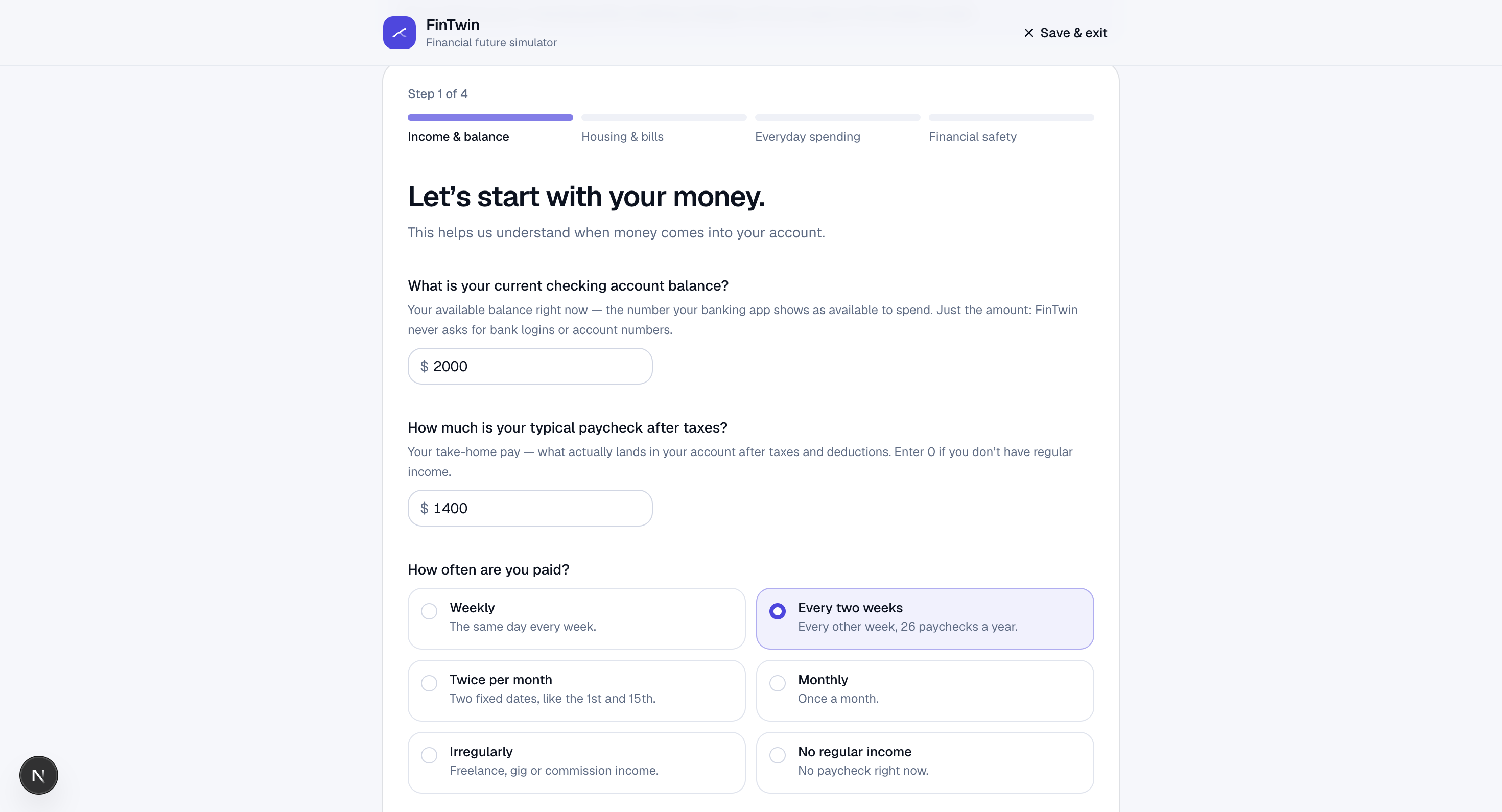
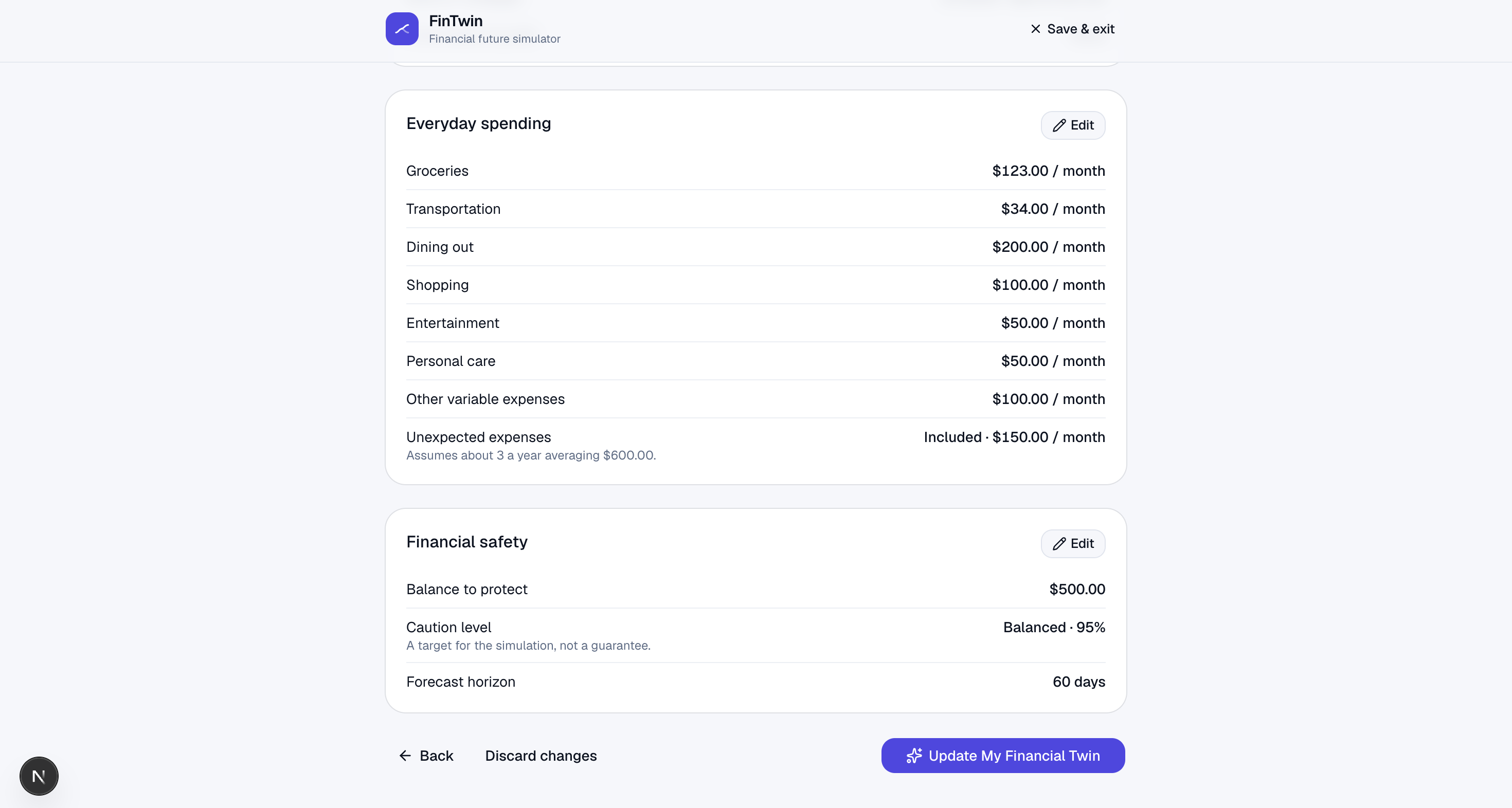
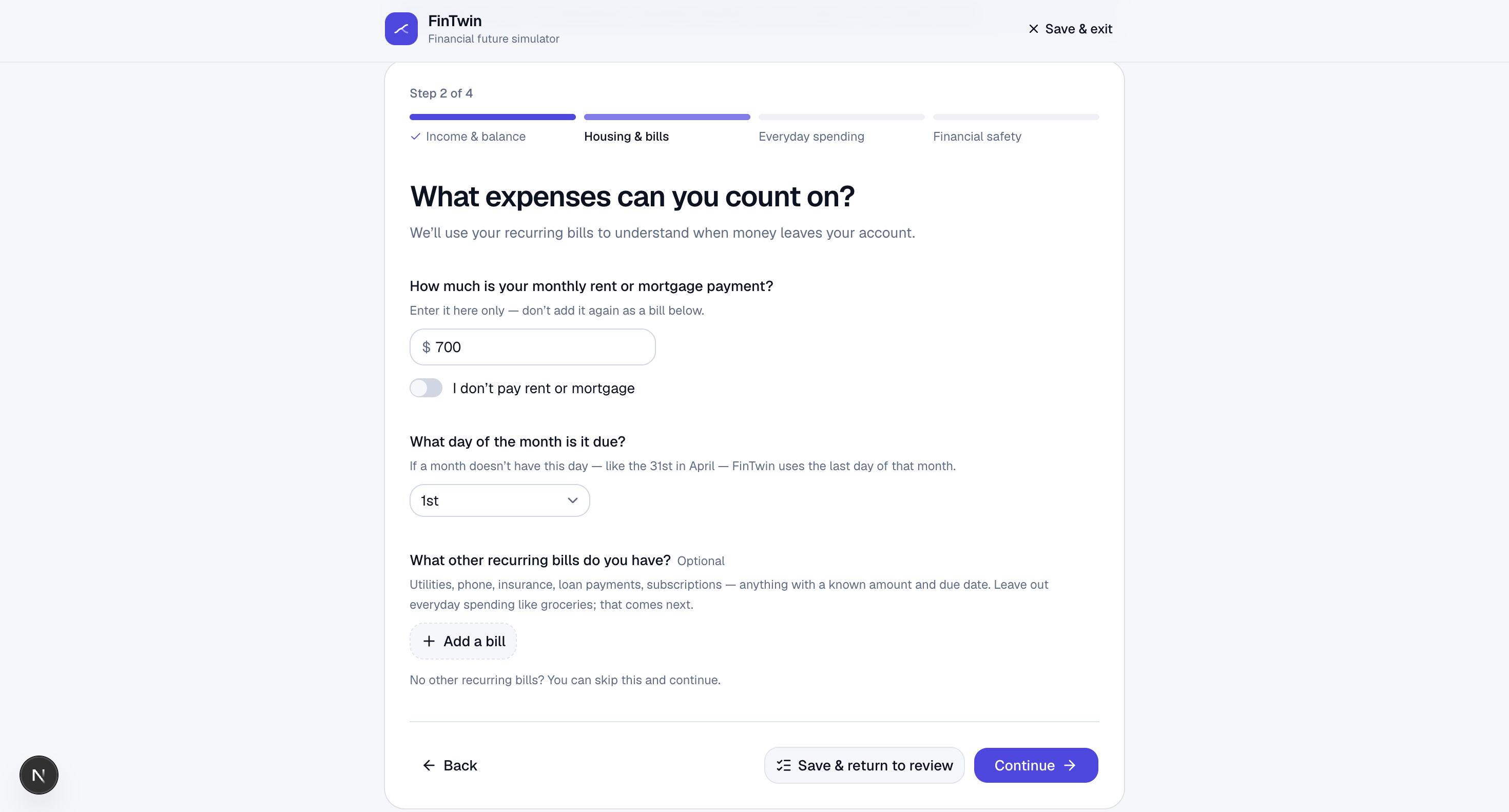
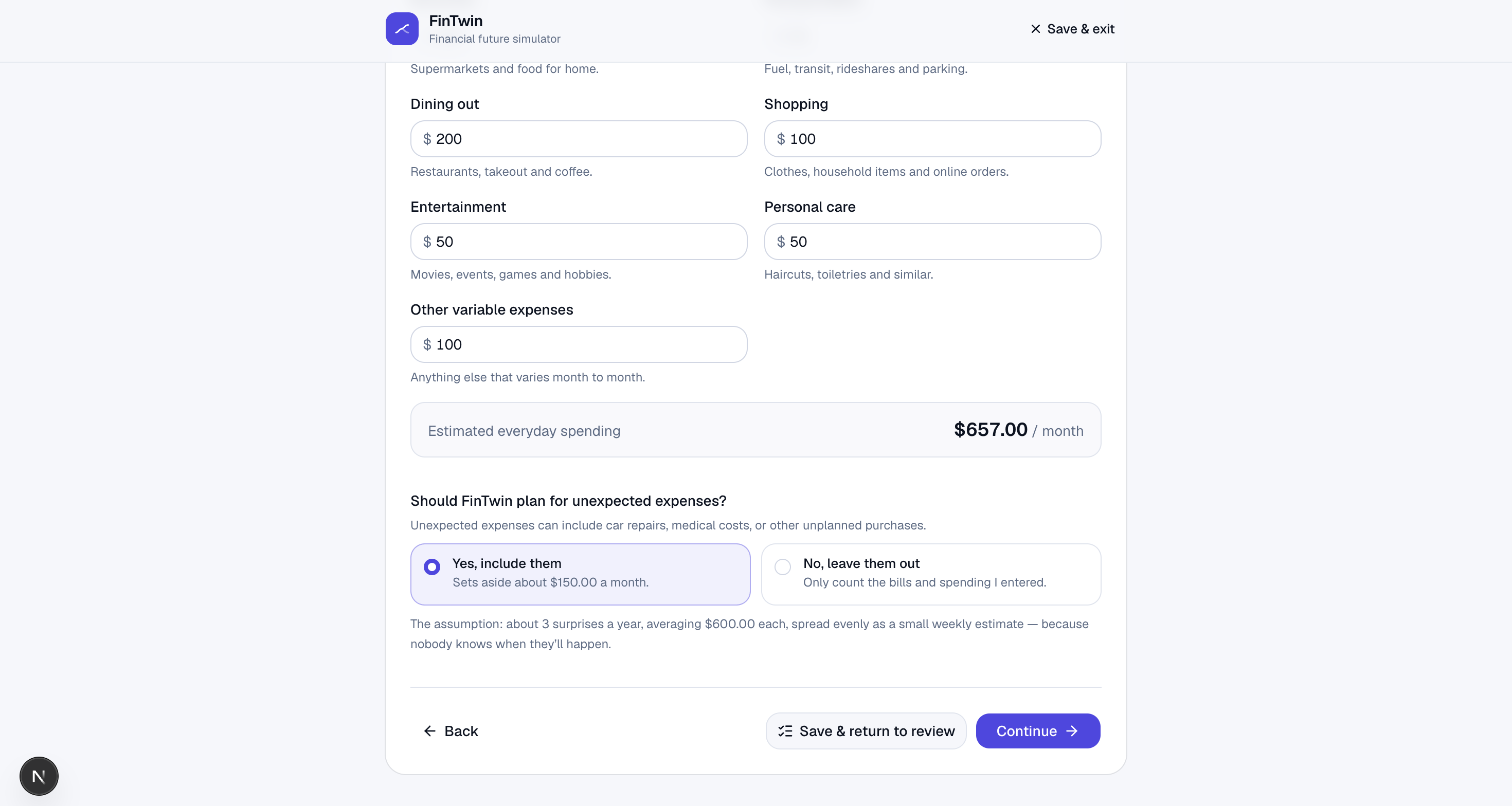
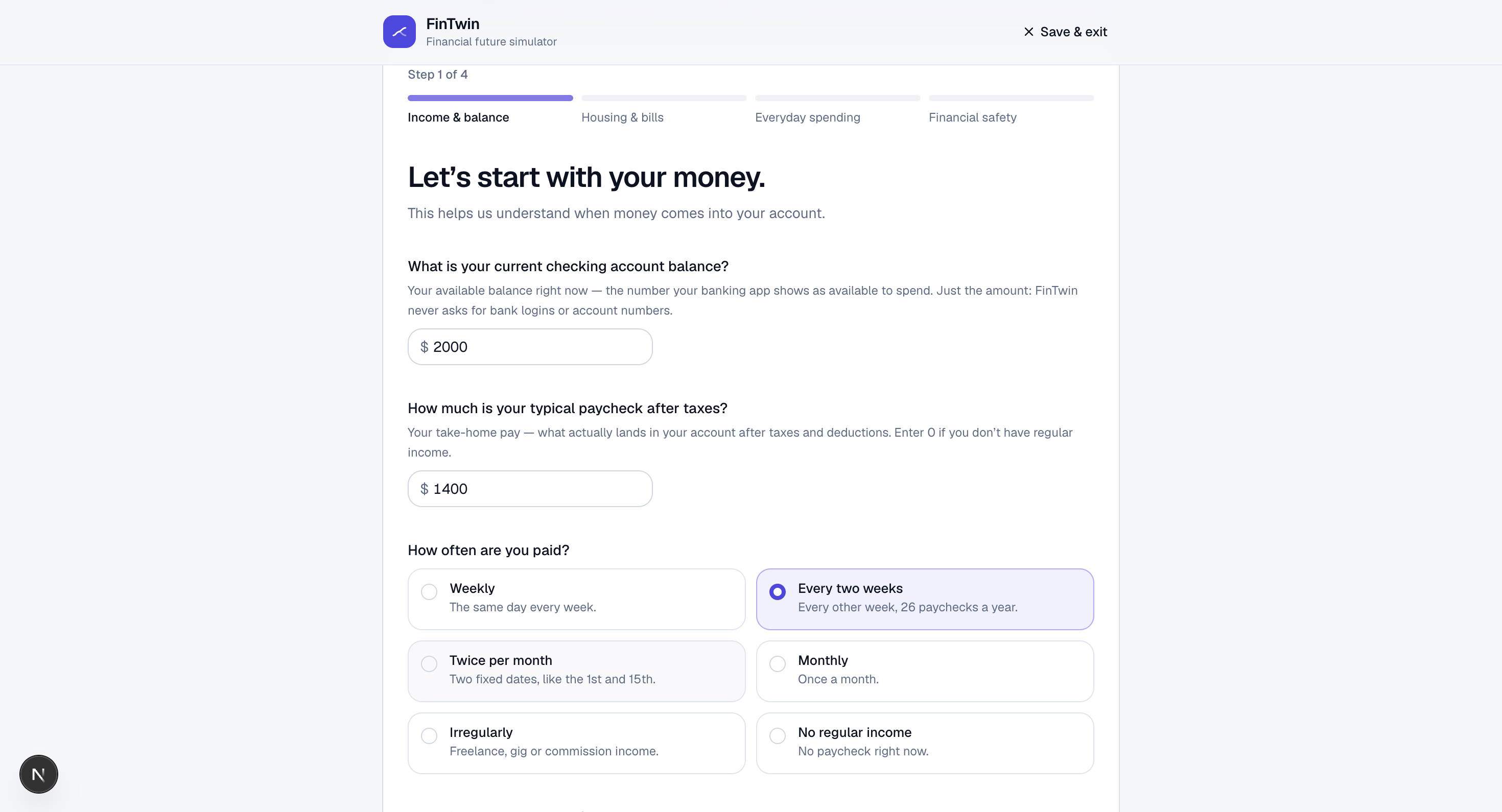
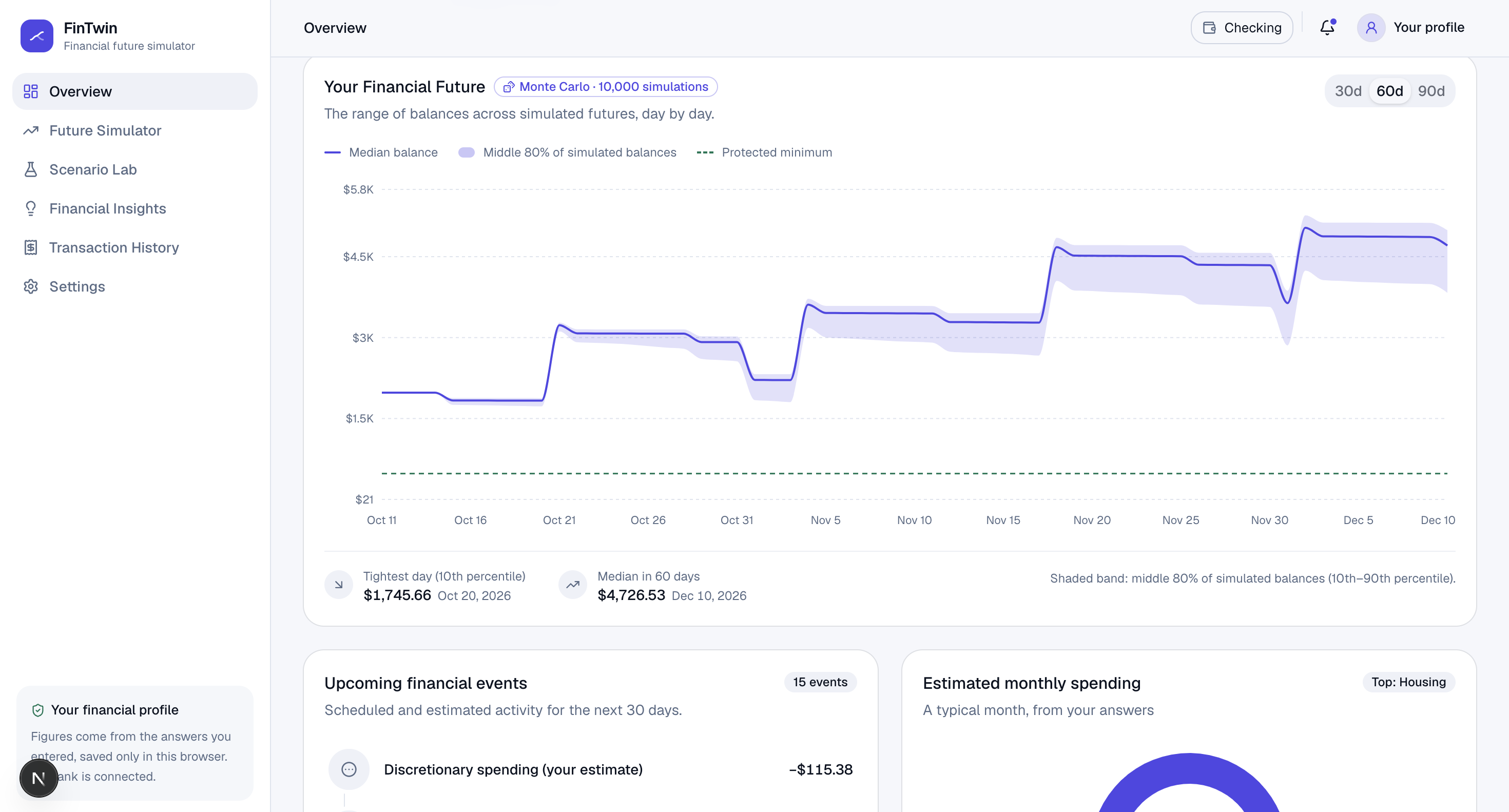
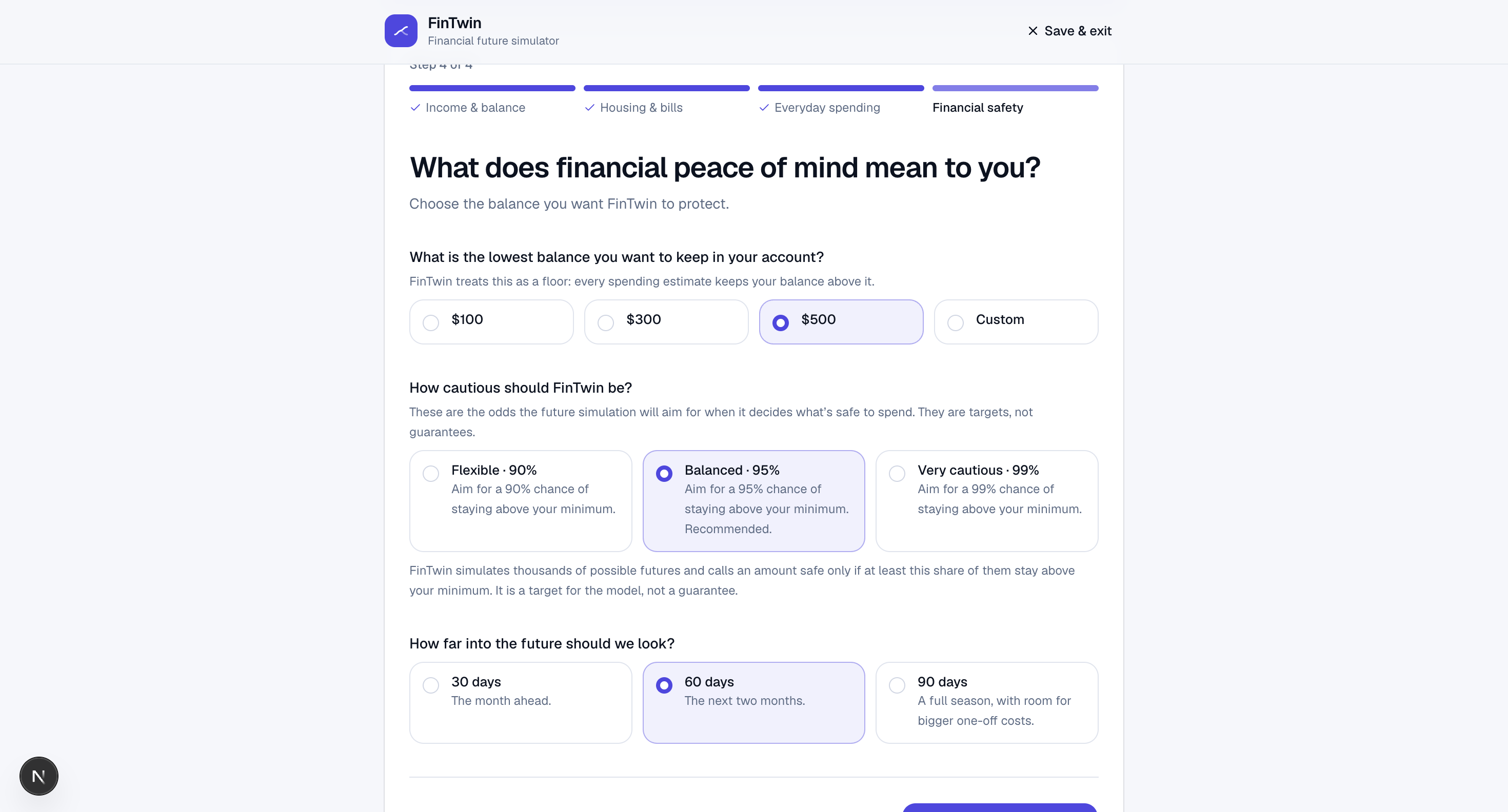
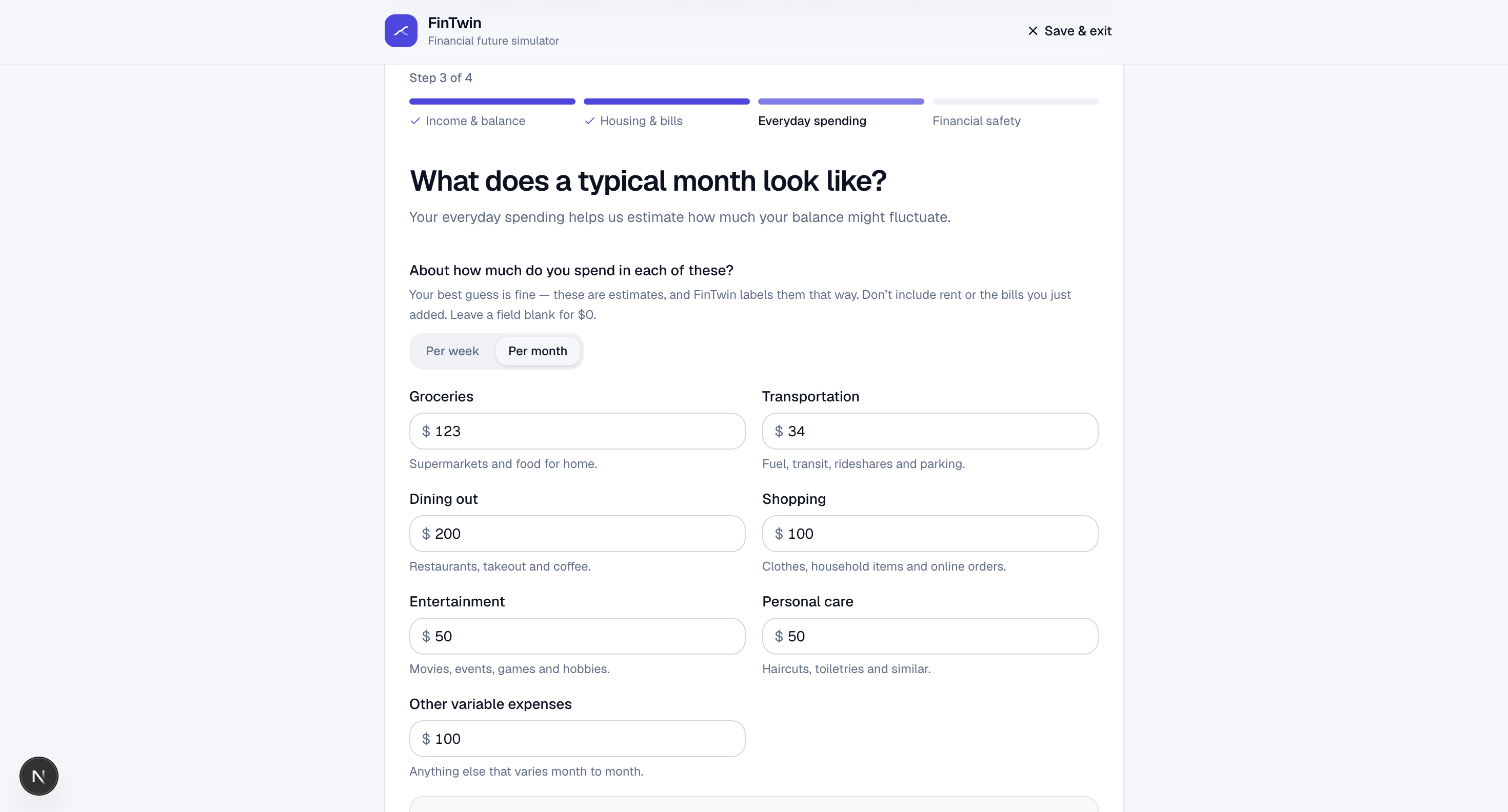
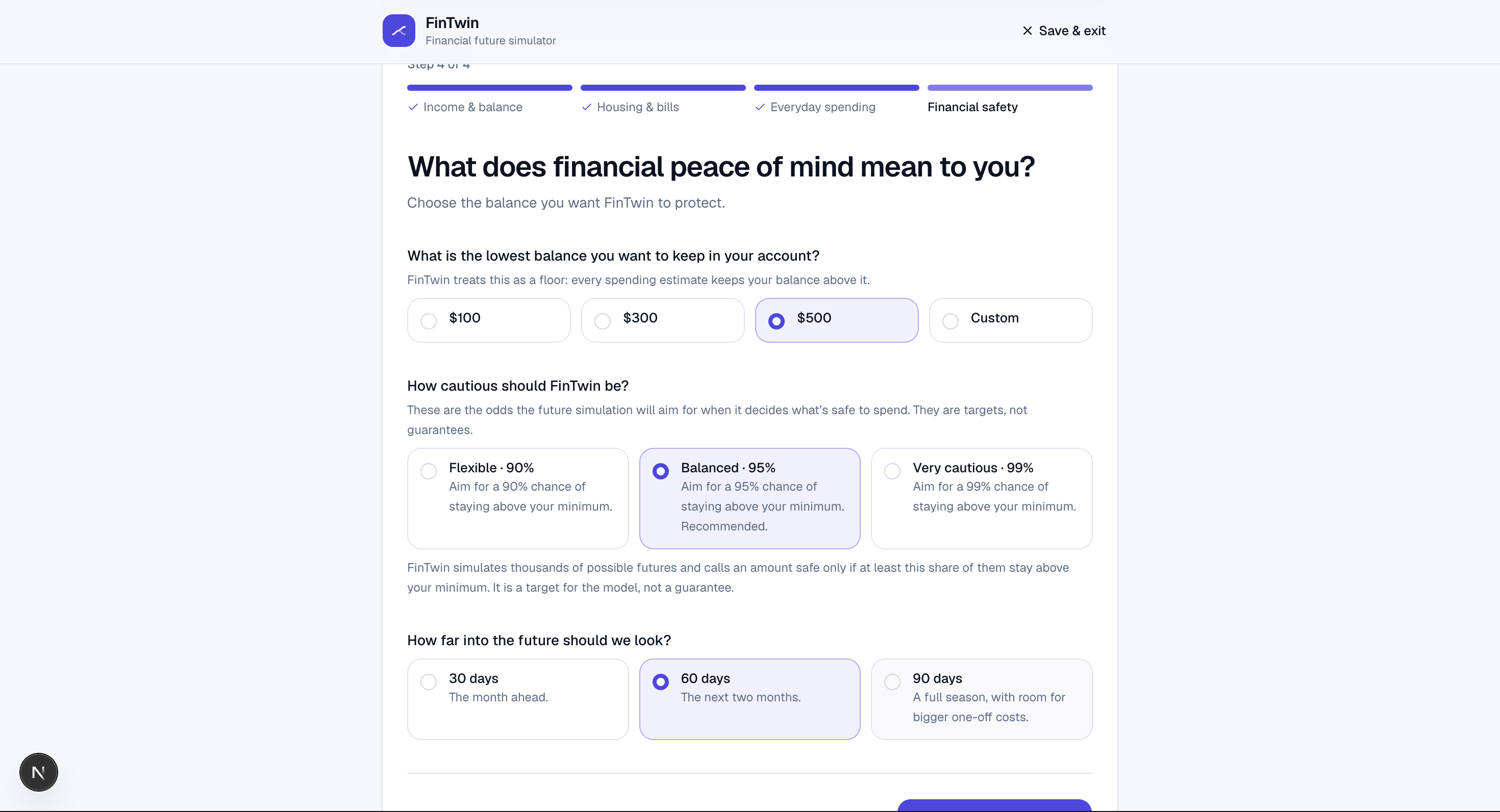
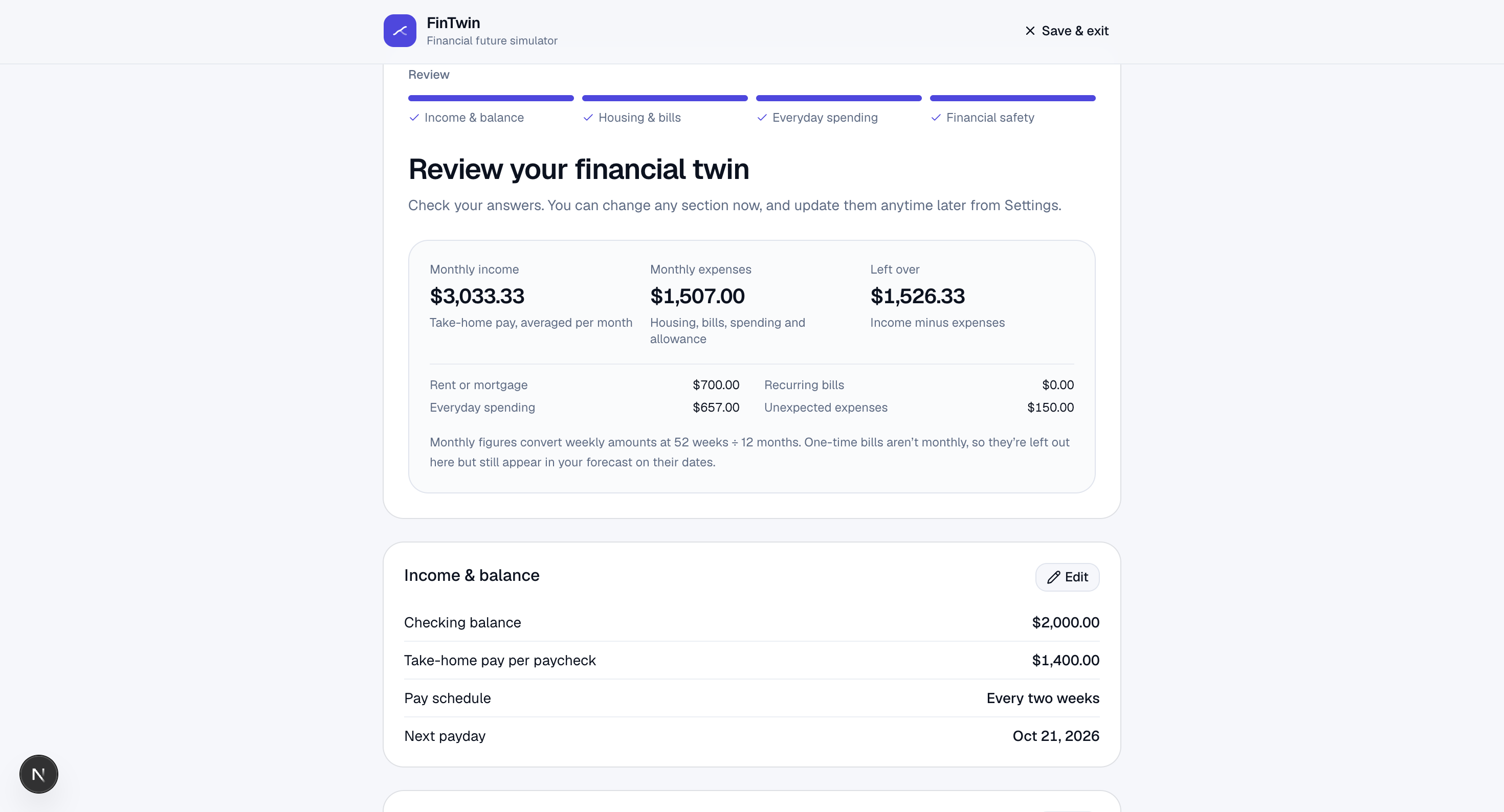
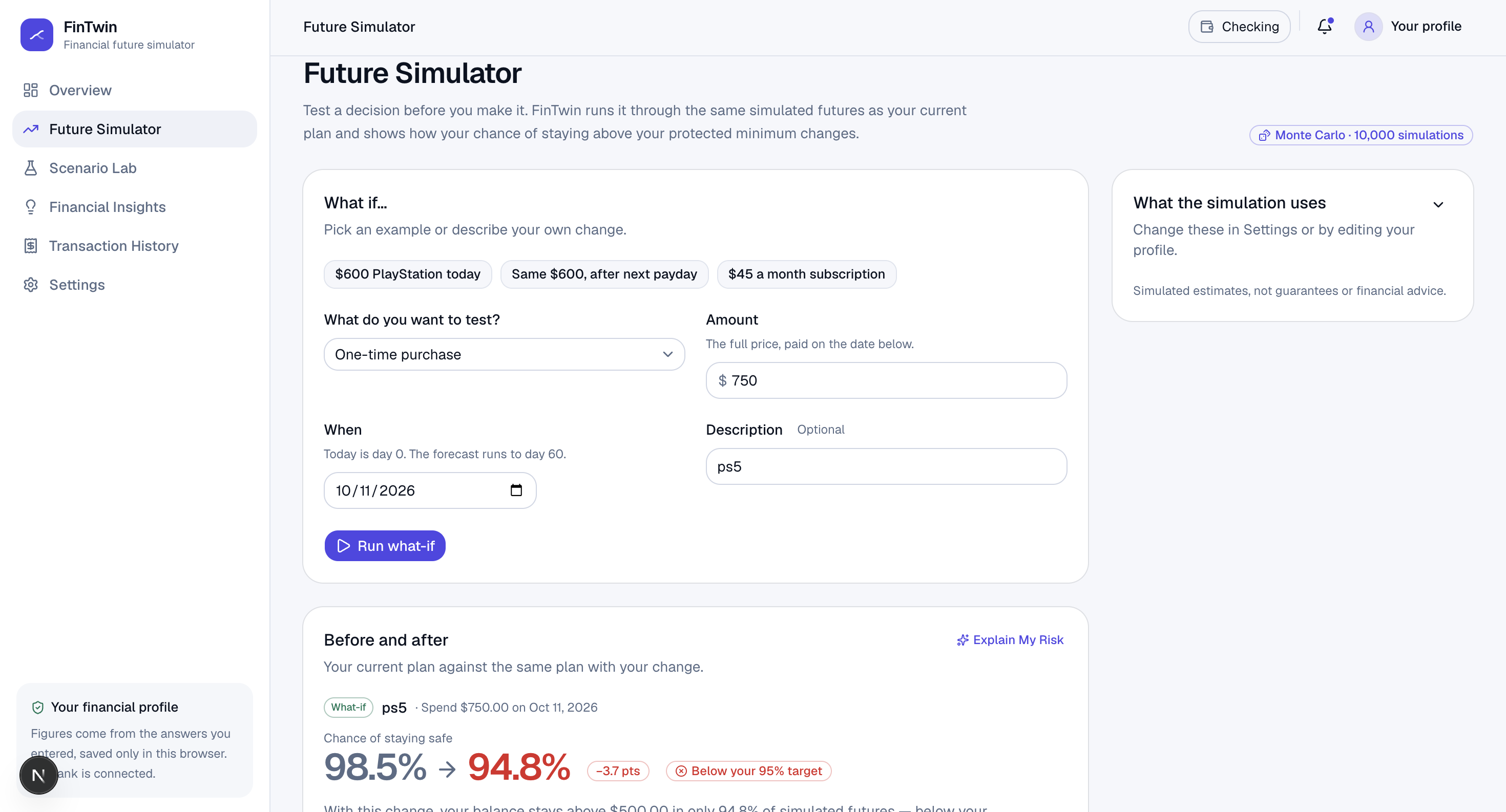
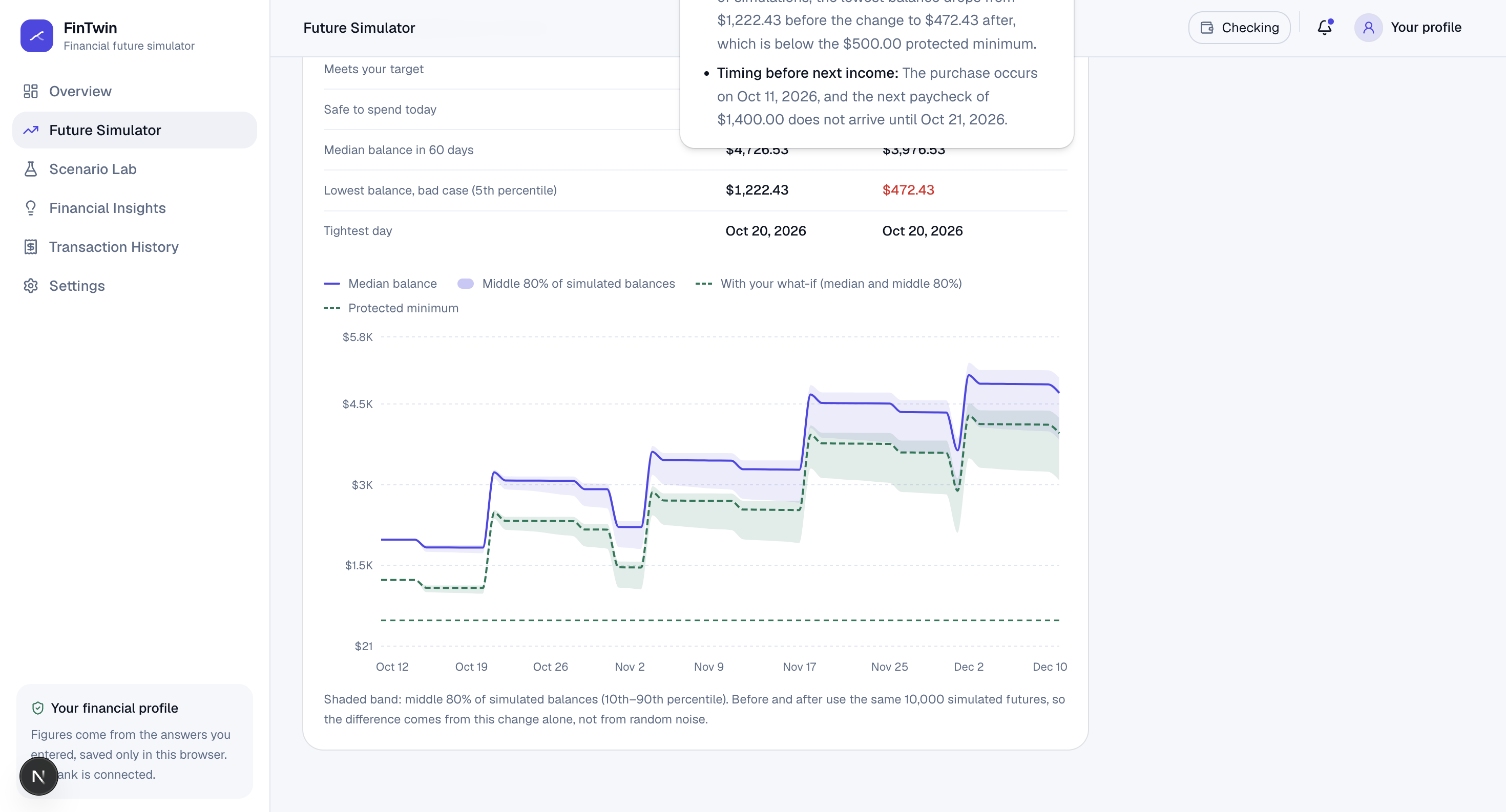
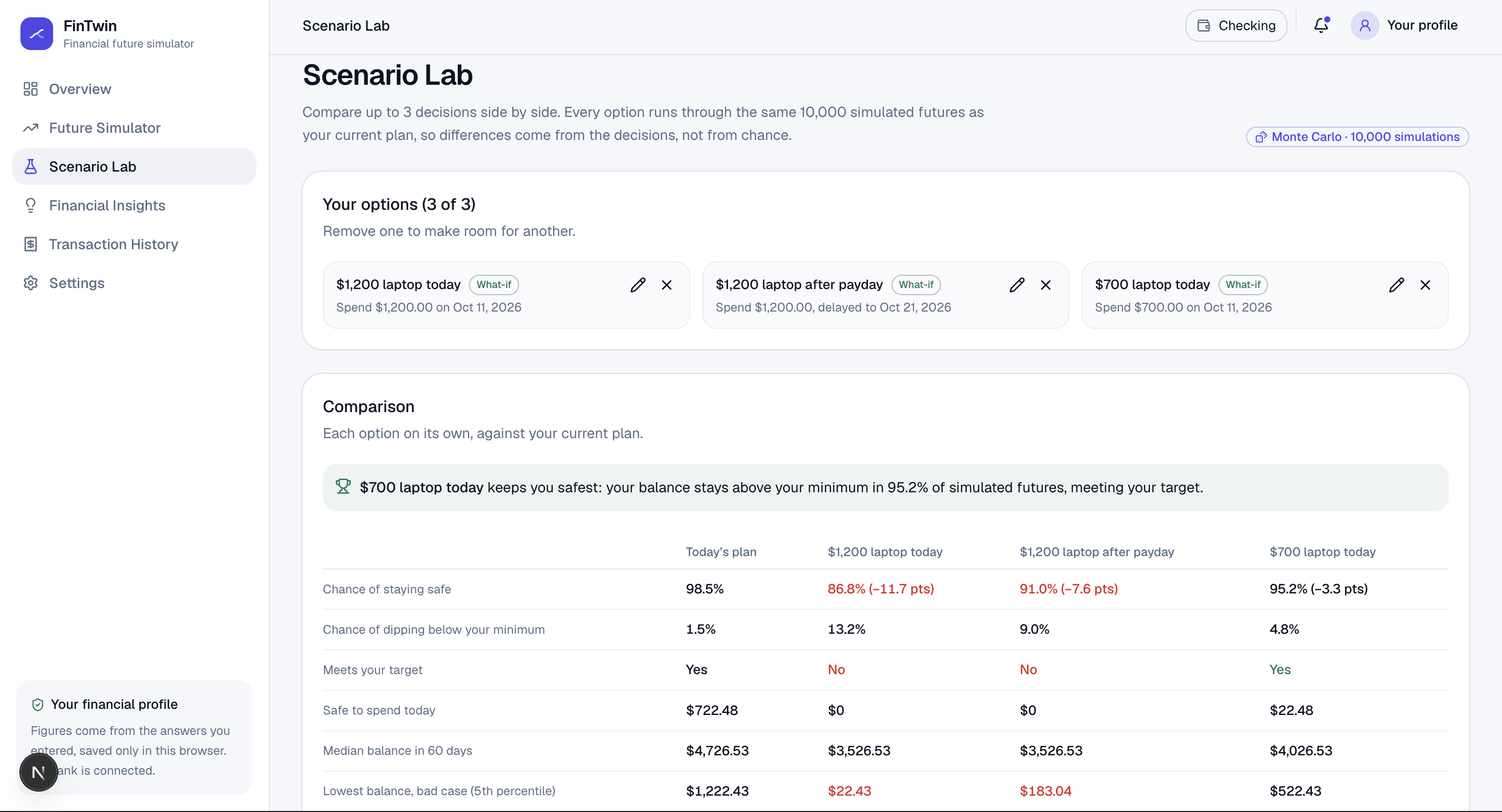
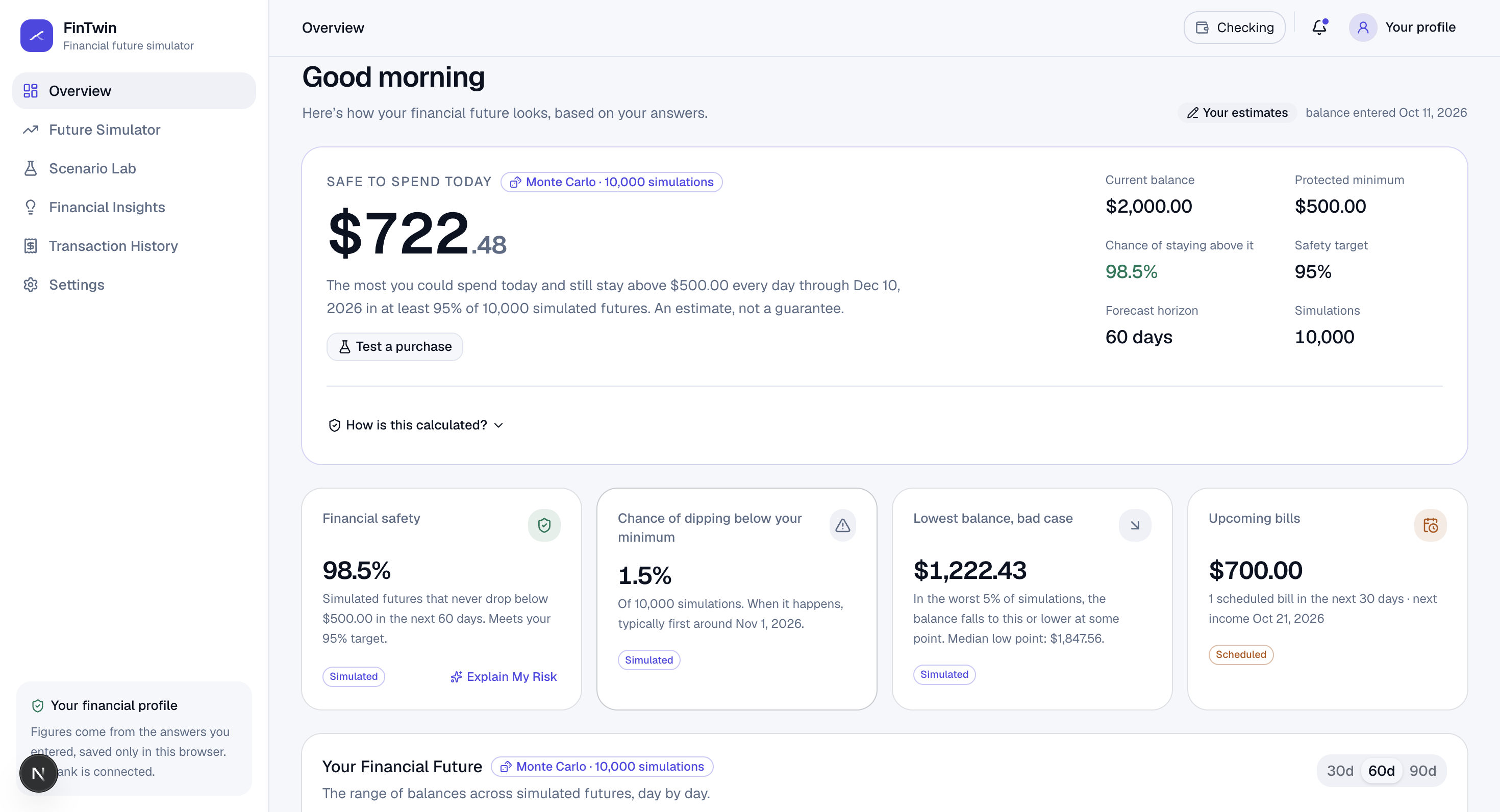
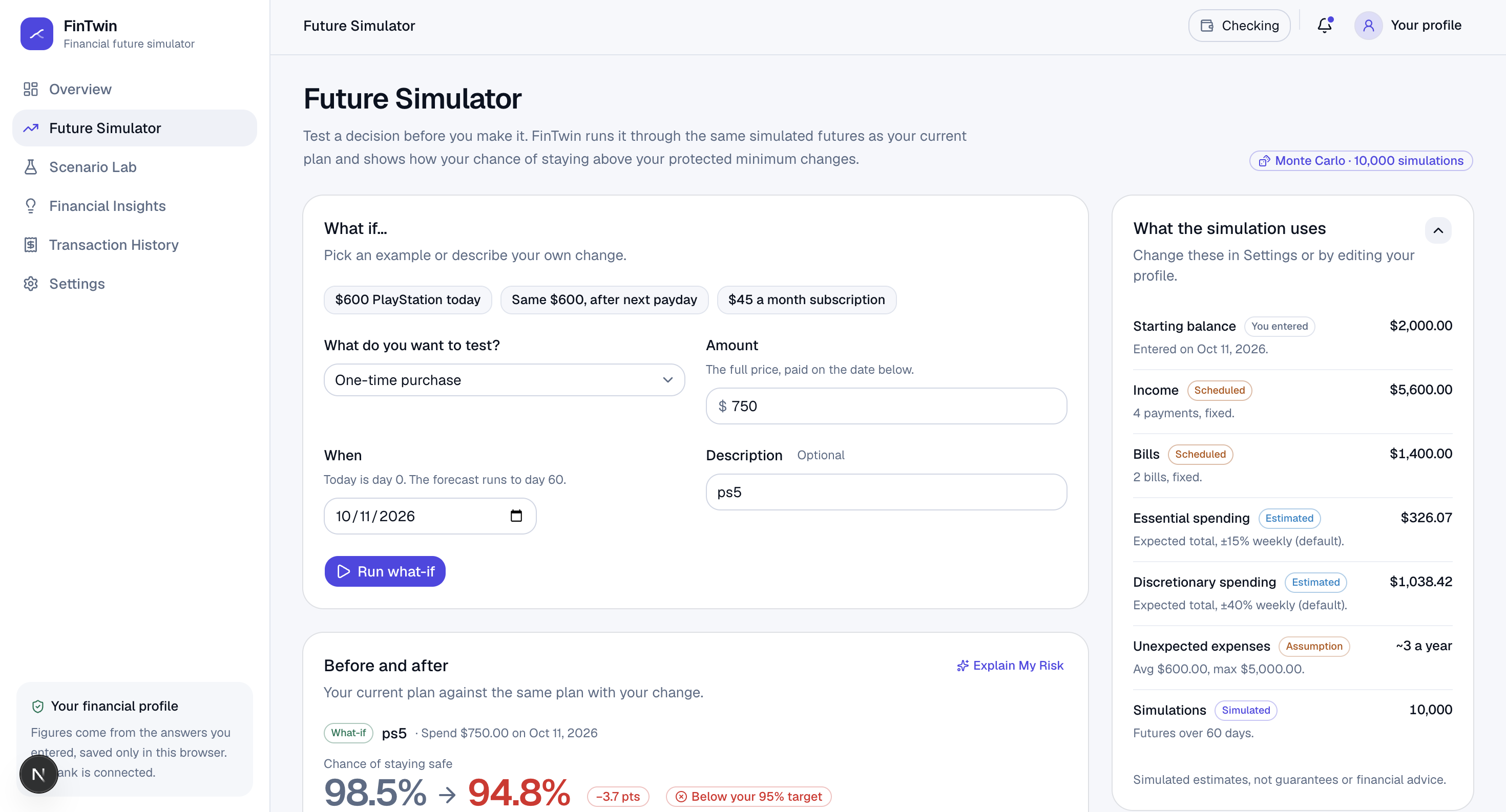
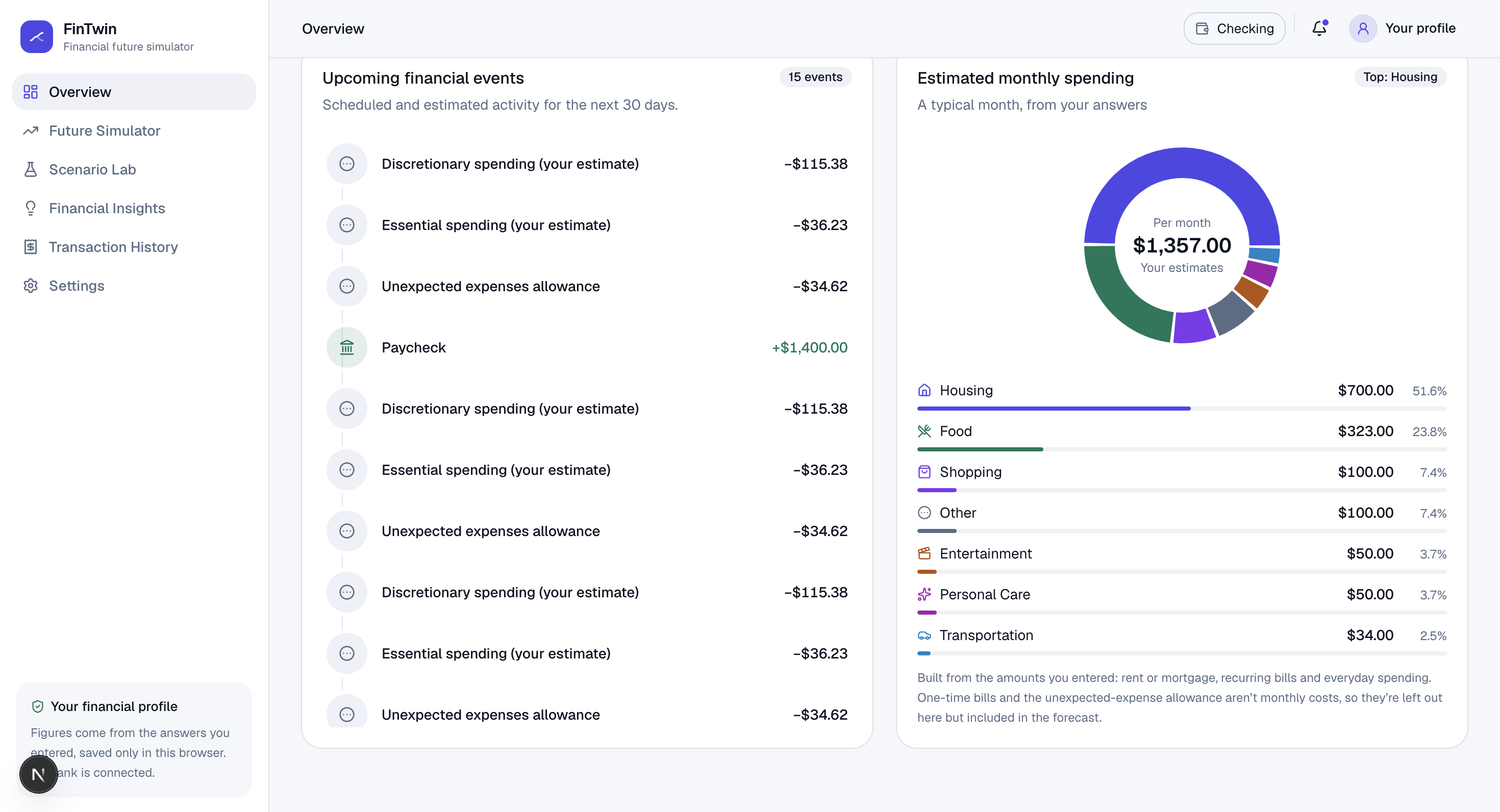
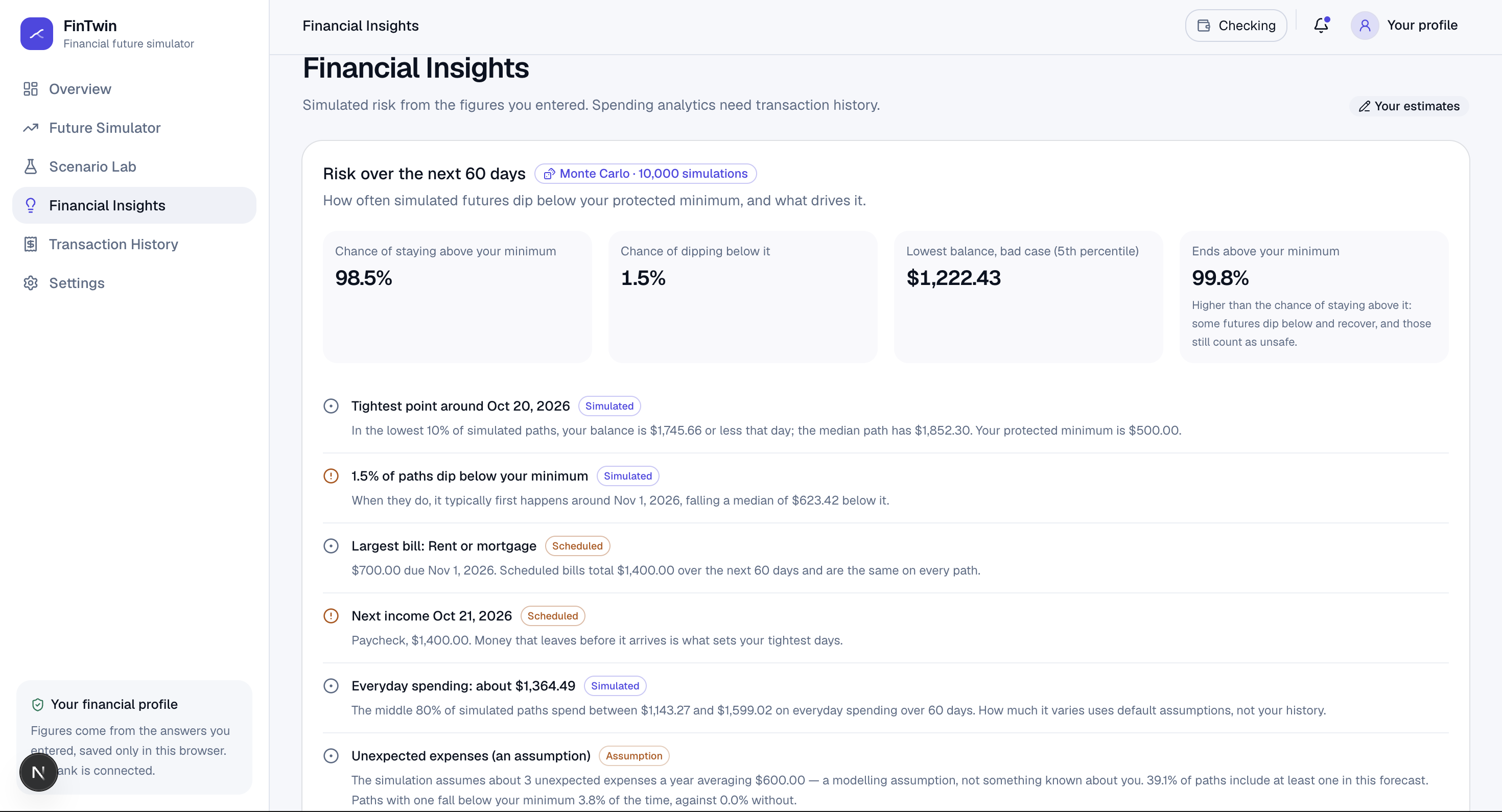
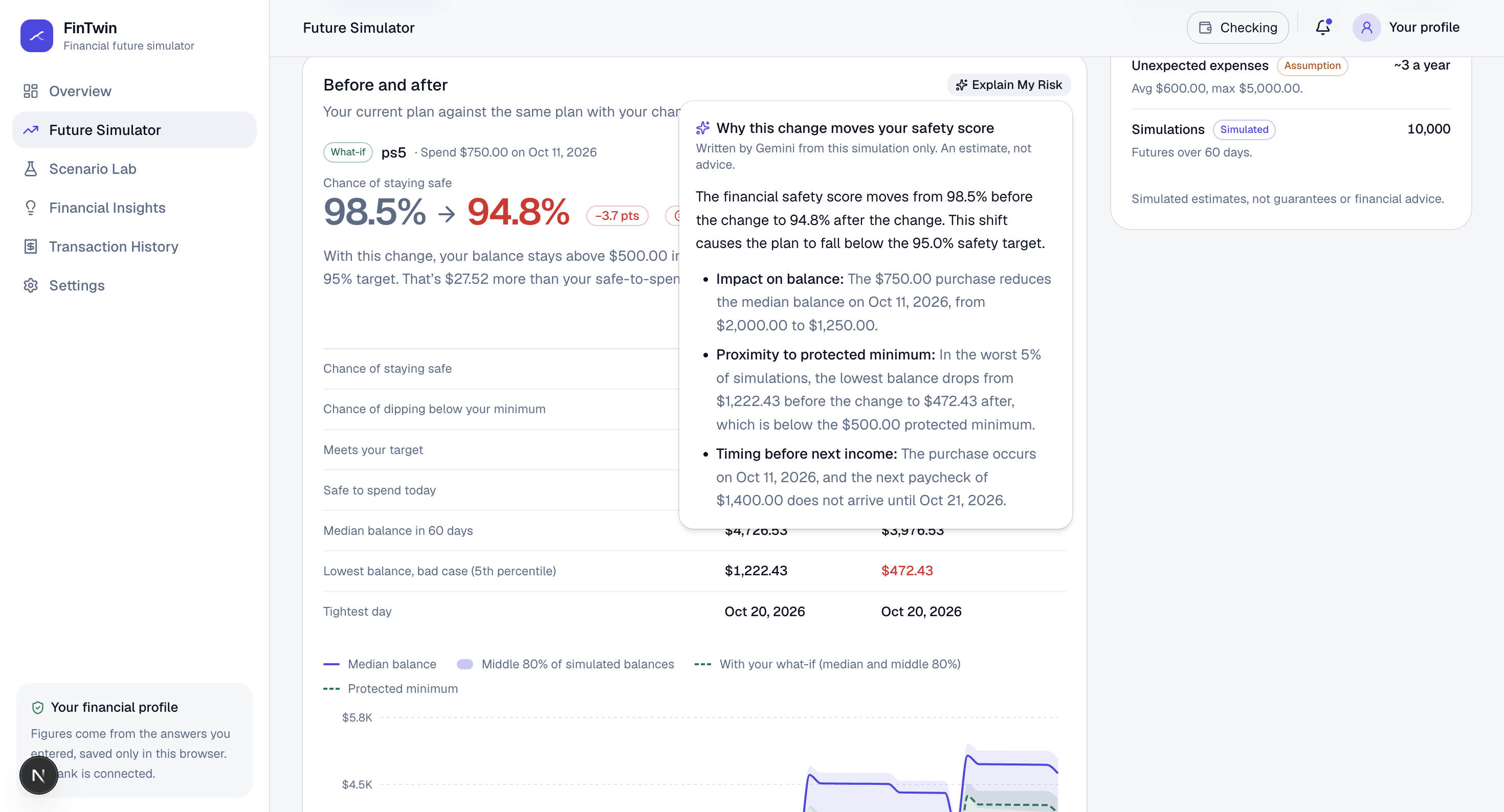
FinTwin helps users figure out how much money they can safely spend without going below their chosen minimum balance. Users enter their income, bills, and spending habits, then choose a safety target. FinTwin runs 10,000 simulations of their financial future to calculate their safety score and Safe-to-Spend amount. Users can test purchases before making them, compare different decisions in the Scenario Lab, and see upcoming financial risks. Google Gemini also explains the results in simple language, helping users understand how bills, spending, and unexpected expenses affect their financial safety.
How we built it
I built FinTwin using Next.js, React, TypeScript, and Tailwind CSS for the frontend, and Python with FastAPI for the backend. I created a Monte Carlo simulation that runs 10,000 possible financial futures to calculate risk and Safe-to-Spend amounts. I integrated Google Gemini to explain the results in simple language and Capital One Nessie to explore simulated banking data. I also used AI tools to brainstorm ideas, debug code, and fix errors during development.
Challenges we ran into
One of the biggest challenges was making the financial predictions realistic. I had to account for paycheck dates, upcoming bills, changing spending habits, and unexpected expenses. Another challenge was calculating how much users could safely spend without going below their minimum balance. I also ran into issues integrating Gemini and Nessie, debugging the simulation, and making sure Gemini's explanations matched the actual results
Accomplishments that we're proud of
I'm proud that FinTwin goes beyond a regular budgeting app by helping users see how their financial decisions could affect them before spending money. My biggest accomplishment was building the Monte Carlo simulation that runs 10,000 possible futures and calculates how much users can safely spend. I'm also proud of the Scenario Lab and Google Gemini integration, which make financial risks easier to compare and understand.
What we learned
I learned how Monte Carlo simulations can be used to predict financial risks by exploring thousands of possible outcomes instead of relying on one prediction. I also gained experience working with Next.js, TypeScript, FastAPI, Google Gemini, and Capital One Nessie. Most importantly, I learned how to turn complex financial calculations into simple information that people can actually understand and use.
What's next for FinTwin
Next, I want to connect real bank accounts so FinTwin can automatically track income, bills, and spending habits. I also plan to improve the financial simulations using real transaction history, add secure user accounts, and make predictions more personalized. My goal is to make FinTwin a tool that helps people make smarter financial decisions with more confidence.
Built With
- fastapi
- nextjs
- python

Log in or sign up for Devpost to join the conversation.