-
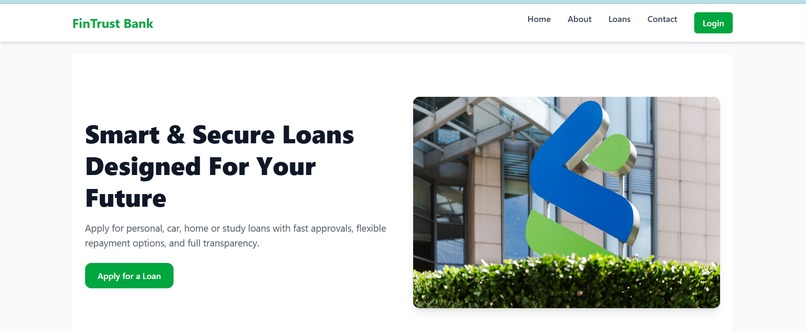
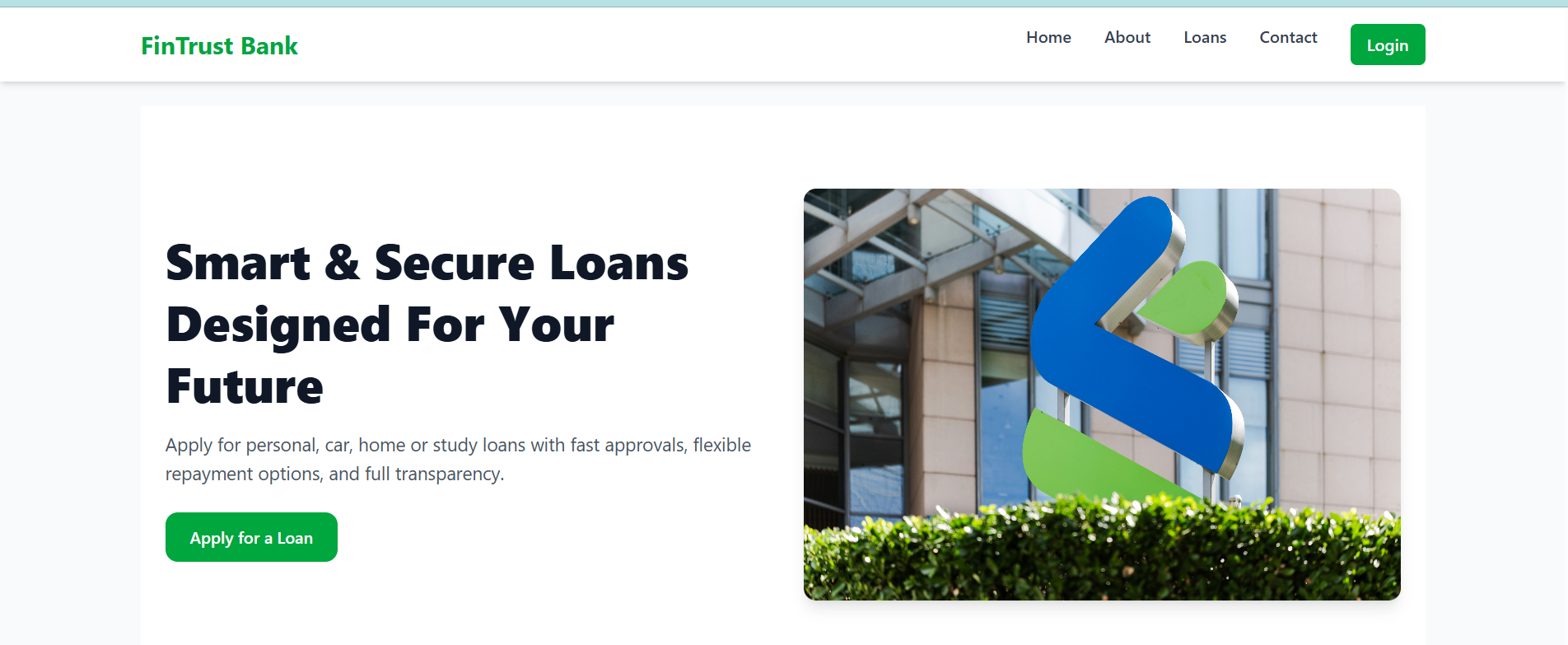
Hero Section
-
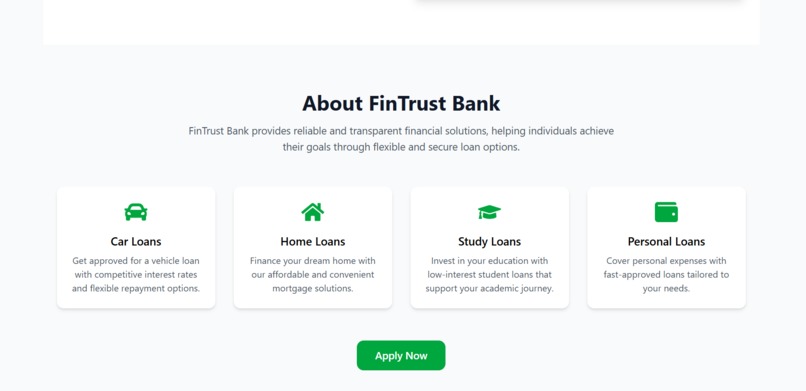
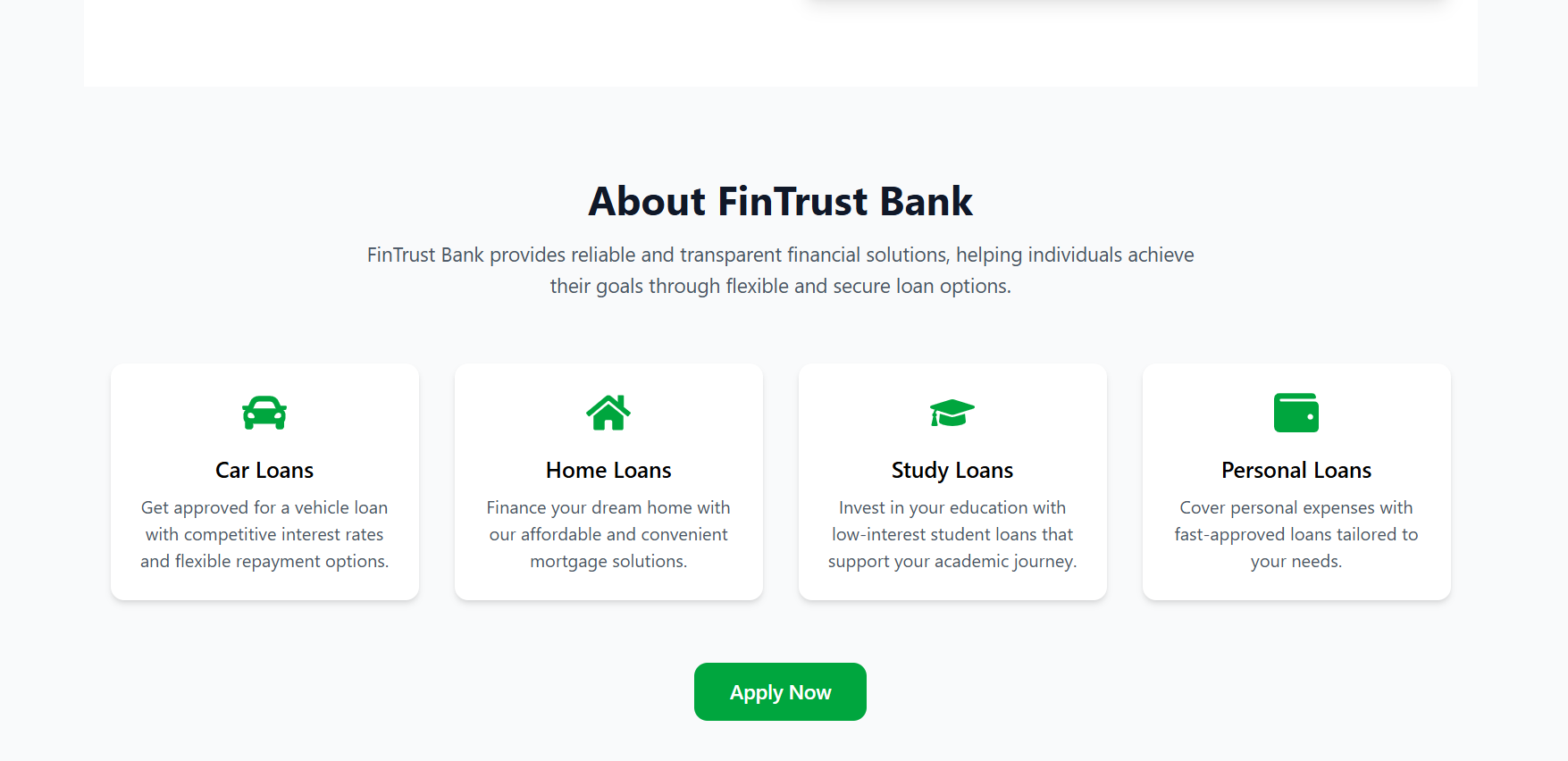
About FinTrust Bank
-
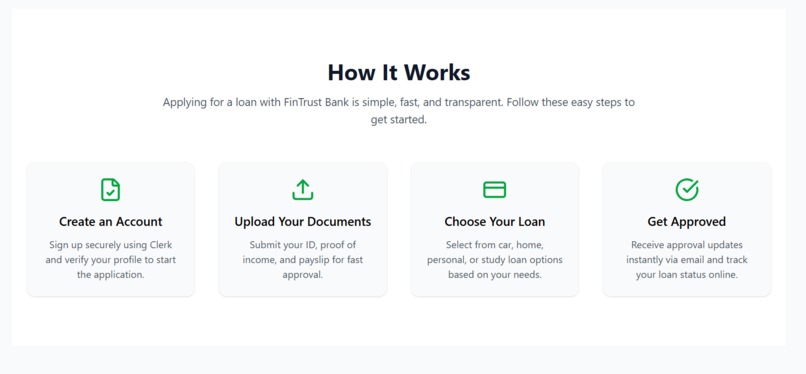
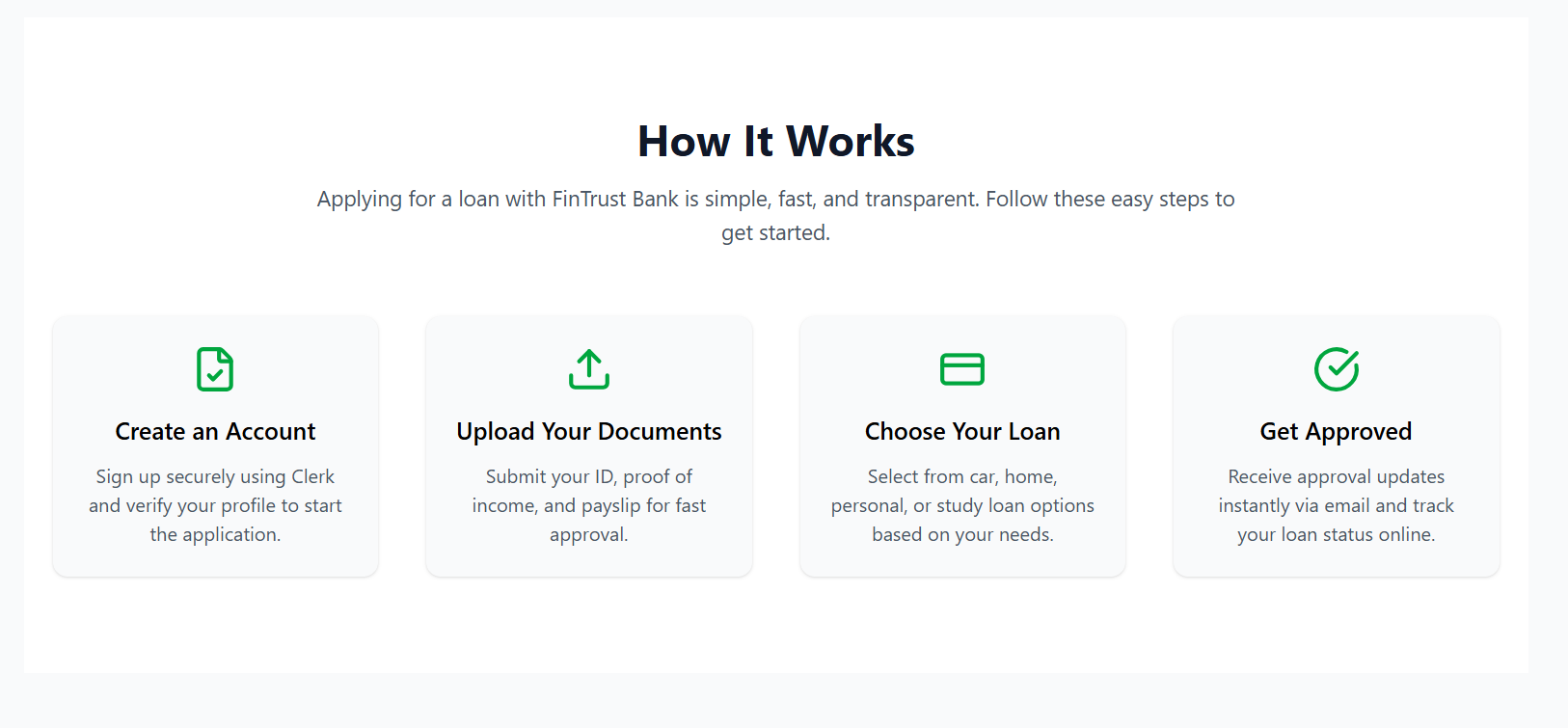
How It Works
-
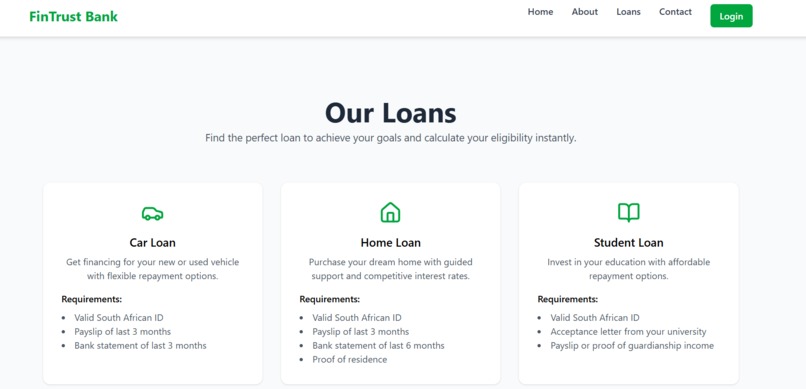
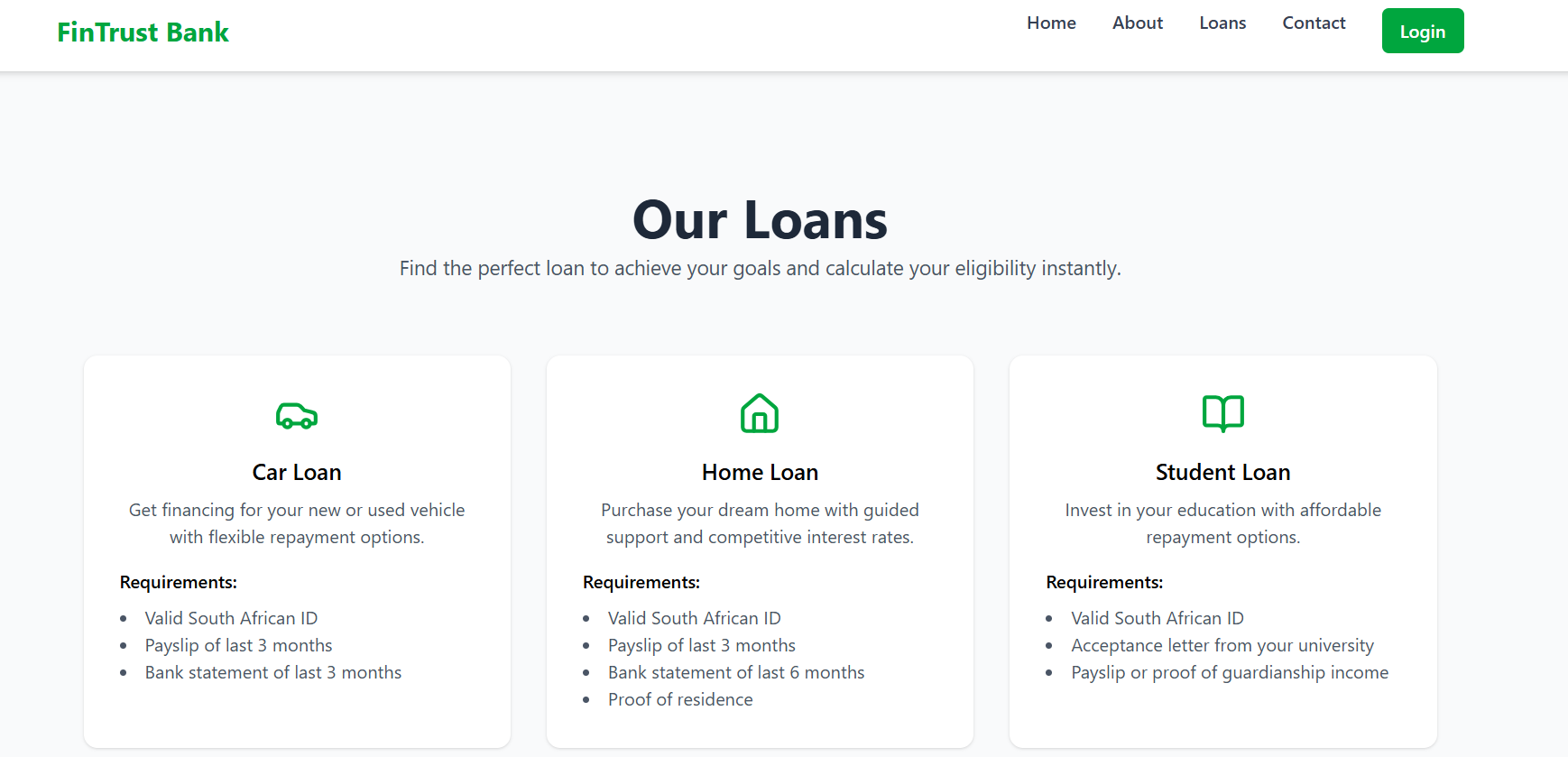
Loans
-
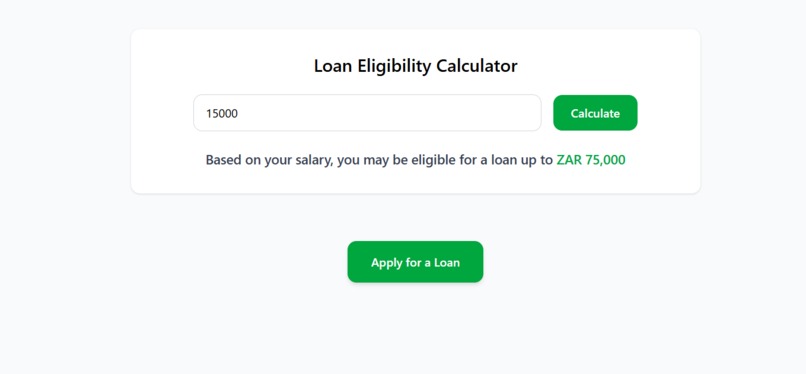
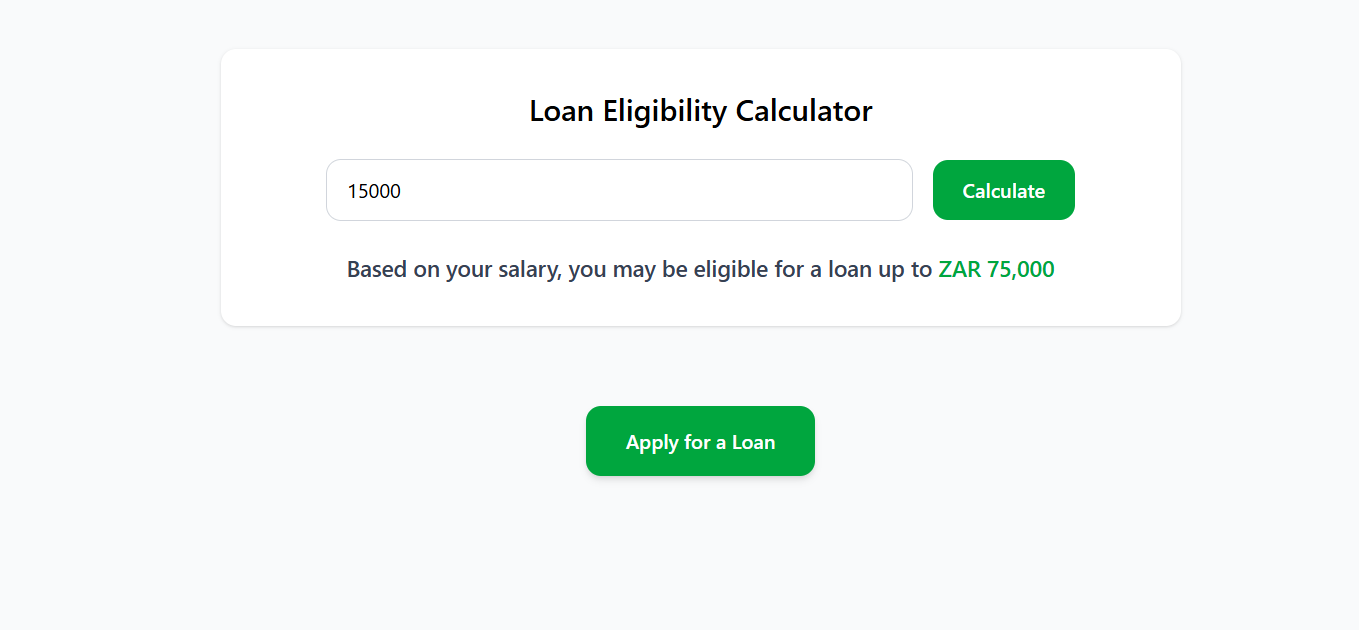
Loan Calculator
-
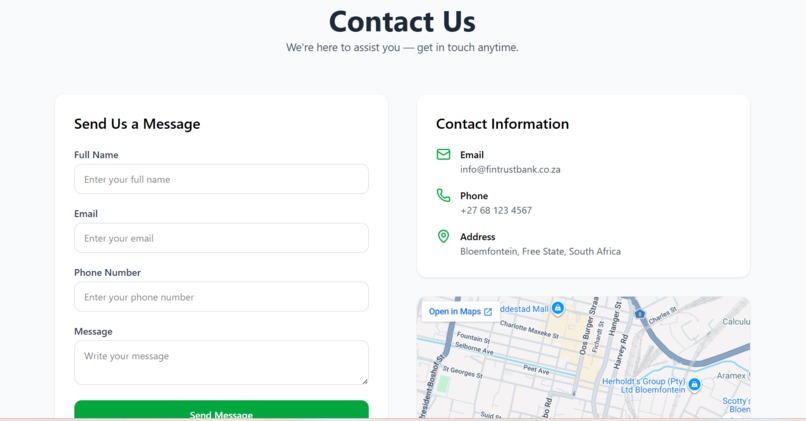
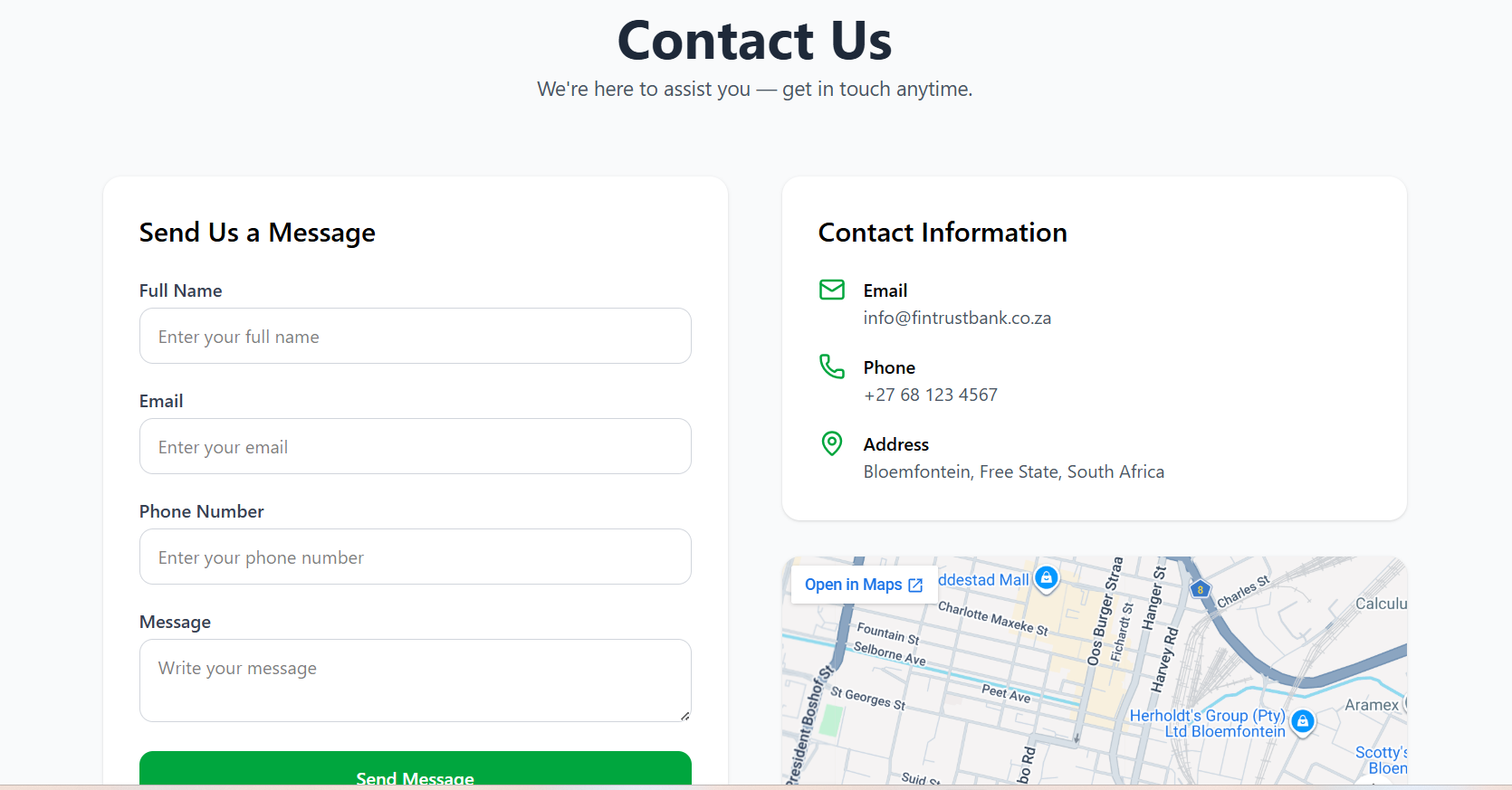
Contact Form
Inspiration
The inspiration behind FinTrust Bank came from the challenges many small banks, micro-lenders, and financial service providers face with outdated, paper-based loan application processes. I wanted to build a modern digital platform that simplifies how customers apply for loans while giving lenders an efficient way to manage applications. At the same time, I wanted a real-world project that would help me strengthen my full-stack development skills using modern technologies
What it does
FinTrust Bank is a digital loan application platform that allows users to create an account, explore different loan products, and submit loan applications online. The platform supports Personal, Car, Home, and Study Loans, includes a loan eligibility calculator, responsive landing pages, FAQs, testimonials, and secure authentication. Users can also upload supporting documents such as ID copies, payslips, proof of address, and university acceptance letters. The backend is being developed to securely store applications, manage documents, and provide an admin dashboard for lenders.
How I built it
I built FinTrust Bank using Next.js 16 with the App Router and TypeScript to create a scalable and maintainable codebase. Tailwind CSS was used to build a clean, responsive user interface, while Clerk provides secure authentication and protected routes. The backend architecture is being developed with Prisma ORM and a Neon PostgreSQL database, with UploadThing for secure document uploads. Throughout development I focused on reusable components, responsive layouts, and modern development practices to create a production-ready foundation.
Challenges I ran into
One of the biggest challenges was learning how to integrate multiple technologies into a single application. Setting up Clerk authentication, understanding Next.js App Router, configuring Prisma, and planning secure document uploads required significant research and experimentation. I also spent time debugging deployment issues, routing errors, and environment variable configuration while ensuring the project remained organized and scalable.
Accomplishments that I'm proud of
I'm proud of building a professional-looking FinTech application from the ground up using technologies I wanted to master. Creating a responsive banking interface, implementing secure authentication, designing reusable components, and planning a scalable backend architecture have been significant milestones. More importantly, this project has evolved from a learning exercise into a product that could potentially be offered to small lenders and financial institutions.
What I learned
This project has helped me gain practical experience with full-stack application development using modern technologies. I improved my understanding of Next.js App Router, TypeScript, Tailwind CSS, component architecture, authentication with Clerk, database design using Prisma and PostgreSQL, and planning secure file upload workflows. I also learned the importance of designing software with scalability, maintainability, and user experience in mind from the beginning.
What's next for FinTrust Bank
The next phase is focused on completing the backend and transforming FinTrust Bank into a fully functional lending platform. Planned features include database integration, secure document uploads, loan application management, an admin dashboard for reviewing and approving applications, email notifications, application tracking, reporting and analytics, and an AI-powered loan eligibility engine that provides intelligent affordability and approval insights. The long-term vision is to offer FinTrust Bank as a Software-as-a-Service (SaaS) platform for small banks, micro-lenders, and financial institutions looking to modernize their lending processes.
Built With
- javascript
- nextjs
- tailwindcss
- typescript
- vercel
