-
-
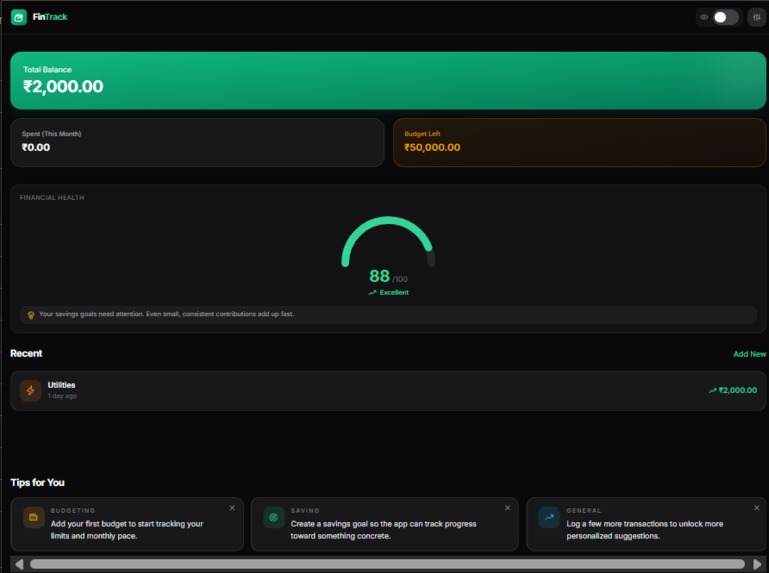
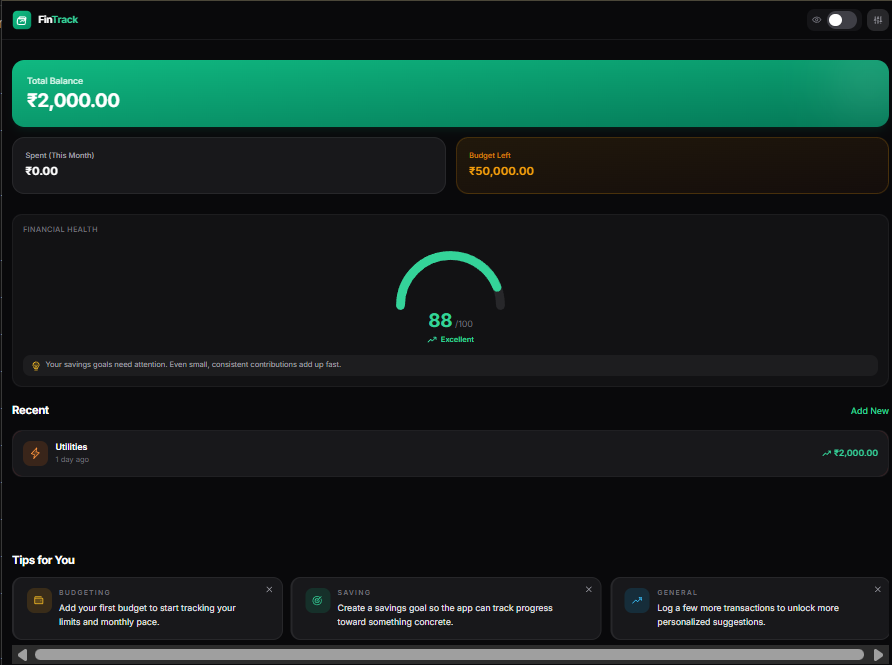
Dashboard
-
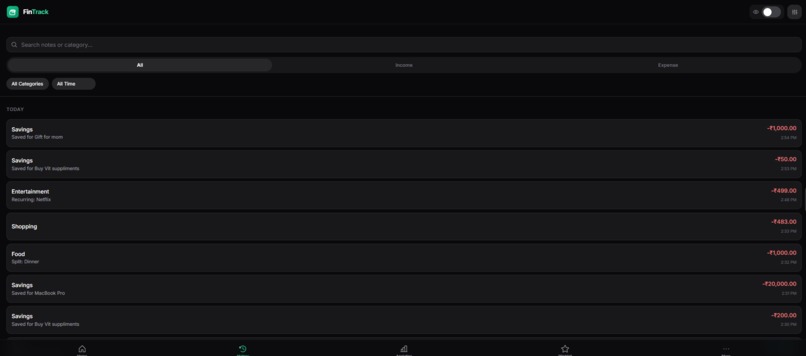
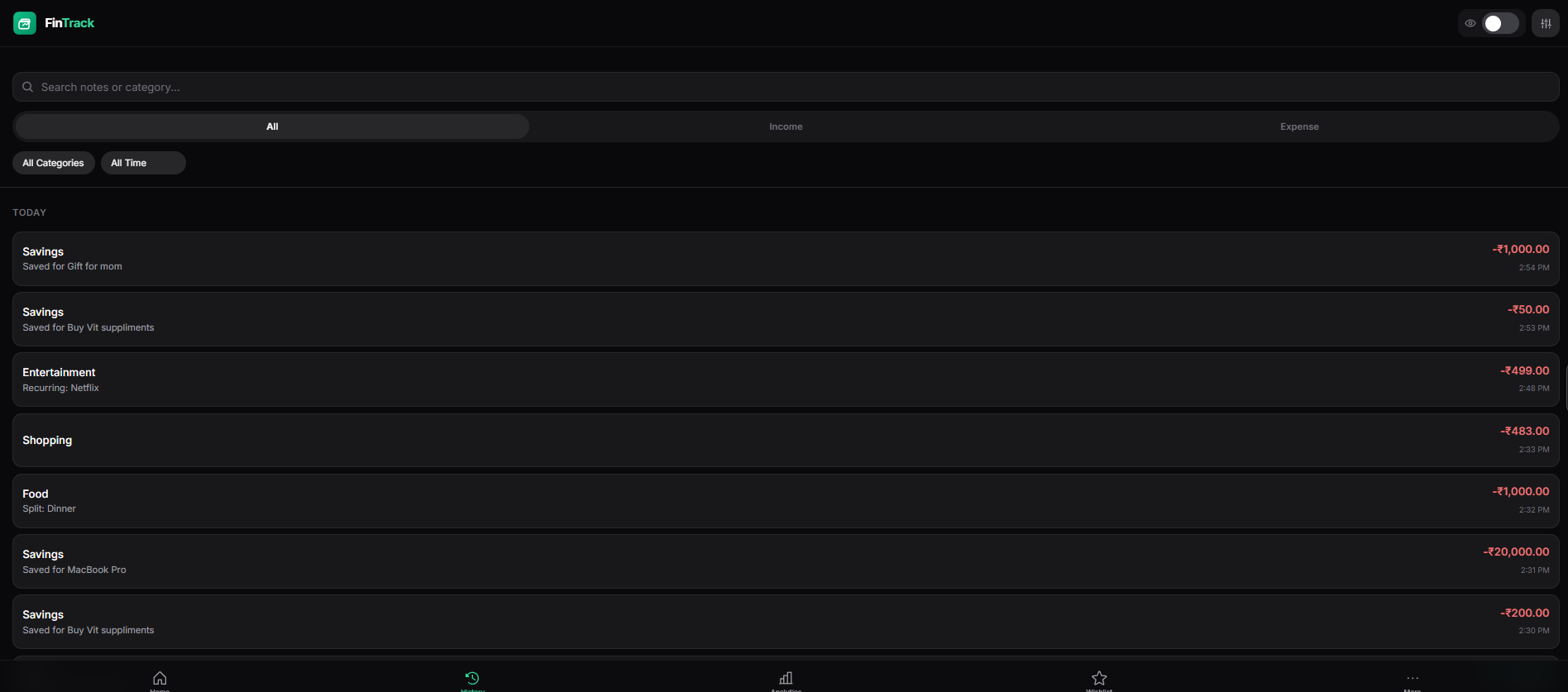
Activity History
-
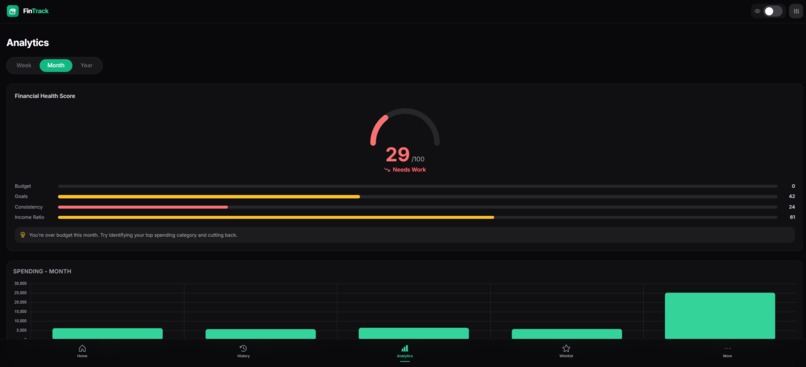
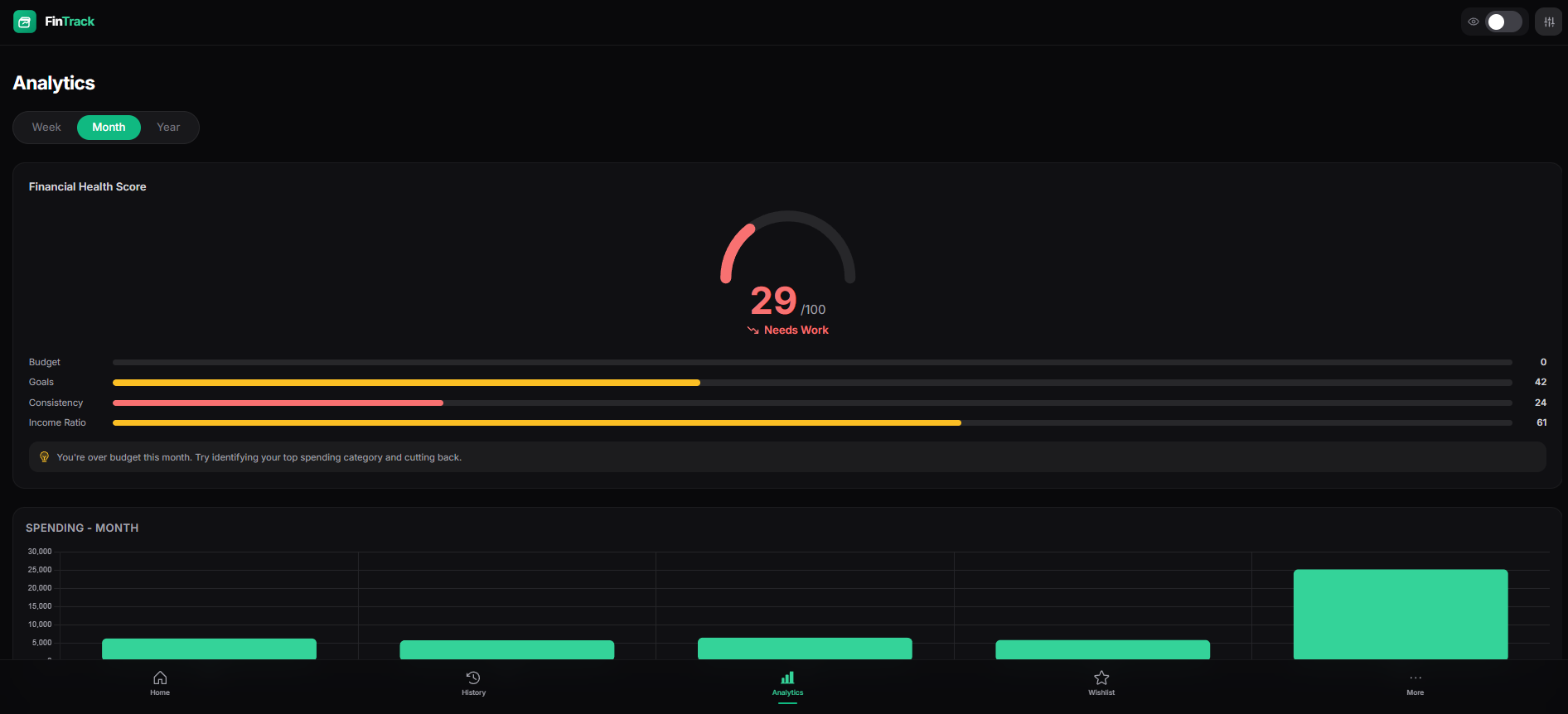
Analytical
-
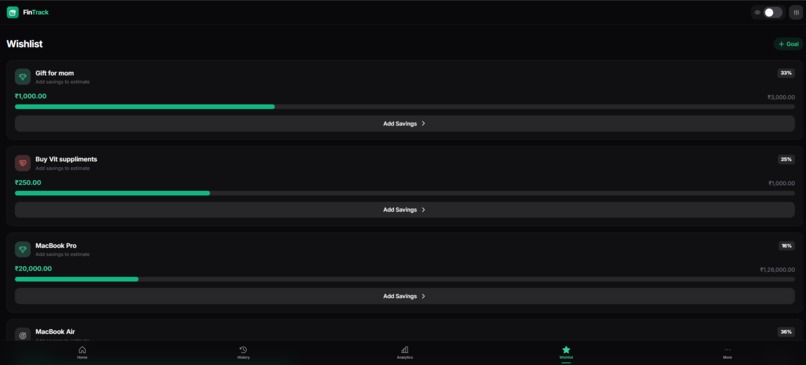
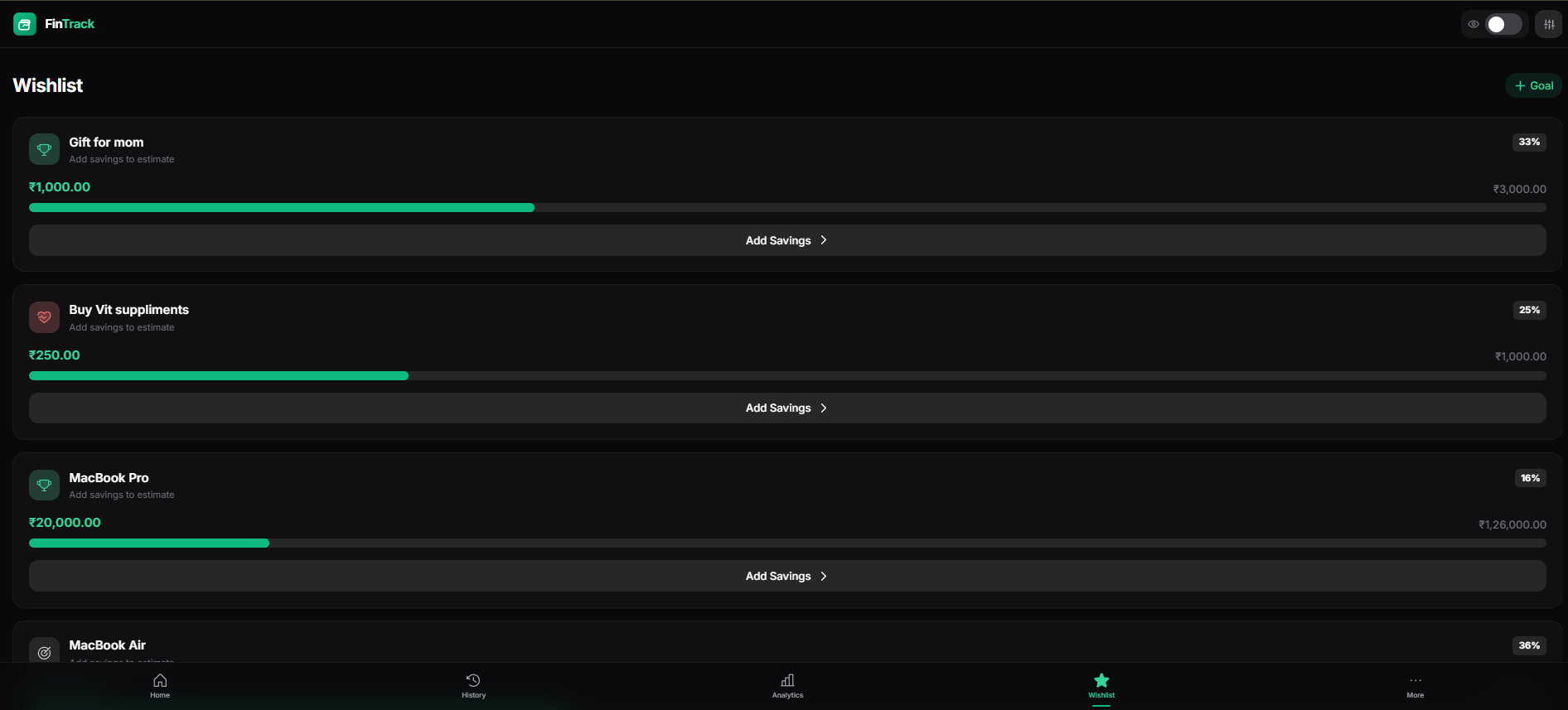
Create wishlist
-
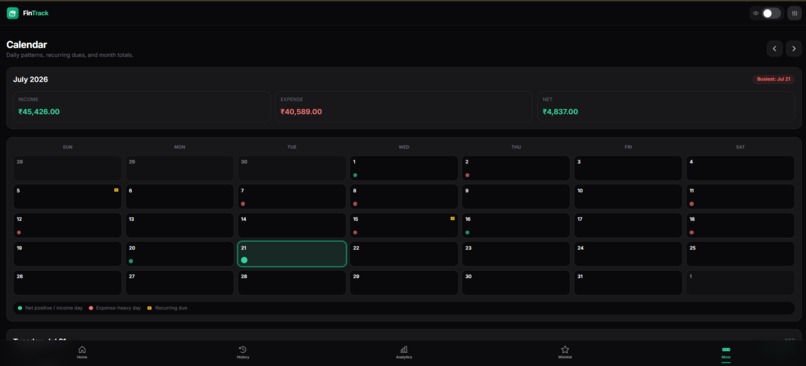
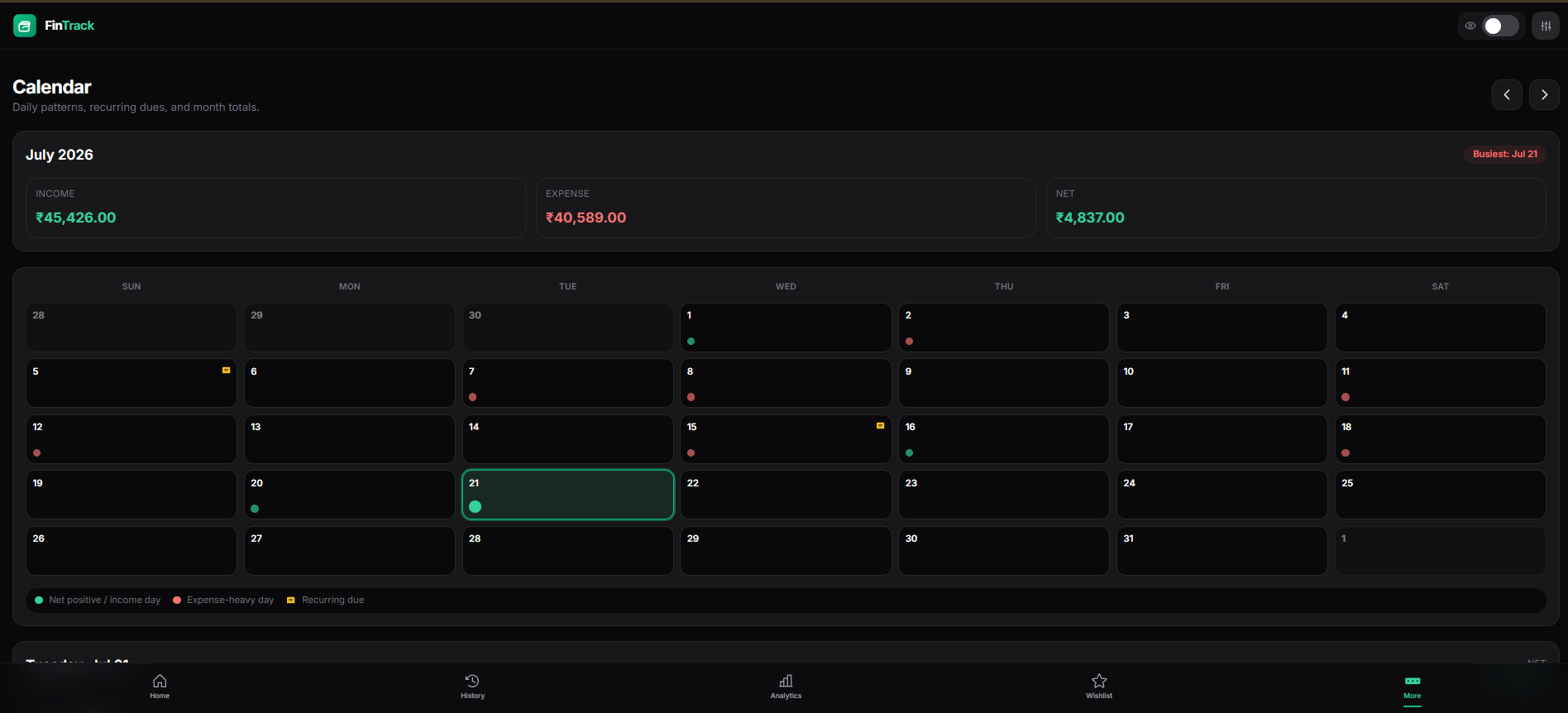
Calendar view
-
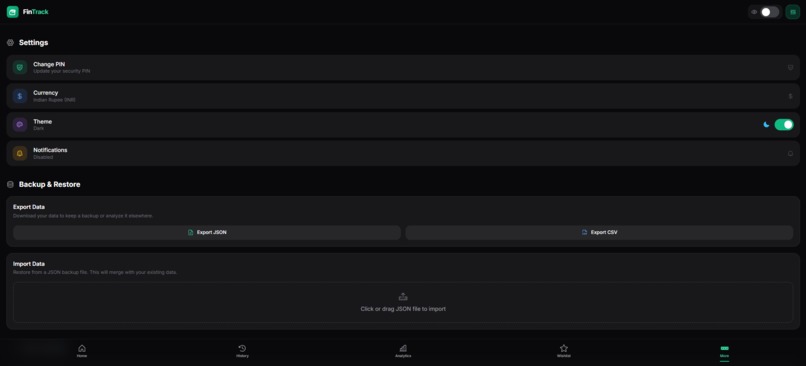
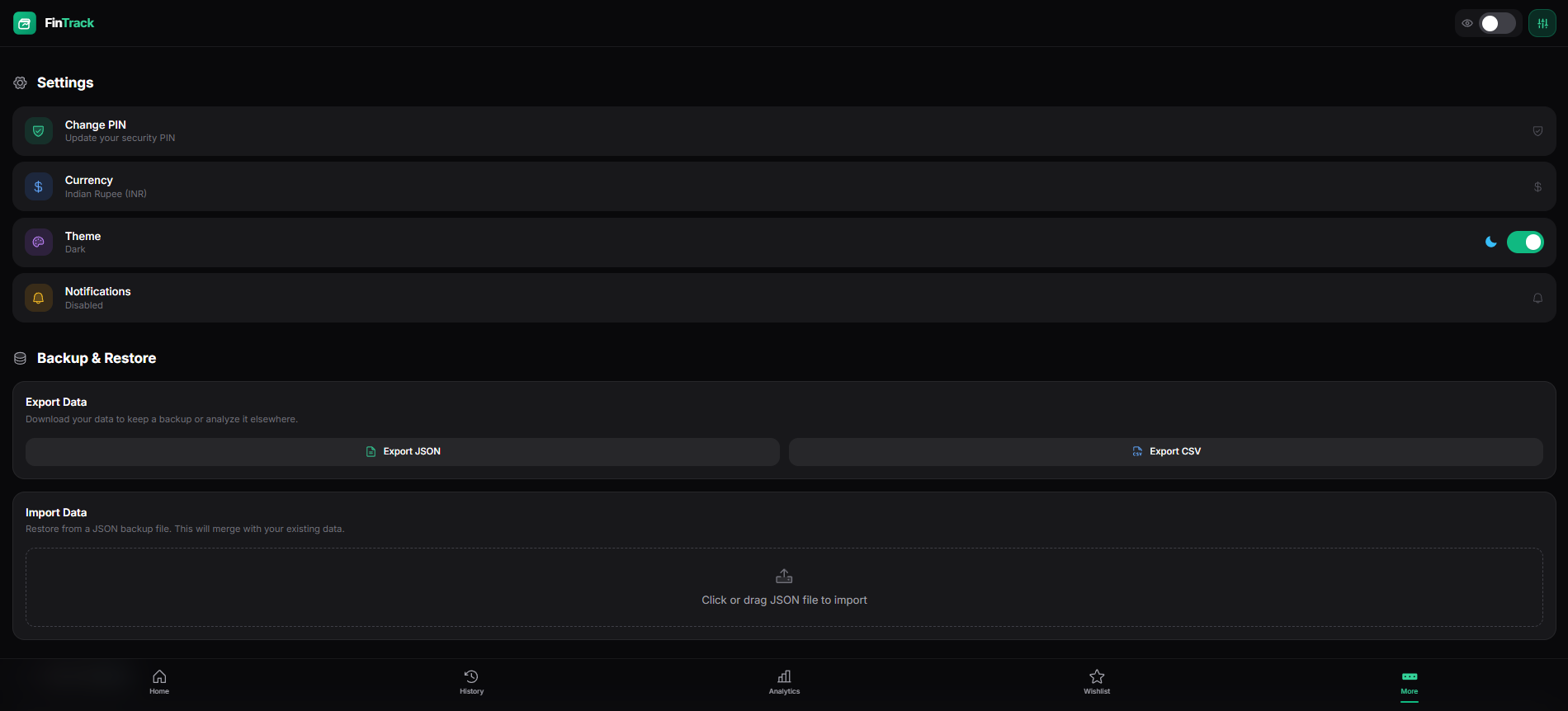
Settings
Inspiration
The idea for FinTrack came from discussions we saw on Reddit and other social media platforms, where concerns about data breaches and digital privacy were becoming increasingly common. Many personal finance apps require users to create an account and upload sensitive financial information to the cloud before they can even start tracking expenses. We wanted to build a finance tracker that takes a different approach—one that gives users complete control over their financial data. FinTrack was designed to be offline-first, privacy-first, and simple to use, allowing people to manage their finances without sacrificing their privacy.
What it does
FinTrack is an installable Progressive Web App (PWA) that helps users manage their personal finances while keeping their data on their own device. Users can:
- Track income and expenses
- Create monthly and category-based budgets
- Monitor savings goals and wishlists
- Manage recurring expenses
- View spending analytics and trends
- Check a financial health score with personalized recommendations
- Protect sensitive information using Privacy Mode and an optional PIN
- Export and import their data
- Optionally enable cloud backup using Supabase The application works completely offline, with cloud backup available only if the user chooses to enable it.
How we built it
FinTrack was built using React 19, TypeScript, Vite, and Tailwind CSS to create a fast and responsive Progressive Web App. To support our offline-first architecture, we used IndexedDB with Dexie.js for local data persistence and Zustand for application state management. Financial analytics are powered by Chart.js, while Framer Motion provides smooth UI animations and Phosphor Icons enhances the user interface. We used vite-plugin-pwa and service workers to enable offline support and installability. Cloud synchronization was implemented as an optional feature using Supabase, allowing users to back up and sync their data without making cloud services a requirement. Throughout development, we used Codex and GPT-5.6 to accelerate development, troubleshoot implementation issues, explore alternative solutions, and improve the overall structure and documentation of the project.
Challenges we ran into
The biggest challenge was building an application that remained fully functional without relying on a backend or continuous internet connection. Designing a reliable offline-first architecture while supporting optional cloud backup required careful planning. Another challenge was integrating multiple finance management features—including budgets, recurring transactions, savings goals, analytics, and recommendations—while keeping the interface clean, intuitive, and easy to navigate.
Accomplishments that we're proud of
- Built a fully functional offline-first personal finance tracker.
- Designed a privacy-first architecture where users retain ownership of their financial data.
- Successfully implemented local storage.
- Developed features including budgeting, analytics, recurring expenses, savings goals, financial health scoring, and personalized recommendations.
What we learned
This project gave us valuable experience building offline-first web applications and working with Progressive Web Apps, and modern frontend technologies. More importantly, we learned that privacy can be a product feature rather than an afterthought. Building software that minimizes data collection while maintaining a great user experience is both technically rewarding and increasingly important.
What's next for FinTrack
Our roadmap focuses on making FinTrack even smarter while preserving its privacy-first philosophy. Future improvements include:
- AI-powered financial insights and spending recommendations
- Smarter budget forecasting
- Improved synchronization across multiple devices
- Biometric authentication
- Better reminder and notification systems
- More advanced analytics and reporting
- Enhanced conflict resolution for cloud synchronization
Built With
- chart.js
- dexie.js
- framermotion
- indexeddb
- phosphoricons
- react
- tailwindcss
- typescript
- vite
- zustand


Log in or sign up for Devpost to join the conversation.