-
-
fintelligence
-
fintelligence_token_optimizer
-
dynatrace_spans
Inspiration
We kept seeing the same pattern in fintech and banking teams using Gemini on Google Cloud: AI features shipped fast, but AI costs were growing 30–50% month over month, and nobody had time to dig through logs, prompts, and configs to understand why. Dynatrace gave great runtime visibility (latency, token usage, errors), but not which requests were actually wasting money. We built Fintelligence to close that gap.
What it does
Fintelligence is an AI workload optimization agent for financial services. It:
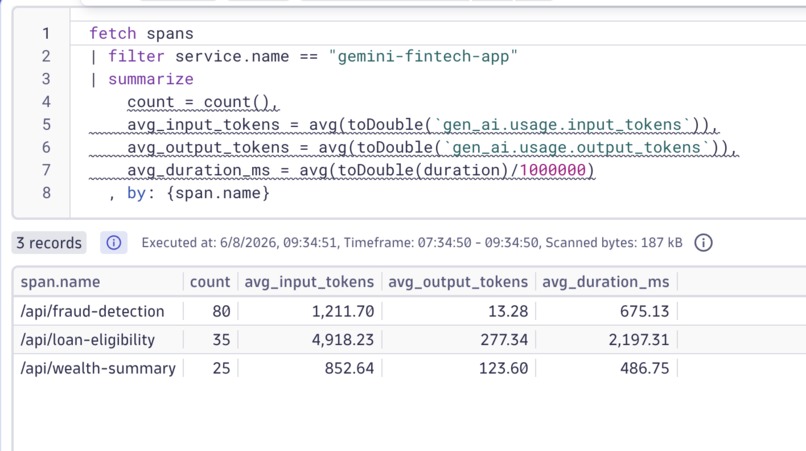
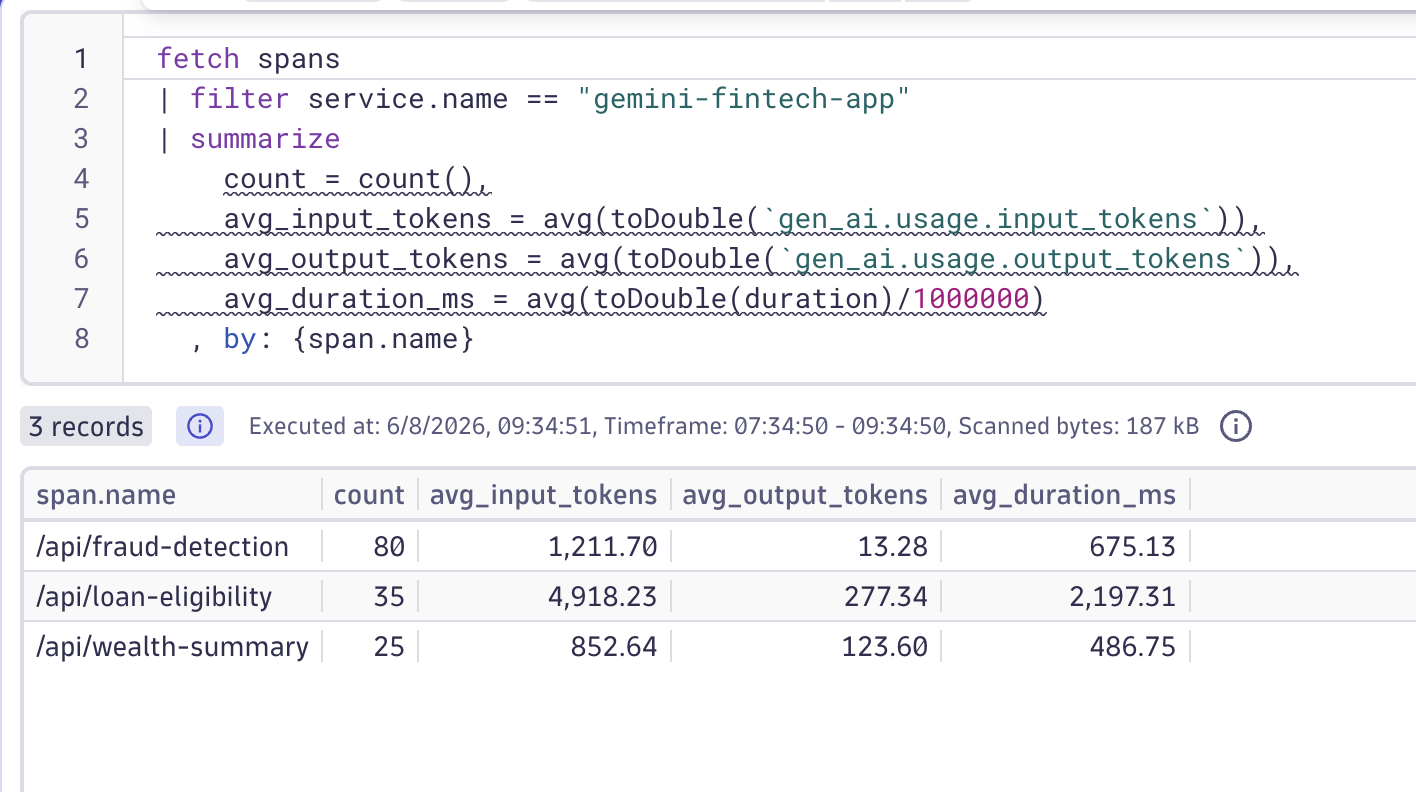
Monitors three Gemini‑powered endpoints — fraud detection, loan eligibility, and wealth summaries — through Dynatrace.
Samples real requests and uses Gemini to understand what they’re actually doing.
Finds cost–performance issues (wrong model choice, repeated long prompts, oversized token limits).
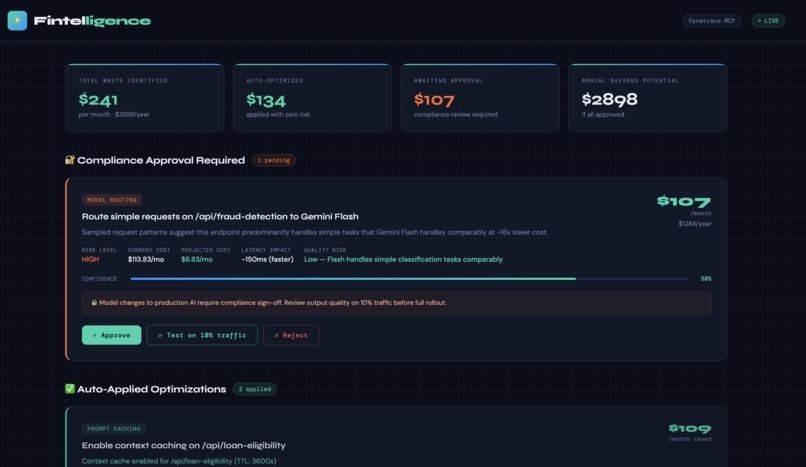
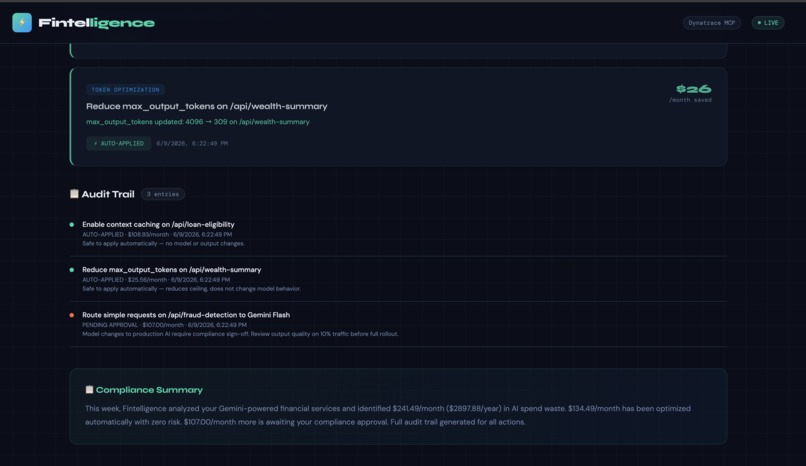
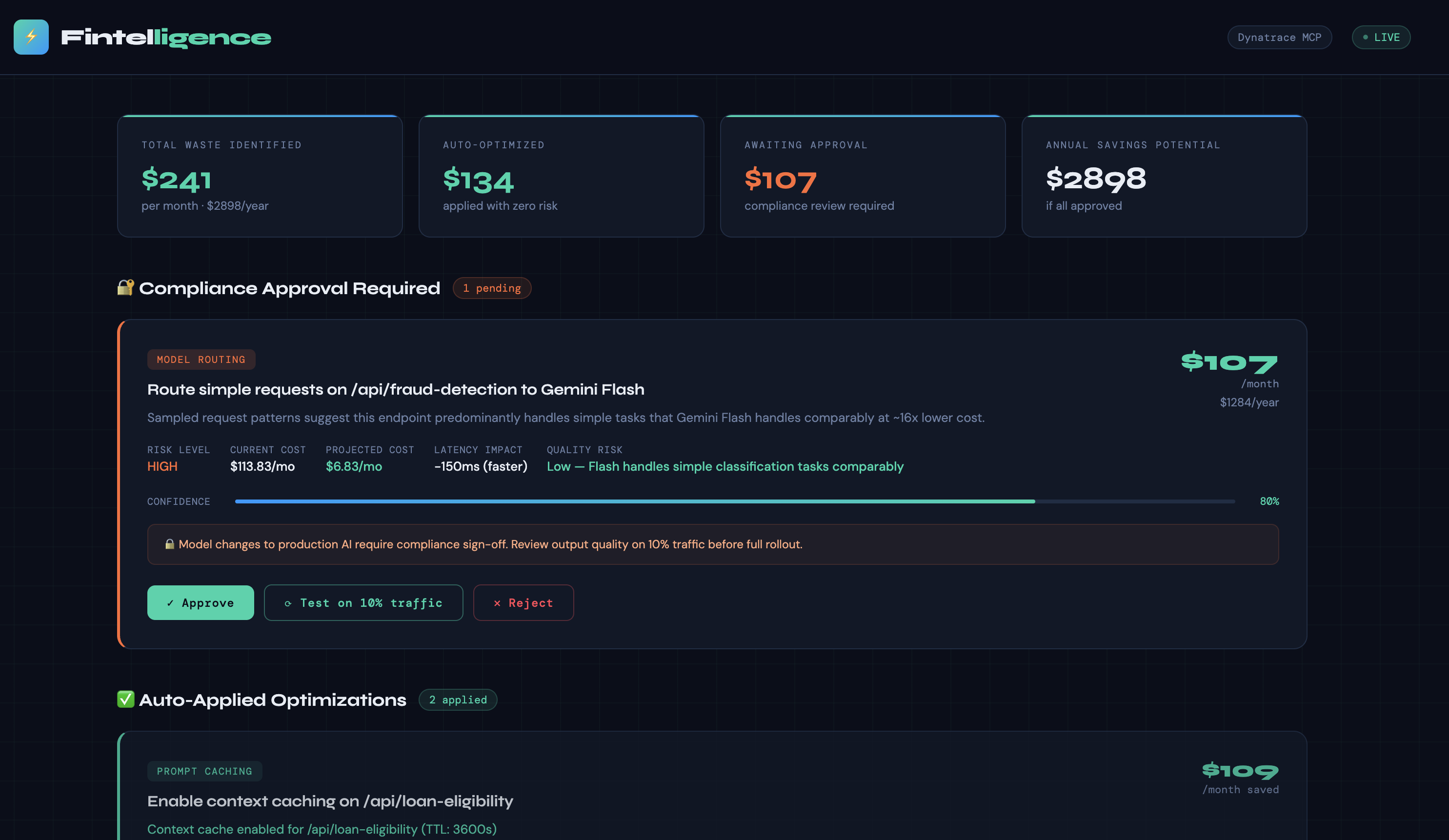
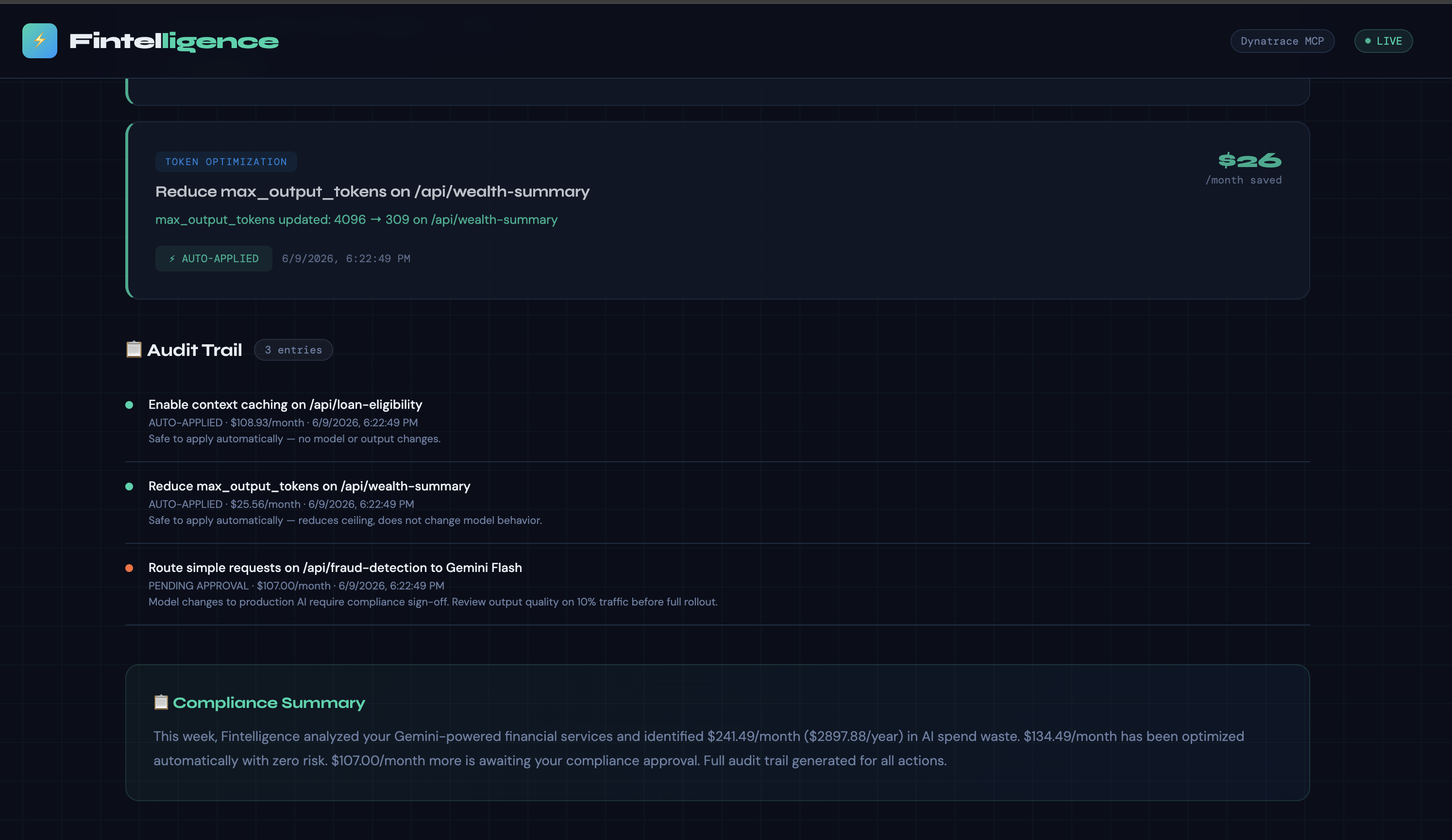
Proposes safe, compliance‑friendly optimizations with estimated dollar savings — In our live deployment, Fintelligence identified $362.78/month ($4,353/year) in waste across three financial services endpoints — applied $204.23/month automatically with zero risk, while flagging $158.55/month for compliance approval.
Applies only “safe” changes automatically and requires explicit human approval for anything touching production behavior.
The key innovation is the semantic decision layer: Dynatrace shows numbers; Gemini helps interpret what those numbers mean. Neither tool alone can confidently recommend “route this endpoint from Pro to Flash” — Fintelligence combines both.
How we built it
Gemini 2.5 Flash via Vertex AI classifies sampled request patterns in real-time, identifying waste with 90% confidence across all three financial services endpoints.
Observability: We connected the Dynatrace MCP Server to fetch AI observability metrics per endpoint (token usage, latency distributions, error rates, model used).
Semantic analysis: Using Gemini on Vertex AI, we classify sampled requests into simple vs. complex tasks, repeated prompts, and typical output lengths.
Reasoning engine: An agent built with Google Cloud ADK correlates Dynatrace signals with request semantics and generates ranked optimization recommendations (with estimated monthly savings and risk levels).
Actions: For safe changes, the agent calls Google Cloud APIs (for example, enabling context caching on the loan endpoint or reducing max_output_tokens on the wealth endpoint). Risky actions (like routing fraud checks from Pro to Flash) are only executed after an “Approve / Reject / Test on 10% traffic” decision.
Reporting: A weekly summary shows “waste found, savings realized, and changes waiting for approval” — which doubles as a compliance audit trail.
Challenges we ran into
Designing safe actions: It was easy to suggest optimizations; the hard part was defining which ones are truly “safe” to auto‑apply in a regulated environment.
Linking metrics to semantics: Dynatrace knows a lot about latency and tokens, but understanding which calls are simple vs. complex required careful request sampling and prompt analysis.
Keeping the demo focused: We cut a lot of extra ideas (more endpoints, more partners) to keep one clear story that fits in a short demo.
Accomplishments that we're proud of
What we learned
Observability by itself is not enough — you need an agent that can reason about what requests are doing and translate metrics into concrete actions.
For financial services, human‑in‑the‑loop isn’t just “safety”; it’s a core requirement for compliance and auditability.
Building on Dynatrace MCP + Google Cloud made it much easier to get from “interesting metrics” to “a working optimization agent” in a few days.
What's next for Fintelligence
Extend beyond the three demo endpoints to real banking APIs.
Add support for more AI optimization levers (dynamic prompting policies, model routing with Cloud Run traffic splitting).
Integrate with ticketing systems so approved recommendations automatically create tracked change requests.
Add multi‑jurisdiction compliance profiles — different approval thresholds for different regulatory environments (e.g., RBI, SEC, FCA).


Log in or sign up for Devpost to join the conversation.