Inspiration
As freelancers and developers, we noticed a recurring problem: capital inefficiency.
We receive irregular payments that often sit idle in checking accounts earning approximately 0.01% APY, while bills continue to pile up. Manually moving funds to high-yield savings, tracking crypto markets, and ensuring invoices are paid requires constant context switching.
We asked ourselves:
What if our bank account had a brain?
Inspired by the idea of a Self-Driving Treasury, we envisioned personal finance as a logistics problem—optimising liquidity for liabilities while automatically maximizing yield through DeFi protocols.
What We Built
FinTabs is an AI-driven financial operating system that seamlessly connects traditional finance (fiat, bills) with the future of finance (DeFi, crypto).
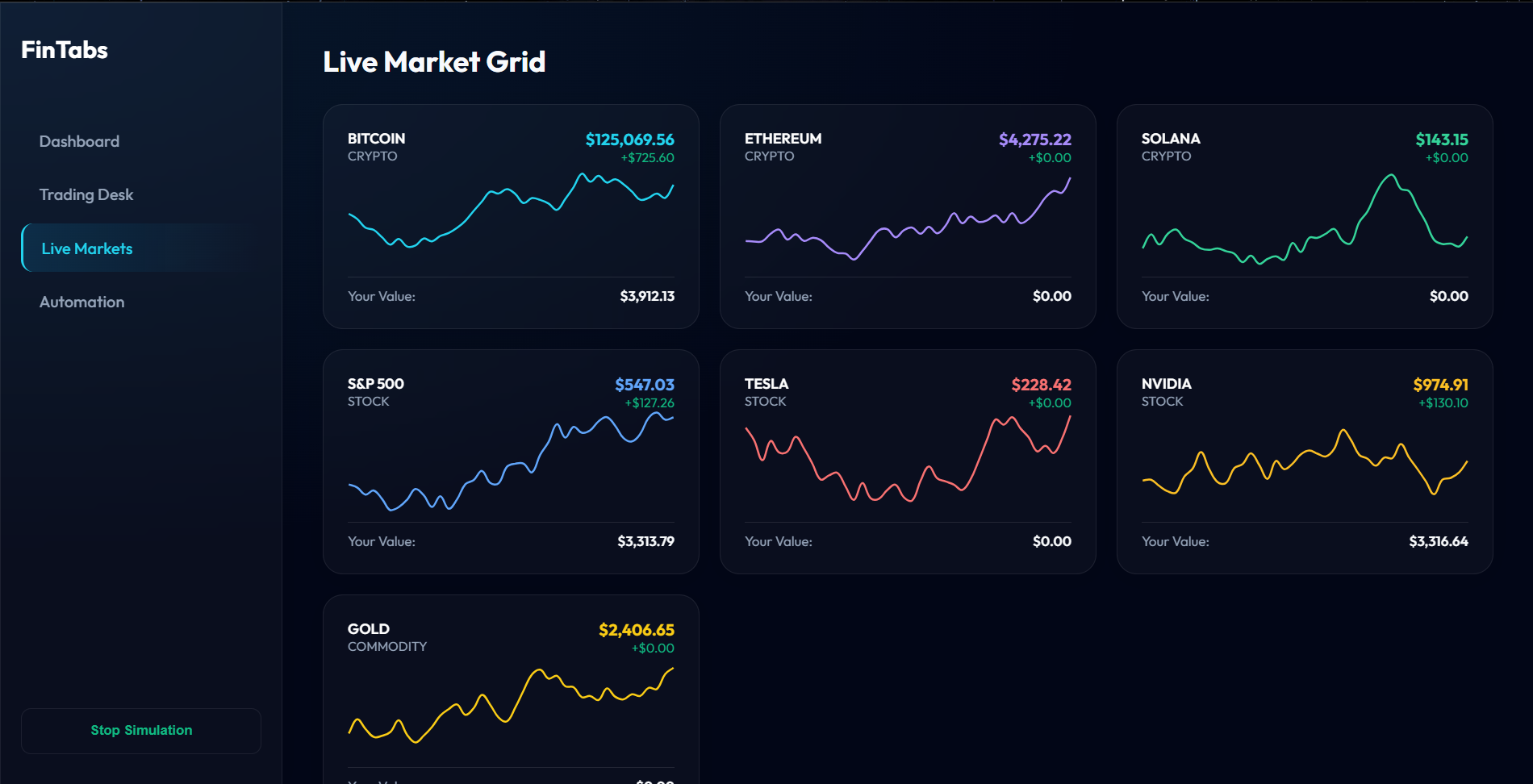
Live Market Simulation
Tracks real-time price movements of BTC, ETH, S&P 500, and NVIDIA using sentiment-biased random walks to simulate a living economy.
AI Portfolio Rebalancing
An intelligent agent monitors available cash. If funds exceed a dynamic safety buffer, capital is automatically diversified into high-yield assets based on volatility and sentiment.
Automated Liability Management
Users add recurring expenses (AWS, rent, Adobe, etc.). The system tracks due dates and auto-liquidates assets when necessary to ensure bills are never missed.
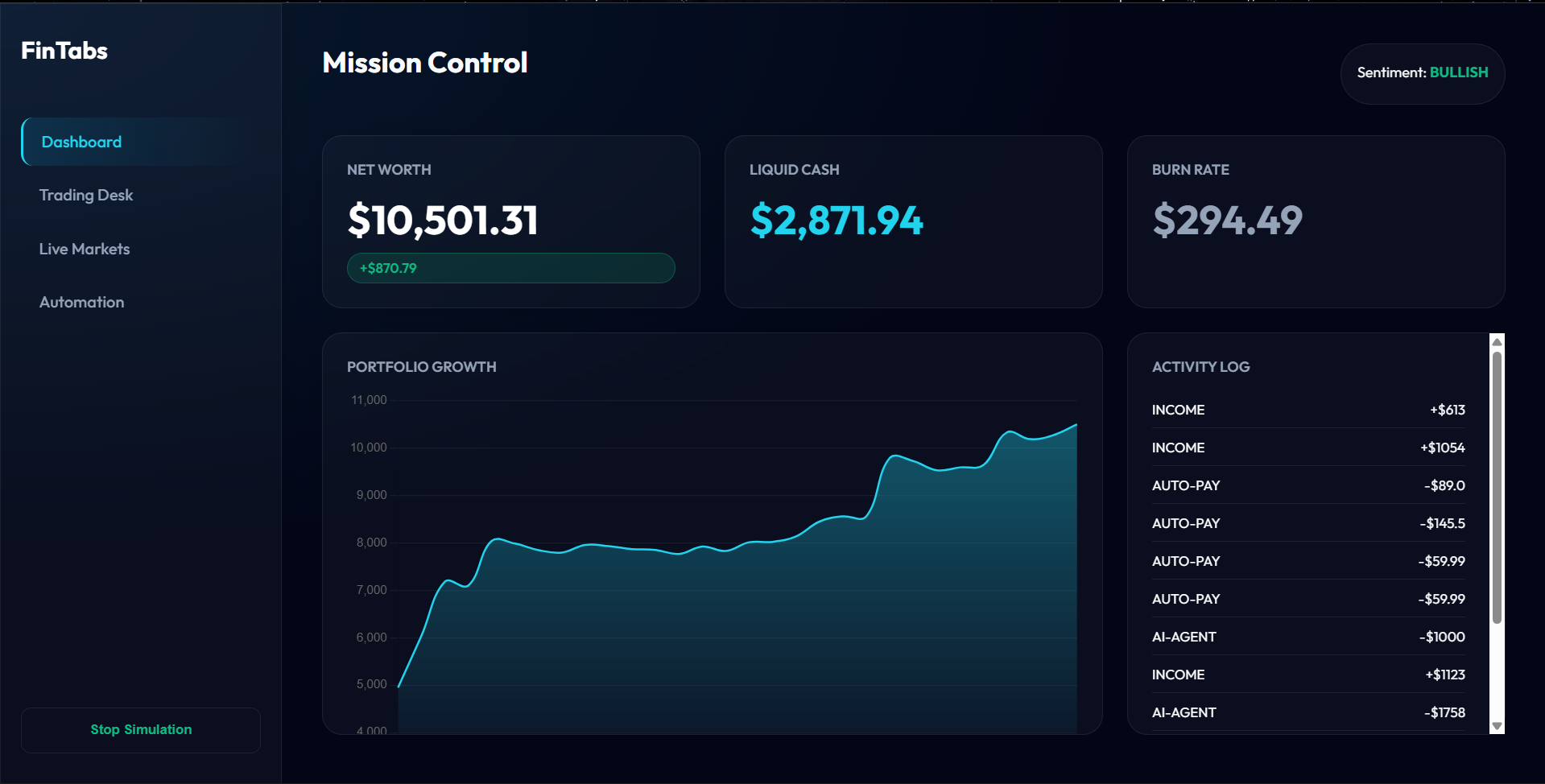
Nebula Analytics Dashboard
A glass-morphic UI displaying real-time net worth, P&L, asset allocation, and market trends.
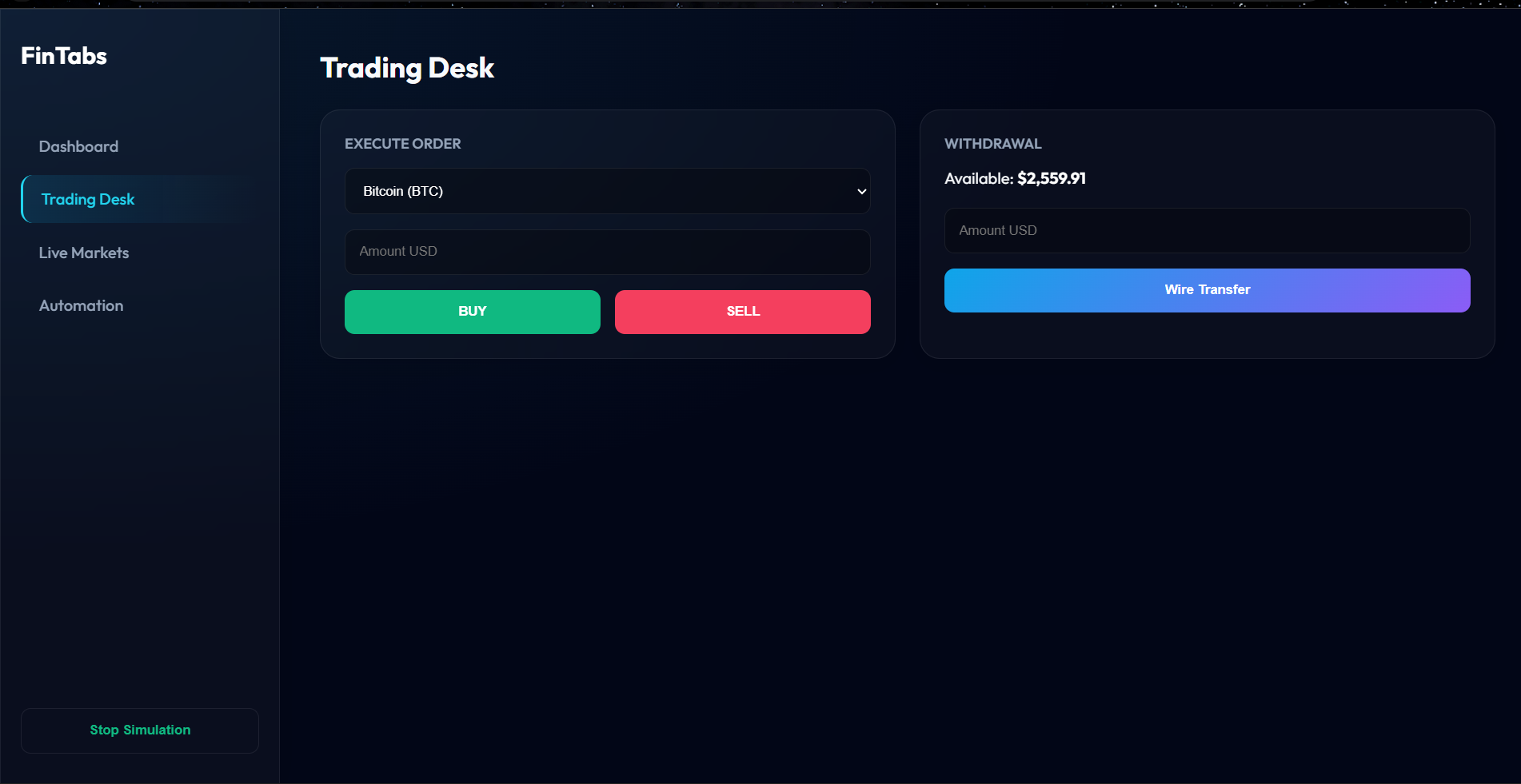
Smart Trading Desk
A manual trading terminal with realistic maker/taker fees and slippage simulation for users who want full control.
How We Built It
FinTabs uses a Python (Flask) backend paired with a high-performance vanilla JavaScript frontend.
Backend actions such as trades, rebalancing, and liquidations are instantly reflected on the frontend via activity logs and notifications, ensuring transparency and trust.
Challenges We Faced
- Balancing aggressive automation with financial safety
- Accounting for fees, slippage, and volatility that quickly erode gains
- Making automated decisions transparent enough for users to trust
- Working within platform constraints that support Markdown but not full LaTeX
What We Learned
Financial Friction Is Real
Even in simulations, fees and volatility quickly erode gains—highlighting the importance of systematic, algorithmic strategies.
UX Builds Trust
Money demands transparency. Activity logs and notifications transformed FinTabs from a black box into a tool users can trust.
What's Next for FinTabs
Web3 Integration
Replace simulations with real smart-contract interactions using web3.py (Aave, Uniswap).
Plaid API Integration
Connect real bank accounts to track actual income and expenses.
LLM-Powered Financial Advisor
Integrate OpenAI’s API so users can ask questions like:
How can I save for a house in 2 years?
and have the AI dynamically adjust portfolio strategy.

Log in or sign up for Devpost to join the conversation.