-
-
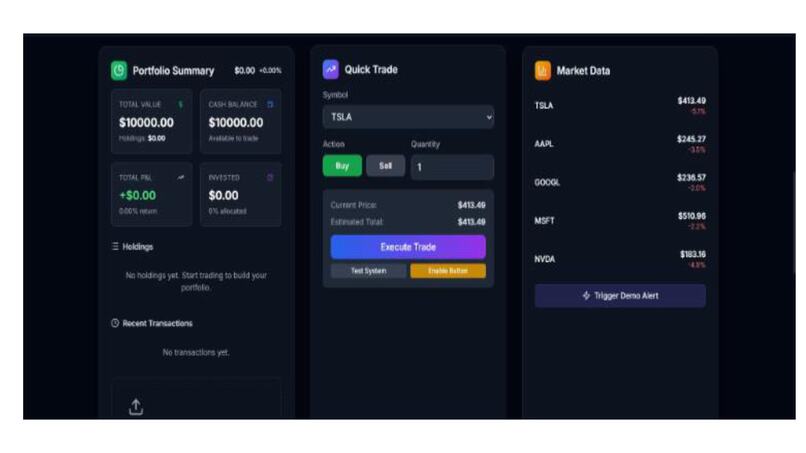
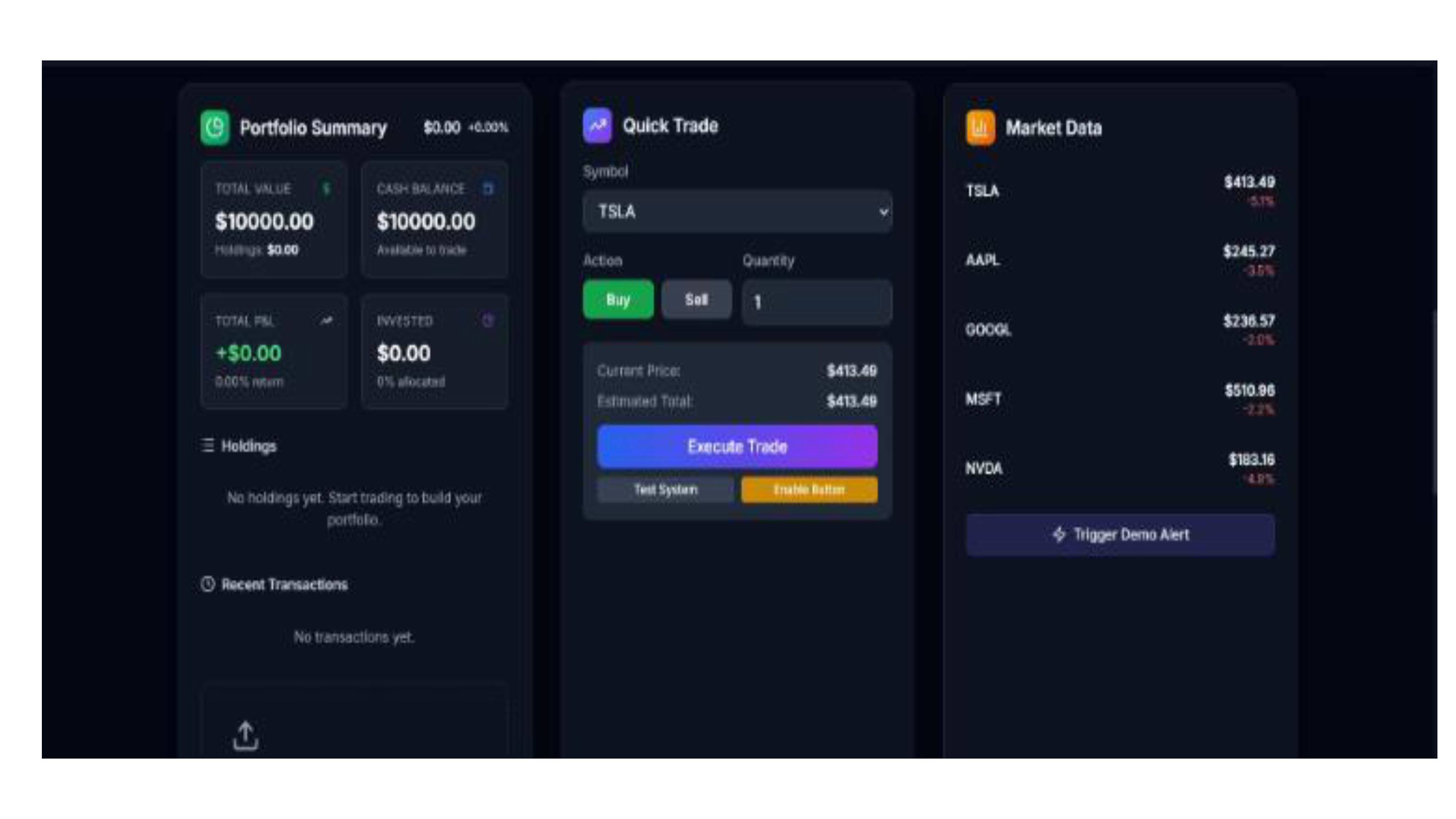
Portfolio & Quick Trade Module
-
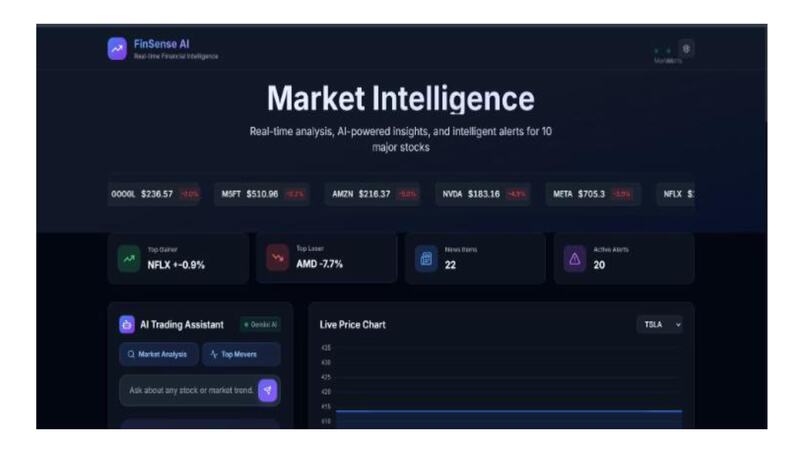
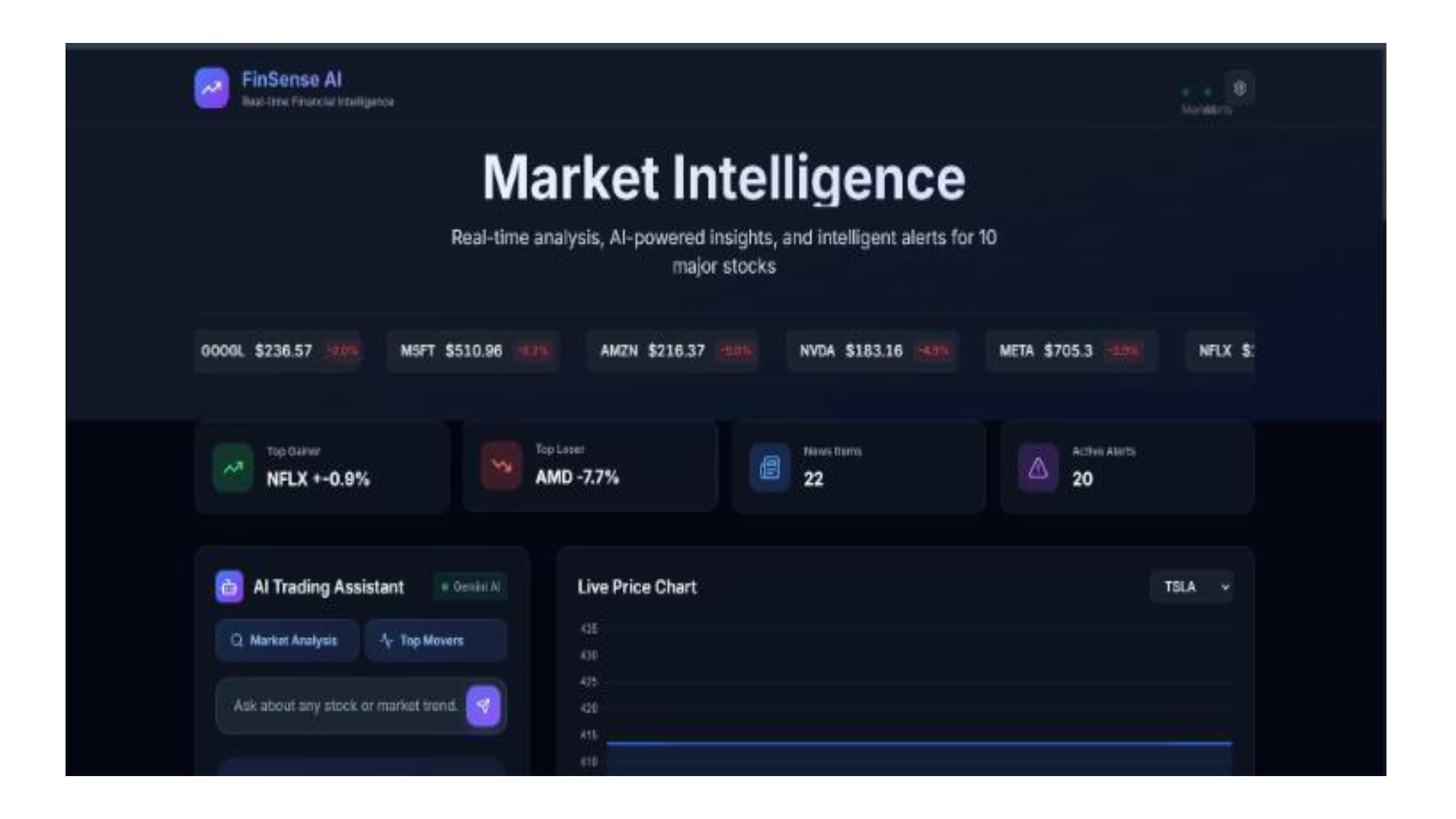
Main Dashboard Overview
-
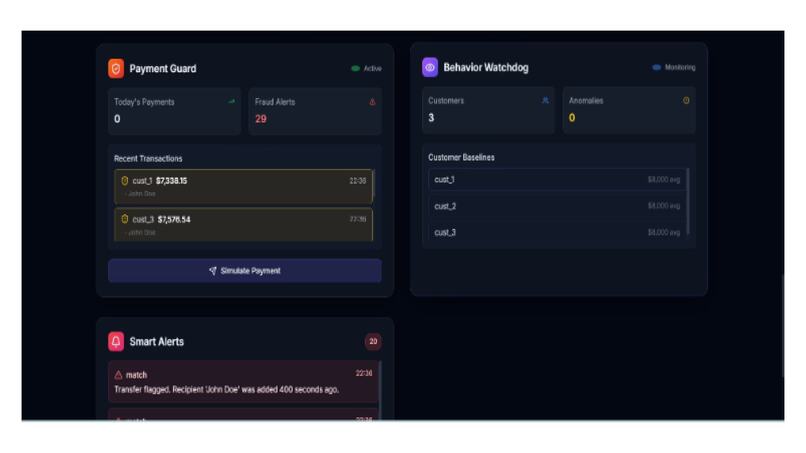
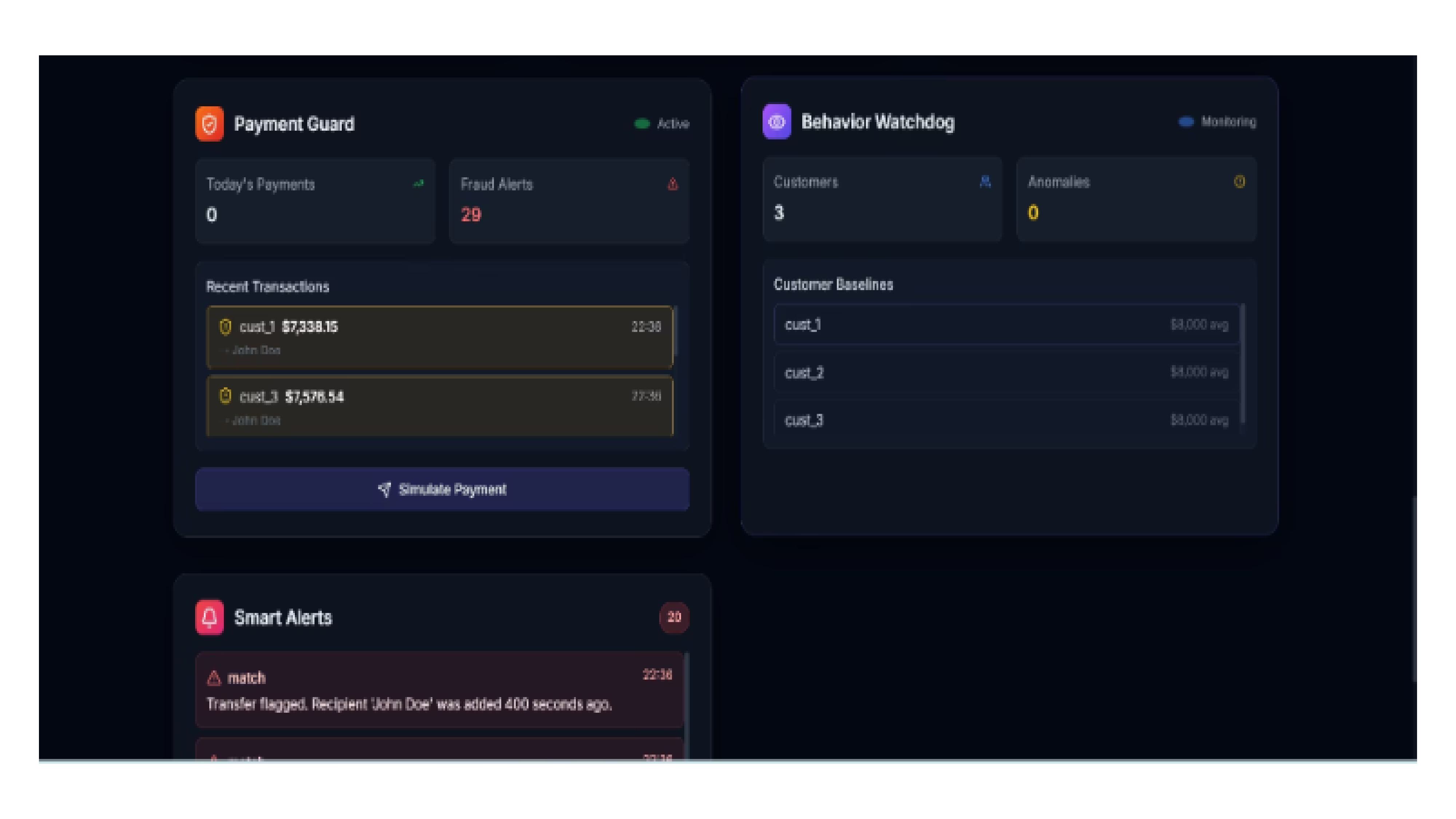
Risk, Fraud & Security Engine
-
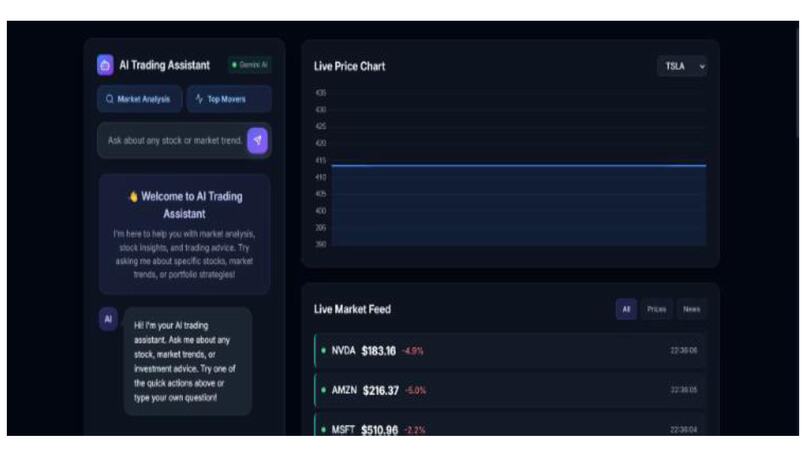
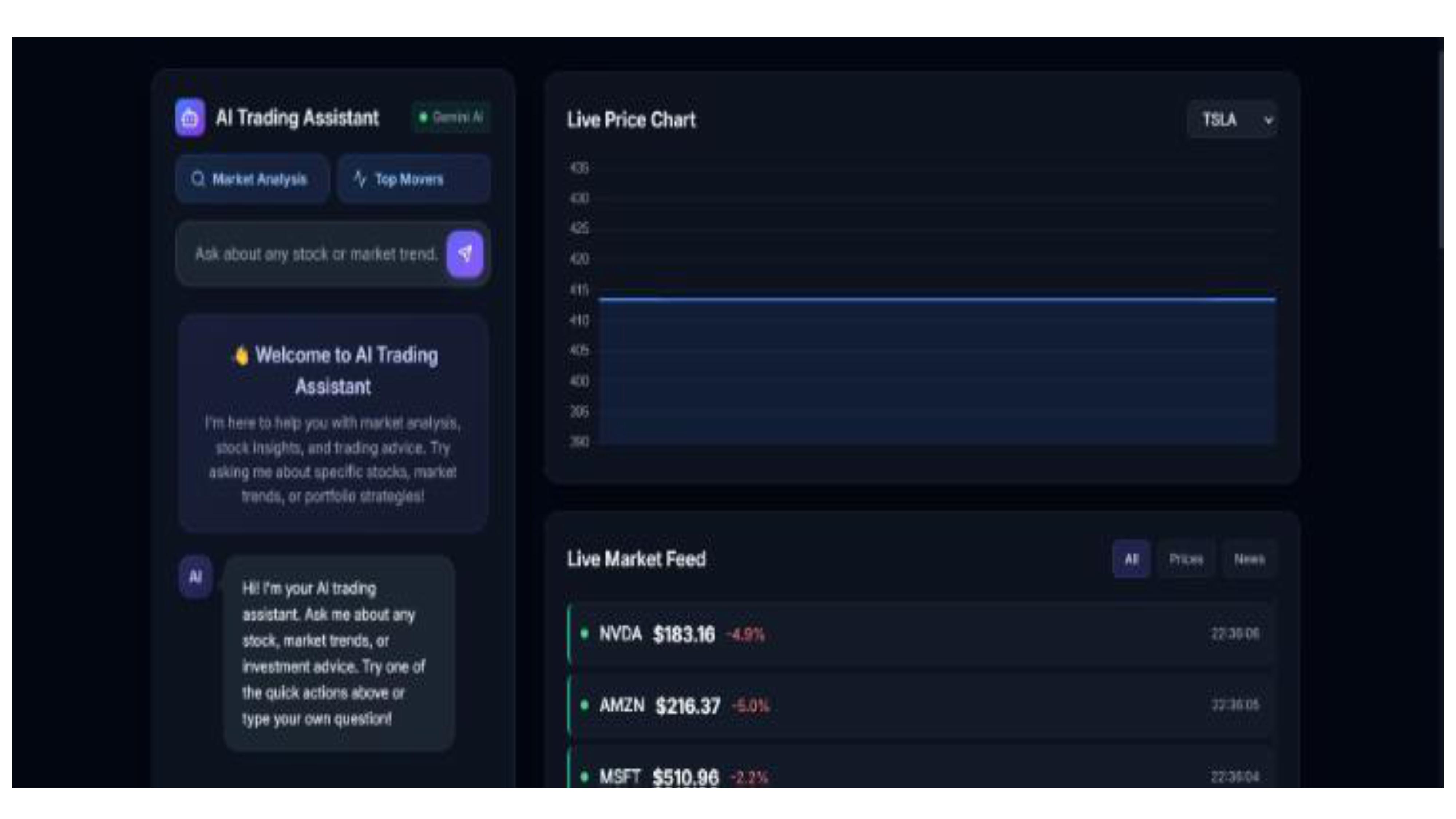
AI Trading Assistant & Live Feeds
FinSense AI: Real-Time Financial Intelligence Assistant
Inspiration
Financial markets generate enormous amounts of data every second, from stock price movements and breaking news to market sentiment and portfolio fluctuations. For analysts, traders, and investors, manually connecting these signals can be time-consuming and overwhelming. Important insights may be missed, and delayed analysis can increase financial risk.
We built FinSense AI to address this challenge by transforming fragmented financial data into contextual, explainable, and actionable intelligence. Our vision was to create an AI-powered financial assistant that not only tracks market movements but also explains why they happen and how they may affect a user's portfolio.
What It Does
FinSense AI combines real-time market data, financial news, sentiment analysis, and Large Language Models (LLMs) into a unified intelligence platform.
- Live Market and News Integration: Aggregates financial information from sources such as Finnhub, Alpha Vantage, Polygon, and NewsAPI.
- Trading Buddy AI: Uses Gemini and OpenAI models to explain market events through natural-language conversations.
- Sentiment Analysis: Uses NLP techniques to identify changes in market sentiment and potential abnormal patterns.
- Portfolio Risk Engine: Connects market movements and breaking news with portfolio holdings to identify potential risks.
- Real-Time Alerts: Delivers notifications and dynamic dashboard updates through WebSockets.
- Portfolio Monitoring: Tracks holdings, profit and loss (P&L), and exposure using uploaded portfolio data.
How We Built It
We designed FinSense AI around a modular architecture that connects data ingestion, streaming analytics, AI reasoning, and an interactive dashboard.
1. Data Ingestion
We integrated financial market and news APIs to collect price movements, news updates, and relevant market signals. These inputs form the foundation of our financial intelligence pipeline.
2. Real-Time Processing
We used FastAPI, Python's AsyncIO, and Pathway to support asynchronous processing and streaming analytics. This architecture helps process incoming information and track changing sentiment and volatility.
3. AI-Powered Reasoning
We integrated Gemini and OpenAI APIs to power Trading Buddy AI. Alongside NLP tools such as spaCy and TextBlob, the system analyzes market context and generates natural-language explanations of financial events.
4. Portfolio Intelligence
We designed a portfolio risk engine that correlates market movements and news with portfolio holdings. This enables relevant risk alerts instead of overwhelming users with unrelated financial updates.
5. Interactive Dashboard
We used React.js and Tailwind CSS for the frontend, with WebSockets and Chart.js supporting real-time updates and visualizations. The interface brings market insights, portfolio information, and AI-generated explanations into one place.
Challenges We Faced
One of our main challenges was bringing together different types of financial information, including continuously changing prices, unstructured news articles, and sentiment signals. Each source provides a different perspective, making meaningful correlation more difficult than simply displaying the data.
Another challenge was designing a real-time processing pipeline that could deliver timely updates while supporting AI-powered reasoning. We also needed to make financial insights understandable rather than presenting users with unexplained sentiment scores or raw market numbers.
Portfolio impact analysis introduced another layer of complexity: market news must be relevant to the assets a user actually holds. We addressed these challenges through a modular architecture that separates data ingestion, streaming analytics, AI reasoning, and portfolio monitoring.
What We Learned
Building FinSense AI helped us understand how to combine streaming data systems with AI-driven applications to solve practical problems in financial technology.
We learned the importance of asynchronous processing, API integration, real-time communication through WebSockets, and using LLMs to make complex information easier to understand. We also explored how sentiment analysis can complement numerical market indicators and how portfolio context can make financial alerts more relevant.
Most importantly, we learned that an effective AI system should do more than generate answers. It should connect relevant information, communicate its reasoning clearly, and help users understand the context behind its insights.
Impact and Future Scope
FinSense AI aims to reduce the time required to interpret financial information from hours to seconds, helping analysts, traders, and institutions identify relevant developments more efficiently.
Our next steps include strengthening authentication and persistent storage, improving alert management, refining LLM prompts, and expanding personalization. We also aim to improve the reliability and traceability of AI-generated explanations.
Our goal is simple: turn financial data overload into clear, contextual intelligence that supports faster and more informed decisions.
FinSense AI brings markets, news, sentiment, and portfolio risk together in one intelligent assistant—helping users focus less on collecting information and more on understanding what it means.
Built With
- alpha-vantage-api
- artificial-intelligence
- asyncio
- chart.js
- docker
- fastapi
- finnhub-api
- gemini-api
- llm
- machine-learning
- natural-language-processing
- newsapi
- openai-api
- pathway
- polygon-api
- python
- react
- sentiment-analysis
- tailwind-css
- websockets

Log in or sign up for Devpost to join the conversation.