-
-

Landing Page
-
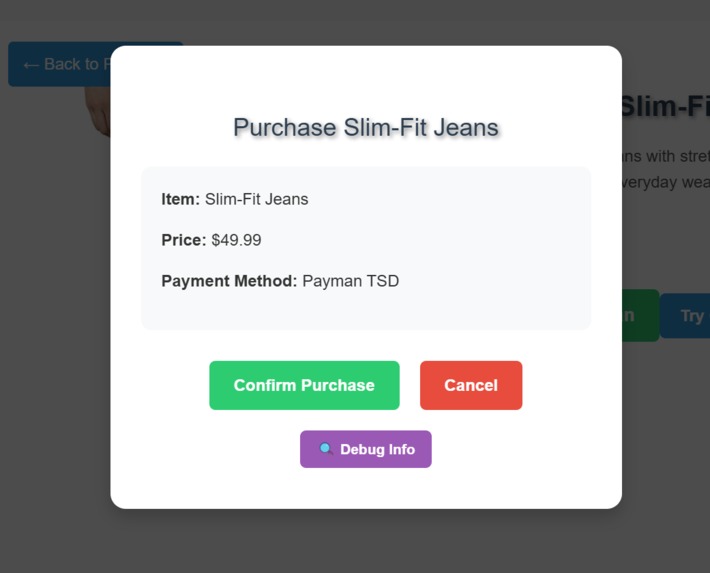
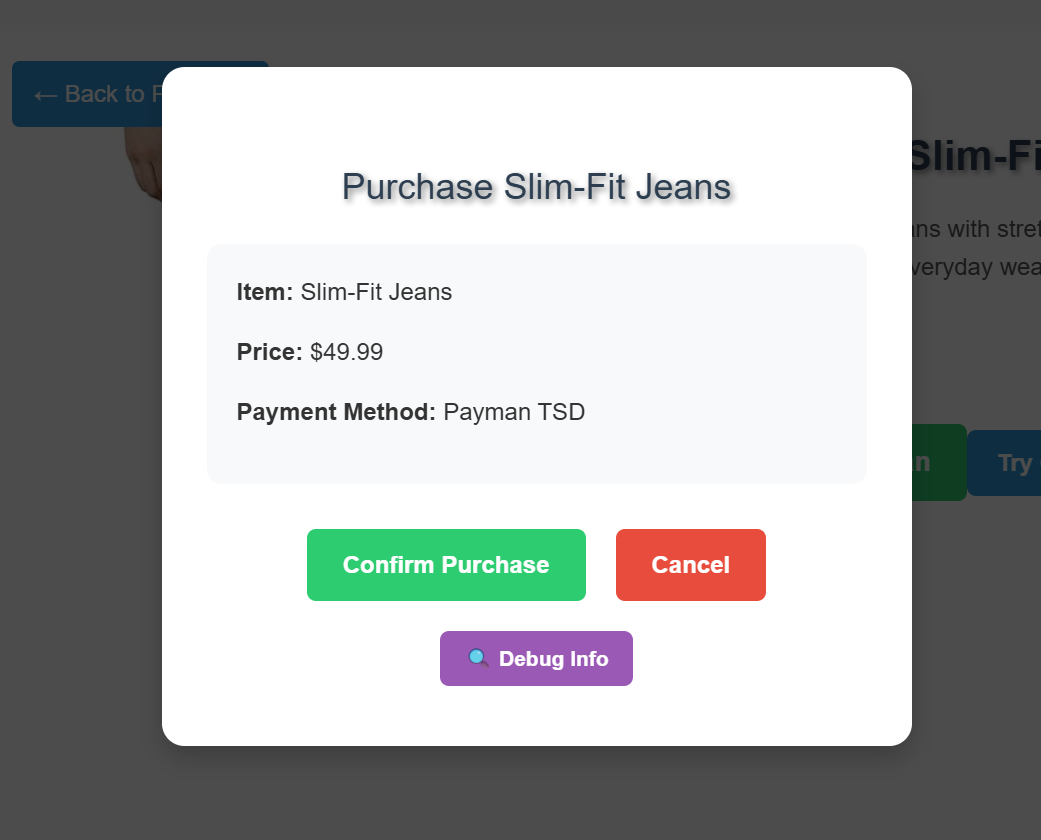
Confirmation to Purchase
-
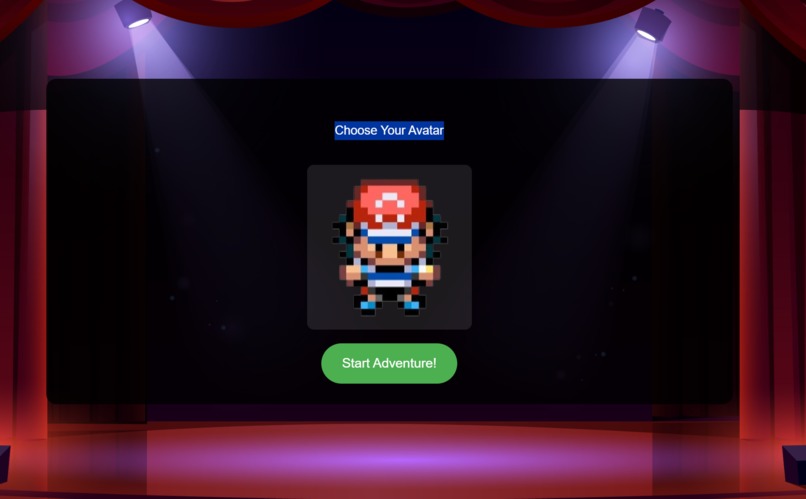
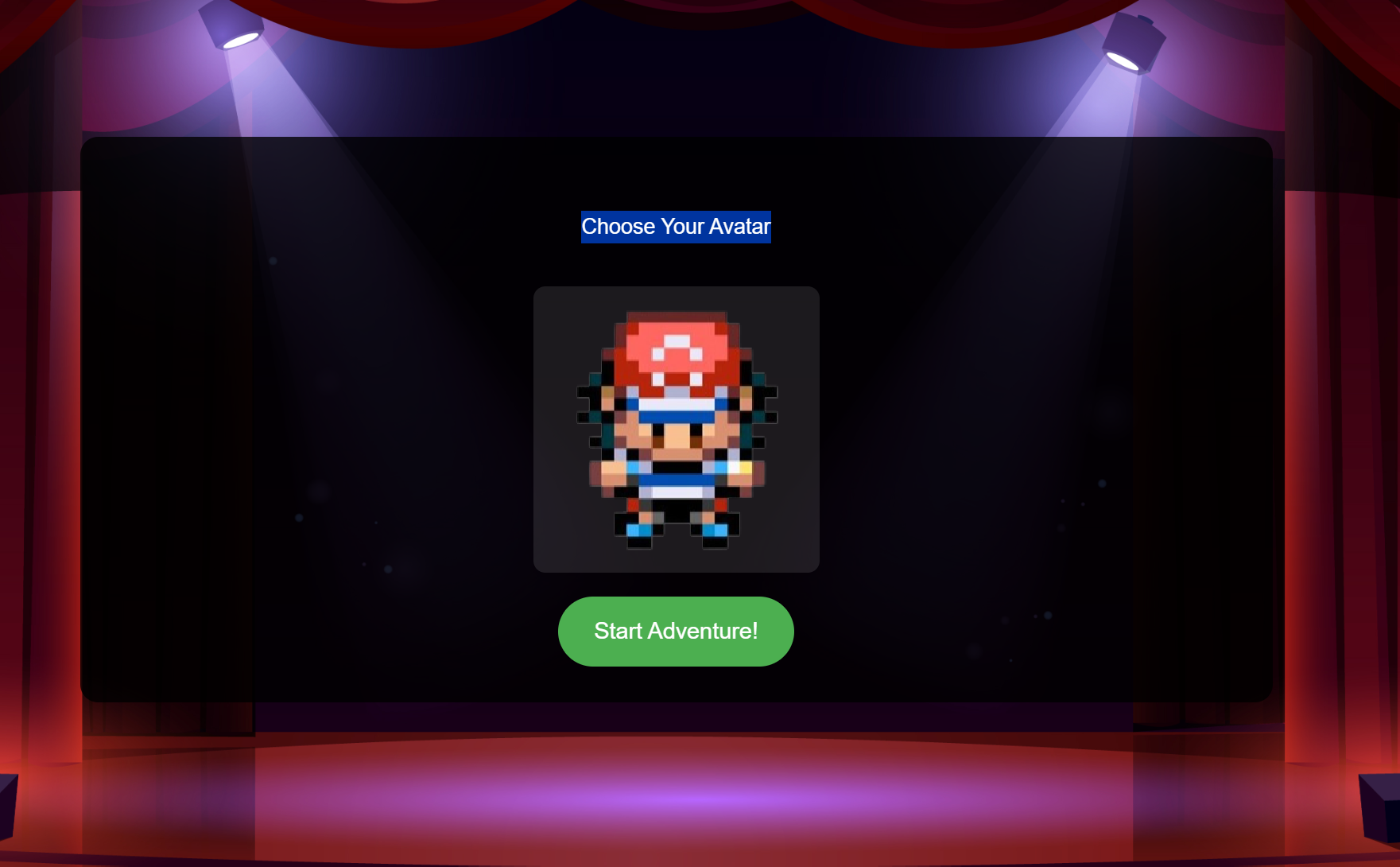
Avatar Selection Page
-
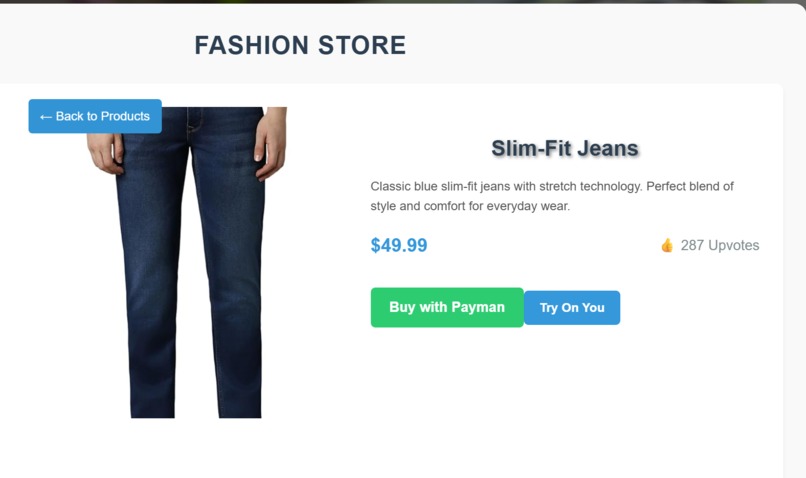
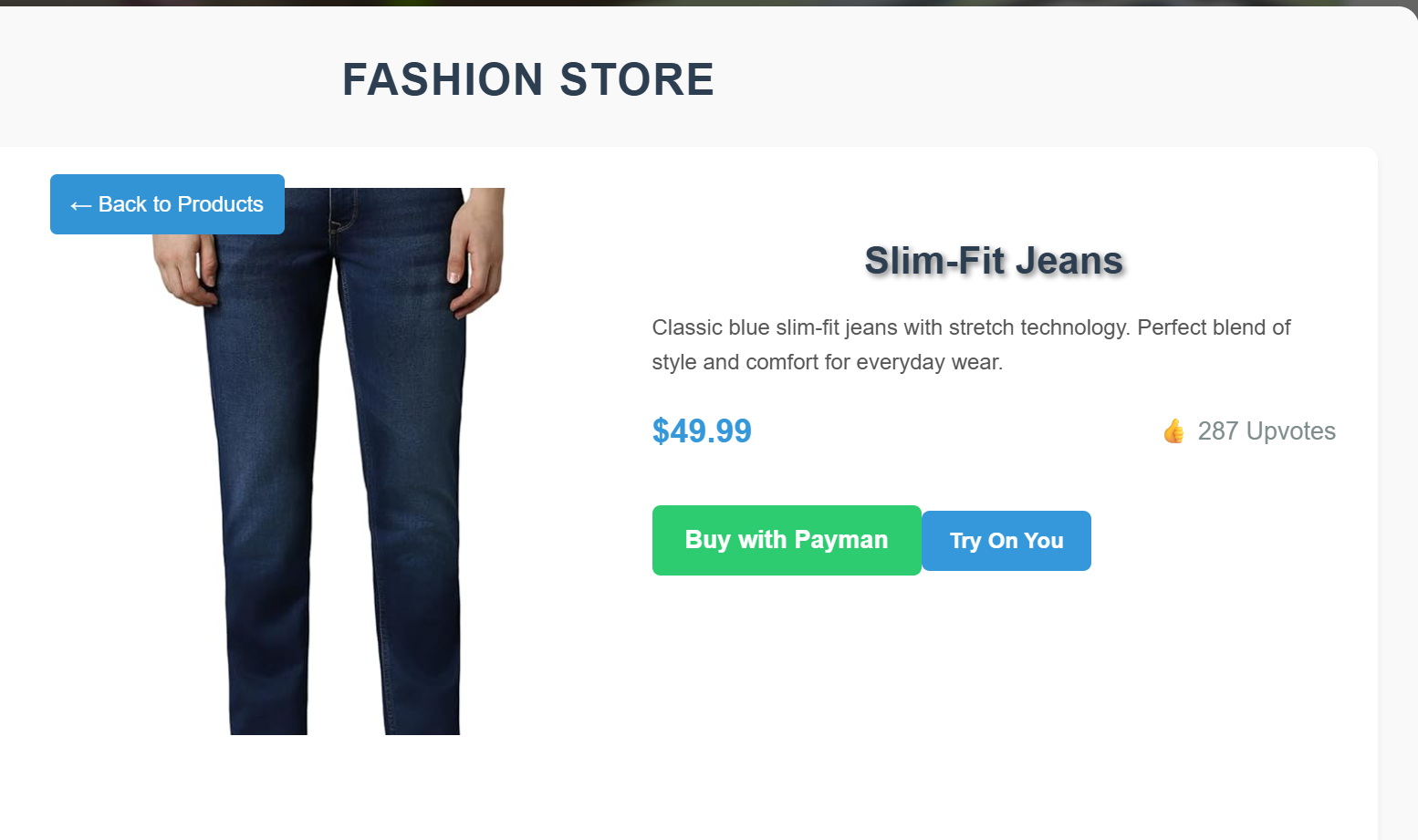
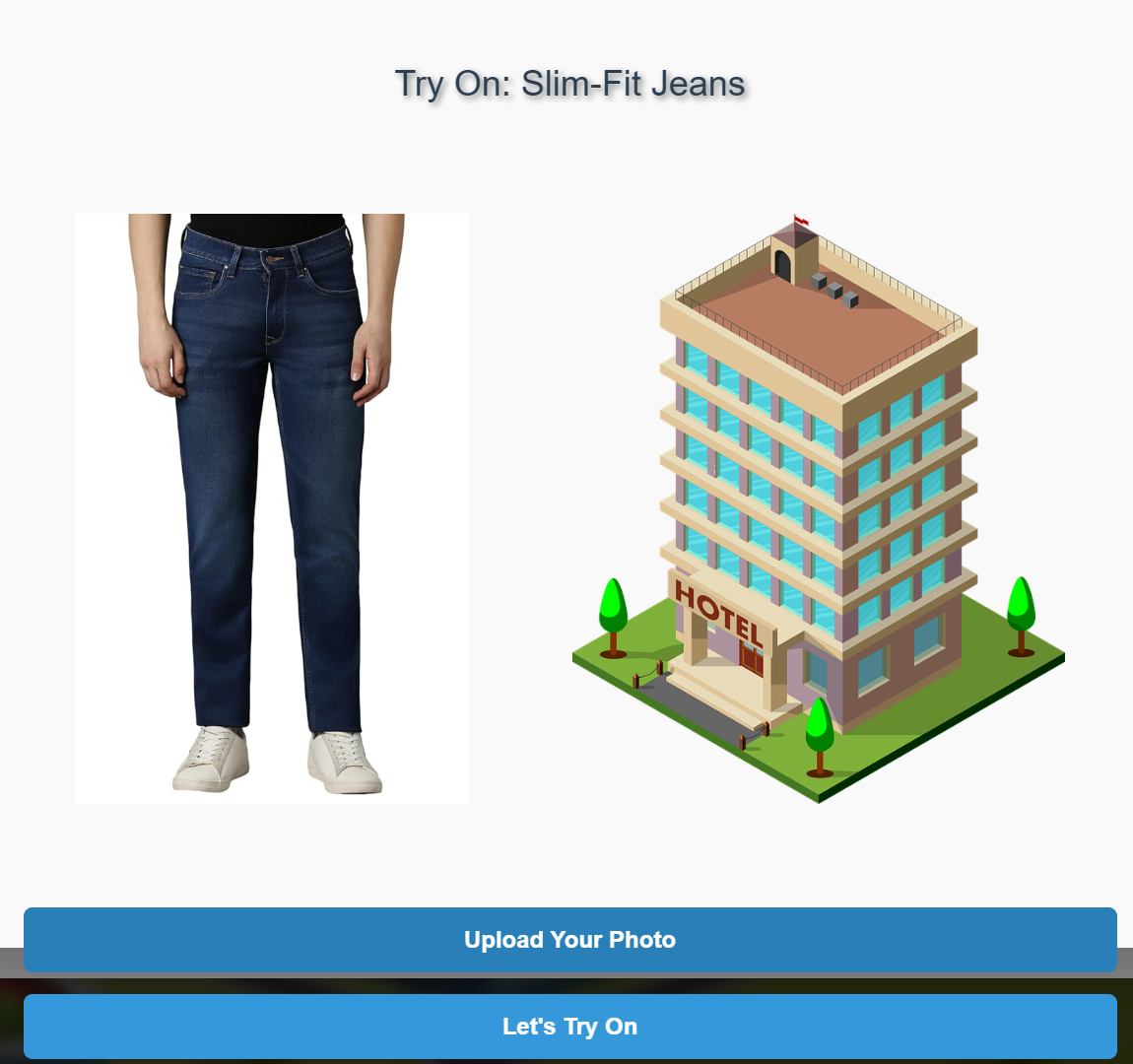
Slim-Fit Jeans Selected
-
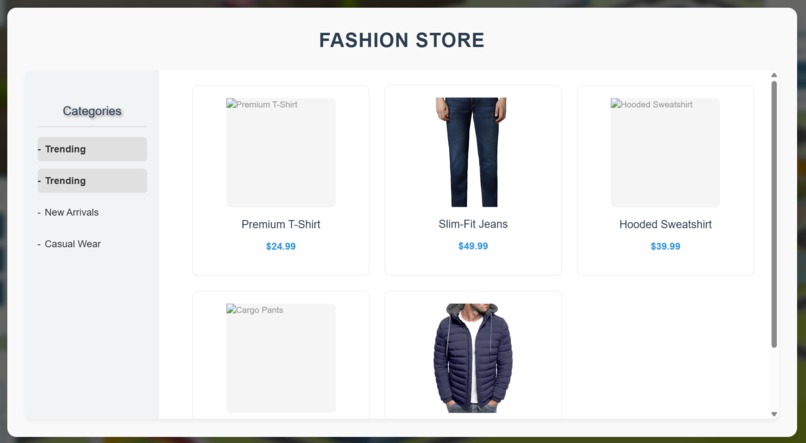
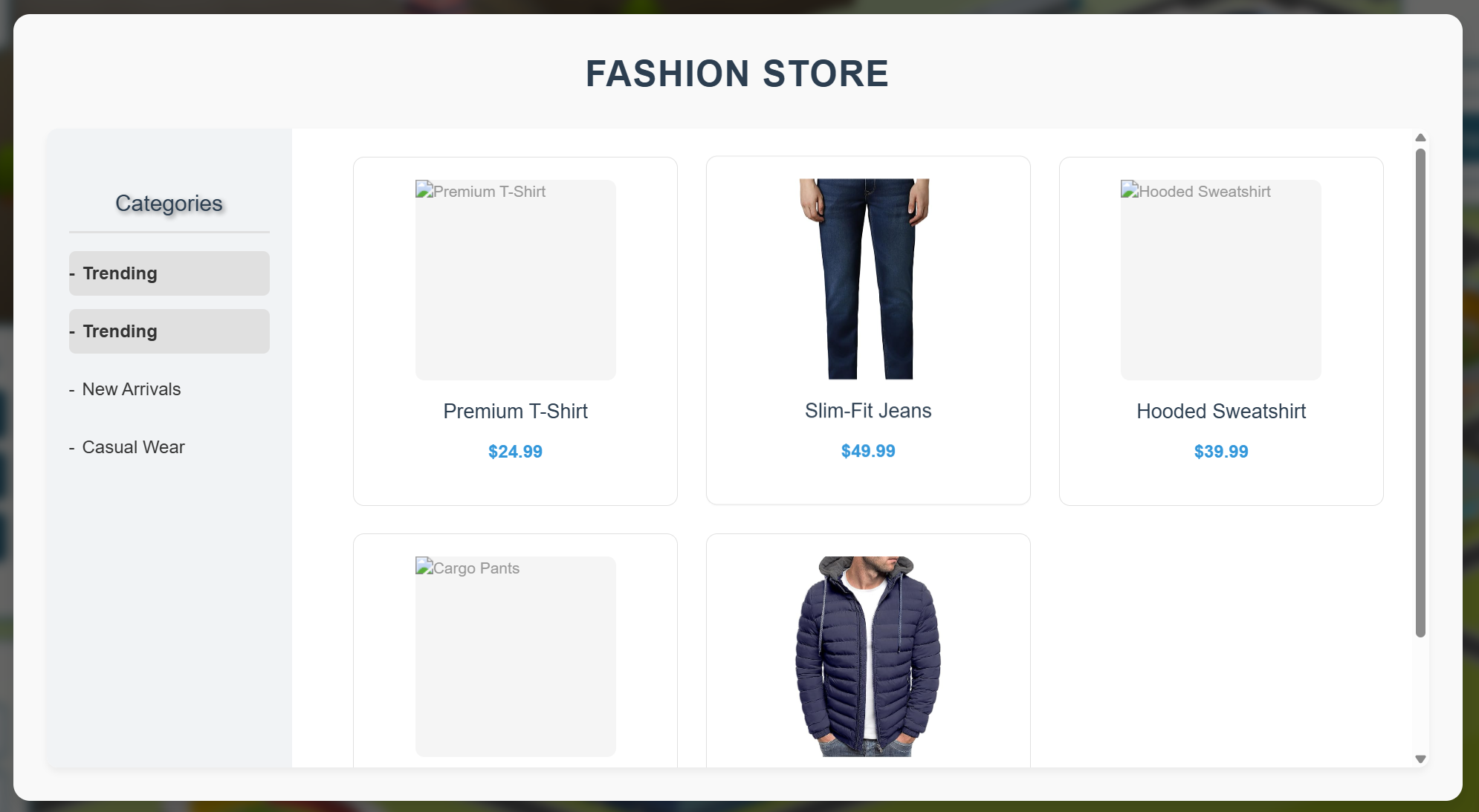
Buying Accessories from Stores
-
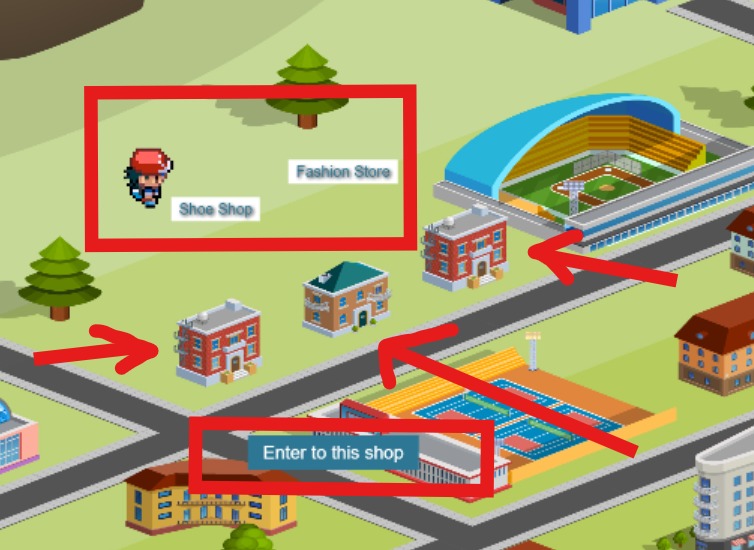
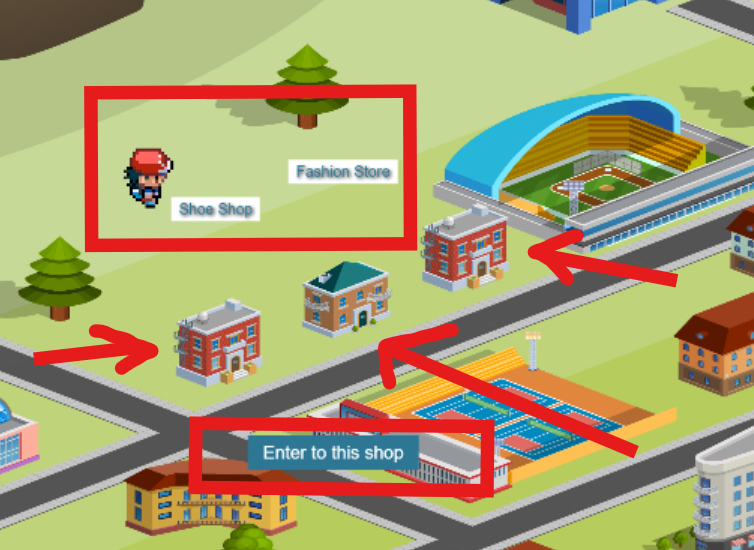
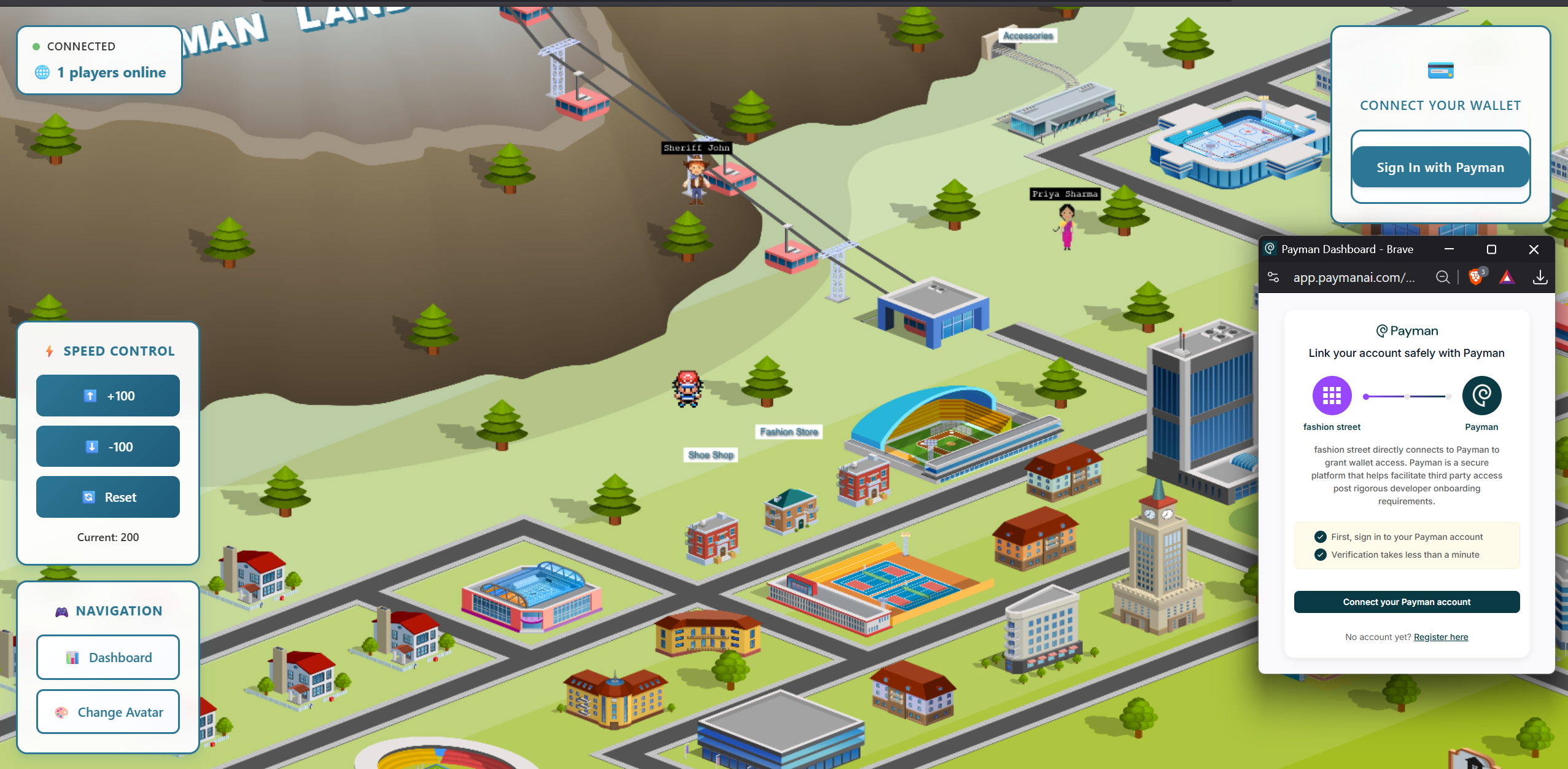
Shops and Offices
-
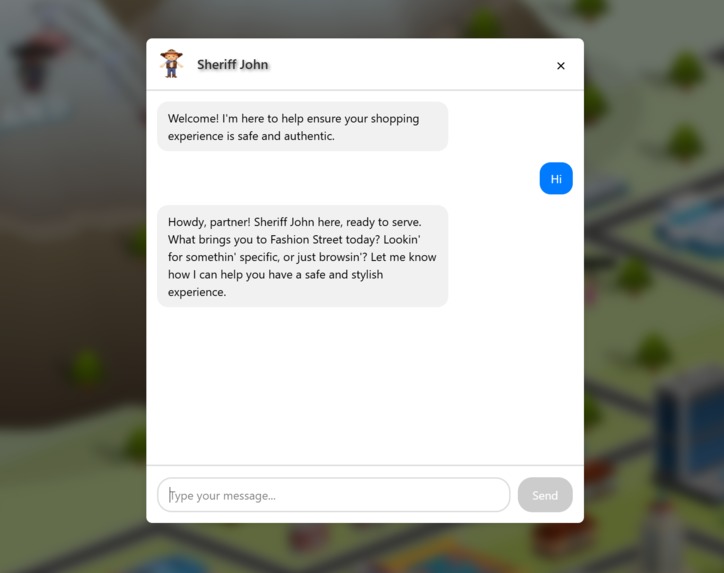
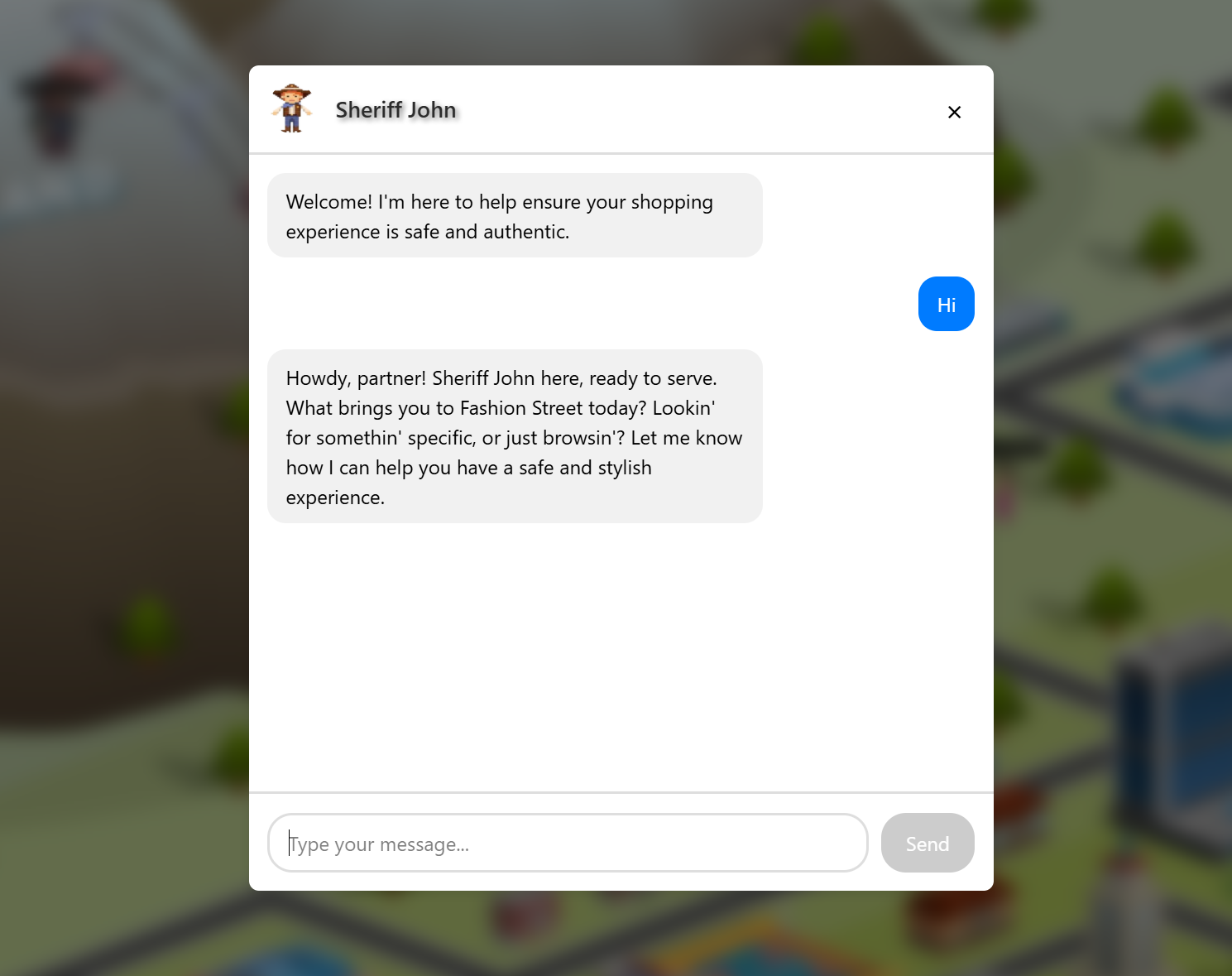
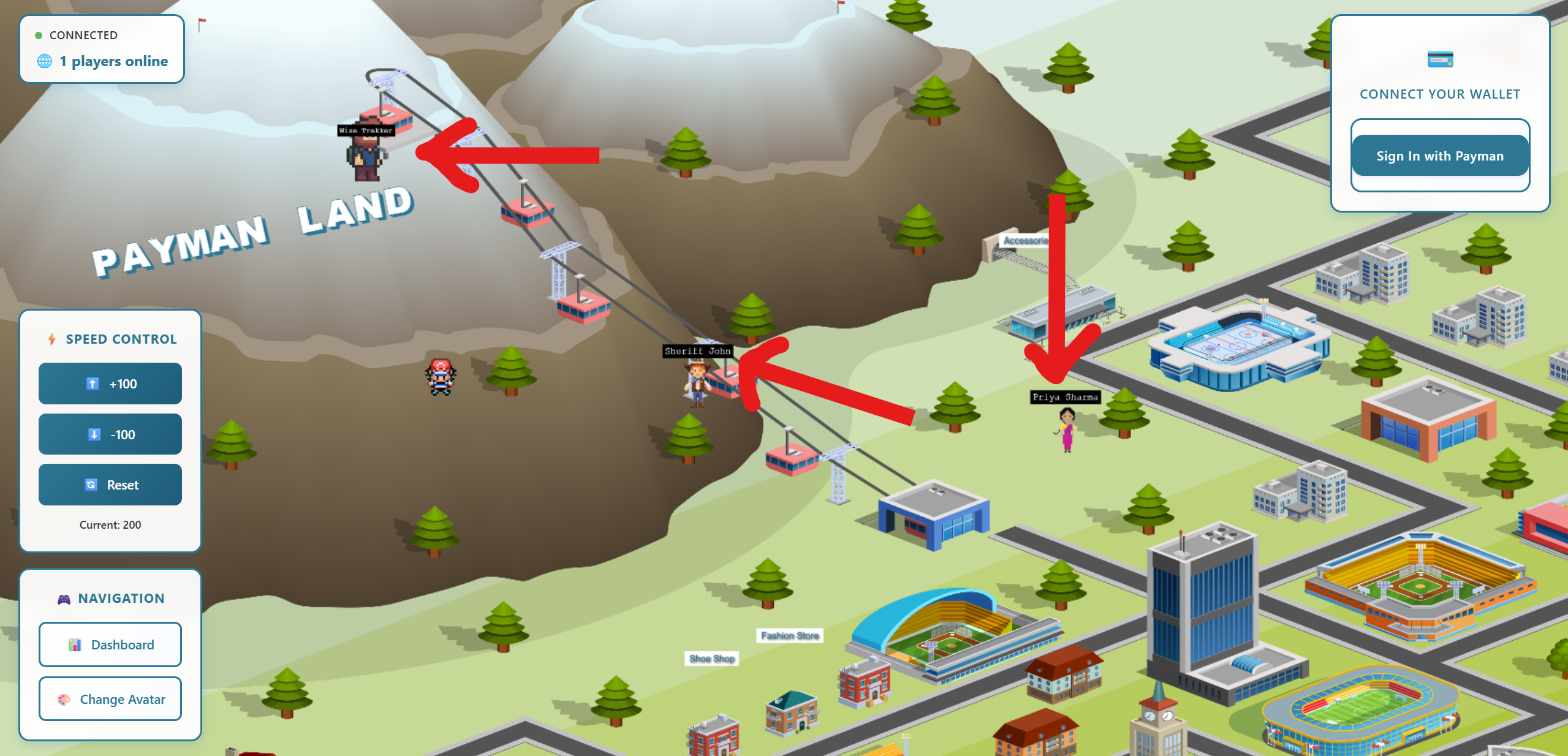
Chat with NPCs / Other Online Players
-
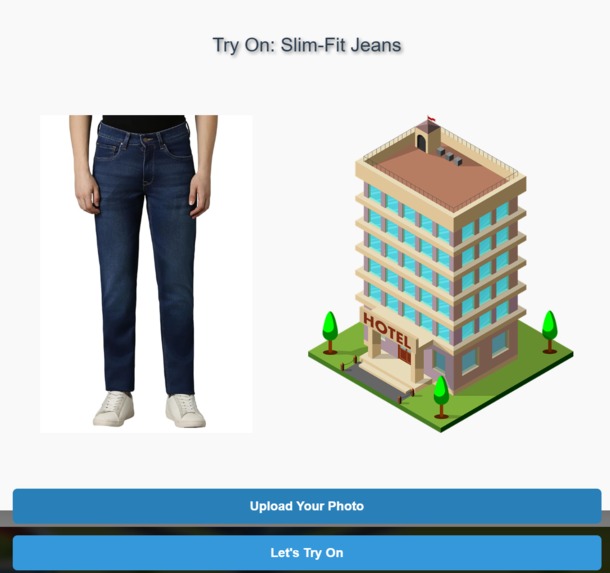
AI-Based Image Diffusion Try On the Clothes/Accessories
-
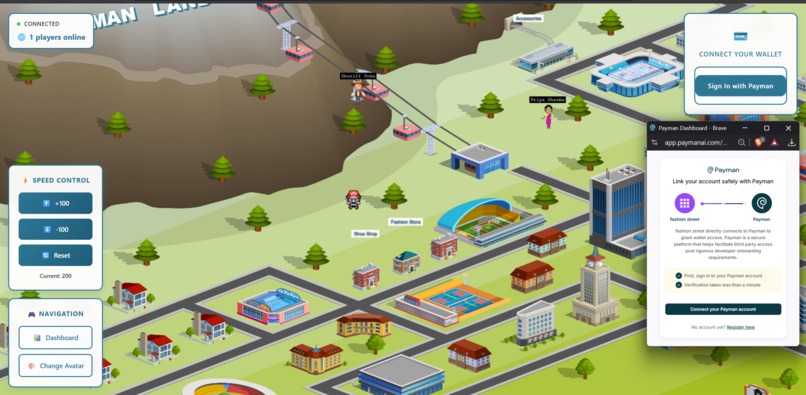
Home Playground Page
-
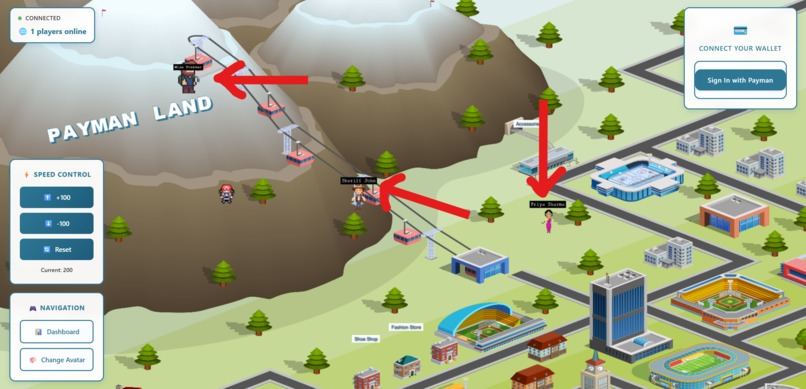
NPCs / Other Online Players
-
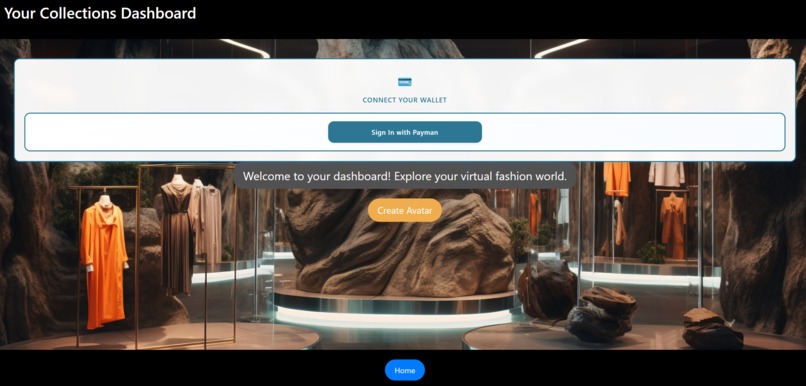
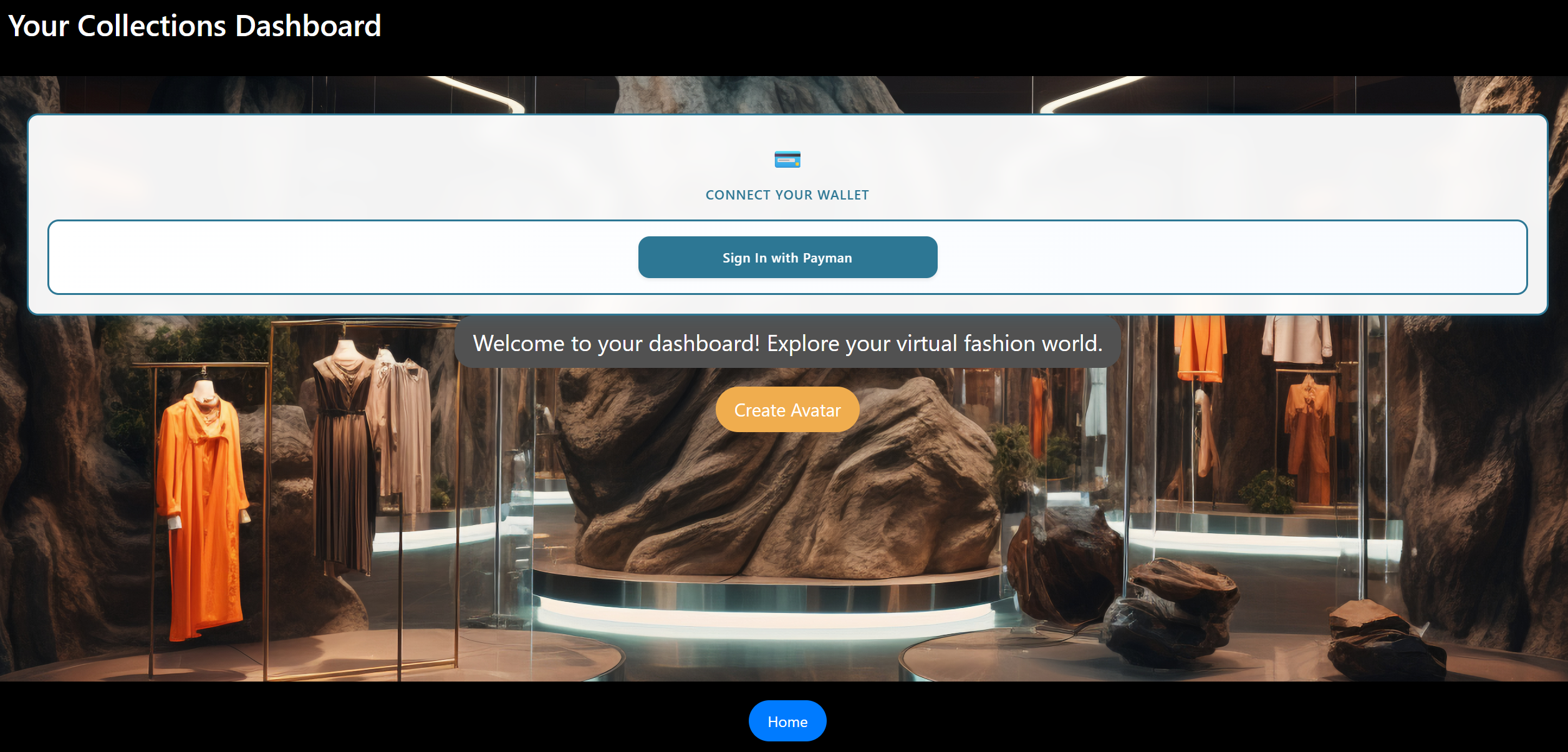
Dashboard for Payment Wallet and Wardrobe(In-Progress)

Inspiration
Payman Land was born from the evolution of our original TRY-FIT concept — a virtual try-on platform that let users experience fashion through advanced image diffusion technology. While TRY-FIT offered a glimpse into the future of immersive shopping, we wanted to push boundaries further, combining multiplayer interactivity, AI-powered fashion recommendations, and secure blockchain transactions into one gamified virtual world.
What it does
Payman Land is a multiplayer fashion metaverse where users can:
- Explore immersive 3D worlds with friends and the community.
- Create and customize avatars in 8-bit style.
- Try on clothes and accessories in real time using AI-powered image diffusion.
- Receive intelligent fashion recommendations via Google Gemini AI and LangChain.
- Purchase virtual and real-world fashion items securely using cryptocurrency through PayMan Wallet.
- Engage in social shopping, community interactions, and live fashion events — all in a gamified environment.
How I built it
The project was built using:
- Frontend: React 18.3.1 + TypeScript + Vite, Chakra UI, TailwindCSS, Framer Motion animations, and Phaser.js for the game world.
- Backend: Node.js + Express.js, Socket.io for real-time multiplayer communication, and custom WebSocket server logic.
- AI Integration: Google Gemini AI for recommendations, LangChain for conversational shopping assistance, and advanced image diffusion for realistic try-ons.
- Blockchain: Ethers.js for Ethereum integration, PayMan Wallet for transactions, and a TSD (Test Dollar) payment system.
- Deployment: Vercel (frontend) and Railway/Render (backend), with GitHub for version control and CI/CD.
🛠️ Technology Stack Overview
| Layer | Technology / Frameworks | Purpose |
|---|---|---|
| Frontend | React 18.3.1, TypeScript, Vite | Core UI & SPA |
| Chakra UI, TailwindCSS | Styling & Layout | |
| Framer Motion | Animations | |
| Phaser.js 3.80.1 | Game Engine for 2D world | |
| Backend | Node.js, Express.js | API & server logic |
| Socket.io | Real-time multiplayer | |
| AI Layer | Google Gemini AI | Fashion recommendations |
| LangChain | Conversational AI | |
| Image Diffusion Models | Realistic try-on | |
| Blockchain | Ethers.js | Ethereum integration |
| PayMan Wallet Connect | Wallet integration | |
| TSD Payment System | In-game currency | |
| DevOps | Vercel | Frontend hosting |
| Railway / Render | Backend hosting | |
| GitHub Actions | CI/CD automation |
🎯 Core System Architecture
flowchart TD
    A[User] -->|Browser| B[React Frontend]
    B -->|REST/WS| C[Node.js Backend]
    C -->|WebSocket| D[Socket.io Server]
    C -->|API Calls| E[AI Services - Gemini/LangChain]
    C -->|Blockchain Calls| F[Ethereum Network via Ethers.js]
    C -->|Payment API| G[PayMan Wallet]
    B -->|Game Engine| H[Phaser.js World]
📦 Folder Structure
payman-land/
├── api/                    # Backend WebSocket server
│   ├── server.js           # Express + Socket.io server
│   └── package.json        # Backend dependencies
├── src/                    # Frontend React application
│   ├── components/         # React components
│   ├── services/           # API and external services
│   ├── utils/              # Utility functions
│   ├── lib/                # Shared libraries
│   └── assets/             # Static assets
├── public/                 # Static public files
├── scripts/                # Build and deployment scripts
├── DEPLOYMENT_GUIDE.md     # Deployment guide
├── PAYMAN_SETUP.md         # PayMan integration setup
└── README.md               # This file
Challenges I ran into
- Integrating real-time multiplayer functionality with the fashion try-on system.
- Ensuring smooth performance for both the game engine (Phaser.js) and AI processes.
- Balancing blockchain security with ease-of-use for players.
- Creating an intuitive UI/UX that works seamlessly on both desktop and mobile devices.
- Managing state and synchronization between avatars, fashion items, and live multiplayer sessions.
Accomplishments that I'm proud of
- Successfully transforming TRY-FIT into a full-fledged multiplayer metaverse.
- Implementing AI-driven outfit suggestions that feel personalized and realistic.
- Seamlessly merging blockchain payments with the shopping experience.
- Achieving a Lighthouse score of 95+ for performance, accessibility, and SEO.
- Building an immersive, gamified shopping environment that feels fun and engaging.
📊 Performance Benchmarks
| Metric | Result |
|---|---|
| Lighthouse Performance | 95+ |
| Accessibility Score | 98 |
| SEO Score | 100 |
| Average Load Time (3G) | < 3s |
| Mobile Responsiveness | 100% |
What I learned
- The importance of optimizing multiplayer environments for low-latency interactions.
- Best practices for integrating AI models with live user experiences.
- How blockchain can be implemented in user-friendly ways for everyday applications.
- Advanced state management for complex, interactive applications.
- The value of responsive, mobile-first design for virtual worlds.
What's next for PaymanLand - Gamified AI Powered Fashion Metaverse
- AI Enhancement: Expand outfit suggestions with deeper personalization and trend forecasting.
- Marketplace: Introduce NFT-based fashion items, creator marketplaces, and brand collaborations.
- Virtual Fashion Events: Host live fashion shows and themed events.
- Mobile App: Launch a React Native app with AR try-on capabilities.
- Community Features: Add forums, group shopping quests, and in-world mini-games.
🚀 Quick Start
# Clone the repository
git clone https://github.com/jishanahmed-shaikh/paymanland-v2.git
cd paymanland-v2

# Install frontend dependencies
npm install

# Install backend dependencies
cd api
npm install
cd ..

# Start backend server
cd api
npm start

# Start frontend
npm start
🔒 Security Features
| Security Aspect | Implementation |
|---|---|
| Transaction Security | Ethereum blockchain (Ethers.js) |
| Payment Privacy | PayMan Wallet encryption |
| Data Protection | GDPR-compliant storage |
| Connection Security | HTTPS + WebSocket Secure |
| AI Data Handling | Anonymized recommendation system |
Built with ❤️ by the Payman Land Team
Built With
- flask
- python
- react
- tailwindcss
- typescript


Log in or sign up for Devpost to join the conversation.