-
-
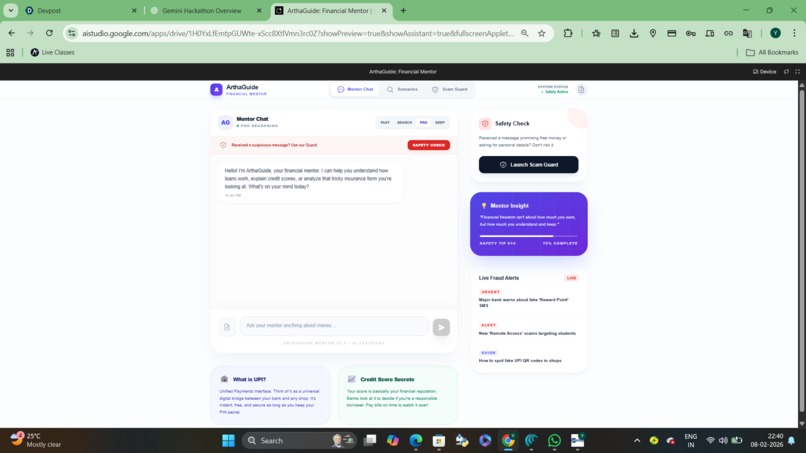
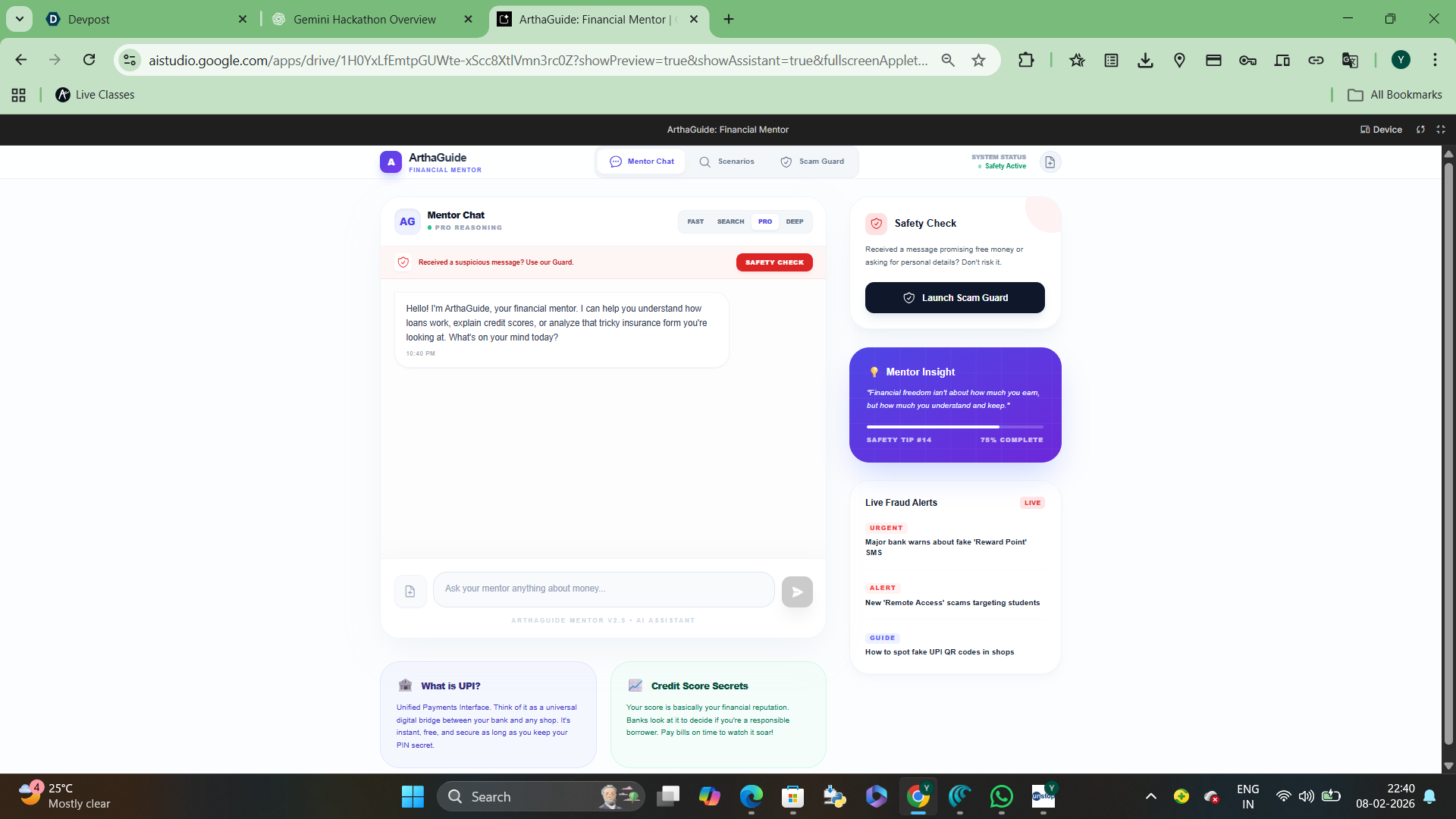
interface of RiskLens
-
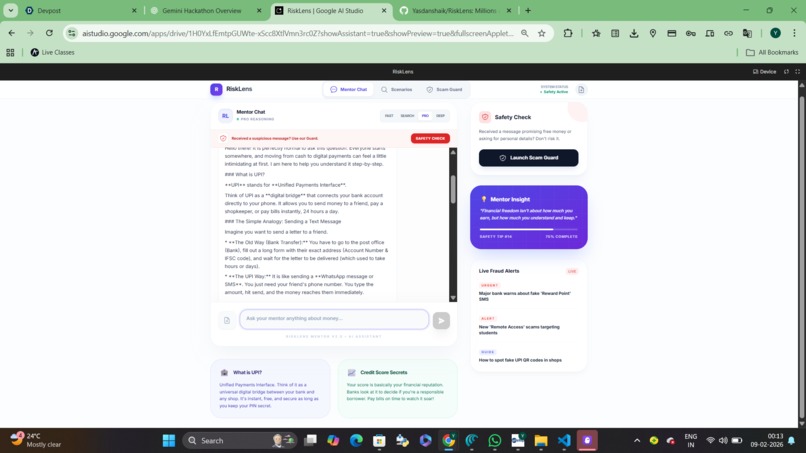
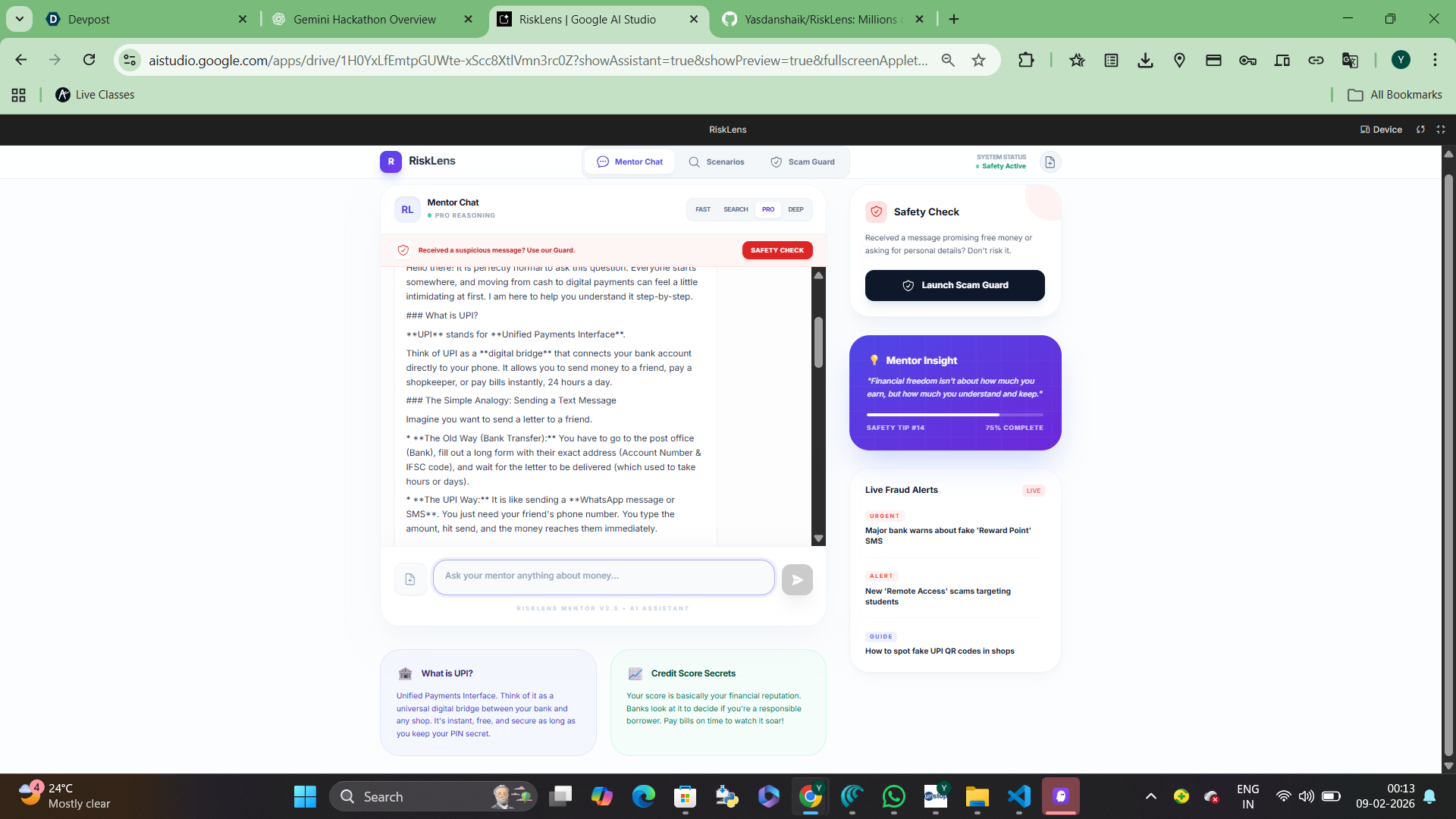
working of RIskLens
-
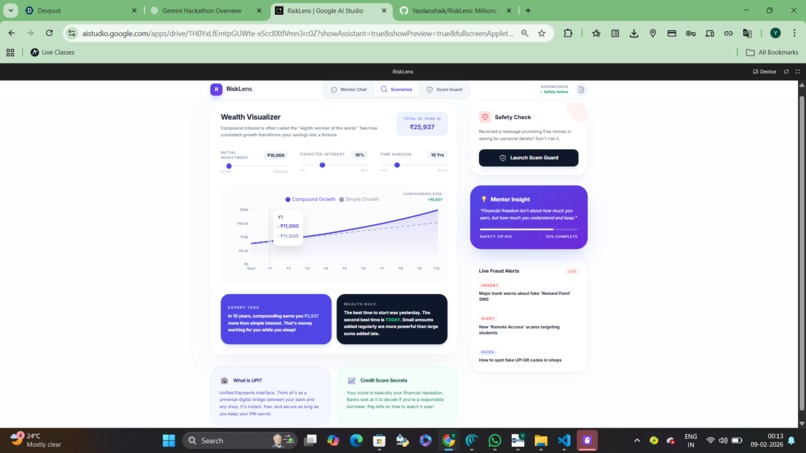
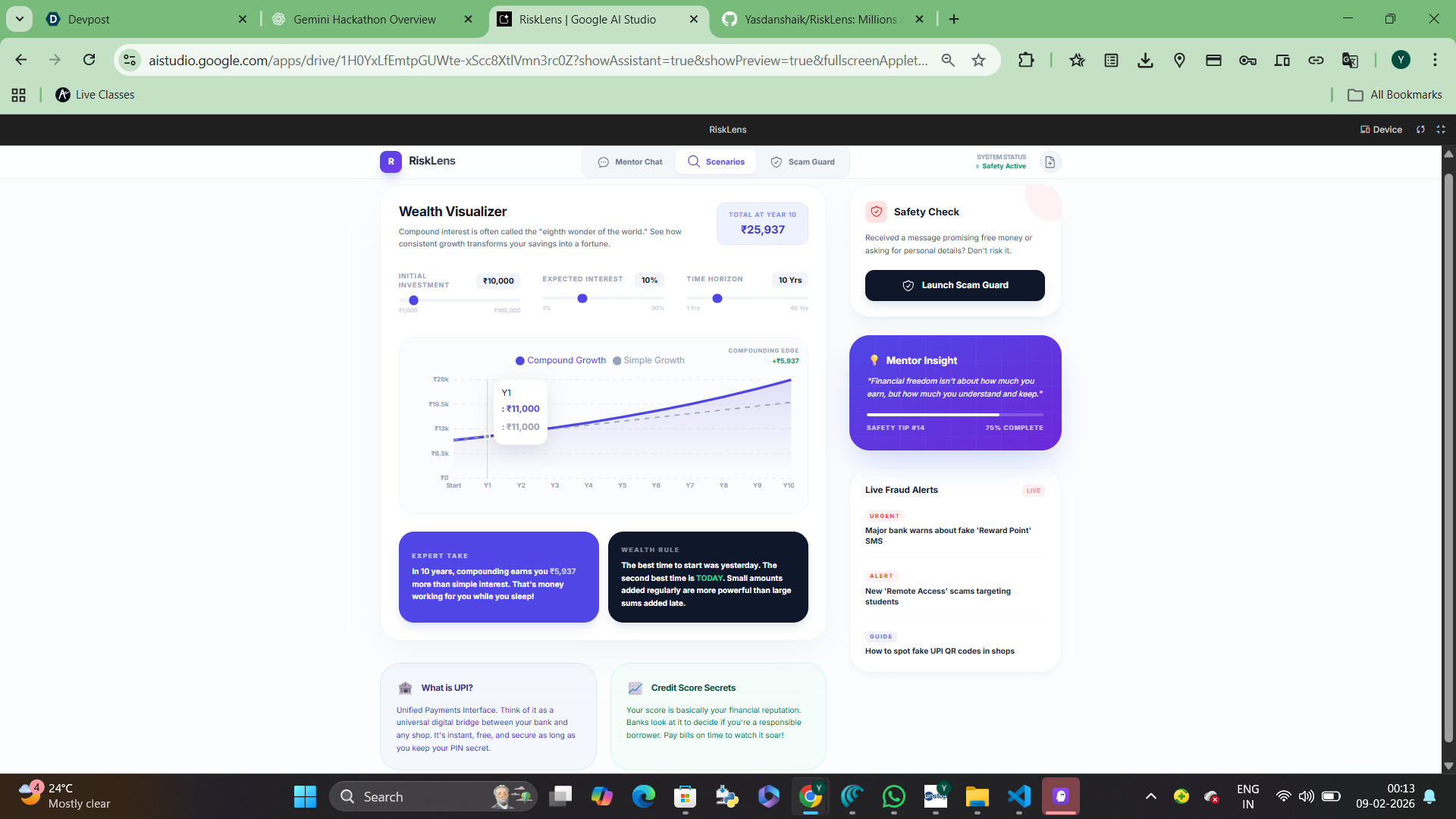
Scenarios of RiskLens
-
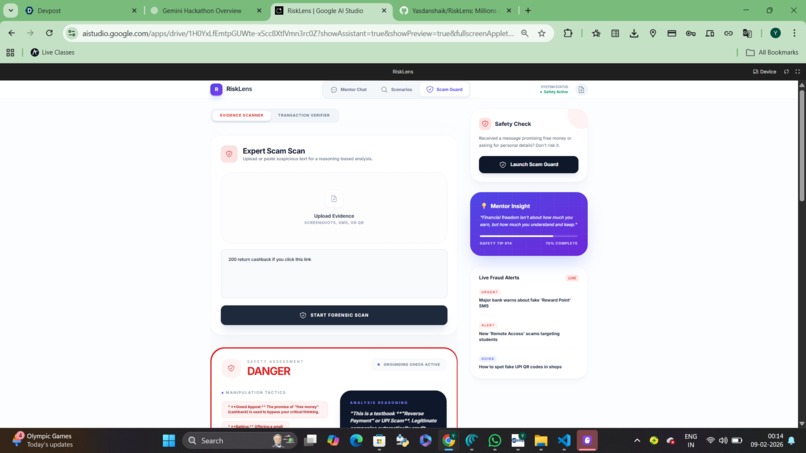
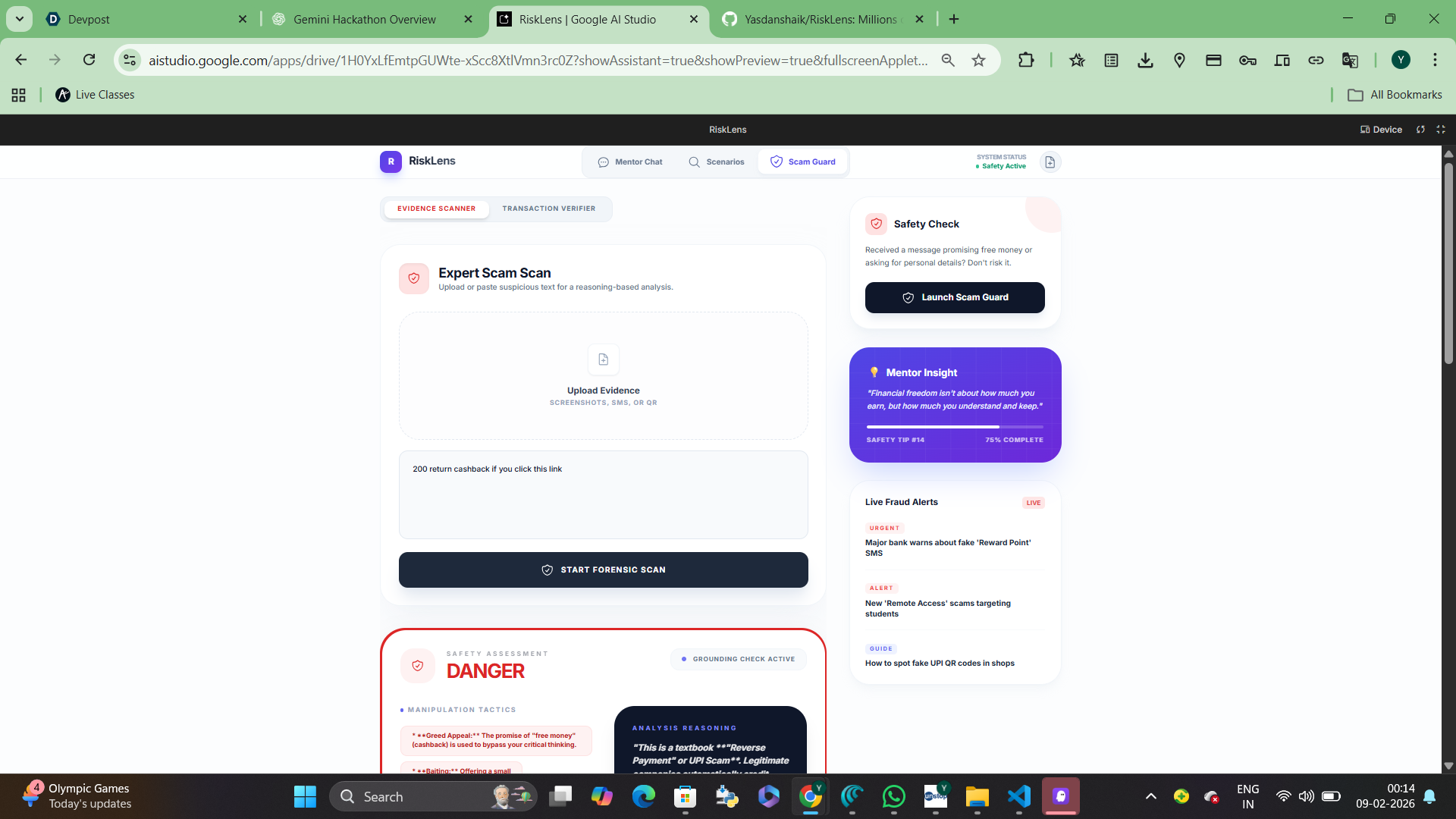
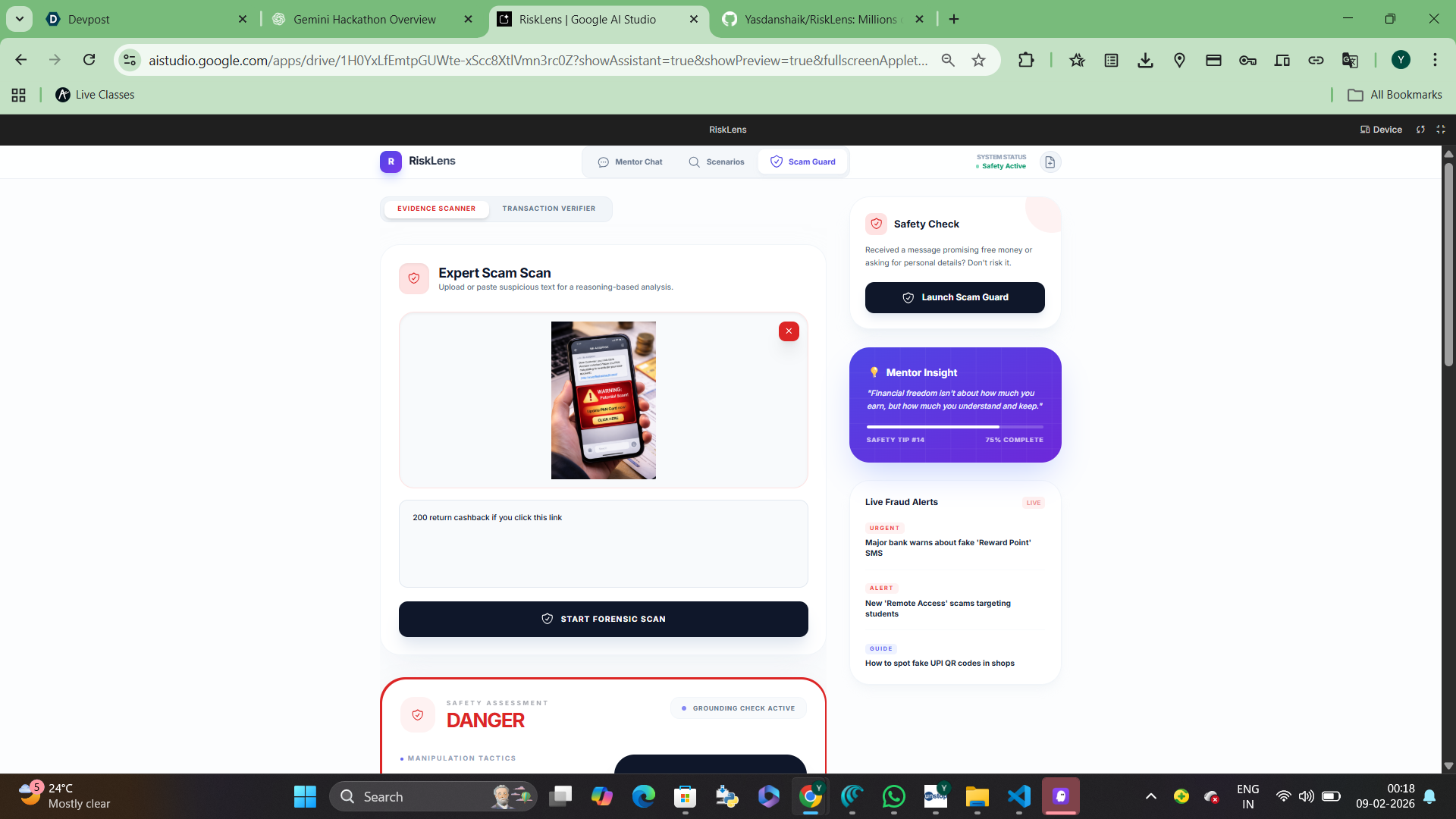
scamgurard interface
-
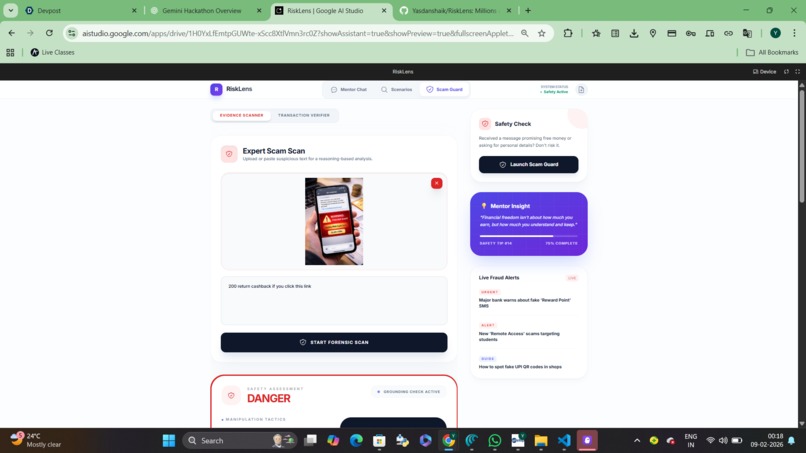
working of scam guard uploading photo
-
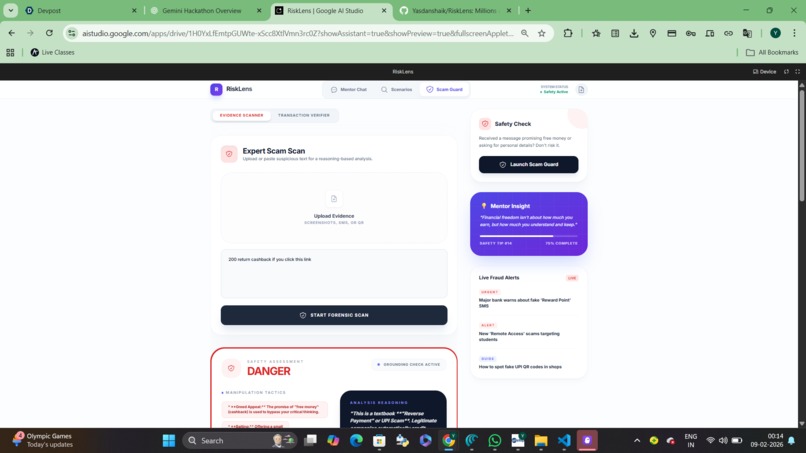
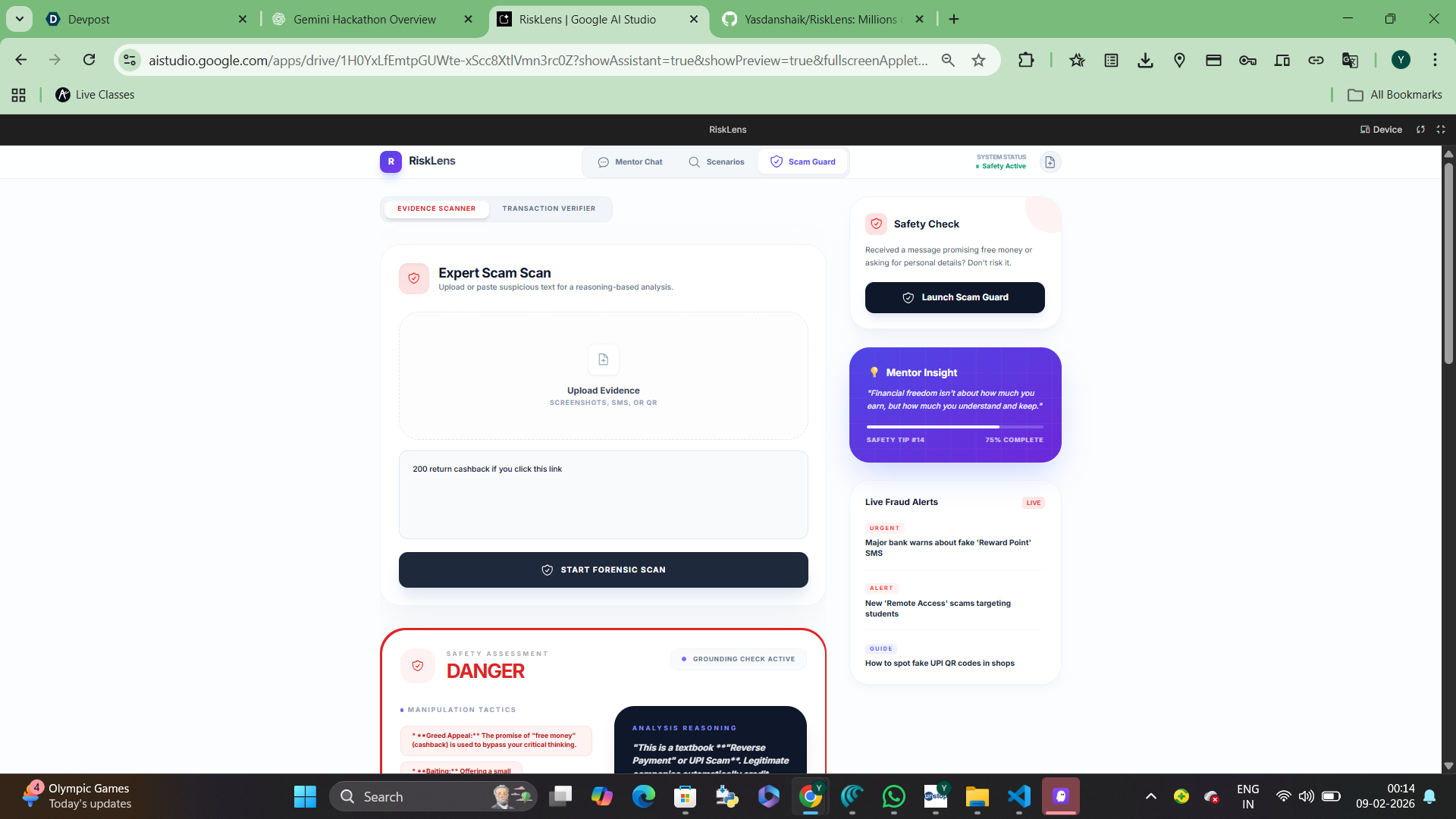
working of scam guard
-
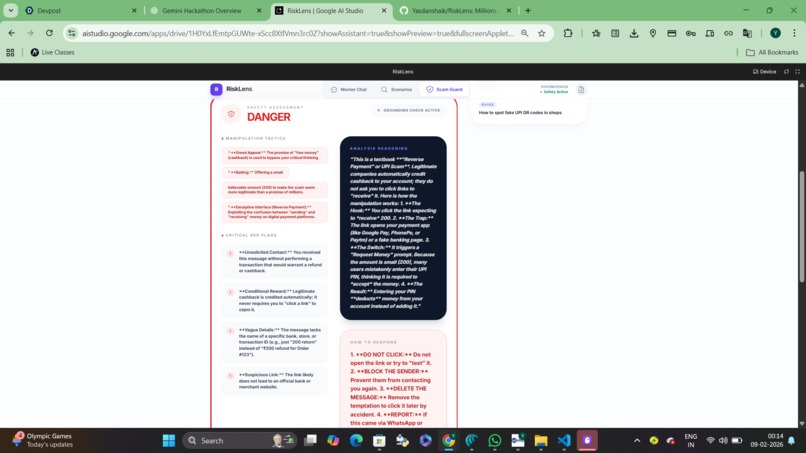
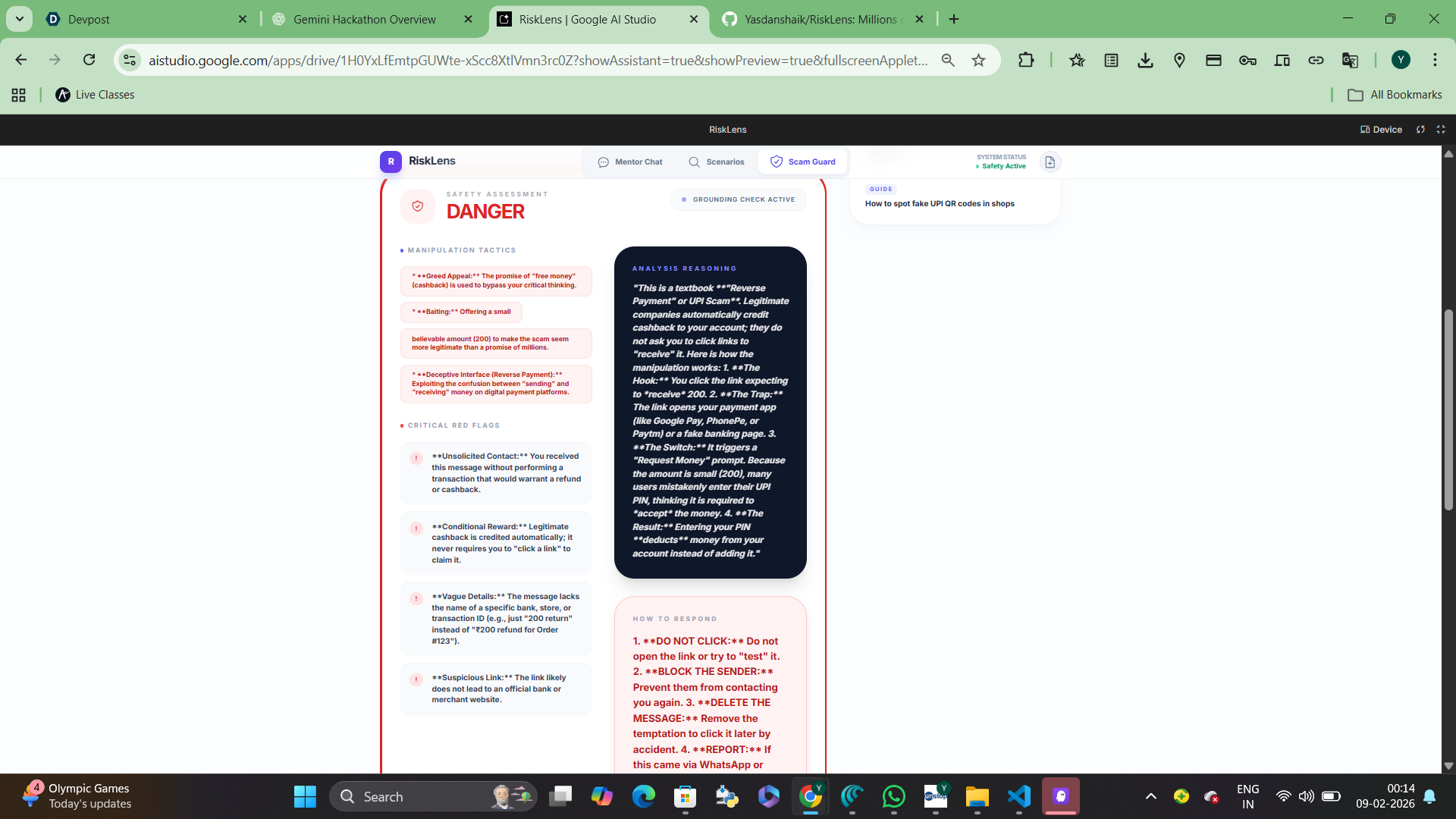
next part working of scamguard
-
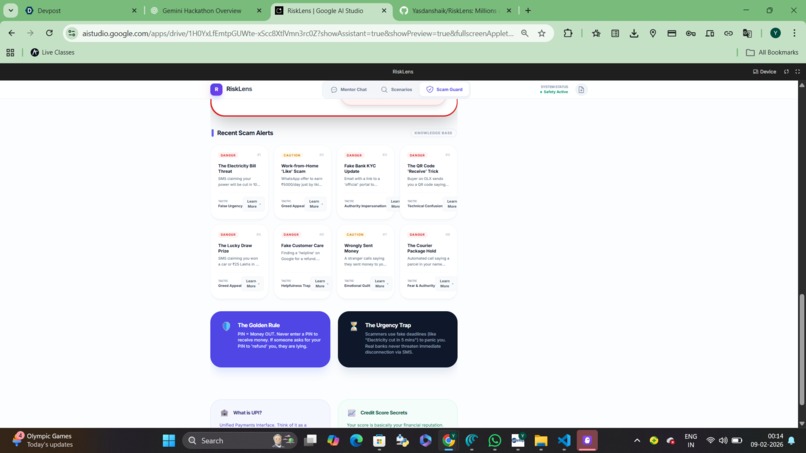
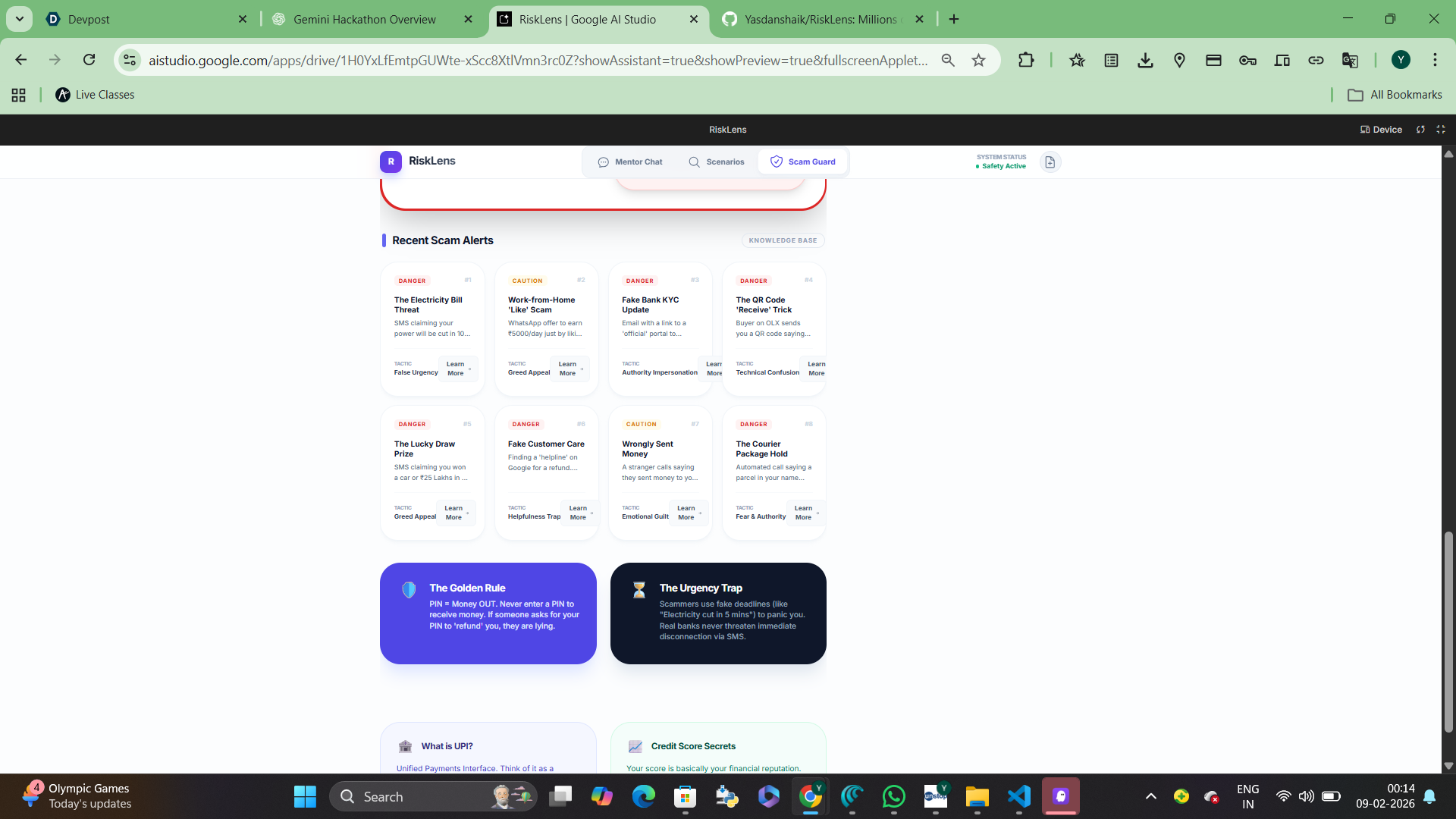
Recent scam of RiskLens
Inspiration
Digital financial scams have become a daily reality for millions of people, especially first-time digital users, students, and low-income individuals. Messages claiming urgent account issues, fake loan approvals, QR-code payment tricks, and impersonation scams exploit fear and urgency.
What inspired us most was noticing that existing tools either block content silently or show generic warnings without explaining why something is risky. Many victims realize the scam only after losing money.
We wanted to build a system that helps users pause, understand, and reason about risk before acting. This idea became RiskLens.
What it does
RiskLens is a multimodal AI-powered scam protection system that helps users verify suspicious financial interactions before taking action.
It allows users to:
Upload screenshots of SMS, WhatsApp messages, UPI requests, QR codes, or app screens
Receive a risk level (Low, Medium, or High)
Understand why something is risky through clear explanations
Learn the scam tactic being used (urgency, authority, reward, fear)
Get safe action recommendations instead of panic alerts
RiskLens focuses on understanding and prevention, not fear-based detection.
How we built it
RiskLens was designed as a reasoning-first system, not a chatbot.
Core components include:
Scam Guard for screenshot-based scam verification
A risk reasoning engine that analyzes urgency, identity mismatch, context, and visual cues
An explanation layer that converts AI reasoning into simple language
A safety guidance module that recommends responsible next steps
To unify multiple signals, we used a weighted risk scoring approach:
𝑅 𝑖 𝑠 𝑘
𝑆 𝑐 𝑜 𝑟
𝑒
𝑤 1 ⋅ 𝑈 + 𝑤 2 ⋅ 𝐼 + 𝑤 3 ⋅ 𝐶 + 𝑤 4 ⋅ 𝑉 Risk Score=w 1
⋅U+w 2
⋅I+w 3
⋅C+w 4
⋅V
Where:
𝑈 U represents urgency signals
𝐼 I represents identity mismatch
𝐶 C represents context inconsistency
𝑉 V represents visual deception cues
The score is translated into Low, Medium, or High risk, along with an explanation.
Challenges we ran into
Designing a calm experience We avoided fear-based language and focused on clarity and trust.
Explaining complex scam patterns simply The challenge was balancing simplicity with meaningful insight.
Responsible AI boundaries We chose not to auto-block payments and ensured the system advises rather than controls.
Accomplishments that we're proud of
Built a screenshot-first, multimodal scam verification feature
Designed explainable risk reasoning instead of black-box alerts
Created realistic scam scenarios users can learn from
Maintained a clean, product-grade UI
Focused on ethical and user-empowering AI design
What we learned
Most scam victims act under pressure, not lack of intelligence
Explanation builds trust more effectively than warnings
Visual context is critical for real-world scam detection
AI works best when it supports human judgment.
What's next for RiskLens
Planned improvements include:
Multilingual explanations
Region-specific scam pattern detection
Voice-based scam verification
Community-reported scam pattern learning
Greater personalization based on user experience level.
Built With
- app.tsx
- chatinterference
- constants.tsx
- css
- geminiservice.ts
- html
- index.tst
- javascript
- metadatajson
- scanguard
- scenarioplanner
- type.ts
- ui

Log in or sign up for Devpost to join the conversation.