-
-
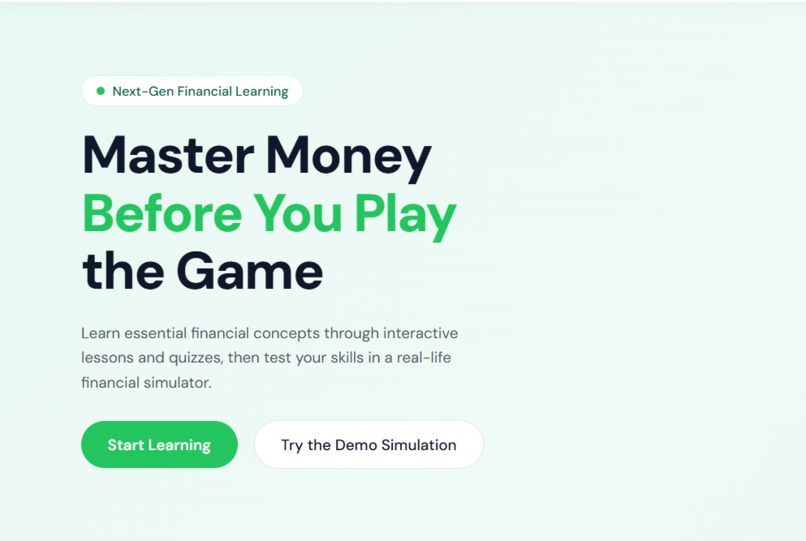
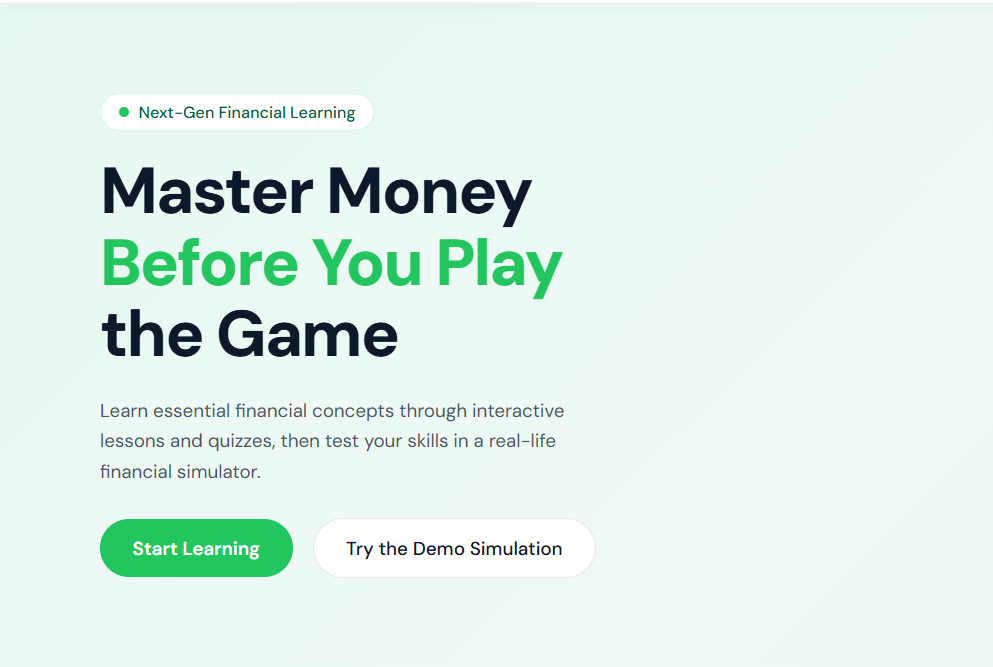
Learn finance the right way — interactive lessons, quick quizzes, and real-world simulations.
-
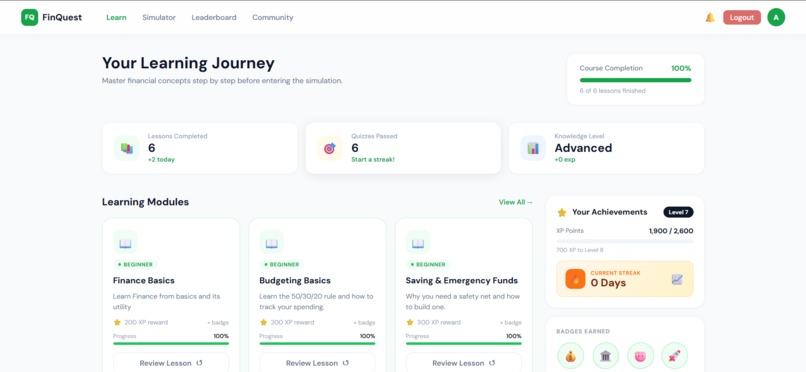
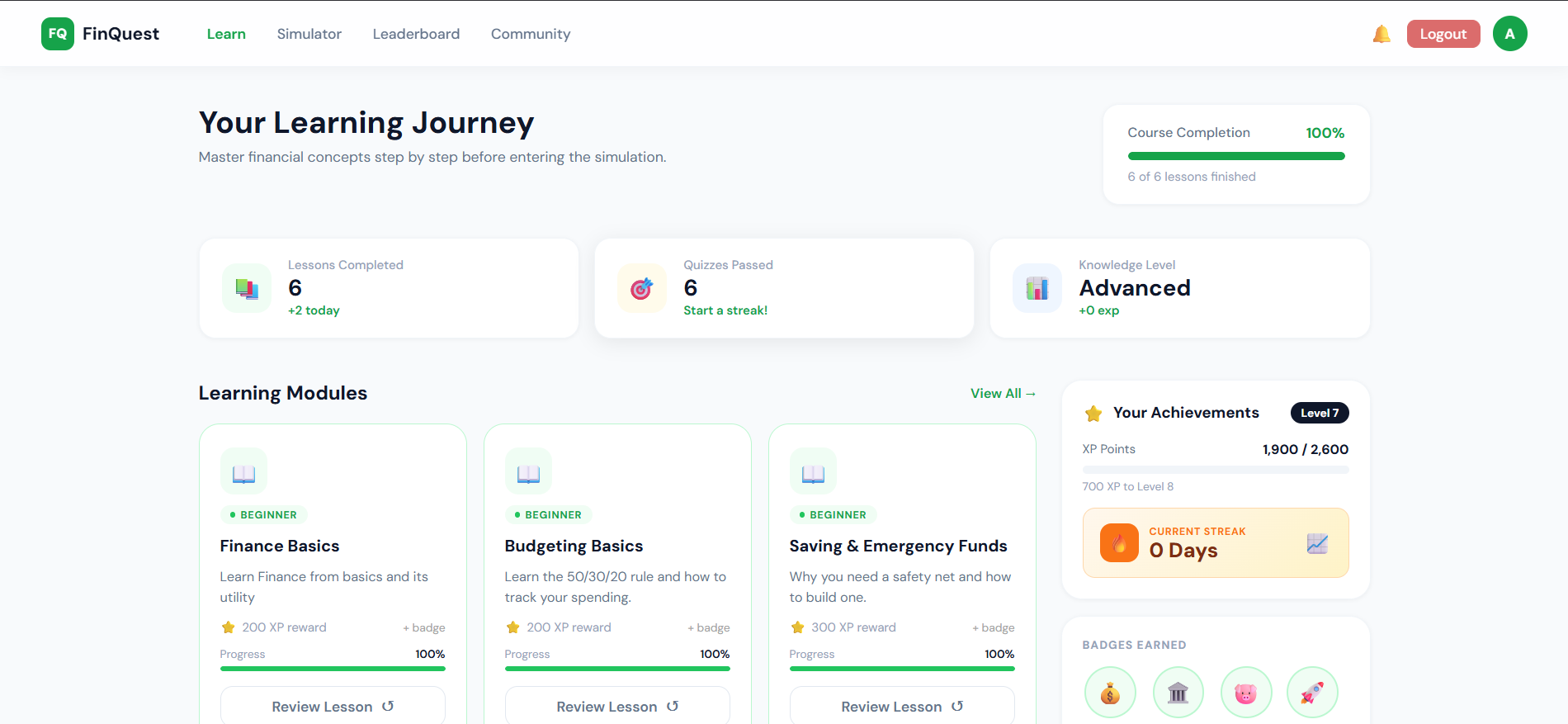
Track your progress, master financial concepts, and unlock new levels as you build real-world money skills.
Inspiration
Most people don’t really learn about money until they’ve already made mistakes — taking bad loans, overspending, or blindly investing because someone told them to. That gap between knowing and doing is what inspired FinQuest. We wanted to create something that teaches financial concepts in a way that actually sticks — not just theory, but something you interact with and apply.
What it does
FinQuest is a web platform that helps users learn financial literacy step by step. It starts with simple, interactive lessons on topics like budgeting, saving, and investing. After each lesson, users take quizzes to test their understanding. Only after completing these do they unlock more advanced content and eventually a simulation where they apply what they’ve learned in real-life scenarios.
How we built it
We built the frontend using React to keep the UI dynamic and component-based. The backend runs on Node.js with Express, handling APIs and logic for users, modules, and quizzes. MongoDB is used to store user data, progress, and content like lessons and questions. Authentication is handled through Firebase (Google sign-in), which made onboarding smooth and secure. The system is structured so that learning modules, quizzes, and user progress all connect cleanly.
Challenges we ran into
One of the biggest challenges was designing the flow between learning and quizzes — making sure users couldn’t skip ahead but also didn’t feel blocked. Structuring the database for modules, lessons, and quizzes in a scalable way also took some iteration. Another tricky part was syncing Firebase authentication with our own backend database so that user data stayed consistent. On the frontend, managing state across different parts of the app (dashboard, lessons, quizzes) required careful planning.
Accomplishments that we're proud of
We’re proud that we built something that goes beyond just content — it actually guides the user through a learning journey. The modular structure works well, and the dashboard gives a clear sense of progress. Getting authentication, backend APIs, and frontend all connected smoothly was a big milestone. Most importantly, the platform feels like something people could genuinely use to improve their financial understanding.
What we learned
We learned a lot about structuring full-stack applications — especially how frontend, backend, and database need to work together. Designing user flows is just as important as writing code. We also got hands-on experience with authentication systems, API design, and managing user state. Beyond the technical side, we realized how important it is to simplify complex topics if you actually want people to learn.
What's next for FinQuest
The next step is to build out the full quiz engine and financial simulation so users can apply what they’ve learned in a more realistic environment. We also want to add gamification features like XP, streaks, and leaderboards to keep users engaged. Expanding the content to cover more advanced financial topics is another priority. Eventually, we’d like to turn FinQuest into a complete platform that can be used in schools and by anyone looking to build better financial habits.


Log in or sign up for Devpost to join the conversation.