Inspiration
Managing money can be difficult even for people with a steady income. Many people know they should save, budget, and plan for the future, but they often don't know what action to take next. Existing financial apps can show users where their money went, but we wanted to build something that could help answer a more useful question: "What should I do with my money next?"
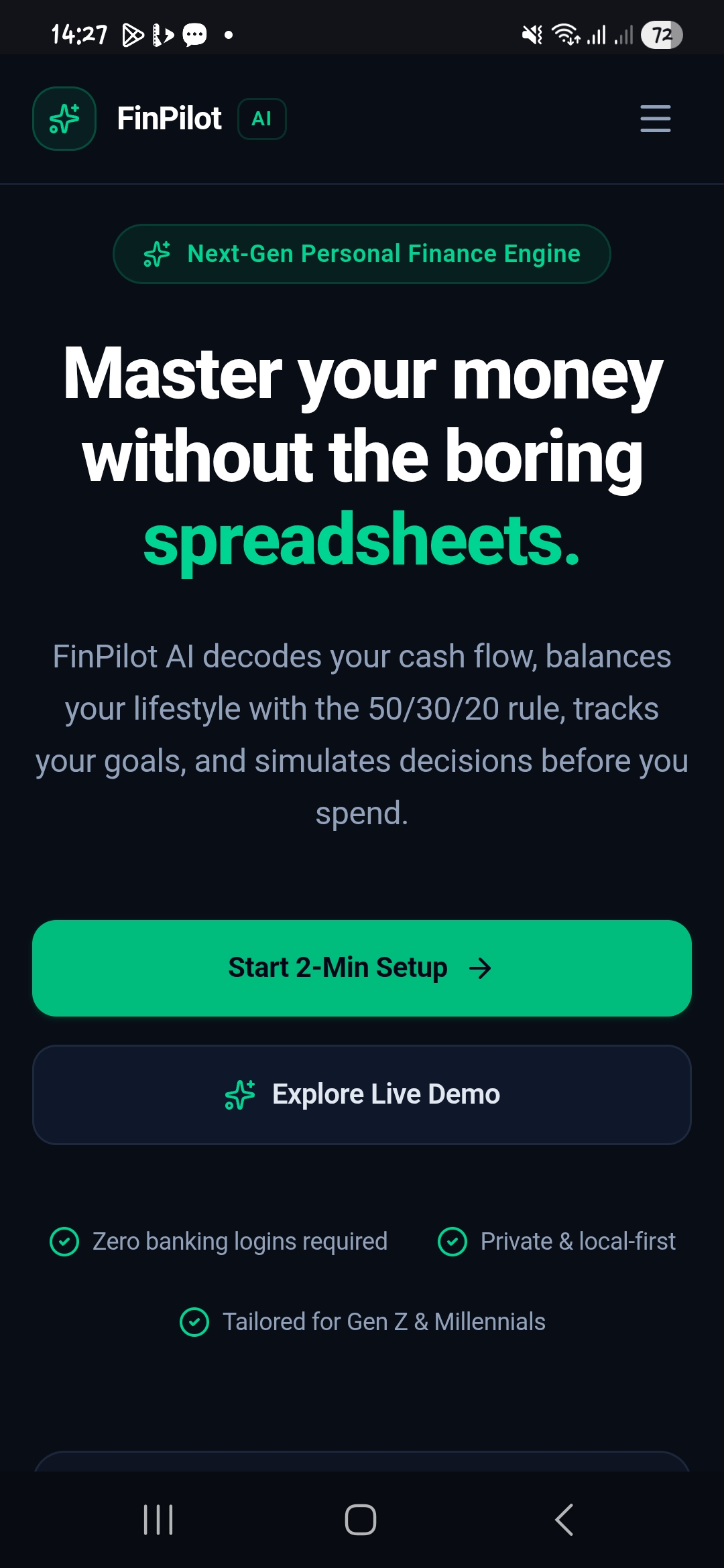
That idea inspired FinPilot AI — an AI-powered financial co-pilot designed to turn personal financial information into simple, practical recommendations.
What it does
FinPilot AI helps users understand and improve their finances through an easy-to-use interface.
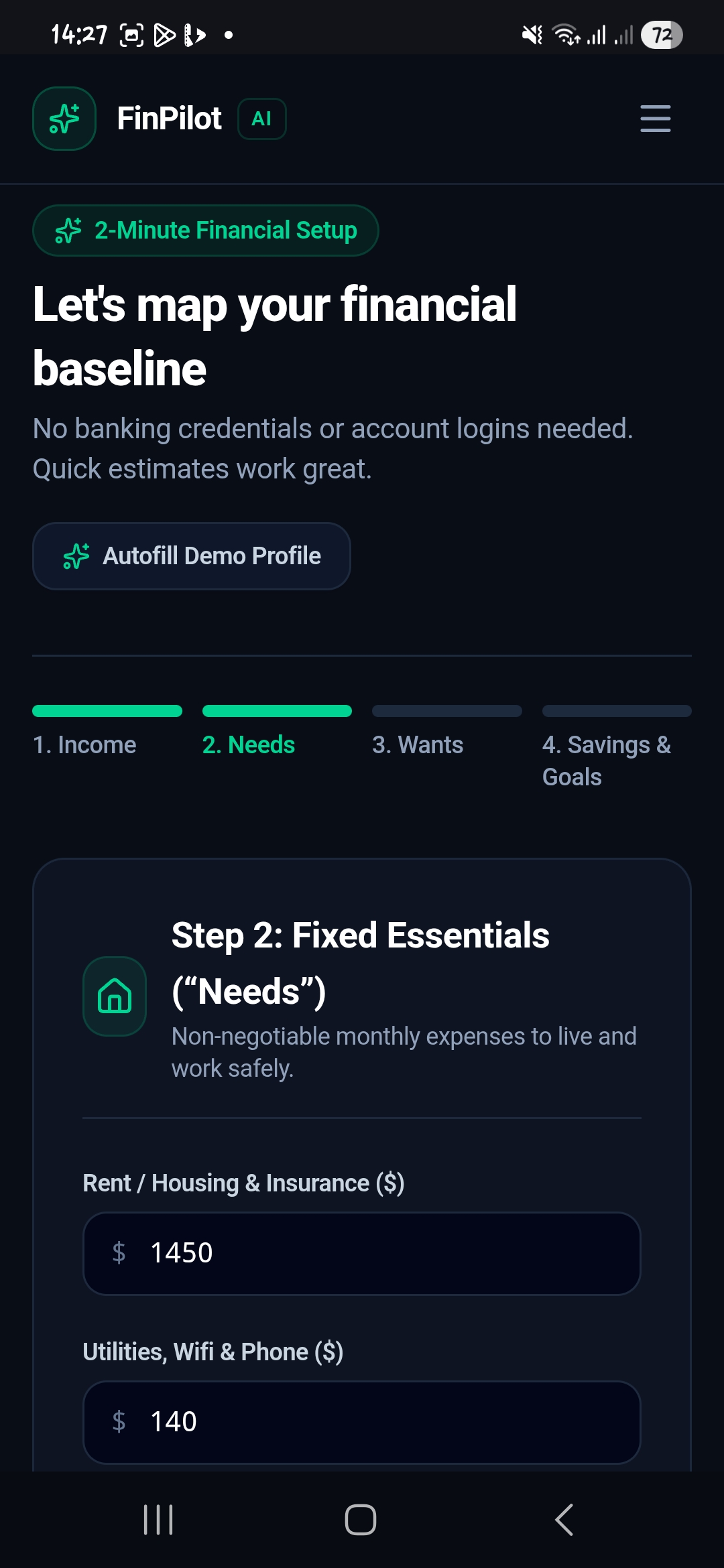
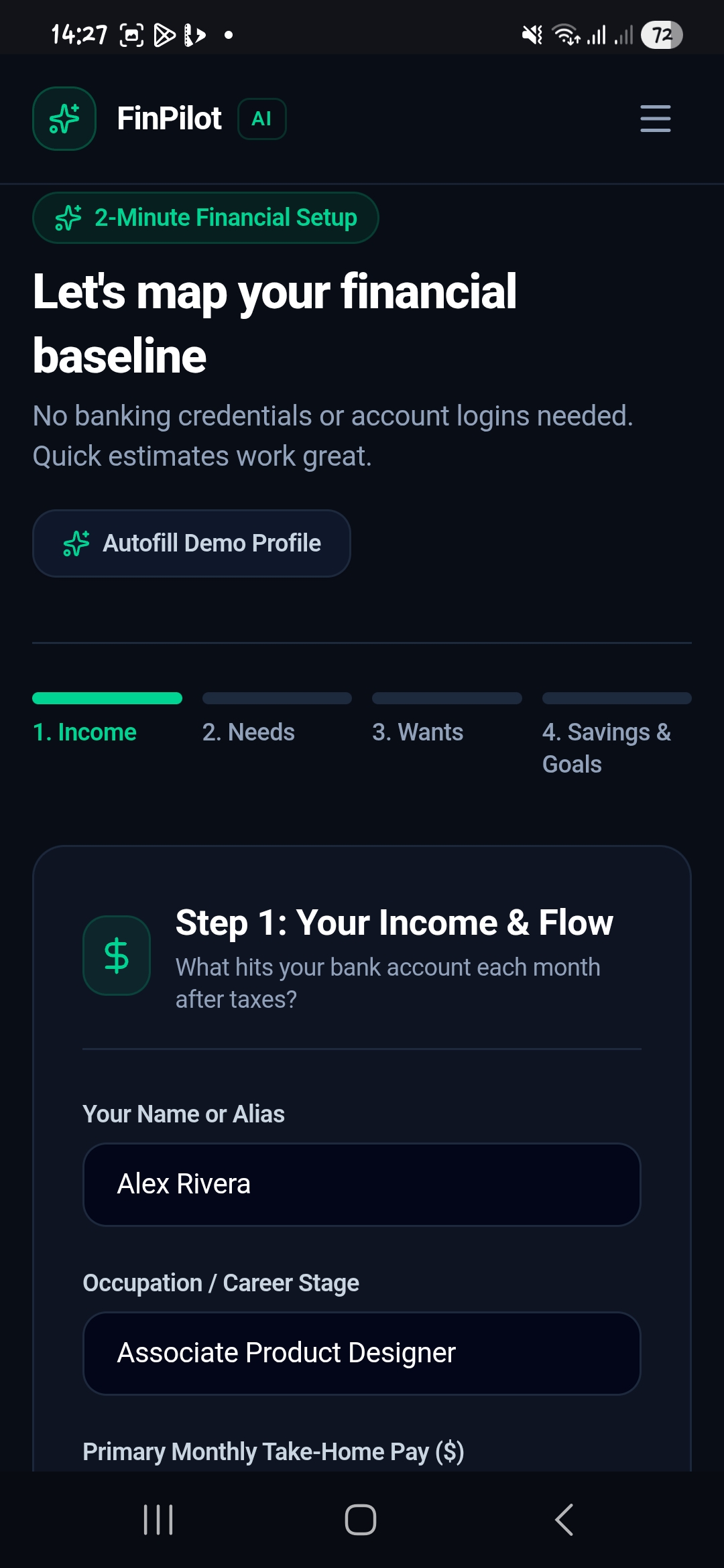
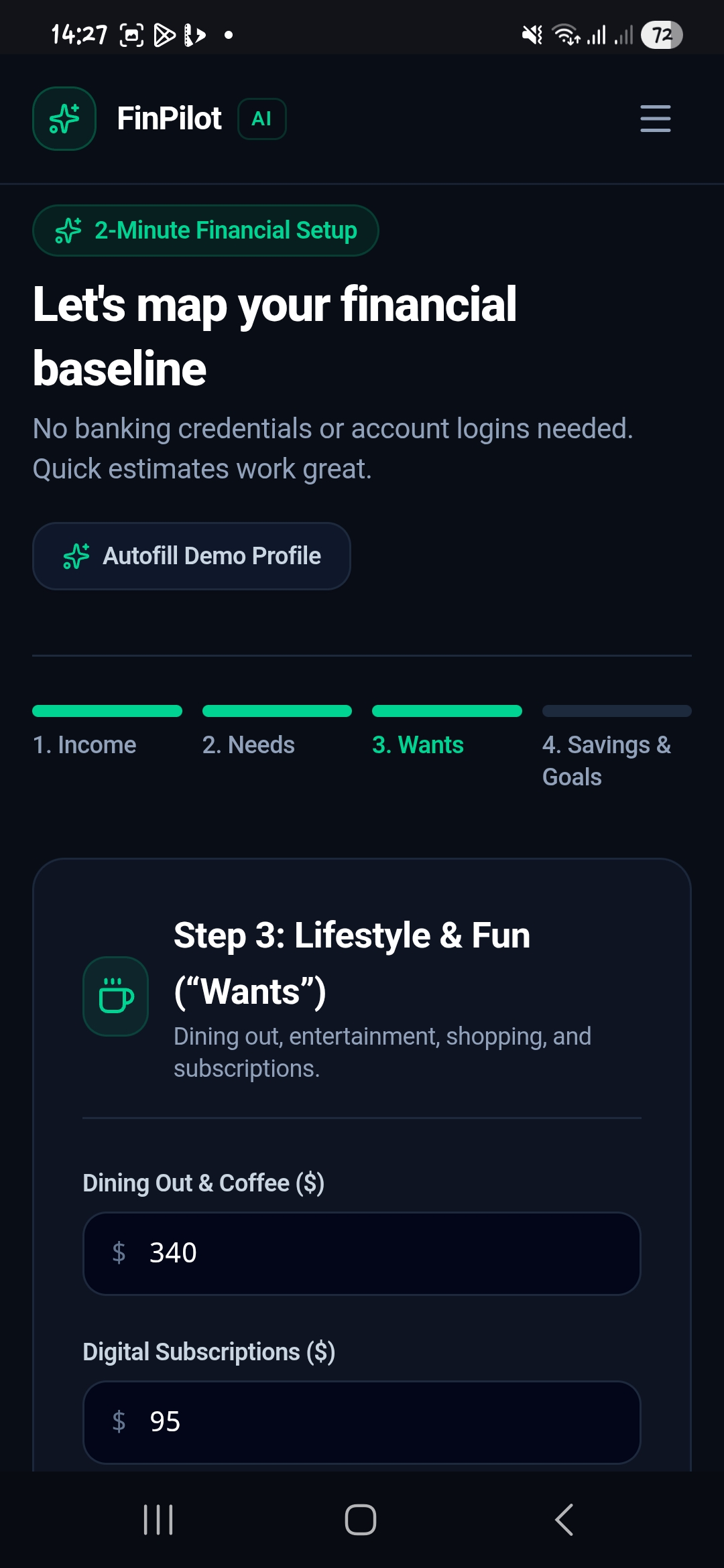
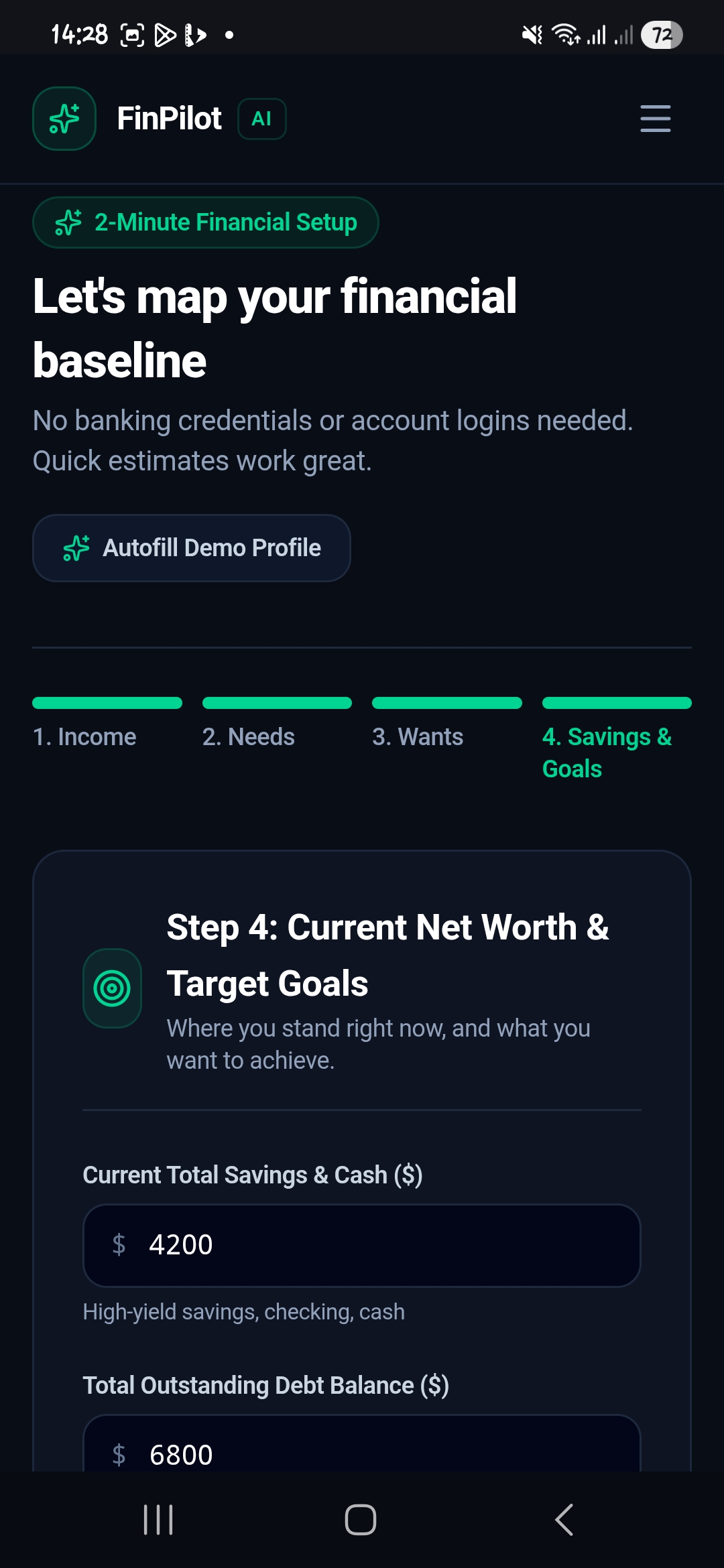
Users can enter their income, expenses, savings, debt, financial goals, and risk profile. FinPilot then provides:
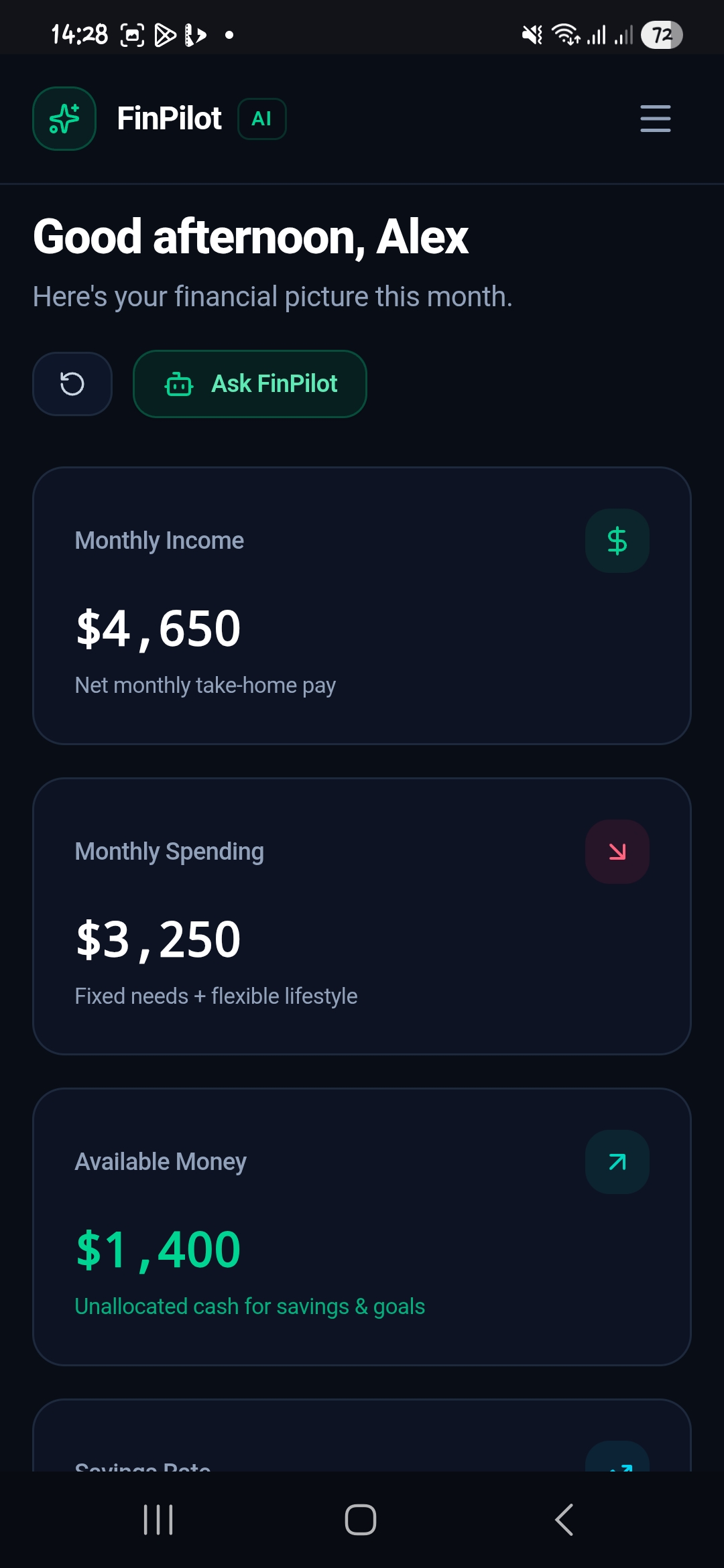
- A simple financial health overview
- Spending analysis and insights
- Personalized budgeting guidance
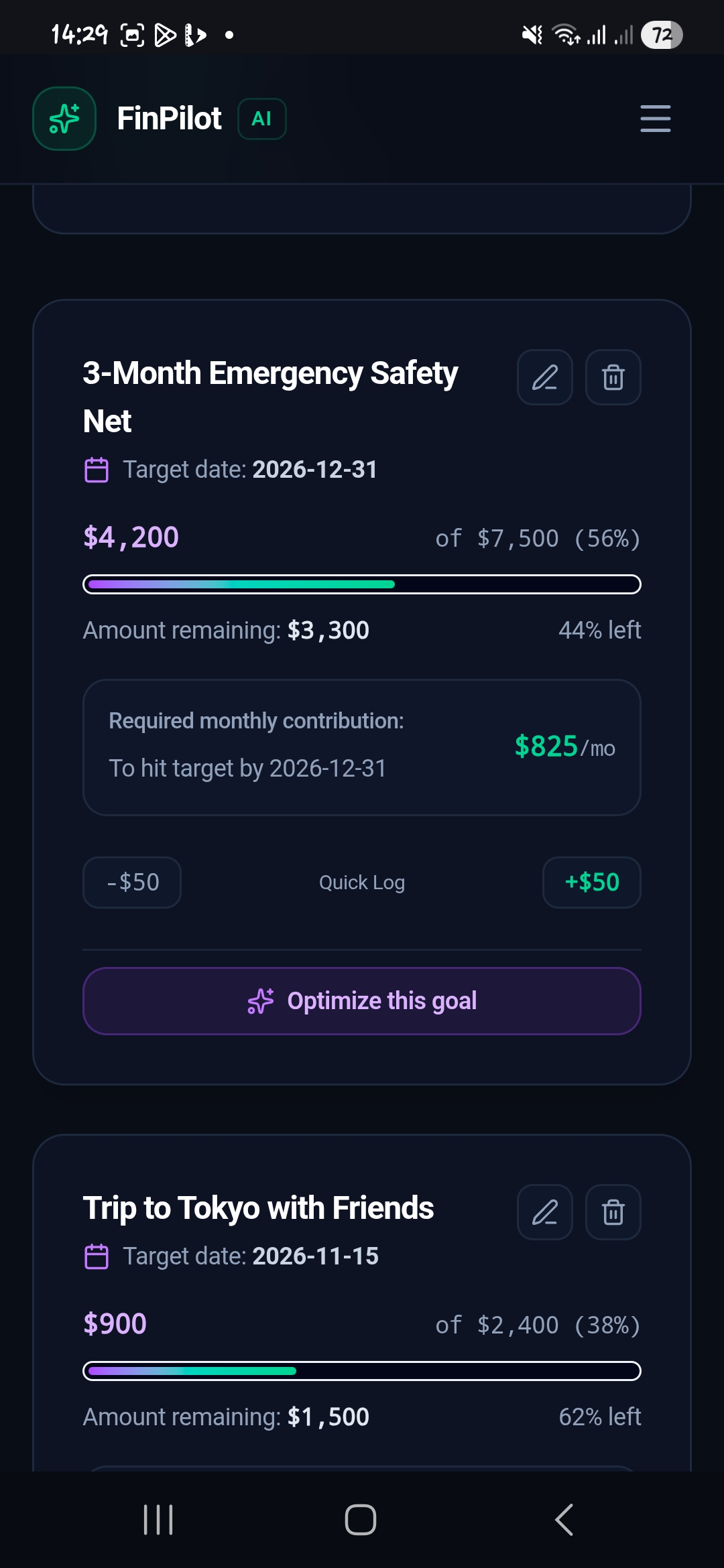
- Savings and goal planning
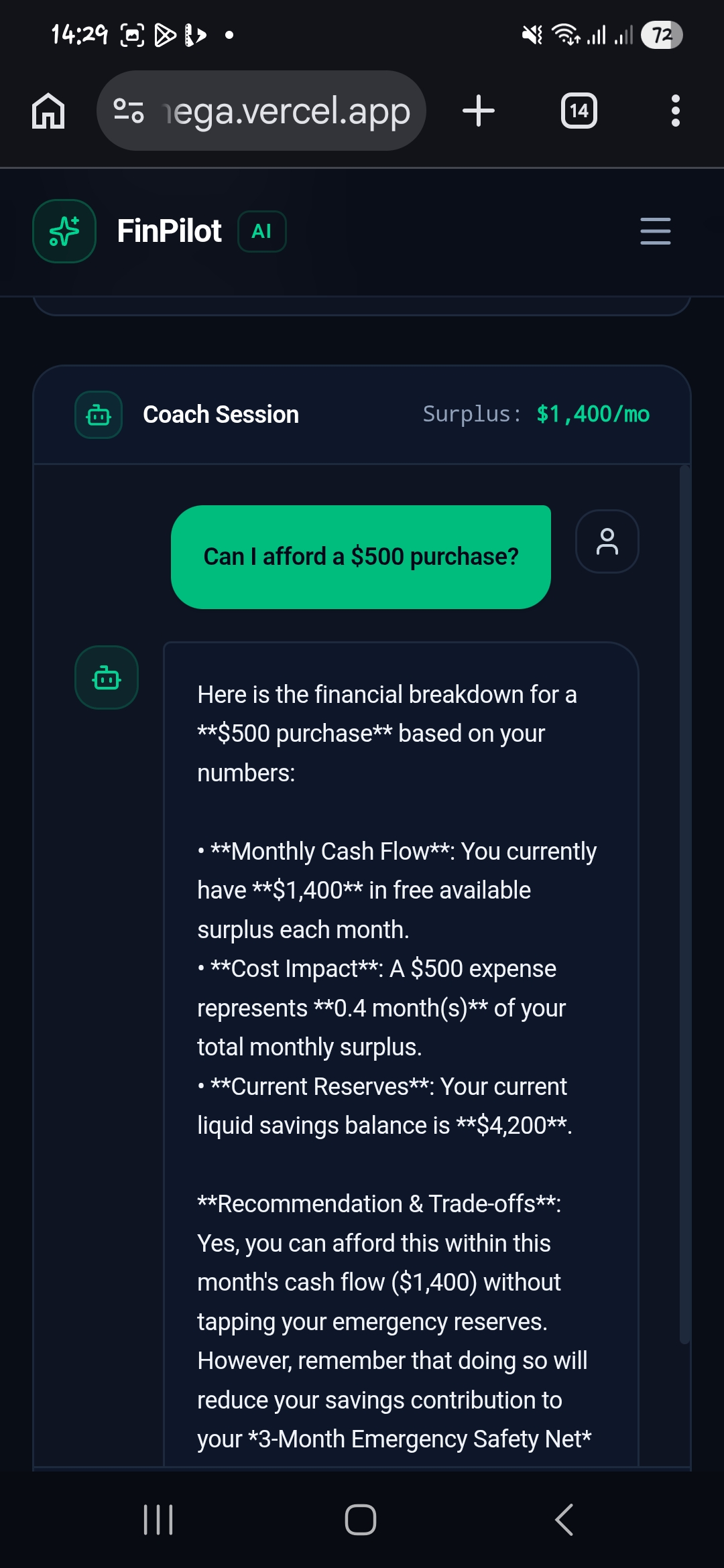
- An AI Financial Coach for money-related questions
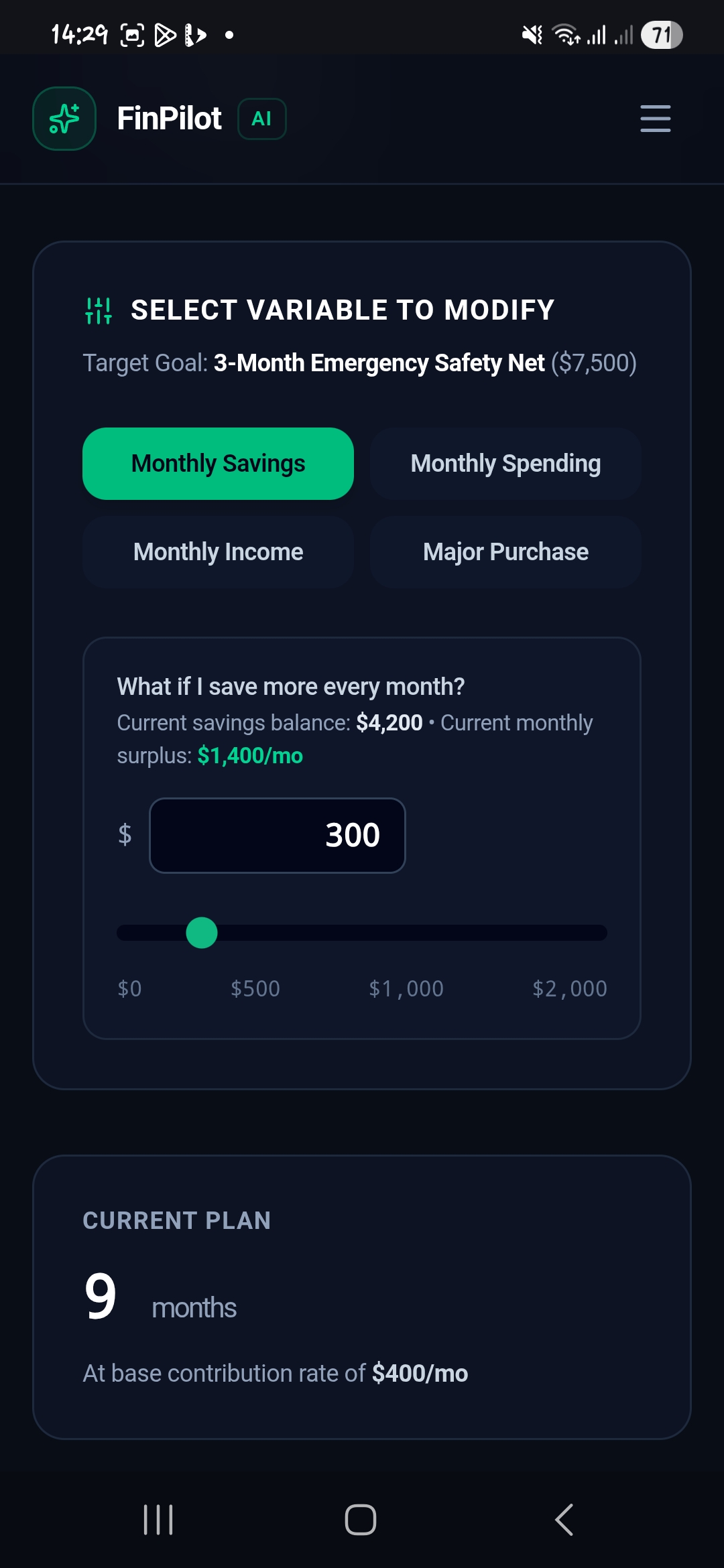
- A What-If Simulator for exploring financial scenarios
- Goal optimization suggestions
For example, a user can ask, "Can I afford this $700 laptop?" and receive guidance based on their current financial situation and goals rather than a generic answer.
FinPilot AI is designed as an educational financial planning tool, not a replacement for a licensed financial advisor.
How we built it
We built FinPilot AI as a lightweight web application with a strong focus on simplicity and reliability.
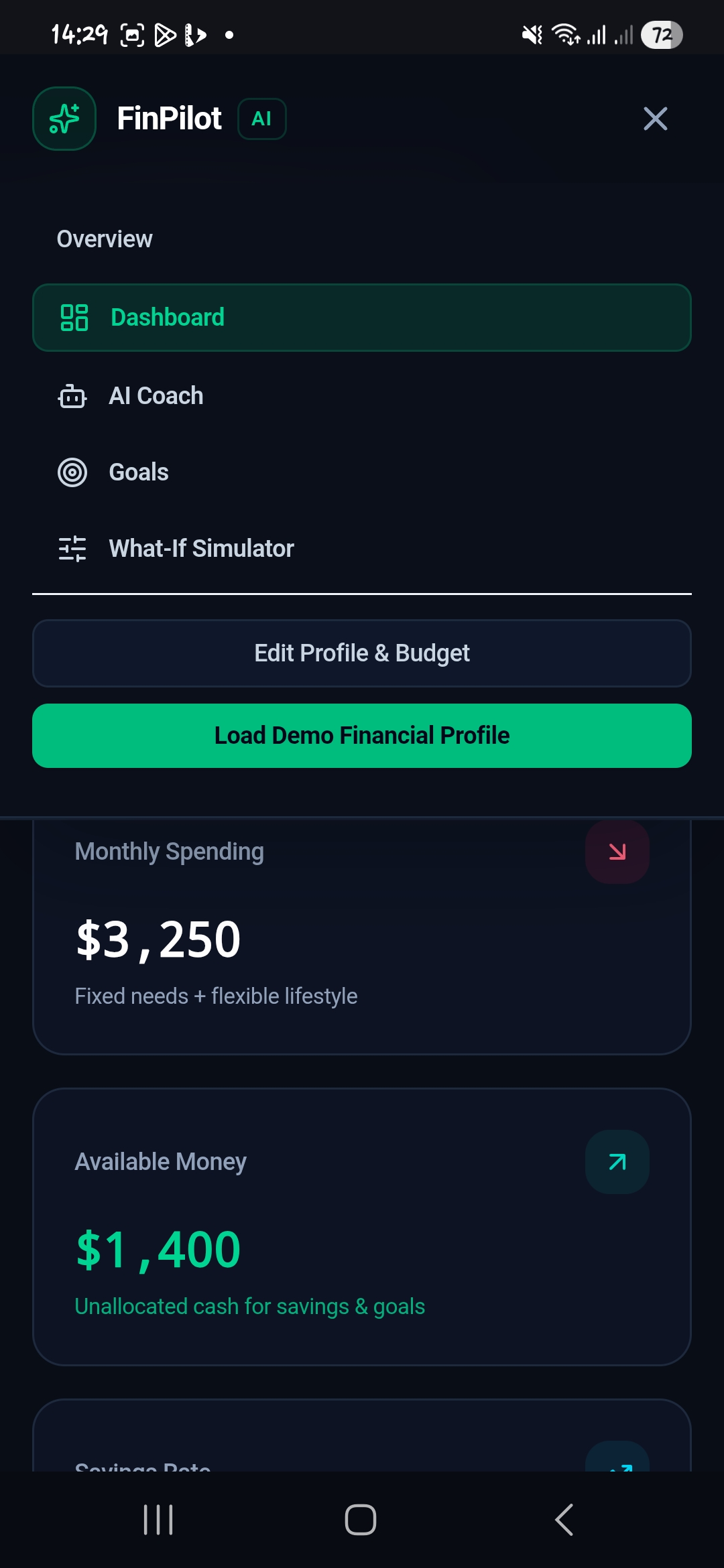
The interface was designed as a modern fintech dashboard, with dedicated areas for the financial overview, AI Financial Coach, goals, and What-If Simulator.
Gemini provides the natural-language intelligence behind the application. We centralized the AI integration so that different features can communicate with Gemini through a consistent service rather than creating separate AI implementations throughout the application.
We also kept deterministic calculations in the application itself. Basic financial calculations such as savings rates, available income, goal progress, and monthly contributions are handled locally, while Gemini is used where AI adds the most value: understanding financial context, generating insights, explaining trade-offs, and providing personalized guidance.
We intentionally avoided unnecessary banking and brokerage integrations for the hackathon MVP so we could focus on delivering a reliable core experience.
Challenges we ran into
One of our biggest challenges was finding the right balance between AI capabilities and application reliability.
It would have been easy to make FinPilot AI overly complicated with multiple agents, financial APIs, banking integrations, and automated investment systems. Instead, we focused on building a smaller system that we could understand, test, and demonstrate reliably.
Another challenge was making sure the application would remain usable if an AI request failed. We implemented error handling and fallback states so that a Gemini failure would not turn into a blank screen or make the entire application unusable.
We also had to decide which calculations should be performed by the application and which should be handled by AI. We learned that deterministic calculations belong in code, while Gemini is most useful for interpretation, explanations, and recommendations.
Accomplishments that we're proud of
We are proud of turning a simple idea into a working AI-powered financial product rather than just building a chatbot around a financial theme.
We created a complete experience where a user can enter their financial situation, explore their finances, set goals, simulate different scenarios, and interact with an AI financial coach.
We're especially proud of the What-If Simulator because it makes financial planning interactive. Instead of only telling users what they are currently doing, FinPilot helps them explore how changing their behavior could affect their goals.
Most importantly, we built the project with simplicity and reliability in mind.
What we learned
We learned that a good AI application is not necessarily the one with the most AI.
The most useful architecture was to combine deterministic software with AI: let the application handle calculations and data management, while Gemini handles reasoning, natural-language interaction, explanations, and personalized insights.
We also learned the importance of graceful error handling when building AI-powered applications. AI APIs can fail, return unexpected responses, or become temporarily unavailable, so the rest of the application should not depend entirely on a successful AI response.
Most importantly, we learned to focus on the user's actual problem rather than simply adding technology for the sake of technology.
What's next for FinPilot AI
The hackathon version is only the beginning.
Future versions could include secure bank-account integrations, automatic transaction categorization, recurring expense detection, subscription monitoring, personalized financial alerts, more advanced financial simulations, and integrations with legitimate investment platforms.
We would also like to improve personalization over time so FinPilot can understand a user's financial habits and help them stay accountable to their goals.
Our long-term vision is simple:
«FinPilot AI shouldn't just tell you where your money went. It should help you decide where your money should go next.»


Log in or sign up for Devpost to join the conversation.