Inspiration
Most financial apps assume you already know how to invest. In reality, most people don’t. People don’t think in terms of stocks or portfolios. They think about real goals like buying a house or paying for school.
We wanted to build something that starts from that point. Instead of asking users what to invest in, we ask what they want to achieve.
What it does
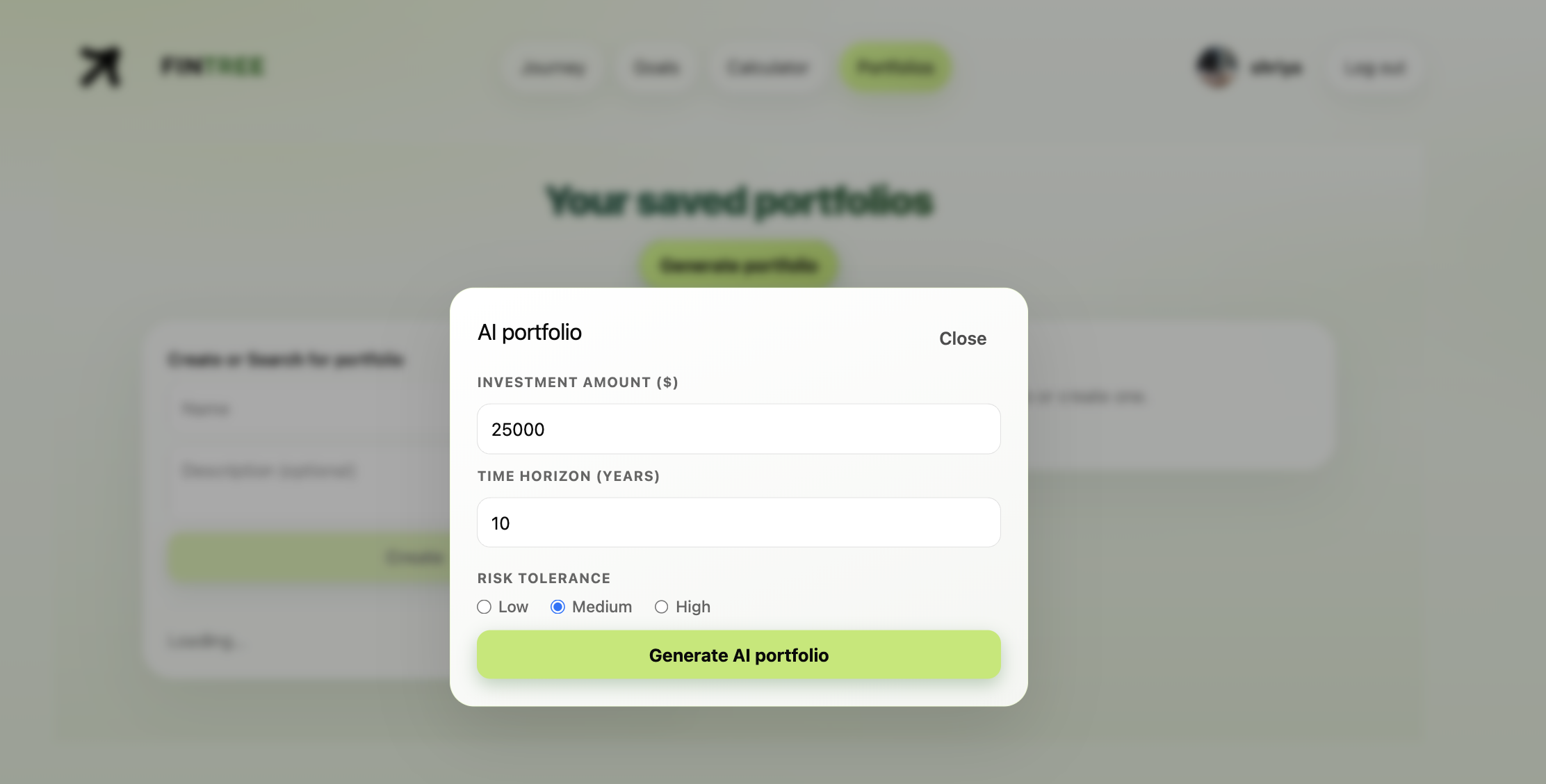
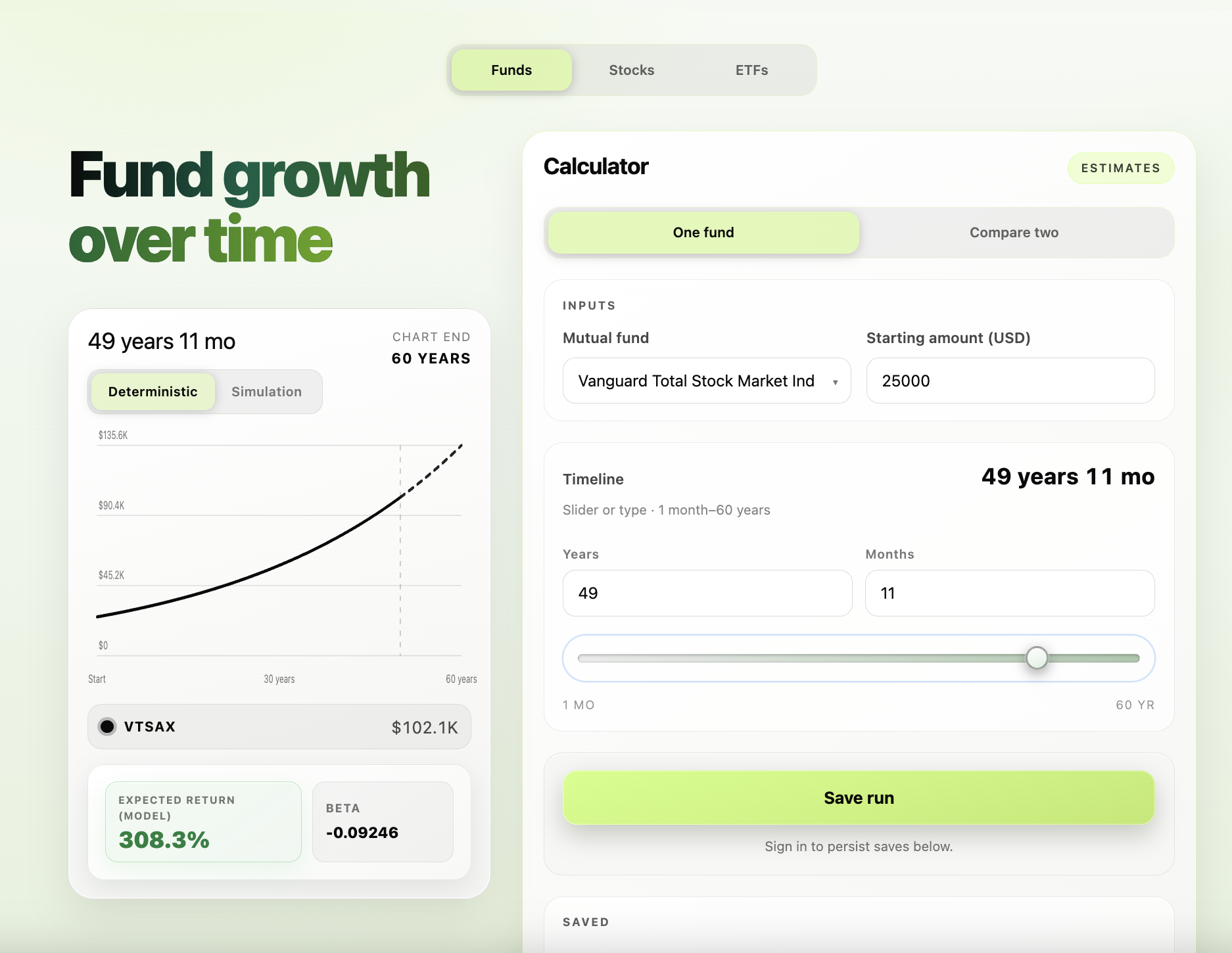
FinTree helps users turn life goals into clear financial plans. You can not only make portfolios but also calculate your investments for ETFs, stocks, and mutual funds, but also plan for life goals and milestones through these investments with AI guidance.
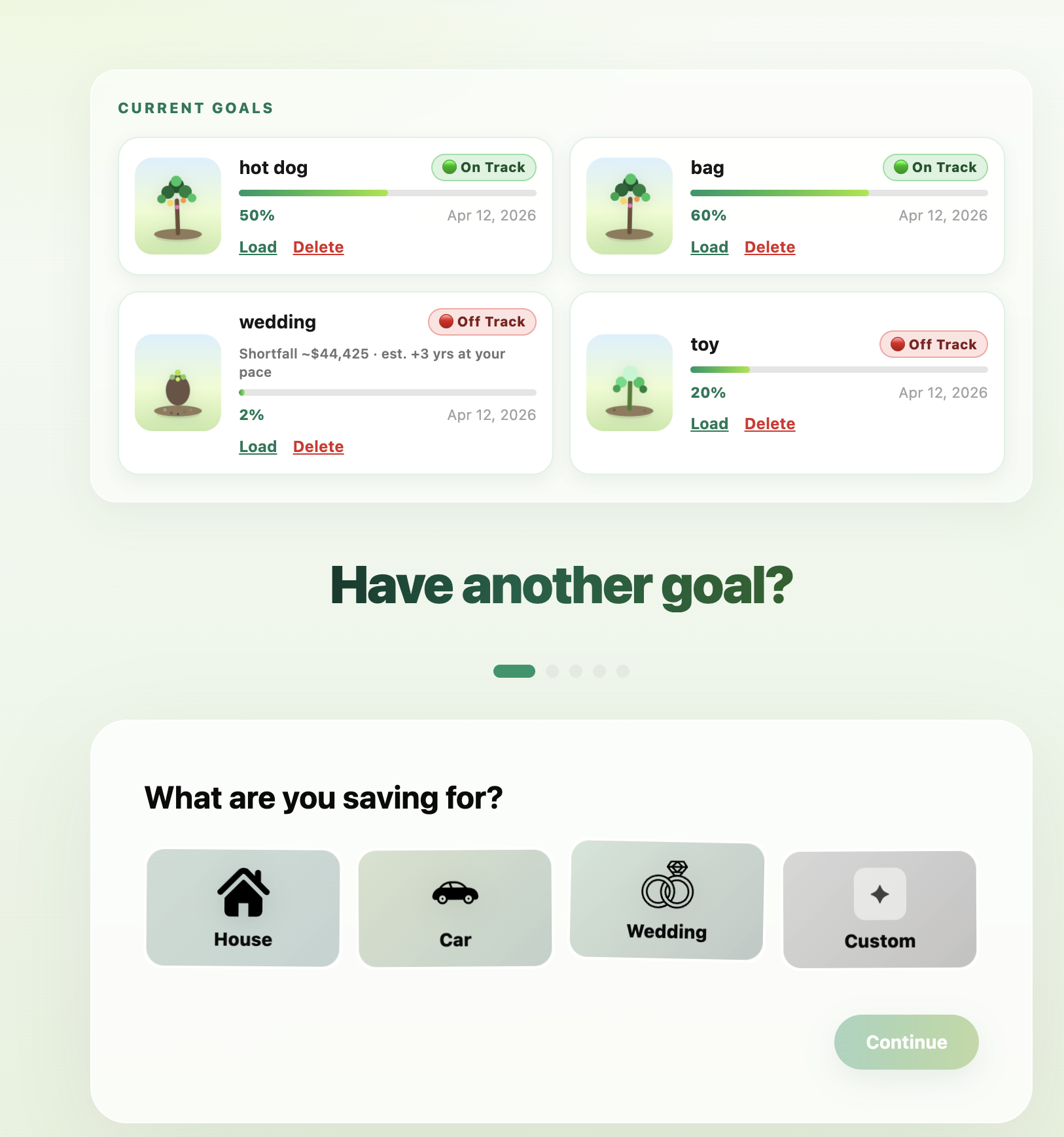
A user can set a goal like buying a car or a home; enter how much they have and how much they need; and the system builds a personalized plan to get there. Each goal gets its own investment strategy, and we simulate outcomes so users can see their chances of success, delays, or shortfalls.
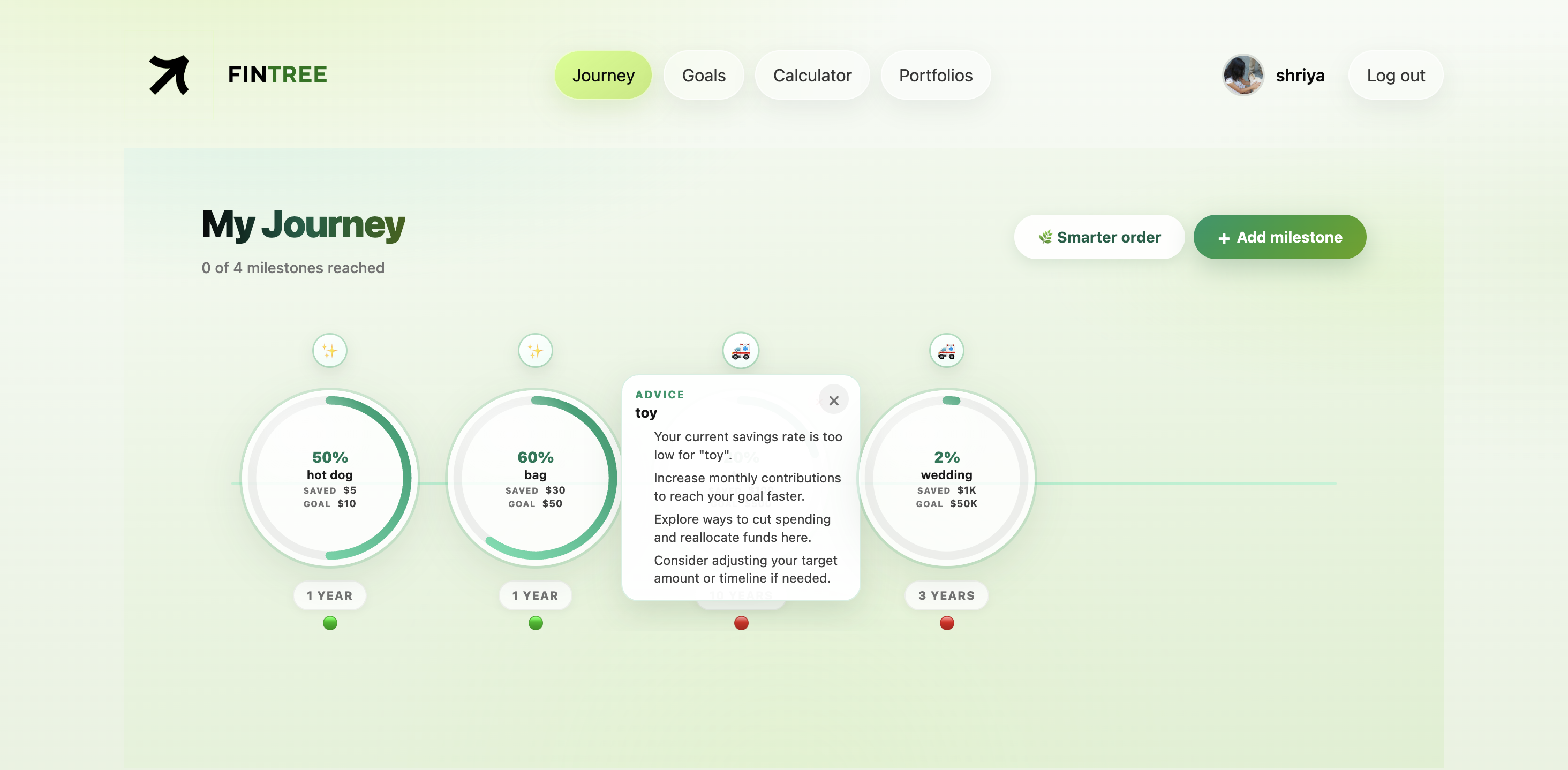
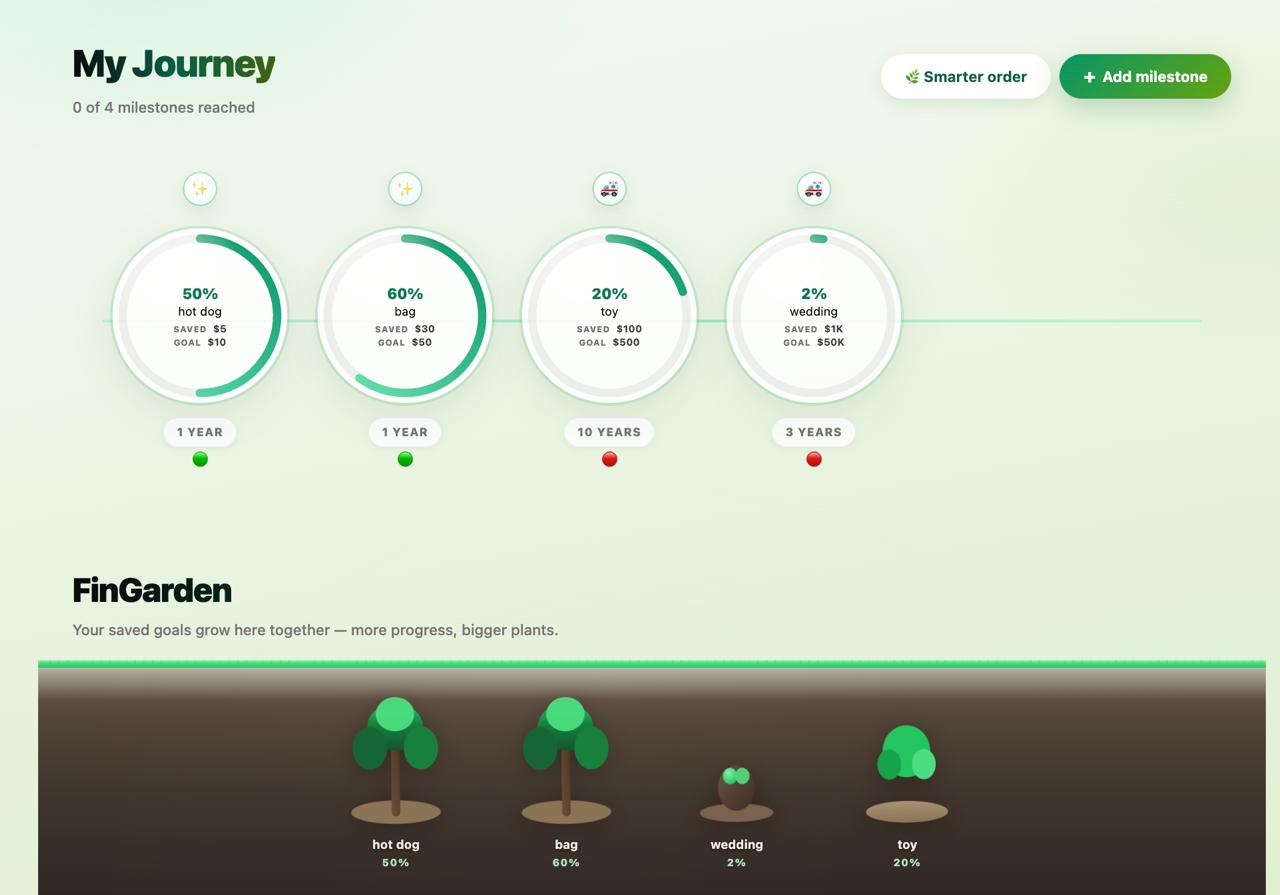
We also connect multiple goals into a single journey. That means if you plan to buy a car first, you can actually see how that affects your ability to buy a house later.
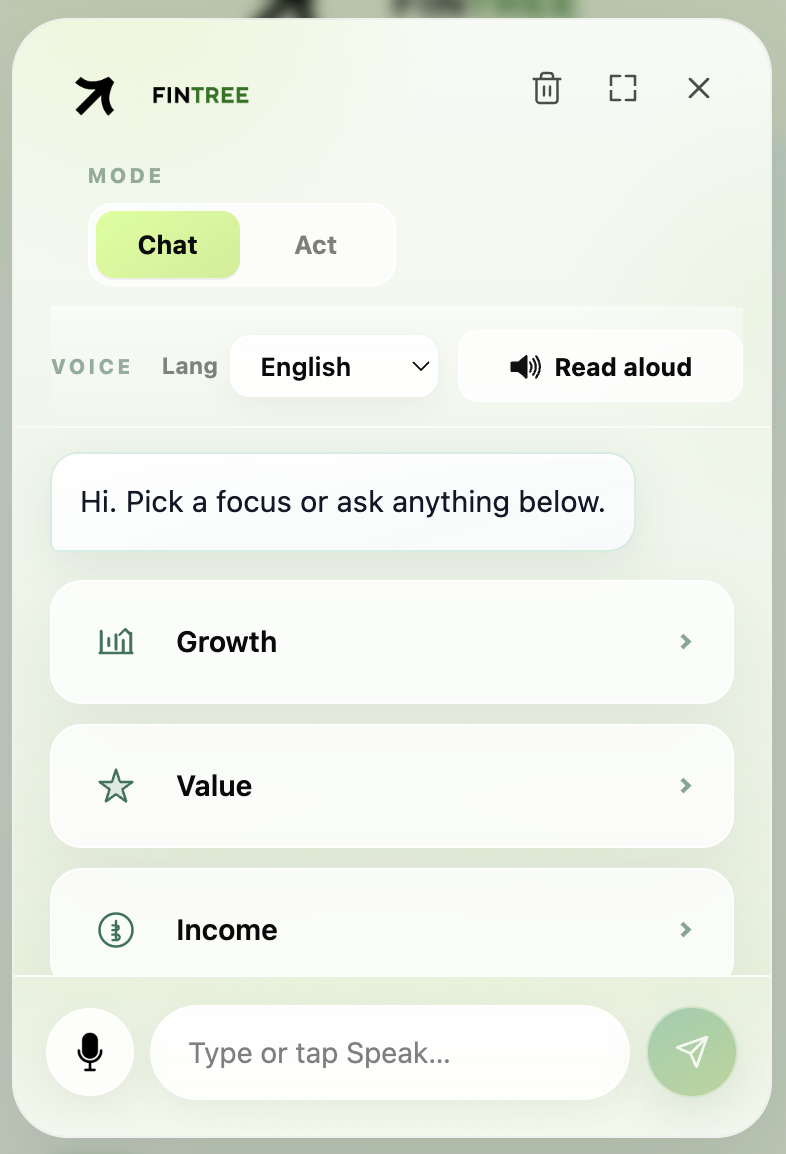
On top of that, the app guides users with suggested next steps, shows progress visually, and includes a voice-enabled AI assistant that explains what’s happening in simple terms.
How we built it
We built a full-stack application.
The frontend is built with Angular and Tailwind to create a clean and interactive experience. The backend is powered by Spring Boot, which handles the business logic, simulations, and APIs. We use PostgreSQL to store user data, goals, and portfolios.
For AI, we used Gemini to generate explanations and recommendations based on user goals and behavior. We also integrated ElevenLabs to add voice, so the system can actually talk users through their plans.
We combined all of this with simulation models to estimate how likely a user is to reach their goals.
Challenges we ran into
One of the biggest challenges was making everything feel connected. Early on, it felt like separate features. We had to redesign the flow so that everything starts from a goal and builds from there.
Another challenge was modeling how multiple goals interact. Real life is messy, and we had to simplify that into something users could understand without losing too much accuracy.
We also had to be careful with AI. We didn’t want it to feel like a generic chatbot, so we focused on making it actually explain decisions and provide useful guidance.
Accomplishments that we're proud of
We’re proud that we built something that actually feels usable.
Instead of just showing numbers, we built a system that helps users understand what those numbers mean and what to do next. We connected goals, portfolios, and simulations into one flow, and everything works together.
We also built a complete product, not just a concept. Users can go from setting a goal all the way to seeing how likely they are to reach it.
What we learned
We learned that most people don’t need more financial tools. They need guidance.
It’s easy to build features, but much harder to make them feel like one system. We also learned how to use AI in a more meaningful way by focusing on reasoning and explanation instead of just responses.
What's next for FinTree
Next, we want to make the system even more personalized.
We plan to improve how the app learns from user behavior over time, so recommendations get better the more you use it. We also want to make the journey feature stronger by helping users optimize the order and timing of their goals.
Long term, we want FinTree to feel like a real financial assistant that helps people make better decisions consistently, not just once.
Built With
- angular.js
- elevenlabs
- fastmcp
- gemini-api
- google-cloud
- java
- mcp
- postgresql
- rag
- springboot
- tailwind

Log in or sign up for Devpost to join the conversation.